
Search
- Curd Mill, circa 1840 -
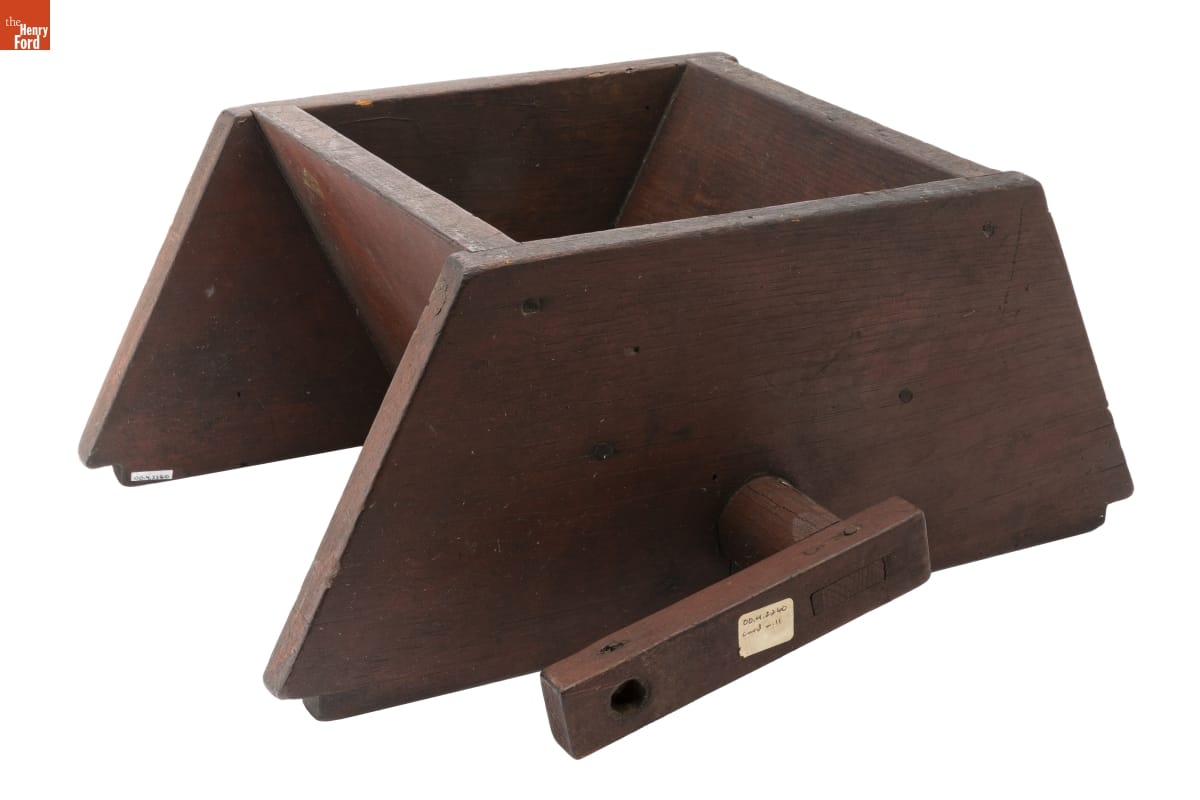
- circa 1840
- Collections - Artifact
Curd Mill, circa 1840
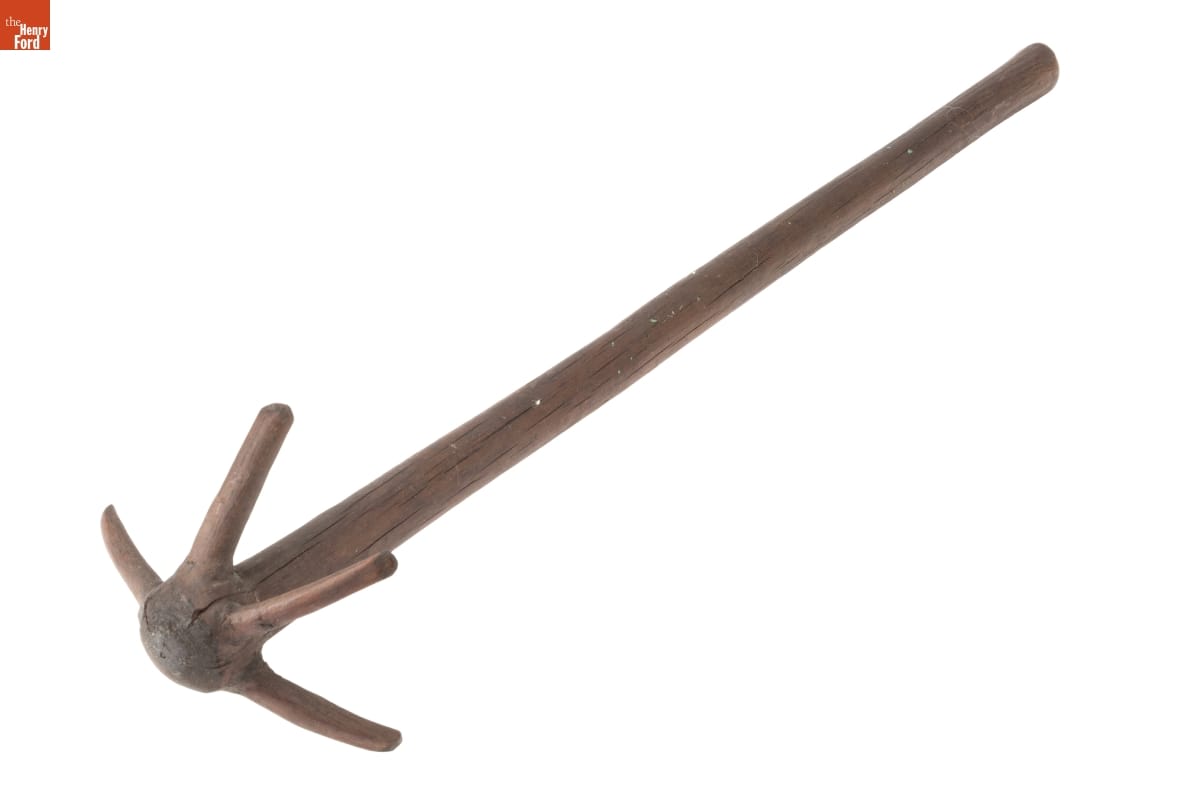
- Dairy Mixing Tool -
- Collections - Artifact
Dairy Mixing Tool
- Cheese Press, Used by Rider and Hoffman Families, circa 1890 -
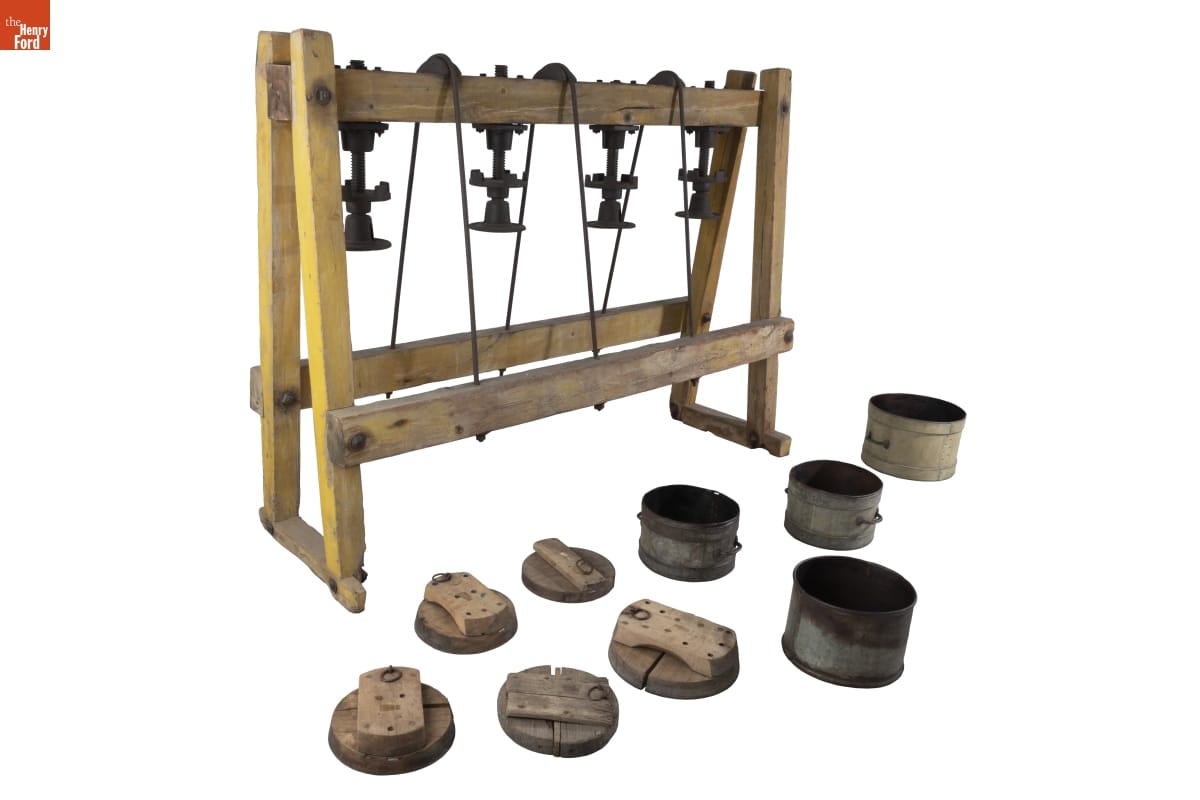
- circa 1890
- Collections - Artifact
Cheese Press, Used by Rider and Hoffman Families, circa 1890
- Curd Mill, circa 1840 -
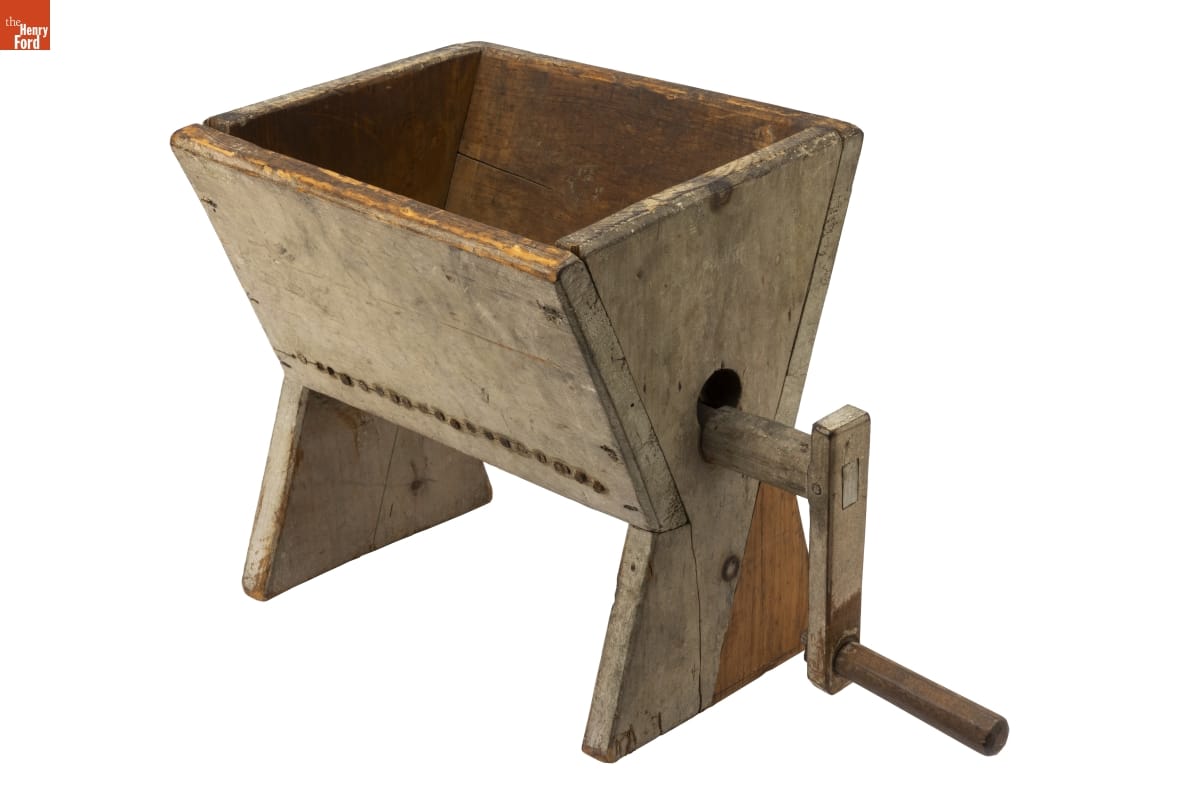
- circa 1840
- Collections - Artifact
Curd Mill, circa 1840
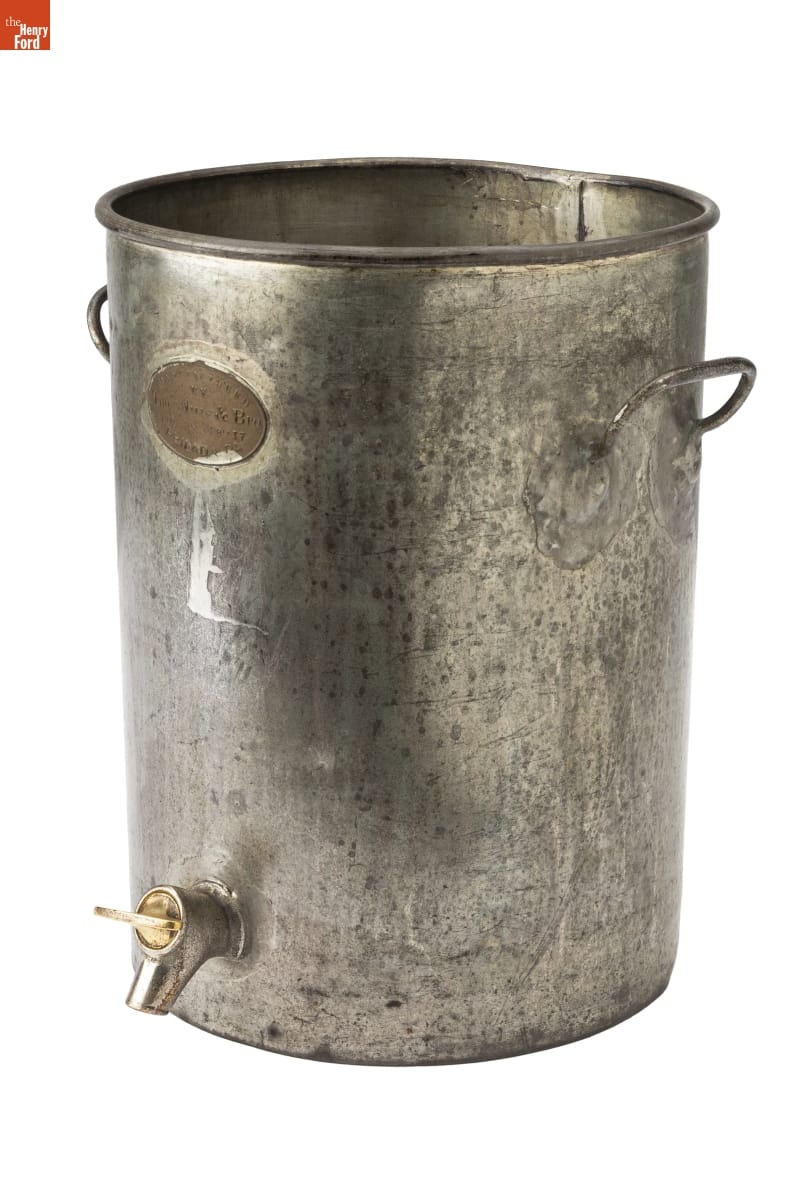
- Cheese Vat, Made by Thomas Mills & Brother -
- Collections - Artifact
Cheese Vat, Made by Thomas Mills & Brother
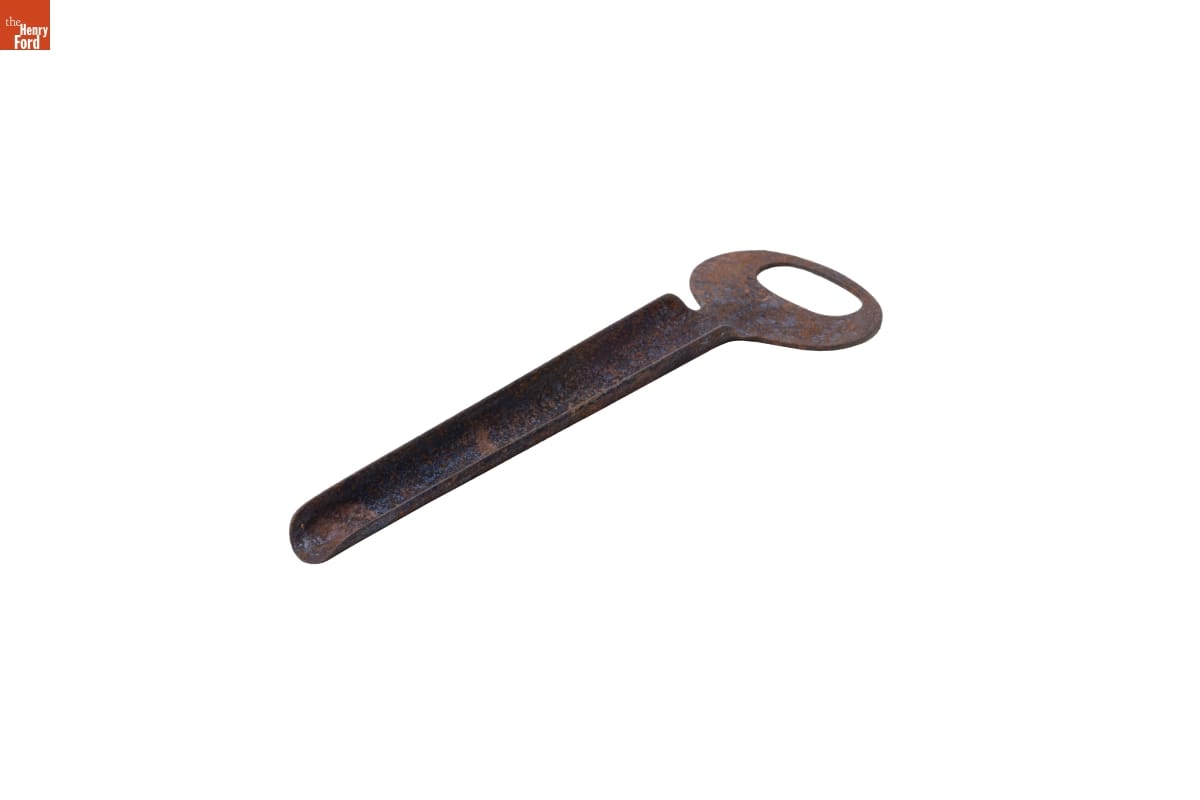
- Cheese Trier, circa 1895 - Cheesemakers remove a sample from a wheel of cheese to test how the product is aging and if it is ready for sale. Cheesemakers insert a trier to pull out a cross-section of cheese that they then evaluated for taste and texture. The plug is reinserted (only small samples are taken for tasting) and sealed if more aging is required.
- circa 1895
- Collections - Artifact
Cheese Trier, circa 1895
Cheesemakers remove a sample from a wheel of cheese to test how the product is aging and if it is ready for sale. Cheesemakers insert a trier to pull out a cross-section of cheese that they then evaluated for taste and texture. The plug is reinserted (only small samples are taken for tasting) and sealed if more aging is required.
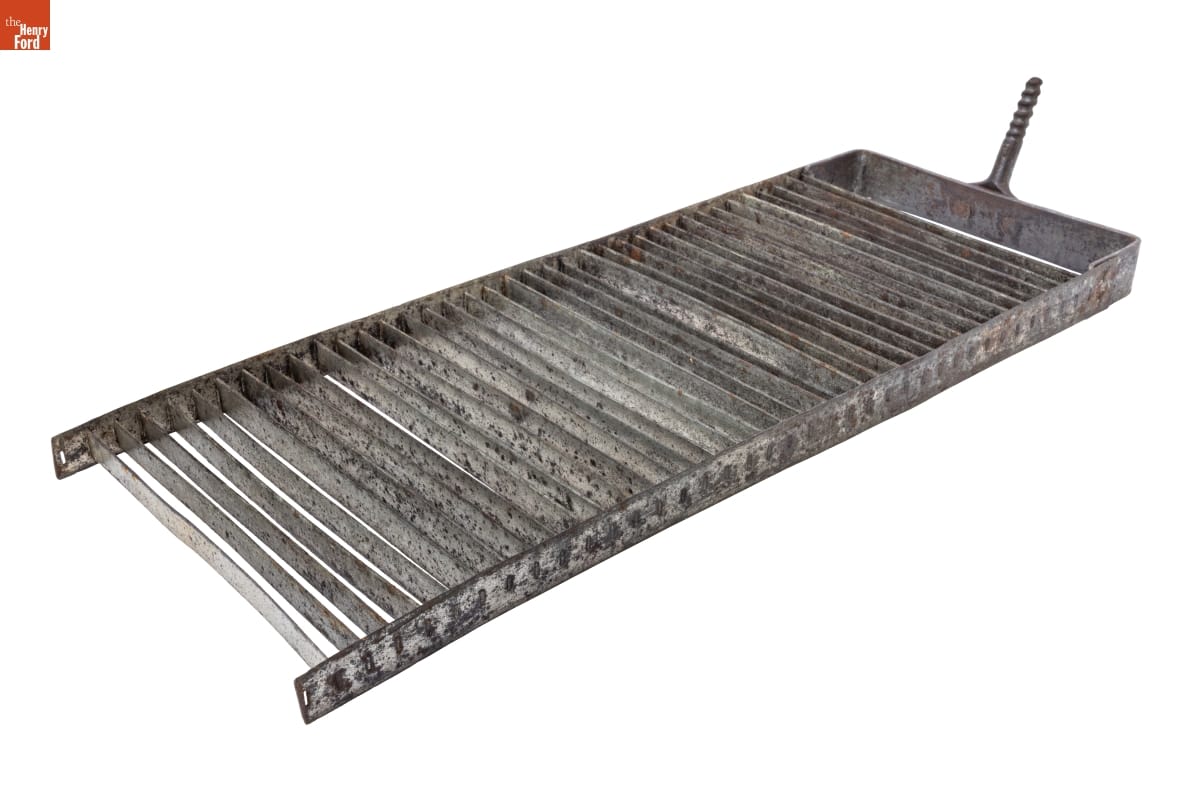
- Cheese Knife, circa 1895 - Milk spoils, but turning it into cheese preserves its nutritional value. Cheesemakers encourage milk proteins to clump together to form curd -- ideal for making cheese -- and remove the whey (a milky, watery leftover). As the curd solidifies, cutting the curds drains off additional whey. Cheese knives provide the needed curd size and moisture for making cheese while encouraging further whey separation.
- circa 1895
- Collections - Artifact
Cheese Knife, circa 1895
Milk spoils, but turning it into cheese preserves its nutritional value. Cheesemakers encourage milk proteins to clump together to form curd -- ideal for making cheese -- and remove the whey (a milky, watery leftover). As the curd solidifies, cutting the curds drains off additional whey. Cheese knives provide the needed curd size and moisture for making cheese while encouraging further whey separation.
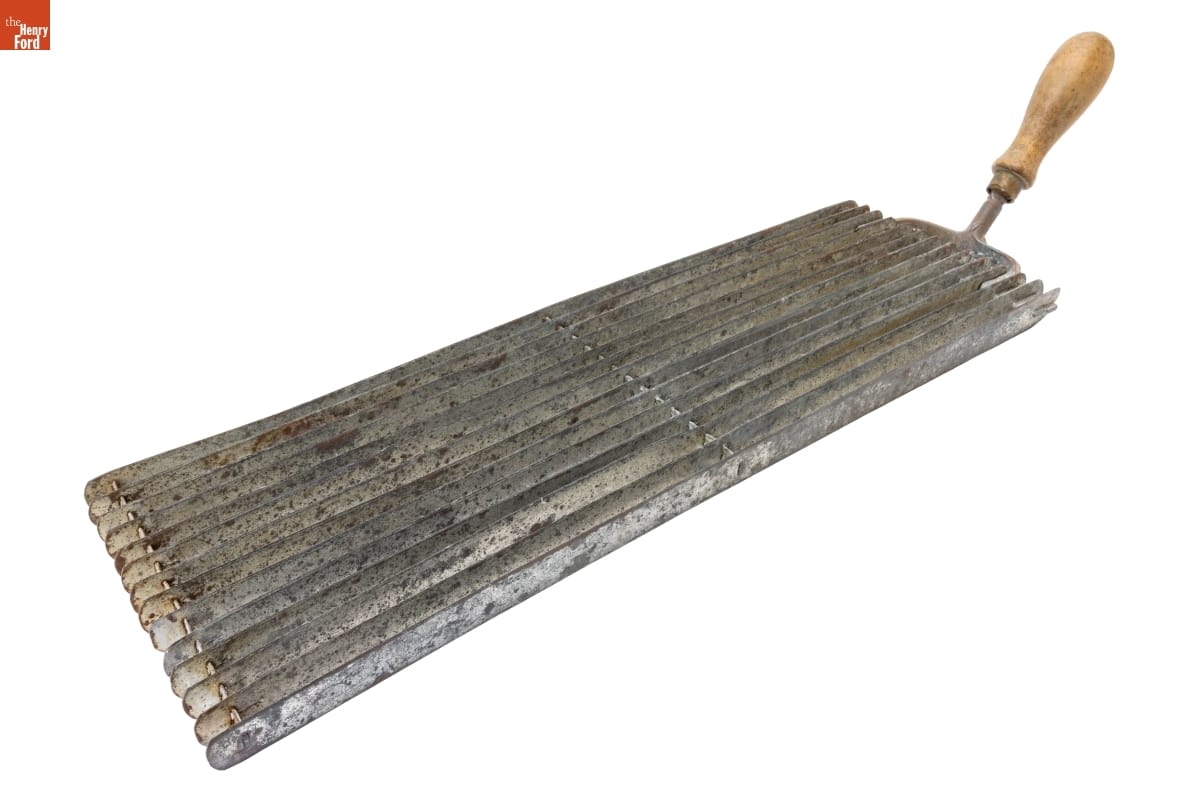
- Cheese Knife, circa 1895 - Milk spoils, but turning it into cheese preserves its nutritional value. Cheesemakers encourage milk proteins to clump together to form curd -- ideal for making cheese -- and remove the whey (a milky, watery leftover). As the curd solidifies, cutting the curds drains off additional whey. Cheese knives provide the needed curd size and moisture for making cheese while encouraging further whey separation.
- circa 1895
- Collections - Artifact
Cheese Knife, circa 1895
Milk spoils, but turning it into cheese preserves its nutritional value. Cheesemakers encourage milk proteins to clump together to form curd -- ideal for making cheese -- and remove the whey (a milky, watery leftover). As the curd solidifies, cutting the curds drains off additional whey. Cheese knives provide the needed curd size and moisture for making cheese while encouraging further whey separation.
- Curd Strainer -
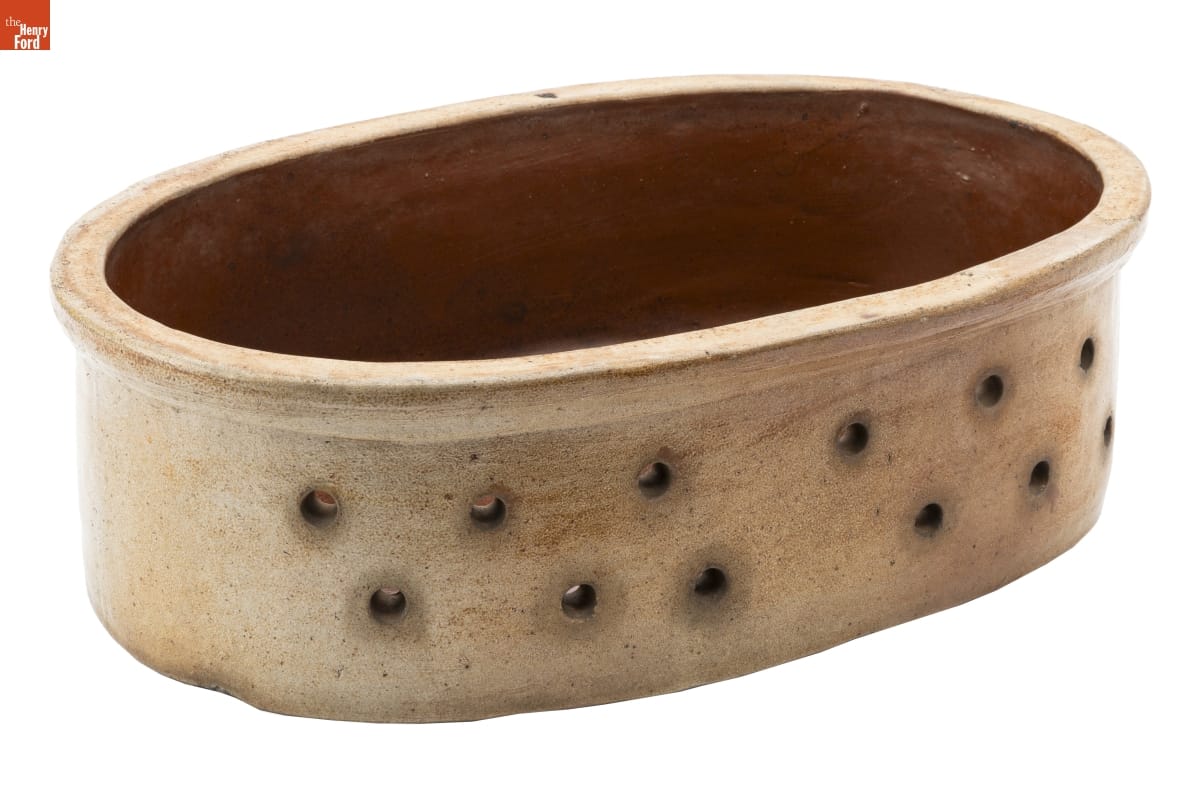
- Collections - Artifact
Curd Strainer
- Cheese Trier, circa 1895 - Cheesemakers remove a sample from a wheel of cheese to test how the product is aging and if it is ready for sale. Cheesemakers insert a trier to pull out a cross-section of cheese that they then evaluated for taste and texture. The plug is reinserted (only small samples are taken for tasting) and sealed if more aging is required.
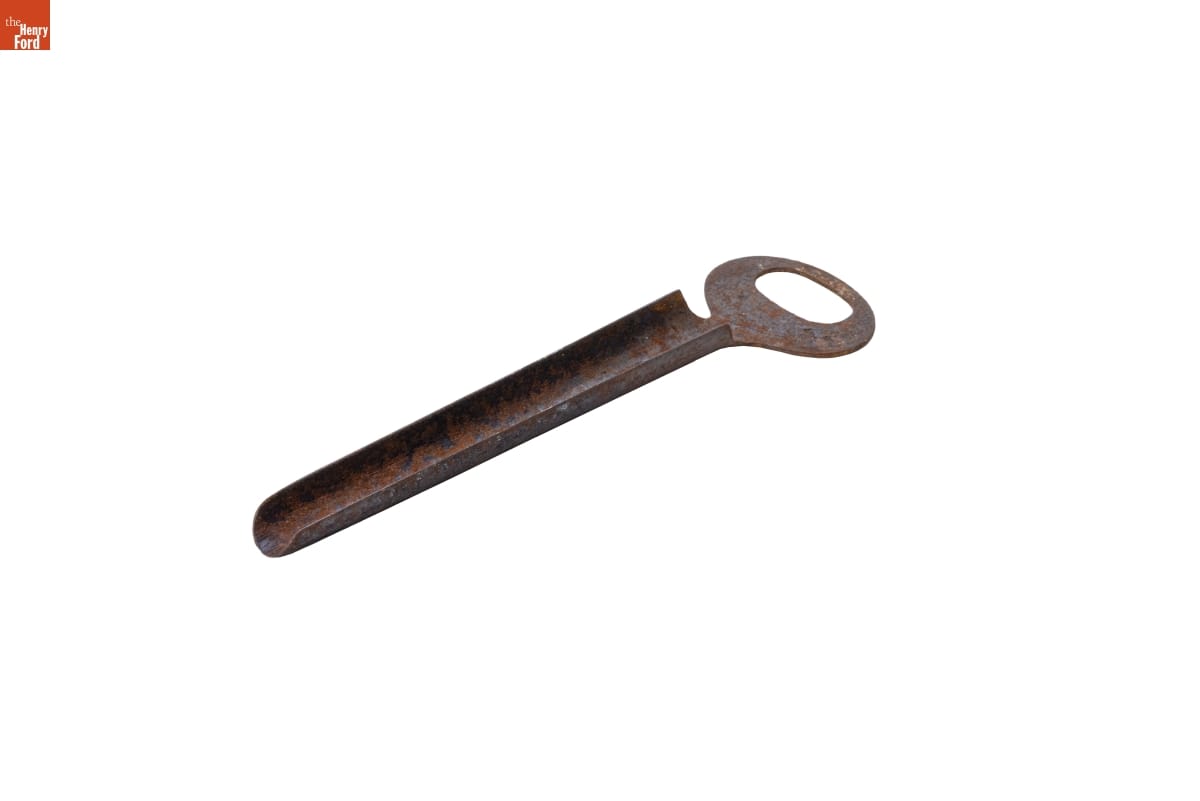
- circa 1895
- Collections - Artifact
Cheese Trier, circa 1895
Cheesemakers remove a sample from a wheel of cheese to test how the product is aging and if it is ready for sale. Cheesemakers insert a trier to pull out a cross-section of cheese that they then evaluated for taste and texture. The plug is reinserted (only small samples are taken for tasting) and sealed if more aging is required.