
Search
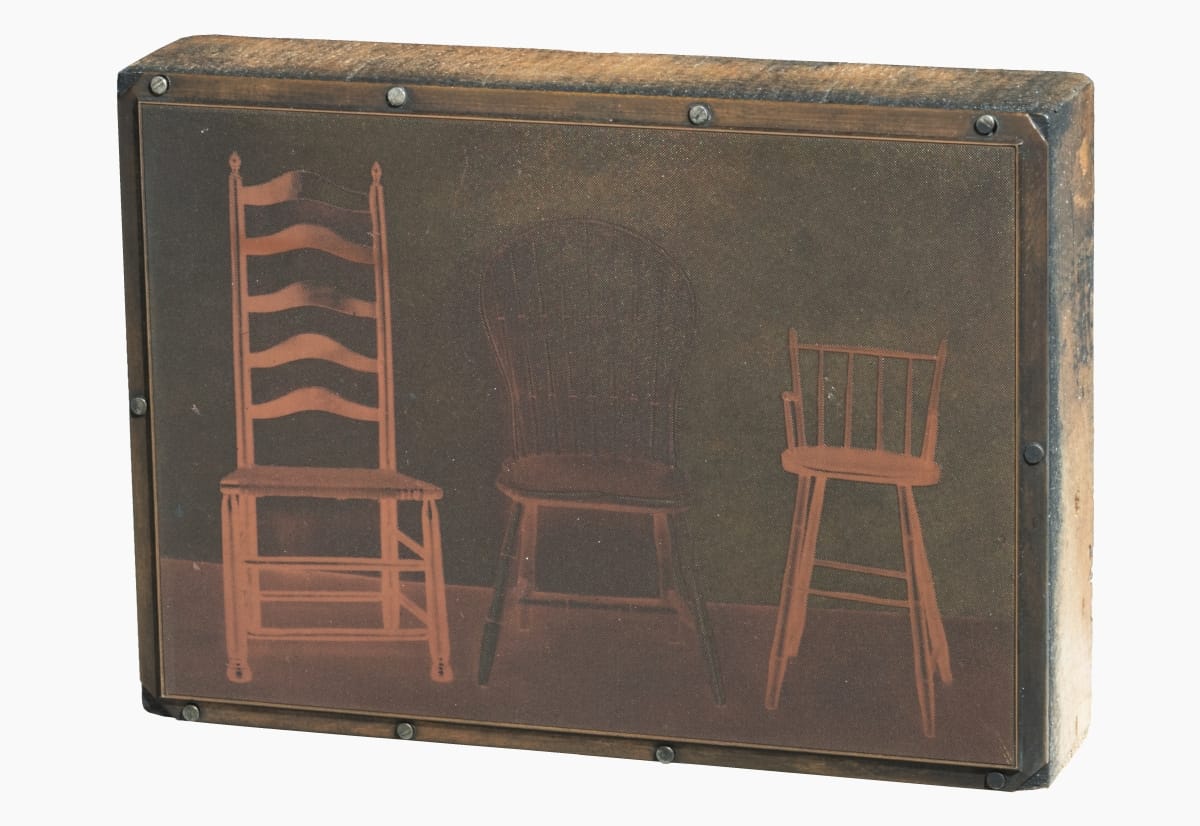
- Printing Plate with Image of Chairs -
- Collections - Artifact
Printing Plate with Image of Chairs
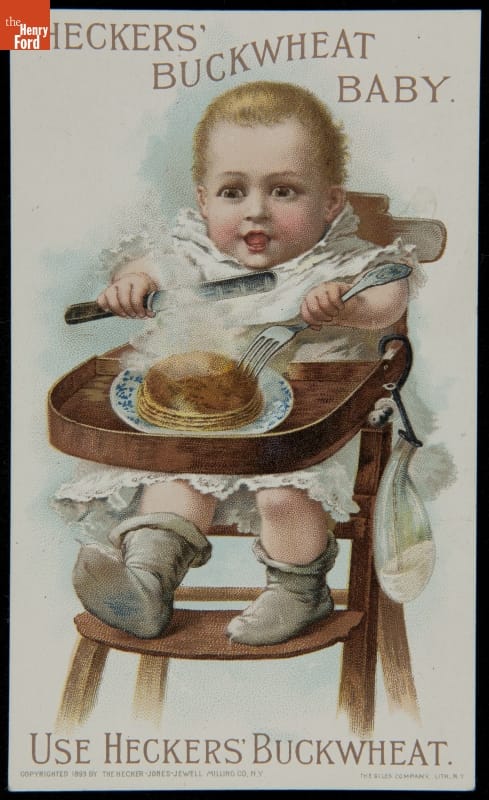
- Trade Card for Hecker's Buckwheat, Hecker-Jones-Jewell Milling Co., 1893 - In the last third of the nineteenth century, an unprecedented variety of consumer goods and services flooded the American market. Advertisers, armed with new methods of color printing, bombarded potential customers with trade cards. Americans enjoyed and often saved the vibrant little advertisements found in product packages or distributed by local merchants. Many survive as historical records of commercialism in the United States.
- 1893
- Collections - Artifact
Trade Card for Hecker's Buckwheat, Hecker-Jones-Jewell Milling Co., 1893
In the last third of the nineteenth century, an unprecedented variety of consumer goods and services flooded the American market. Advertisers, armed with new methods of color printing, bombarded potential customers with trade cards. Americans enjoyed and often saved the vibrant little advertisements found in product packages or distributed by local merchants. Many survive as historical records of commercialism in the United States.
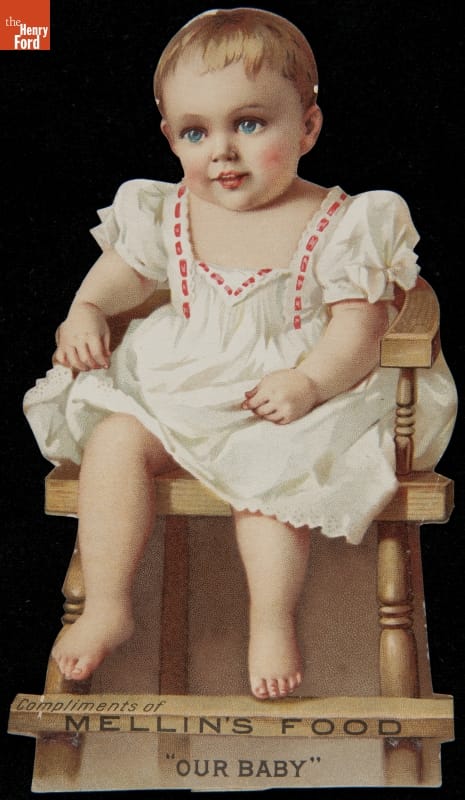
- Trade Card for Mellin's Food, 1897 - In the last third of the nineteenth century, an unprecedented variety of consumer goods and services flooded the American market. Advertisers, armed with new methods of color printing, bombarded potential customers with trade cards. Americans enjoyed and often saved the vibrant little advertisements found in product packages or distributed by local merchants. Many survive as historical records of commercialism in the United States.
- 1897
- Collections - Artifact
Trade Card for Mellin's Food, 1897
In the last third of the nineteenth century, an unprecedented variety of consumer goods and services flooded the American market. Advertisers, armed with new methods of color printing, bombarded potential customers with trade cards. Americans enjoyed and often saved the vibrant little advertisements found in product packages or distributed by local merchants. Many survive as historical records of commercialism in the United States.
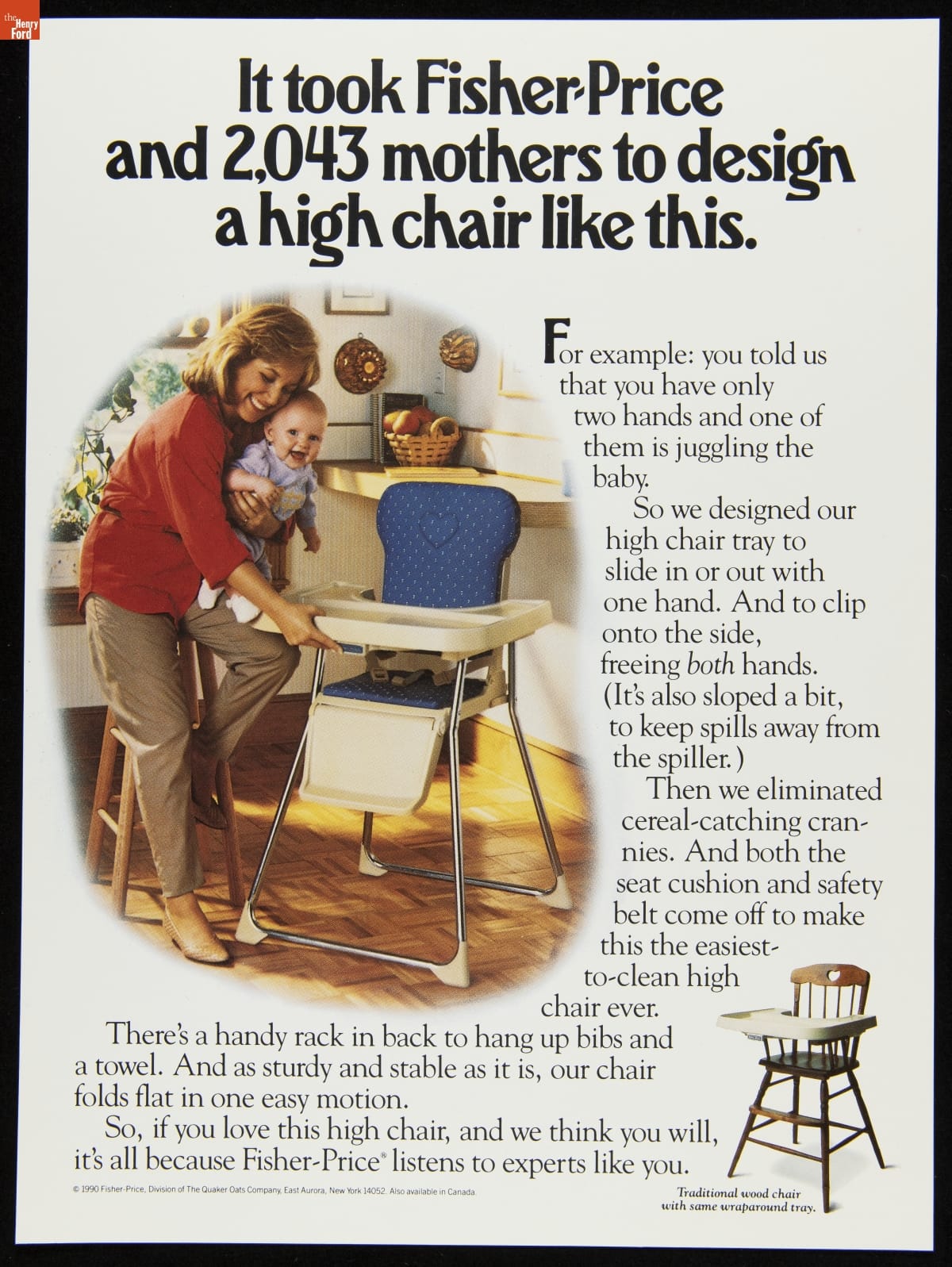
- Fisher-Price Advertisement, "It Took Fisher-Price and 2,043 Mothers to Design a High Chair Like This," 1990 - By the time Fisher-Price created this advertisement, highchairs had been around for centuries--but the company now claimed it improved on the age-old design. Fisher-Price proudly announced that it had listened to "the experts"-- 2.043 moms--when designing this highchair. The company stated that the sturdy and stable chair was easy to use--especially when juggling a baby with one hand--and easy to clean.
- 1990
- Collections - Artifact
Fisher-Price Advertisement, "It Took Fisher-Price and 2,043 Mothers to Design a High Chair Like This," 1990
By the time Fisher-Price created this advertisement, highchairs had been around for centuries--but the company now claimed it improved on the age-old design. Fisher-Price proudly announced that it had listened to "the experts"-- 2.043 moms--when designing this highchair. The company stated that the sturdy and stable chair was easy to use--especially when juggling a baby with one hand--and easy to clean.
- Playing Tea Party, 1920-1930 -
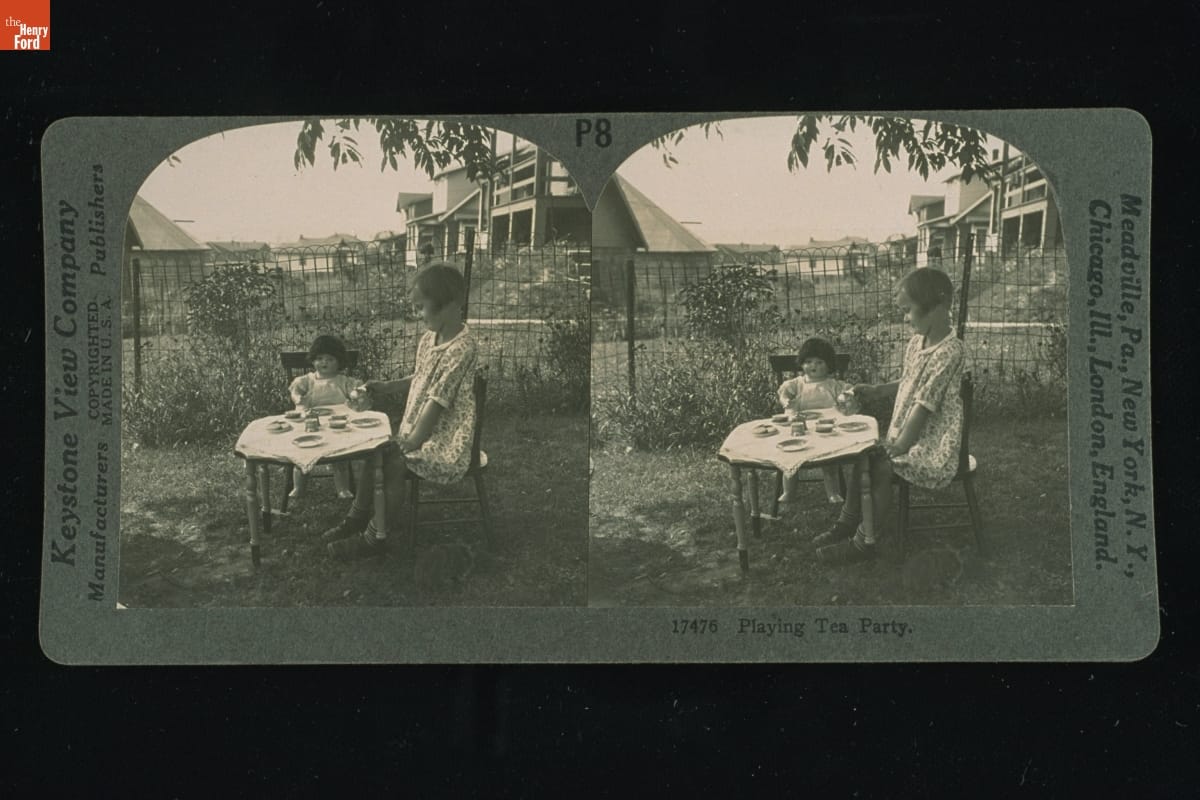
- 1920-1930
- Collections - Artifact
Playing Tea Party, 1920-1930
- Children's Christmas Day Celebration, Henry Ford Hospital, December 25, 1946 - Henry Ford Hospital opened in Detroit, Michigan, in 1915. While its namesake, auto magnate Henry Ford, was the hospital's primary benefactor, others made their own contributions. In 1930, oil refiner Harry B. Earhart established a fund to purchase presents for all children, and many adults, who were in the hospital during the Christmas holiday. Earhart's fund continued for 20 years.
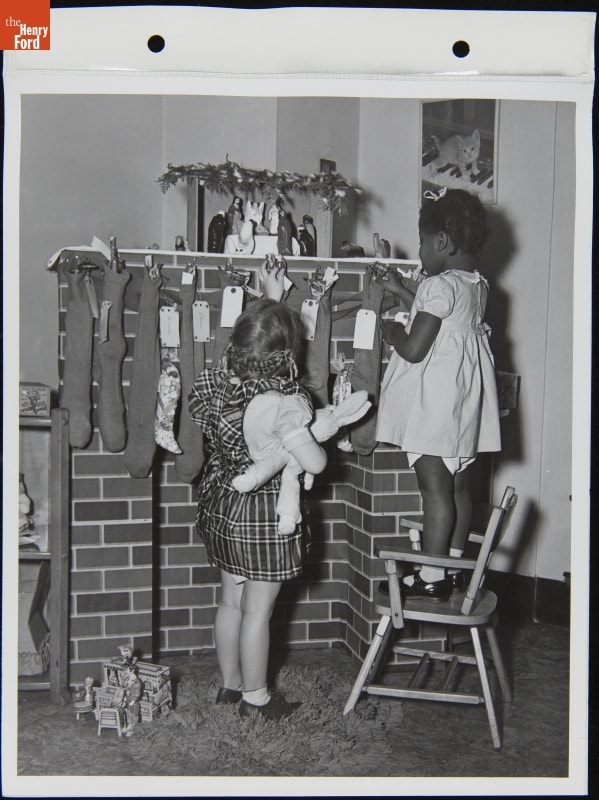
- December 25, 1946
- Collections - Artifact
Children's Christmas Day Celebration, Henry Ford Hospital, December 25, 1946
Henry Ford Hospital opened in Detroit, Michigan, in 1915. While its namesake, auto magnate Henry Ford, was the hospital's primary benefactor, others made their own contributions. In 1930, oil refiner Harry B. Earhart established a fund to purchase presents for all children, and many adults, who were in the hospital during the Christmas holiday. Earhart's fund continued for 20 years.
- Trade Card for Mellin's Food, 1883-1899 - In the last third of the nineteenth century, an unprecedented variety of consumer goods and services flooded the American market. Advertisers, armed with new methods of color printing, bombarded potential customers with trade cards. Americans enjoyed and often saved the vibrant little advertisements found in product packages or distributed by local merchants. Many survive as historical records of commercialism in the United States.
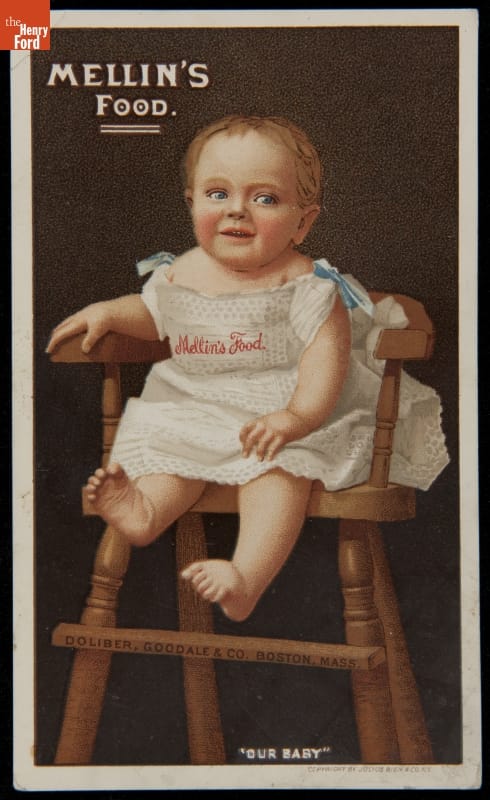
- 1883-1899
- Collections - Artifact
Trade Card for Mellin's Food, 1883-1899
In the last third of the nineteenth century, an unprecedented variety of consumer goods and services flooded the American market. Advertisers, armed with new methods of color printing, bombarded potential customers with trade cards. Americans enjoyed and often saved the vibrant little advertisements found in product packages or distributed by local merchants. Many survive as historical records of commercialism in the United States.
- Shaker Child's Chair, 1850-1900 -
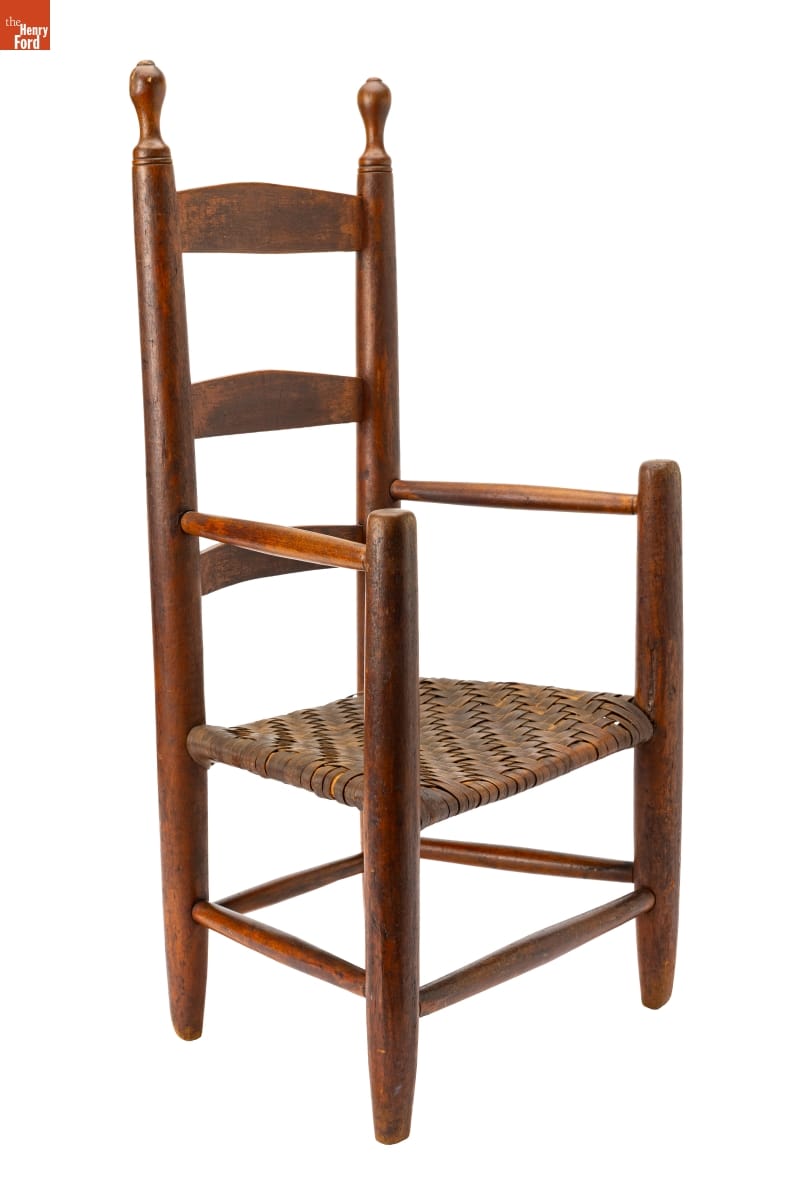
- 1850-1900
- Collections - Artifact
Shaker Child's Chair, 1850-1900
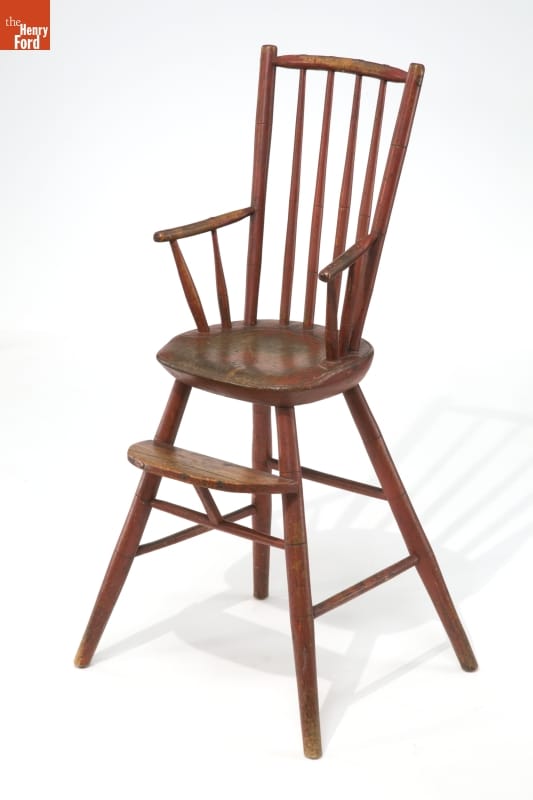
- Windsor Child's Highchair, circa 1820-1840 - This Windsor highchair allowed a child to sit at the same level as the dining table making it easier for parents to feed the child. Highchairs, however, were not a common piece of household furniture in the early 1800s. Most small children had to sit on someone's lap or find other ways to boost themselves to table level during meals.
- circa 1820-1840
- Collections - Artifact
Windsor Child's Highchair, circa 1820-1840
This Windsor highchair allowed a child to sit at the same level as the dining table making it easier for parents to feed the child. Highchairs, however, were not a common piece of household furniture in the early 1800s. Most small children had to sit on someone's lap or find other ways to boost themselves to table level during meals.
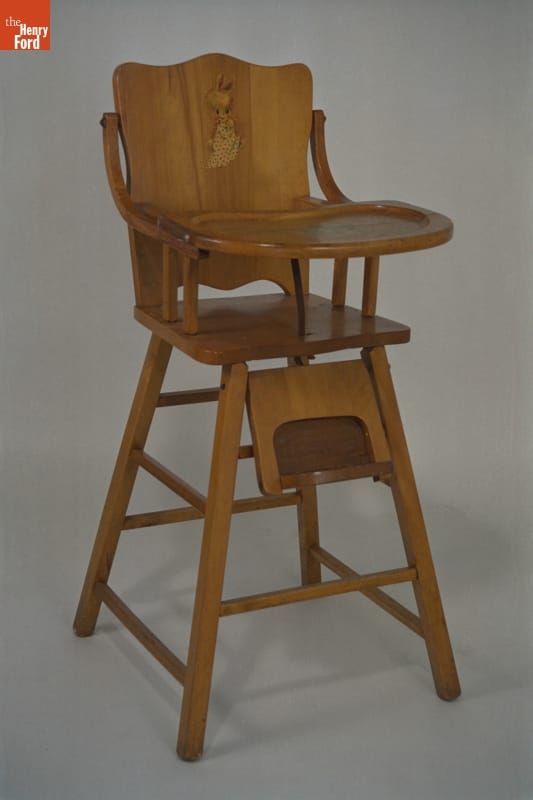
- Highchair, 1943 - By the early 20th century highchairs for young children were common, with many designs incorporating attached trays. The sturdy locking tray on this highchair, from the 1940s, safeguarded the small child from falling. The tray also provided a convenient serving area away from the table -- letting parents regulate the child's diet and manage reachable distractions.
- 1943
- Collections - Artifact
Highchair, 1943
By the early 20th century highchairs for young children were common, with many designs incorporating attached trays. The sturdy locking tray on this highchair, from the 1940s, safeguarded the small child from falling. The tray also provided a convenient serving area away from the table -- letting parents regulate the child's diet and manage reachable distractions.