
Search
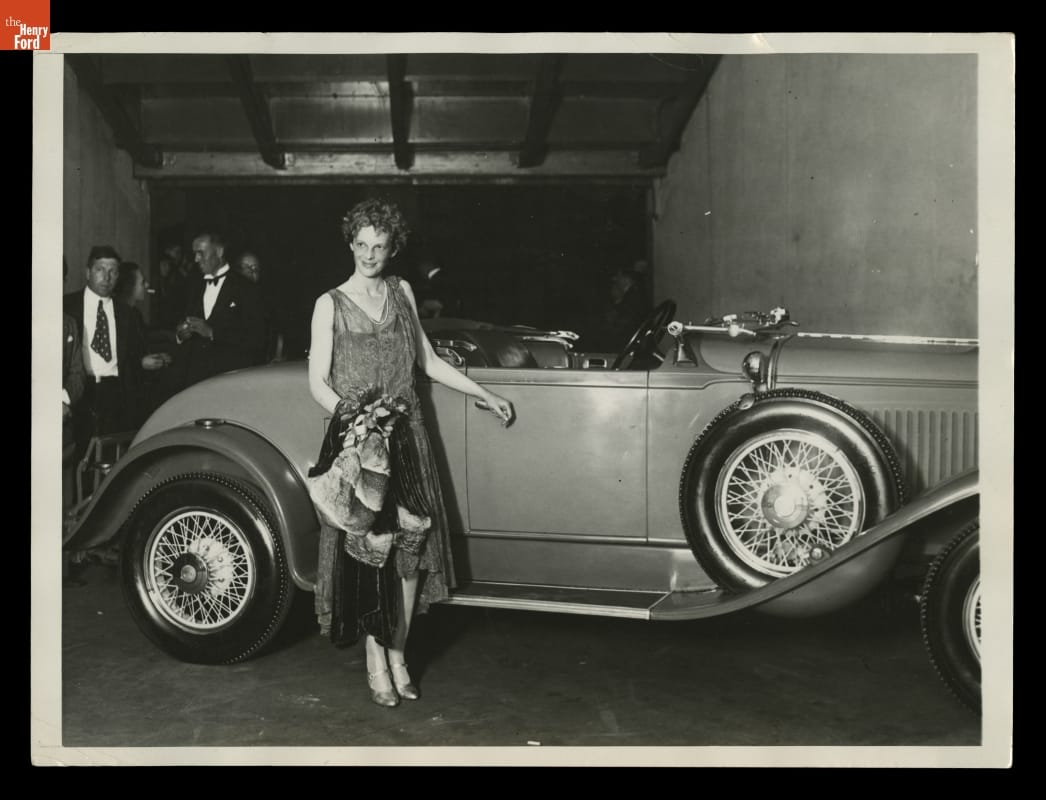
- Amelia Earhart with the Automobile Received from Chrysler Corporation, July 11, 1928 - Skilled aviatrix Amelia Earhart came to national attention in 1928, when she was invited to become the first woman to fly the Atlantic--as a passenger. Wilmer Stutz flew the plane, with Louis Gordon as co-pilot, as the trio made their challenging--and successful--journey from Newfoundland to Wales. Upon her return, Earhart received this sporty automobile from Chrysler Corporation.
- July 11, 1928
- Collections - Artifact
Amelia Earhart with the Automobile Received from Chrysler Corporation, July 11, 1928
Skilled aviatrix Amelia Earhart came to national attention in 1928, when she was invited to become the first woman to fly the Atlantic--as a passenger. Wilmer Stutz flew the plane, with Louis Gordon as co-pilot, as the trio made their challenging--and successful--journey from Newfoundland to Wales. Upon her return, Earhart received this sporty automobile from Chrysler Corporation.
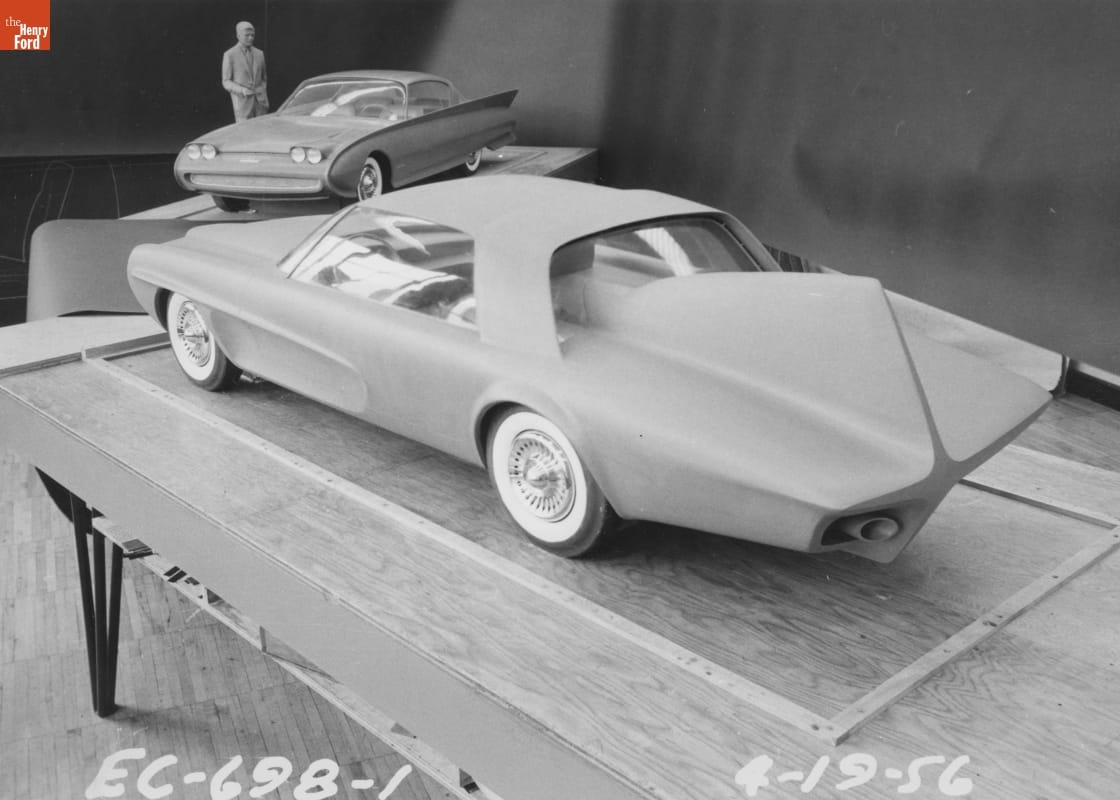
- Clay Model for the 1956 Chrysler Falcon Concept Car Designed by Virgil M. Exner - Virgil Exner designed the two-seat Chrysler Falcon concept car for the 1955 auto show season. The roadster was close in spirit to the contemporary Chevrolet Corvette and Ford Thunderbird, though the simulated knock-off wheels and external exhaust pipes gave the Falcon a somewhat racier appearance. Chrysler chose not to put the car into production.
- April 19, 1956
- Collections - Artifact
Clay Model for the 1956 Chrysler Falcon Concept Car Designed by Virgil M. Exner
Virgil Exner designed the two-seat Chrysler Falcon concept car for the 1955 auto show season. The roadster was close in spirit to the contemporary Chevrolet Corvette and Ford Thunderbird, though the simulated knock-off wheels and external exhaust pipes gave the Falcon a somewhat racier appearance. Chrysler chose not to put the car into production.
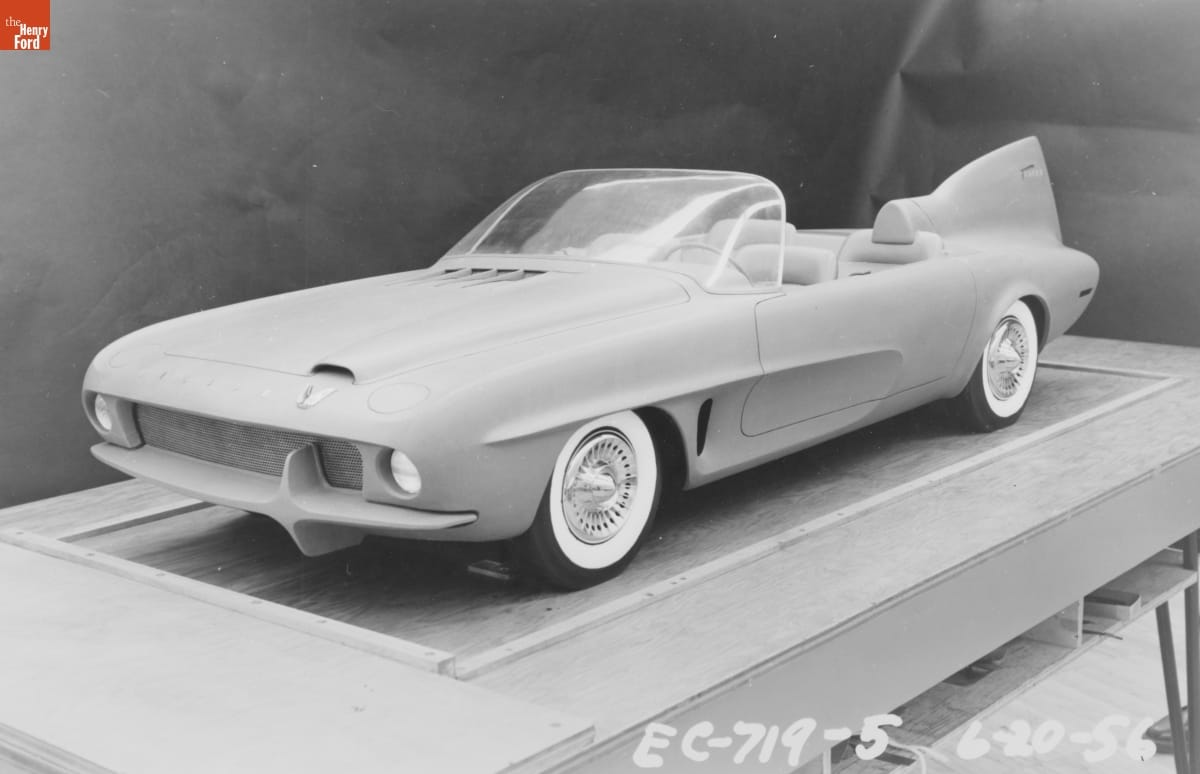
- Clay Model for the 1956 Chrysler Falcon Concept Car Designed by Virgil M. Exner - Virgil Exner designed the two-seat Chrysler Falcon concept car for the 1955 auto show season. The roadster was close in spirit to the contemporary Chevrolet Corvette and Ford Thunderbird, though the simulated knock-off wheels and external exhaust pipes gave the Falcon a somewhat racier appearance. Chrysler chose not to put the car into production.
- June 20, 1956
- Collections - Artifact
Clay Model for the 1956 Chrysler Falcon Concept Car Designed by Virgil M. Exner
Virgil Exner designed the two-seat Chrysler Falcon concept car for the 1955 auto show season. The roadster was close in spirit to the contemporary Chevrolet Corvette and Ford Thunderbird, though the simulated knock-off wheels and external exhaust pipes gave the Falcon a somewhat racier appearance. Chrysler chose not to put the car into production.
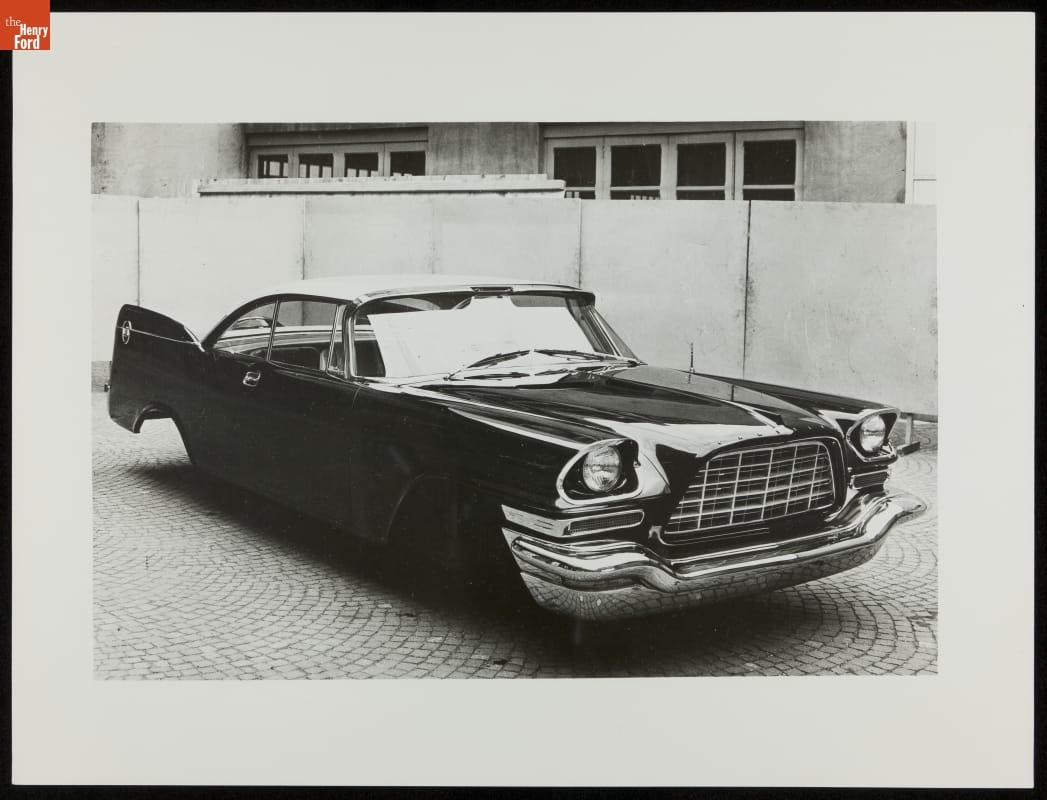
- Chrysler "613" Concept Car, 1955-1956 - In the 1950s, Chrysler Corporation's Advanced Styling Studio remade the carmaker's stodgy image with sleek, smooth lines inspired by jet aircraft. The department, headed by chief stylist Virgil Exner, developed several fully operational concept models. Pictured here is the body of #613, an "idea car" that exemplified Exner's "Forward Look" and influenced much of the styling for Chrysler's 1957 300C.
- 1955-1956
- Collections - Artifact
Chrysler "613" Concept Car, 1955-1956
In the 1950s, Chrysler Corporation's Advanced Styling Studio remade the carmaker's stodgy image with sleek, smooth lines inspired by jet aircraft. The department, headed by chief stylist Virgil Exner, developed several fully operational concept models. Pictured here is the body of #613, an "idea car" that exemplified Exner's "Forward Look" and influenced much of the styling for Chrysler's 1957 300C.
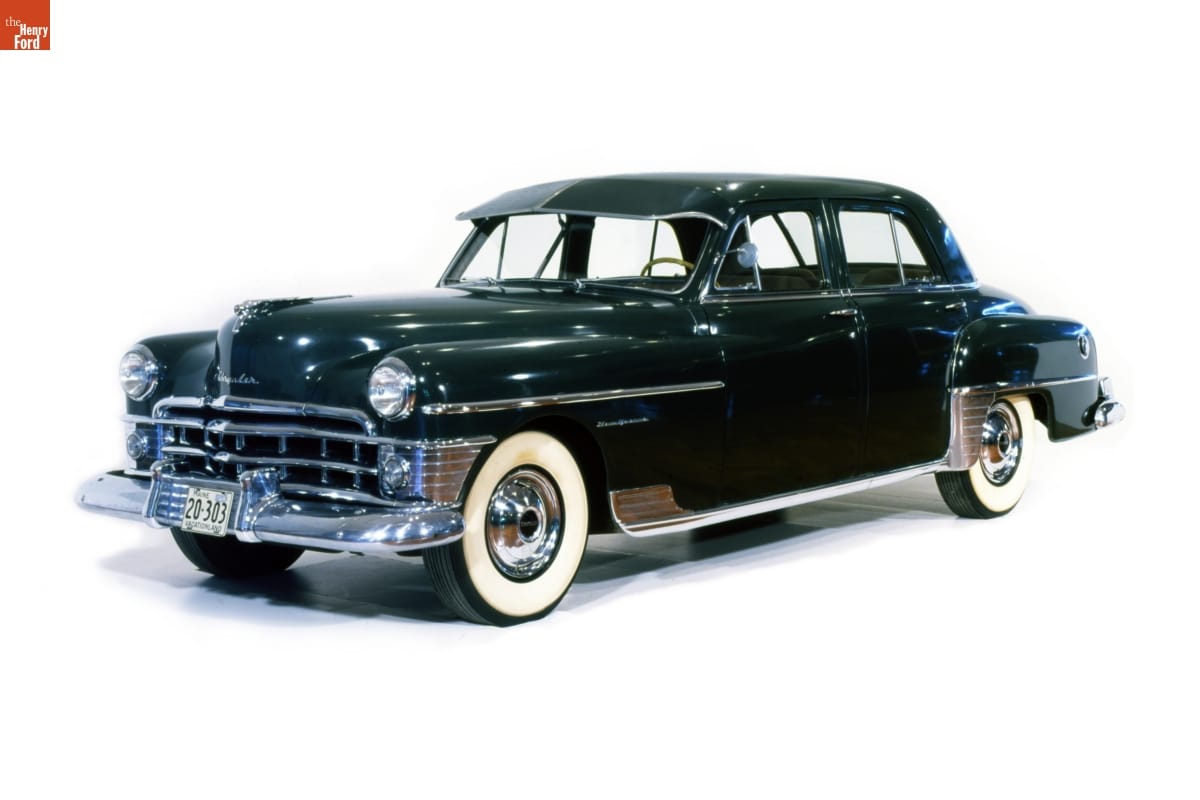
- 1950 Chrysler New Yorker Sedan - Chrysler joined the trend for "slab side" styling with its 1949 models. The new look removed running boards and separate front fenders, and it projected a fresh postwar image. The New Yorker, introduced in 1939, was among Chrysler's higher-end models. This 1950 example has "Prestomatic Fluid Drive," a semi-automatic transmission that eliminated much -- but not all -- clutch pedal use.
- 1950
- Collections - Artifact
1950 Chrysler New Yorker Sedan
Chrysler joined the trend for "slab side" styling with its 1949 models. The new look removed running boards and separate front fenders, and it projected a fresh postwar image. The New Yorker, introduced in 1939, was among Chrysler's higher-end models. This 1950 example has "Prestomatic Fluid Drive," a semi-automatic transmission that eliminated much -- but not all -- clutch pedal use.
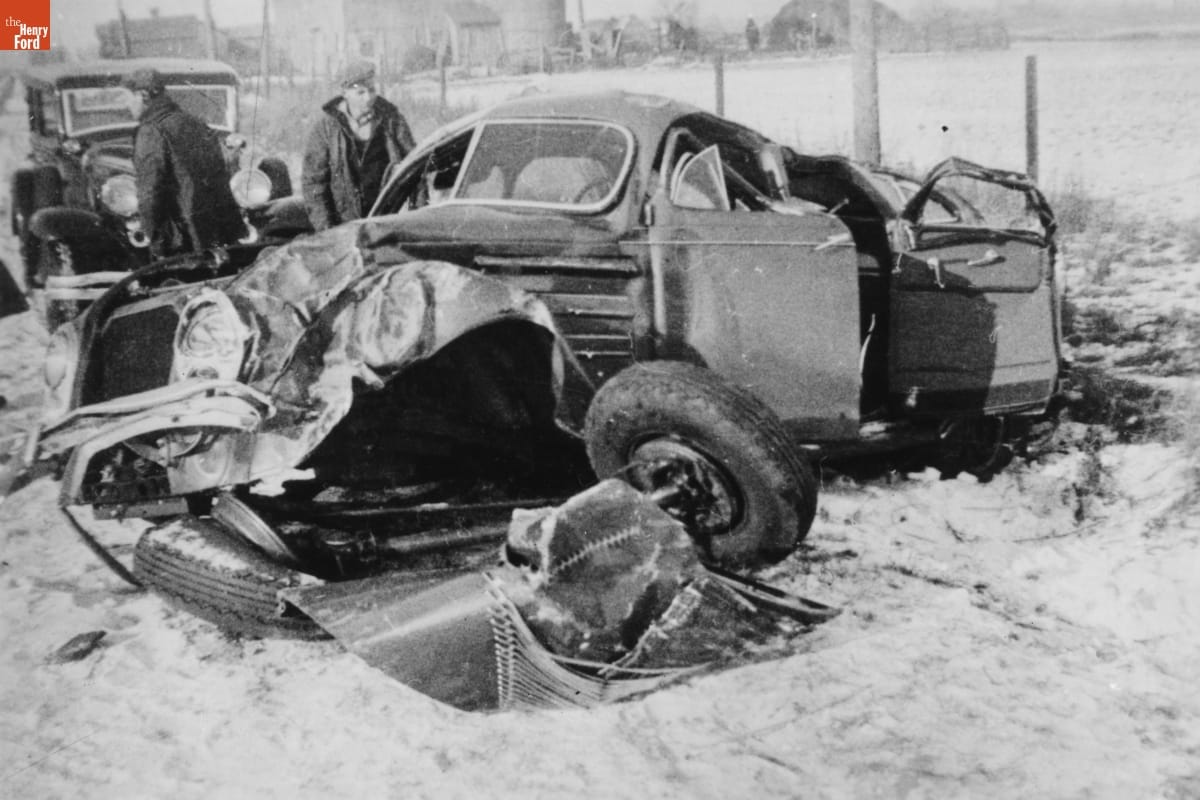
- Wreckage of a Chrysler Airflow Car at the Accident Scene, 1934 - Here, two men inspect the wreckage of a Chrysler Airflow on a wintry day in 1934. Until the 1950s, car manufacturers and buyers were more focused on styling and horsepower than reducing drivers' and passengers' risks. Since the late 1960s, Americans have generally accepted increasing regulation of cars and drivers, and gradually become more willing to pay for safety features.
- March 21, 1934
- Collections - Artifact
Wreckage of a Chrysler Airflow Car at the Accident Scene, 1934
Here, two men inspect the wreckage of a Chrysler Airflow on a wintry day in 1934. Until the 1950s, car manufacturers and buyers were more focused on styling and horsepower than reducing drivers' and passengers' risks. Since the late 1960s, Americans have generally accepted increasing regulation of cars and drivers, and gradually become more willing to pay for safety features.
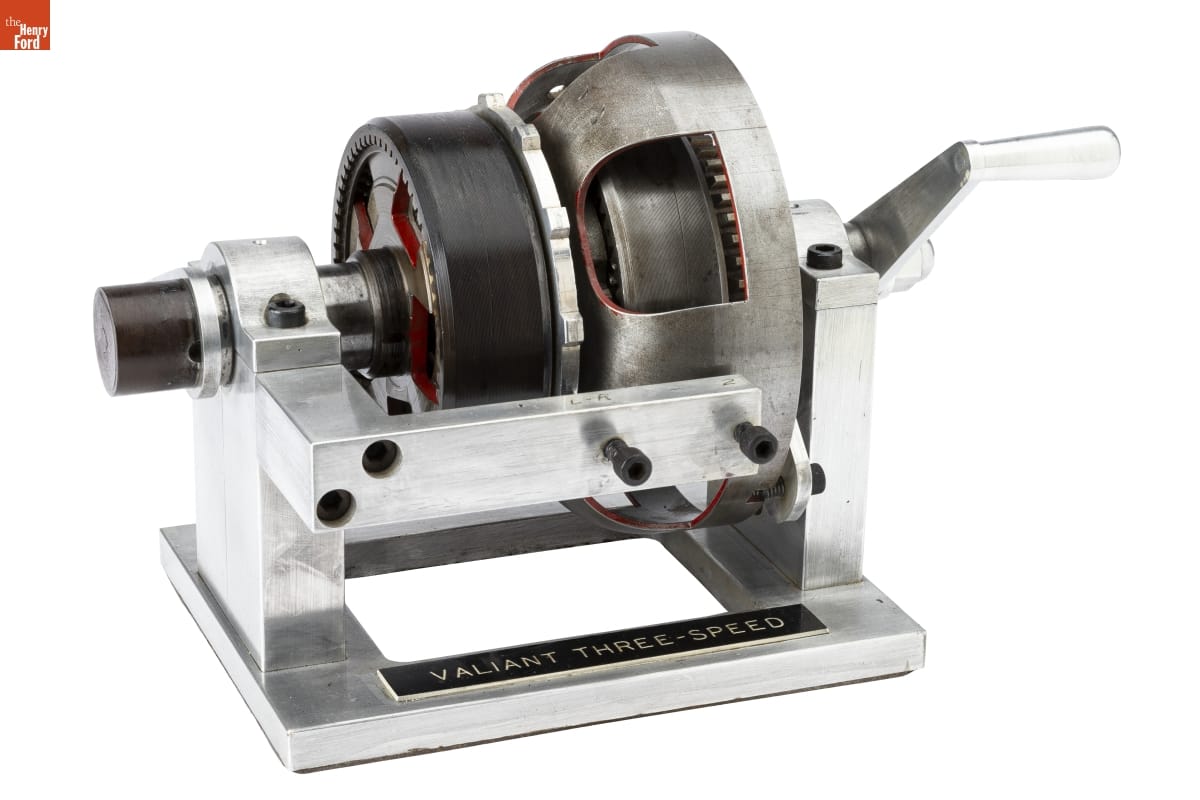
- Planetary Gearset Model, Made by Howard Simpson for Chrysler Corporation, circa 1959 - Following time at Ford Motor Company and Detroit Harvester, Howard Simpson retired to pursue work on planetary gearsets. His designs were licensed and manufactured by Ford, General Motors and Chrysler, and Simpson gearsets became common in automatic transmissions produced through the latter half of the 20th century. This model represents a three-speed unit created for Chrysler's Valiant compact car.
- circa 1959
- Collections - Artifact
Planetary Gearset Model, Made by Howard Simpson for Chrysler Corporation, circa 1959
Following time at Ford Motor Company and Detroit Harvester, Howard Simpson retired to pursue work on planetary gearsets. His designs were licensed and manufactured by Ford, General Motors and Chrysler, and Simpson gearsets became common in automatic transmissions produced through the latter half of the 20th century. This model represents a three-speed unit created for Chrysler's Valiant compact car.
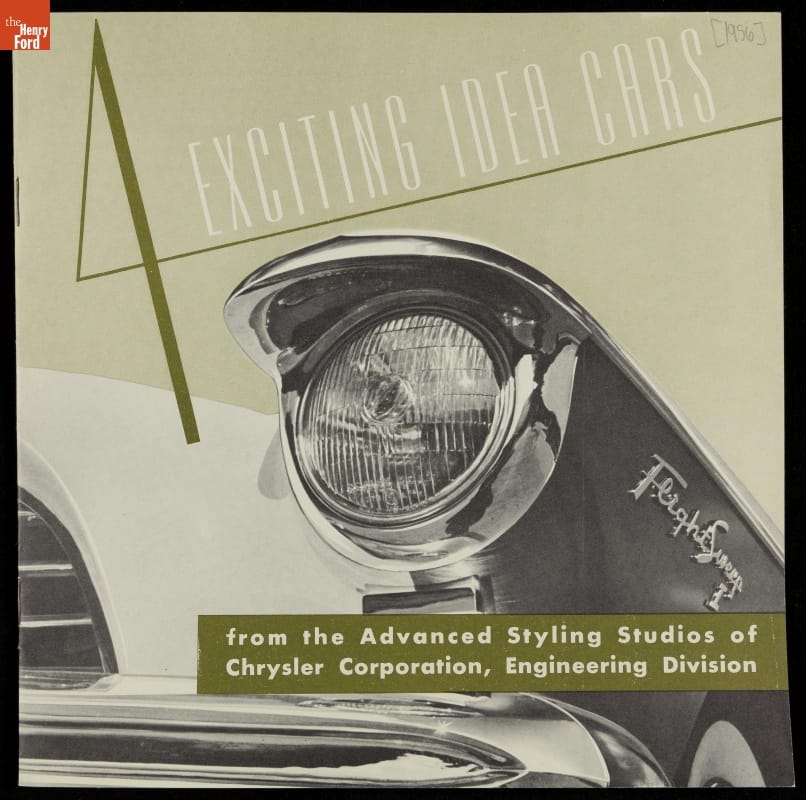
- "4 Exciting Idea Cars from the Advanced Styling Studios of Chrysler Corporation, Engineering Division," 1956 - Virgil Exner, Chrysler's design head from 1953 to 1961, introduced the Flight Sweep I concept convertible in 1955. A hardtop version, the Flight Sweep II, was also created. Built by Ghia of Italy, the Flight Sweep cars embodied the dramatic "Forward Look" -- characterized by tall tailfins and aggressive front ends -- seen on Chrysler's production cars from 1955 to 1961.
- 1956
- Collections - Artifact
"4 Exciting Idea Cars from the Advanced Styling Studios of Chrysler Corporation, Engineering Division," 1956
Virgil Exner, Chrysler's design head from 1953 to 1961, introduced the Flight Sweep I concept convertible in 1955. A hardtop version, the Flight Sweep II, was also created. Built by Ghia of Italy, the Flight Sweep cars embodied the dramatic "Forward Look" -- characterized by tall tailfins and aggressive front ends -- seen on Chrysler's production cars from 1955 to 1961.
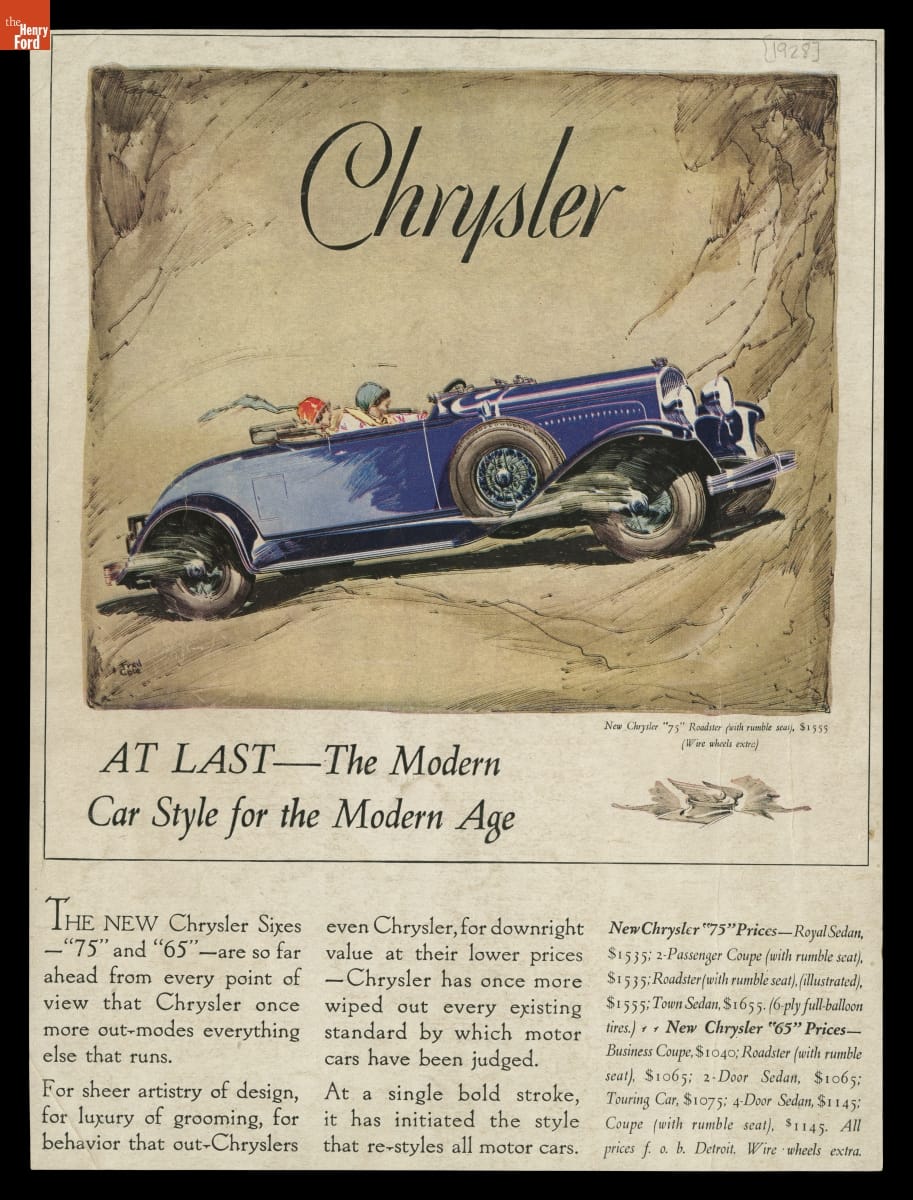
- "Chrysler At Last - The Modern Car Style for the Modern Age," 1928 - In this advertisement from late 1928, Chrysler boasted of new six-cylinder cars for 1929 that "wiped out every existing standard." Models for the new year featured narrower radiators, higher cowls, and full-crown fenders for a sleeker, more modern look. Prices ranged from $1,040 for the basic Series 65 Business Coupe to $1,655 for the four-door Series 75 Town Sedan.
- 1928
- Collections - Artifact
"Chrysler At Last - The Modern Car Style for the Modern Age," 1928
In this advertisement from late 1928, Chrysler boasted of new six-cylinder cars for 1929 that "wiped out every existing standard." Models for the new year featured narrower radiators, higher cowls, and full-crown fenders for a sleeker, more modern look. Prices ranged from $1,040 for the basic Series 65 Business Coupe to $1,655 for the four-door Series 75 Town Sedan.
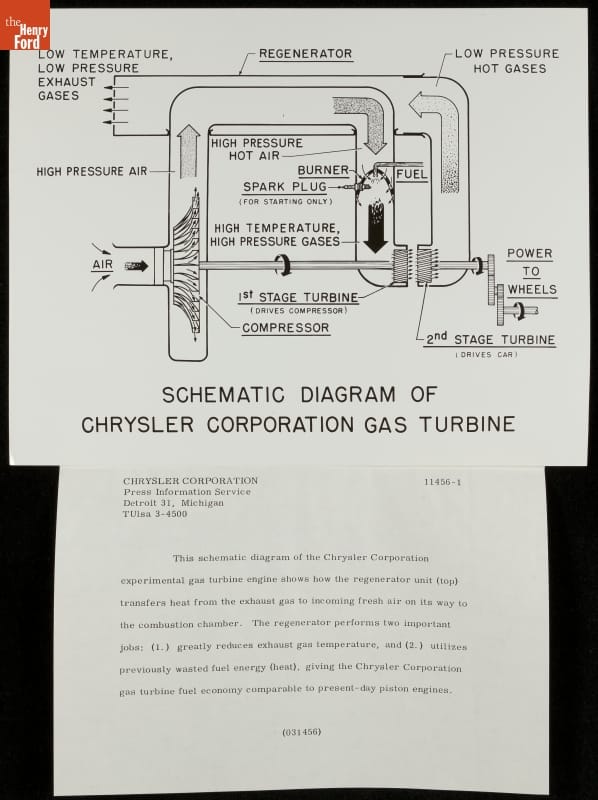
- Schematic Diagram of Chrysler Corporation Gas Turbine, 1950-1959 - In 1963, Chrysler lent 50 cars with gas turbine engines to potential customers. The engine's regenerator, shown in this diagram, was designed to increase fuel economy. Chrysler claimed its gas turbine engine would get comparable miles-per-gallon to a piston engine, but users complained about poor fuel economy. Rising gasoline prices ultimately killed the turbine dream.
- March 14, 1956
- Collections - Artifact
Schematic Diagram of Chrysler Corporation Gas Turbine, 1950-1959
In 1963, Chrysler lent 50 cars with gas turbine engines to potential customers. The engine's regenerator, shown in this diagram, was designed to increase fuel economy. Chrysler claimed its gas turbine engine would get comparable miles-per-gallon to a piston engine, but users complained about poor fuel economy. Rising gasoline prices ultimately killed the turbine dream.