
Search
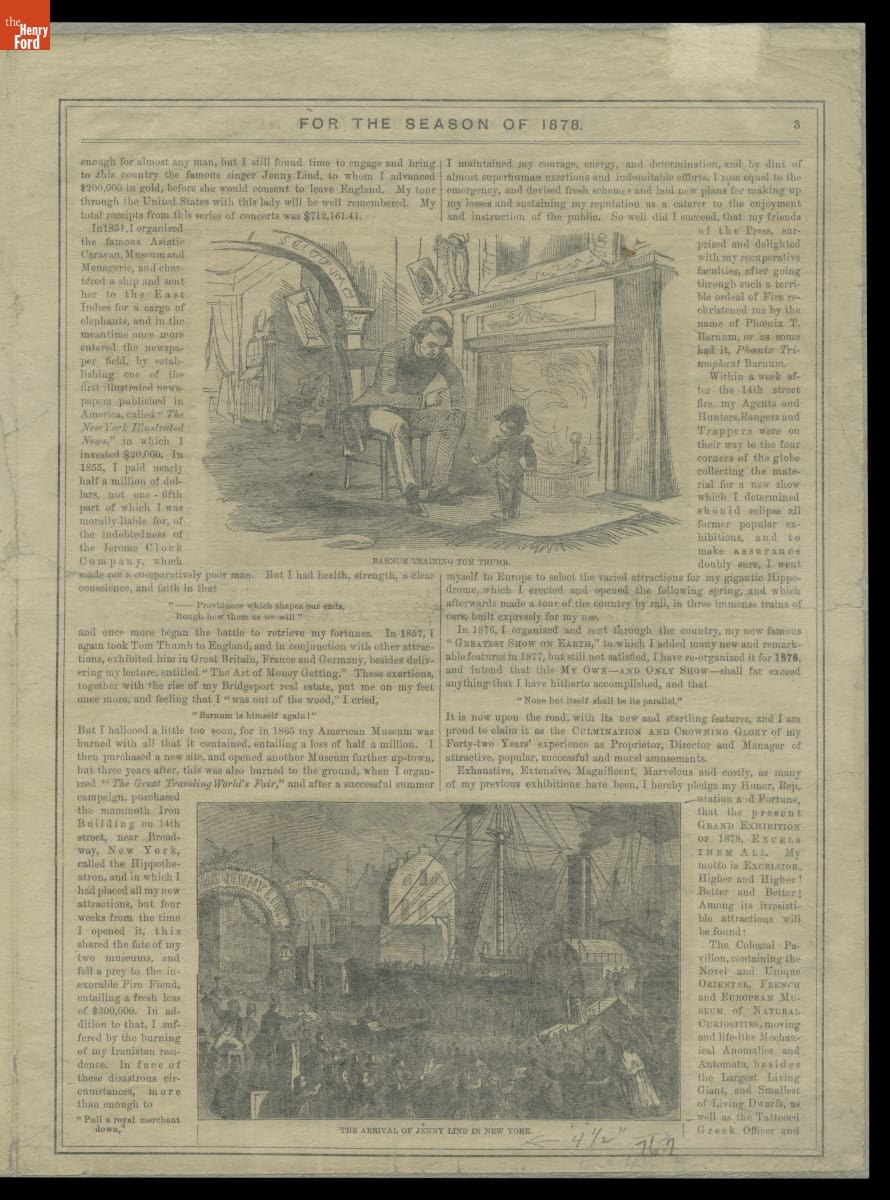
- "P.T. Barnum's Own Illustrated News for the Season of 1878" - Phineas Taylor (P.T.) Barnum (1810-1891) entered the circus business in 1876 after a 40-year career as a showman. In this presumably self-published newspaper, Barnum highlighted his past entertainment endeavor and announced his lineup for the 1878 "Greatest Show on Earth" circus. Barnum's circus featured animal menageries, clowns, automata, acrobatic horse-riders, and human "curiosities" such as Captain George Costentenus--a heavily tattooed man.
- 1878
- Collections - Artifact
"P.T. Barnum's Own Illustrated News for the Season of 1878"
Phineas Taylor (P.T.) Barnum (1810-1891) entered the circus business in 1876 after a 40-year career as a showman. In this presumably self-published newspaper, Barnum highlighted his past entertainment endeavor and announced his lineup for the 1878 "Greatest Show on Earth" circus. Barnum's circus featured animal menageries, clowns, automata, acrobatic horse-riders, and human "curiosities" such as Captain George Costentenus--a heavily tattooed man.
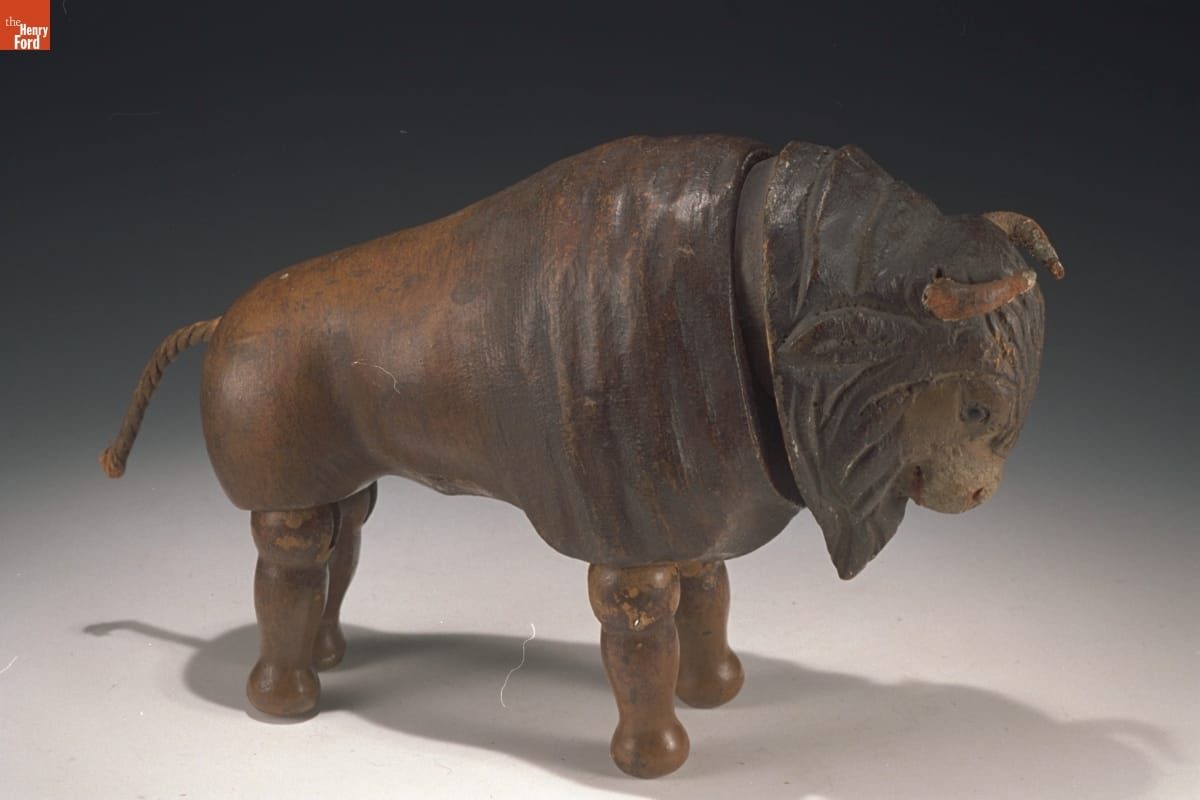
- Toy Bison, 1906-1918 - German immigrant Albert Schoenhut first patented the Humpty Dumpty Circus in 1903. He followed the high-quality tradition of German toymakers in manufacturing the many unusual and complex pieces for this toy circus. The jointed heads, arms, and legs on the wooden animals and figures used elasticized cords, which allowed them to be posed.
- 1906-1918
- Collections - Artifact
Toy Bison, 1906-1918
German immigrant Albert Schoenhut first patented the Humpty Dumpty Circus in 1903. He followed the high-quality tradition of German toymakers in manufacturing the many unusual and complex pieces for this toy circus. The jointed heads, arms, and legs on the wooden animals and figures used elasticized cords, which allowed them to be posed.
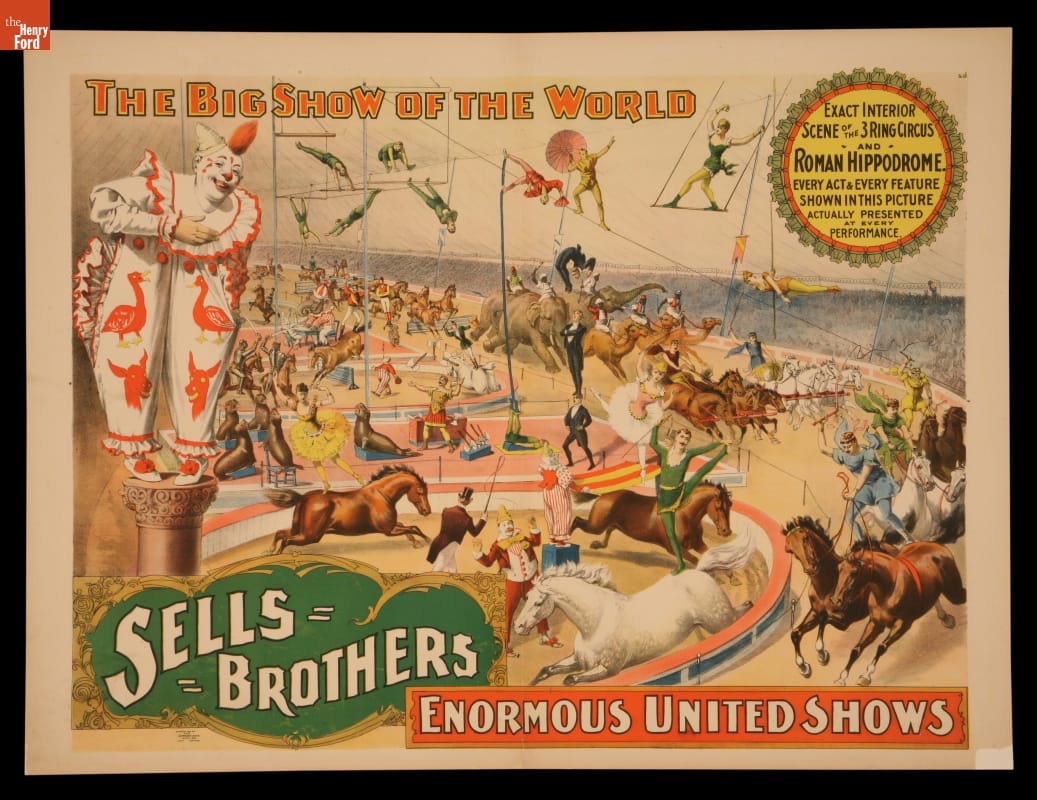
- Circus Poster, "Sells Brothers Enormous United Shows," 1893 - In the late nineteenth century, printers developed a lithograph method that produced brightly colored posters. In advance of a circus coming to town, general agents glued these eye-catching generic posters to building walls, fences, and in window displays. To announce when and where the performances would happen, local printers sometimes provided letterpress paper date strips to paste onto the posters' lower margin.
- 1893
- Collections - Artifact
Circus Poster, "Sells Brothers Enormous United Shows," 1893
In the late nineteenth century, printers developed a lithograph method that produced brightly colored posters. In advance of a circus coming to town, general agents glued these eye-catching generic posters to building walls, fences, and in window displays. To announce when and where the performances would happen, local printers sometimes provided letterpress paper date strips to paste onto the posters' lower margin.
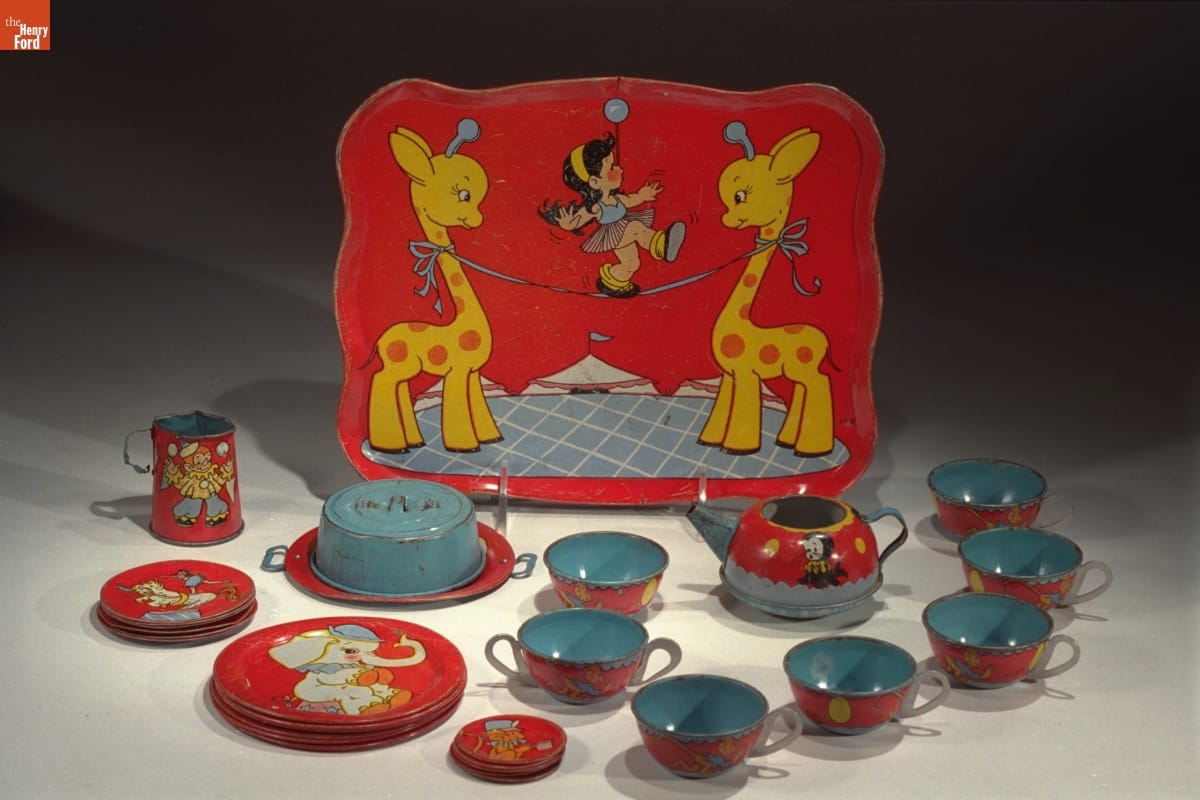
- Toy Tea Set, 1951-1954 - The Ohio Art Company, founded in 1908 in Archbold, Ohio, first produced picture frames. They greatly expanded their toy line during World War I, when the United States stopped importing German toys. In 1920, they began to market tea sets and in 1949, this circus tea set was introduced.
- 1951-1954
- Collections - Artifact
Toy Tea Set, 1951-1954
The Ohio Art Company, founded in 1908 in Archbold, Ohio, first produced picture frames. They greatly expanded their toy line during World War I, when the United States stopped importing German toys. In 1920, they began to market tea sets and in 1949, this circus tea set was introduced.
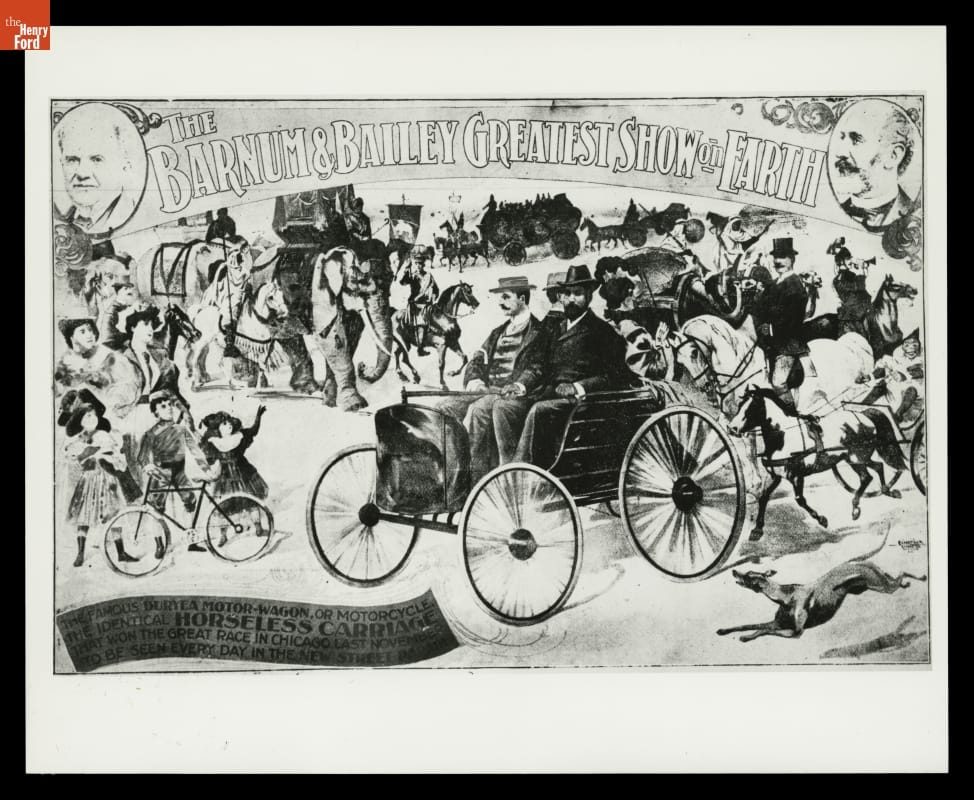
- Barnum & Bailey Circus Poster with Illustration of Duryea Motor Wagon, 1896 - Early on, automobiles were more curiosities than practical transportation. This print shows an original Duryea displayed by the Barnum and Bailey Circus. Duryea Motor Wagon Company was formed in 1895 as the first American company to try to make a business of building and selling gasoline-powered automobiles.
- 1896
- Collections - Artifact
Barnum & Bailey Circus Poster with Illustration of Duryea Motor Wagon, 1896
Early on, automobiles were more curiosities than practical transportation. This print shows an original Duryea displayed by the Barnum and Bailey Circus. Duryea Motor Wagon Company was formed in 1895 as the first American company to try to make a business of building and selling gasoline-powered automobiles.
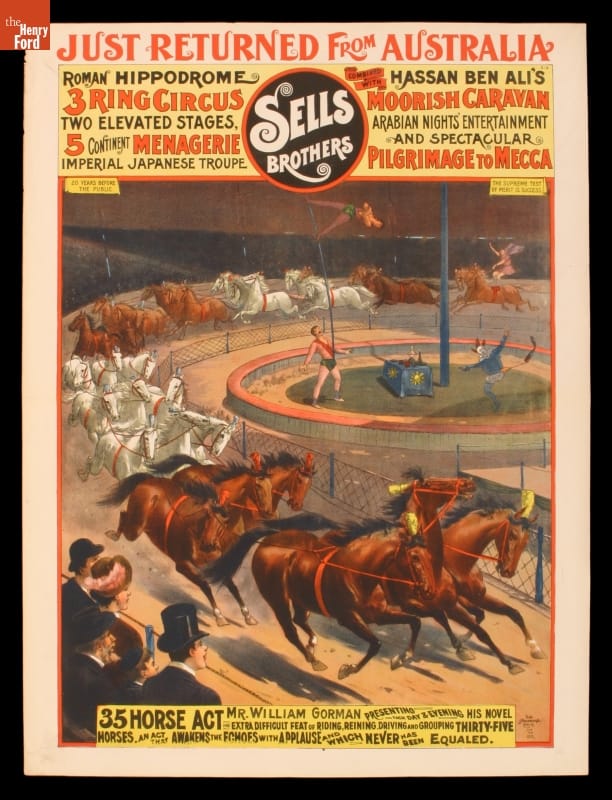
- Circus Poster, Sells Brothers, "35 Horse Act," circa 1892 -
- circa 1892
- Collections - Artifact
Circus Poster, Sells Brothers, "35 Horse Act," circa 1892
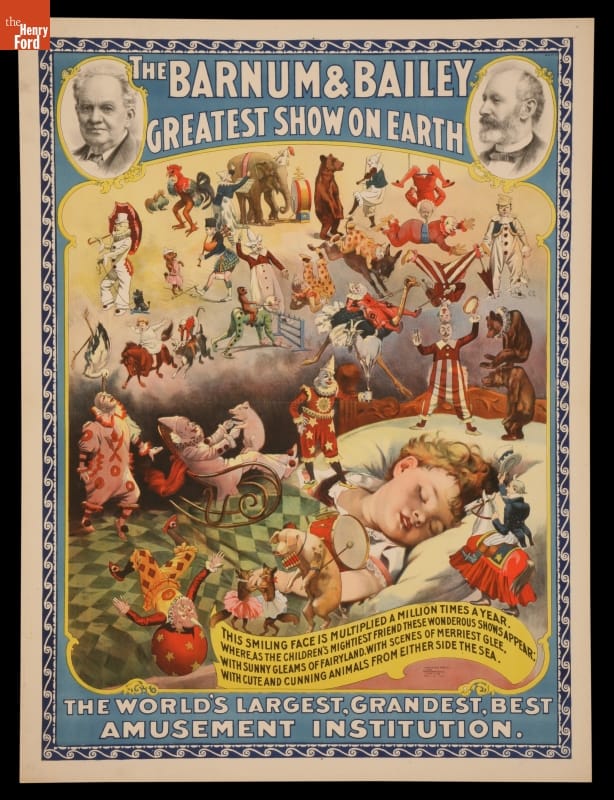
- Circus Poster, Barnum & Bailey, A Child Dreaming of a Circus, 1896 - In the late nineteenth century, printers developed a lithograph method that produced brightly colored posters. In advance of a circus coming to town, general agents glued these eye-catching generic posters to building walls, fences, and in window displays. To announce when and where the performances would happen, local printers sometimes provided letterpress paper date strips to paste onto the posters' lower margin.
- 1896
- Collections - Artifact
Circus Poster, Barnum & Bailey, A Child Dreaming of a Circus, 1896
In the late nineteenth century, printers developed a lithograph method that produced brightly colored posters. In advance of a circus coming to town, general agents glued these eye-catching generic posters to building walls, fences, and in window displays. To announce when and where the performances would happen, local printers sometimes provided letterpress paper date strips to paste onto the posters' lower margin.
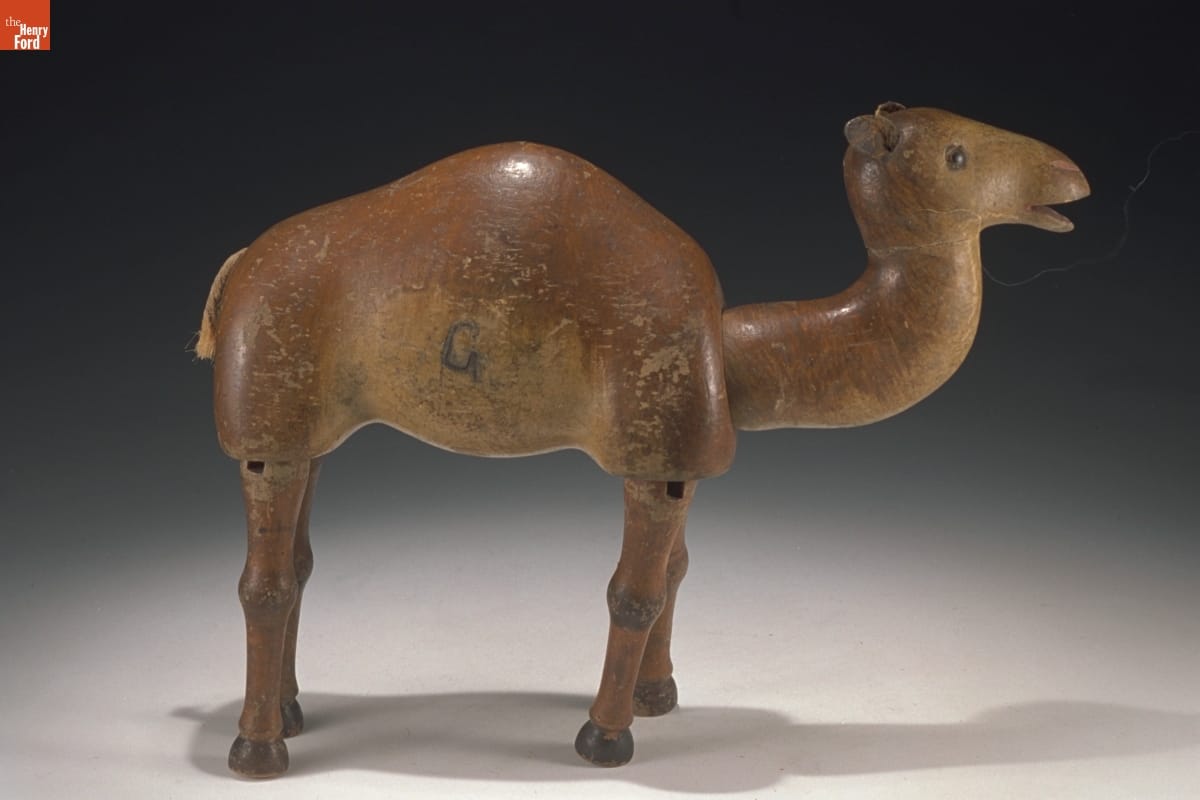
- Toy Camel, 1906-1918 - German immigrant Albert Schoenhut first patented the Humpty Dumpty Circus in 1903. He followed the high-quality tradition of German toymakers in manufacturing the many unusual and complex pieces for this toy circus. The jointed heads, arms, and legs on the wooden animals and figures used elasticized cords, which allowed them to be posed.
- 1906-1918
- Collections - Artifact
Toy Camel, 1906-1918
German immigrant Albert Schoenhut first patented the Humpty Dumpty Circus in 1903. He followed the high-quality tradition of German toymakers in manufacturing the many unusual and complex pieces for this toy circus. The jointed heads, arms, and legs on the wooden animals and figures used elasticized cords, which allowed them to be posed.
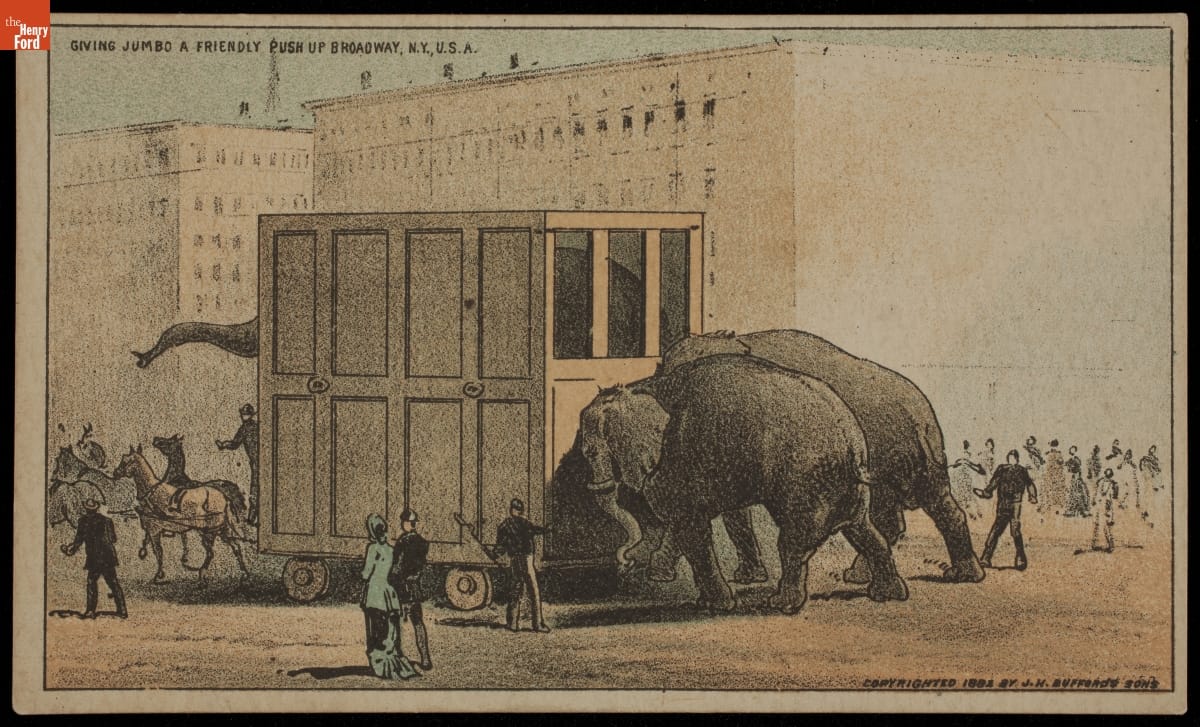
- Trade Card Advertising Jumbo the Elephant, 1882 - Showman P. T. Barnum purchased Jumbo, an 11-foot, 6-ton African elephant, from the London Zoo in 1882. Barnum shipped the giant pachyderm to America to star in his circus. Jumbo became a national sensation. Manufacturers and merchants capitalized on Jumbo's popularity by referencing the elephant in advertising materials like trade cards. This card depicts Jumbo receiving a "friendly push" through New York City.
- 1882
- Collections - Artifact
Trade Card Advertising Jumbo the Elephant, 1882
Showman P. T. Barnum purchased Jumbo, an 11-foot, 6-ton African elephant, from the London Zoo in 1882. Barnum shipped the giant pachyderm to America to star in his circus. Jumbo became a national sensation. Manufacturers and merchants capitalized on Jumbo's popularity by referencing the elephant in advertising materials like trade cards. This card depicts Jumbo receiving a "friendly push" through New York City.
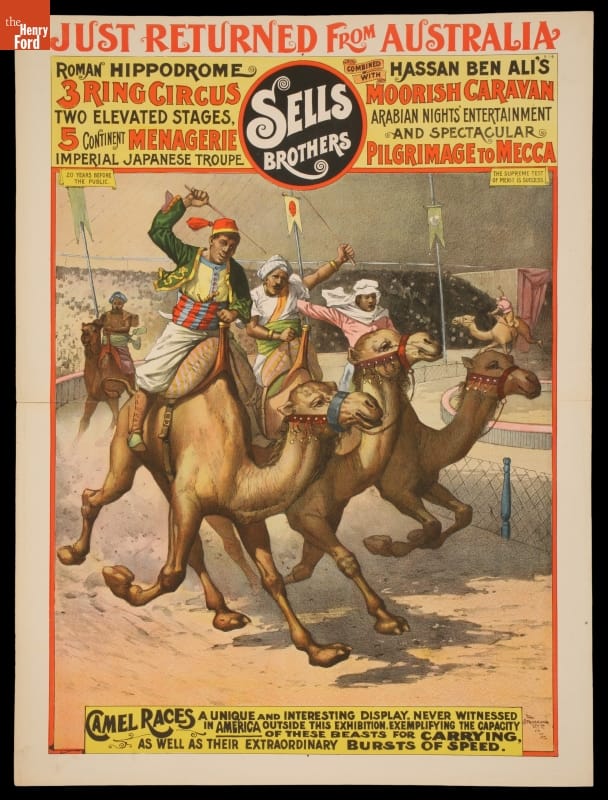
- Circus Poster, Sells Brothers, "Camel Races," circa 1892 -
- circa 1892
- Collections - Artifact
Circus Poster, Sells Brothers, "Camel Races," circa 1892