
Search
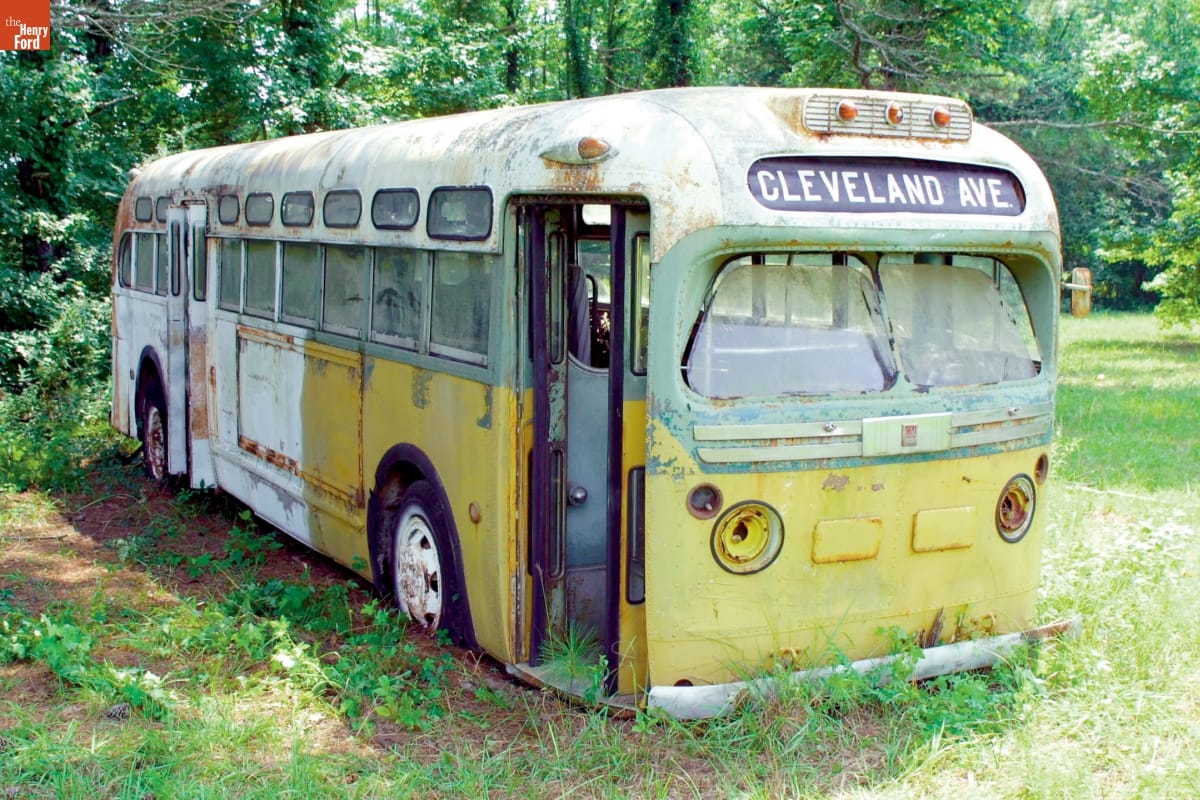
- Rosa Parks Bus in Montgomery, Alabama, 2000-2001, before Acquisition by The Henry Ford - This bus, the site of Rosa Parks's stand against segregation laws, sat as a rusted storage shed before The Henry Ford acquired it and began a full restoration. Parks's act of defiance on December 1, 1955, sparked the Montgomery Bus Boycott, which helped to ignite the Civil Rights Movement. Today, the restored bus survives as a reminder of her courageous activism.
- 2000-2001
- Collections - Artifact
Rosa Parks Bus in Montgomery, Alabama, 2000-2001, before Acquisition by The Henry Ford
This bus, the site of Rosa Parks's stand against segregation laws, sat as a rusted storage shed before The Henry Ford acquired it and began a full restoration. Parks's act of defiance on December 1, 1955, sparked the Montgomery Bus Boycott, which helped to ignite the Civil Rights Movement. Today, the restored bus survives as a reminder of her courageous activism.
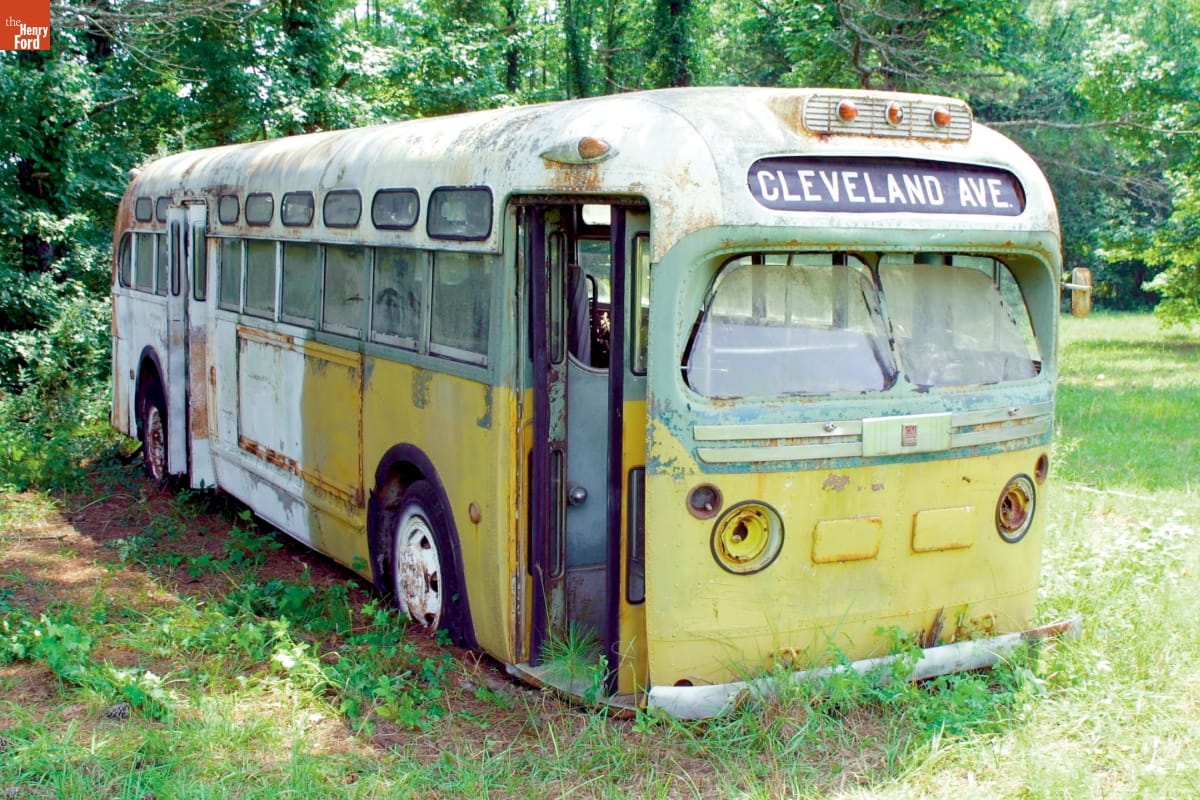
- Rosa Parks Bus in Montgomery, Alabama, 2000-2001, before Acquisition by The Henry Ford - This bus, the site of Rosa Parks's stand against segregation laws, sat as a rusted storage shed before The Henry Ford acquired it and began a full restoration. Parks's act of defiance on December 1, 1955, sparked the Montgomery Bus Boycott, which helped to ignite the Civil Rights Movement. Today, the restored bus survives as a reminder of her courageous activism.
- 2000-2001
- Collections - Artifact
Rosa Parks Bus in Montgomery, Alabama, 2000-2001, before Acquisition by The Henry Ford
This bus, the site of Rosa Parks's stand against segregation laws, sat as a rusted storage shed before The Henry Ford acquired it and began a full restoration. Parks's act of defiance on December 1, 1955, sparked the Montgomery Bus Boycott, which helped to ignite the Civil Rights Movement. Today, the restored bus survives as a reminder of her courageous activism.
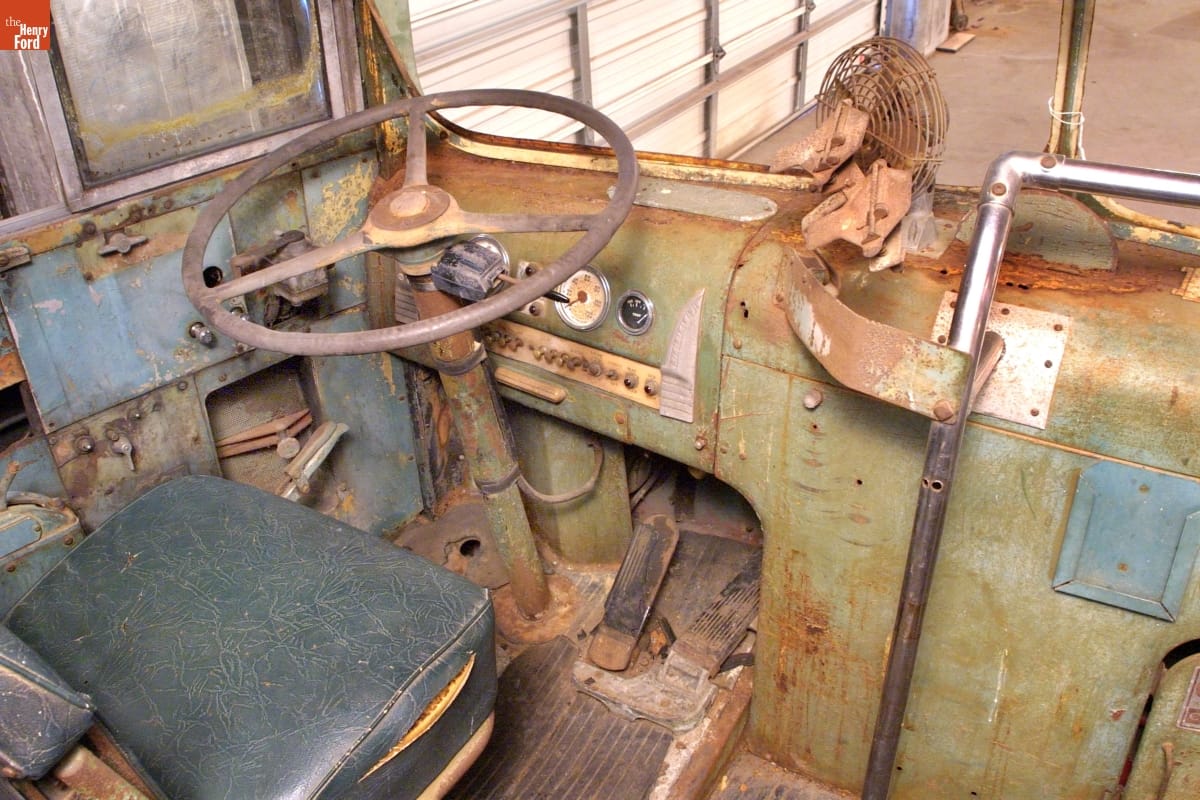
- Rosa Parks Bus before Restoration, Interior, Driver's Area, March 2002 - This bus, the site of Rosa Parks's stand against segregation laws, sat as a rusted storage shed before The Henry Ford acquired it and began a full restoration. Parks's act of defiance on December 1, 1955, sparked the Montgomery Bus Boycott, which helped to ignite the Civil Rights Movement. Today, the restored bus survives as a reminder of her courageous activism.
- March 01, 2002
- Collections - Artifact
Rosa Parks Bus before Restoration, Interior, Driver's Area, March 2002
This bus, the site of Rosa Parks's stand against segregation laws, sat as a rusted storage shed before The Henry Ford acquired it and began a full restoration. Parks's act of defiance on December 1, 1955, sparked the Montgomery Bus Boycott, which helped to ignite the Civil Rights Movement. Today, the restored bus survives as a reminder of her courageous activism.
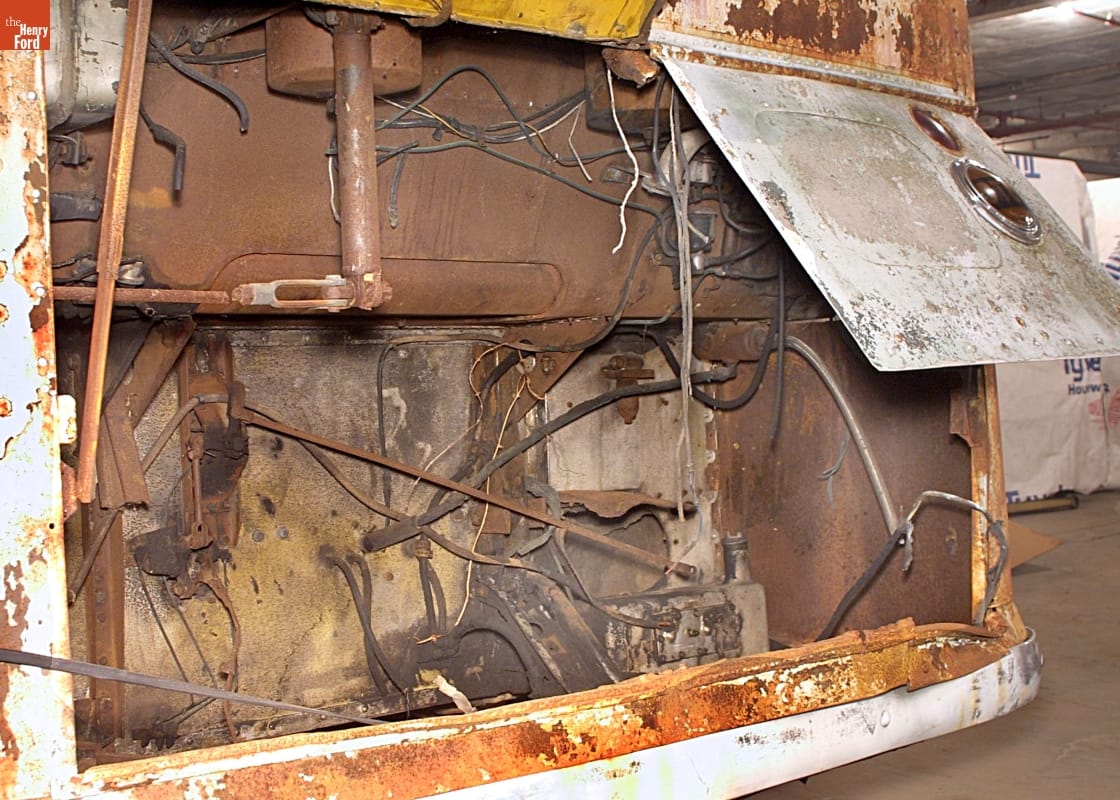
- Rosa Parks Bus before Restoration, Rear Engine Compartment, March 2002 - This bus, the site of Rosa Parks's stand against segregation laws, sat as a rusted storage shed before The Henry Ford acquired it and began a full restoration. Parks's act of defiance on December 1, 1955, sparked the Montgomery Bus Boycott, which helped to ignite the Civil Rights Movement. Today, the restored bus survives as a reminder of her courageous activism.
- March 01, 2002
- Collections - Artifact
Rosa Parks Bus before Restoration, Rear Engine Compartment, March 2002
This bus, the site of Rosa Parks's stand against segregation laws, sat as a rusted storage shed before The Henry Ford acquired it and began a full restoration. Parks's act of defiance on December 1, 1955, sparked the Montgomery Bus Boycott, which helped to ignite the Civil Rights Movement. Today, the restored bus survives as a reminder of her courageous activism.
- Rosa Parks Bus before Restoration, Exterior Detail, March 2002 - This bus, the site of Rosa Parks's stand against segregation laws, sat as a rusted storage shed before The Henry Ford acquired it and began a full restoration. Parks's act of defiance on December 1, 1955, sparked the Montgomery Bus Boycott, which helped to ignite the Civil Rights Movement. Today, the restored bus survives as a reminder of her courageous activism.

- March 01, 2002
- Collections - Artifact
Rosa Parks Bus before Restoration, Exterior Detail, March 2002
This bus, the site of Rosa Parks's stand against segregation laws, sat as a rusted storage shed before The Henry Ford acquired it and began a full restoration. Parks's act of defiance on December 1, 1955, sparked the Montgomery Bus Boycott, which helped to ignite the Civil Rights Movement. Today, the restored bus survives as a reminder of her courageous activism.
- Button, "I Won't Live with Jim Crow: Civil Rights Congress," circa 1948 - The term "Jim Crow" implied the systematic practice of discriminating against and segregating African Americans, especially in the American South, from the late 19th to the mid-20th centuries. The Civil Rights Congress (1946-1956) became a brief force in civil rights battles. However, with its ties to the American Communist Party, it became victim to Cold War anticommunism and government repression.
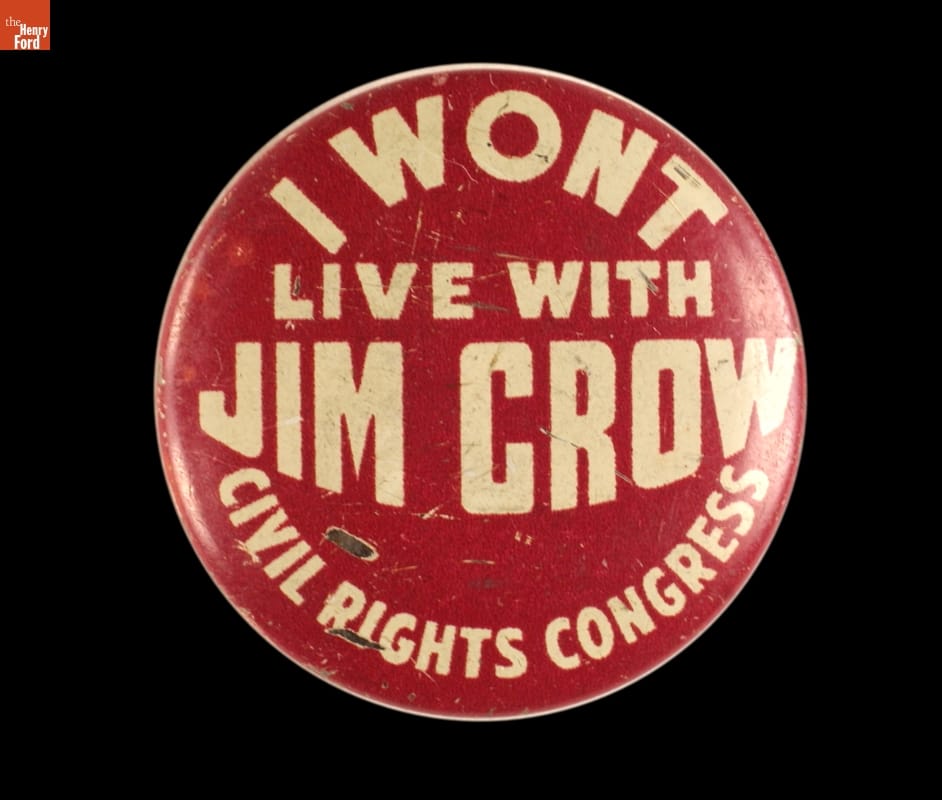
- circa 1948
- Collections - Artifact
Button, "I Won't Live with Jim Crow: Civil Rights Congress," circa 1948
The term "Jim Crow" implied the systematic practice of discriminating against and segregating African Americans, especially in the American South, from the late 19th to the mid-20th centuries. The Civil Rights Congress (1946-1956) became a brief force in civil rights battles. However, with its ties to the American Communist Party, it became victim to Cold War anticommunism and government repression.
- Letterpress Print, "Give Light and People Will Find the Way, Ella Baker," 2021 -
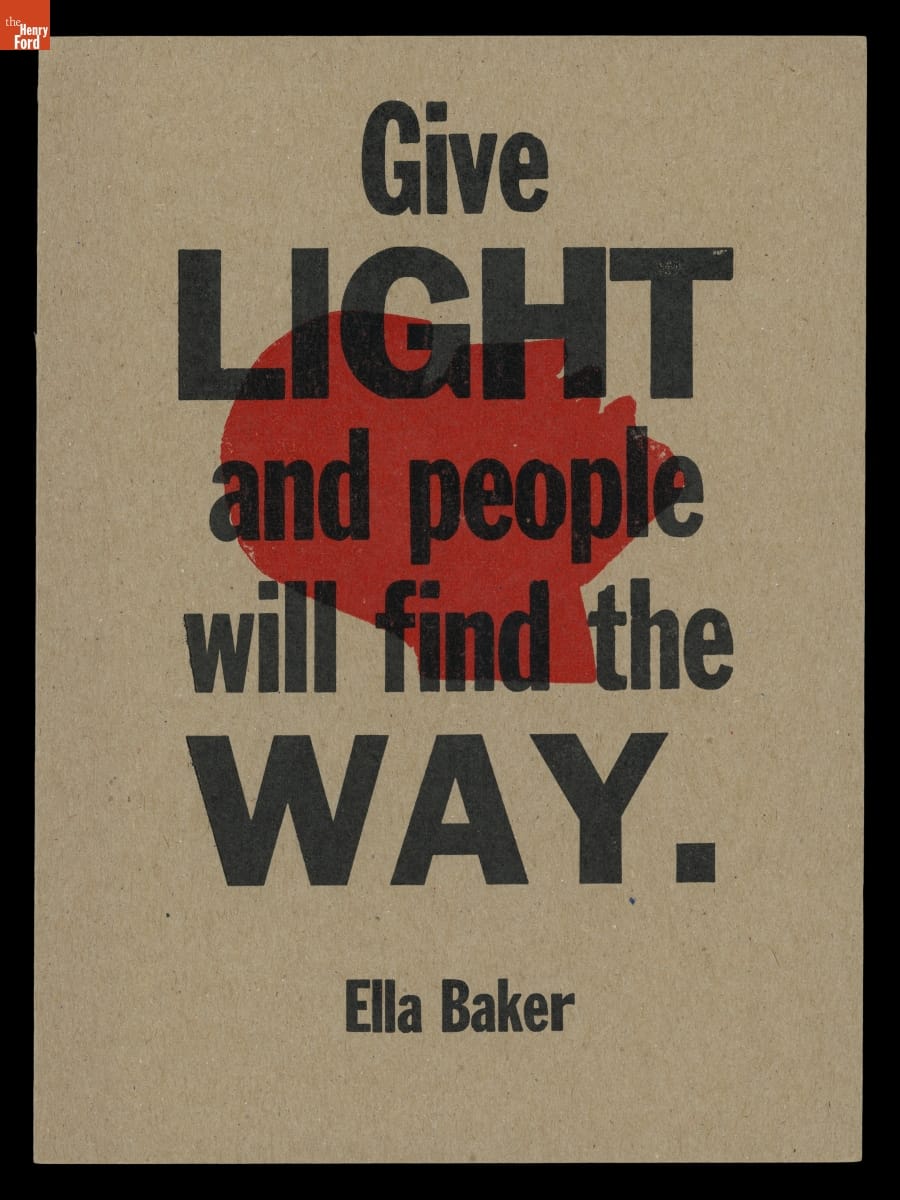
- 2021
- Collections - Artifact
Letterpress Print, "Give Light and People Will Find the Way, Ella Baker," 2021
- "CORE-Lator" Magazine, No. 86, February 1961 - The Congress of Racial Equality (CORE), founded in 1942, pioneered nonviolent civil rights activism. Members organized and participated in many sit-ins, freedom rides and other nonviolent actions during the Civil Rights era. This newsletter from 1961 pictures Jim Farmer, one of the founders of CORE, and informs readers about the continuing struggle to desegregate lunch counters throughout the country.
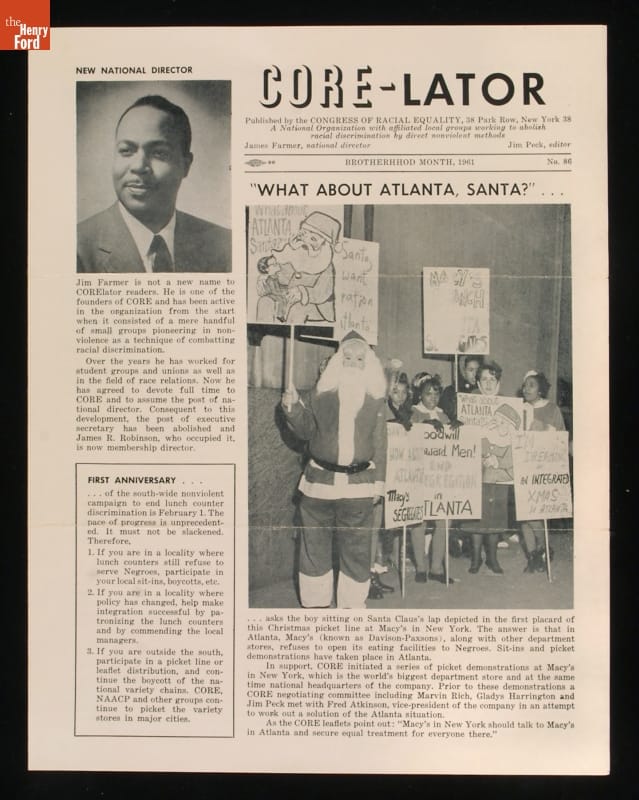
- February 01, 1961
- Collections - Artifact
"CORE-Lator" Magazine, No. 86, February 1961
The Congress of Racial Equality (CORE), founded in 1942, pioneered nonviolent civil rights activism. Members organized and participated in many sit-ins, freedom rides and other nonviolent actions during the Civil Rights era. This newsletter from 1961 pictures Jim Farmer, one of the founders of CORE, and informs readers about the continuing struggle to desegregate lunch counters throughout the country.
- "We Shall Overcome! A Jail Can Only Hold a Man's Body - His Mind and Heart Remain Free," 1963 - More than 250,000 civil rights advocates showed up at the 1963 March on Washington for Jobs and Freedom. This print, part of a souvenir portfolio made for the event, incorporated fragments of disturbing images from the movement. The artist intended these to symbolize man's inhumanity to his fellow man. Civil Rights activists hoped that they would stir people's emotions and incite action.
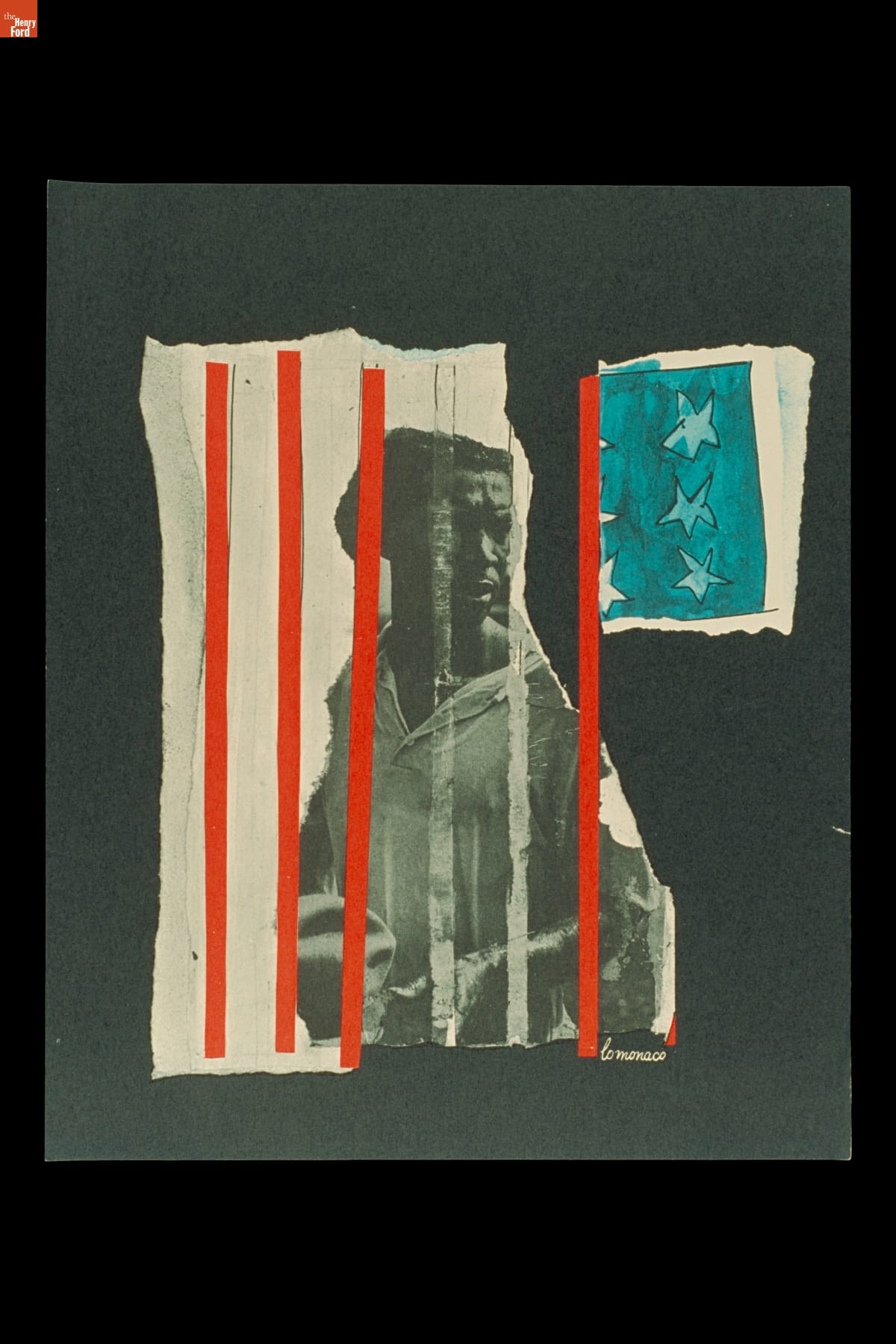
- August 28, 1963
- Collections - Artifact
"We Shall Overcome! A Jail Can Only Hold a Man's Body - His Mind and Heart Remain Free," 1963
More than 250,000 civil rights advocates showed up at the 1963 March on Washington for Jobs and Freedom. This print, part of a souvenir portfolio made for the event, incorporated fragments of disturbing images from the movement. The artist intended these to symbolize man's inhumanity to his fellow man. Civil Rights activists hoped that they would stir people's emotions and incite action.
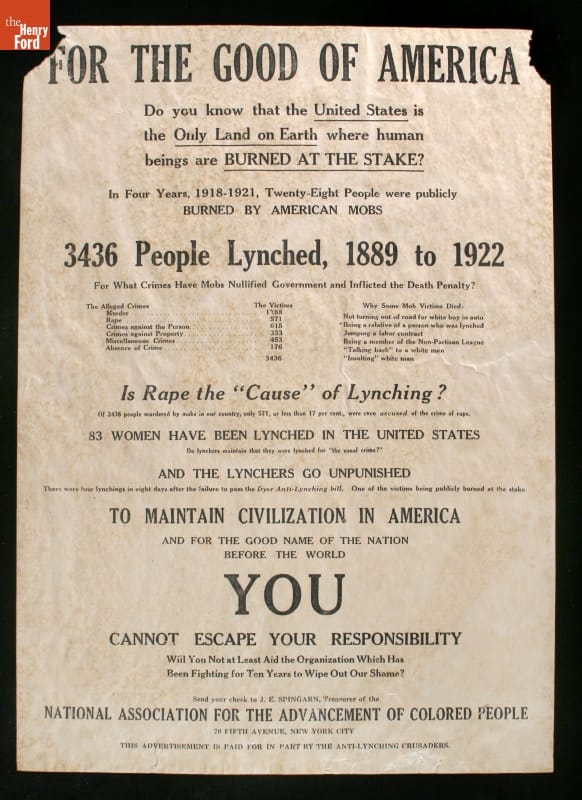
- "For the Good of America... You Cannot Escape Your Responsibility," 1923 - In 1912, the NAACP began a formal campaign to ban lynching. This 1923 broadside informed Americans about the numbers, causes and brutality of lynching. An anti-lynching bill was first introduced in Congress in 1918. A later version -- and others that followed -- failed to pass in the United States Senate. In June 2005, the Senate finally issued a formal apology for never having outlawed lynching.
- 1923
- Collections - Artifact
"For the Good of America... You Cannot Escape Your Responsibility," 1923
In 1912, the NAACP began a formal campaign to ban lynching. This 1923 broadside informed Americans about the numbers, causes and brutality of lynching. An anti-lynching bill was first introduced in Congress in 1918. A later version -- and others that followed -- failed to pass in the United States Senate. In June 2005, the Senate finally issued a formal apology for never having outlawed lynching.