
Search
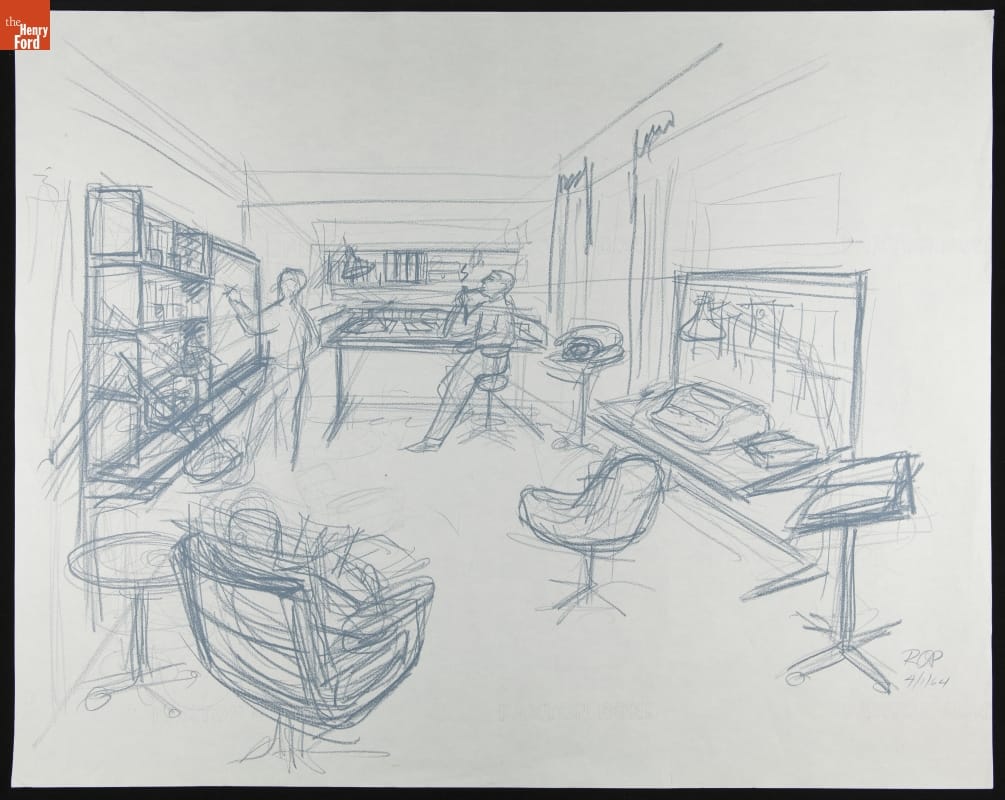
- Action Office Project Drawing by Robert Propst, April 1, 1964 - Action Office, conceptualized by Robert Propst with final design by George Nelson, was rooted in Propst's research into office function and worker behavior. The system was not a commercial success: manufacturing costs were high, and it was, in Propst's words, "too showy and bright for serious consideration as a middle management tool." Propst went on to design the hugely successful Action Office 2 cubicle-based system.
- April 01, 1964
- Collections - Artifact
Action Office Project Drawing by Robert Propst, April 1, 1964
Action Office, conceptualized by Robert Propst with final design by George Nelson, was rooted in Propst's research into office function and worker behavior. The system was not a commercial success: manufacturing costs were high, and it was, in Propst's words, "too showy and bright for serious consideration as a middle management tool." Propst went on to design the hugely successful Action Office 2 cubicle-based system.
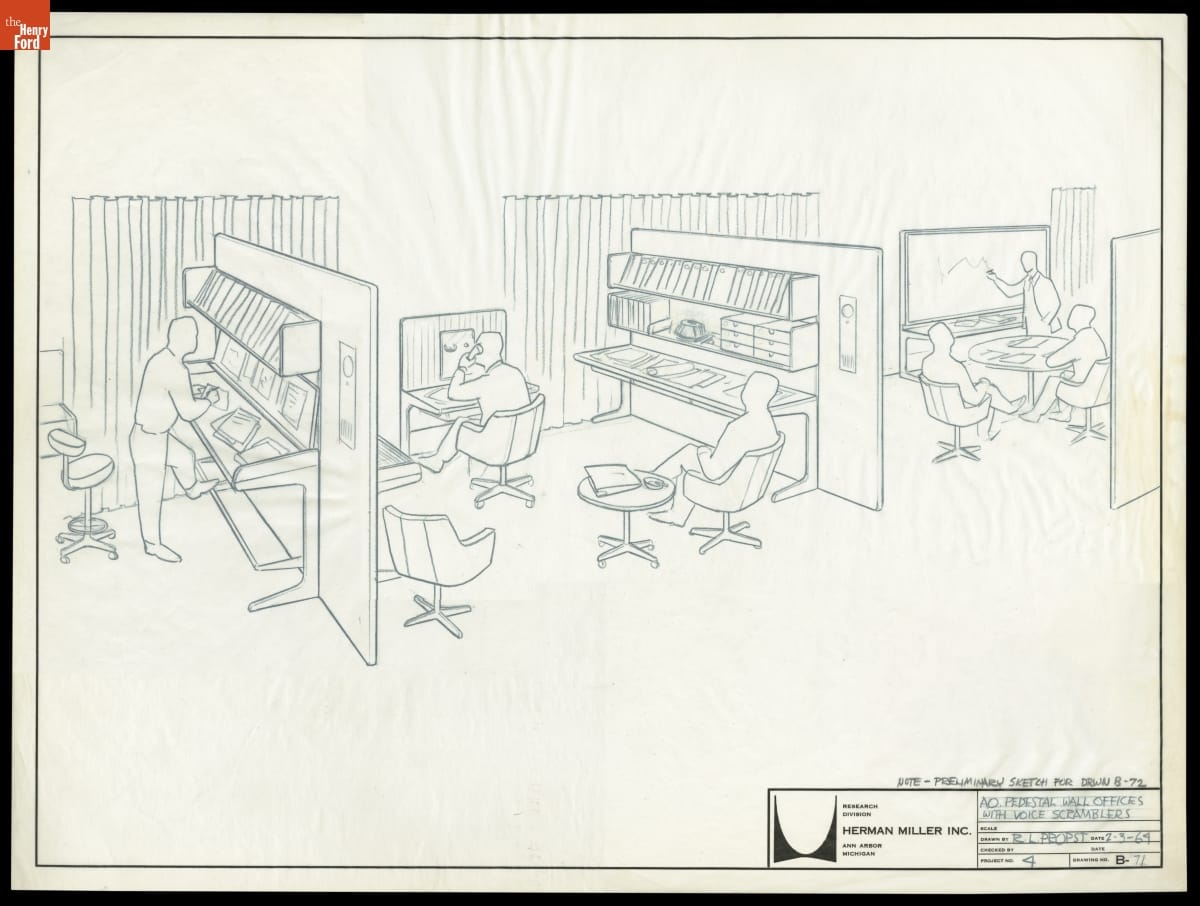
- Herman Miller Action Office Concept Drawing, "Action Office Pedestal Wall Offices with Voice Scramblers," February 3, 1964 -
- February 03, 1964
- Collections - Artifact
Herman Miller Action Office Concept Drawing, "Action Office Pedestal Wall Offices with Voice Scramblers," February 3, 1964
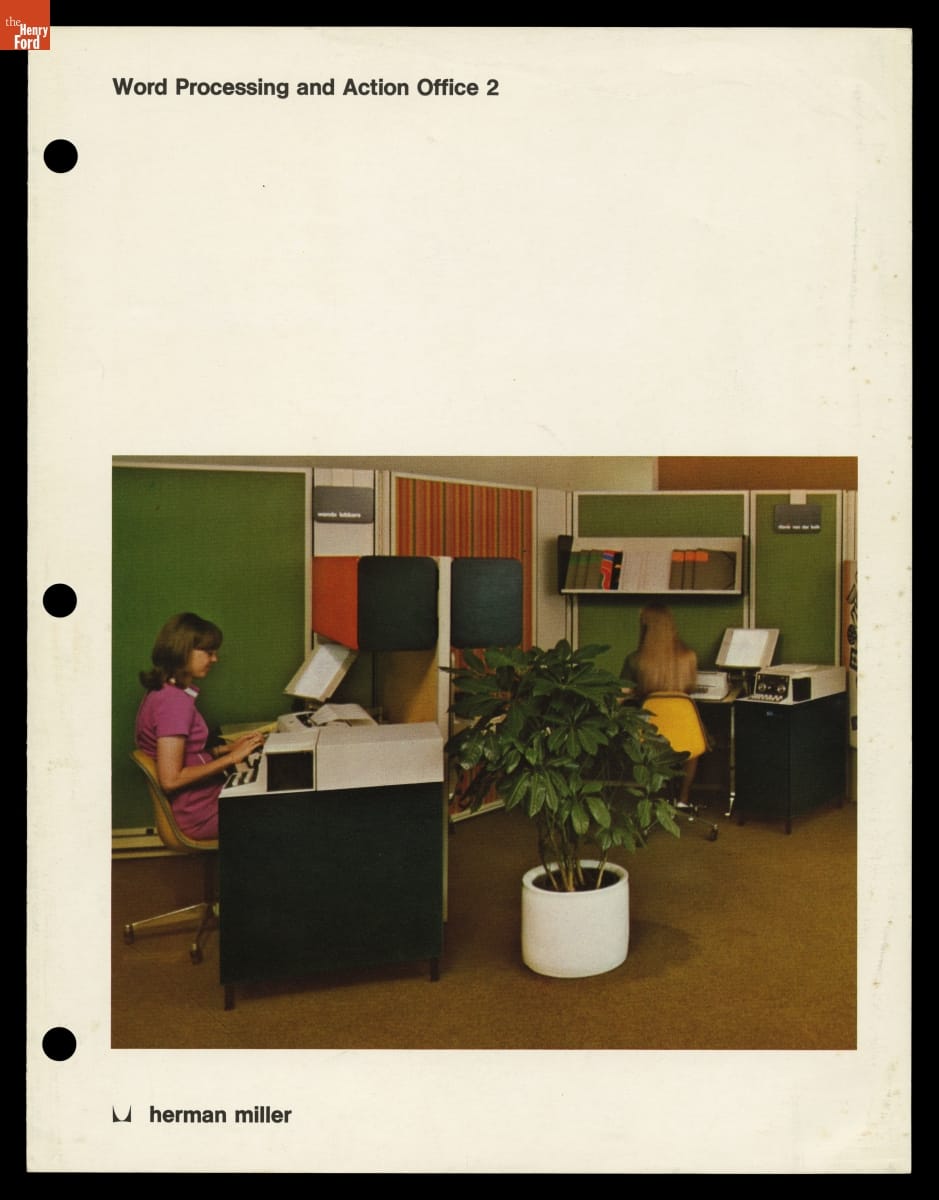
- Herman Miller Brochure, "Word Processing and Action Office 2," 1972 -
- 1972
- Collections - Artifact
Herman Miller Brochure, "Word Processing and Action Office 2," 1972
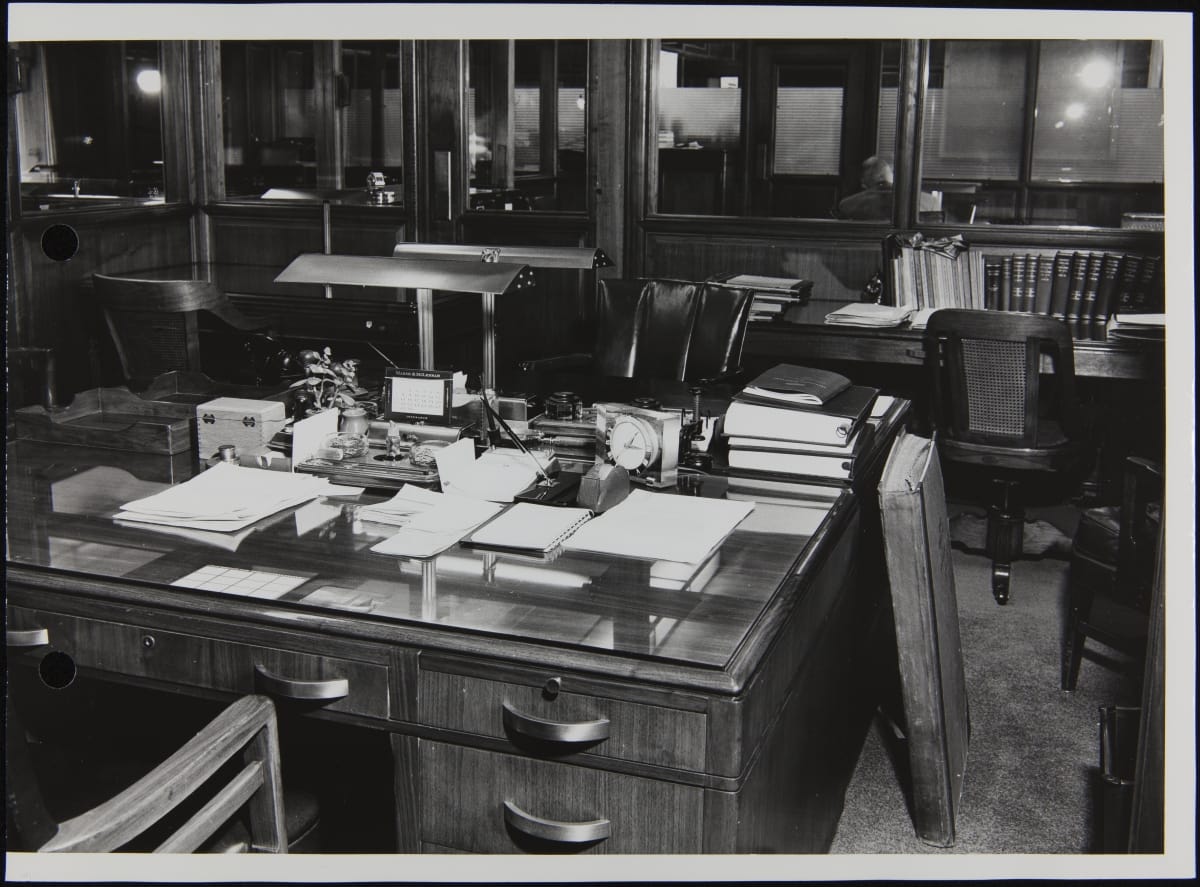
- Office of H. R. Waddell in the Ford Engineering Laboratory, September 1952 - In 1923, H.R. Waddell joined the mailing department at Dearborn Publishing Company -- one of Henry Ford's many businesses outside Ford Motor Company. The next year, he was transferred to the Office of Henry Ford, where he was given secretarial duties. Mr. Waddell's responsibilities increased over time. This photo shows his office in the Ford Engineering Laboratory.
- September 17, 1952
- Collections - Artifact
Office of H. R. Waddell in the Ford Engineering Laboratory, September 1952
In 1923, H.R. Waddell joined the mailing department at Dearborn Publishing Company -- one of Henry Ford's many businesses outside Ford Motor Company. The next year, he was transferred to the Office of Henry Ford, where he was given secretarial duties. Mr. Waddell's responsibilities increased over time. This photo shows his office in the Ford Engineering Laboratory.
- Group Portrait of Alfred O. Tate and Others at the Franklin Institute, December 3, 1935 -
- December 03, 1935
- Collections - Artifact
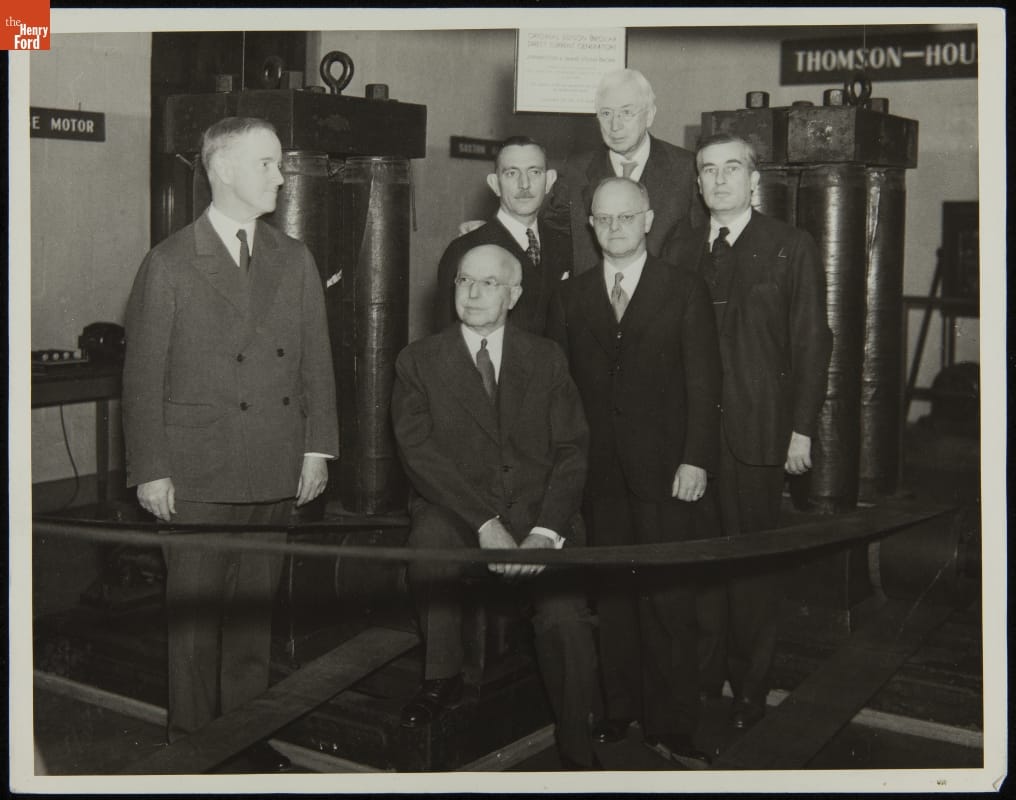
Group Portrait of Alfred O. Tate and Others at the Franklin Institute, December 3, 1935
- Secretary Mechanical Toy, 1950-1960 -
- 1950-1960
- Collections - Artifact
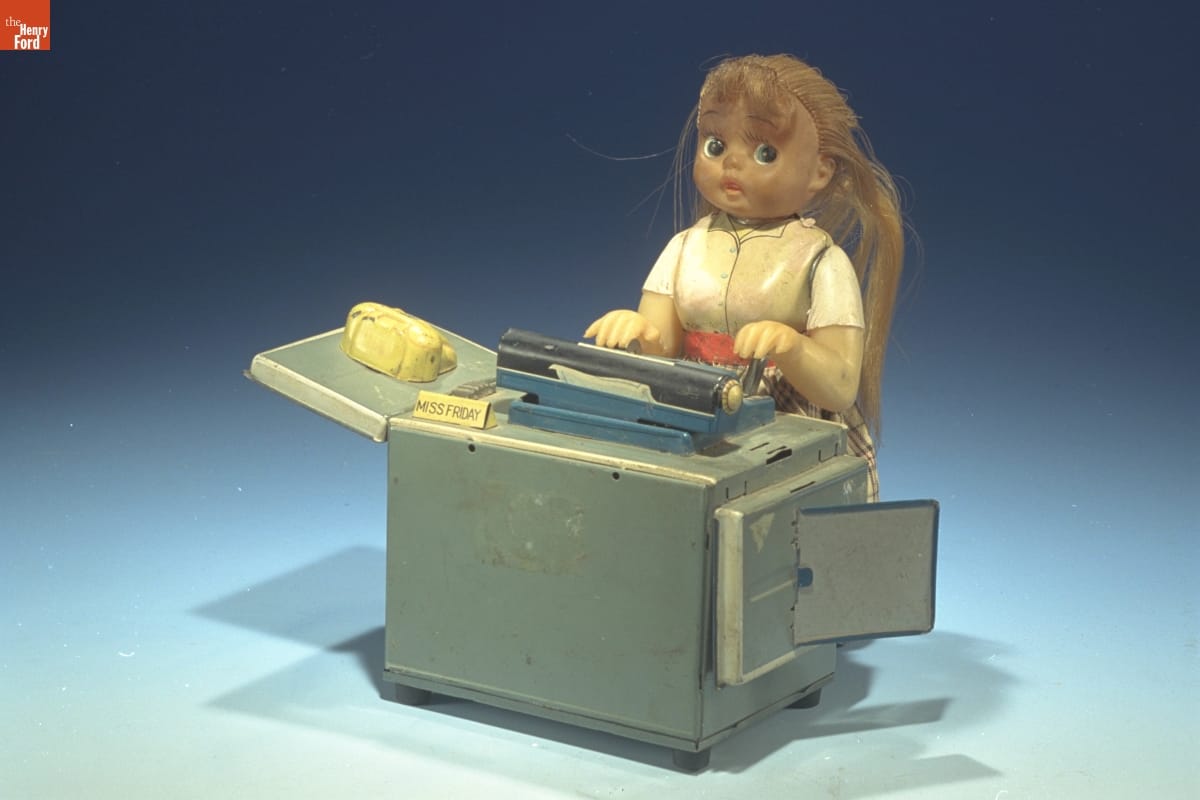
Secretary Mechanical Toy, 1950-1960
- Herman Miller Action Office System, circa 1968 -
- circa 1968
- Collections - Artifact
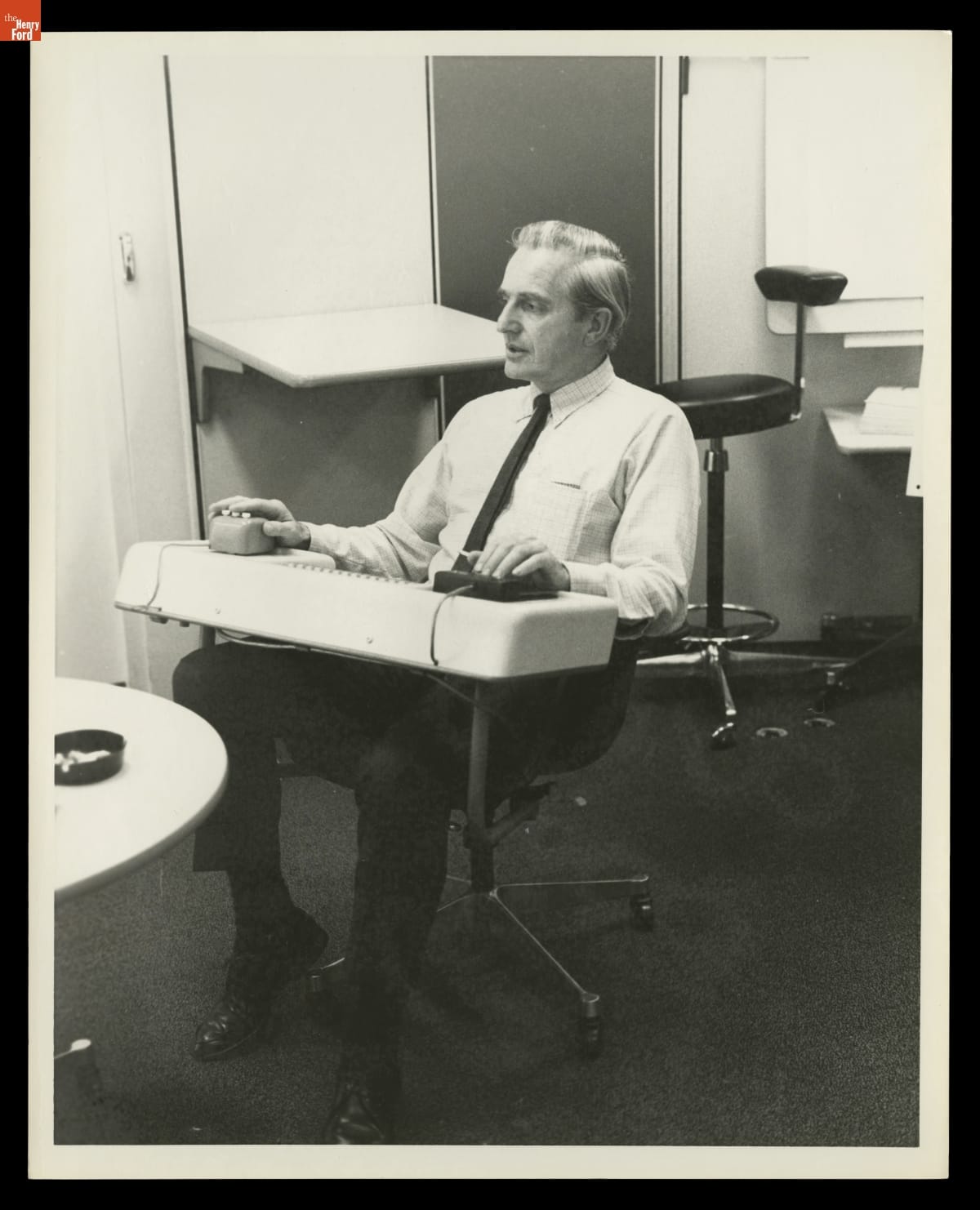
Herman Miller Action Office System, circa 1968
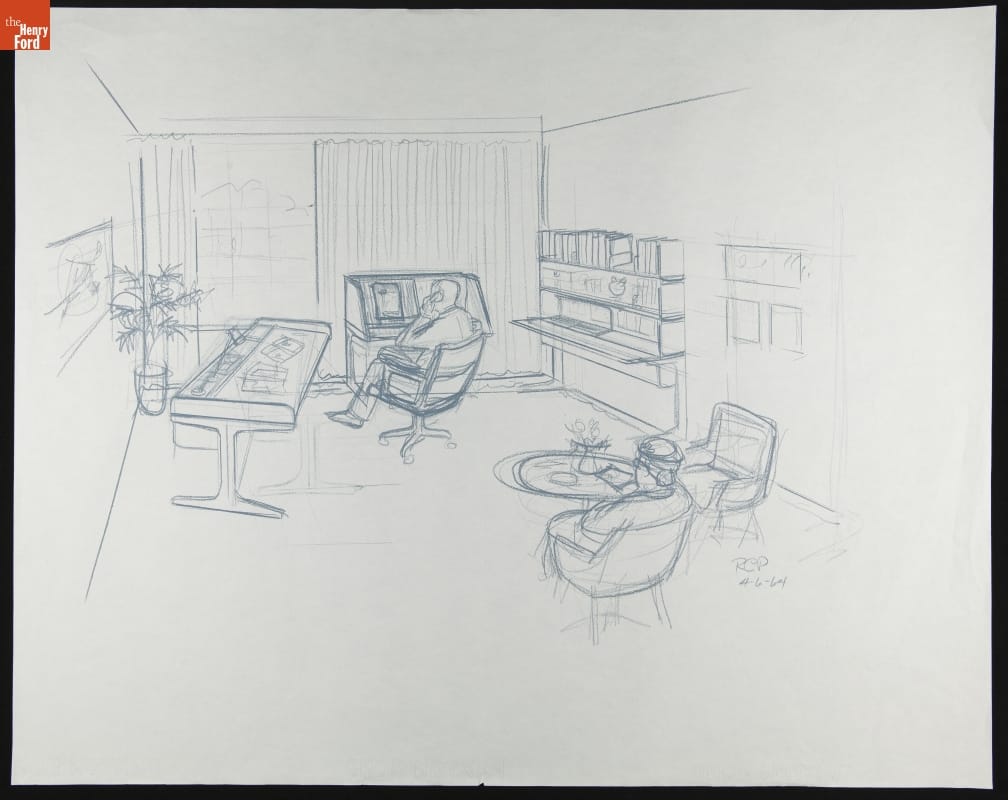
- Action Office Project Drawing by Robert Propst, April 6, 1964 - Action Office, conceptualized by Robert Propst with final design by George Nelson, was rooted in Propst's research into office function and worker behavior. The system was not a commercial success: manufacturing costs were high, and it was, in Propst's words, "too showy and bright for serious consideration as a middle management tool." Propst went on to design the hugely successful Action Office 2 cubicle-based system.
- April 06, 1964
- Collections - Artifact
Action Office Project Drawing by Robert Propst, April 6, 1964
Action Office, conceptualized by Robert Propst with final design by George Nelson, was rooted in Propst's research into office function and worker behavior. The system was not a commercial success: manufacturing costs were high, and it was, in Propst's words, "too showy and bright for serious consideration as a middle management tool." Propst went on to design the hugely successful Action Office 2 cubicle-based system.
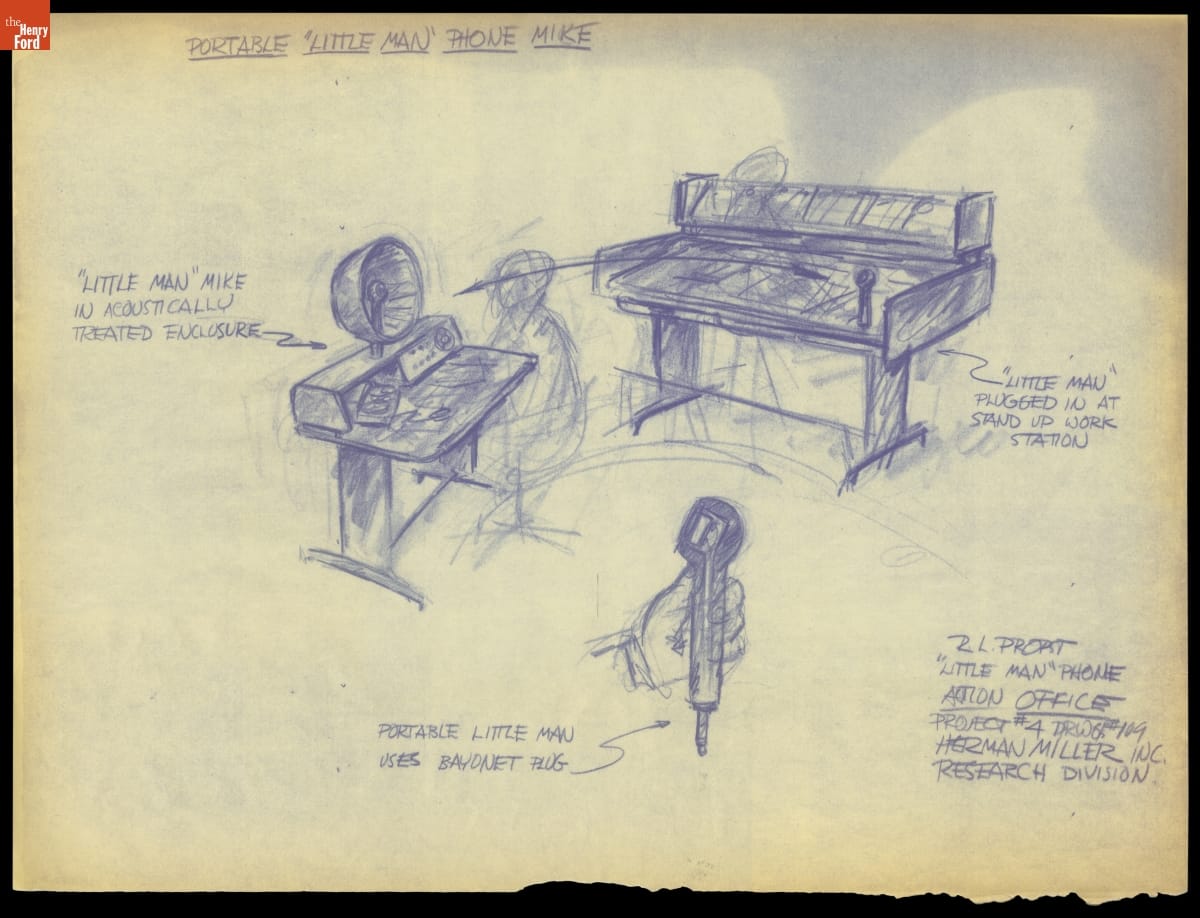
- Herman Miller Action Office Concept Drawing, "Little Man" Phone Mike -
- Collections - Artifact
Herman Miller Action Office Concept Drawing, "Little Man" Phone Mike
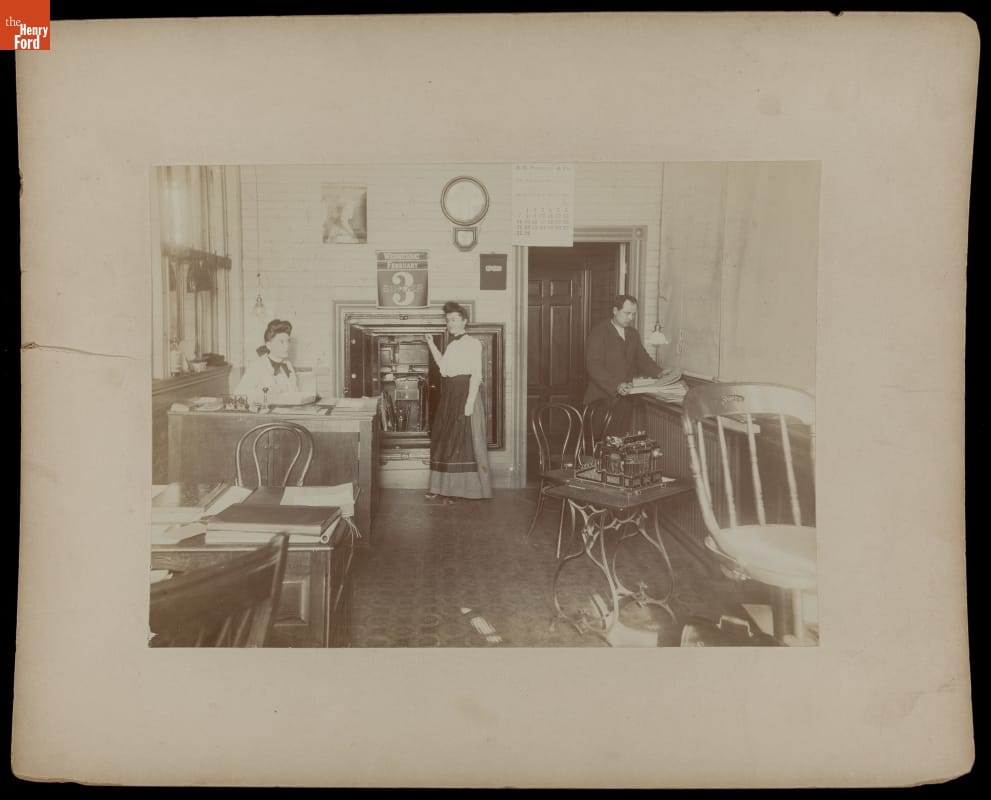
- Men and Women Working in a Shoe Factory Office, Boston, Massachusetts, 1904 - Women found new employment opportunities as the industrial and managerial revolutions of the late 19th century increased the need for office workers. There were few job opportunities in the professions, outside of nursing and teaching, so literate women often turned to office work. By 1900, women made up more than a third of clerical workers. Still, opportunity was limited--very few female office workers became office executives.
- 1904
- Collections - Artifact
Men and Women Working in a Shoe Factory Office, Boston, Massachusetts, 1904
Women found new employment opportunities as the industrial and managerial revolutions of the late 19th century increased the need for office workers. There were few job opportunities in the professions, outside of nursing and teaching, so literate women often turned to office work. By 1900, women made up more than a third of clerical workers. Still, opportunity was limited--very few female office workers became office executives.