
Search
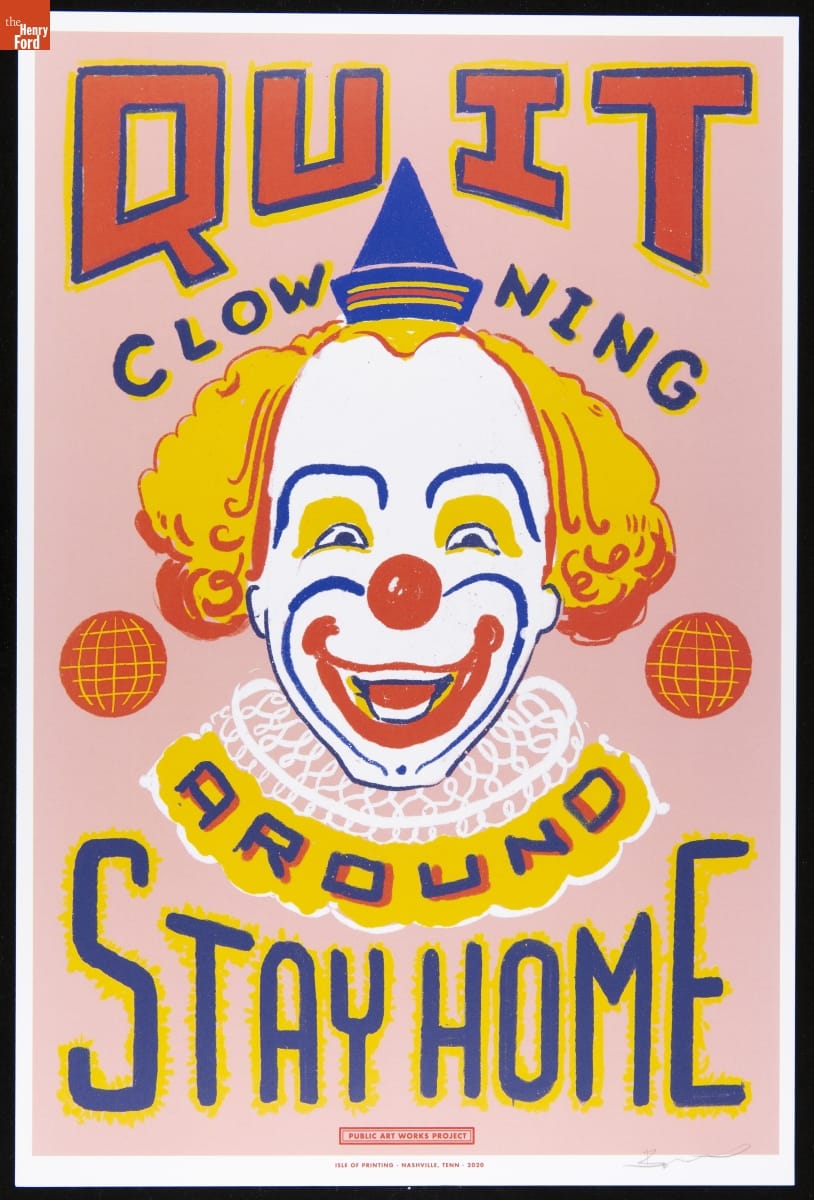
- Public Service Poster, "Quit Clowning Around: Stay Home," 2020 -
- 2020
- Collections - Artifact
Public Service Poster, "Quit Clowning Around: Stay Home," 2020
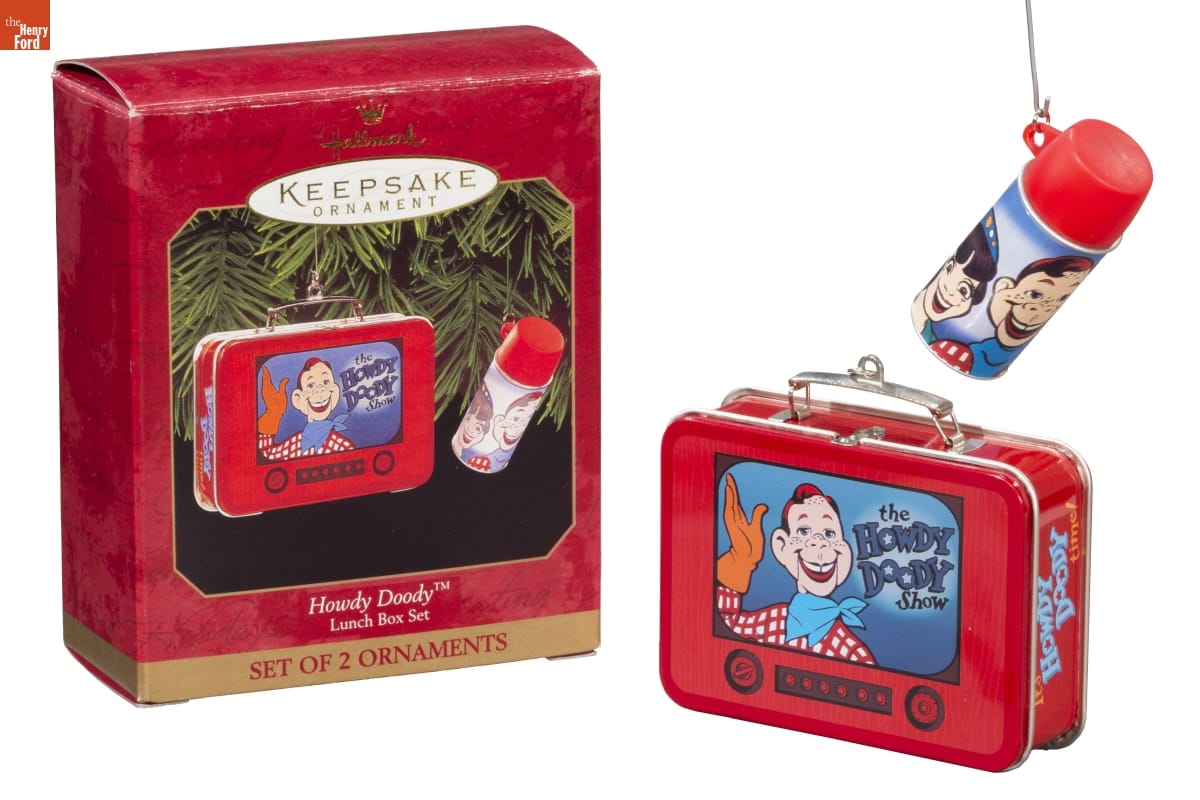
- Hallmark "Howdy Doody Lunch Box Set" Christmas Ornaments, 1999 - Already known for greeting cards, Hallmark introduced a line of Christmas ornaments in 1973. The company's annual release of an increasing array of ornaments revolutionized Christmas decorating, appealing to customers' interest in marking memories and milestones as well as expressing one's personality and unique tastes.
- 1999
- Collections - Artifact
Hallmark "Howdy Doody Lunch Box Set" Christmas Ornaments, 1999
Already known for greeting cards, Hallmark introduced a line of Christmas ornaments in 1973. The company's annual release of an increasing array of ornaments revolutionized Christmas decorating, appealing to customers' interest in marking memories and milestones as well as expressing one's personality and unique tastes.
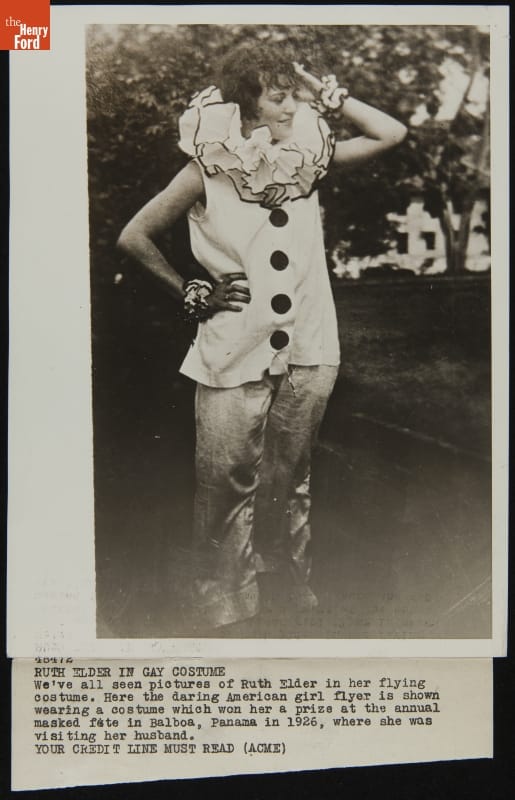
- Ruth Elder in her Prize Winning Costume, Balboa, Panama, 1926 - Ruth Elder planned to be the first woman to fly across the Atlantic. On October 11, 1927, Elder and co-pilot George Haldeman took off in their Stinson Detroiter <EM>American Girl</EM>. An oil leak forced them to ditch in the ocean some 360 miles short of land. Still, the 2,623 miles Elder covered set a new distance record for a female pilot.
- 1926
- Collections - Artifact
Ruth Elder in her Prize Winning Costume, Balboa, Panama, 1926
Ruth Elder planned to be the first woman to fly across the Atlantic. On October 11, 1927, Elder and co-pilot George Haldeman took off in their Stinson Detroiter American Girl. An oil leak forced them to ditch in the ocean some 360 miles short of land. Still, the 2,623 miles Elder covered set a new distance record for a female pilot.
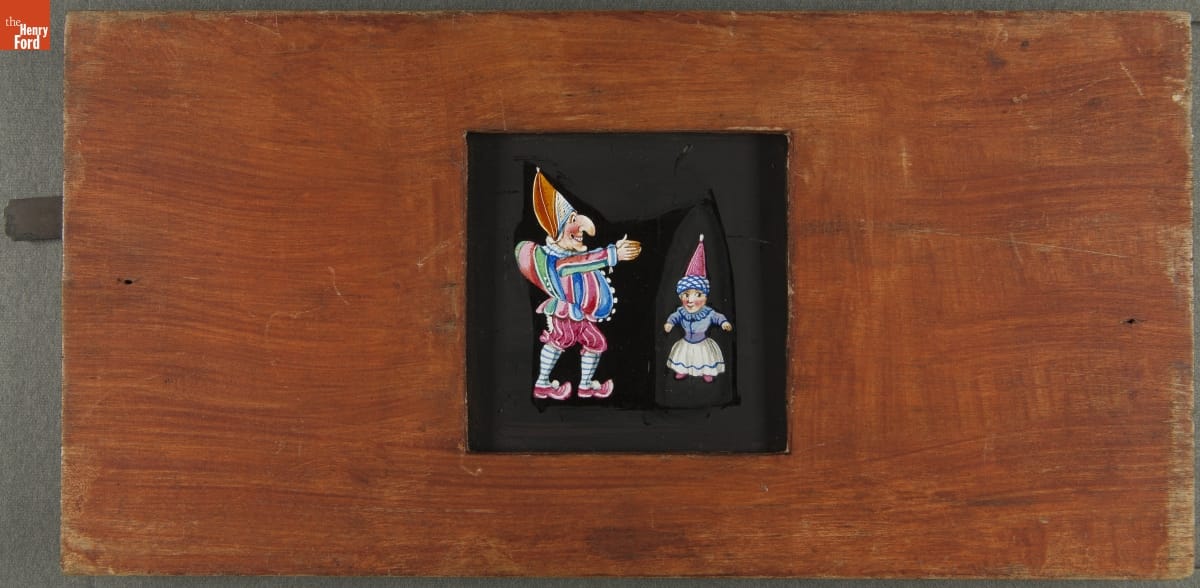
- Mechanical Lantern Slide, The Dancing Girl, 1860-1900 - Magic lanterns use a concave mirror and light source to project images on glass slides with painted or photographic scenes. Developed in the 17th century, magic lanterns predate slide projectors and motion pictures. In the hands of magicians, they became "lanterns of fright," projecting wondrous images and apparitions. Slide themes ranged widely: exotic travel, folklore, advertising, history, science, and art.
- 1860-1900
- Collections - Artifact
Mechanical Lantern Slide, The Dancing Girl, 1860-1900
Magic lanterns use a concave mirror and light source to project images on glass slides with painted or photographic scenes. Developed in the 17th century, magic lanterns predate slide projectors and motion pictures. In the hands of magicians, they became "lanterns of fright," projecting wondrous images and apparitions. Slide themes ranged widely: exotic travel, folklore, advertising, history, science, and art.
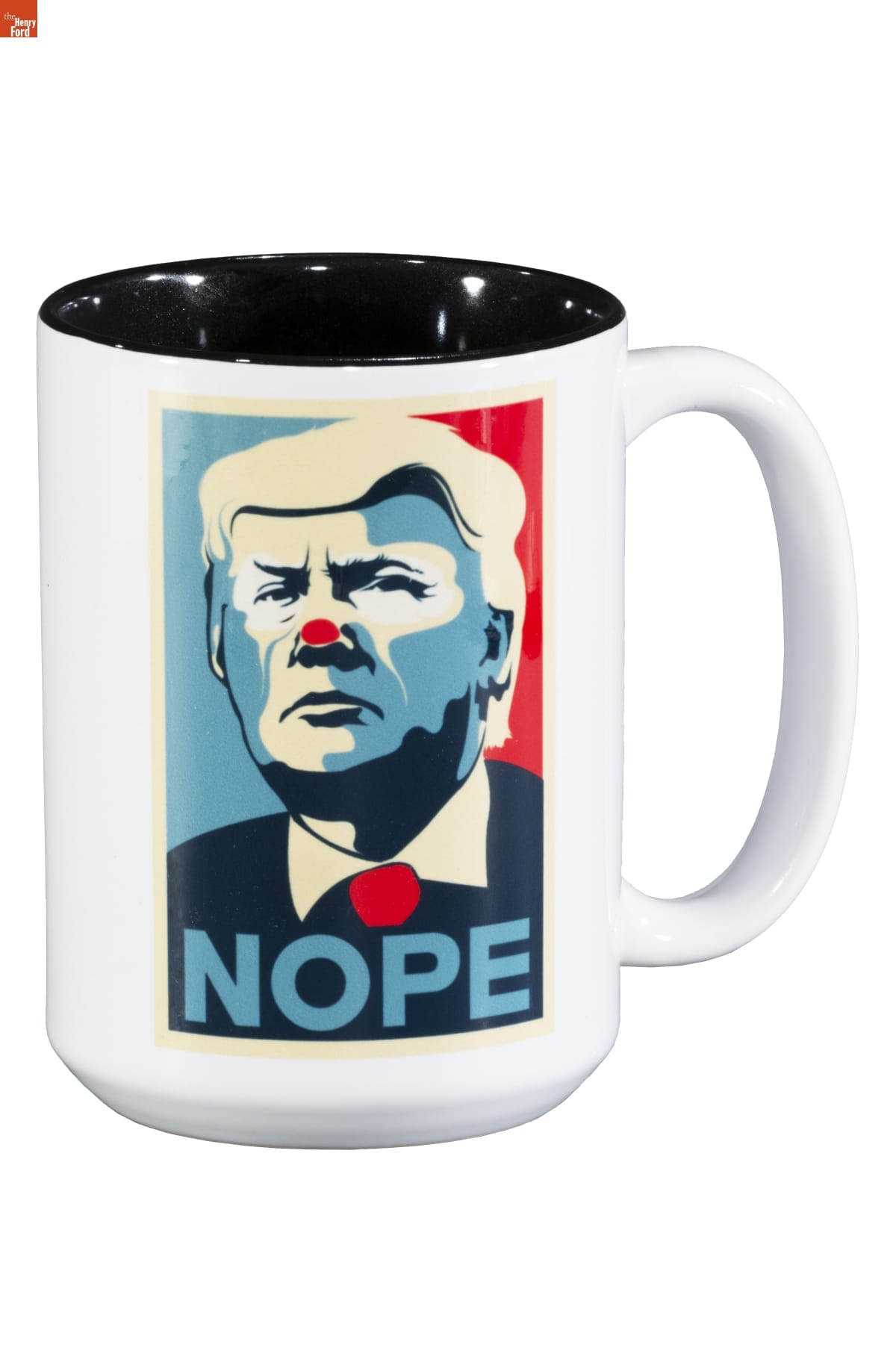
- "Nope" Mug, 2019-2020 - Every election cycle, The Henry Ford collects objects that represent the candidates, the central issues debated, and any major events. Traditionally, this has meant collecting things like lawn signs, buttons, and bumper stickers. In recent years it has also included t-shirts, flags, and objects that incorporate online culture. This collecting encompasses a wide range of viewpoints.
- 2019-2020
- Collections - Artifact
"Nope" Mug, 2019-2020
Every election cycle, The Henry Ford collects objects that represent the candidates, the central issues debated, and any major events. Traditionally, this has meant collecting things like lawn signs, buttons, and bumper stickers. In recent years it has also included t-shirts, flags, and objects that incorporate online culture. This collecting encompasses a wide range of viewpoints.
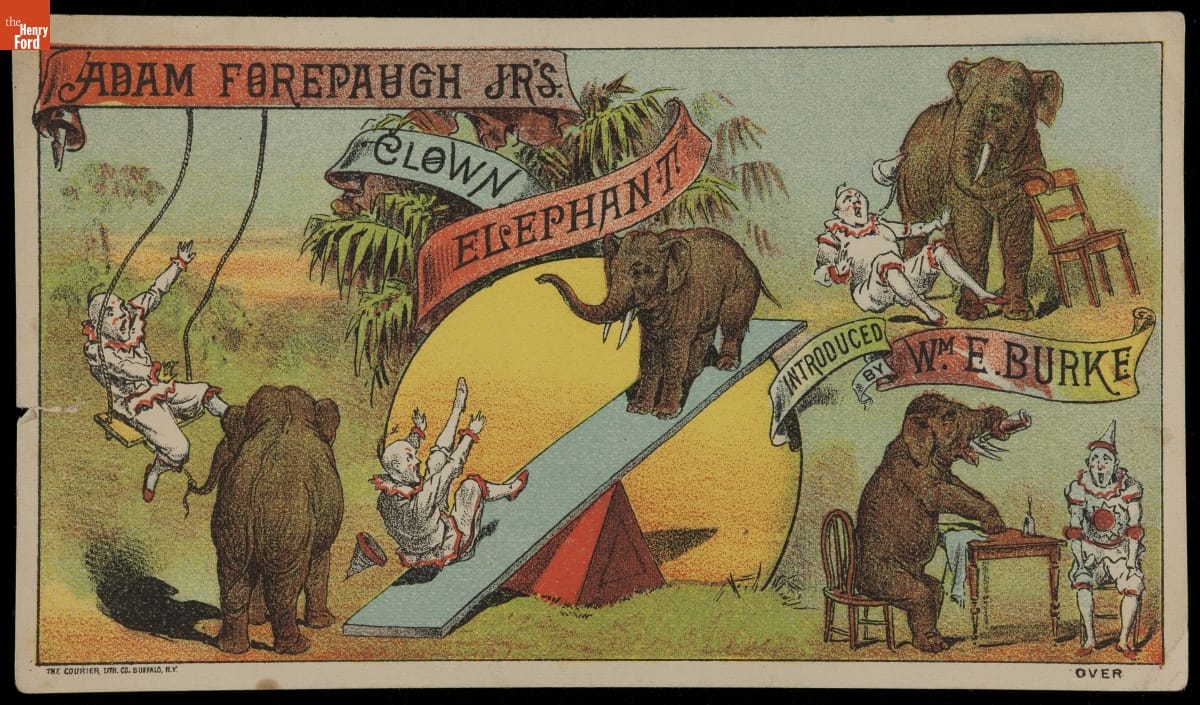
- Trade Card for Adam Forepaugh & Sells Bros. Circus, "Clown Elephant," 1870-1890 - In the last third of the nineteenth century, promoters used a popular medium--trade cards--to announce shows, activities, and community events. Americans enjoyed and often saved the vibrant little advertisements, which survive as historical records of leisure in the United States.
- circa 1884
- Collections - Artifact
Trade Card for Adam Forepaugh & Sells Bros. Circus, "Clown Elephant," 1870-1890
In the last third of the nineteenth century, promoters used a popular medium--trade cards--to announce shows, activities, and community events. Americans enjoyed and often saved the vibrant little advertisements, which survive as historical records of leisure in the United States.
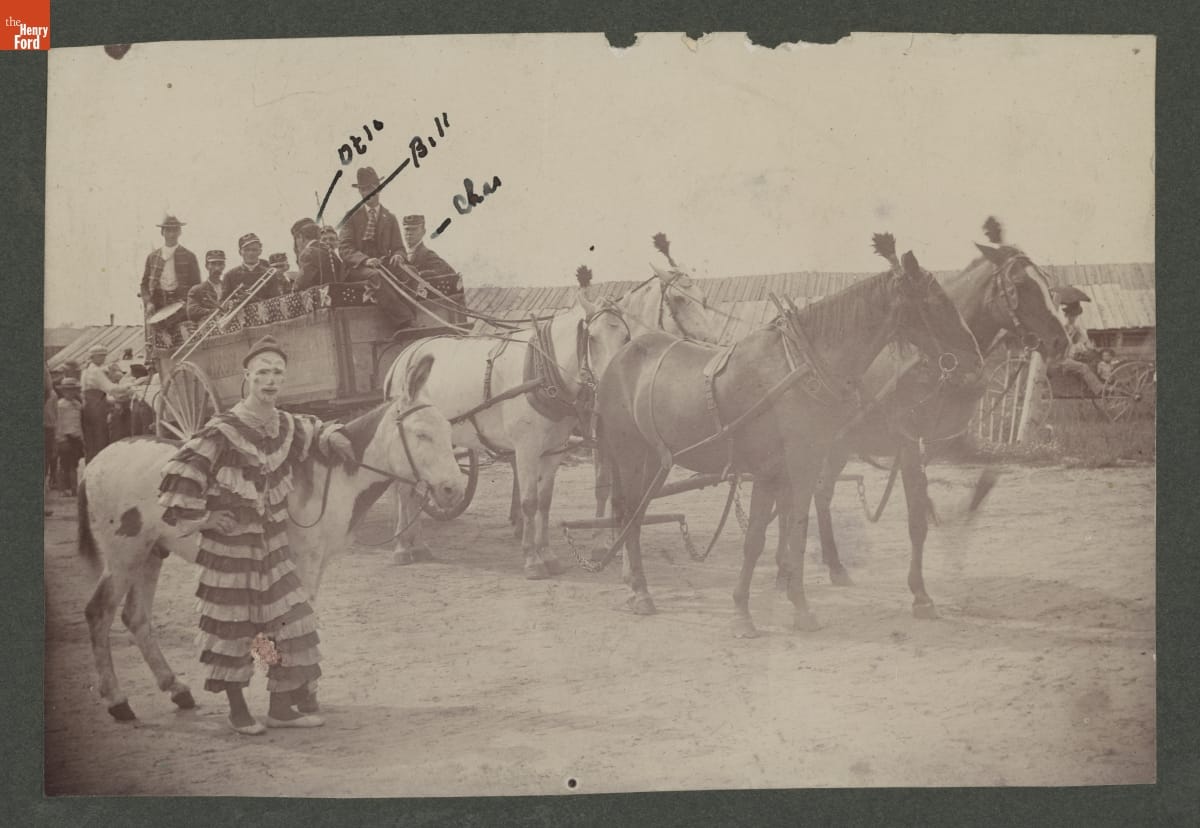
- Wixom Brothers Great Show at Ithaca, Michigan Fairgrounds, August 18, 1900 - Small traveling circuses in the late 19th and early 20th centuries arrived in towns with great fanfare. Performers, animals and musicians paraded down streets. This free publicity, circus owners hoped, would arouse the interest of the residents and potential customers. This photograph shows the Wixom Brothers Circus marching to the fairgrounds in Ithaca, Michigan.
- August 18, 1900
- Collections - Artifact
Wixom Brothers Great Show at Ithaca, Michigan Fairgrounds, August 18, 1900
Small traveling circuses in the late 19th and early 20th centuries arrived in towns with great fanfare. Performers, animals and musicians paraded down streets. This free publicity, circus owners hoped, would arouse the interest of the residents and potential customers. This photograph shows the Wixom Brothers Circus marching to the fairgrounds in Ithaca, Michigan.
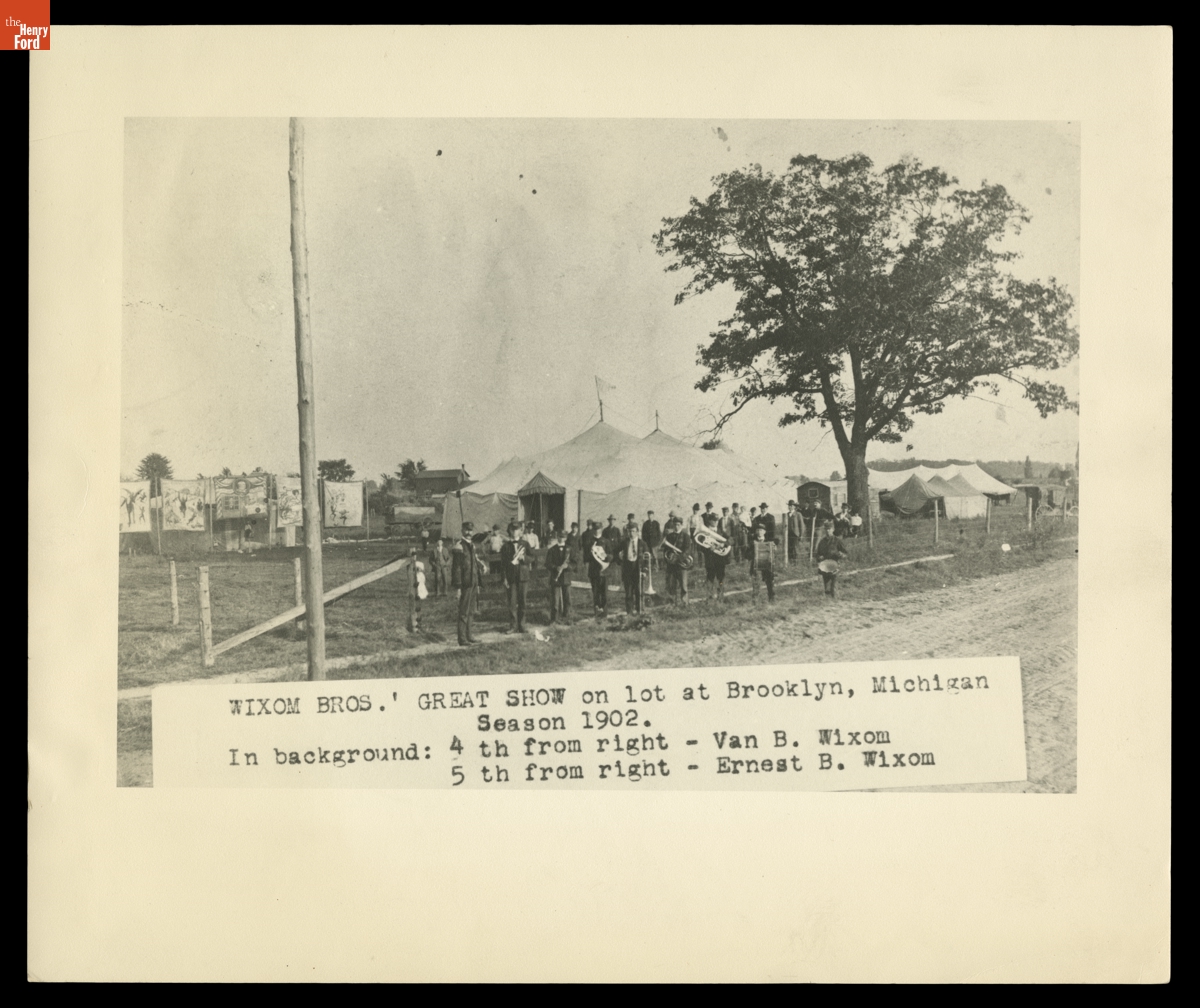
- Wixom Brothers Great Show, Brooklyn, Michigan, September 1902 - Martin Van Buren "Mat" Wixom, and his sons--Frank, Russel, Ernie, and Van--were Michigan-based showmen. They operated a small, regional circus that traveled to mid-Michigan's rural communities between 1874 and 1908. Beginning in 1881, the Wixoms would create a new gimmick or theme and change the roster of performers yearly for the circus to fuel the audience's anticipation.
- September 17, 1902
- Collections - Artifact
Wixom Brothers Great Show, Brooklyn, Michigan, September 1902
Martin Van Buren "Mat" Wixom, and his sons--Frank, Russel, Ernie, and Van--were Michigan-based showmen. They operated a small, regional circus that traveled to mid-Michigan's rural communities between 1874 and 1908. Beginning in 1881, the Wixoms would create a new gimmick or theme and change the roster of performers yearly for the circus to fuel the audience's anticipation.
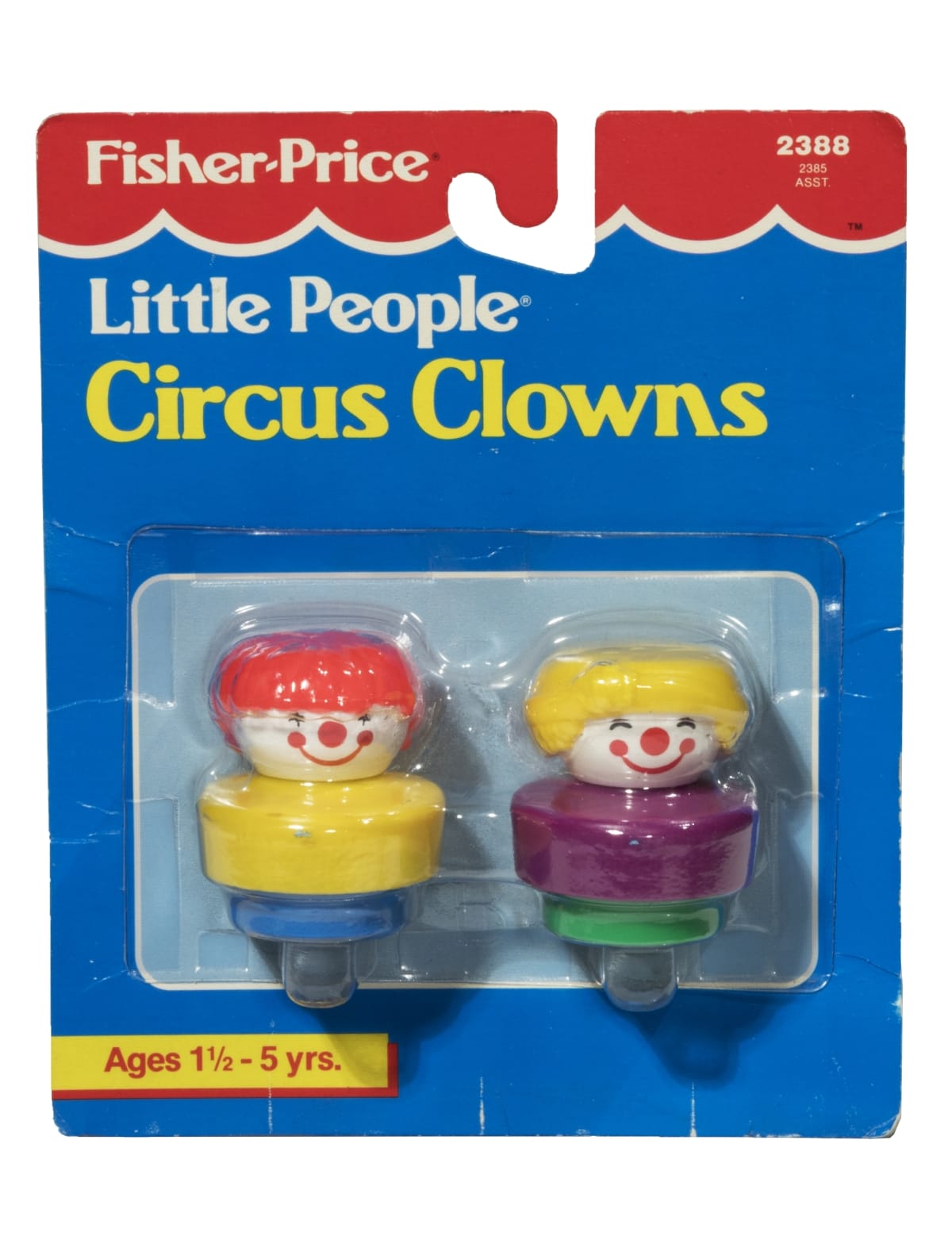
- Fisher-Price "Little People Circus Clowns" Figures, 1991-1992 - Fisher-Price introduced its peg-like figures -- later known as "Little People"-- in 1959. During the 1980s, parents and child advocates feared that small toys like this could be a choking hazard. Redesigned to give the toy a greater diameter, Fisher-Price introduced this newer version in 1991. Though larger and offering a safer experience, "Little People" still provided children with plenty of fun adventures.
- 1991-1992
- Collections - Artifact
Fisher-Price "Little People Circus Clowns" Figures, 1991-1992
Fisher-Price introduced its peg-like figures -- later known as "Little People"-- in 1959. During the 1980s, parents and child advocates feared that small toys like this could be a choking hazard. Redesigned to give the toy a greater diameter, Fisher-Price introduced this newer version in 1991. Though larger and offering a safer experience, "Little People" still provided children with plenty of fun adventures.
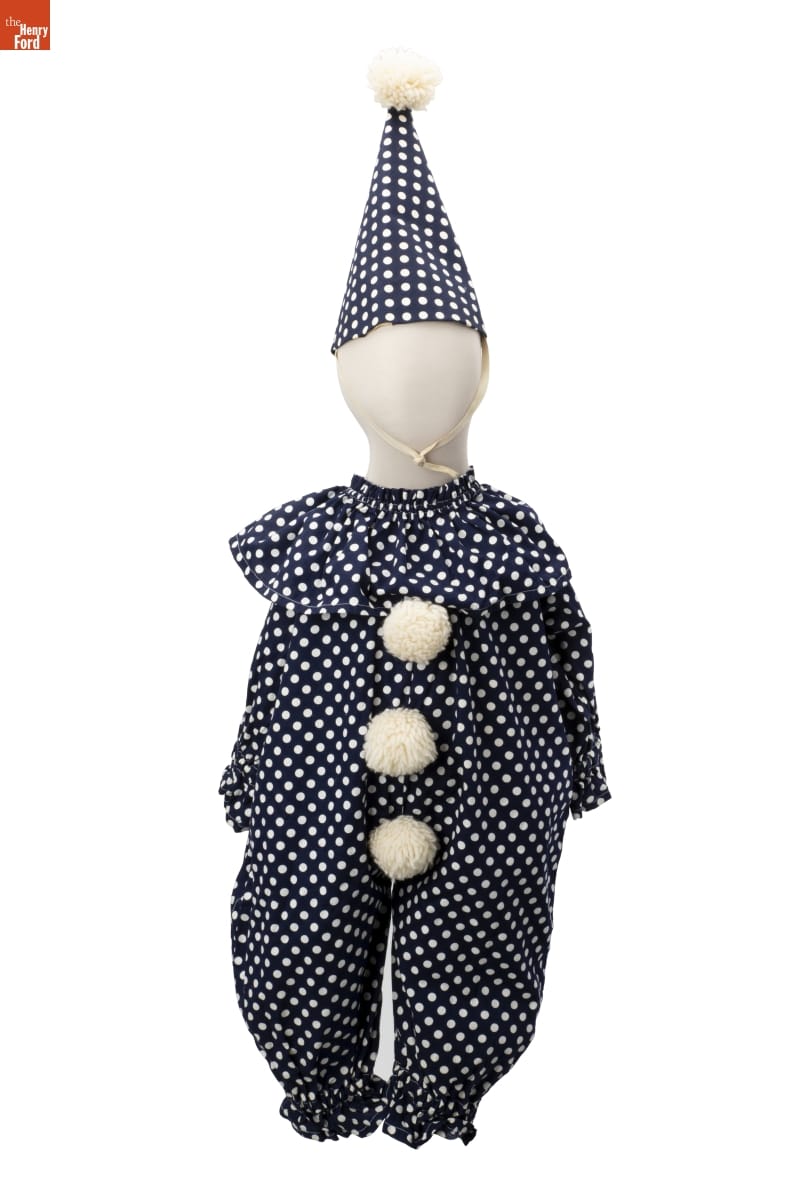
- Clown Halloween Costume, Worn by Kevin Nietering in 1995 -
- 1995
- Collections - Artifact
Clown Halloween Costume, Worn by Kevin Nietering in 1995