
Search
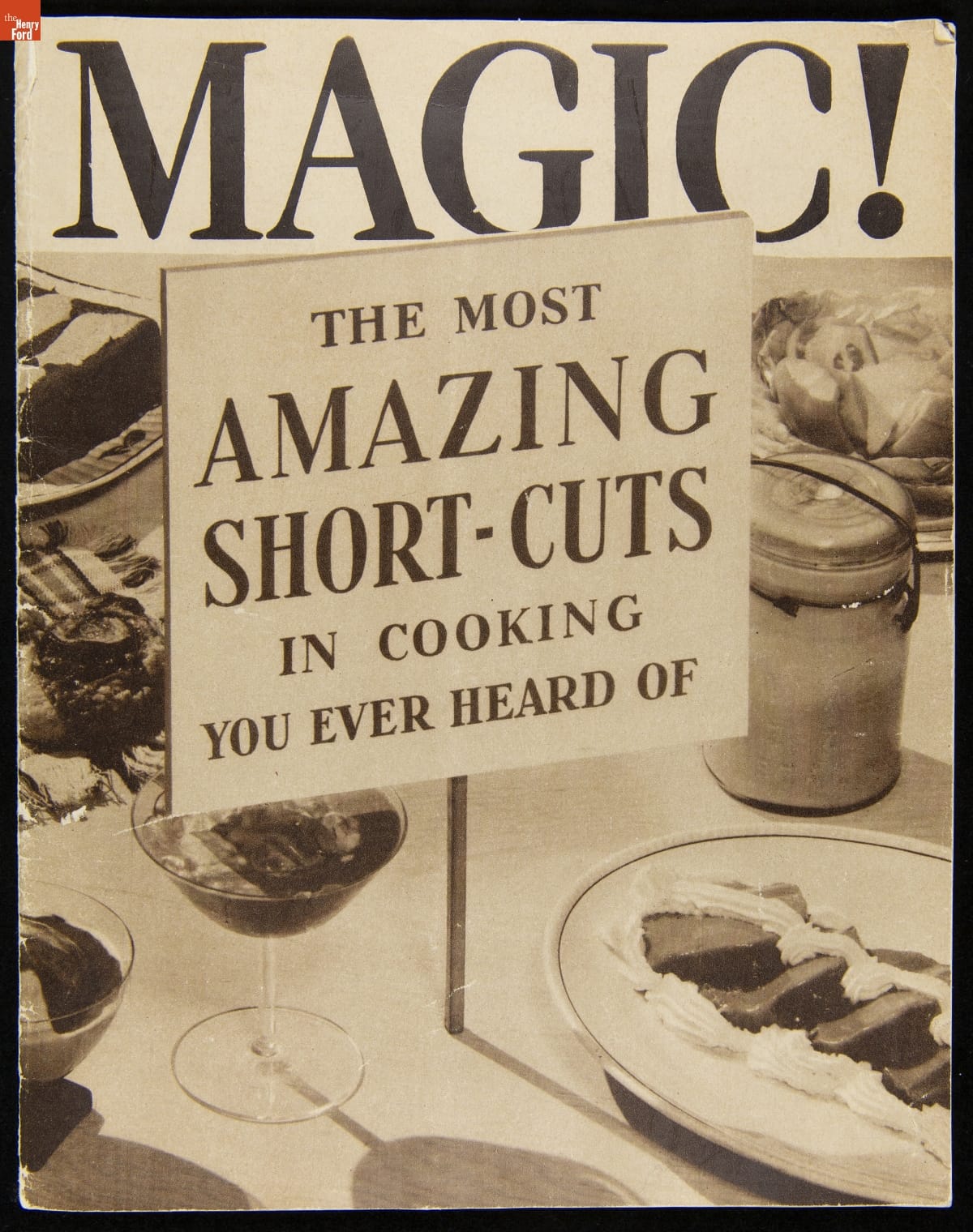
- Recipe Booklet, "MAGIC! The Most Amazing Short-Cuts in Cooking You Ever Heard Of," circa 1930 -
- circa 1930
- Collections - Artifact
Recipe Booklet, "MAGIC! The Most Amazing Short-Cuts in Cooking You Ever Heard Of," circa 1930
- Faradon Variable Mica Condenser, Model UC-1819, 1920-1925 - Early radios containing vacuum tubes needed both AC (alternating current) and DC (direct current) electrical power to operate. Condensers (also known as capacitors) allow alternating electrical currents to pass while blocking direct currents. Condensers can block, pass, filter and tune the various currents of the radio.

- 1920-1925
- Collections - Artifact
Faradon Variable Mica Condenser, Model UC-1819, 1920-1925
Early radios containing vacuum tubes needed both AC (alternating current) and DC (direct current) electrical power to operate. Condensers (also known as capacitors) allow alternating electrical currents to pass while blocking direct currents. Condensers can block, pass, filter and tune the various currents of the radio.
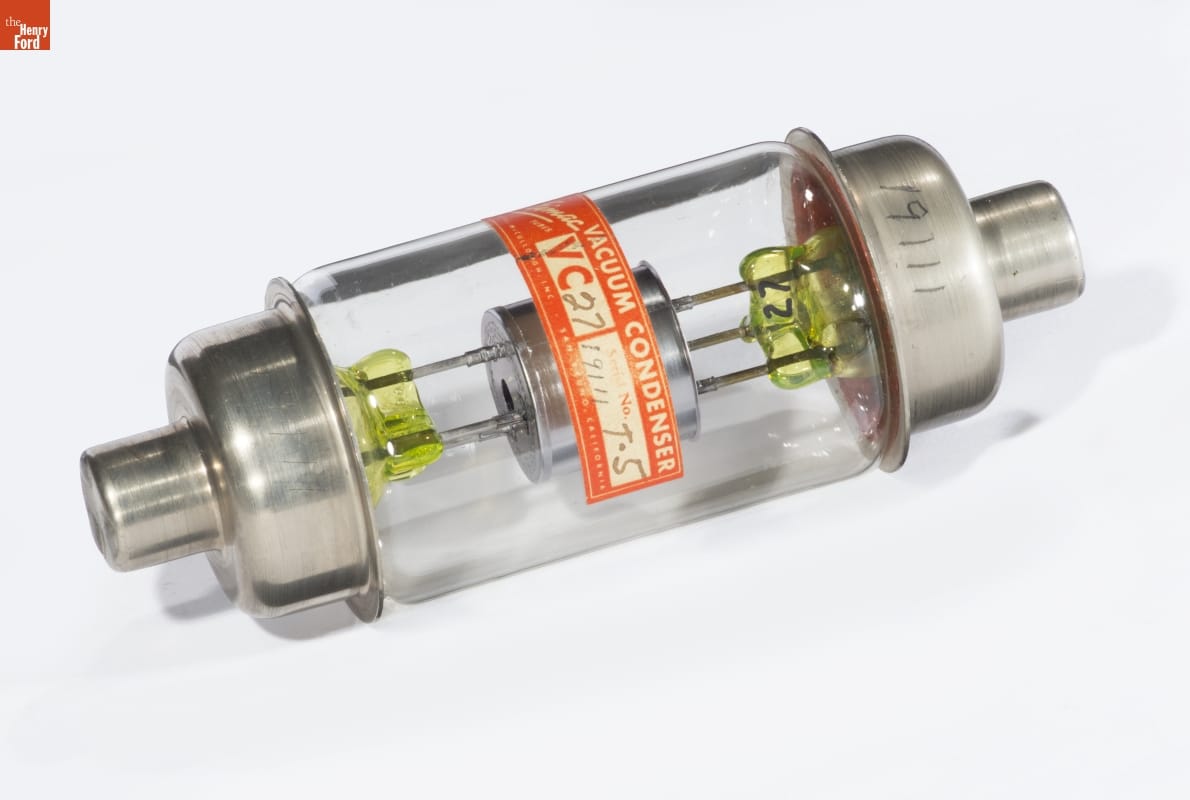
- Eimac VC27 Vacuum Condenser, 1940 -
- 1940
- Collections - Artifact
Eimac VC27 Vacuum Condenser, 1940
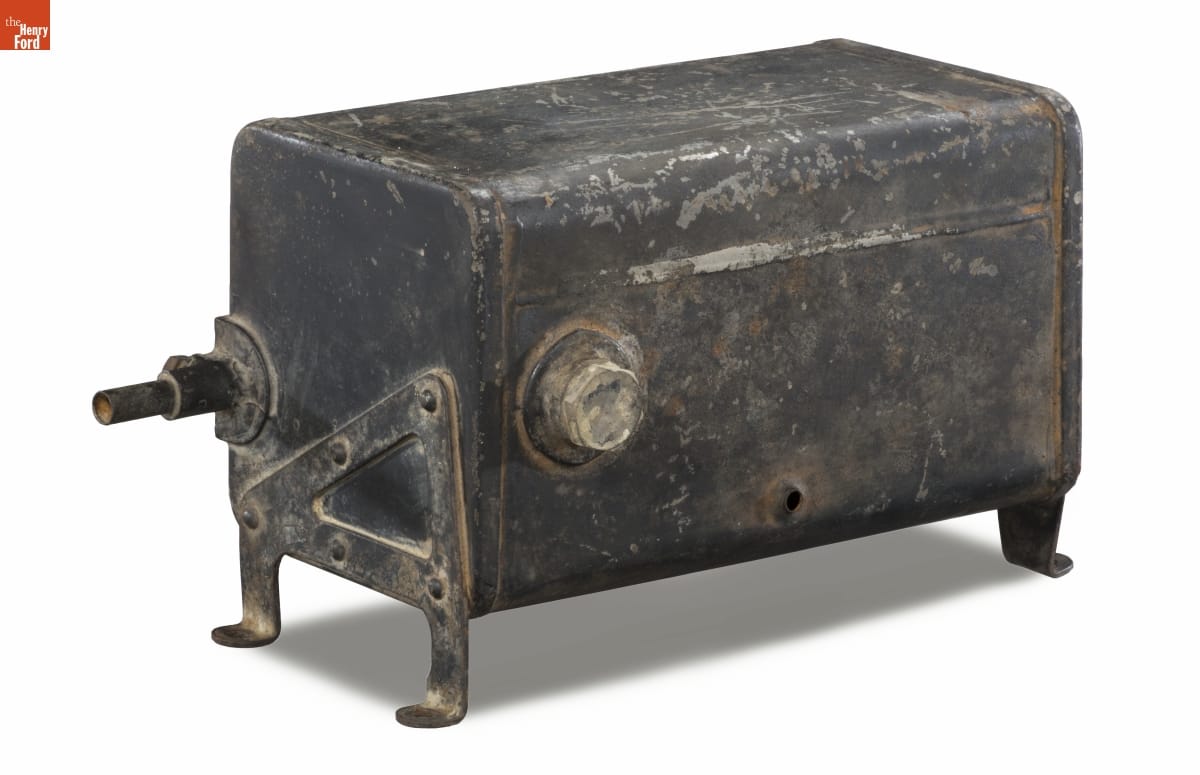
- Condenser Tank -
- Collections - Artifact
Condenser Tank
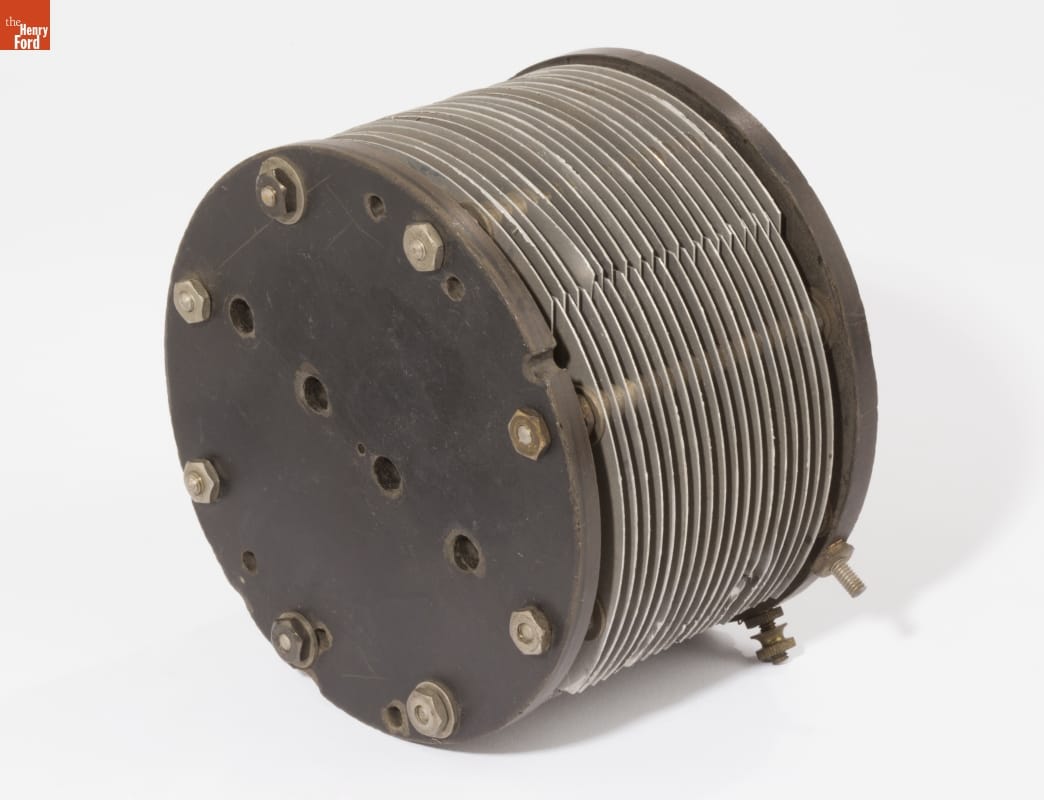
- Fixed Capacitor, 1915-1920 - Early radios containing vacuum tubes needed both AC (alternating current) and DC (direct current) electrical power to operate. Condensers (also known as capacitors) allow alternating electrical currents to pass while blocking direct currents. Condensers can block, pass, filter and tune the various currents of the radio.
- 1915-1920
- Collections - Artifact
Fixed Capacitor, 1915-1920
Early radios containing vacuum tubes needed both AC (alternating current) and DC (direct current) electrical power to operate. Condensers (also known as capacitors) allow alternating electrical currents to pass while blocking direct currents. Condensers can block, pass, filter and tune the various currents of the radio.
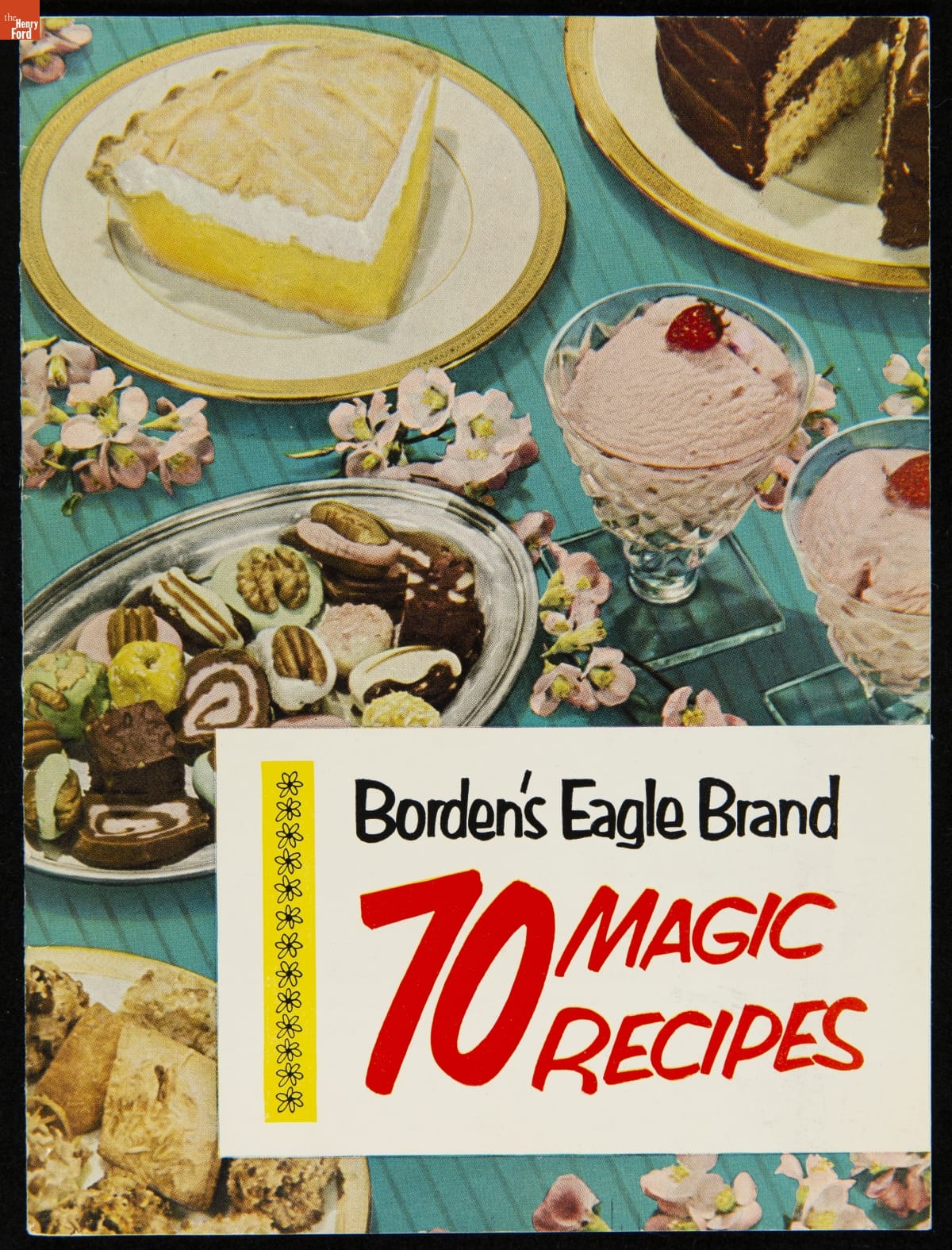
- Recipe Booklet, "Borden's Eagle Brand: 70 Magic Recipes," circa 1961 - Before the invention of pasteurized milk, fresh milk was often unsafe to drink, as it soured quickly. After experimenting with ways to preserve milk, Gail Borden introduced Eagle Brand Sweetened Condensed Milk in 1856. What was advertised as nourishment for young children soon gained popularity as a baking and cooking ingredient. This booklet from 1961 features recipes for desserts and confections using Eagle Brand Condensed Milk.
- circa 1961
- Collections - Artifact
Recipe Booklet, "Borden's Eagle Brand: 70 Magic Recipes," circa 1961
Before the invention of pasteurized milk, fresh milk was often unsafe to drink, as it soured quickly. After experimenting with ways to preserve milk, Gail Borden introduced Eagle Brand Sweetened Condensed Milk in 1856. What was advertised as nourishment for young children soon gained popularity as a baking and cooking ingredient. This booklet from 1961 features recipes for desserts and confections using Eagle Brand Condensed Milk.
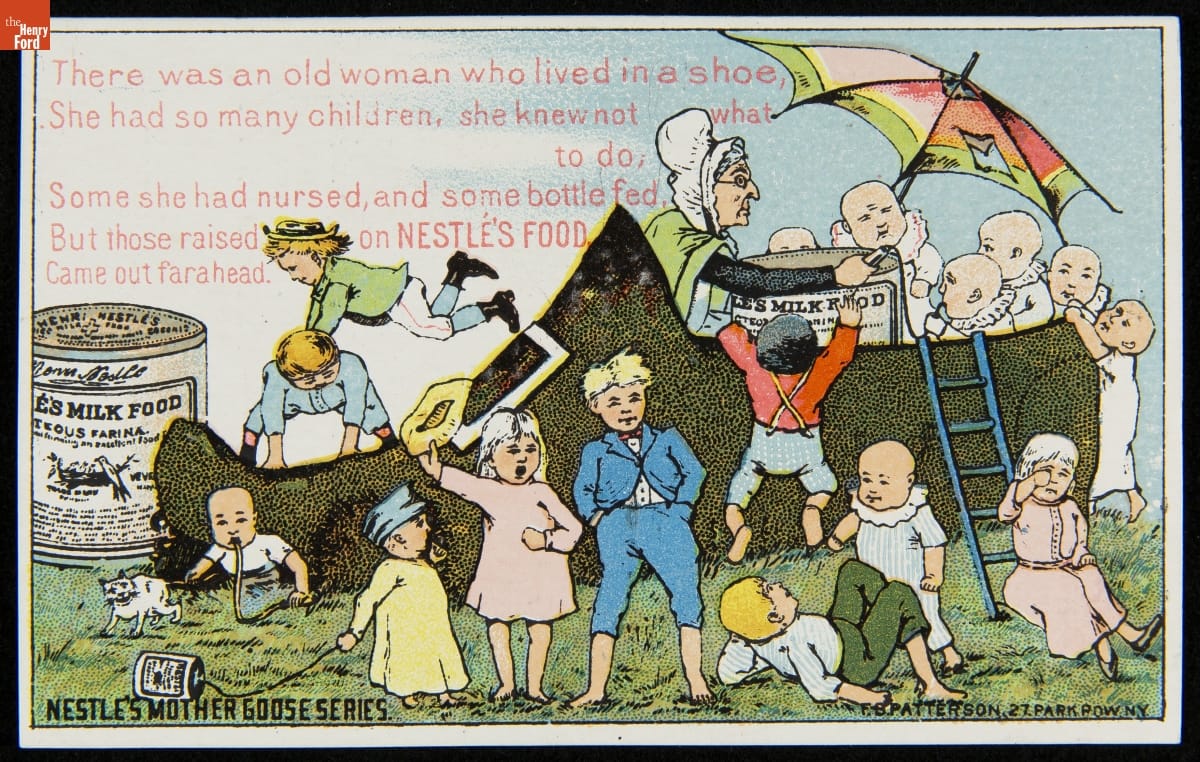
- Trade Card for Nestle's Milk Food, from Nestle Company's Mother Goose Series, 1880-1900 - In the last third of the nineteenth century, an unprecedented variety of consumer goods and services flooded the American market. Advertisers, armed with new methods of color printing, bombarded potential customers with trade cards. Americans enjoyed and often saved the vibrant little advertisements found in product packages or distributed by local merchants. Many survive as historical records of commercialism in the United States.
- 1880-1900
- Collections - Artifact
Trade Card for Nestle's Milk Food, from Nestle Company's Mother Goose Series, 1880-1900
In the last third of the nineteenth century, an unprecedented variety of consumer goods and services flooded the American market. Advertisers, armed with new methods of color printing, bombarded potential customers with trade cards. Americans enjoyed and often saved the vibrant little advertisements found in product packages or distributed by local merchants. Many survive as historical records of commercialism in the United States.
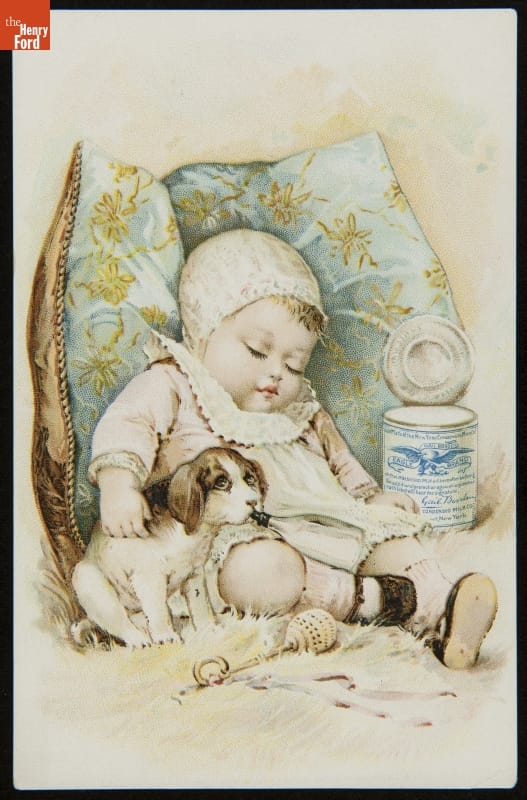
- Trade Card for Gail Borden Eagle Brand Condensed Milk, New York Condensed Milk Co., 1891 - Feeding infants tainted cow's milk was a common cause of infant mortality. In 1856, Gail Borden introduced Eagle Brand Condensed Milk to combat this. This product became so popular for soldiers during the Civil War that, by the end of the war, it had gained a reputation for being safe, wholesome, and nourishing -- a trusted food for infants.
- circa 1891
- Collections - Artifact
Trade Card for Gail Borden Eagle Brand Condensed Milk, New York Condensed Milk Co., 1891
Feeding infants tainted cow's milk was a common cause of infant mortality. In 1856, Gail Borden introduced Eagle Brand Condensed Milk to combat this. This product became so popular for soldiers during the Civil War that, by the end of the war, it had gained a reputation for being safe, wholesome, and nourishing -- a trusted food for infants.
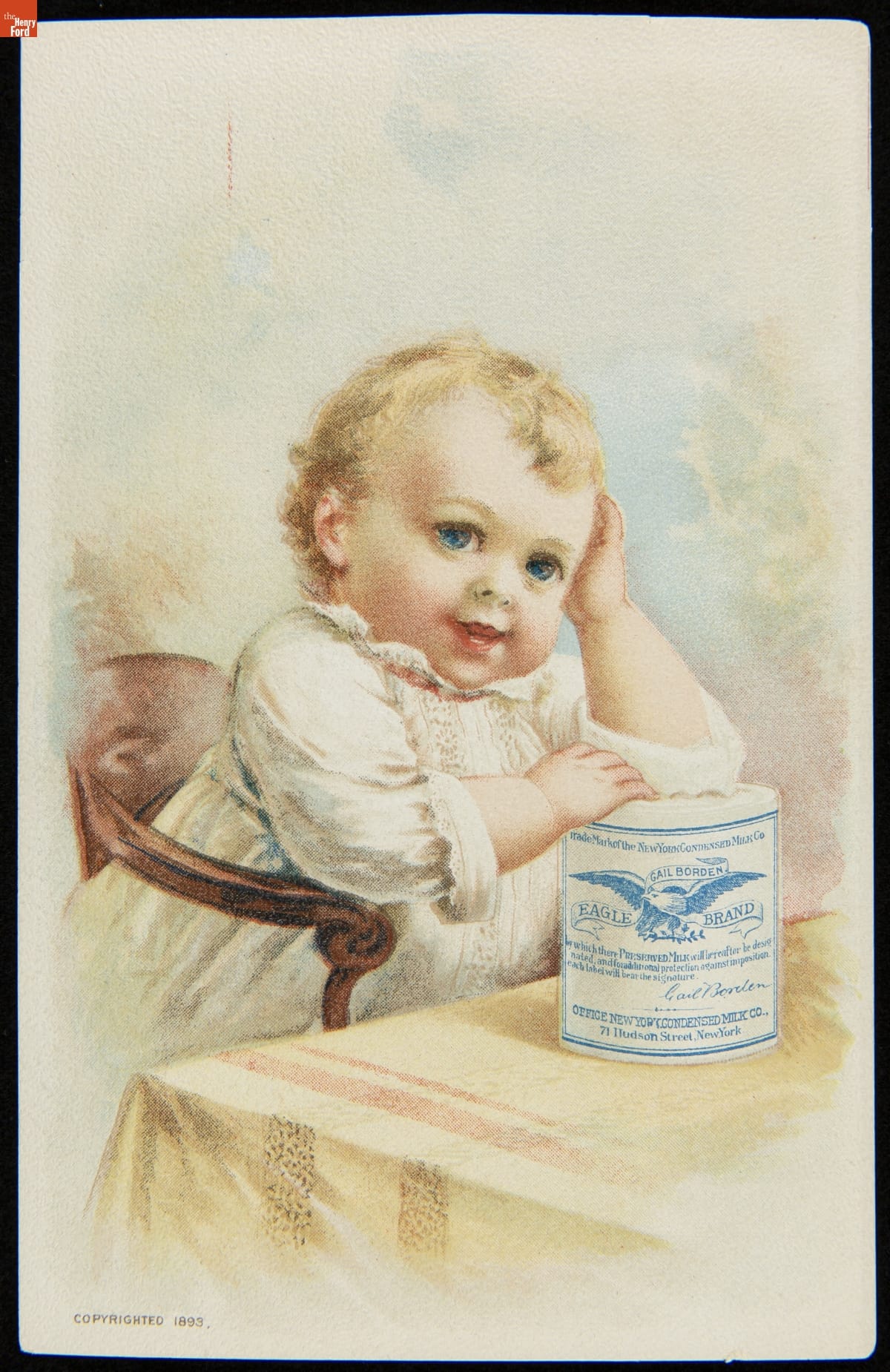
- Trade Card for Gail Borden Eagle Brand Condensed Milk, New York Condensed Milk Co., 1893 - Feeding infants tainted cow's milk was a common cause of infant mortality. In 1856, Gail Borden introduced Eagle Brand Condensed Milk to combat this. This product became so popular for soldiers during the Civil War that, by the end of the war, it had gained a reputation for being safe, wholesome, and nourishing -- a trusted food for infants and children.
- circa 1893
- Collections - Artifact
Trade Card for Gail Borden Eagle Brand Condensed Milk, New York Condensed Milk Co., 1893
Feeding infants tainted cow's milk was a common cause of infant mortality. In 1856, Gail Borden introduced Eagle Brand Condensed Milk to combat this. This product became so popular for soldiers during the Civil War that, by the end of the war, it had gained a reputation for being safe, wholesome, and nourishing -- a trusted food for infants and children.
- St. Charles Evaporated Cream Button, 1900-1910 -
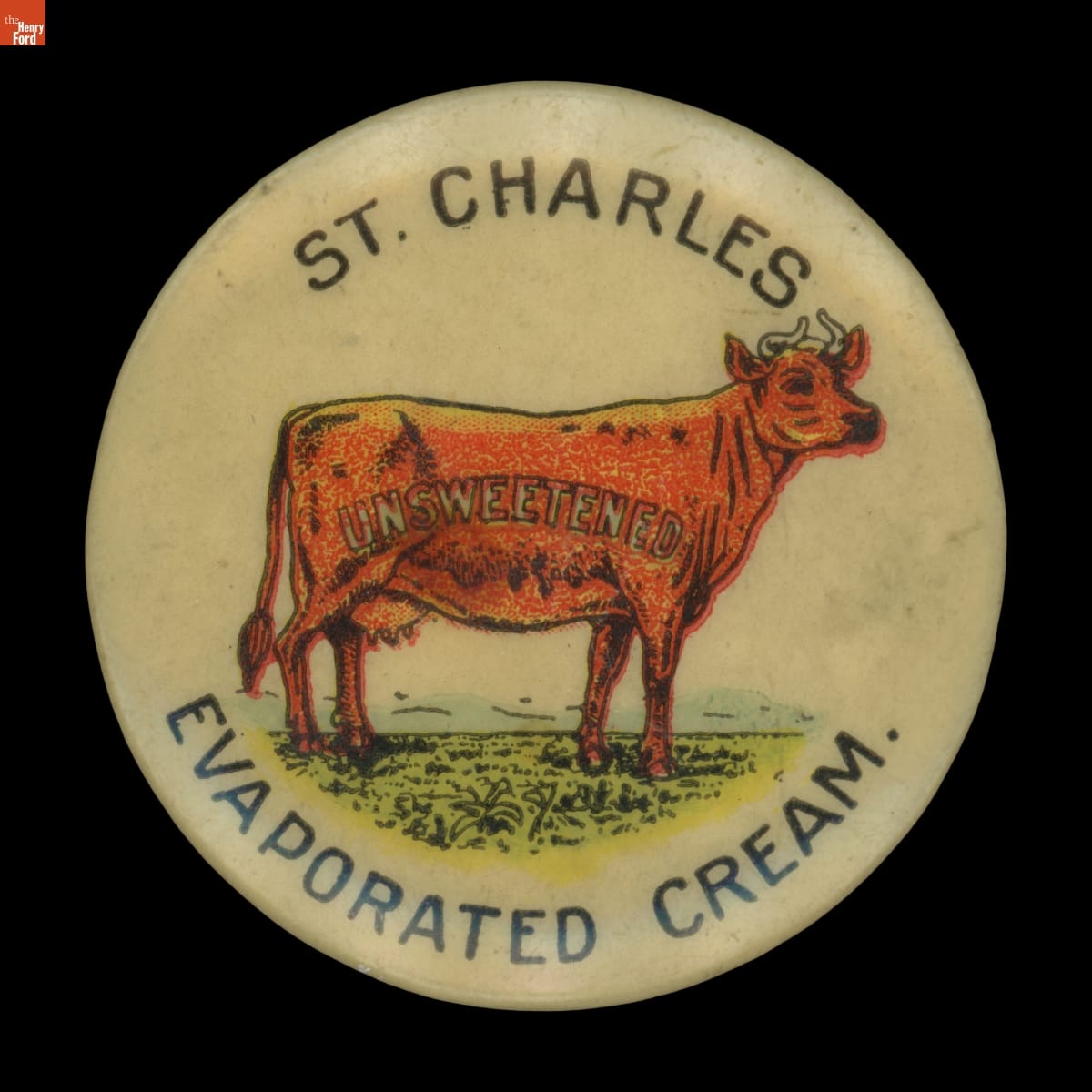
- 1900-1910
- Collections - Artifact
St. Charles Evaporated Cream Button, 1900-1910