
Search
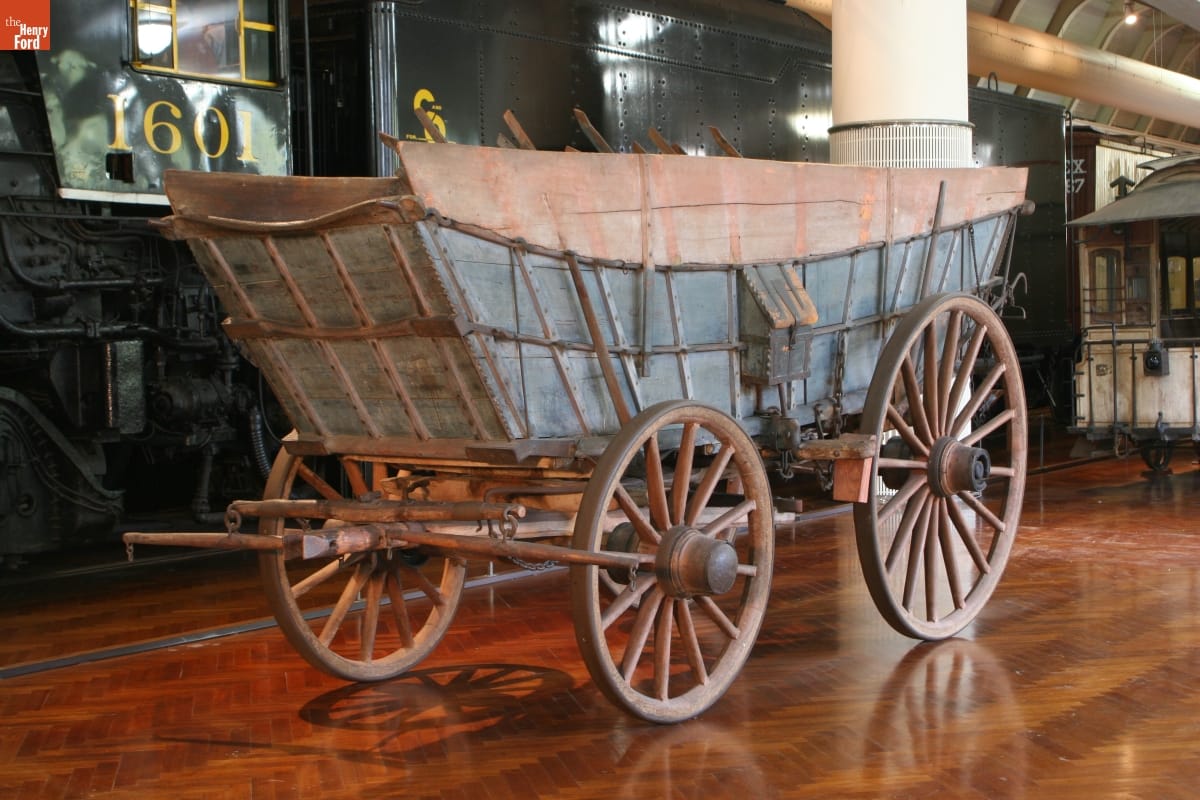
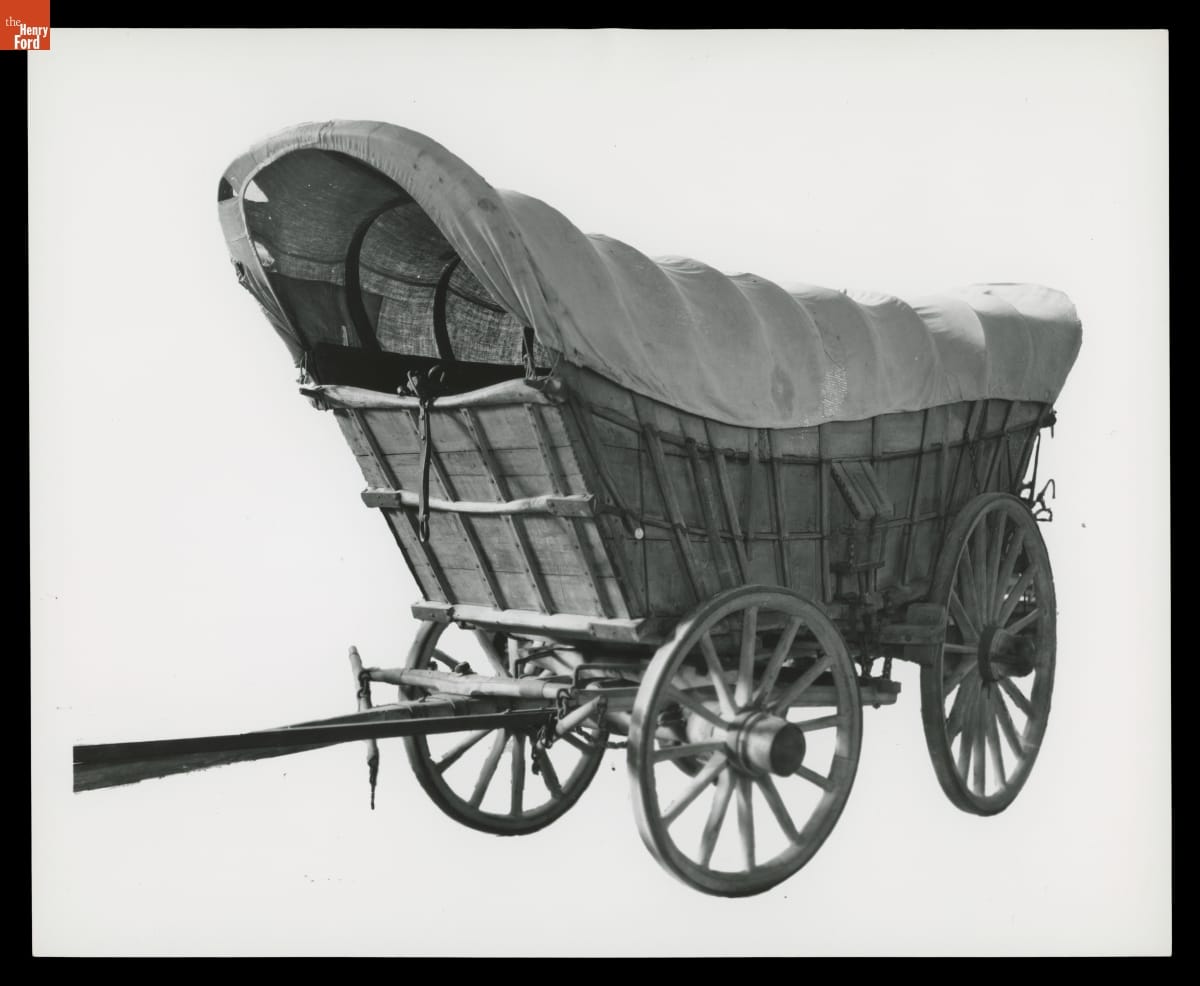
- Conestoga Wagon, circa 1840 - Conestoga wagons first appeared in Pennsylvania's Conestoga River valley about 1750. Designed for freight, the Conestoga's curved body tended to keep the load in the center, rather than shifting it toward the rear. The Conestoga's popularity peaked in the first half of the 19th century -- before railroads replaced it for hauling agricultural products and manufactured goods.
- circa 1840
- Collections - Artifact
Conestoga Wagon, circa 1840
Conestoga wagons first appeared in Pennsylvania's Conestoga River valley about 1750. Designed for freight, the Conestoga's curved body tended to keep the load in the center, rather than shifting it toward the rear. The Conestoga's popularity peaked in the first half of the 19th century -- before railroads replaced it for hauling agricultural products and manufactured goods.
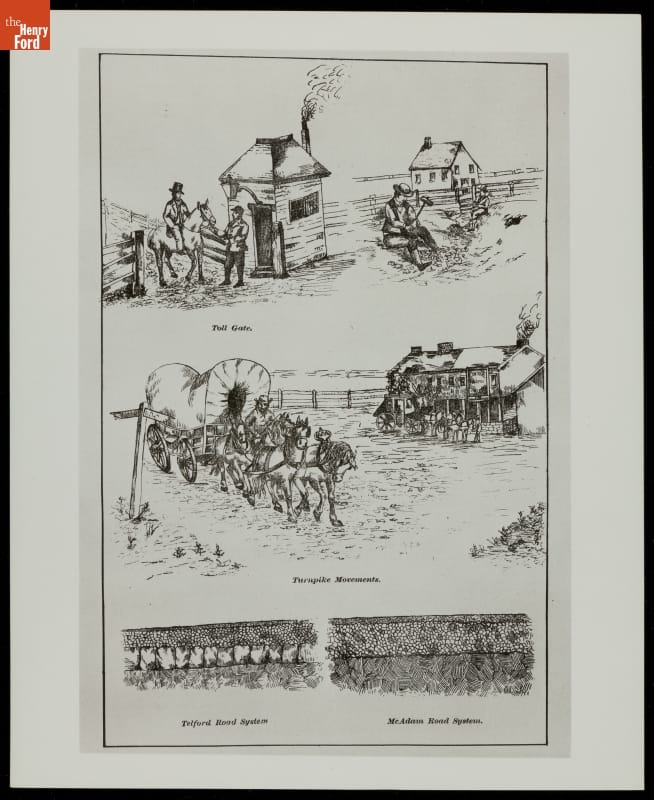
- "Toll Gate, Turnpike Movements, Telford Road System, McAdam Road System" - In the 19th century, road improvements in the United States tended to be private efforts financed by investors and supported by tolls. This illustration shows two methods of road construction. The Telford system used a base layer of stone blocks and an upper layer of smaller interlocking stones to support the road surface. Macadam (or McAdam) roads eliminated the stone-block foundation.
- 1850-1900
- Collections - Artifact
"Toll Gate, Turnpike Movements, Telford Road System, McAdam Road System"
In the 19th century, road improvements in the United States tended to be private efforts financed by investors and supported by tolls. This illustration shows two methods of road construction. The Telford system used a base layer of stone blocks and an upper layer of smaller interlocking stones to support the road surface. Macadam (or McAdam) roads eliminated the stone-block foundation.
- Conestoga Wagon in Henry Ford Museum, circa 1941 -
- circa 1941
- Collections - Artifact
Conestoga Wagon in Henry Ford Museum, circa 1941
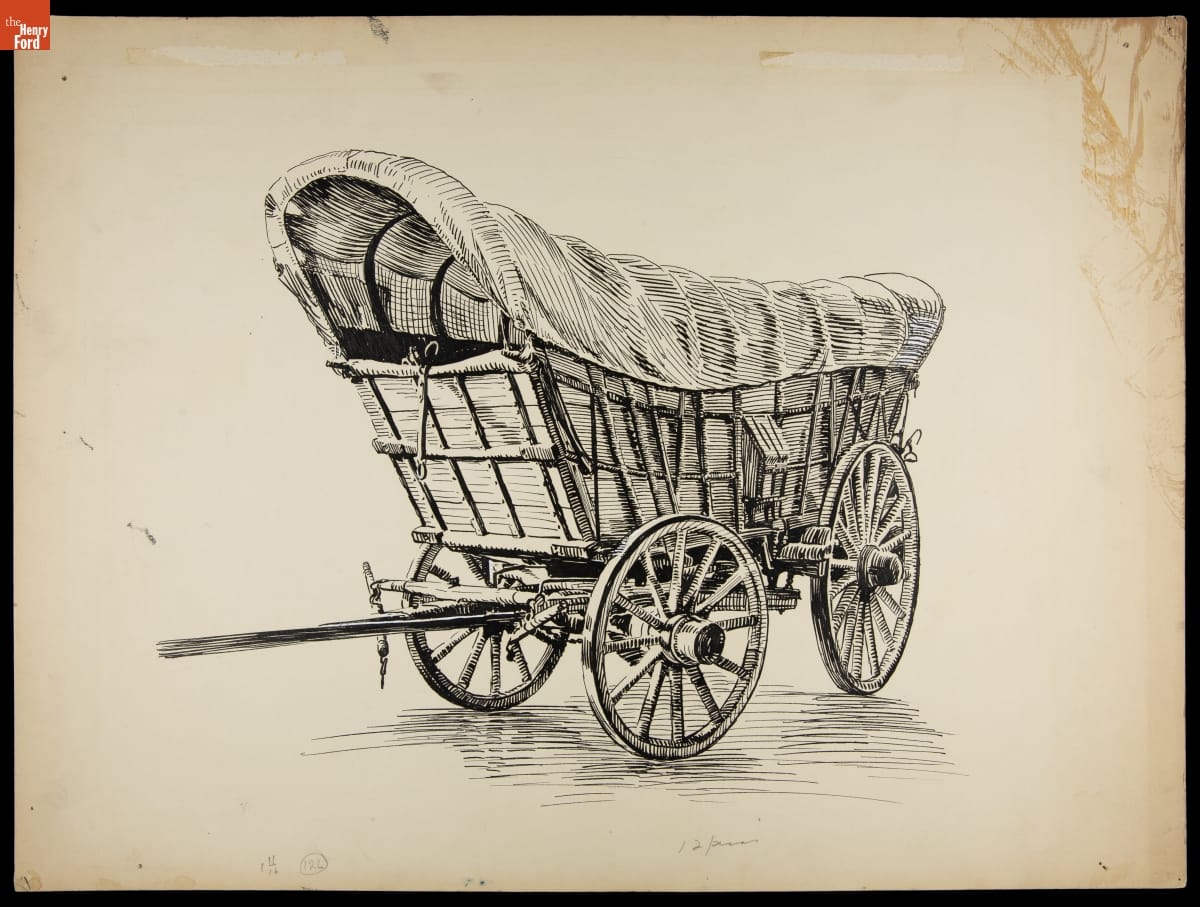
- Conestoga Wagon in Henry Ford Museum, circa 1941 - Irving Bacon, a Ford Motor Company employee and Henry Ford's personal artist, created pen-and-ink drawings to illustrate guidebooks for the Edison Institute Museum and Greenfield Village (now The Henry Ford) when they officially opened to the public in 1933. An illustrated souvenir guidebook helped visitors navigate the exhibits and grounds. Ford also used these drawings in other company publications.
- circa 1941
- Collections - Artifact
Conestoga Wagon in Henry Ford Museum, circa 1941
Irving Bacon, a Ford Motor Company employee and Henry Ford's personal artist, created pen-and-ink drawings to illustrate guidebooks for the Edison Institute Museum and Greenfield Village (now The Henry Ford) when they officially opened to the public in 1933. An illustrated souvenir guidebook helped visitors navigate the exhibits and grounds. Ford also used these drawings in other company publications.
- Conestoga Wagon Axe Socket, circa 1800 -
- circa 1800
- Collections - Artifact
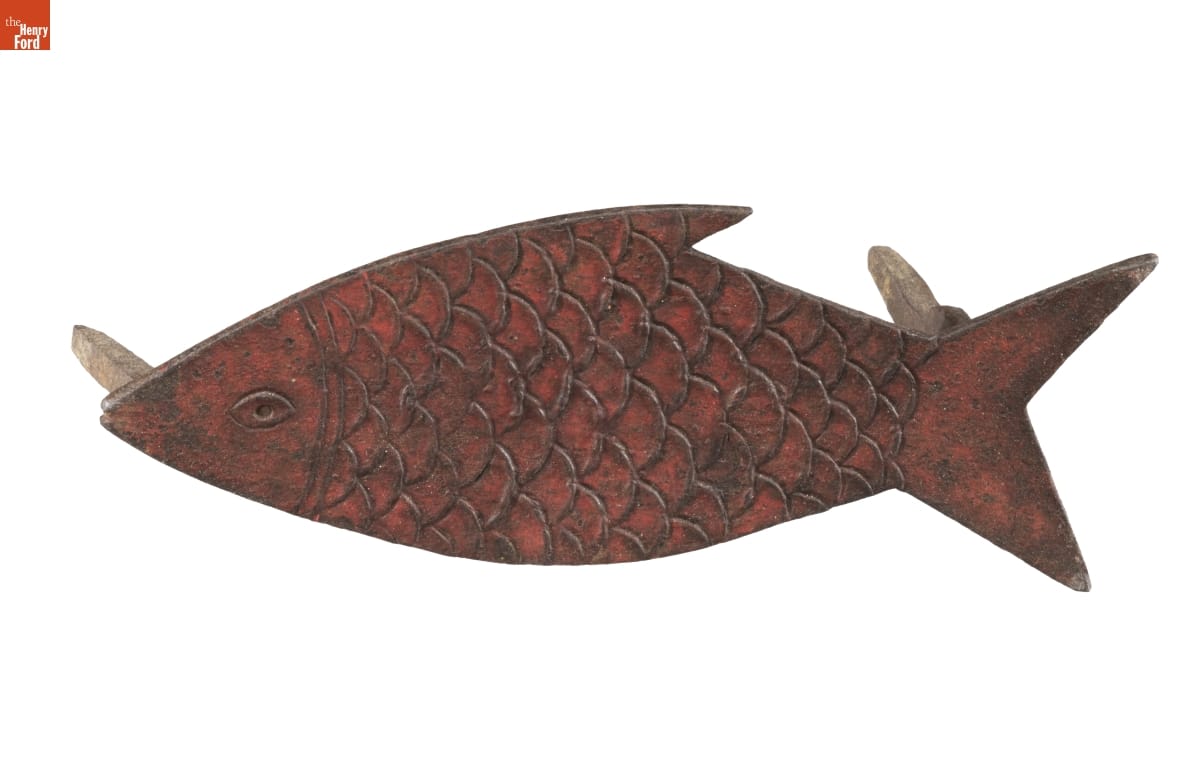
Conestoga Wagon Axe Socket, circa 1800
- Printing Plate with Image of a Conestoga Wagon -
- Collections - Artifact
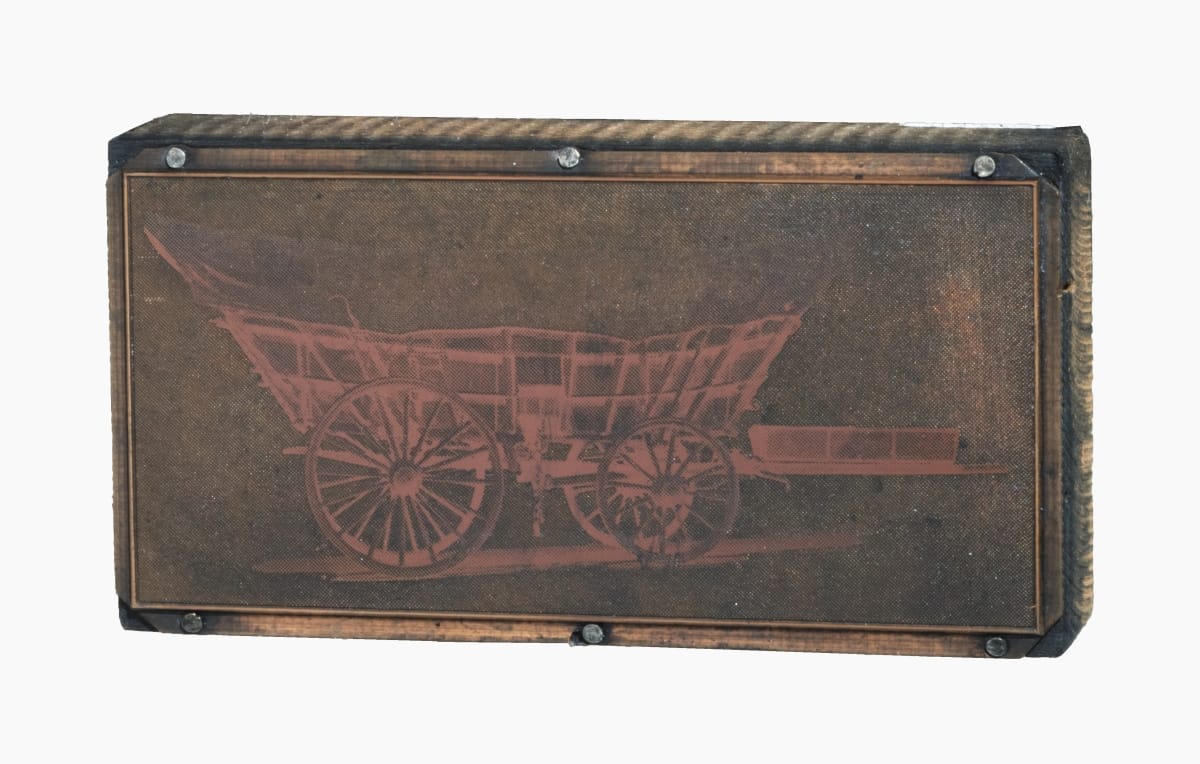
Printing Plate with Image of a Conestoga Wagon
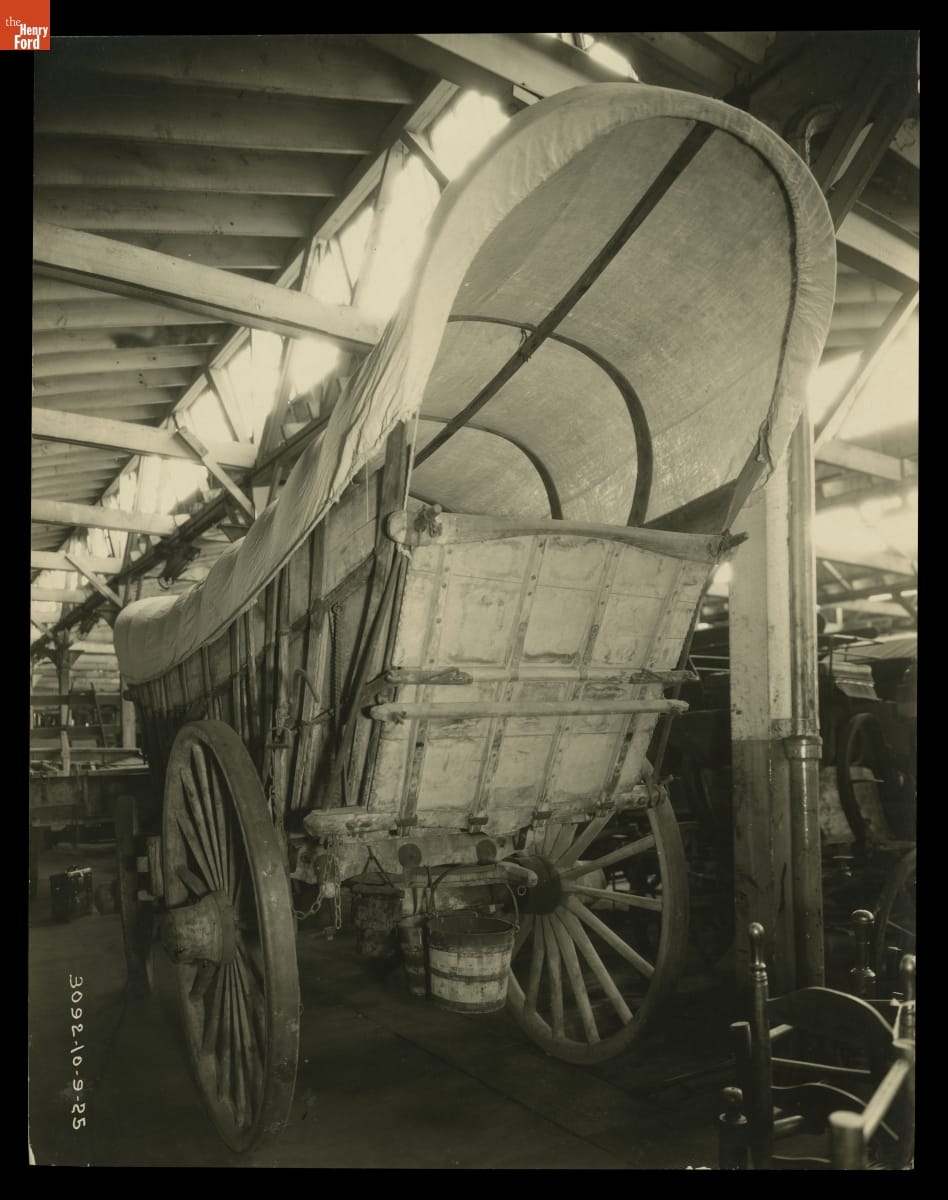
- Conestoga Wagon Collected by Henry Ford, Photographed in the Ford Engineering Laboratory, 1925 - Conestoga wagons first appeared in Pennsylvania's Conestoga River valley about 1750. Designed for freight, the Conestoga's curved body tended to keep the load in the center, rather than shifting it toward the rear. The Conestoga's popularity peaked in the first half of the 19th century -- before railroads replaced it for hauling agricultural products and manufactured goods.
- October 09, 1925
- Collections - Artifact
Conestoga Wagon Collected by Henry Ford, Photographed in the Ford Engineering Laboratory, 1925
Conestoga wagons first appeared in Pennsylvania's Conestoga River valley about 1750. Designed for freight, the Conestoga's curved body tended to keep the load in the center, rather than shifting it toward the rear. The Conestoga's popularity peaked in the first half of the 19th century -- before railroads replaced it for hauling agricultural products and manufactured goods.
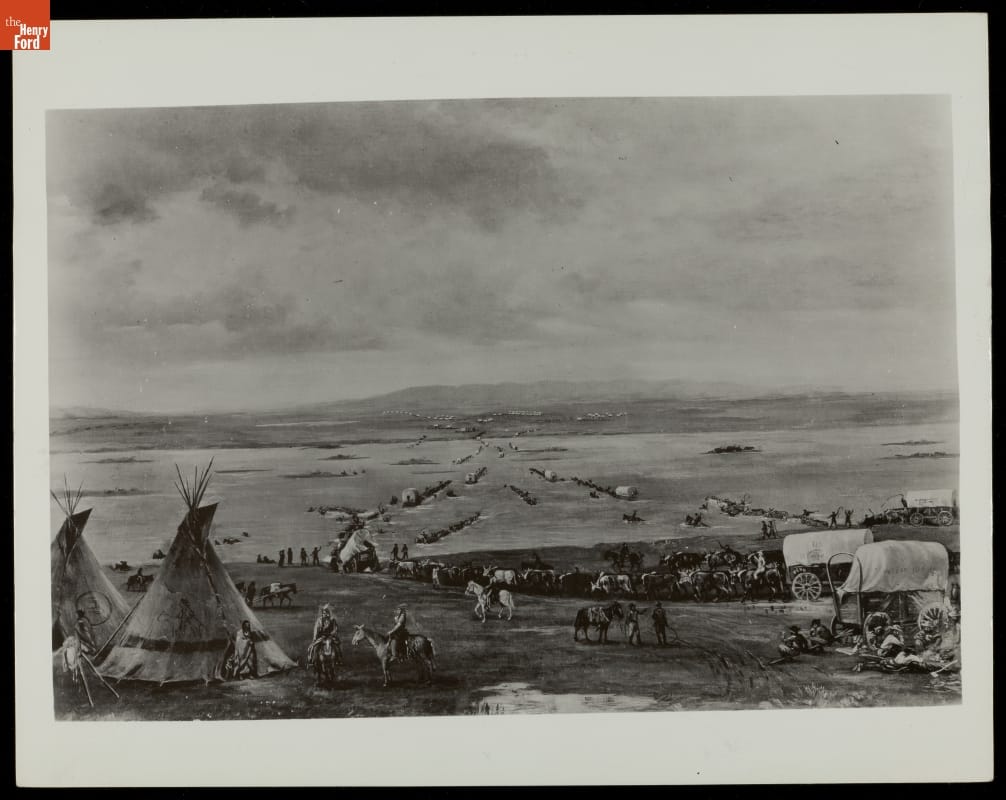
- Illustration of Crossing the South Fork of the Platte River, circa 1850 - In 1913, Henry Ford established Ford Motor Company's photographic department. Though few internal records describe company photography, remaining photographs reveal a wide range of departmental activity. Over nearly 100 years, Ford photographers documented company ventures, personal affairs, and daily life around the world. This photograph shows an illustration of an Overland Trail wagon train fording the Platte River.
- circa 1850
- Collections - Artifact
Illustration of Crossing the South Fork of the Platte River, circa 1850
In 1913, Henry Ford established Ford Motor Company's photographic department. Though few internal records describe company photography, remaining photographs reveal a wide range of departmental activity. Over nearly 100 years, Ford photographers documented company ventures, personal affairs, and daily life around the world. This photograph shows an illustration of an Overland Trail wagon train fording the Platte River.