
Search
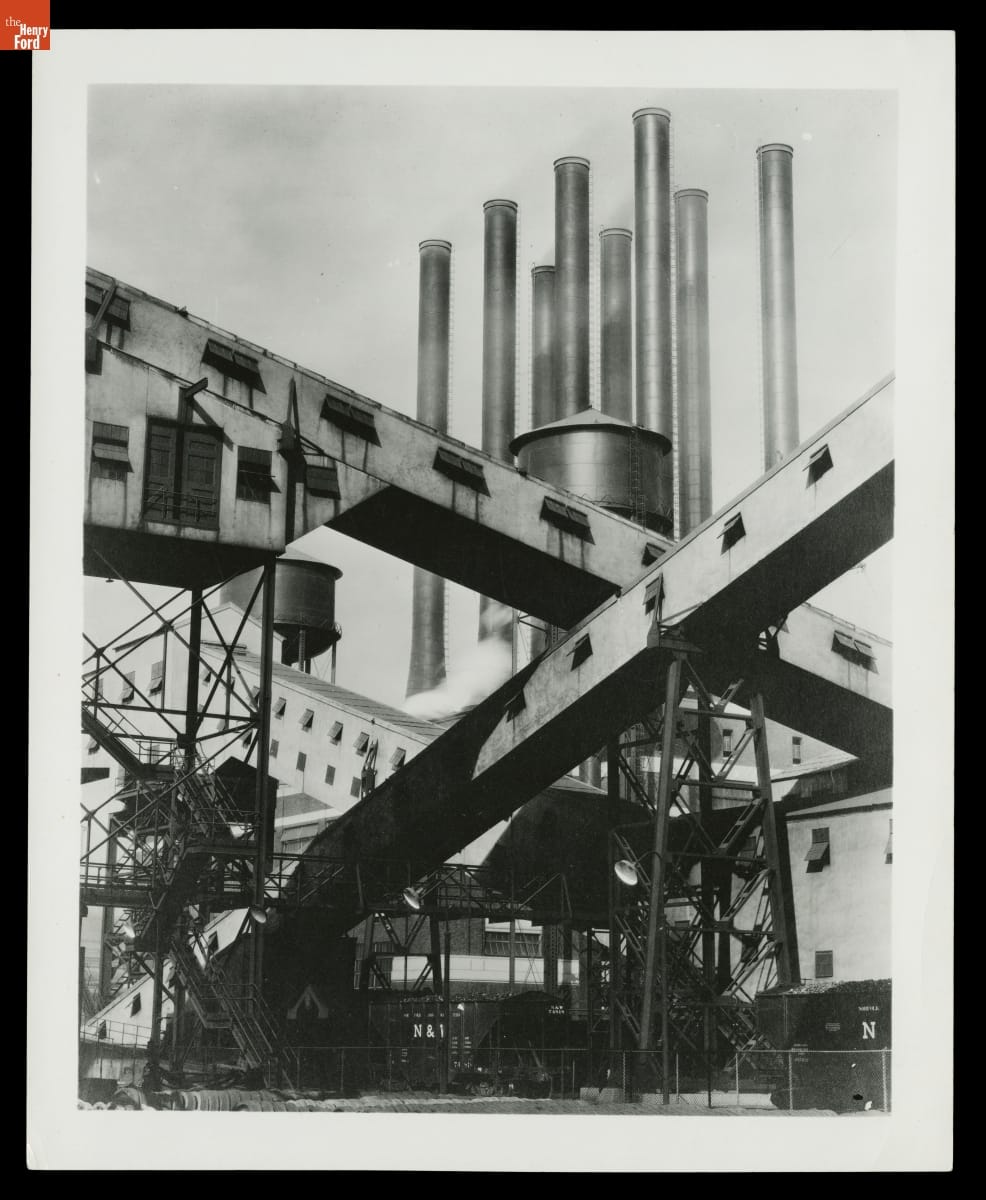
- Criss-crossed Conveyors at Ford Rouge Plant, 1927 - In 1927, Ford Motor Company commissioned Charles Sheeler to do a series of documentary photographs of its River Rouge industrial complex near Dearborn, Michigan. The conveyors moved coal and coke to the pulverizing building and screening stations. Coke made from coal was used in the steelmaking process of the blast furnaces. This vigorous photograph shows Sheeler's ability to form a compelling image from a complicated scene.
- 1927
- Collections - Artifact
Criss-crossed Conveyors at Ford Rouge Plant, 1927
In 1927, Ford Motor Company commissioned Charles Sheeler to do a series of documentary photographs of its River Rouge industrial complex near Dearborn, Michigan. The conveyors moved coal and coke to the pulverizing building and screening stations. Coke made from coal was used in the steelmaking process of the blast furnaces. This vigorous photograph shows Sheeler's ability to form a compelling image from a complicated scene.
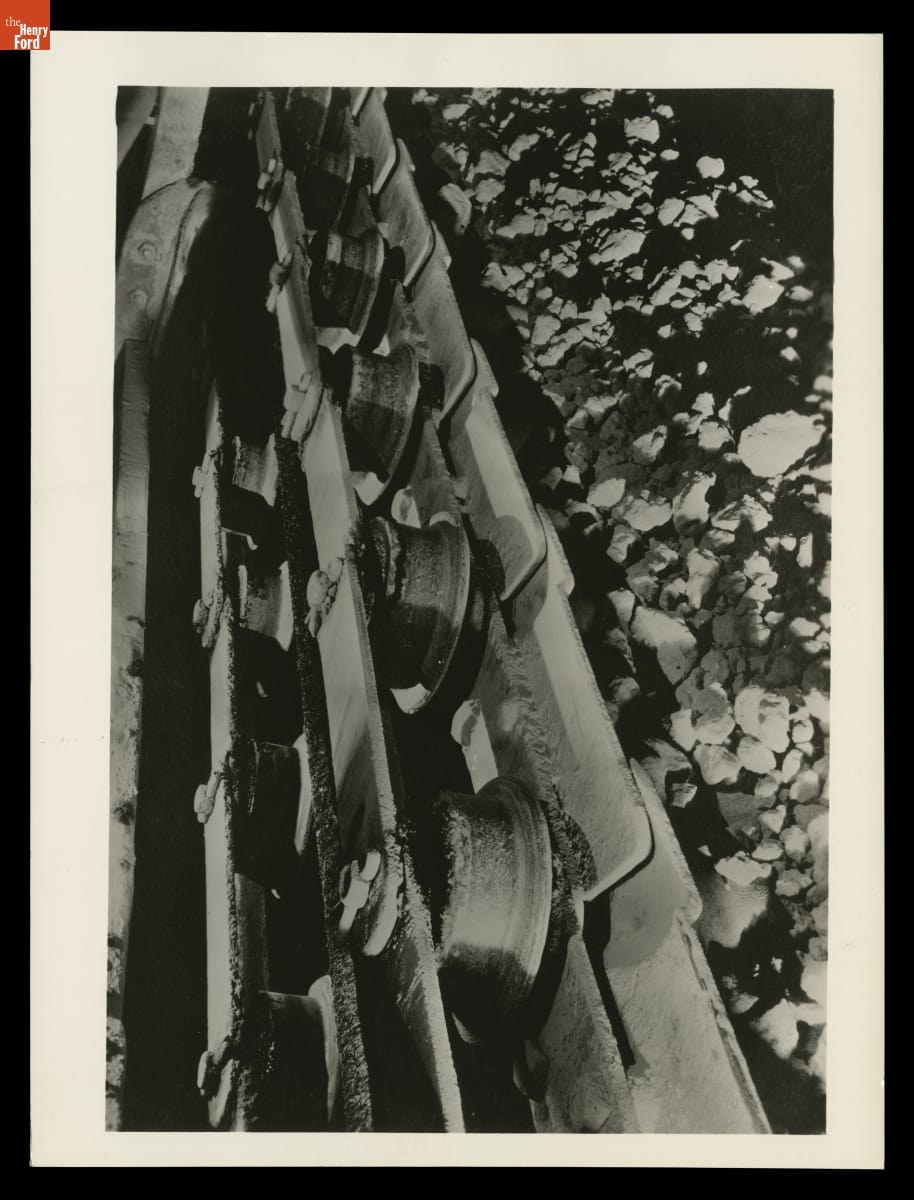
- Bauxite Ore Conveyor, Aluminum Company of America (Alcoa), 1930-1934 - The Aluminum Company of America (Alcoa) hired Margaret Bourke-White to photograph its factories and foundries for inclusion in its 1934 World's Fair display. The resulting photos demonstrated Bourke-White's talent for taking simple, yet dynamic photos and elevating industrial scenes into artistic pieces. This talent helped distinguish Bourke-White as one of the leading photojournalists of the 20th century.
- March 15, 1935
- Collections - Artifact
Bauxite Ore Conveyor, Aluminum Company of America (Alcoa), 1930-1934
The Aluminum Company of America (Alcoa) hired Margaret Bourke-White to photograph its factories and foundries for inclusion in its 1934 World's Fair display. The resulting photos demonstrated Bourke-White's talent for taking simple, yet dynamic photos and elevating industrial scenes into artistic pieces. This talent helped distinguish Bourke-White as one of the leading photojournalists of the 20th century.
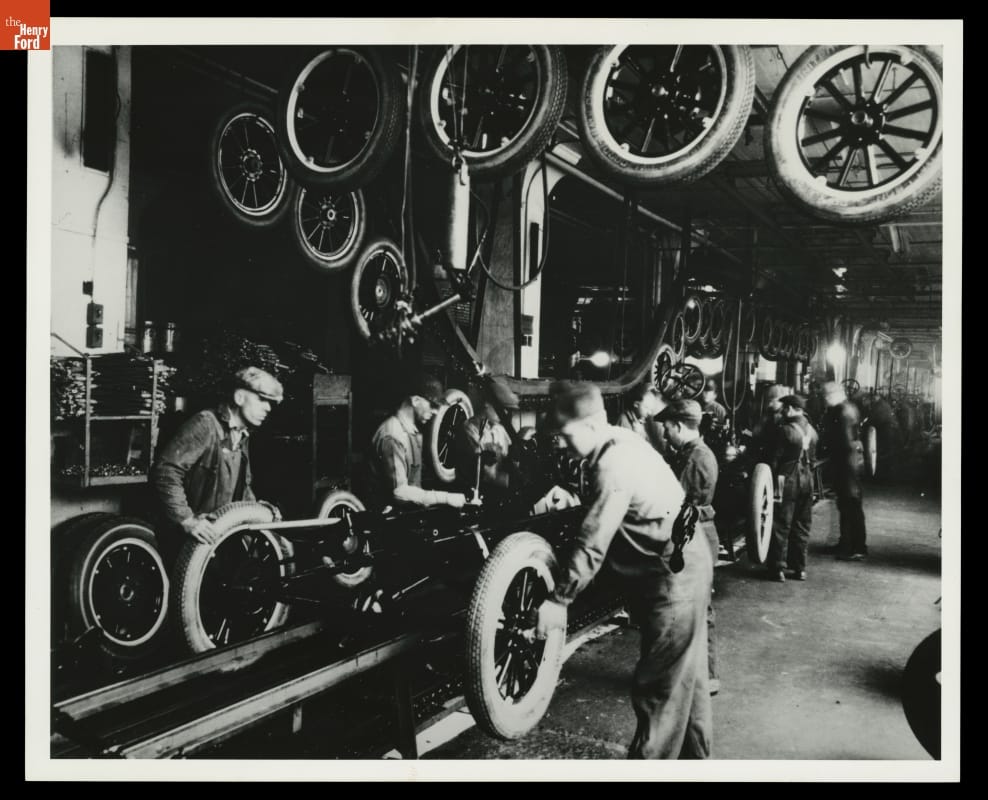
- Workers Installing Tires on Ford Model T Assembly Line at Highland Park Plant, circa 1925 - Ford constantly tweaked Model T assembly lines at its Highland Park plant for efficiency. In 1914, wheels and radiators were conveyed to a platform and slid down ramps for installation on the same line. By 1925, wheels (with tires already mounted and inflated) were conveyed directly to workers, who installed them on both sides of the chassis at once.
- circa 1925
- Collections - Artifact
Workers Installing Tires on Ford Model T Assembly Line at Highland Park Plant, circa 1925
Ford constantly tweaked Model T assembly lines at its Highland Park plant for efficiency. In 1914, wheels and radiators were conveyed to a platform and slid down ramps for installation on the same line. By 1925, wheels (with tires already mounted and inflated) were conveyed directly to workers, who installed them on both sides of the chassis at once.
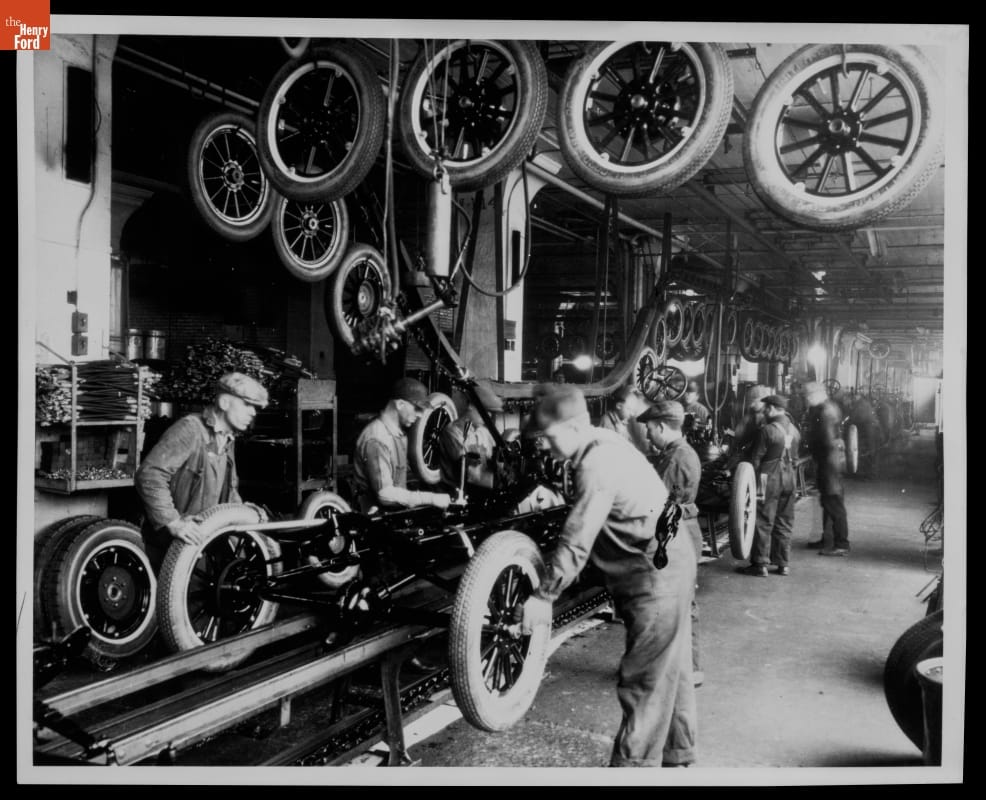
- Workers Installing Tires on Ford Model T Assembly Line at Highland Park Plant, circa 1925 - Ford constantly tweaked Model T assembly lines at its Highland Park plant for efficiency. In 1914, wheels and radiators were conveyed to a platform and slid down ramps for installation on the same line. By 1925, wheels (with tires already mounted and inflated) were conveyed directly to workers, who installed them on both sides of the chassis at once.
- circa 1925
- Collections - Artifact
Workers Installing Tires on Ford Model T Assembly Line at Highland Park Plant, circa 1925
Ford constantly tweaked Model T assembly lines at its Highland Park plant for efficiency. In 1914, wheels and radiators were conveyed to a platform and slid down ramps for installation on the same line. By 1925, wheels (with tires already mounted and inflated) were conveyed directly to workers, who installed them on both sides of the chassis at once.
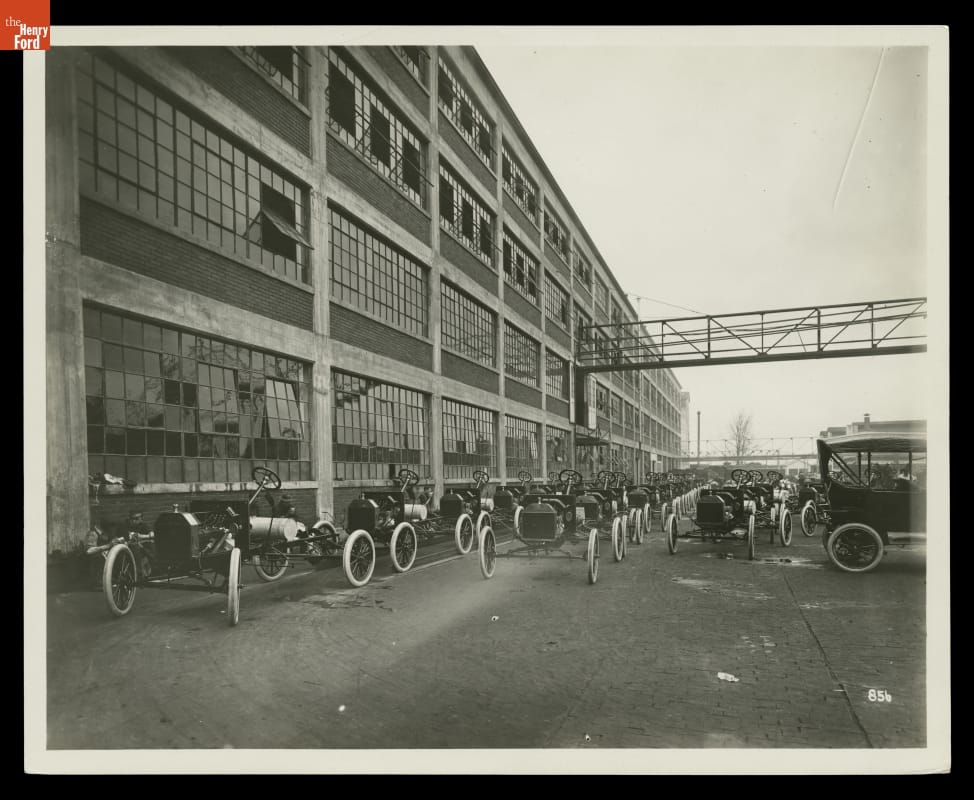
- Line of Ford Model T Chassis outside the Highland Park Plant, 1914 -
- 1914
- Collections - Artifact
Line of Ford Model T Chassis outside the Highland Park Plant, 1914
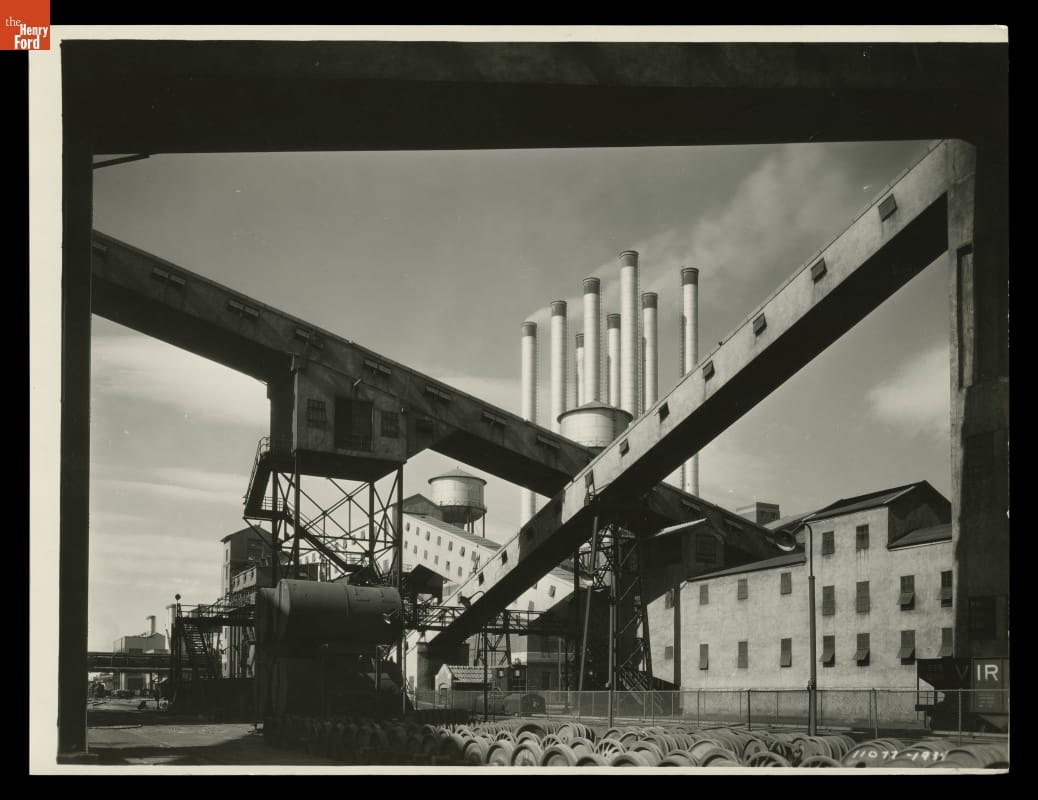
- Foundry Building at Ford Motor Company Rouge Plant, 1934 - The Ford building at the 1933-1934 Chicago World's Fair was lined with murals depicting the River Rouge Plant -- a symbol of industrial efficiency that exemplified the fair's Century of Progress theme. One mural included this artistic view of the Rouge foundry. This is where Ford's single-piece V-8 engine block was cast in 1932, setting an industry benchmark.
- 1934
- Collections - Artifact
Foundry Building at Ford Motor Company Rouge Plant, 1934
The Ford building at the 1933-1934 Chicago World's Fair was lined with murals depicting the River Rouge Plant -- a symbol of industrial efficiency that exemplified the fair's Century of Progress theme. One mural included this artistic view of the Rouge foundry. This is where Ford's single-piece V-8 engine block was cast in 1932, setting an industry benchmark.
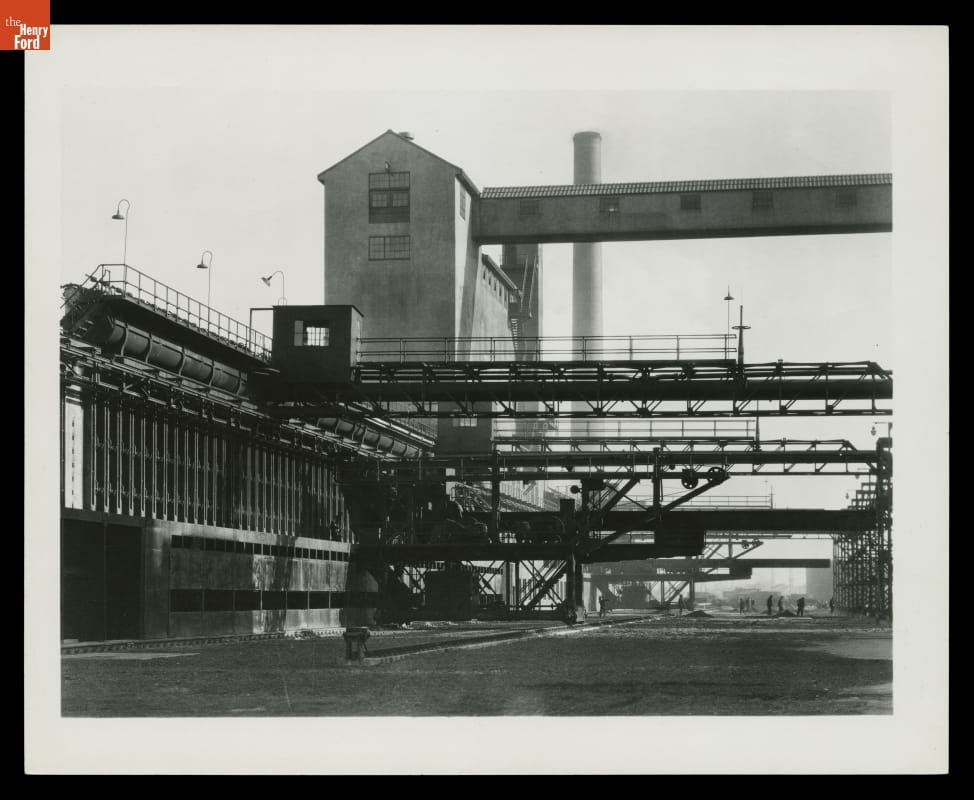
- Coke Ovens at Ford Motor Company Rouge Plant, 1927 - To fuel the Rouge Plant's blast furnaces, Ford purchased several bituminous coal mines. Because bituminous coal was relatively impure, coking ovens were constructed at the Rouge complex within reach of dockside coal bins. The ovens coked the coal, releasing gases and removing impurities. Products of the process included coke for the furnaces, gas, and a number of other useful by-products.
- 1927
- Collections - Artifact
Coke Ovens at Ford Motor Company Rouge Plant, 1927
To fuel the Rouge Plant's blast furnaces, Ford purchased several bituminous coal mines. Because bituminous coal was relatively impure, coking ovens were constructed at the Rouge complex within reach of dockside coal bins. The ovens coked the coal, releasing gases and removing impurities. Products of the process included coke for the furnaces, gas, and a number of other useful by-products.
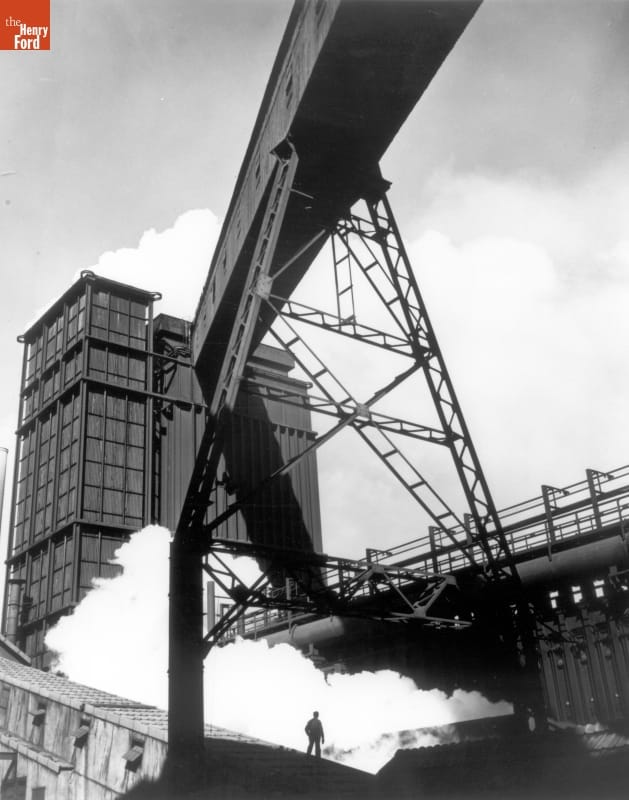
- Coke Quenching Tower at Ford Rouge Plant, 1944 - Coke ovens at Ford Motor Company's Rouge plant converted coal into high-carbon coke, used in the factory's blast furnaces to produce iron. In 1921, the Rouge's ovens could produce up to 3,600 tons of coke daily. New, more efficient coke ovens opened in 1937. The coking process also produced gas used to heat some of the factory's other furnaces.
- February 01, 1944
- Collections - Artifact
Coke Quenching Tower at Ford Rouge Plant, 1944
Coke ovens at Ford Motor Company's Rouge plant converted coal into high-carbon coke, used in the factory's blast furnaces to produce iron. In 1921, the Rouge's ovens could produce up to 3,600 tons of coke daily. New, more efficient coke ovens opened in 1937. The coking process also produced gas used to heat some of the factory's other furnaces.