
Search
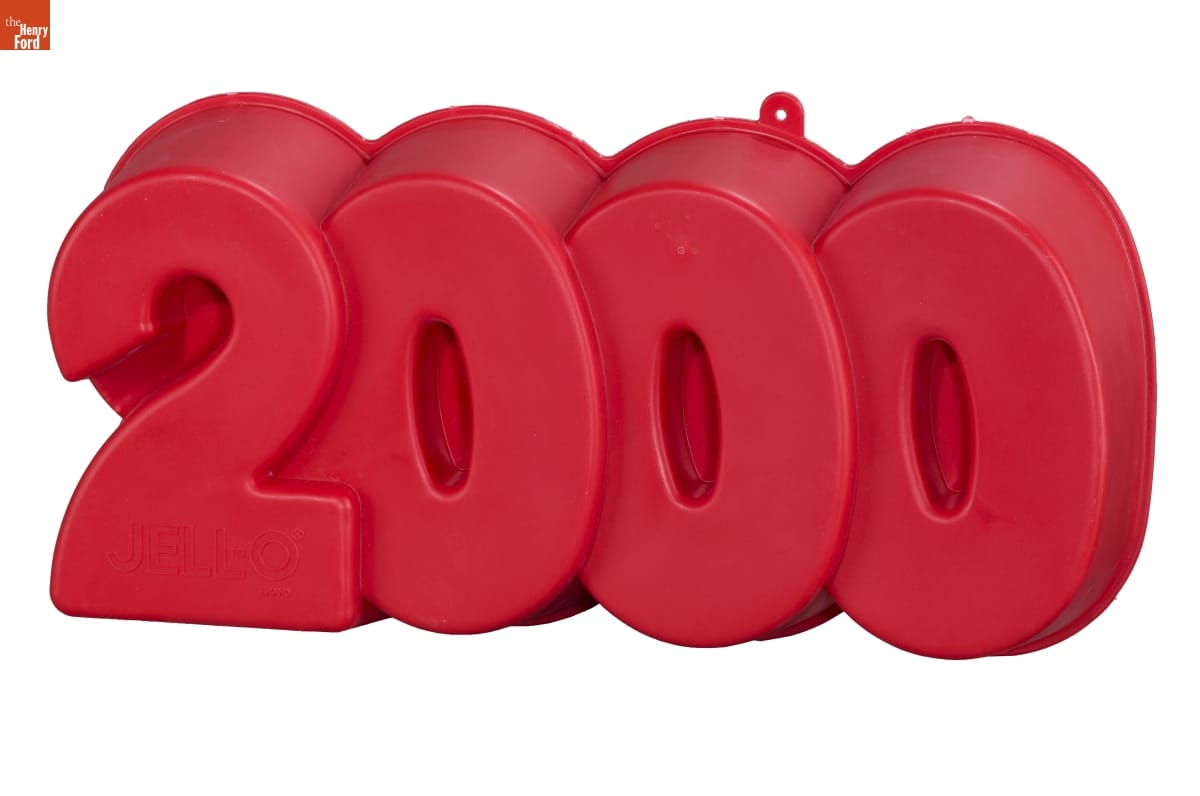
- "Jell-O 2000" Gelatin Mold, circa 1999 - For more than a century, Jell-O has been served at family gatherings, pot-lucks, parties, and barbeques, becoming an American icon. The Jell-O company created this special mold to help customers celebrate Y2K. The person who donated this mold also sent her New Year's Eve Jell-O recipe which called for sparkling club soda, sparkling Jell-O, and champagne. What a way to ring in the new millennium!
- circa 1999
- Collections - Artifact
"Jell-O 2000" Gelatin Mold, circa 1999
For more than a century, Jell-O has been served at family gatherings, pot-lucks, parties, and barbeques, becoming an American icon. The Jell-O company created this special mold to help customers celebrate Y2K. The person who donated this mold also sent her New Year's Eve Jell-O recipe which called for sparkling club soda, sparkling Jell-O, and champagne. What a way to ring in the new millennium!
- Recipe for "2000 Jell-o Mold," circa 1999 -
- circa 1999
- Collections - Artifact
Recipe for "2000 Jell-o Mold," circa 1999
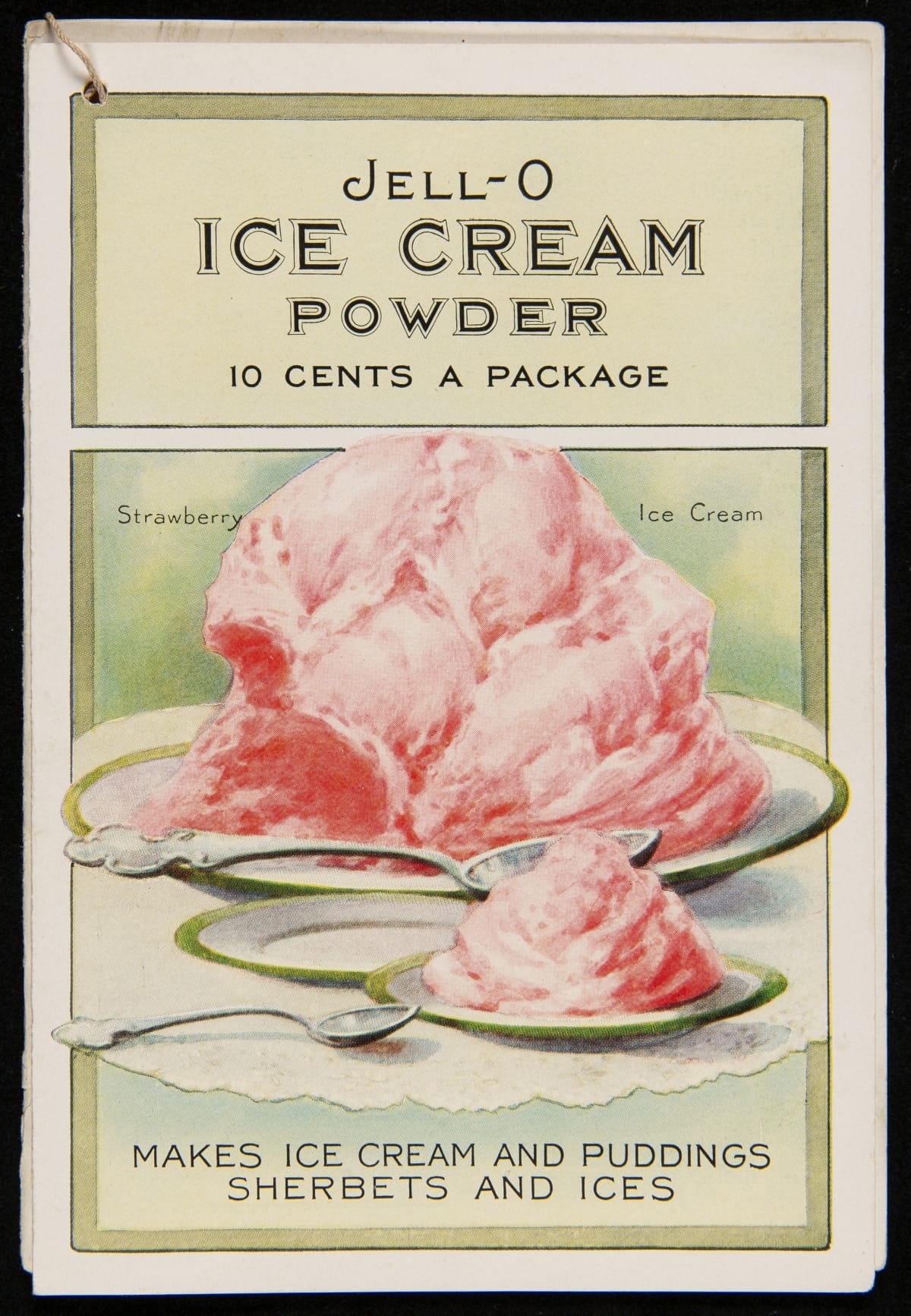
- Recipe Booklet, "Jell-O Ice Cream Powder," circa 1910 - In 1899, Orator F. Woodward acquired the rights to Jell-O from Pearle Wait, who had invented Jell-O when he added fruit flavoring and sugar to powdered gelatin in 1897. Woodward used recipe booklets to gather interest, which proved to be an invaluable marketing strategy. Additional Jell-O products included Jell-O Ice Cream Powder, in which homemakers could add milk and freeze it for a frozen treat.
- circa 1910
- Collections - Artifact
Recipe Booklet, "Jell-O Ice Cream Powder," circa 1910
In 1899, Orator F. Woodward acquired the rights to Jell-O from Pearle Wait, who had invented Jell-O when he added fruit flavoring and sugar to powdered gelatin in 1897. Woodward used recipe booklets to gather interest, which proved to be an invaluable marketing strategy. Additional Jell-O products included Jell-O Ice Cream Powder, in which homemakers could add milk and freeze it for a frozen treat.
- Recipe Booklet, "Jell-O Ice Cream Powder: Doesn't That Look Good?," circa 1910 - In 1899, Orator F. Woodward acquired the rights to Jell-O from Pearle Wait, who had invented Jell-O when he added fruit flavoring and sugar to powdered gelatin in 1897. Woodward used recipe booklets to gather interest, which proved to be an invaluable marketing strategy. Additional Jell-O products included Jell-O Ice Cream Powder, in which homemakers could add milk and freeze it for a frozen treat.

- circa 1910
- Collections - Artifact
Recipe Booklet, "Jell-O Ice Cream Powder: Doesn't That Look Good?," circa 1910
In 1899, Orator F. Woodward acquired the rights to Jell-O from Pearle Wait, who had invented Jell-O when he added fruit flavoring and sugar to powdered gelatin in 1897. Woodward used recipe booklets to gather interest, which proved to be an invaluable marketing strategy. Additional Jell-O products included Jell-O Ice Cream Powder, in which homemakers could add milk and freeze it for a frozen treat.
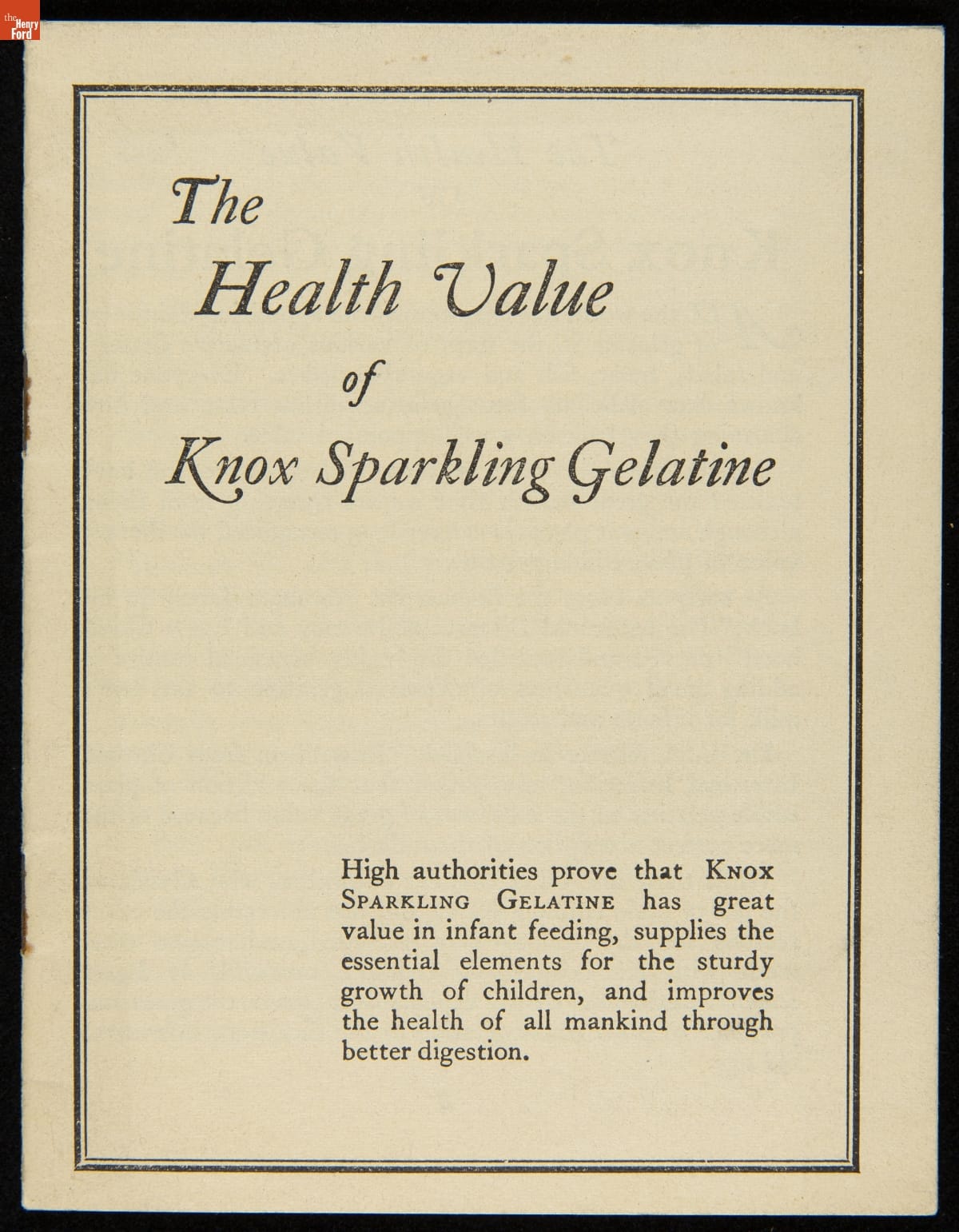
- Recipe Booklet,"The Health Value of Knox Sparkling Gelatine," 1924 - Charles B. Knox revolutionized the use of gelatin in 1889 when he developed a method for granulating gelatin (before this, gelatin was sold in sheet form). When Knox passed away in 1908, his wife Rose took over the Knox Gelatine company, marketing its unflavored "sparkling gelatin" to American housewives. This booklet from 1924 highlights the health benefits of eating Knox Sparkling Gelatine.
- 1924
- Collections - Artifact
Recipe Booklet,"The Health Value of Knox Sparkling Gelatine," 1924
Charles B. Knox revolutionized the use of gelatin in 1889 when he developed a method for granulating gelatin (before this, gelatin was sold in sheet form). When Knox passed away in 1908, his wife Rose took over the Knox Gelatine company, marketing its unflavored "sparkling gelatin" to American housewives. This booklet from 1924 highlights the health benefits of eating Knox Sparkling Gelatine.
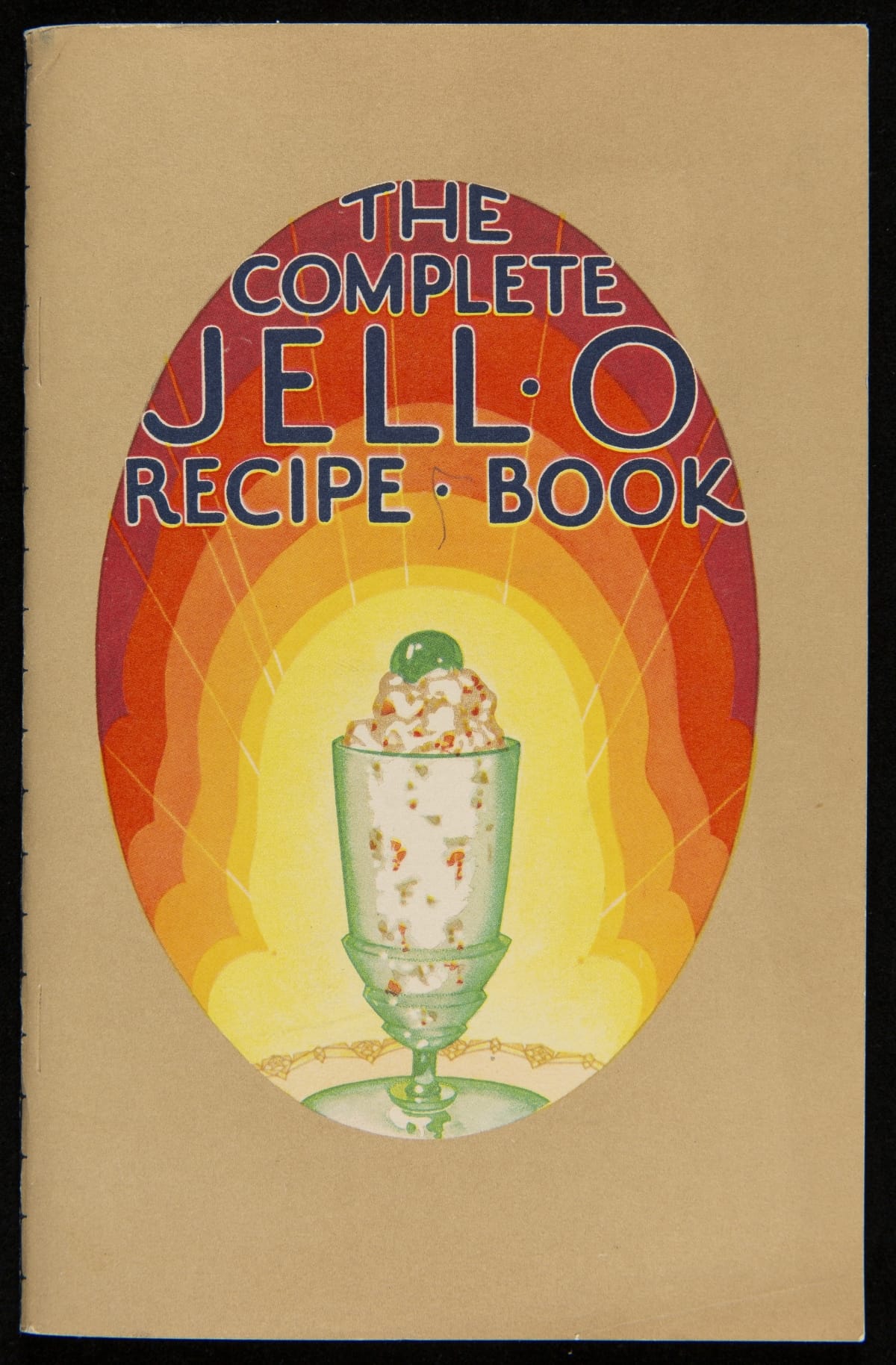
- Recipe Booklet, "The Complete Jell-O Recipe Book," 1929 - In 1899, Orator F. Woodward acquired the rights to Jell-O from Pearle Wait, who had invented Jell-O when he added fruit flavoring and sugar to powdered gelatin in 1897. While Wait was unable to market his product, Woodward used recipe booklets to gather interest. The booklets proved to be an invaluable marketing strategy, providing homemakers with creative uses for the ready-made product.
- 1929
- Collections - Artifact
Recipe Booklet, "The Complete Jell-O Recipe Book," 1929
In 1899, Orator F. Woodward acquired the rights to Jell-O from Pearle Wait, who had invented Jell-O when he added fruit flavoring and sugar to powdered gelatin in 1897. While Wait was unable to market his product, Woodward used recipe booklets to gather interest. The booklets proved to be an invaluable marketing strategy, providing homemakers with creative uses for the ready-made product.
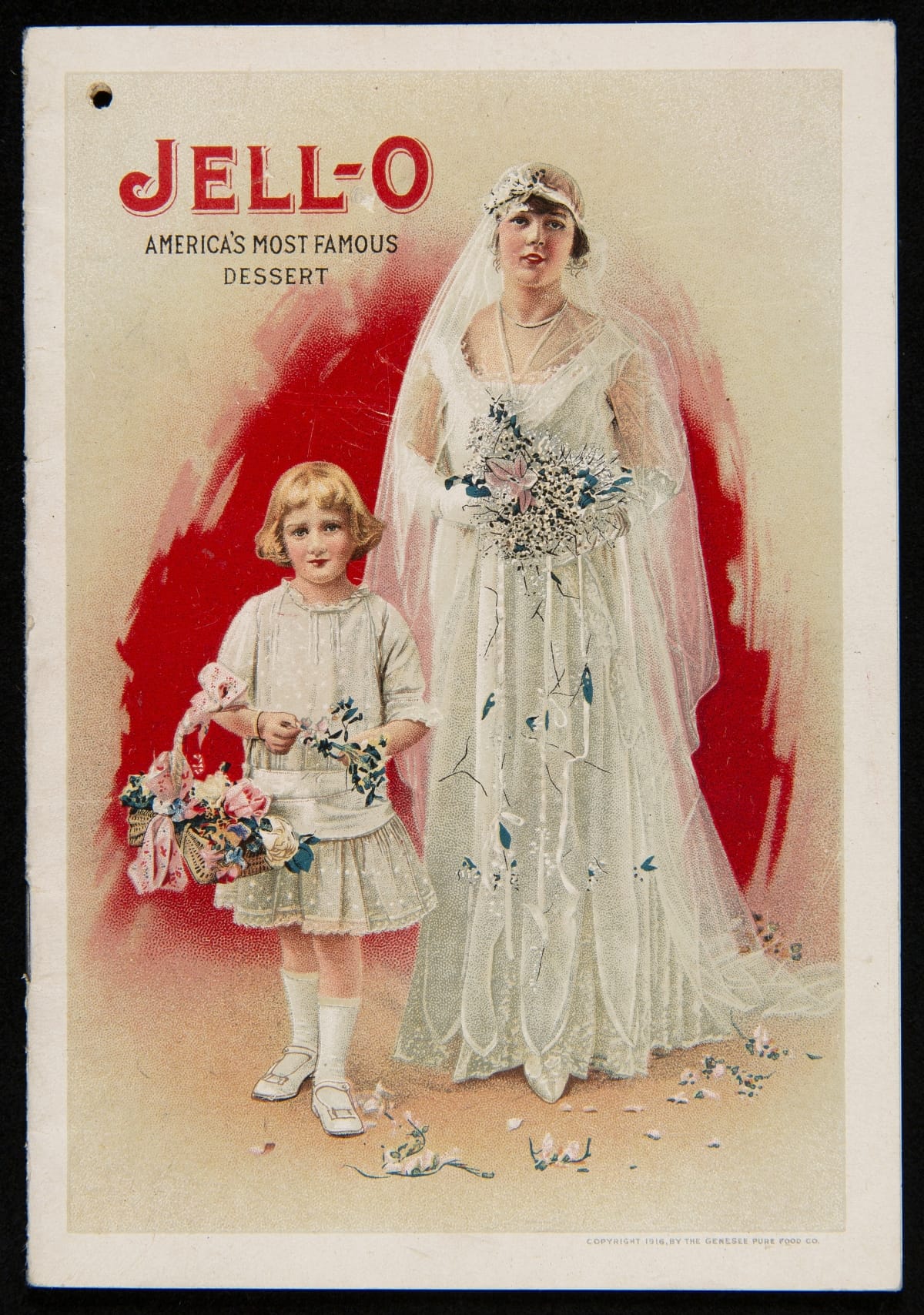
- Recipe Booklet, "Jell-O, Americas Most Famous Dessert," 1916 - In 1899, Orator F. Woodward acquired the rights to Jell-O from Pearle Wait, who had invented Jell-O when he added fruit flavoring and sugar to powdered gelatin in 1897. While Wait was unable to market his product, Woodward used recipe booklets to gather interest. The booklets proved to be an invaluable marketing strategy, providing homemakers with creative uses for the ready-made product.
- 1916
- Collections - Artifact
Recipe Booklet, "Jell-O, Americas Most Famous Dessert," 1916
In 1899, Orator F. Woodward acquired the rights to Jell-O from Pearle Wait, who had invented Jell-O when he added fruit flavoring and sugar to powdered gelatin in 1897. While Wait was unable to market his product, Woodward used recipe booklets to gather interest. The booklets proved to be an invaluable marketing strategy, providing homemakers with creative uses for the ready-made product.
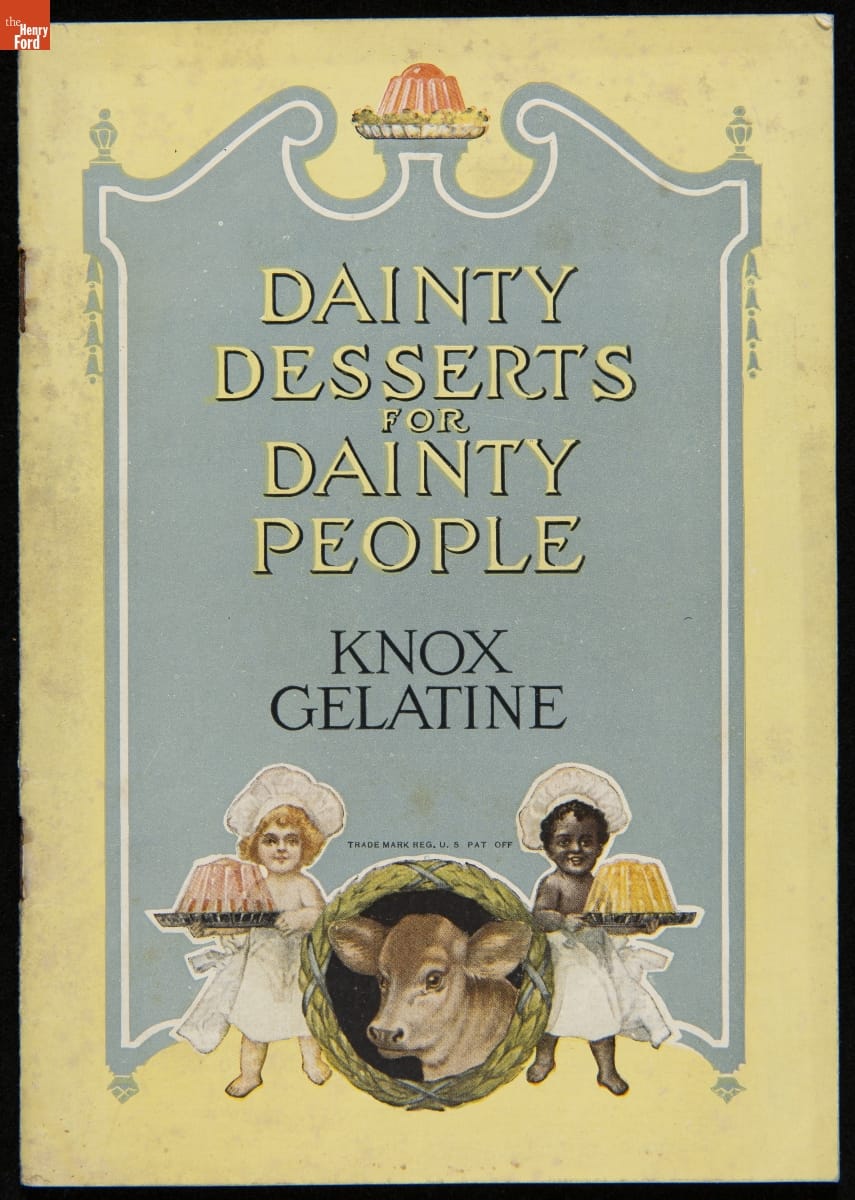
- "Dainty Desserts for Dainty People," 1924 - Charles B. Knox revolutionized the use of gelatin in 1889 when he developed a method for granulating gelatin (before this, gelatin was sold in sheet form). When Knox passed away in 1908, his wife Rose took over the Knox Gelatine company, marketing its gelatin to American housewives. Recipe booklets, like this one, provided creative uses for the ready-made product.
- 1924
- Collections - Artifact
"Dainty Desserts for Dainty People," 1924
Charles B. Knox revolutionized the use of gelatin in 1889 when he developed a method for granulating gelatin (before this, gelatin was sold in sheet form). When Knox passed away in 1908, his wife Rose took over the Knox Gelatine company, marketing its gelatin to American housewives. Recipe booklets, like this one, provided creative uses for the ready-made product.
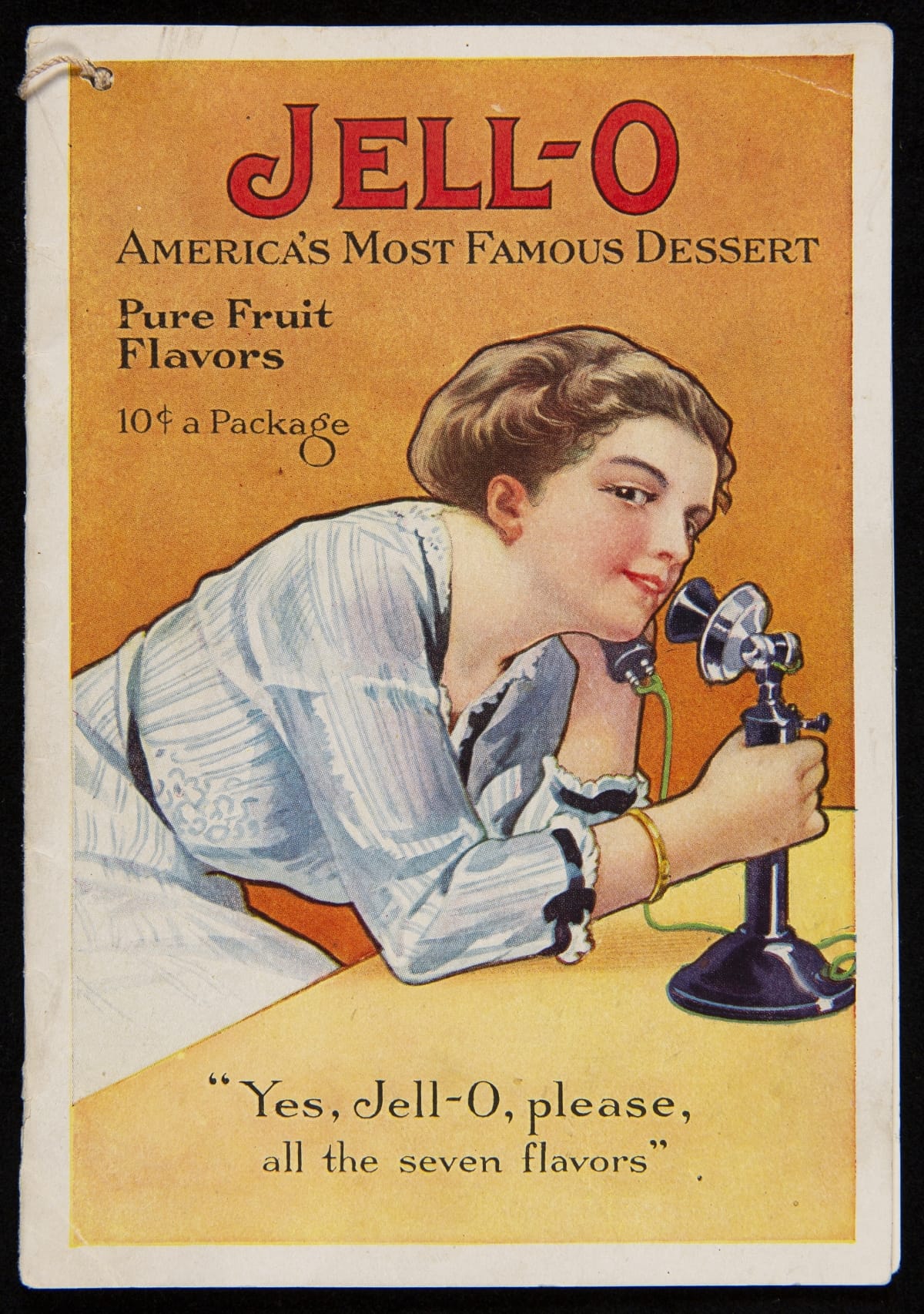
- Recipe Booklet, "Jell-O, America's Most Famous Dessert," circa 1910 - In 1899, Orator F. Woodward acquired the rights to Jell-O from Pearle Wait, who had invented Jell-O when he added fruit flavoring and sugar to powdered gelatin in 1897. While Wait was unable to market his product, Woodward used recipe booklets to gather interest. The booklets proved to be an invaluable marketing strategy, providing homemakers with creative uses for the ready-made product.
- circa 1910
- Collections - Artifact
Recipe Booklet, "Jell-O, America's Most Famous Dessert," circa 1910
In 1899, Orator F. Woodward acquired the rights to Jell-O from Pearle Wait, who had invented Jell-O when he added fruit flavoring and sugar to powdered gelatin in 1897. While Wait was unable to market his product, Woodward used recipe booklets to gather interest. The booklets proved to be an invaluable marketing strategy, providing homemakers with creative uses for the ready-made product.