
Search
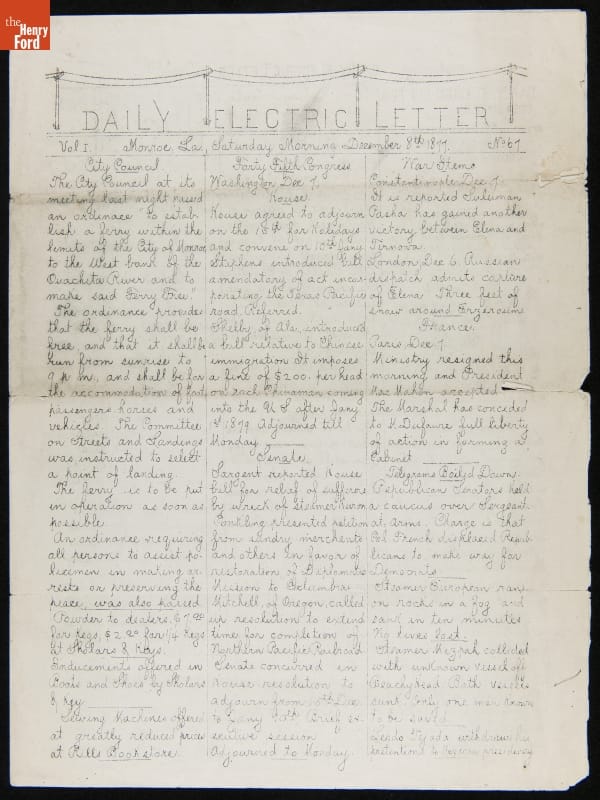
- "Daily Electric Letter" Newspaper for December 8, 1877, Vol. 1, No. 69, Made with the Edison Electric Pen and Duplicating Press -
- December 08, 1877
- Collections - Artifact
"Daily Electric Letter" Newspaper for December 8, 1877, Vol. 1, No. 69, Made with the Edison Electric Pen and Duplicating Press
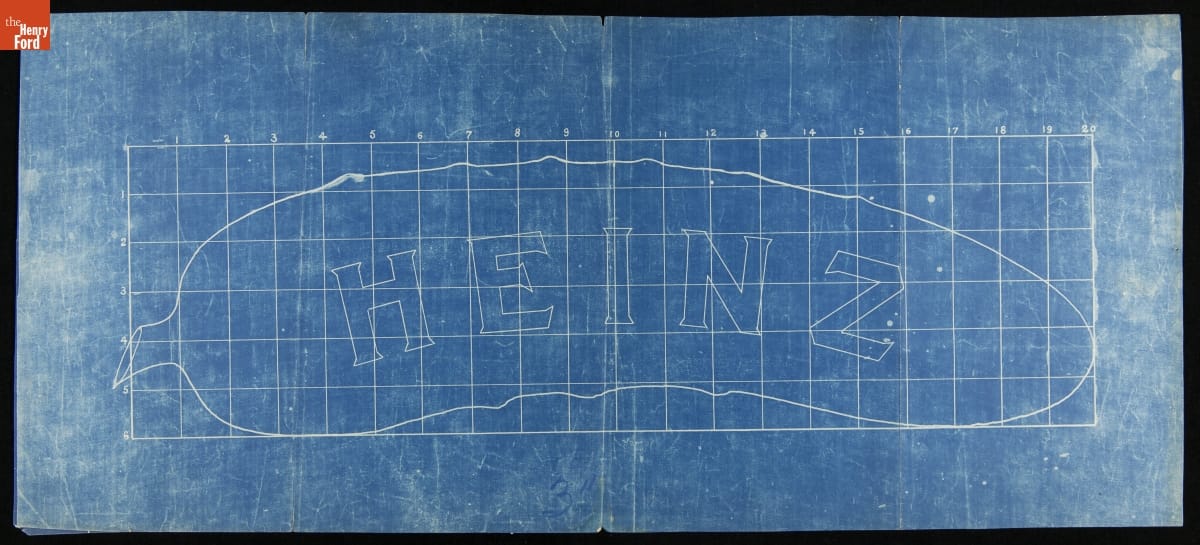
- Drawing of the H. J. Heinz Standard Pickle Advertising Logo, 1923 - The H.J. Heinz Company employed ambitious and comprehensive advertising strategies to meet consumers at home, in stores, and everywhere in between. By 1900, Heinz had created a strong brand identity and became a household name. The signature pickle seen here is the iconic advertising symbol of the Heinz brand.
- 1923
- Collections - Artifact
Drawing of the H. J. Heinz Standard Pickle Advertising Logo, 1923
The H.J. Heinz Company employed ambitious and comprehensive advertising strategies to meet consumers at home, in stores, and everywhere in between. By 1900, Heinz had created a strong brand identity and became a household name. The signature pickle seen here is the iconic advertising symbol of the Heinz brand.
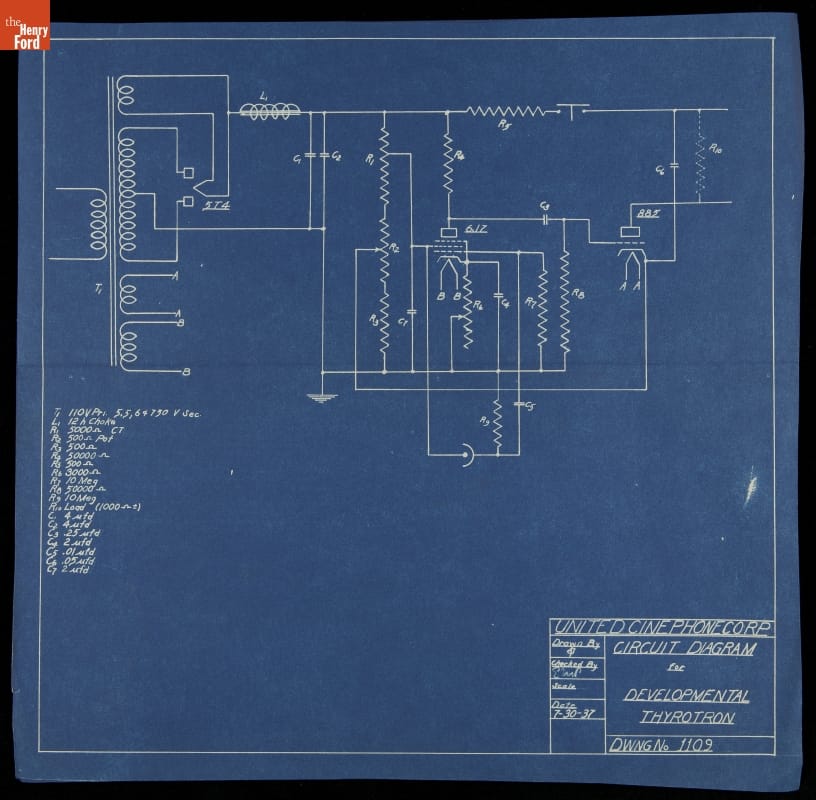
- Circuit Diagram for Developmental Thyrotron, Reference Number 1109 -
- July 30, 1937
- Collections - Artifact
Circuit Diagram for Developmental Thyrotron, Reference Number 1109
- Reproduction of the 1856 Essay by John Burroughs, "Work and Wait" - Naturalist John Burroughs penned this composition during his college preparatory studies at Cooperstown Seminary. This was an early foray into essay writing in which Burroughs would excel. The photostatic reproduction of this essay, pictured above, was used by Clara Barrus, Burroughs' literary executor and official biographer, for her book <EM>The Life and Letters of John Burroughs</EM>, published in 1925.

- 1856
- Collections - Artifact
Reproduction of the 1856 Essay by John Burroughs, "Work and Wait"
Naturalist John Burroughs penned this composition during his college preparatory studies at Cooperstown Seminary. This was an early foray into essay writing in which Burroughs would excel. The photostatic reproduction of this essay, pictured above, was used by Clara Barrus, Burroughs' literary executor and official biographer, for her book The Life and Letters of John Burroughs, published in 1925.
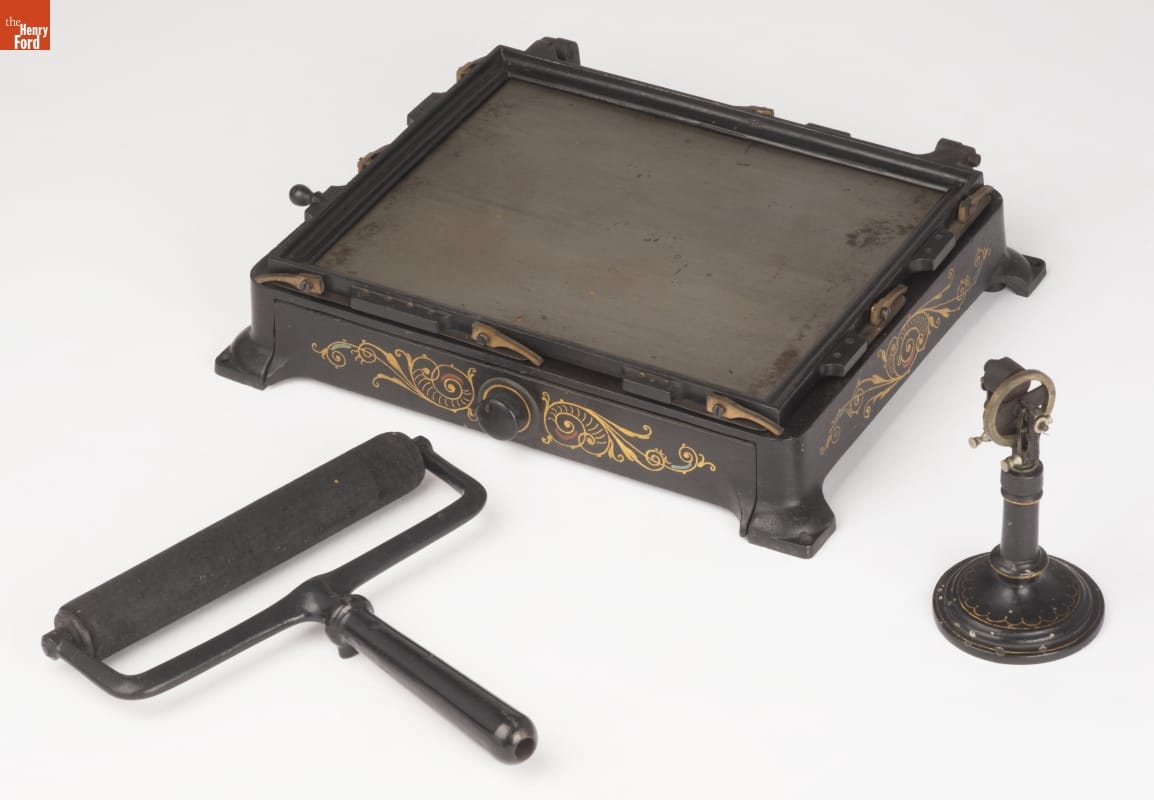
- Edison's Autographic Press and Electric Pen, 1875-1880 - Thomas Edison's electric pen, an ancestor of both the mimeograph and the tattoo needle, was a successful product in the mid-1870s. Users would write normally with the pen, which, instead of a nib, had a needle powered by an electric motor. The needle poked holes into a stencil, which was then used to copy the document. Many businesses found document duplication an attractive possibility.
- 1875-1880
- Collections - Artifact
Edison's Autographic Press and Electric Pen, 1875-1880
Thomas Edison's electric pen, an ancestor of both the mimeograph and the tattoo needle, was a successful product in the mid-1870s. Users would write normally with the pen, which, instead of a nib, had a needle powered by an electric motor. The needle poked holes into a stencil, which was then used to copy the document. Many businesses found document duplication an attractive possibility.
- A.B. Dick Co. Edison Mimeograph No. 12, 1895-1915 -
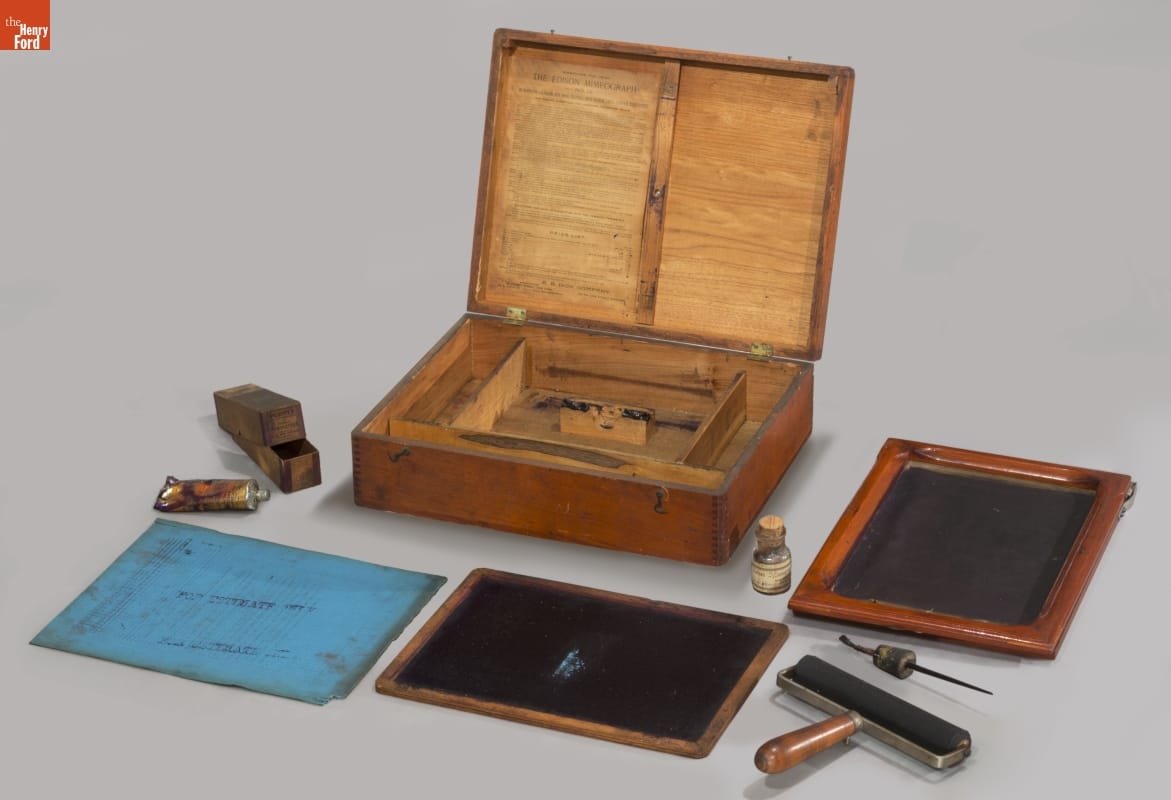
- 1895-1915
- Collections - Artifact
A.B. Dick Co. Edison Mimeograph No. 12, 1895-1915
- Tattoo Flash Portfolio, circa 1918 - Tattoos communicate stories. Their content ranges from deeply personal and traditional--to regrettable and frivolous. In the early 1900s, "Professor" Waters apprenticed as a tattoo artist in carnivals and New York's Bowery District. He ran a successful supply shop in Detroit (1918-1939), patenting the standard "two-coil" tattoo machine in 1929. Designs from his flash sheets continue to inspire tattooists today.
- circa 1918
- Collections - Artifact
Tattoo Flash Portfolio, circa 1918
Tattoos communicate stories. Their content ranges from deeply personal and traditional--to regrettable and frivolous. In the early 1900s, "Professor" Waters apprenticed as a tattoo artist in carnivals and New York's Bowery District. He ran a successful supply shop in Detroit (1918-1939), patenting the standard "two-coil" tattoo machine in 1929. Designs from his flash sheets continue to inspire tattooists today.
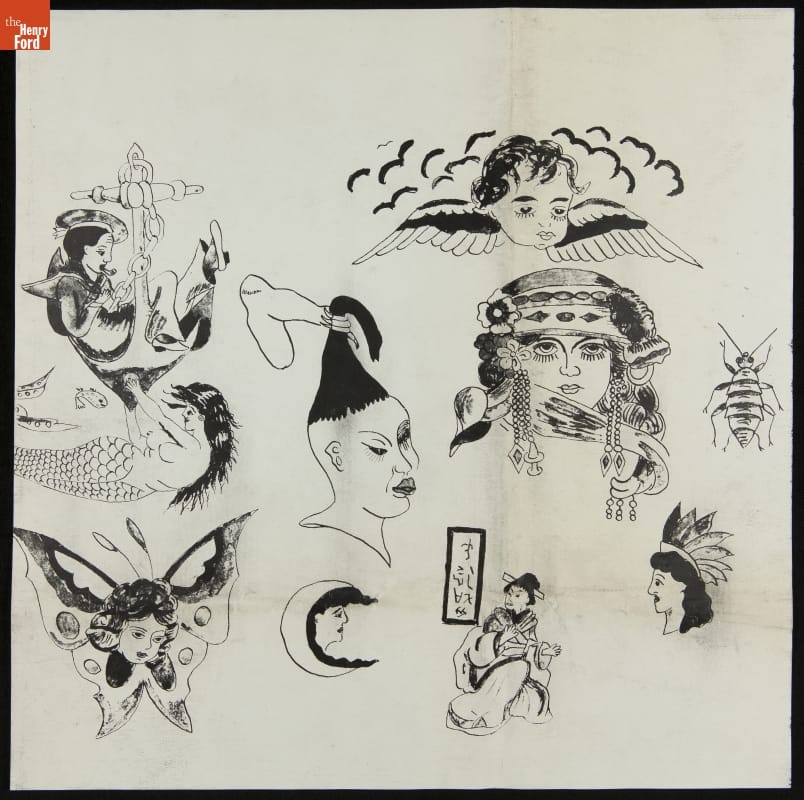
- Tattoo Flash, circa 1925 - Tattoos communicate stories. Their content ranges from deeply personal and traditional--to regrettable and frivolous. In the early 1900s, "Professor" Waters apprenticed as a tattoo artist in carnivals and New York's Bowery District. He ran a successful supply shop in Detroit (1918-1939), patenting the standard "two-coil" tattoo machine in 1929. Designs from his flash sheets continue to inspire tattooists today.
- circa 1925
- Collections - Artifact
Tattoo Flash, circa 1925
Tattoos communicate stories. Their content ranges from deeply personal and traditional--to regrettable and frivolous. In the early 1900s, "Professor" Waters apprenticed as a tattoo artist in carnivals and New York's Bowery District. He ran a successful supply shop in Detroit (1918-1939), patenting the standard "two-coil" tattoo machine in 1929. Designs from his flash sheets continue to inspire tattooists today.
- "New Simplified Mimeograph for Every Office. No Expert Needed to Produce Superior Copies," 1960 -
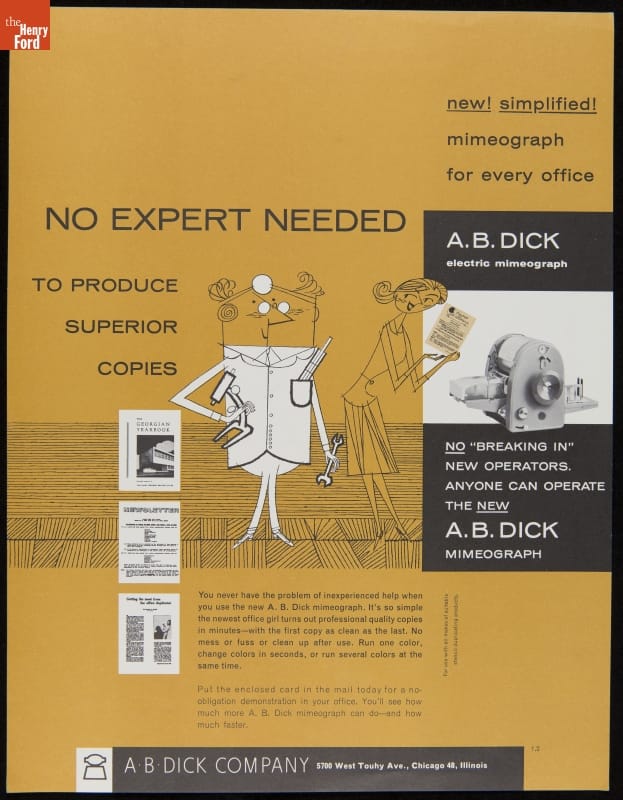
- 1960
- Collections - Artifact
"New Simplified Mimeograph for Every Office. No Expert Needed to Produce Superior Copies," 1960
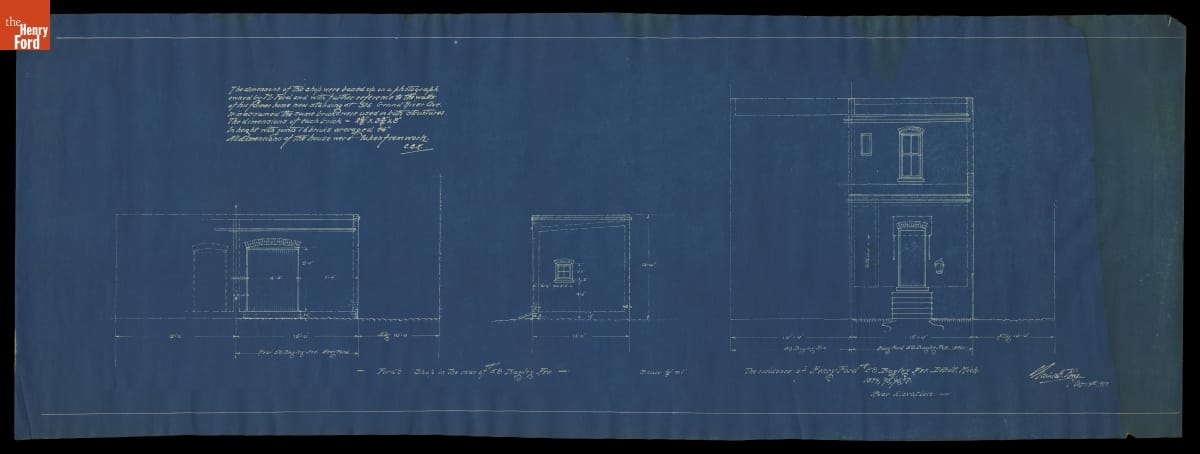
- Henry Ford Residence and Workshop at #58 Bagley Ave, Detroit, Michigan, 1894-1897 - From late 1893 to mid-1897, Henry and Clara Ford rented the left half of a duplex at 58 Bagley Avenue in Detroit. Henry built his first automobile, the 1896 Quadricycle, in a shed behind the house. Charles Brady King drew this blueprint of the Bagley Avenue buildings in 1929, by which time the house was converted into a tea room.
- October 14, 1929
- Collections - Artifact
Henry Ford Residence and Workshop at #58 Bagley Ave, Detroit, Michigan, 1894-1897
From late 1893 to mid-1897, Henry and Clara Ford rented the left half of a duplex at 58 Bagley Avenue in Detroit. Henry built his first automobile, the 1896 Quadricycle, in a shed behind the house. Charles Brady King drew this blueprint of the Bagley Avenue buildings in 1929, by which time the house was converted into a tea room.