
Search
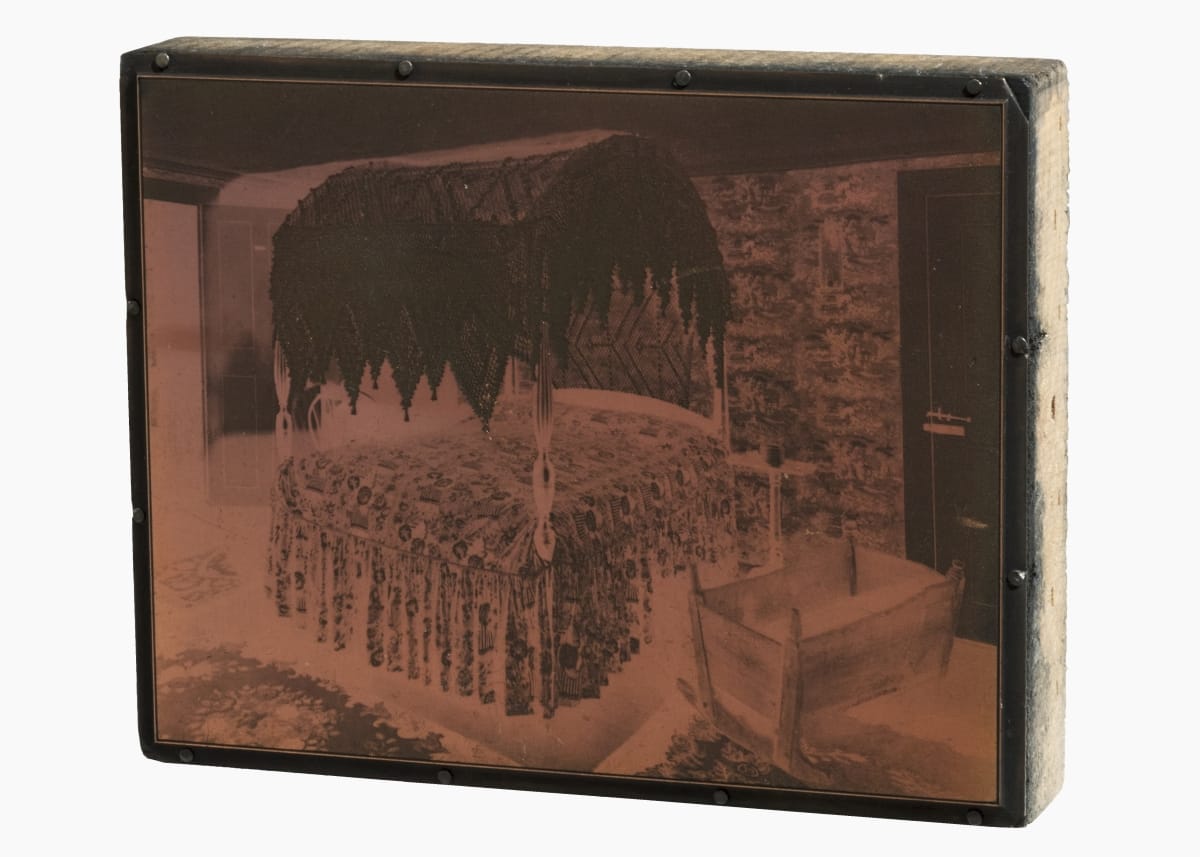
- Printing Plate with Image of a Bedroom Interior -
- Collections - Artifact
Printing Plate with Image of a Bedroom Interior
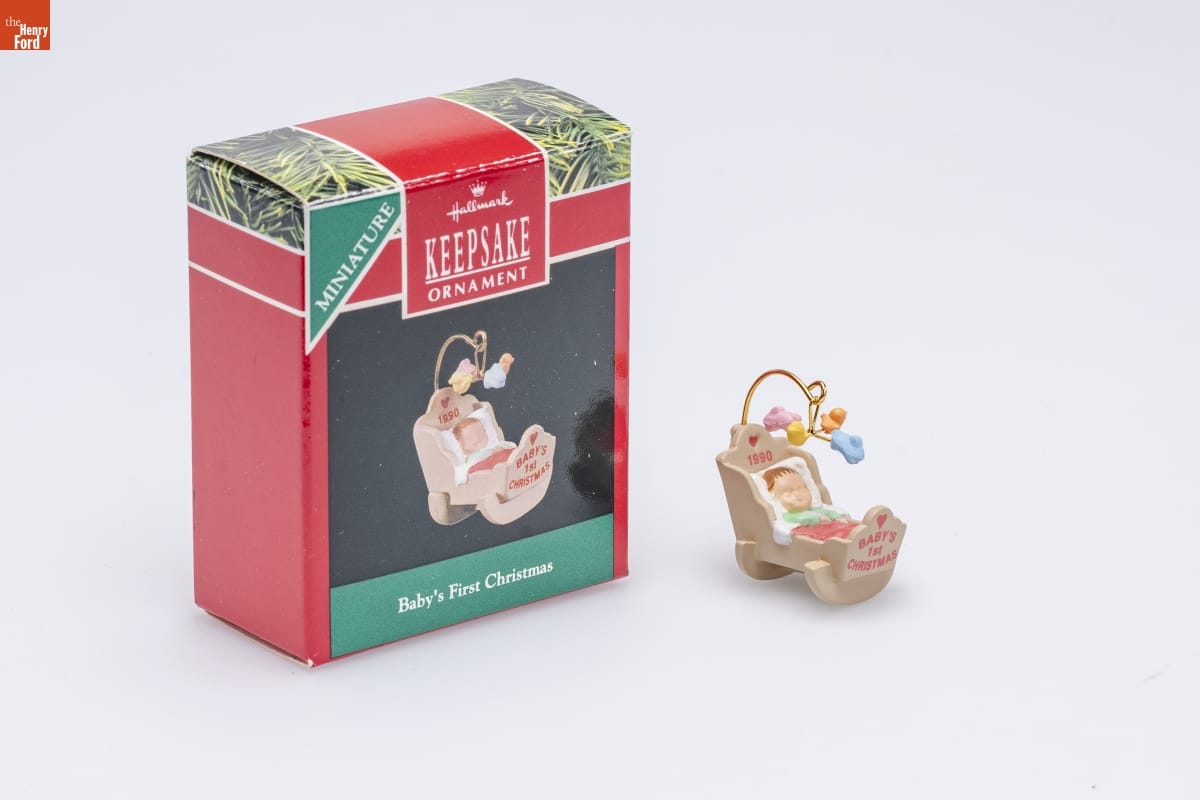
- Hallmark "Baby's First Christmas" Miniature Christmas Ornament, 1990 - Already known for greeting cards, Hallmark introduced a line of Christmas ornaments in 1973. The company's annual release of an increasing array of ornaments appealed to customers' interest in marking memories and milestones as well as expressing one's personality and unique tastes. Purchasing an ornament like this one would bring back happy family memories of that event year after year.
- 1990
- Collections - Artifact
Hallmark "Baby's First Christmas" Miniature Christmas Ornament, 1990
Already known for greeting cards, Hallmark introduced a line of Christmas ornaments in 1973. The company's annual release of an increasing array of ornaments appealed to customers' interest in marking memories and milestones as well as expressing one's personality and unique tastes. Purchasing an ornament like this one would bring back happy family memories of that event year after year.
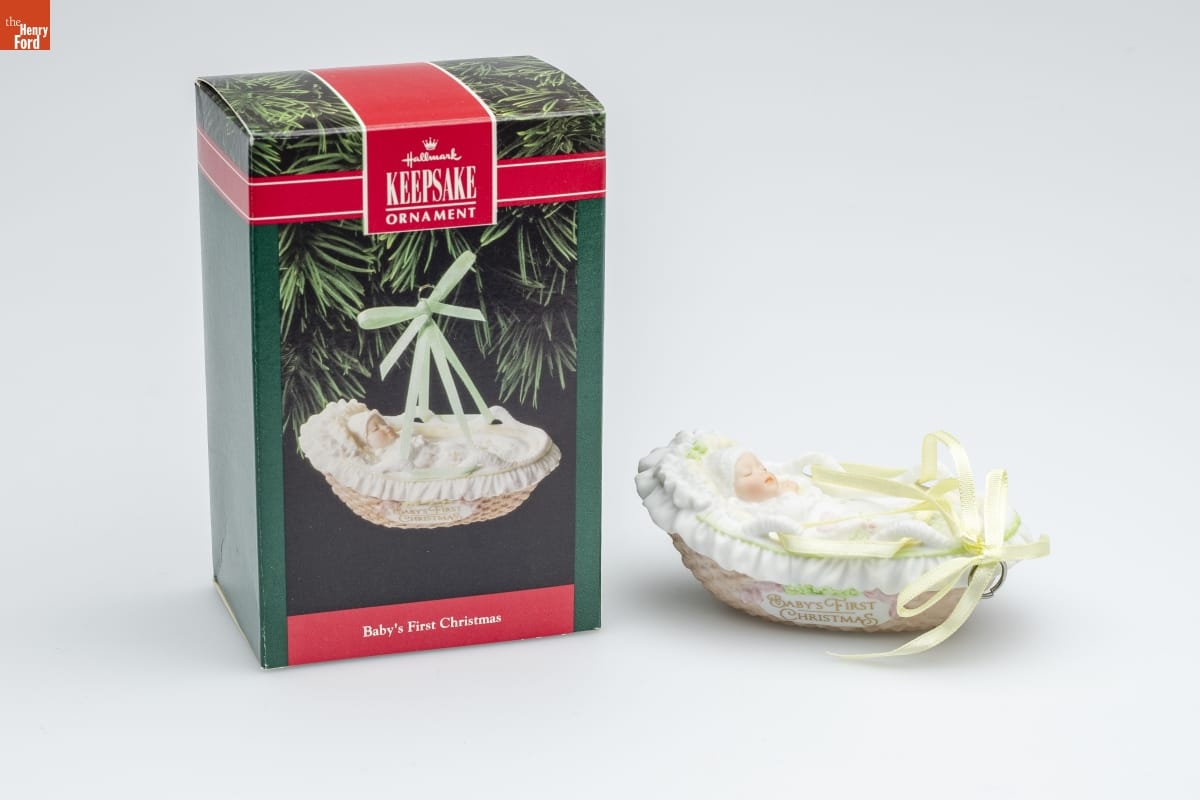
- Hallmark "Baby's First Christmas" Christmas Ornament, 1992 - Already known for greeting cards, Hallmark introduced a line of Christmas ornaments in 1973. The company's annual release of an increasing array of ornaments appealed to customers' interest in marking memories and milestones as well as expressing one's personality and unique tastes. Purchasing an ornament like this one would bring back happy family memories of that event year after year.
- 1992
- Collections - Artifact
Hallmark "Baby's First Christmas" Christmas Ornament, 1992
Already known for greeting cards, Hallmark introduced a line of Christmas ornaments in 1973. The company's annual release of an increasing array of ornaments appealed to customers' interest in marking memories and milestones as well as expressing one's personality and unique tastes. Purchasing an ornament like this one would bring back happy family memories of that event year after year.
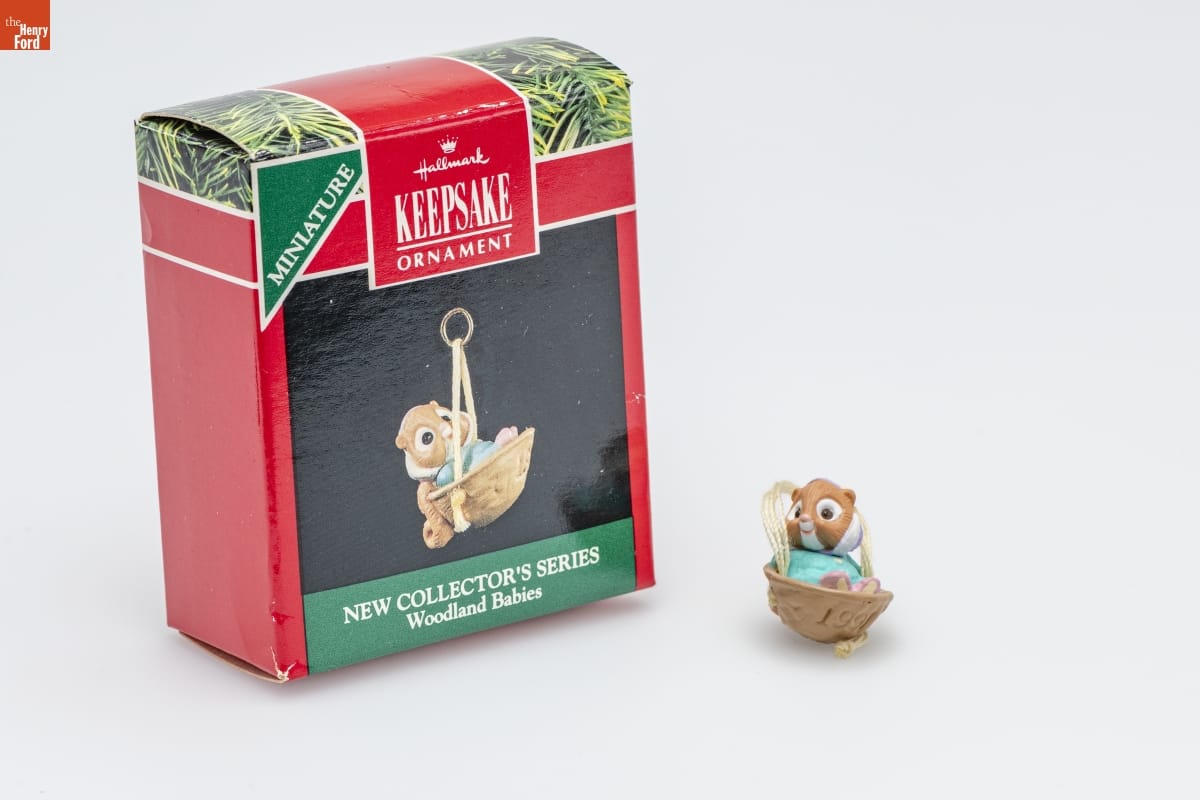
- Hallmark "Woodland Babies Series" Miniature Christmas Ornament, 1991 - Already known for greeting cards, Hallmark introduced a line of Christmas ornaments in 1973. The company's annual release of an increasing array of ornaments revolutionized Christmas decorating, appealing to customers' interest in marking memories and milestones as well as expressing one's personality and unique tastes.
- 1991
- Collections - Artifact
Hallmark "Woodland Babies Series" Miniature Christmas Ornament, 1991
Already known for greeting cards, Hallmark introduced a line of Christmas ornaments in 1973. The company's annual release of an increasing array of ornaments revolutionized Christmas decorating, appealing to customers' interest in marking memories and milestones as well as expressing one's personality and unique tastes.
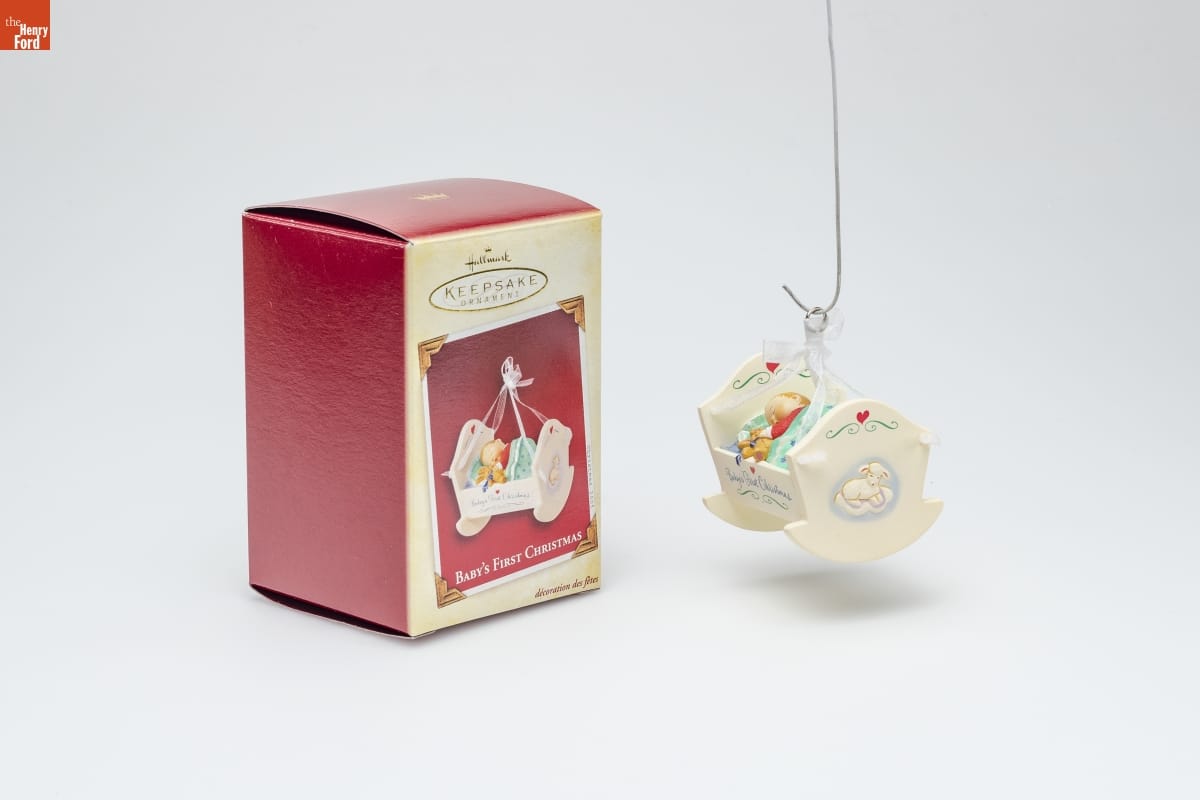
- Hallmark "Baby's First Christmas" Christmas Ornament, 2005 - Already known for greeting cards, Hallmark introduced a line of Christmas ornaments in 1973. The company's annual release of an increasing array of ornaments appealed to customers' interest in marking memories and milestones as well as expressing one's personality and unique tastes. Purchasing an ornament like this one would bring back happy family memories of that event year after year.
- 2005
- Collections - Artifact
Hallmark "Baby's First Christmas" Christmas Ornament, 2005
Already known for greeting cards, Hallmark introduced a line of Christmas ornaments in 1973. The company's annual release of an increasing array of ornaments appealed to customers' interest in marking memories and milestones as well as expressing one's personality and unique tastes. Purchasing an ornament like this one would bring back happy family memories of that event year after year.
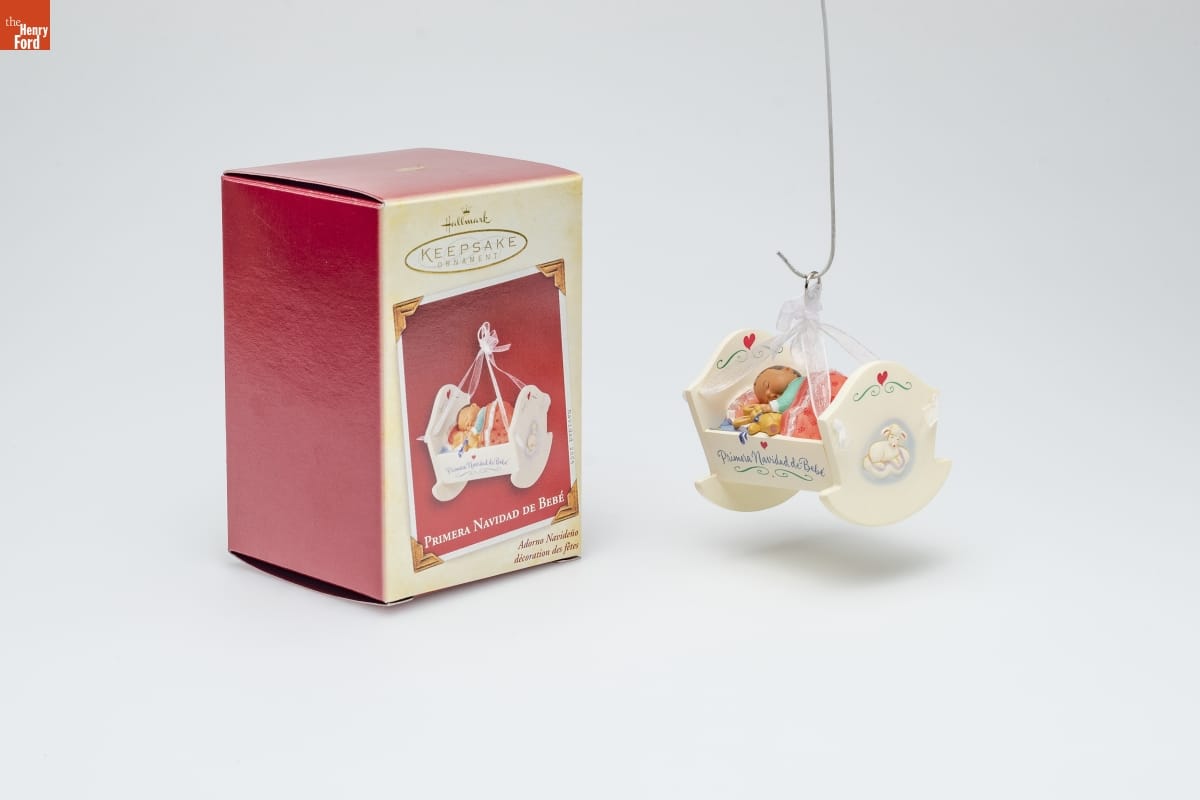
- Hallmark "Primera Navidad de Bebe" Christmas Ornament, 2005 - Already known for greeting cards, Hallmark introduced a line of Christmas ornaments in 1973. The company's annual release of an increasing array of ornaments revolutionized Christmas decorating, appealing to customers' interest in marking memories and milestones as well as expressing one's personality and unique tastes.
- 2005
- Collections - Artifact
Hallmark "Primera Navidad de Bebe" Christmas Ornament, 2005
Already known for greeting cards, Hallmark introduced a line of Christmas ornaments in 1973. The company's annual release of an increasing array of ornaments revolutionized Christmas decorating, appealing to customers' interest in marking memories and milestones as well as expressing one's personality and unique tastes.
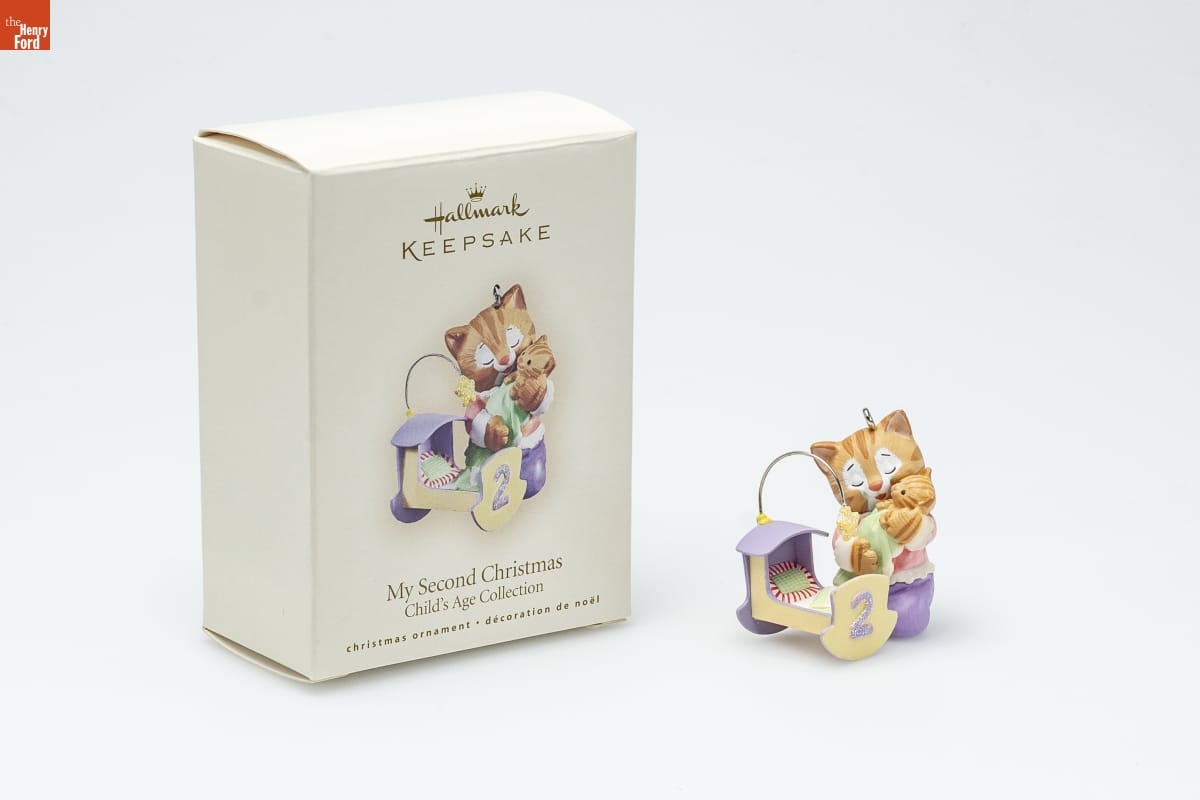
- Hallmark "Child's Age Collection: My Second Christmas" Christmas Ornament, 2007 - Already known for greeting cards, Hallmark introduced a line of Christmas ornaments in 1973. The company's annual release of an increasing array of ornaments revolutionized Christmas decorating, appealing to customers' interest in marking memories and milestones as well as expressing one's personality and unique tastes.
- 2007
- Collections - Artifact
Hallmark "Child's Age Collection: My Second Christmas" Christmas Ornament, 2007
Already known for greeting cards, Hallmark introduced a line of Christmas ornaments in 1973. The company's annual release of an increasing array of ornaments revolutionized Christmas decorating, appealing to customers' interest in marking memories and milestones as well as expressing one's personality and unique tastes.
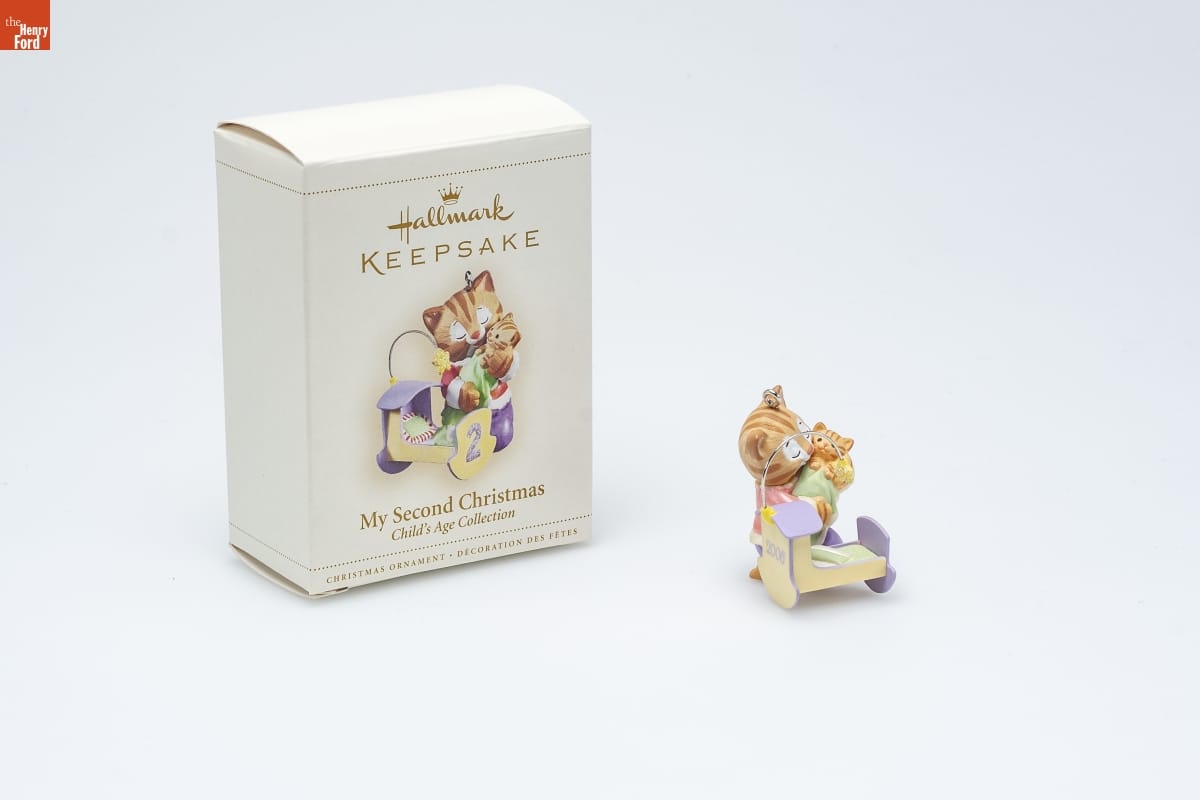
- Hallmark "Child's Age Collection: My Second Christmas" Christmas Ornament, 2006 - Already known for greeting cards, Hallmark introduced a line of Christmas ornaments in 1973. The company's annual release of an increasing array of ornaments appealed to customers' interest in marking memories and milestones as well as expressing one's personality and unique tastes. Purchasing an ornament like this one would bring back happy family memories of that event year after year.
- 2006
- Collections - Artifact
Hallmark "Child's Age Collection: My Second Christmas" Christmas Ornament, 2006
Already known for greeting cards, Hallmark introduced a line of Christmas ornaments in 1973. The company's annual release of an increasing array of ornaments appealed to customers' interest in marking memories and milestones as well as expressing one's personality and unique tastes. Purchasing an ornament like this one would bring back happy family memories of that event year after year.
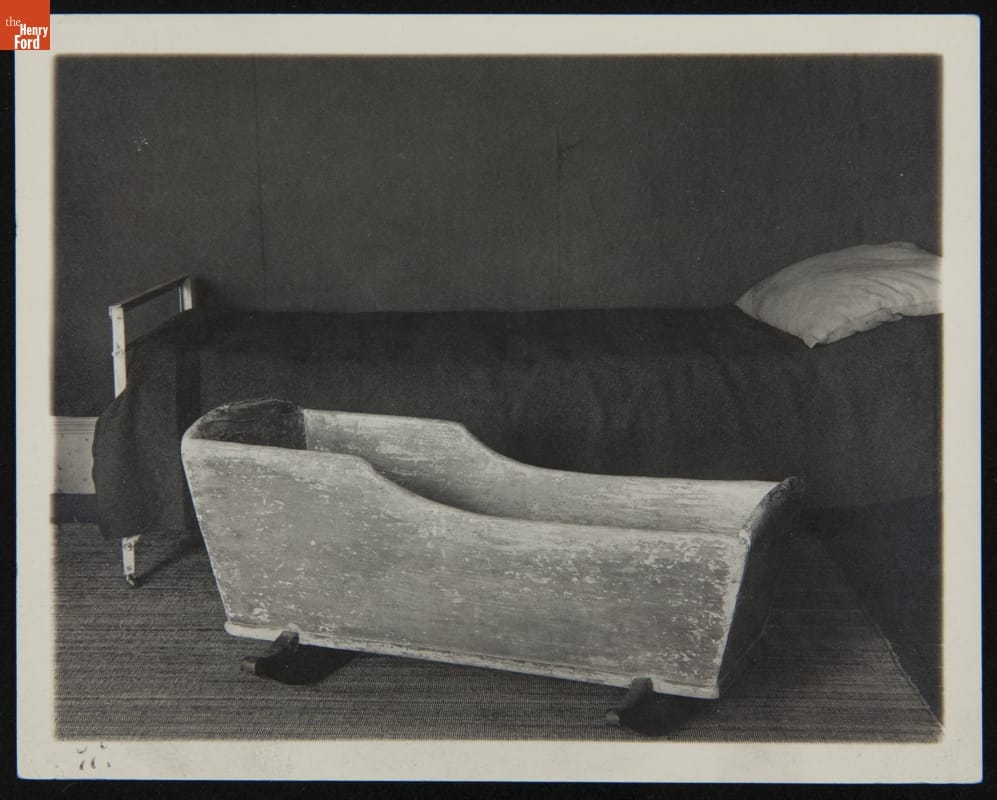
- John Burroughs' Cradle, Photographed at His Birthplace, September 29, 1918 - John Burroughs (1837-1921), an internationally known naturalist and writer, was born on a dairy farm near Roxbury, New York, in the Catskills Mountains. After working as an itinerant teacher and living in Washington, D.C., Burroughs returned to the Catskills and built a home. There, he could visit his birthplace and the surrounding lands where he grew up.
- September 29, 1918
- Collections - Artifact
John Burroughs' Cradle, Photographed at His Birthplace, September 29, 1918
John Burroughs (1837-1921), an internationally known naturalist and writer, was born on a dairy farm near Roxbury, New York, in the Catskills Mountains. After working as an itinerant teacher and living in Washington, D.C., Burroughs returned to the Catskills and built a home. There, he could visit his birthplace and the surrounding lands where he grew up.
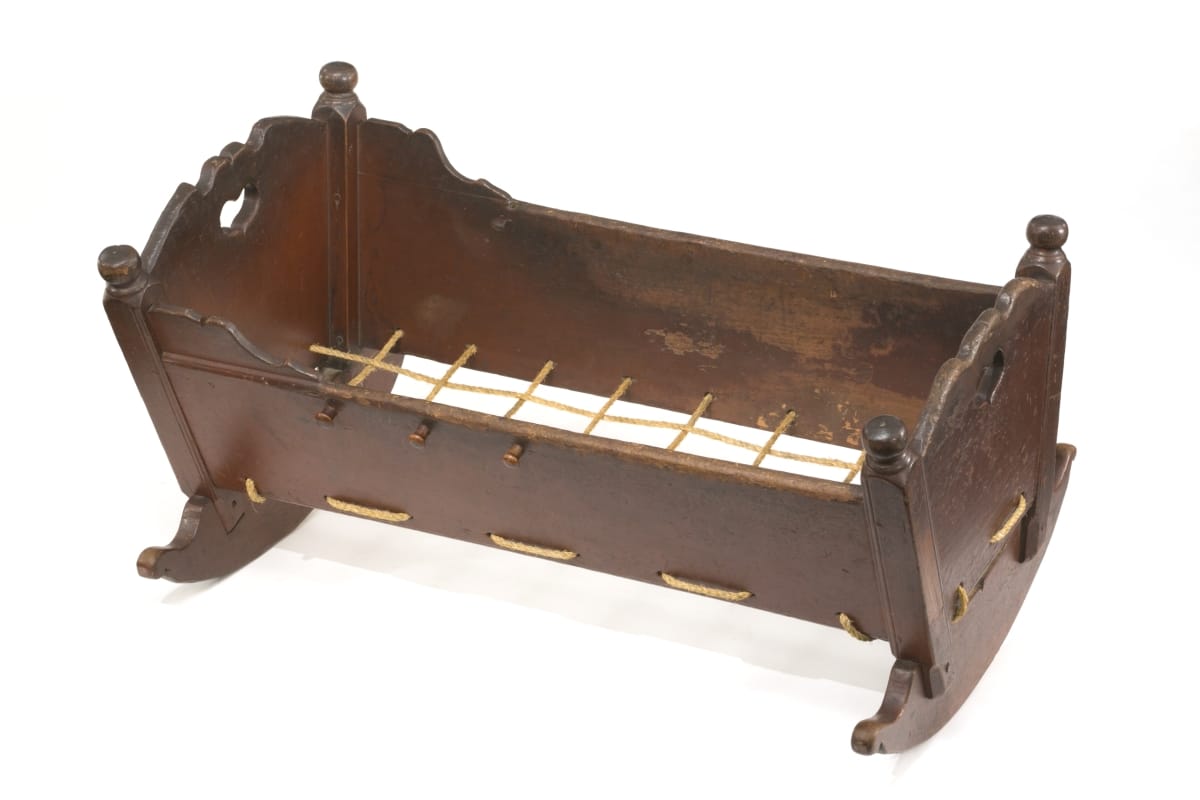
- Cradle, 1760-1790 - Eighteenth-century parents used cradles to keep babies warm and safely removed from household dangers. Babies could be laced into cradles to prevent them from falling or crawling out -- lacing pegs can be seen on this cradle along the top outer edge of the sides. With the baby securely confined, mothers or other caregivers could go about their daily chores without worry.
- 1760-1790
- Collections - Artifact
Cradle, 1760-1790
Eighteenth-century parents used cradles to keep babies warm and safely removed from household dangers. Babies could be laced into cradles to prevent them from falling or crawling out -- lacing pegs can be seen on this cradle along the top outer edge of the sides. With the baby securely confined, mothers or other caregivers could go about their daily chores without worry.