Search
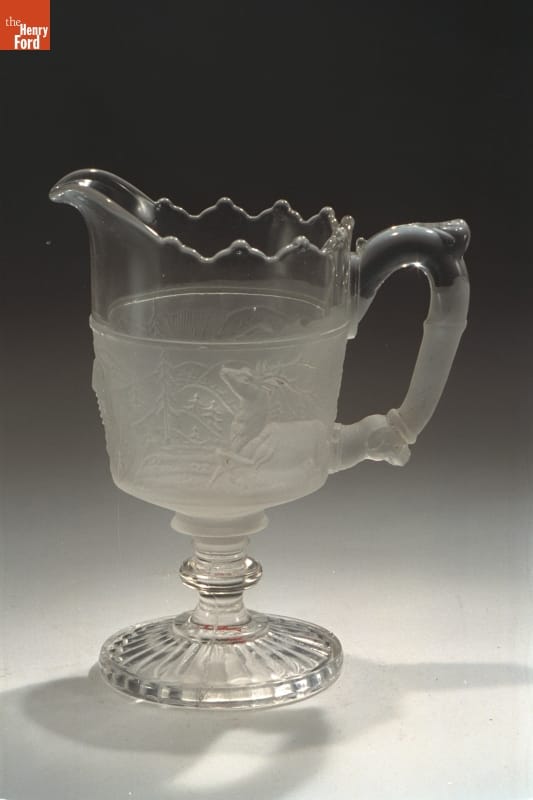
- Creamer, 1876-1885 - Middle-class Americans in the late 19th century arrayed their dining tables with affordable pressed-glass tableware. These items, usually sold in sets, came in a wide variety of patterns, colors, and styles. These decorative pieces -- like this cream pitcher -- communicated a family's status and taste to visitors and guests.
- 1876-1885
- Collections - Artifact
Creamer, 1876-1885
Middle-class Americans in the late 19th century arrayed their dining tables with affordable pressed-glass tableware. These items, usually sold in sets, came in a wide variety of patterns, colors, and styles. These decorative pieces -- like this cream pitcher -- communicated a family's status and taste to visitors and guests.
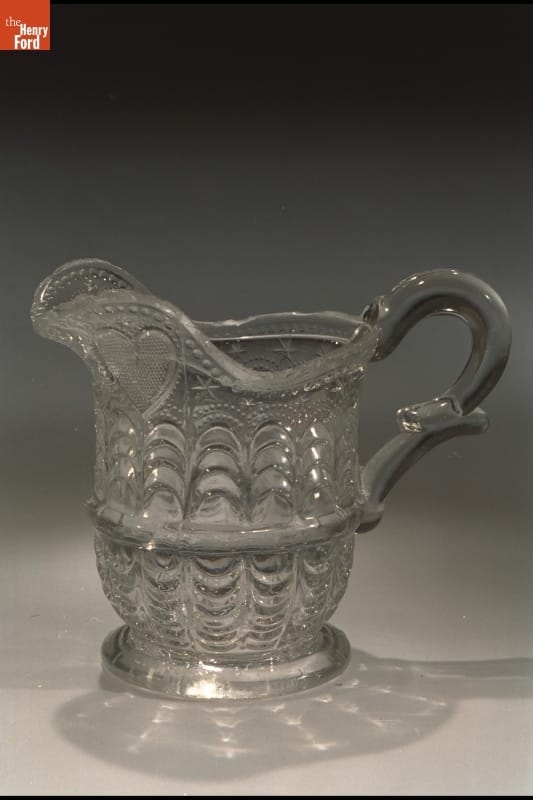
- Creamer, 1830-1845 - Mechanically pressed glass was an innovation in glass history, making decorative, "patterned" glass available to a broad audience. One of the earliest types of pressed glass, dating to the 1830s is known as "Lacy Glass". Complex stippled patterns were developed to help hide technical defects caused by early presses, when the glass gather was cut off and dropped into a mold.
- 1830-1845
- Collections - Artifact
Creamer, 1830-1845
Mechanically pressed glass was an innovation in glass history, making decorative, "patterned" glass available to a broad audience. One of the earliest types of pressed glass, dating to the 1830s is known as "Lacy Glass". Complex stippled patterns were developed to help hide technical defects caused by early presses, when the glass gather was cut off and dropped into a mold.
- Royal Dairy Farm Cream Carton -

- Collections - Artifact
Royal Dairy Farm Cream Carton
- Pennbrook Light Cream Sample Carton - The quest for a shatter-proof milk container prompted John Van Wormer to patent a paper carton in 1915. Many processors and distributors continued to use breakable glass bottles, but, after 1937, mechanized production made the disposable, wax-coated folded cartons inexpensive and indispensable liquid containers. The iconic design, a box with a gable-end top with a pouring or drinking spout, remains the industry standard today.

- Collections - Artifact
Pennbrook Light Cream Sample Carton
The quest for a shatter-proof milk container prompted John Van Wormer to patent a paper carton in 1915. Many processors and distributors continued to use breakable glass bottles, but, after 1937, mechanized production made the disposable, wax-coated folded cartons inexpensive and indispensable liquid containers. The iconic design, a box with a gable-end top with a pouring or drinking spout, remains the industry standard today.
- Oakside Dairy Coffee Cream Carton - The quest for a shatter-proof milk container prompted John Van Wormer to patent a paper carton in 1915. Many processors and distributors continued to use breakable glass bottles, but, after 1937, mechanized production made the disposable, wax-coated folded cartons inexpensive and indispensable liquid containers. The iconic design, a box with a gable-end top with a pouring or drinking spout, remains the industry standard today.

- Collections - Artifact
Oakside Dairy Coffee Cream Carton
The quest for a shatter-proof milk container prompted John Van Wormer to patent a paper carton in 1915. Many processors and distributors continued to use breakable glass bottles, but, after 1937, mechanized production made the disposable, wax-coated folded cartons inexpensive and indispensable liquid containers. The iconic design, a box with a gable-end top with a pouring or drinking spout, remains the industry standard today.
- Land O' Sun Light Cream Carton - The quest for a shatter-proof milk container prompted John Van Wormer to patent a paper carton in 1915. Many processors and distributors continued to use breakable glass bottles, but, after 1937, mechanized production made the disposable, wax-coated folded cartons inexpensive and indispensable liquid containers. The iconic design, a box with a gable-end top with a pouring or drinking spout, remains the industry standard today.

- Collections - Artifact
Land O' Sun Light Cream Carton
The quest for a shatter-proof milk container prompted John Van Wormer to patent a paper carton in 1915. Many processors and distributors continued to use breakable glass bottles, but, after 1937, mechanized production made the disposable, wax-coated folded cartons inexpensive and indispensable liquid containers. The iconic design, a box with a gable-end top with a pouring or drinking spout, remains the industry standard today.
- Pennbrook Light Cream Sample Carton - The quest for a shatter-proof milk container prompted John Van Wormer to patent a paper carton in 1915. Many processors and distributors continued to use breakable glass bottles, but, after 1937, mechanized production made the disposable, wax-coated folded cartons inexpensive and indispensable liquid containers. The iconic design, a box with a gable-end top with a pouring or drinking spout, remains the industry standard today.

- Collections - Artifact
Pennbrook Light Cream Sample Carton
The quest for a shatter-proof milk container prompted John Van Wormer to patent a paper carton in 1915. Many processors and distributors continued to use breakable glass bottles, but, after 1937, mechanized production made the disposable, wax-coated folded cartons inexpensive and indispensable liquid containers. The iconic design, a box with a gable-end top with a pouring or drinking spout, remains the industry standard today.
- Creamer, 1870-1880 - Middle-class Americans in the late 19th century arrayed their dining tables with affordable pressed-glass tableware. These items, usually sold in sets, came in a wide variety of patterns, colors, and styles. These decorative pieces -- like this cream pitcher -- communicated a family's status and taste to visitors and guests.

- 1870-1880
- Collections - Artifact
Creamer, 1870-1880
Middle-class Americans in the late 19th century arrayed their dining tables with affordable pressed-glass tableware. These items, usually sold in sets, came in a wide variety of patterns, colors, and styles. These decorative pieces -- like this cream pitcher -- communicated a family's status and taste to visitors and guests.
- Creamer, 1815-1825 - American glass factories made a variety of glass products for the early-nineteenth-century consumer. Glassblowers turned out bottles, flasks, tableware and other household items. Earlier products were affordable only to the well-to-do. But by the second quarter of the 19th century, a growing number of manufacturers made reasonably priced blown-glass items available to the expanding middle class.

- 1815-1825
- Collections - Artifact
Creamer, 1815-1825
American glass factories made a variety of glass products for the early-nineteenth-century consumer. Glassblowers turned out bottles, flasks, tableware and other household items. Earlier products were affordable only to the well-to-do. But by the second quarter of the 19th century, a growing number of manufacturers made reasonably priced blown-glass items available to the expanding middle class.
- Creamer, 1830-1840 - Mechanically pressed glass was an innovation in glass history, making decorative, "patterned" glass available to a broad audience. One of the earliest types of pressed glass, dating to the 1830s is known as "Lacy Glass". Complex stippled patterns were developed to help hide technical defects caused by early presses, when the glass gather was cut off and dropped into a mold.

- 1830-1840
- Collections - Artifact
Creamer, 1830-1840
Mechanically pressed glass was an innovation in glass history, making decorative, "patterned" glass available to a broad audience. One of the earliest types of pressed glass, dating to the 1830s is known as "Lacy Glass". Complex stippled patterns were developed to help hide technical defects caused by early presses, when the glass gather was cut off and dropped into a mold.