
Search
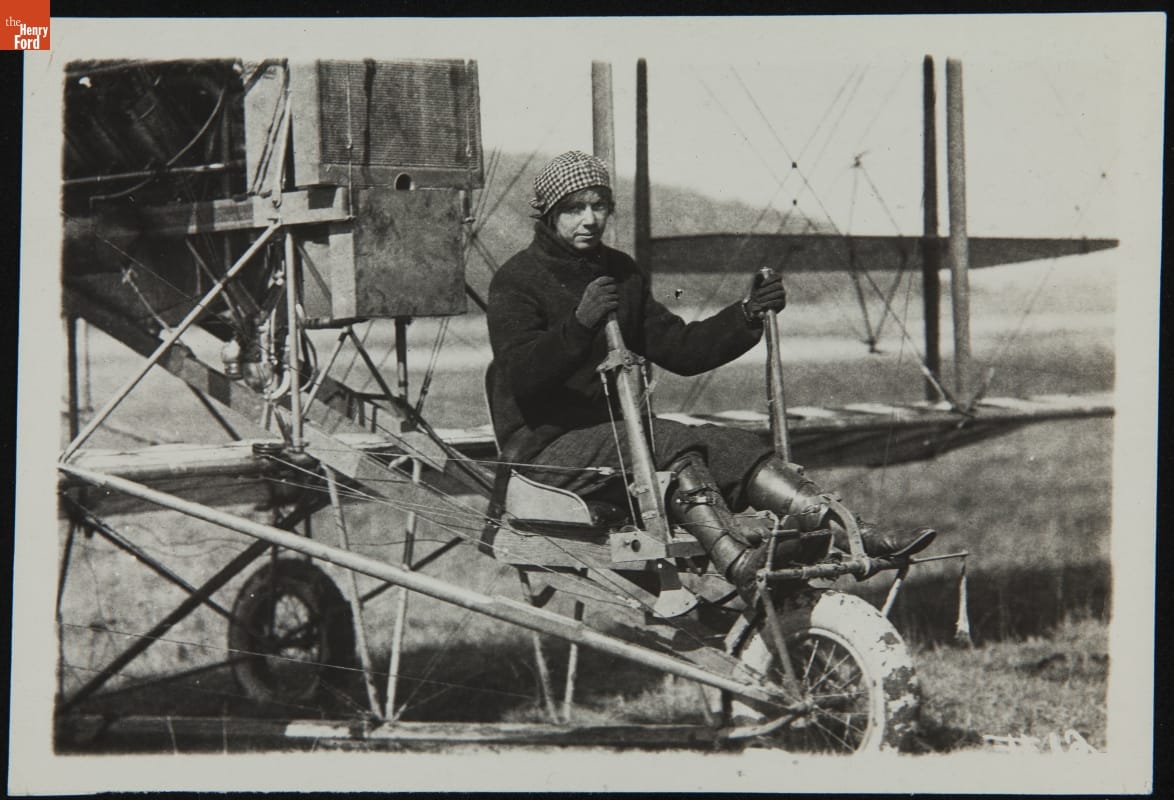
- Ruth Law in Curtiss Pusher Aircraft, circa 1915 - Ruth Law earned her pilot's license in 1912 and soon developed a taste for aerobatics and record breaking. In 1916 she flew 590 nonstop miles from Chicago to the state of New York. During World War I, Law argued unsuccessfully for women to fly in combat roles. Law continued to set records until she retired from flying in 1922.
- circa 1915
- Collections - Artifact
Ruth Law in Curtiss Pusher Aircraft, circa 1915
Ruth Law earned her pilot's license in 1912 and soon developed a taste for aerobatics and record breaking. In 1916 she flew 590 nonstop miles from Chicago to the state of New York. During World War I, Law argued unsuccessfully for women to fly in combat roles. Law continued to set records until she retired from flying in 1922.
- Milton Bradley Company Trade Catalog, "Bradley's The World's Best Games," 1919-1920 - Milton Bradley, a Springfield, Massachusetts, lithographer, published his first board game in 1860. It was a hit, and Bradley soon became a leader in the growing American game business. By his death in 1911, Bradley's company was one of the nation's best known and most prolific game and toy manufacturers. Milton Bradley products remained popular even after the company's 1984 acquisition by Hasbro, Inc.

- 1919-1920
- Collections - Artifact
Milton Bradley Company Trade Catalog, "Bradley's The World's Best Games," 1919-1920
Milton Bradley, a Springfield, Massachusetts, lithographer, published his first board game in 1860. It was a hit, and Bradley soon became a leader in the growing American game business. By his death in 1911, Bradley's company was one of the nation's best known and most prolific game and toy manufacturers. Milton Bradley products remained popular even after the company's 1984 acquisition by Hasbro, Inc.
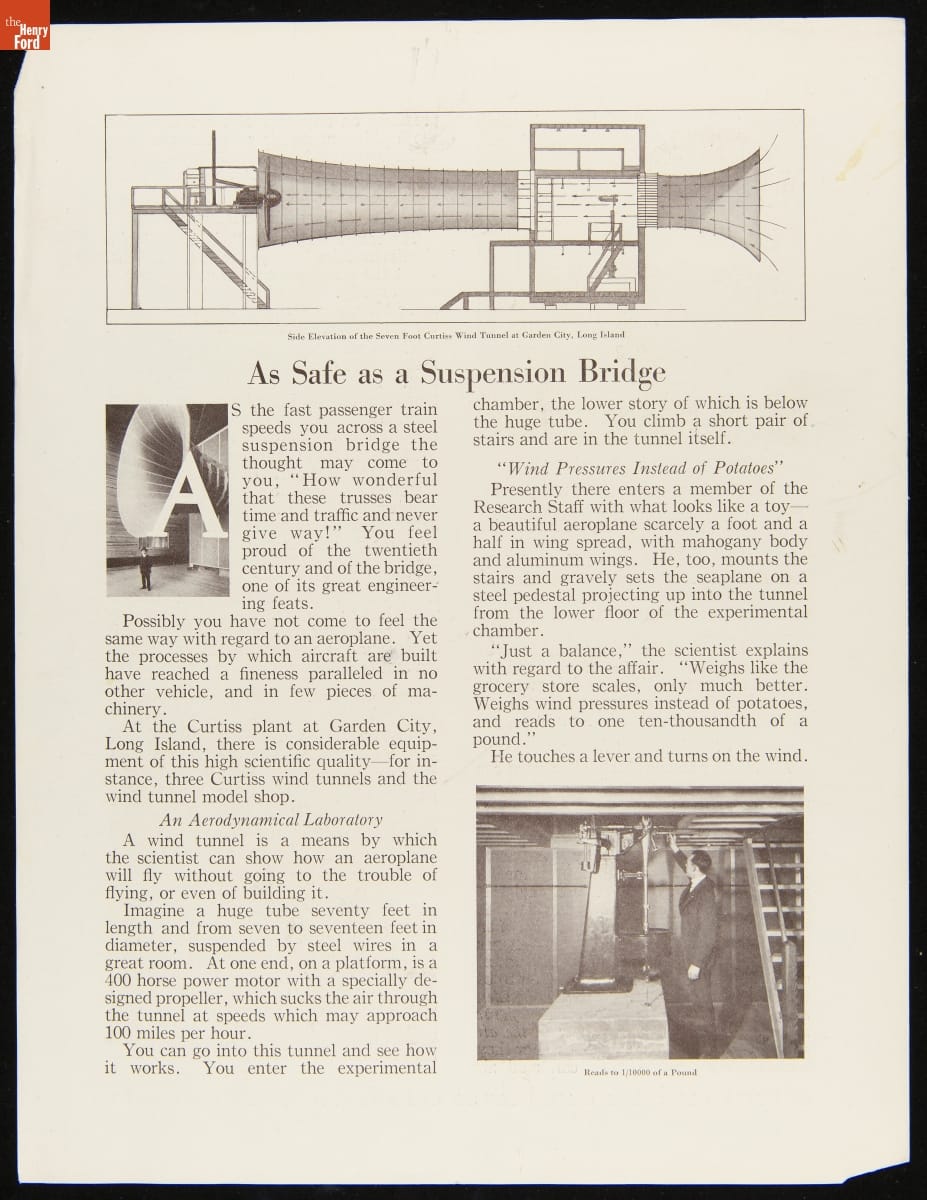
- As Safe as a Suspension Bridge, 1919-1920 - Glenn Curtiss, whose airplane business flourished during World War I, established a state-of-the-art research and experimentation facility on Long Island, New York, in 1917. At the Curtiss Engineering Corporation, a handpicked team built, tested, and refined propellers, engines, and airplanes. This brochure claimed a scientific approach made Curtiss airplanes as safe as the more established modes of transportation Americans already trusted.
- 1919-1920
- Collections - Artifact
As Safe as a Suspension Bridge, 1919-1920
Glenn Curtiss, whose airplane business flourished during World War I, established a state-of-the-art research and experimentation facility on Long Island, New York, in 1917. At the Curtiss Engineering Corporation, a handpicked team built, tested, and refined propellers, engines, and airplanes. This brochure claimed a scientific approach made Curtiss airplanes as safe as the more established modes of transportation Americans already trusted.
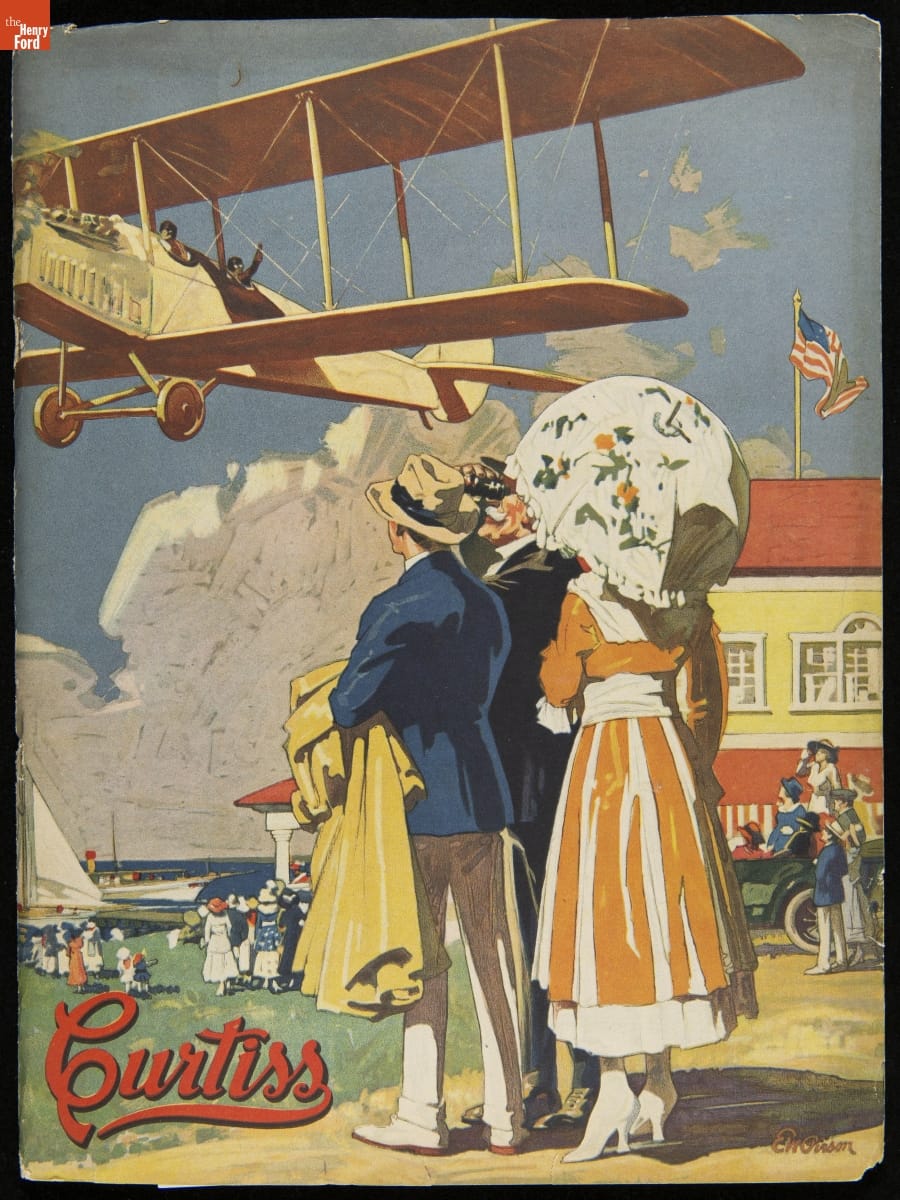
- Curtiss Aeroplane Co. Trade Catalog, "Curtiss Flying Boats, Aeronautical Motors, Aeroplanes, Hydroaeroplanes," 1917 - Glenn Curtiss established what would become the Curtiss Aeroplane and Motor Company in his hometown of Hammondsport, New York, in 1909. As military orders soared during World War I, Curtiss relocated the company to Buffalo, New York, in 1916. Curtiss's firm was acquired by Willys-Overland the following year, and it merged with the Wright Company in 1929.
- 1917
- Collections - Artifact
Curtiss Aeroplane Co. Trade Catalog, "Curtiss Flying Boats, Aeronautical Motors, Aeroplanes, Hydroaeroplanes," 1917
Glenn Curtiss established what would become the Curtiss Aeroplane and Motor Company in his hometown of Hammondsport, New York, in 1909. As military orders soared during World War I, Curtiss relocated the company to Buffalo, New York, in 1916. Curtiss's firm was acquired by Willys-Overland the following year, and it merged with the Wright Company in 1929.
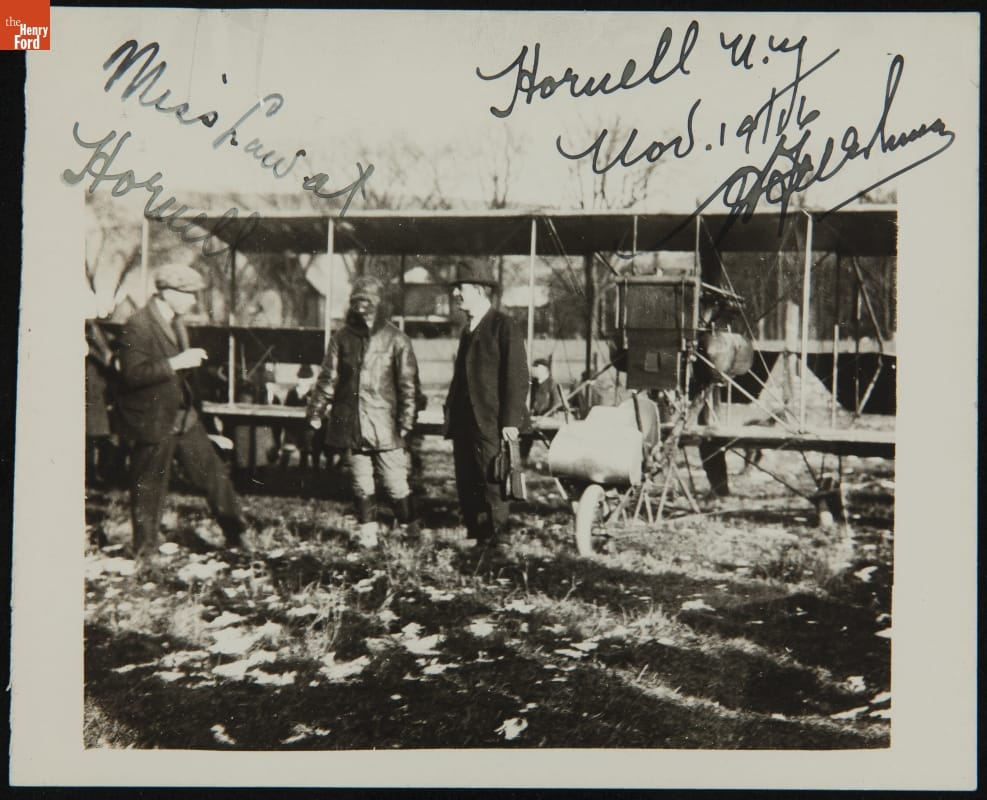
- Ruth Law with her Curtiss Pusher in Hornell, New York, 1916 - Ruth Law earned her pilot's license in 1912 and soon developed a taste for aerobatics and record breaking. In 1916 she flew 590 nonstop miles from Chicago to the state of New York. During World War I, Law argued unsuccessfully for women to fly in combat roles. Law continued to set records until she retired from flying in 1922.
- November 01, 1916
- Collections - Artifact
Ruth Law with her Curtiss Pusher in Hornell, New York, 1916
Ruth Law earned her pilot's license in 1912 and soon developed a taste for aerobatics and record breaking. In 1916 she flew 590 nonstop miles from Chicago to the state of New York. During World War I, Law argued unsuccessfully for women to fly in combat roles. Law continued to set records until she retired from flying in 1922.
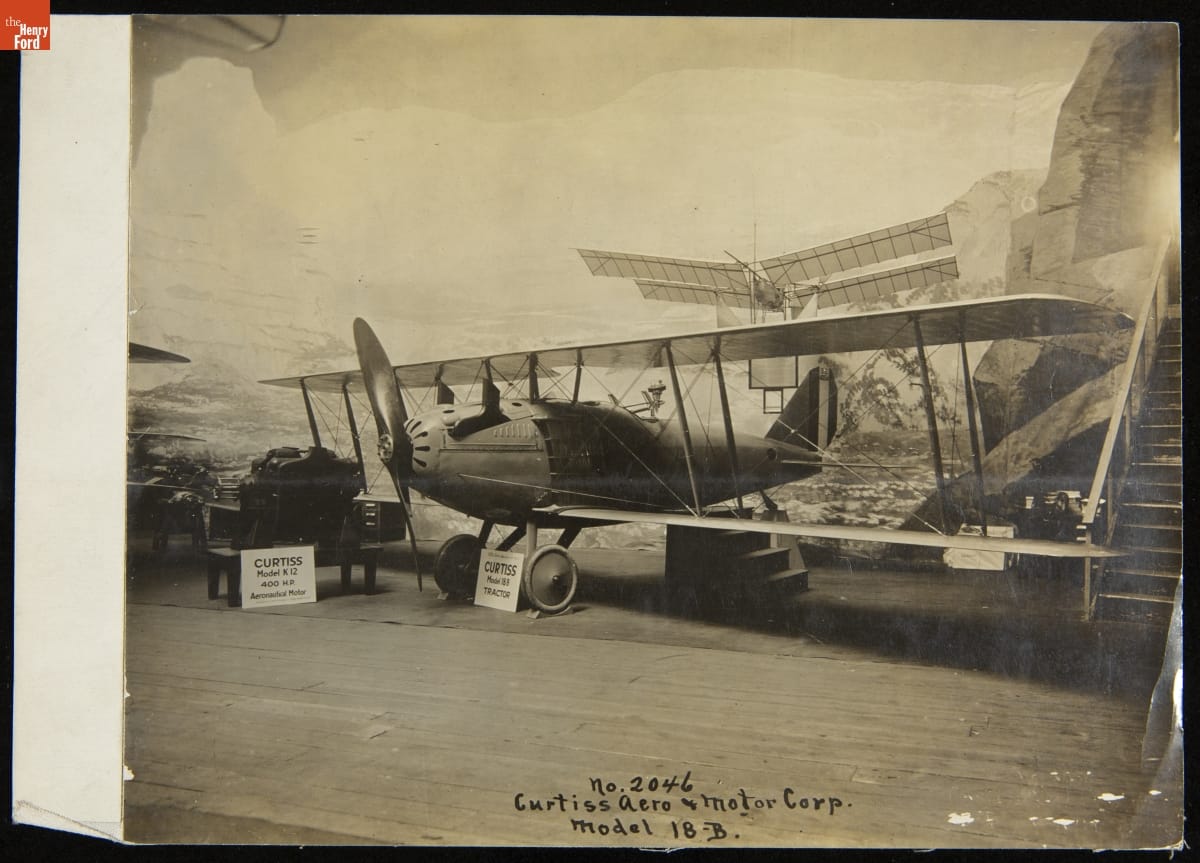
- Curtiss Model K-12 Engine and Model 18-B Airplane, circa 1919 - Glenn Curtiss established what would become the Curtiss Aeroplane and Motor Company in 1909. The company achieved success -- especially as military orders soared during World War I -- but Curtiss also endured failure. The promising 400-horsepower K-12 engine (pictured here, left) ultimately proved to be unreliable, and the model 18-B airplane (right) was never put into production.
- circa 1919
- Collections - Artifact
Curtiss Model K-12 Engine and Model 18-B Airplane, circa 1919
Glenn Curtiss established what would become the Curtiss Aeroplane and Motor Company in 1909. The company achieved success -- especially as military orders soared during World War I -- but Curtiss also endured failure. The promising 400-horsepower K-12 engine (pictured here, left) ultimately proved to be unreliable, and the model 18-B airplane (right) was never put into production.
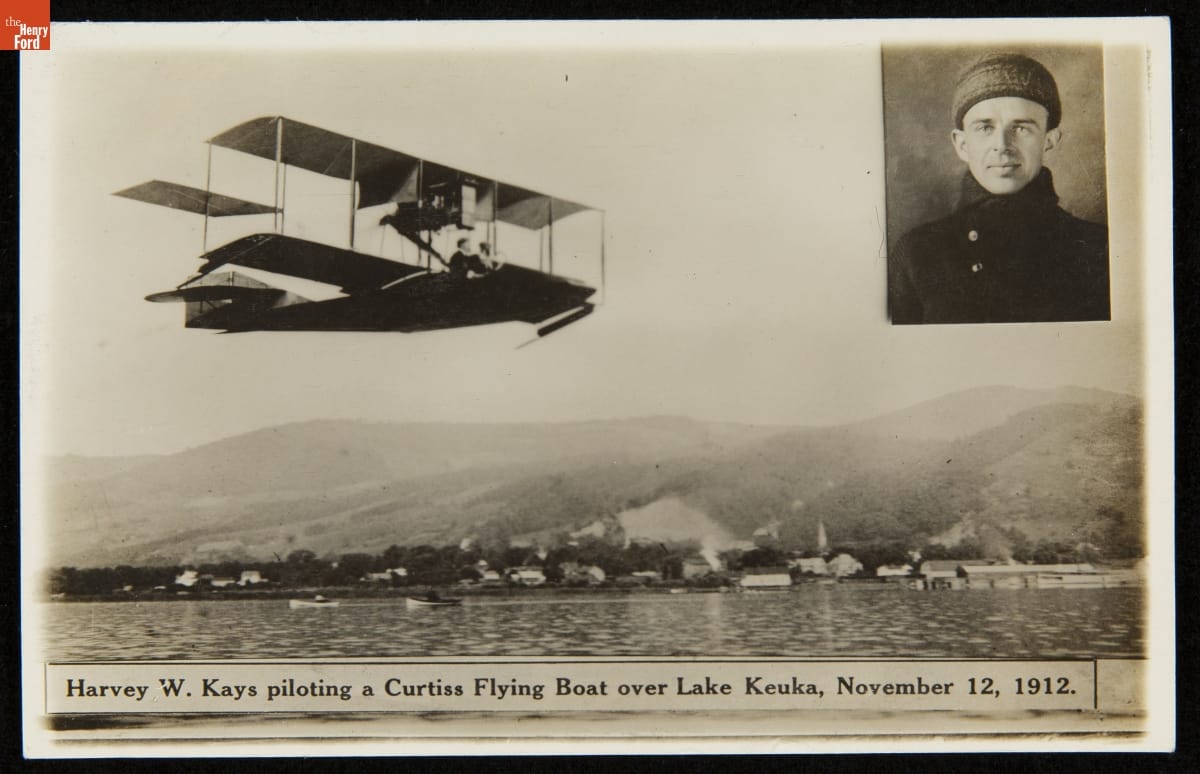
- "Harvey W. Kays Piloting a Curtiss Flying Boat over Lake Keuka, November 12, 1912" - In addition to his pioneering work with aileron control surfaces, Glenn Curtiss designed and built some of the earliest seaplanes in the United States. His first experiments involved little more than strapping a canoe to the bottom of a standard airplane. But by 1911, the potential of Curtiss's flying boats had earned him a contract with the U.S. Navy.
- November 12, 1912
- Collections - Artifact
"Harvey W. Kays Piloting a Curtiss Flying Boat over Lake Keuka, November 12, 1912"
In addition to his pioneering work with aileron control surfaces, Glenn Curtiss designed and built some of the earliest seaplanes in the United States. His first experiments involved little more than strapping a canoe to the bottom of a standard airplane. But by 1911, the potential of Curtiss's flying boats had earned him a contract with the U.S. Navy.
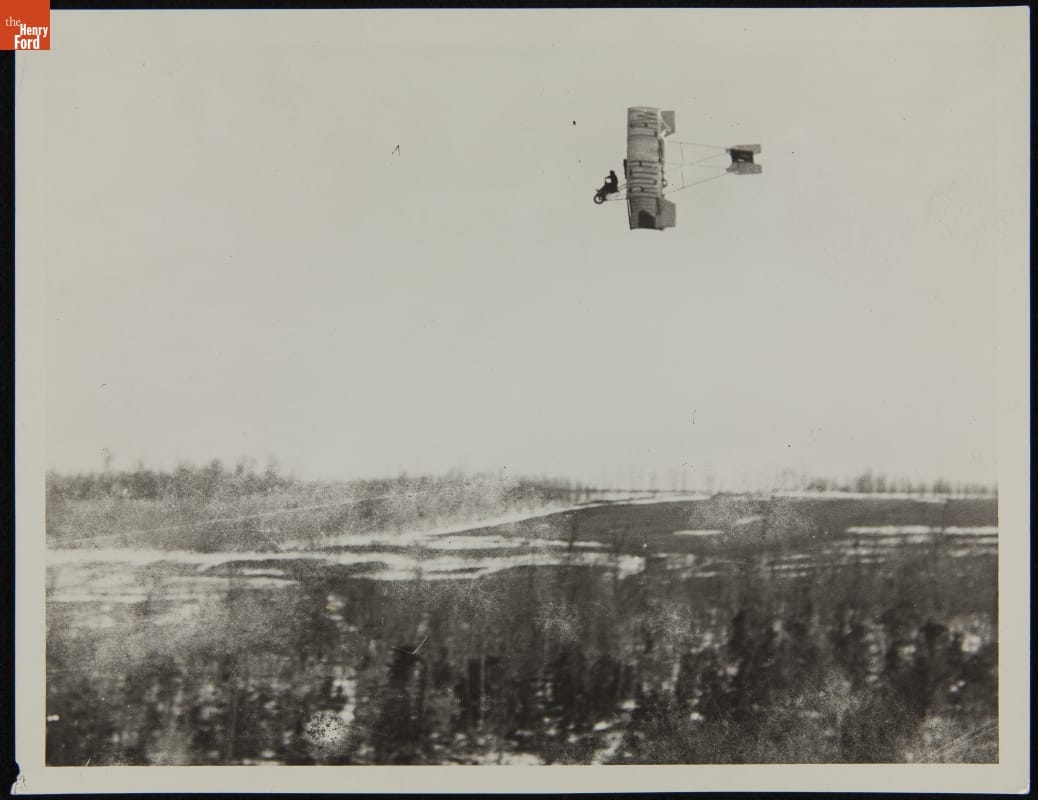
- Ruth Law Flying a Biplane, circa 1917 - Ruth Law earned her pilot's license in 1912 and soon developed a taste for aerobatics and record breaking. In 1916 she flew 590 nonstop miles from Chicago to the state of New York. During World War I, Law argued unsuccessfully for women to fly in combat roles. Law continued to set records until she retired from flying in 1922.
- circa 1917
- Collections - Artifact
Ruth Law Flying a Biplane, circa 1917
Ruth Law earned her pilot's license in 1912 and soon developed a taste for aerobatics and record breaking. In 1916 she flew 590 nonstop miles from Chicago to the state of New York. During World War I, Law argued unsuccessfully for women to fly in combat roles. Law continued to set records until she retired from flying in 1922.
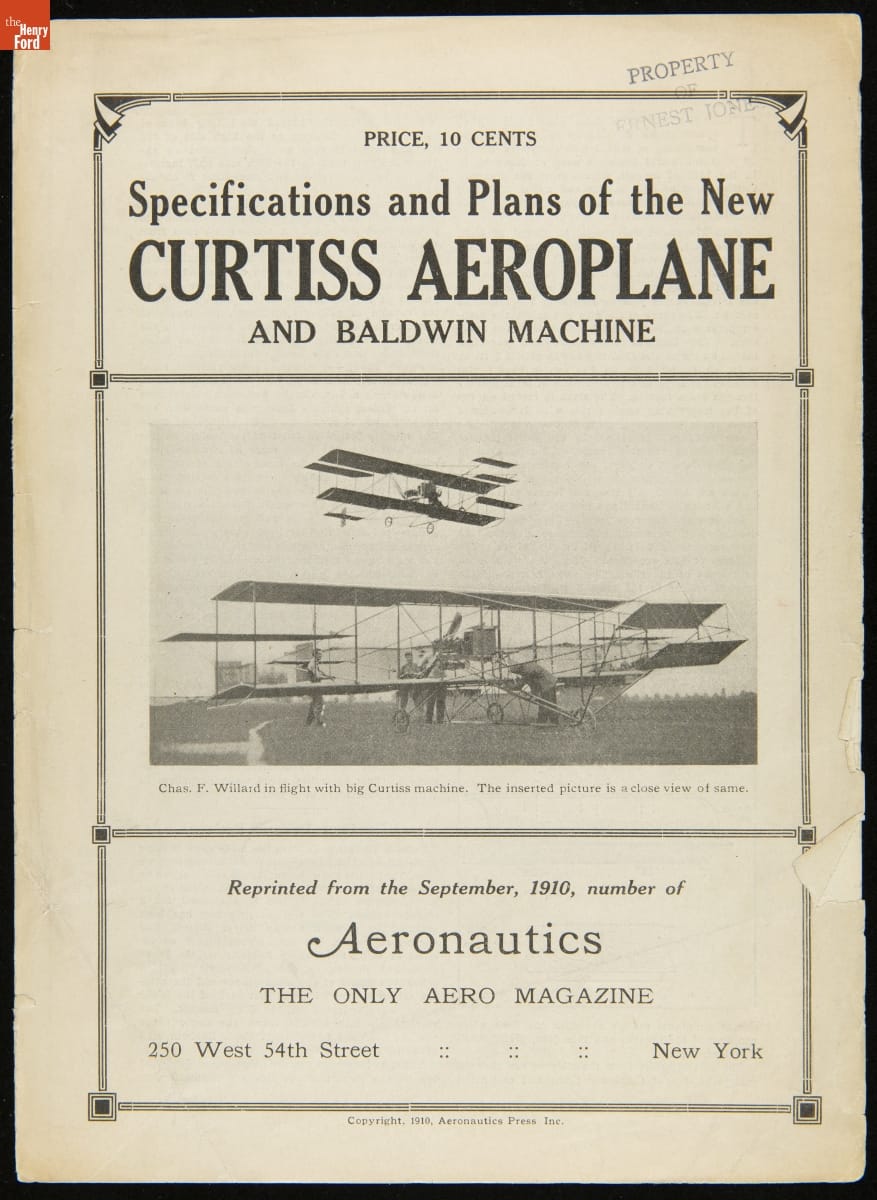
- Specifications and Plans of the New Curtiss Aeroplane and Baldwin Machine, 1910 - This article, reprinted from the September 1910 issue of <em>Aeronautics</em> magazine, included plans for biplanes designed by early American aviators Glenn Curtiss and Thomas Baldwin. Work with Baldwin (who is better known as a pioneering balloonist and airship builder) sparked Curtiss's interest in aviation. Curtiss helped establish the American aircraft industry and is remembered as an architect of aviation infrastructure.
- 1910
- Collections - Artifact
Specifications and Plans of the New Curtiss Aeroplane and Baldwin Machine, 1910
This article, reprinted from the September 1910 issue of Aeronautics magazine, included plans for biplanes designed by early American aviators Glenn Curtiss and Thomas Baldwin. Work with Baldwin (who is better known as a pioneering balloonist and airship builder) sparked Curtiss's interest in aviation. Curtiss helped establish the American aircraft industry and is remembered as an architect of aviation infrastructure.
- Curtiss Flying Boat, 1920-1925 - Seaplanes were especially practical at a time when airstrips were rare and airports were all but nonexistent. By building the airplane's fuselage in the form of a boat hull or mounting a set of pontoon floats on the landing gear, any sufficiently large body of water became a runway.
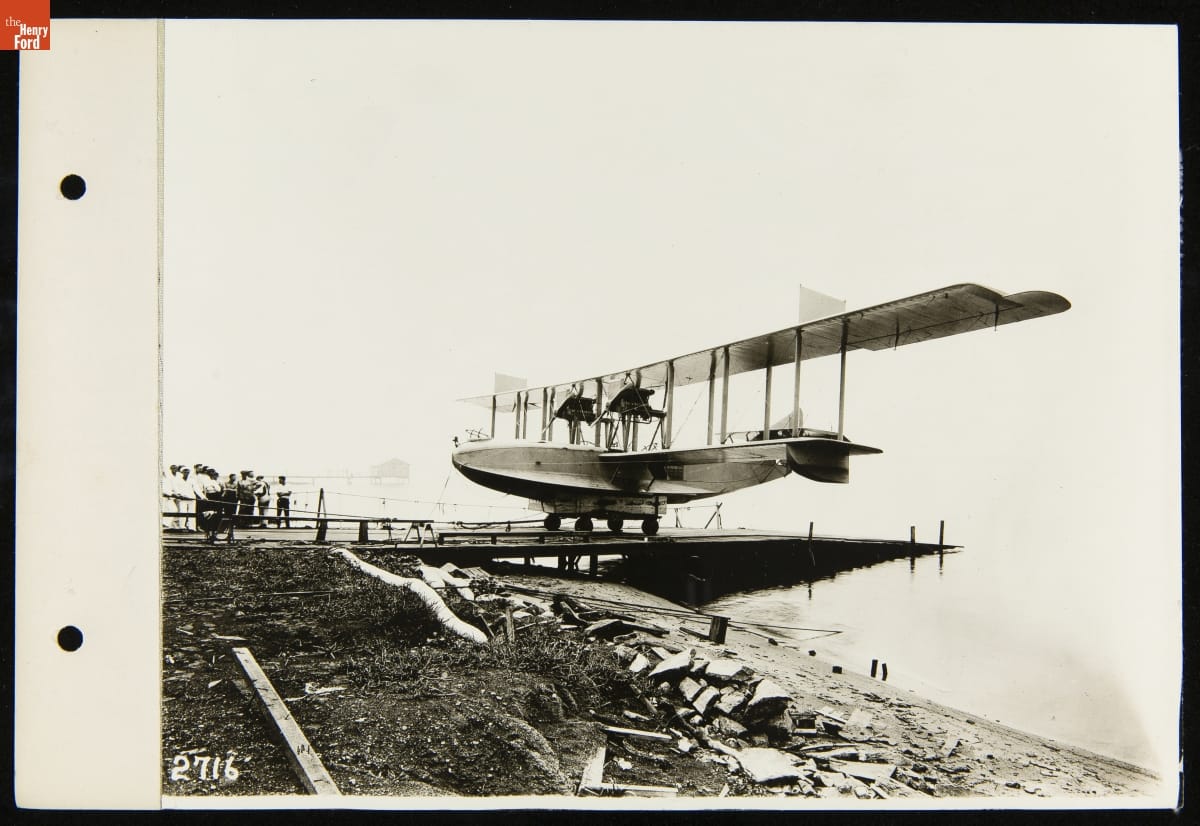
- 1920-1925
- Collections - Artifact
Curtiss Flying Boat, 1920-1925
Seaplanes were especially practical at a time when airstrips were rare and airports were all but nonexistent. By building the airplane's fuselage in the form of a boat hull or mounting a set of pontoon floats on the landing gear, any sufficiently large body of water became a runway.