
Search
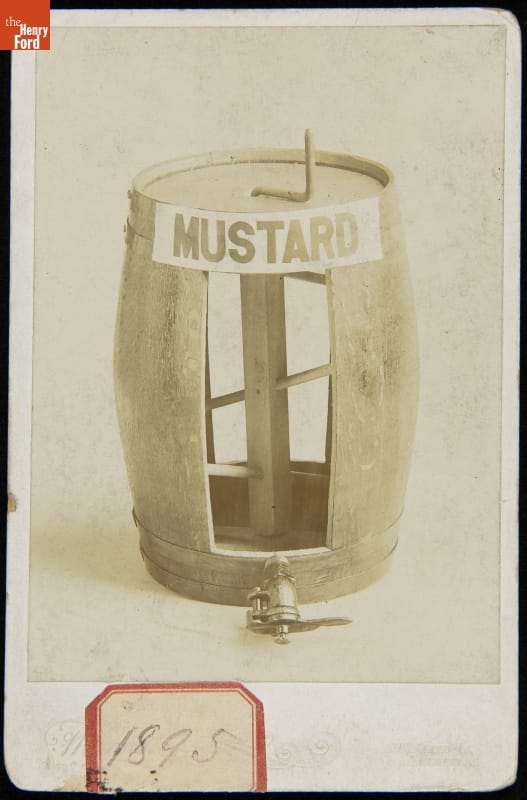
- Mustard Dispenser Cut Away to Show the Interior, 1895 -
- 1895
- Collections - Artifact
Mustard Dispenser Cut Away to Show the Interior, 1895
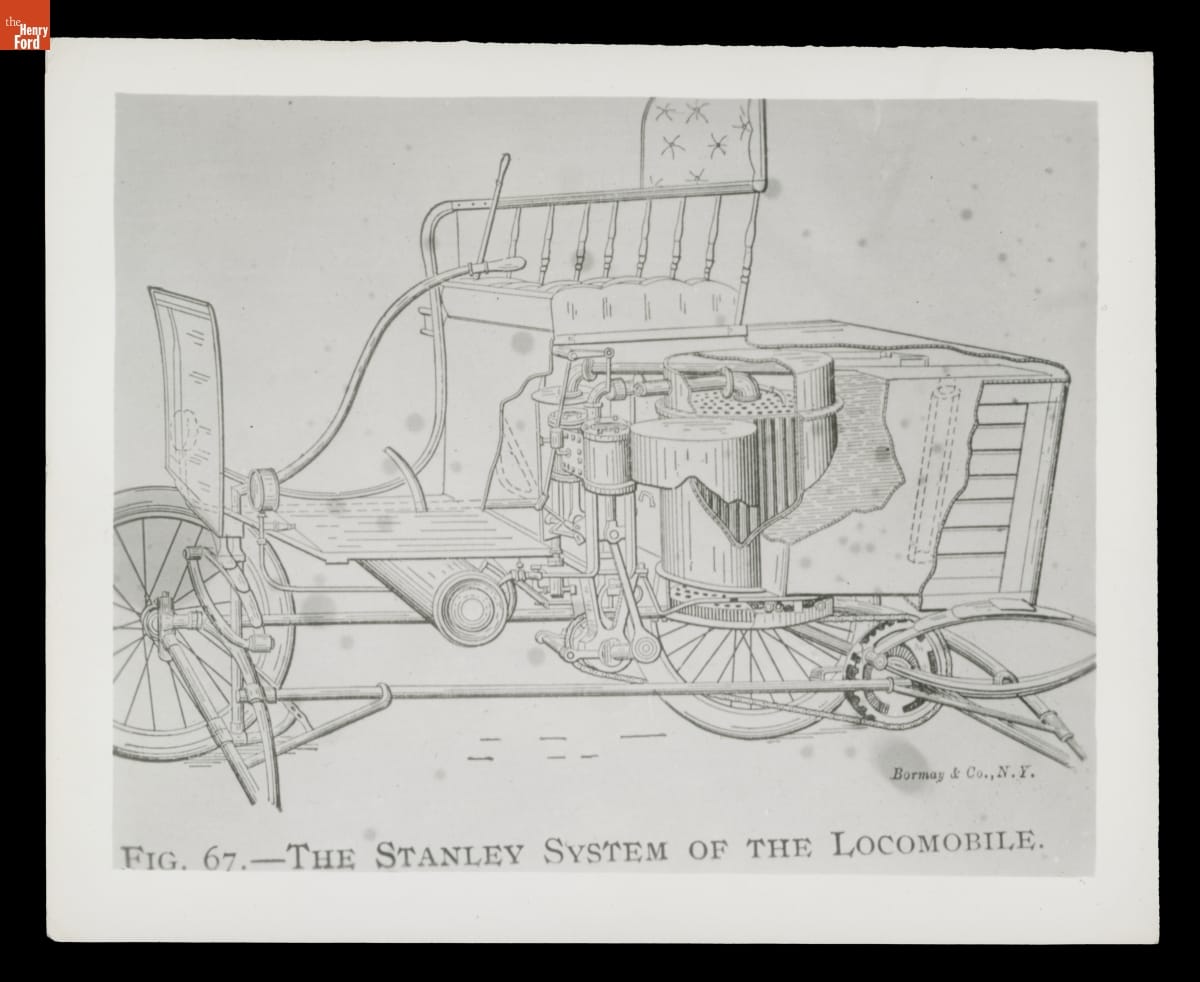
- "The Stanley System of the Locomobile" circa 1900 - This cutaway diagram reveals the inner workings of an early steam-powered Locomobile. The vehicle packed a water tank, boiler, two-cylinder steam engine, and fuel supply under the seat of the automobile.
- circa 1900
- Collections - Artifact
"The Stanley System of the Locomobile" circa 1900
This cutaway diagram reveals the inner workings of an early steam-powered Locomobile. The vehicle packed a water tank, boiler, two-cylinder steam engine, and fuel supply under the seat of the automobile.
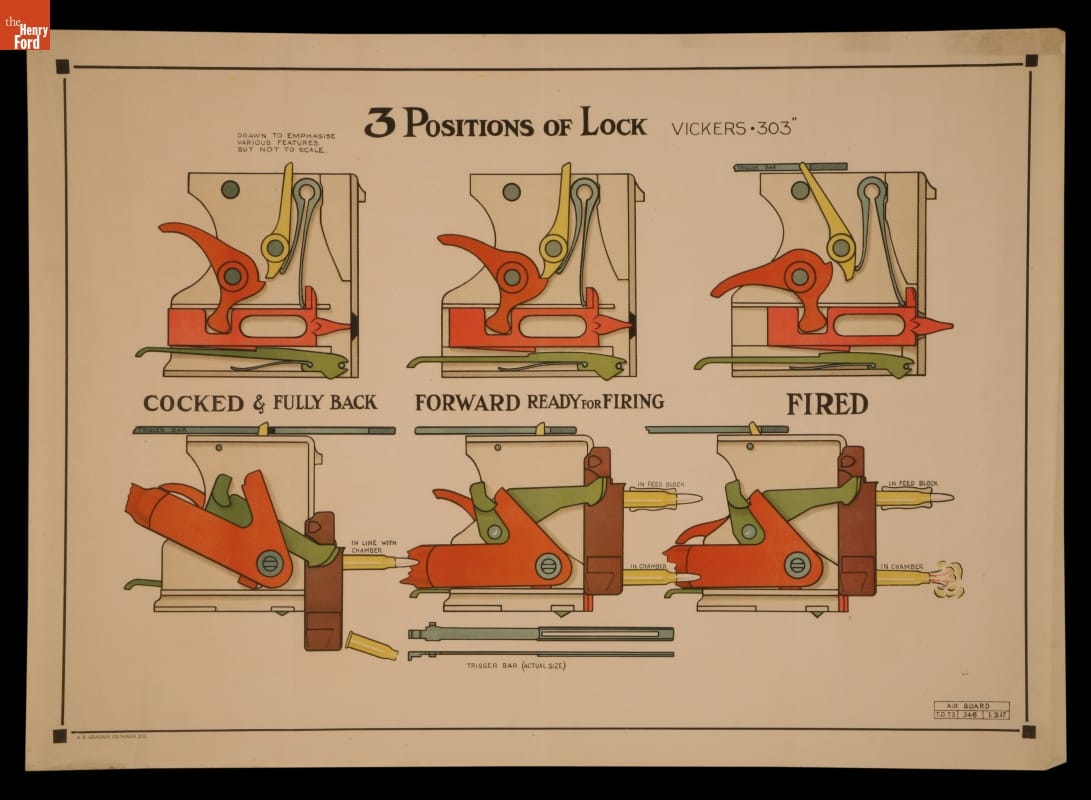
- Cutaway Illustration, 3 Positions of Vickers .303" Machine Gun Lock, circa 1917 -
- circa 1917
- Collections - Artifact
Cutaway Illustration, 3 Positions of Vickers .303" Machine Gun Lock, circa 1917
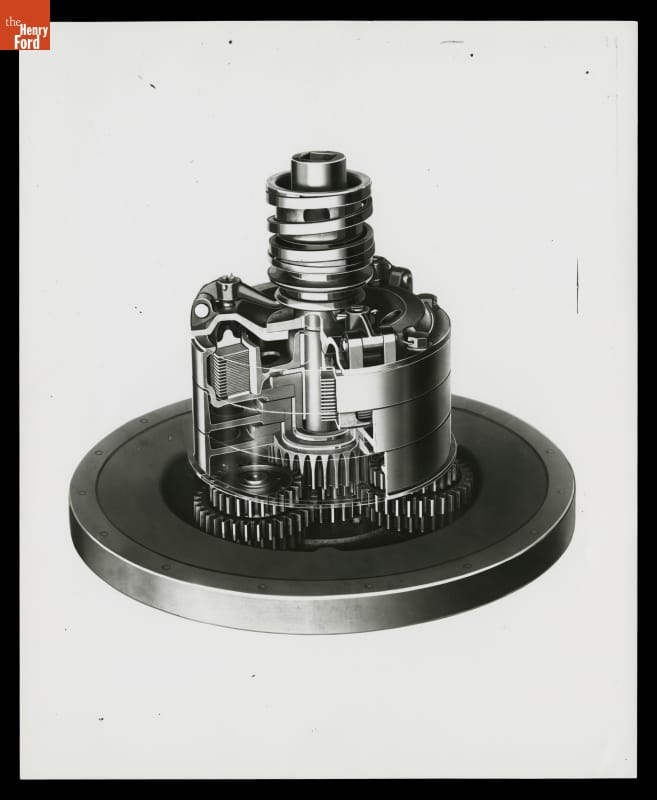
- Drawing of the Ford Model T Transmission, circa 1917 - The Ford Model T used a two-speed planetary gearset in its transmission throughout the car's production run from 1908-1927. The central sun gear was surrounded by planet gears that rotated around it. Because the gears were always in mesh, they were easier to shift than the unsynchronized sliding gearsets of the time.
- circa 1917
- Collections - Artifact
Drawing of the Ford Model T Transmission, circa 1917
The Ford Model T used a two-speed planetary gearset in its transmission throughout the car's production run from 1908-1927. The central sun gear was surrounded by planet gears that rotated around it. Because the gears were always in mesh, they were easier to shift than the unsynchronized sliding gearsets of the time.
- Ford 6000 Diesel Tractor, Cutaway View Drawing, circa 1961 -
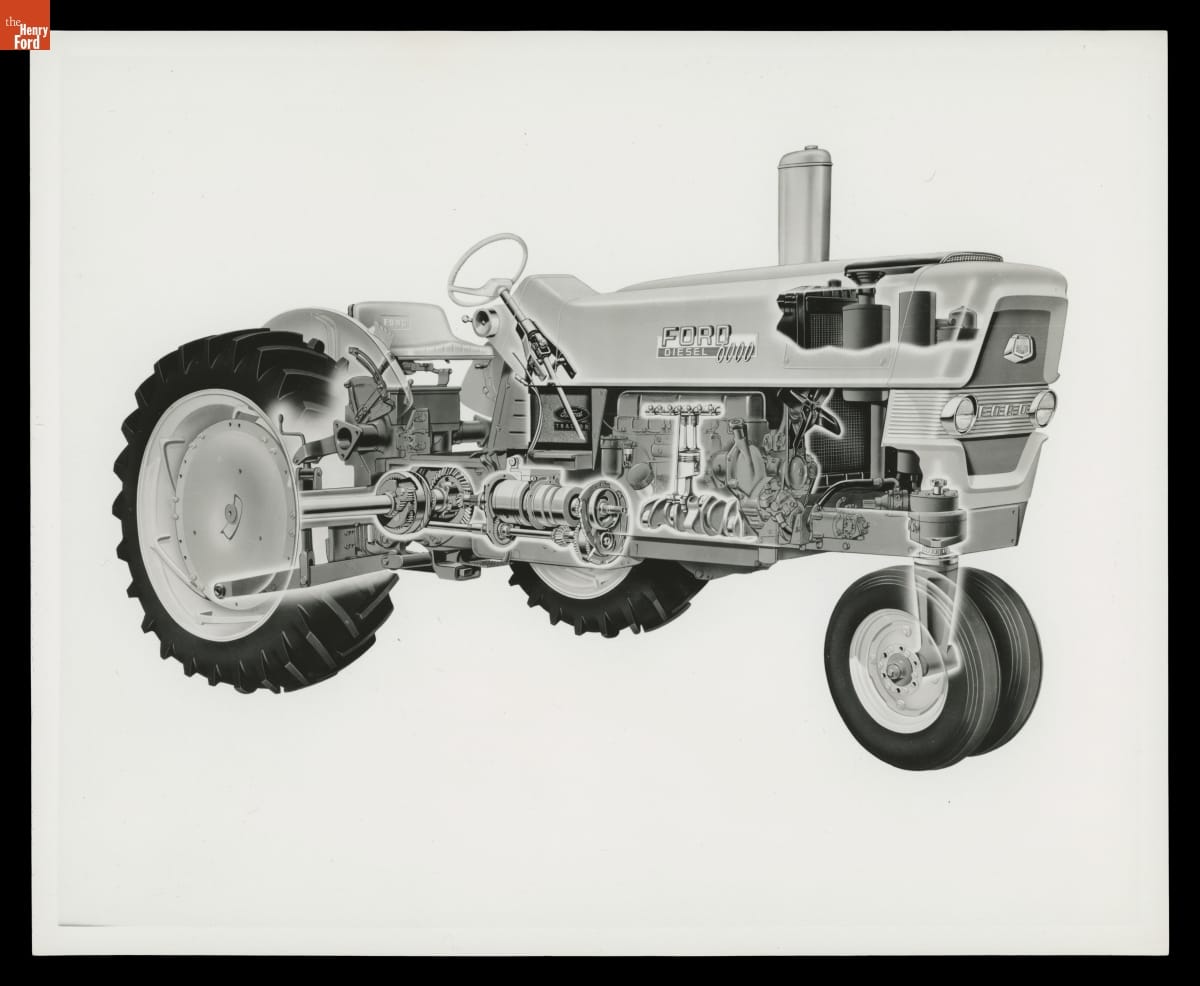
- circa 1961
- Collections - Artifact
Ford 6000 Diesel Tractor, Cutaway View Drawing, circa 1961
- Cutaway Illustration, Vickers .303" Machine Gun Feed Block, circa 1917 -
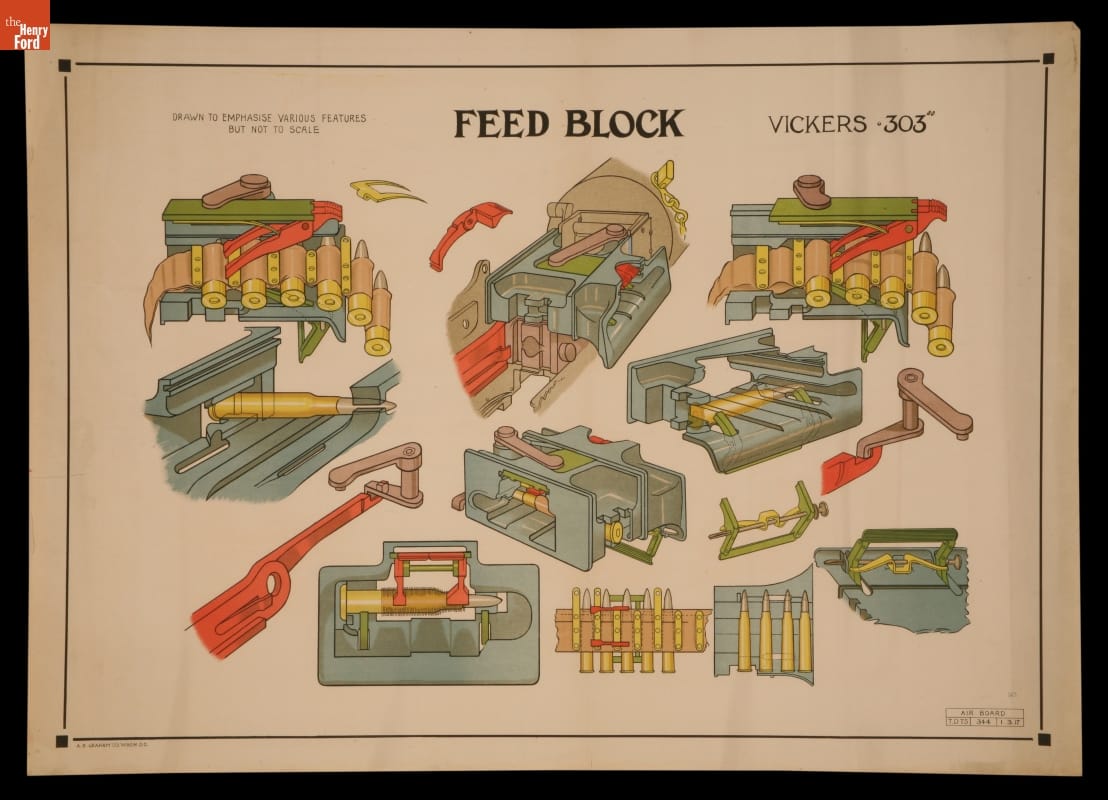
- circa 1917
- Collections - Artifact
Cutaway Illustration, Vickers .303" Machine Gun Feed Block, circa 1917
- Poster, "The Westinghouse Air Brake Company 9-1/2 Inch Air Pump Diagrams," circa 1910 - Before the air brake's introduction, brakemen stopped trains by scrambling from car to car and setting individual brake mechanisms on each one. It was dangerous even in fair weather, let alone in wet or icy conditions. George Westinghouse's brake used air pumped from the locomotive, through an airline running the train's length, to operate brakes on each car automatically.
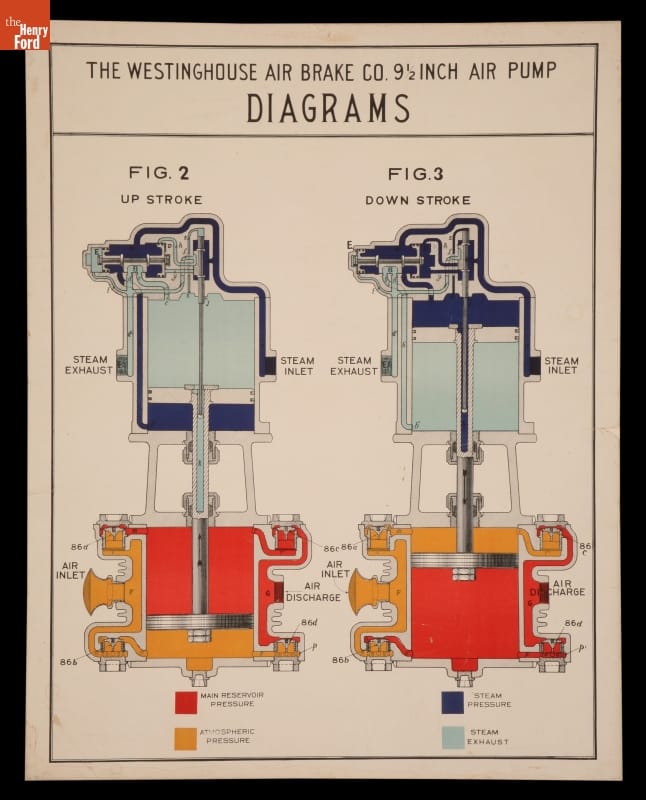
- circa 1910
- Collections - Artifact
Poster, "The Westinghouse Air Brake Company 9-1/2 Inch Air Pump Diagrams," circa 1910
Before the air brake's introduction, brakemen stopped trains by scrambling from car to car and setting individual brake mechanisms on each one. It was dangerous even in fair weather, let alone in wet or icy conditions. George Westinghouse's brake used air pumped from the locomotive, through an airline running the train's length, to operate brakes on each car automatically.
- Cutaway Illustration, Vickers .303" Machine Gun Barrel Casing, circa 1917 -
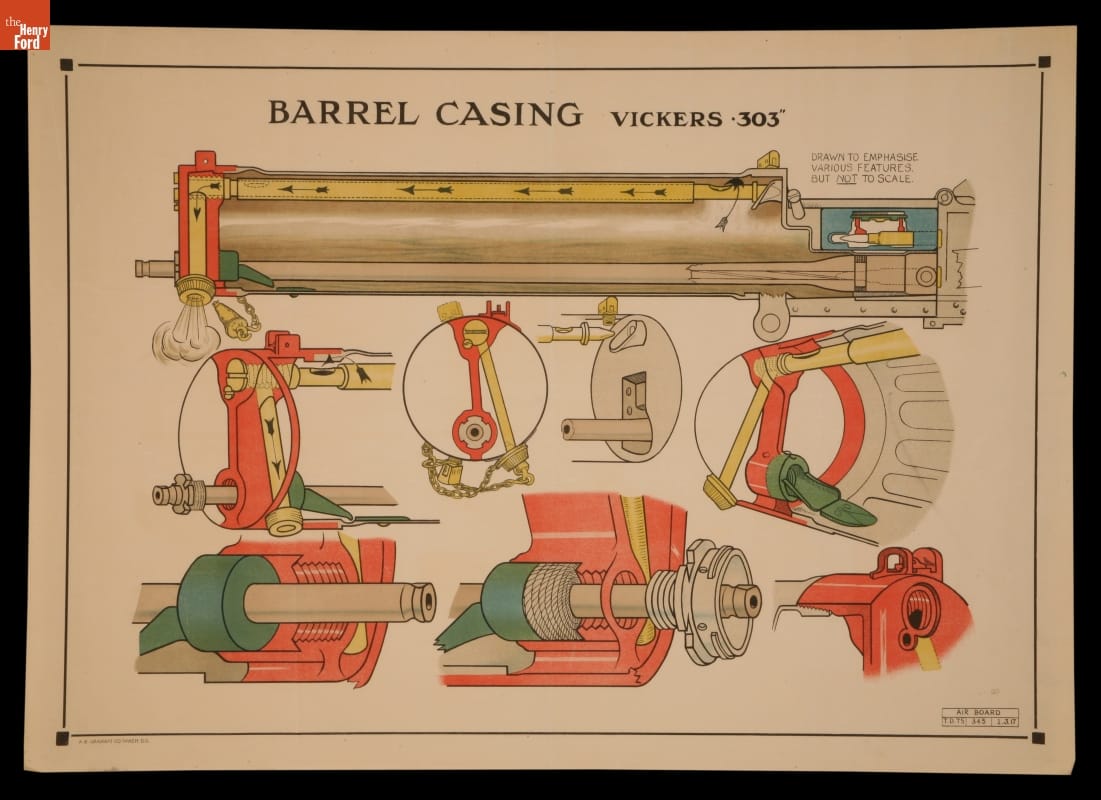
- circa 1917
- Collections - Artifact
Cutaway Illustration, Vickers .303" Machine Gun Barrel Casing, circa 1917
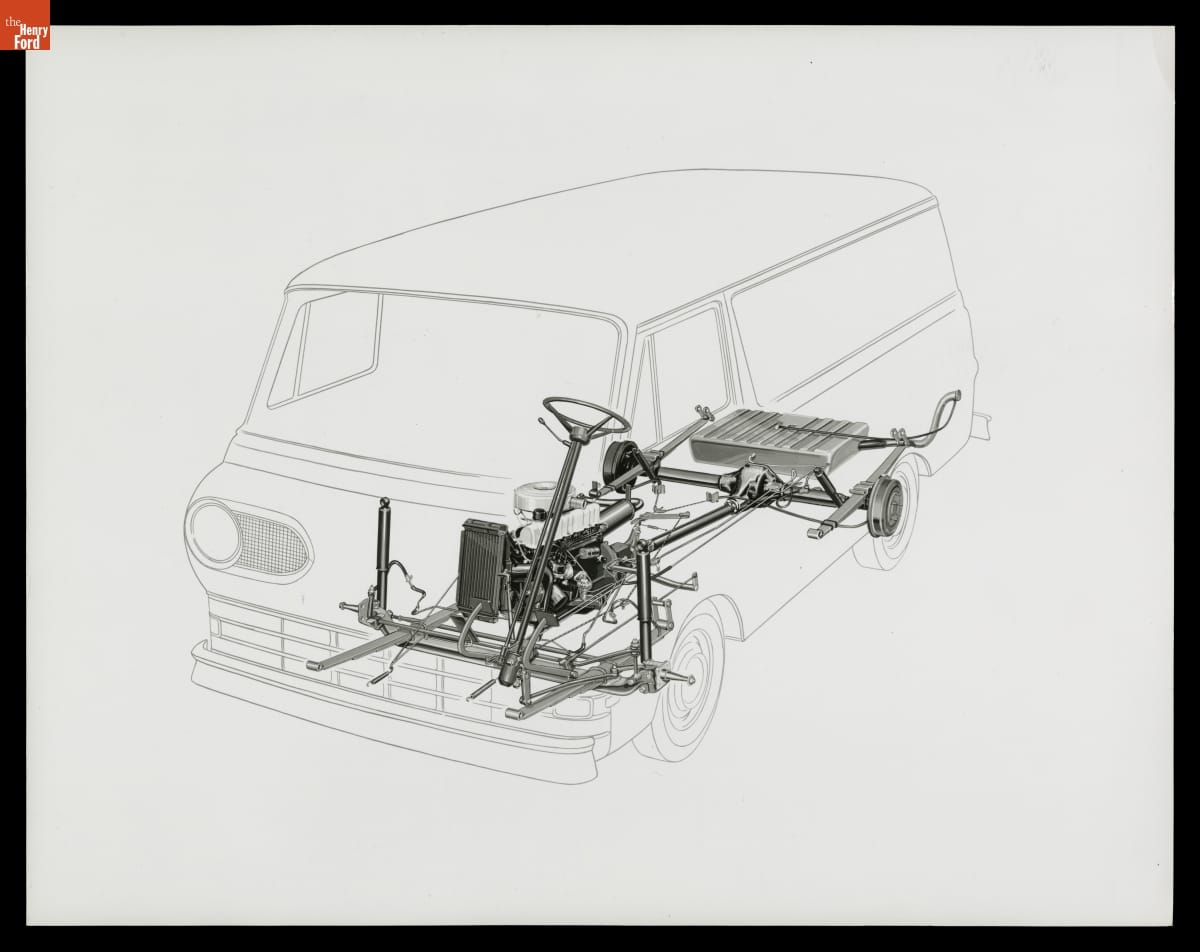
- Cutaway Drawing of 1961 Ford Econoline Delivery Van - Ford took a cue from Volkswagen's popular Type 2 Transporter vans and introduced its own Econoline vans for 1961. This cutaway view shows that, unlike the rear-engine Volkswagen, Ford's Econoline mounted its engine just behind the front axle, with a driveshaft sending power to the rear wheels. The Econoline was built on the compact Ford Falcon platform.
- 1961
- Collections - Artifact
Cutaway Drawing of 1961 Ford Econoline Delivery Van
Ford took a cue from Volkswagen's popular Type 2 Transporter vans and introduced its own Econoline vans for 1961. This cutaway view shows that, unlike the rear-engine Volkswagen, Ford's Econoline mounted its engine just behind the front axle, with a driveshaft sending power to the rear wheels. The Econoline was built on the compact Ford Falcon platform.
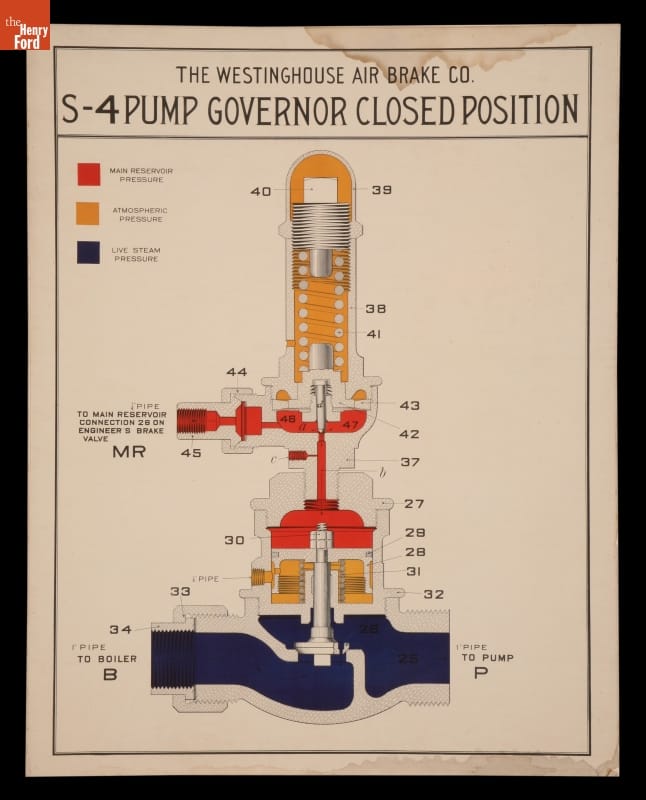
- Poster, "The Westinghouse Air Brake Company S-4 Governor Closed Position," circa 1910 - Before the air brake's introduction, brakemen stopped trains by scrambling from car to car and setting individual brake mechanisms on each one. It was dangerous even in fair weather, let alone in wet or icy conditions. George Westinghouse's brake used air pumped from the locomotive, through an airline running the train's length, to operate brakes on each car automatically.
- circa 1910
- Collections - Artifact
Poster, "The Westinghouse Air Brake Company S-4 Governor Closed Position," circa 1910
Before the air brake's introduction, brakemen stopped trains by scrambling from car to car and setting individual brake mechanisms on each one. It was dangerous even in fair weather, let alone in wet or icy conditions. George Westinghouse's brake used air pumped from the locomotive, through an airline running the train's length, to operate brakes on each car automatically.