
Search
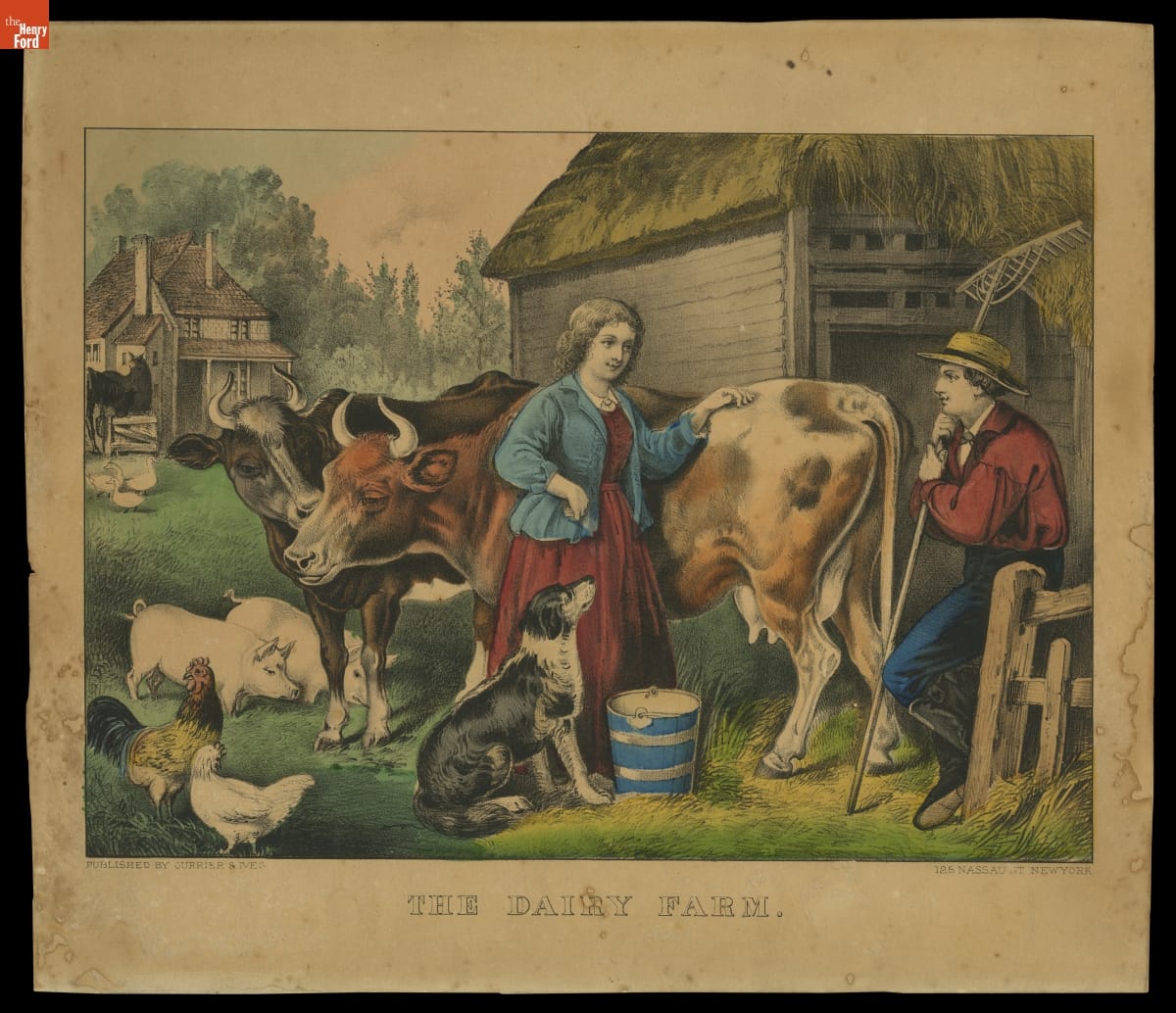
- Lithograph, "The Dairy Farm," circa 1874 -
- circa 1874
- Collections - Artifact
Lithograph, "The Dairy Farm," circa 1874
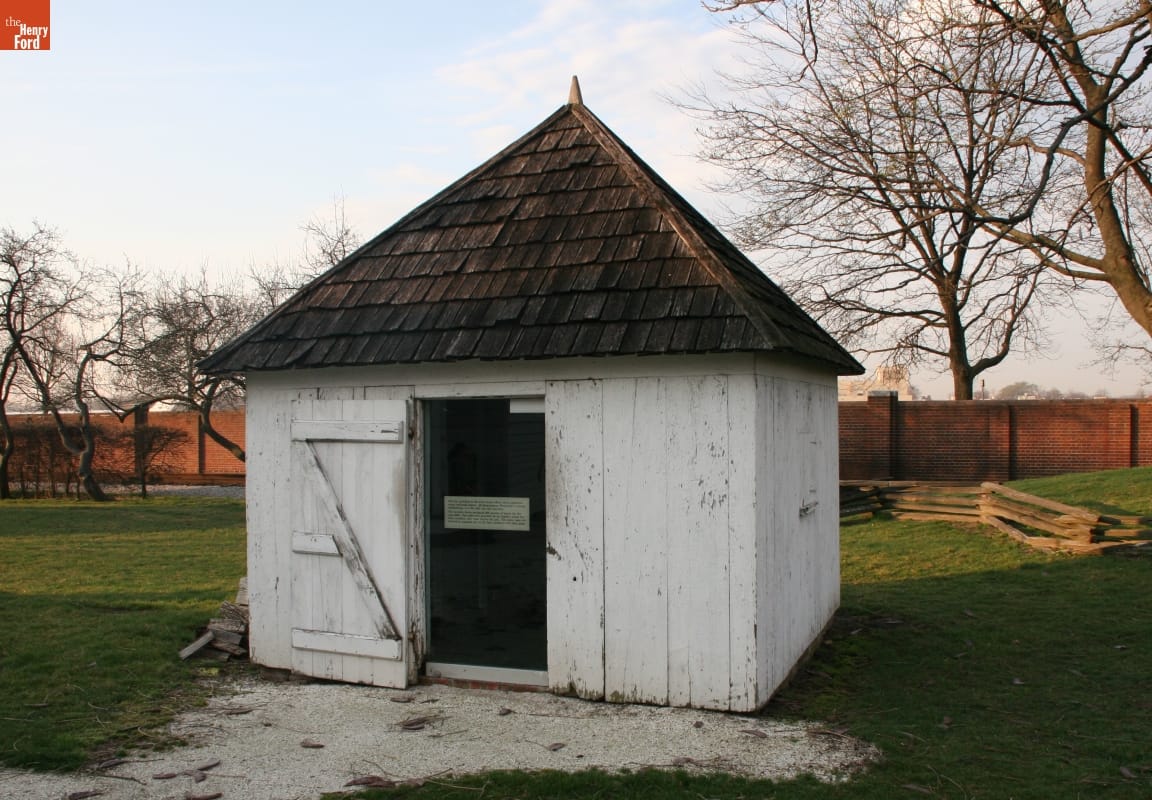
- Susquehanna Dairy - This dairy house stood on Susquehanna Plantation, near the main dwelling house. Here, enslaved African Americans had responsibility for the time consuming tasks of making butter and cheese, an important part of the planters' diet. Besides a dairy, plantation outbuildings typically included slave quarters, tobacco barn, corn house, stable, meat house, poultry house, blacksmith and carpentry shops.
- circa 1800
- Collections - Artifact
Susquehanna Dairy
This dairy house stood on Susquehanna Plantation, near the main dwelling house. Here, enslaved African Americans had responsibility for the time consuming tasks of making butter and cheese, an important part of the planters' diet. Besides a dairy, plantation outbuildings typically included slave quarters, tobacco barn, corn house, stable, meat house, poultry house, blacksmith and carpentry shops.
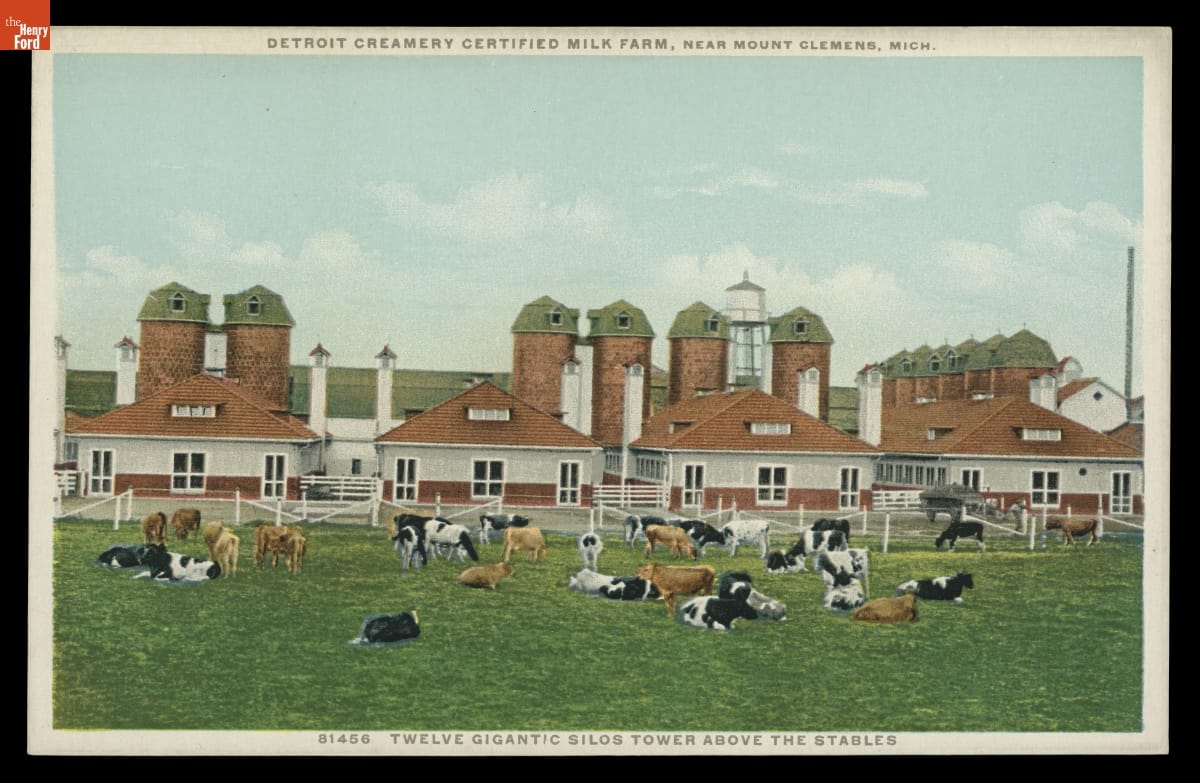
- Twelve Gigantic Silos Tower above the Stables, 1920-1930 - The Detroit Creamery Milk Farm produced milk for the Detroit area from 1910 until 1929. At its peak, it was the second largest milk farm in the country, with 2,300 acres and over 900 cattle. Their milk was certified by the Walker-Gordon milk laboratory, demonstrating its safety and purity. Souvenir postcards showcased the modern cleanliness of the Clinton Township farm.
- 1920-1930
- Collections - Artifact
Twelve Gigantic Silos Tower above the Stables, 1920-1930
The Detroit Creamery Milk Farm produced milk for the Detroit area from 1910 until 1929. At its peak, it was the second largest milk farm in the country, with 2,300 acres and over 900 cattle. Their milk was certified by the Walker-Gordon milk laboratory, demonstrating its safety and purity. Souvenir postcards showcased the modern cleanliness of the Clinton Township farm.
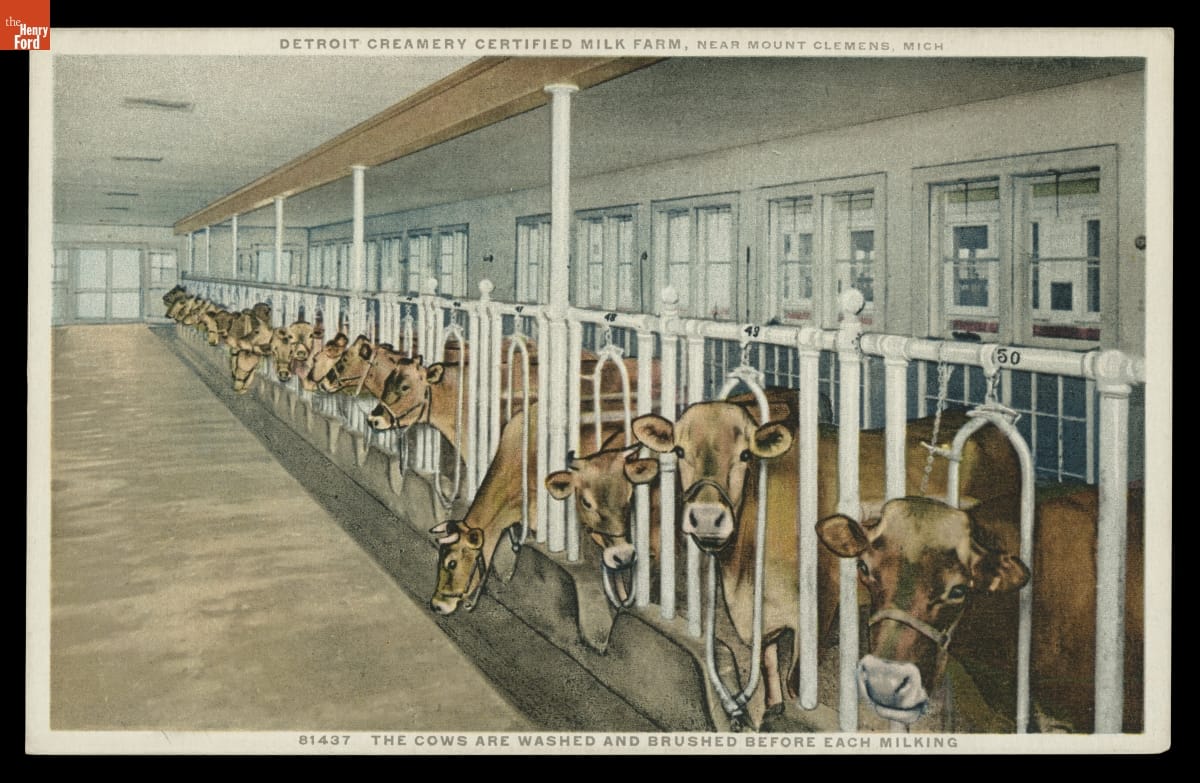
- The Cows are Washed and Brushed before Each Milking, 1920-1930 - The Detroit Creamery Milk Farm produced milk for the Detroit area from 1910 until 1929. At its peak, it was the second largest milk farm in the country, with 2,300 acres and over 900 cattle. Their milk was certified by the Walker-Gordon milk laboratory, demonstrating its safety and purity. Souvenir postcards showcased the modern cleanliness of the Clinton Township farm.
- 1920-1930
- Collections - Artifact
The Cows are Washed and Brushed before Each Milking, 1920-1930
The Detroit Creamery Milk Farm produced milk for the Detroit area from 1910 until 1929. At its peak, it was the second largest milk farm in the country, with 2,300 acres and over 900 cattle. Their milk was certified by the Walker-Gordon milk laboratory, demonstrating its safety and purity. Souvenir postcards showcased the modern cleanliness of the Clinton Township farm.
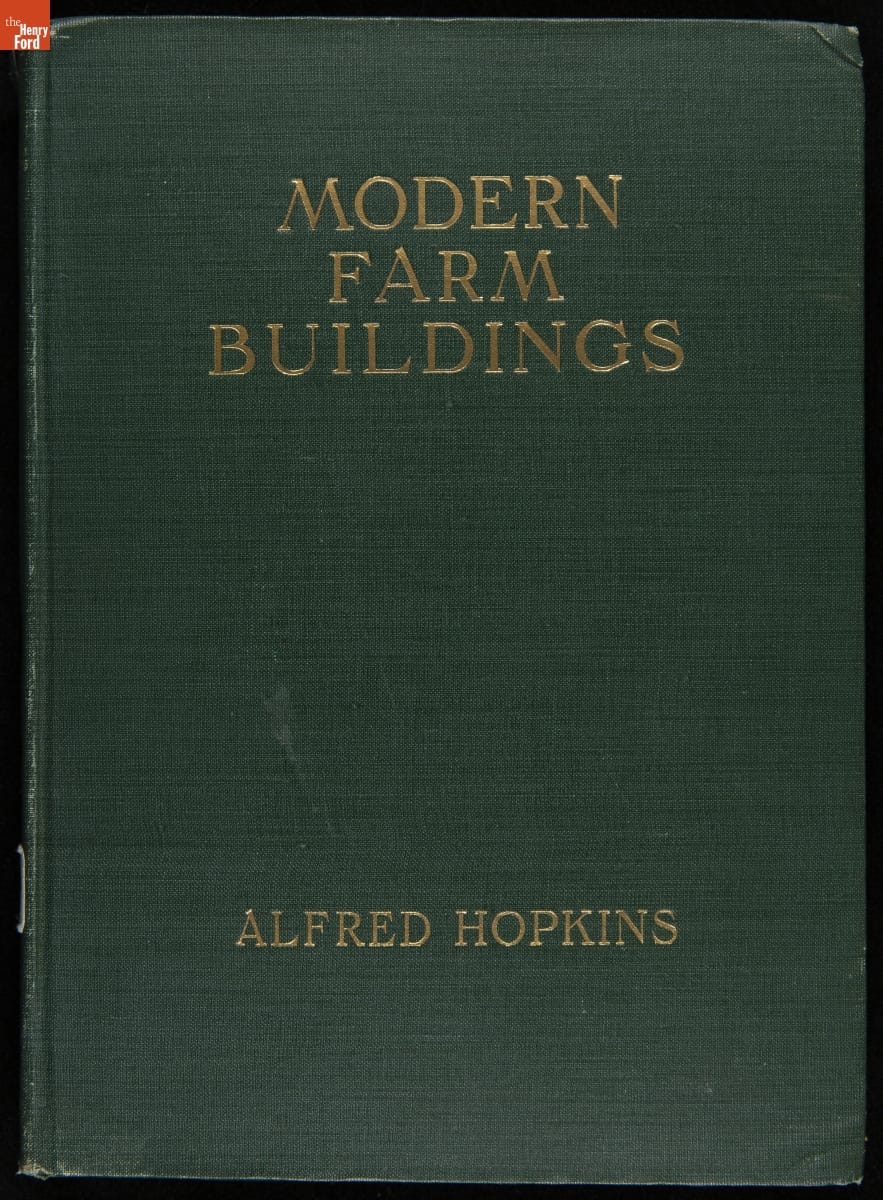
- Modern Farm Buildings, 1916 -
- 1916
- Collections - Artifact
Modern Farm Buildings, 1916
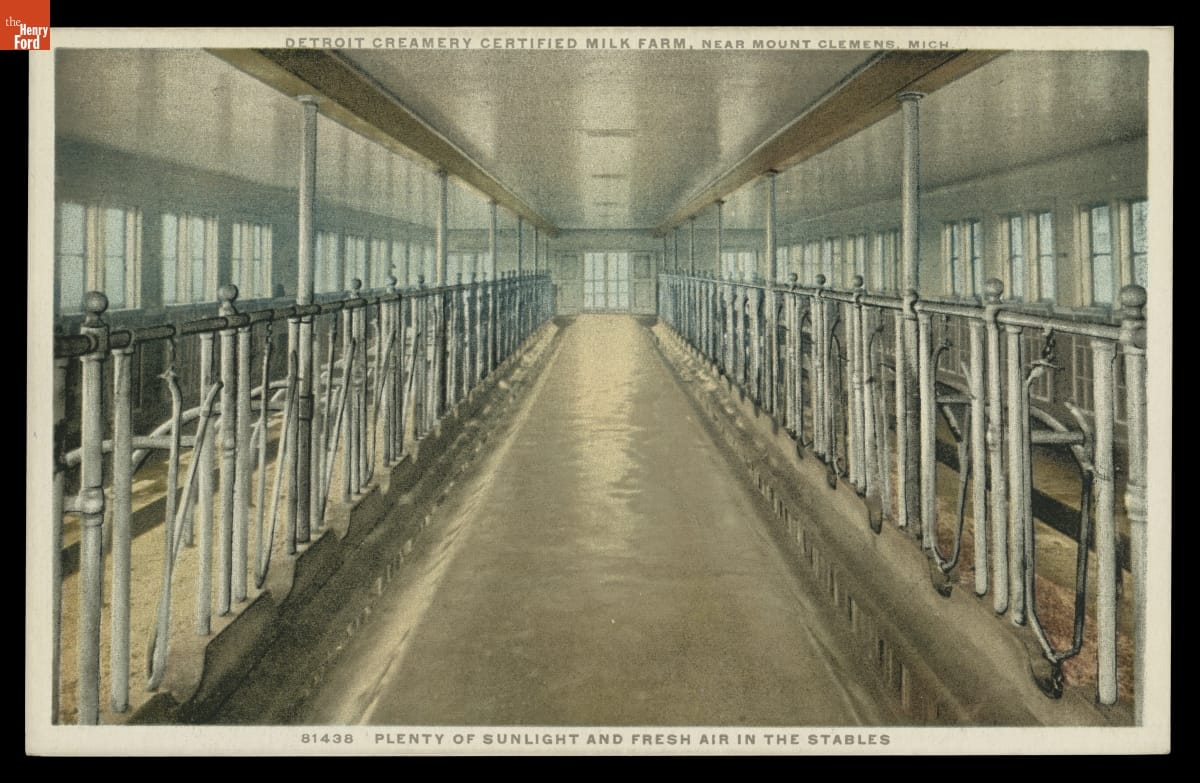
- Plenty of Sunlight and Fresh Air in the Stables, 1920-1930 - The Detroit Creamery Milk Farm produced milk for the Detroit area from 1910 until 1929. At its peak, it was the second largest milk farm in the country, with 2,300 acres and over 900 cattle. Their milk was certified by the Walker-Gordon milk laboratory, demonstrating its safety and purity. Souvenir postcards showcased the modern cleanliness of the Clinton Township farm.
- 1920-1930
- Collections - Artifact
Plenty of Sunlight and Fresh Air in the Stables, 1920-1930
The Detroit Creamery Milk Farm produced milk for the Detroit area from 1910 until 1929. At its peak, it was the second largest milk farm in the country, with 2,300 acres and over 900 cattle. Their milk was certified by the Walker-Gordon milk laboratory, demonstrating its safety and purity. Souvenir postcards showcased the modern cleanliness of the Clinton Township farm.
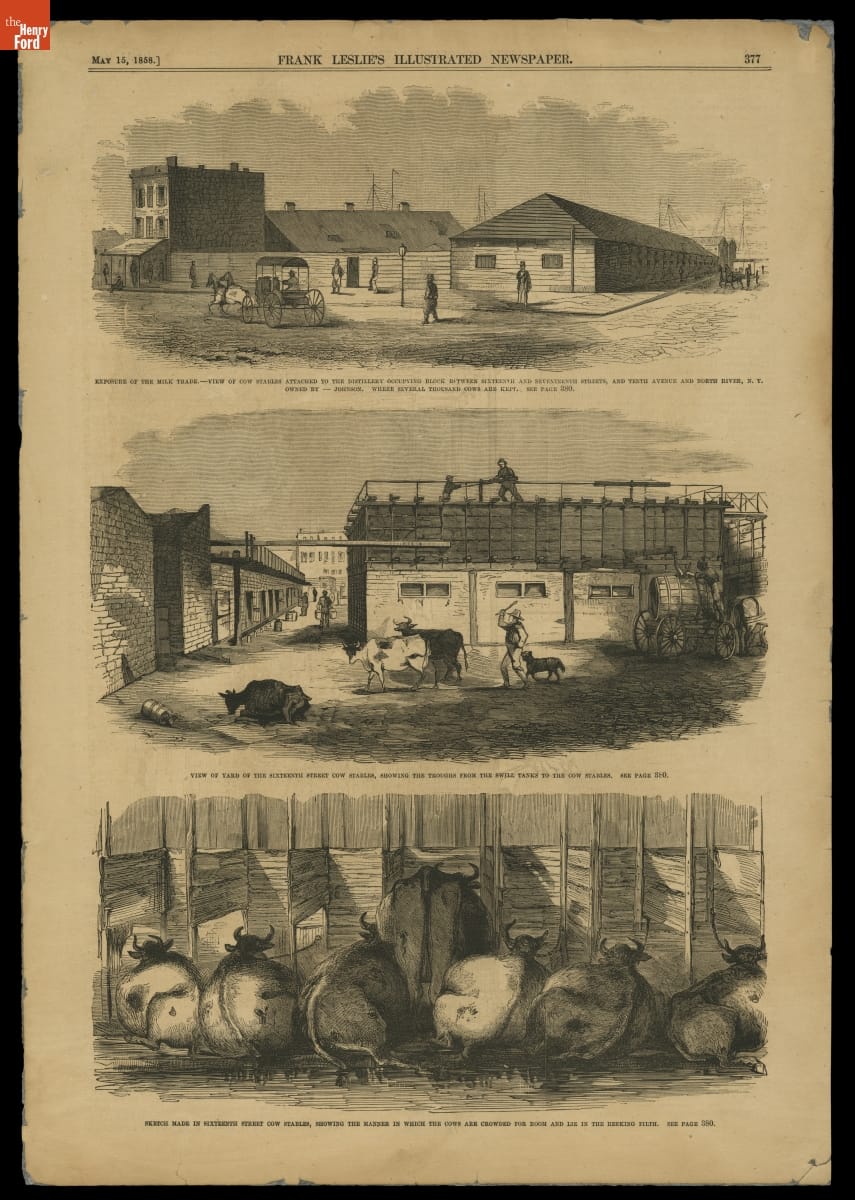
- "View of Cow Stables Attached to the Distillery" from Frank Leslie's Illustrated Newspaper, May 15, 1858 - Frank Leslie's scathing articles exposed New York City's "swill milk" scandal in 1858. Whiskey distillers had been keeping dairy cows in cramped sheds and feeding them leftover mash, sickening them and tainting their milk. In turn, the milk--masked with other ingredients and marketed as "pure" to urban consumers--poisoned thousands of infants. New York State finally issued milk regulations in 1862.
- May 15, 1858
- Collections - Artifact
"View of Cow Stables Attached to the Distillery" from Frank Leslie's Illustrated Newspaper, May 15, 1858
Frank Leslie's scathing articles exposed New York City's "swill milk" scandal in 1858. Whiskey distillers had been keeping dairy cows in cramped sheds and feeding them leftover mash, sickening them and tainting their milk. In turn, the milk--masked with other ingredients and marketed as "pure" to urban consumers--poisoned thousands of infants. New York State finally issued milk regulations in 1862.
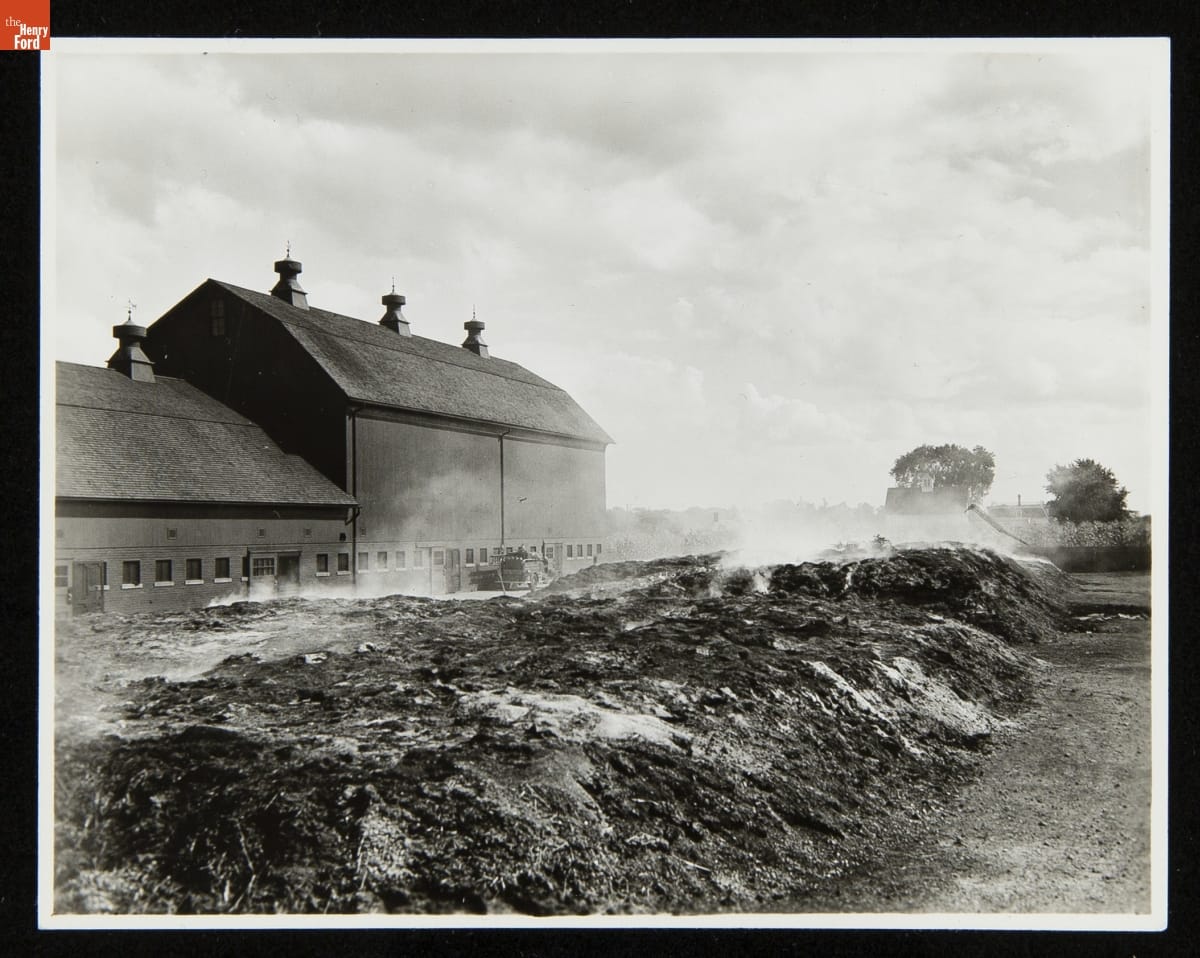
- Dairy Farm, One of the Henry Ford Farms, circa 1940 -
- circa 1940
- Collections - Artifact
Dairy Farm, One of the Henry Ford Farms, circa 1940