
Search
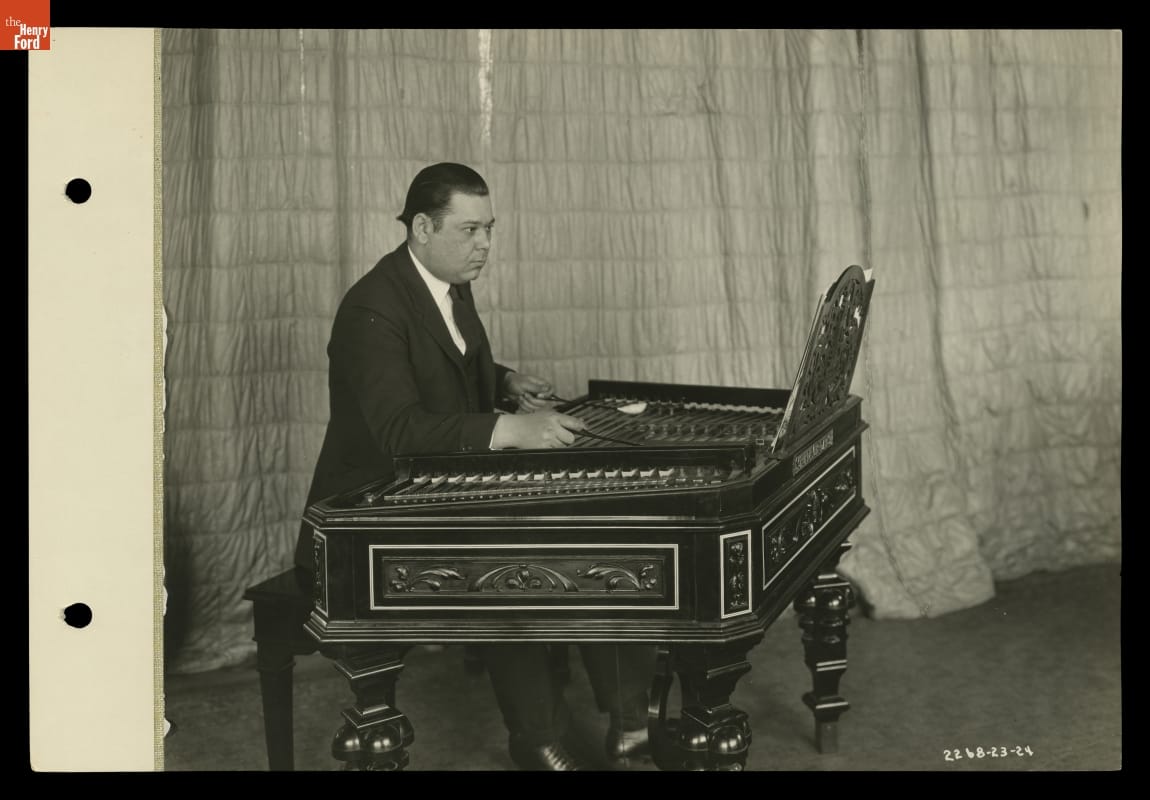
- Edmund Berky Playing the Cimbalom during a Ford Radio Station WWI Broadcast, 1924 - Edmund Berky provided musical entertainment for a Ford Motor Company radio program in May 1924. Berky played several selections -- ranging from classical to folk tunes -- on a cimbalom, which is similar to a dulcimer. Musicians play the cimbalom by striking metal strings with spoon-shaped wooden hammers covered with cotton, felt, or leather.
- May 22, 1924
- Collections - Artifact
Edmund Berky Playing the Cimbalom during a Ford Radio Station WWI Broadcast, 1924
Edmund Berky provided musical entertainment for a Ford Motor Company radio program in May 1924. Berky played several selections -- ranging from classical to folk tunes -- on a cimbalom, which is similar to a dulcimer. Musicians play the cimbalom by striking metal strings with spoon-shaped wooden hammers covered with cotton, felt, or leather.
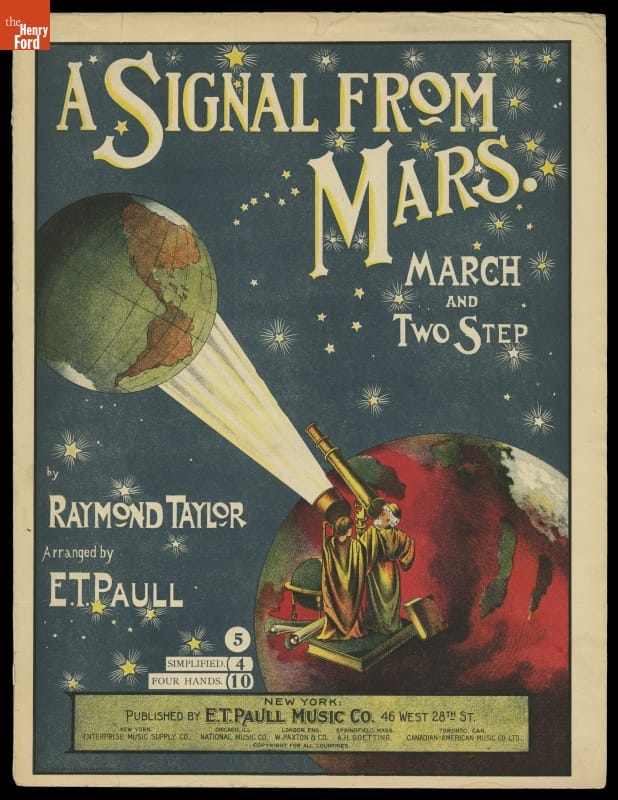
- "A Signal from Mars March and Two-Step," 1901 - The concept of "life on Mars" did not begin in tabloid magazines. In 1877, when astronomer Giovanni Schiaparelli's Mars report was translated into English, one word--canali--was misinterpreted to mean "canal." The idea of intelligent Martian lifeforms was influenced by this misunderstanding. This music documents the rise of "Mars Fever" and its impact upon popular, artistic and scientific cultures.
- 1901
- Collections - Artifact
"A Signal from Mars March and Two-Step," 1901
The concept of "life on Mars" did not begin in tabloid magazines. In 1877, when astronomer Giovanni Schiaparelli's Mars report was translated into English, one word--canali--was misinterpreted to mean "canal." The idea of intelligent Martian lifeforms was influenced by this misunderstanding. This music documents the rise of "Mars Fever" and its impact upon popular, artistic and scientific cultures.
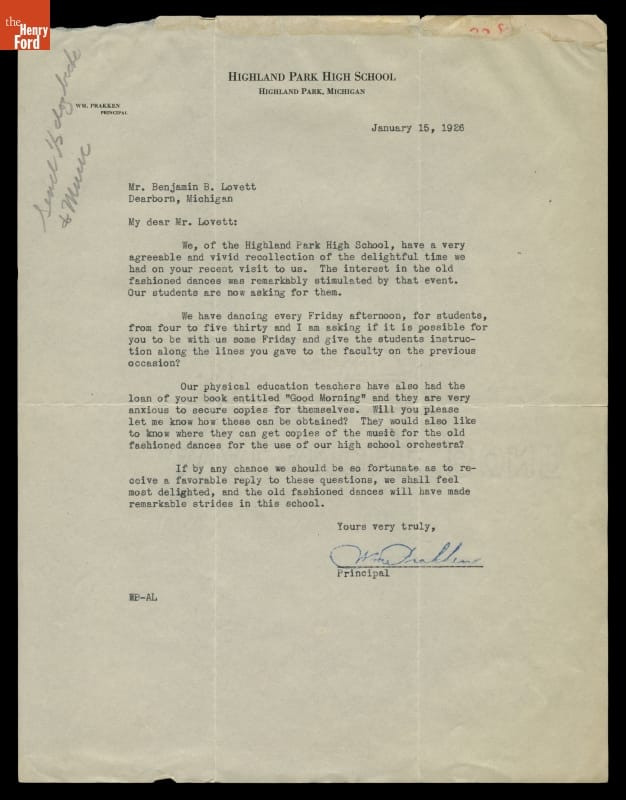
- Letter from Highland Park High School Principal to Benjamin Lovett, January 16, 1926 - Like the collections of antique vehicles, farm equipment and cooking implements Ford began to amass with vigor during the 1920s--music was part of Ford's larger vision for preserving the American past. By this time, much of America had left traditional music behind. But Ford never forgot it. And, through Benjamin Lovett's instruction, Ford wanted to share it with new generations.
- January 16, 1926
- Collections - Artifact
Letter from Highland Park High School Principal to Benjamin Lovett, January 16, 1926
Like the collections of antique vehicles, farm equipment and cooking implements Ford began to amass with vigor during the 1920s--music was part of Ford's larger vision for preserving the American past. By this time, much of America had left traditional music behind. But Ford never forgot it. And, through Benjamin Lovett's instruction, Ford wanted to share it with new generations.
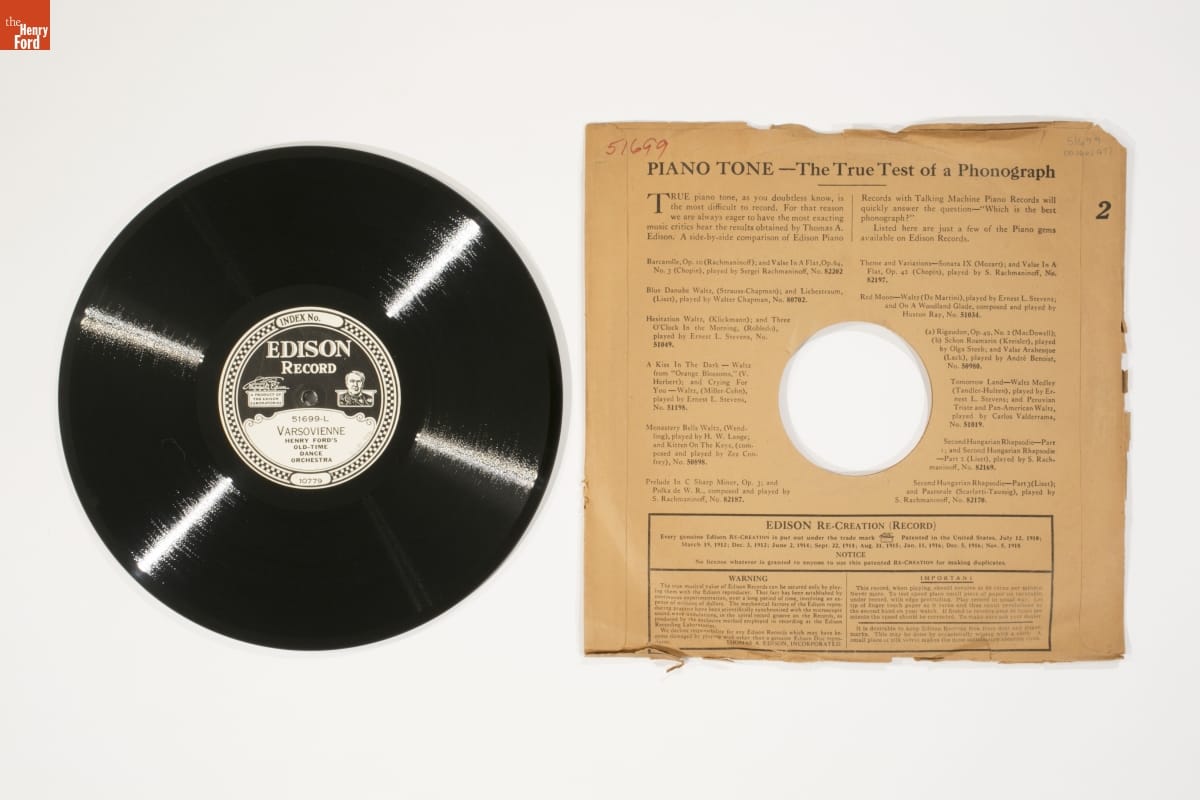
- Edison Diamond Disc Record, "Varsovienne" and "Heel and Toe Polka," 1926 - During the 1920s -- the "Jazz Age" -- Henry Ford led a nationwide revival of rural fiddling and old-fashioned dancing. Ford's "Old Time Orchestra" played at dances Ford hosted, while a dance instructor called the steps. After the orchestra performed at the New York Automobile Show in 1926, Edison recorded them at his New Jersey laboratory and included several selections in his record catalog for sale to the public.
- 1926-1929
- Collections - Artifact
Edison Diamond Disc Record, "Varsovienne" and "Heel and Toe Polka," 1926
During the 1920s -- the "Jazz Age" -- Henry Ford led a nationwide revival of rural fiddling and old-fashioned dancing. Ford's "Old Time Orchestra" played at dances Ford hosted, while a dance instructor called the steps. After the orchestra performed at the New York Automobile Show in 1926, Edison recorded them at his New Jersey laboratory and included several selections in his record catalog for sale to the public.
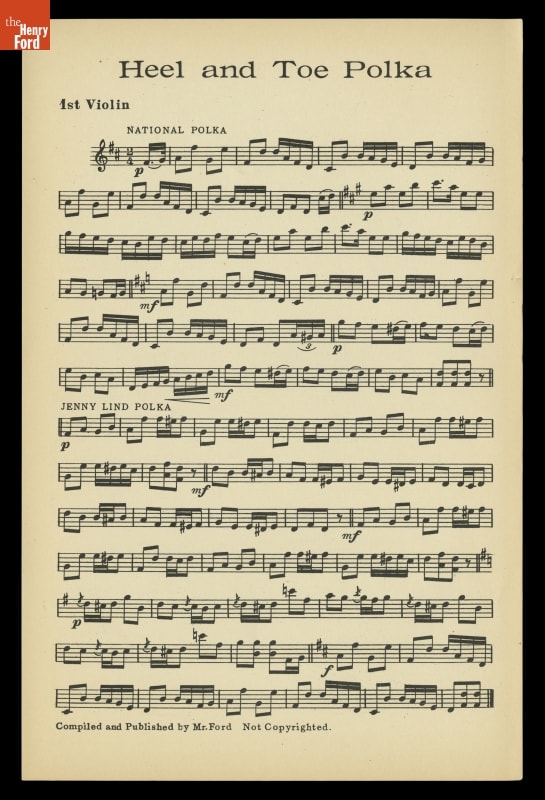
- "Heel and Toe Polka," Published by Henry Ford, 1925-1926 - In the 1920s, Henry Ford thought the old-fashioned dances of his youth should be revived. So he published a book of dance instruction--and also this sheet music for school orchestras or community musicians who wished to provide live music for 19th century dances like the reel, quadrille, schottische, and gavotte. The music included parts for violin, bass, cello, viola, clarinet, flute, piano, trumpet, trombone, and drums.
- 1925-1926
- Collections - Artifact
"Heel and Toe Polka," Published by Henry Ford, 1925-1926
In the 1920s, Henry Ford thought the old-fashioned dances of his youth should be revived. So he published a book of dance instruction--and also this sheet music for school orchestras or community musicians who wished to provide live music for 19th century dances like the reel, quadrille, schottische, and gavotte. The music included parts for violin, bass, cello, viola, clarinet, flute, piano, trumpet, trombone, and drums.
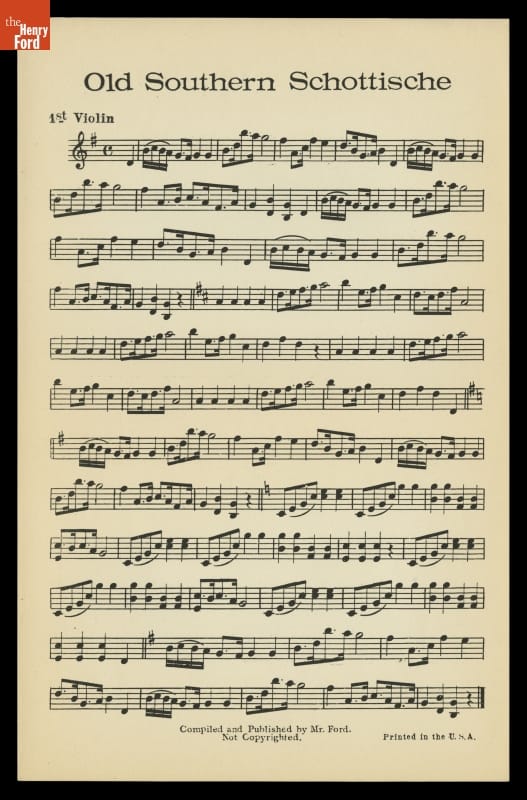
- "Old Southern Schottische," Published by Henry Ford, 1925-1926 - In the 1920s, Henry Ford thought the old-fashioned dances of his youth should be revived. So he published a book of dance instruction--and also this sheet music for school orchestras or community musicians who wished to provide live music for 19th century dances like the reel, quadrille, schottische, and gavotte. The music included parts for violin, bass, cello, viola, clarinet, flute, piano, trumpet, trombone, and drums.
- 1925-1926
- Collections - Artifact
"Old Southern Schottische," Published by Henry Ford, 1925-1926
In the 1920s, Henry Ford thought the old-fashioned dances of his youth should be revived. So he published a book of dance instruction--and also this sheet music for school orchestras or community musicians who wished to provide live music for 19th century dances like the reel, quadrille, schottische, and gavotte. The music included parts for violin, bass, cello, viola, clarinet, flute, piano, trumpet, trombone, and drums.
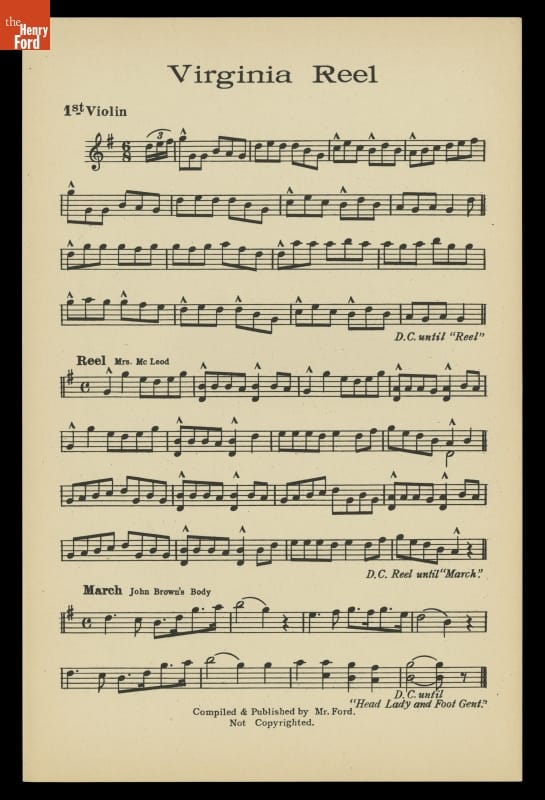
- "Virginia Reel," Published by Henry Ford, 1925-1926 - In the 1920s, Henry Ford thought the old-fashioned dances of his youth should be revived. So he published a book of dance instruction--and also this sheet music for school orchestras or community musicians who wished to provide live music for 19th century dances like the reel, quadrille, schottische, and gavotte. The music included parts for violin, bass, cello, viola, clarinet, flute, piano, trumpet, trombone, and drums.
- 1925-1926
- Collections - Artifact
"Virginia Reel," Published by Henry Ford, 1925-1926
In the 1920s, Henry Ford thought the old-fashioned dances of his youth should be revived. So he published a book of dance instruction--and also this sheet music for school orchestras or community musicians who wished to provide live music for 19th century dances like the reel, quadrille, schottische, and gavotte. The music included parts for violin, bass, cello, viola, clarinet, flute, piano, trumpet, trombone, and drums.
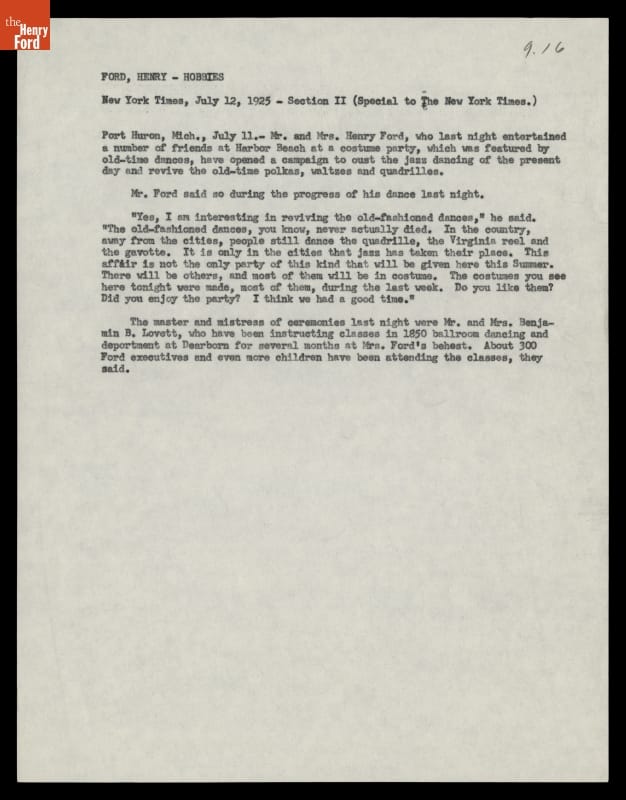
- News Story about Henry Ford's Revival of Old-Fashioned Music and Dancing, July 1925 -
- July 11, 1925
- Collections - Artifact
News Story about Henry Ford's Revival of Old-Fashioned Music and Dancing, July 1925
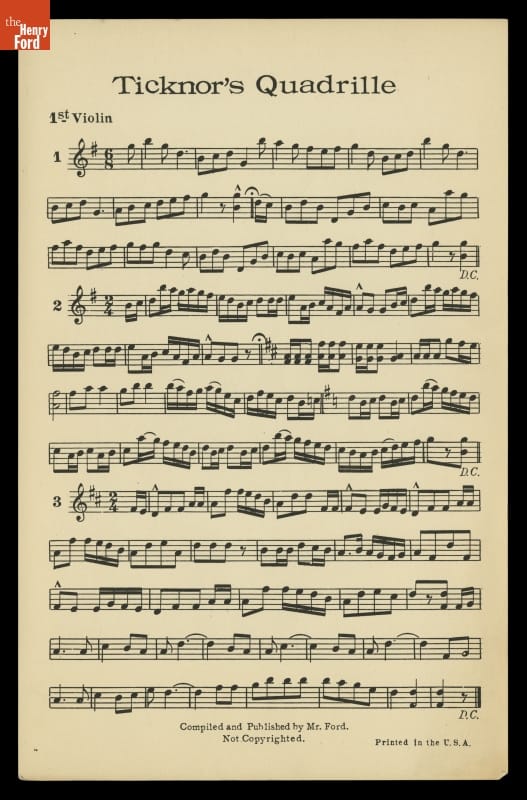
- "Ticknor's Quadrille," Published by Henry Ford, 1925-1926 - In the 1920s, Henry Ford thought the old-fashioned dances of his youth should be revived. So he published a book of dance instruction--and also this sheet music for school orchestras or community musicians who wished to provide live music for 19th century dances like the reel, quadrille, schottische, and gavotte. The music included parts for violin, bass, cello, viola, clarinet, flute, piano, trumpet, trombone, and drums.
- 1925-1926
- Collections - Artifact
"Ticknor's Quadrille," Published by Henry Ford, 1925-1926
In the 1920s, Henry Ford thought the old-fashioned dances of his youth should be revived. So he published a book of dance instruction--and also this sheet music for school orchestras or community musicians who wished to provide live music for 19th century dances like the reel, quadrille, schottische, and gavotte. The music included parts for violin, bass, cello, viola, clarinet, flute, piano, trumpet, trombone, and drums.
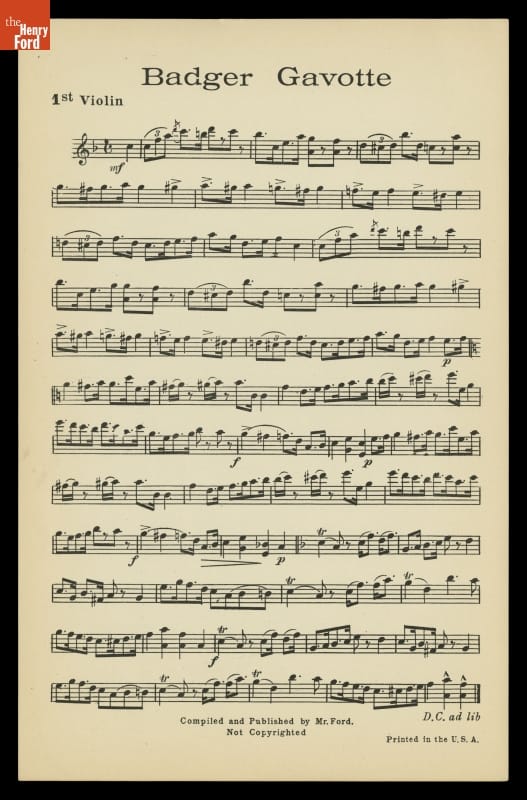
- "Badger Gavotte," Published by Henry Ford, 1925-1926 - In the 1920s, Henry Ford thought the old-fashioned dances of his youth should be revived. So he published a book of dance instruction--and also this sheet music for school orchestras or community musicians who wished to provide live music for 19th century dances like the reel, quadrille, schottische, and gavotte. The music included parts for violin, bass, cello, viola, clarinet, flute, piano, trumpet, trombone, and drums.
- 1925-1926
- Collections - Artifact
"Badger Gavotte," Published by Henry Ford, 1925-1926
In the 1920s, Henry Ford thought the old-fashioned dances of his youth should be revived. So he published a book of dance instruction--and also this sheet music for school orchestras or community musicians who wished to provide live music for 19th century dances like the reel, quadrille, schottische, and gavotte. The music included parts for violin, bass, cello, viola, clarinet, flute, piano, trumpet, trombone, and drums.