
Search
- Letter Congratulating Edsel Ford for Involving Ford Dealers with Airmarking Buildings in Their Towns, January 15, 1926 - Edsel Ford championed the development of commercial aviation in the United States. As an aid to aerial navigation, he wrote letters to Ford dealers encouraging them to paint two things on each dealer's roof: the name of the city and an arrow pointing due north. More than 4,000 communities had aerial markings of some sort by 1929.
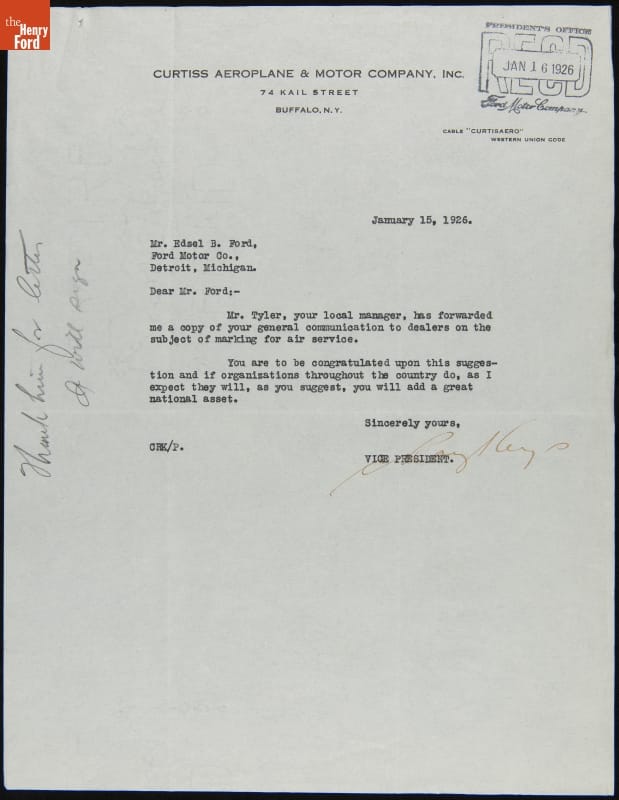
- January 15, 1926
- Collections - Artifact
Letter Congratulating Edsel Ford for Involving Ford Dealers with Airmarking Buildings in Their Towns, January 15, 1926
Edsel Ford championed the development of commercial aviation in the United States. As an aid to aerial navigation, he wrote letters to Ford dealers encouraging them to paint two things on each dealer's roof: the name of the city and an arrow pointing due north. More than 4,000 communities had aerial markings of some sort by 1929.
- Aerial Photo of Carbondale, Illinois, Showing Airmarker on a Ford Dealer's Roof, 1929 - Edsel Ford championed the development of commercial aviation in the United States. As an aid to aerial navigation, he wrote letters to Ford dealers encouraging them to paint two things on each dealer's roof: the name of the city and an arrow pointing due north. More than 4,000 communities had aerial markings of some sort by 1929.
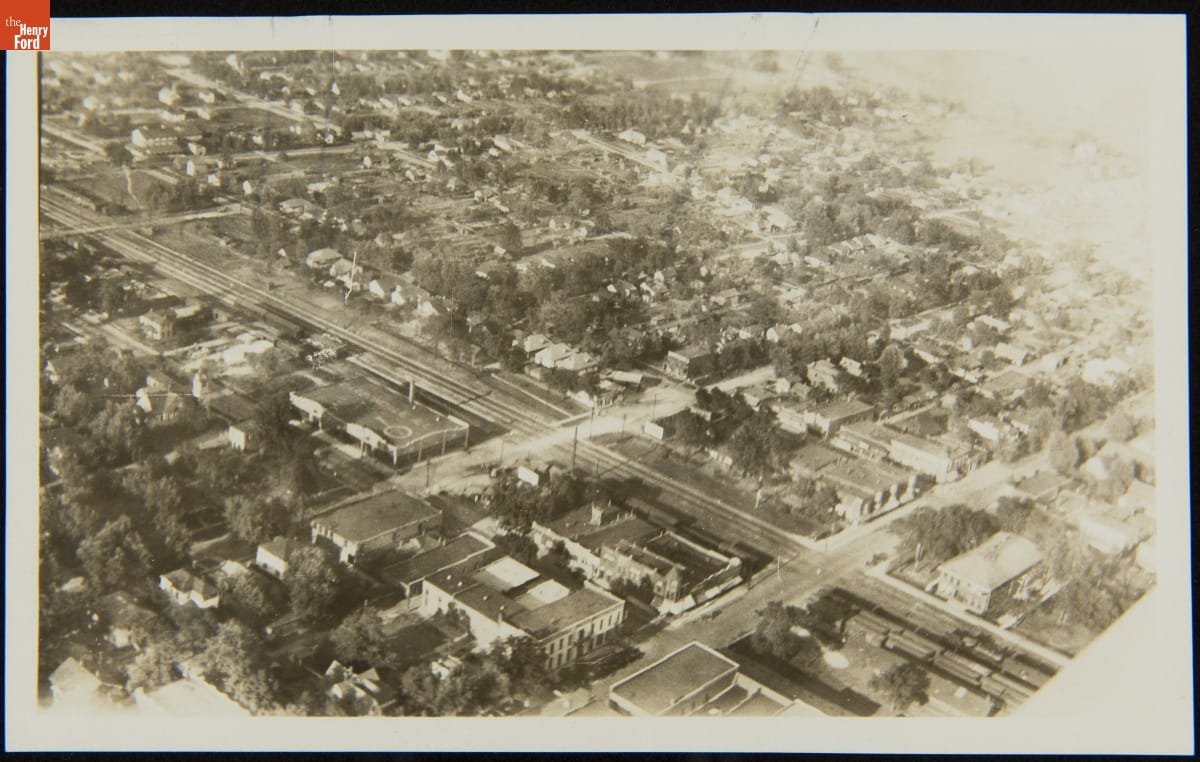
- 1929
- Collections - Artifact
Aerial Photo of Carbondale, Illinois, Showing Airmarker on a Ford Dealer's Roof, 1929
Edsel Ford championed the development of commercial aviation in the United States. As an aid to aerial navigation, he wrote letters to Ford dealers encouraging them to paint two things on each dealer's roof: the name of the city and an arrow pointing due north. More than 4,000 communities had aerial markings of some sort by 1929.
- Letter from a Ford Dealer to Harry Guggenheim regarding an Airmarker on Their Roof, February 5, 1929 - Edsel Ford championed the development of commercial aviation in the United States. As an aid to aerial navigation, he wrote letters to Ford dealers encouraging them to paint two things on each dealer's roof: the name of the city and an arrow pointing due north. More than 4,000 communities had aerial markings of some sort by 1929.
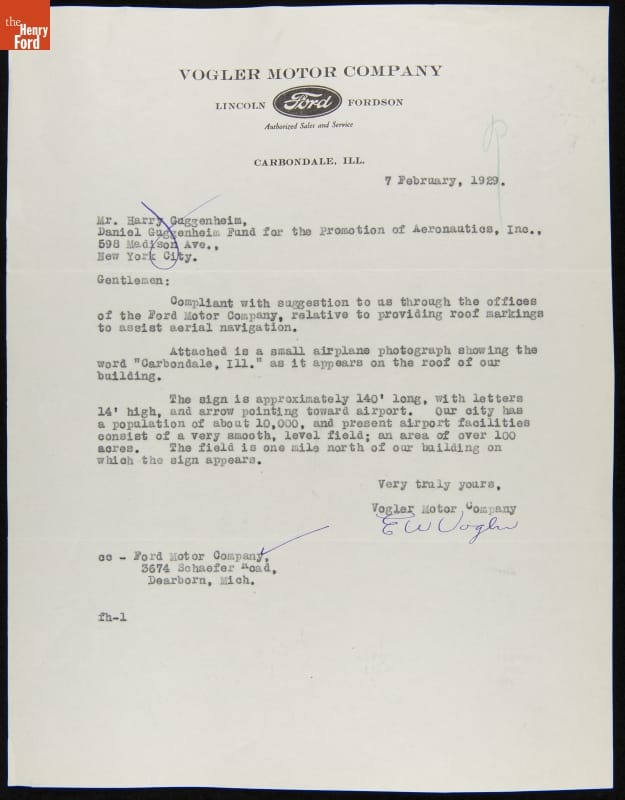
- February 07, 1929
- Collections - Artifact
Letter from a Ford Dealer to Harry Guggenheim regarding an Airmarker on Their Roof, February 5, 1929
Edsel Ford championed the development of commercial aviation in the United States. As an aid to aerial navigation, he wrote letters to Ford dealers encouraging them to paint two things on each dealer's roof: the name of the city and an arrow pointing due north. More than 4,000 communities had aerial markings of some sort by 1929.
- Letter from Harry Guggenheim to Edsel Ford regarding Airmarking Buildings to Aid Aerial Navigation, January 29, 1929 - Edsel Ford championed the development of commercial aviation in the United States. As an aid to aerial navigation, he wrote letters to Ford dealers encouraging them to paint two things on each dealer's roof: the name of the city and an arrow pointing due north. More than 4,000 communities had aerial markings of some sort by 1929.
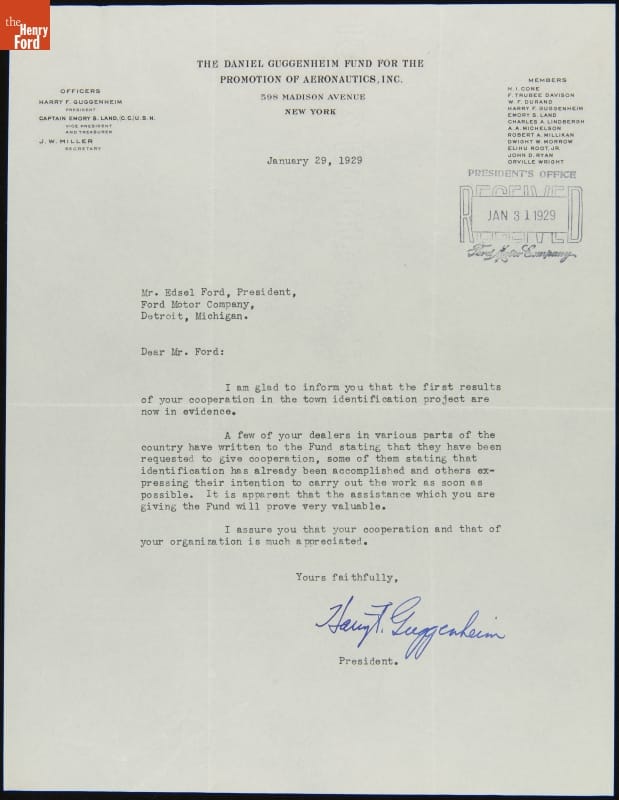
- January 29, 1929
- Collections - Artifact
Letter from Harry Guggenheim to Edsel Ford regarding Airmarking Buildings to Aid Aerial Navigation, January 29, 1929
Edsel Ford championed the development of commercial aviation in the United States. As an aid to aerial navigation, he wrote letters to Ford dealers encouraging them to paint two things on each dealer's roof: the name of the city and an arrow pointing due north. More than 4,000 communities had aerial markings of some sort by 1929.
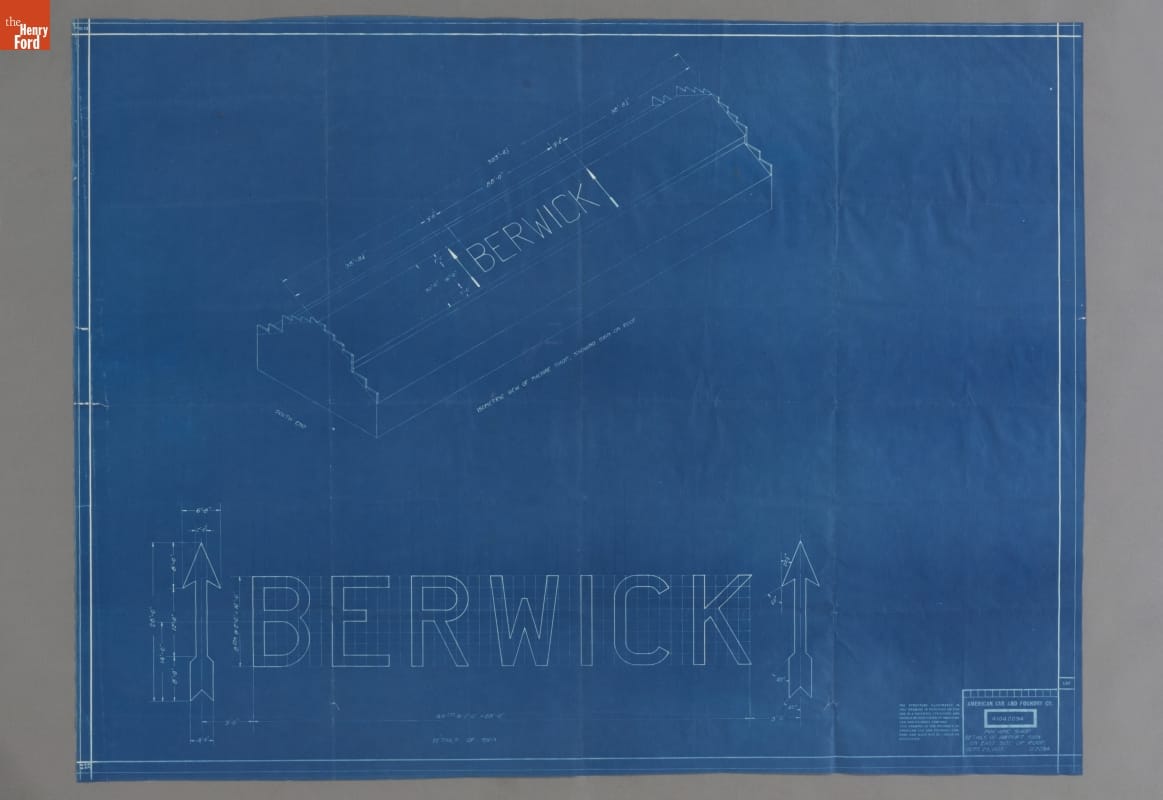
- Drawing of Airmarker for the American Car and Foundry Company, Berwick, Pennsylvania, September 1929 - Philanthropist Daniel Guggenheim established a Fund for the Promotion of Aeronautics in 1926. The fund supported a town identification project encouraging every American community to paint its name and a north-pointing arrow on the roof of a prominent building. Recommended letter height was 12 feet -- to be plainly visible from airplanes 3,000 feet in the sky.
- September 29, 1927
- Collections - Artifact
Drawing of Airmarker for the American Car and Foundry Company, Berwick, Pennsylvania, September 1929
Philanthropist Daniel Guggenheim established a Fund for the Promotion of Aeronautics in 1926. The fund supported a town identification project encouraging every American community to paint its name and a north-pointing arrow on the roof of a prominent building. Recommended letter height was 12 feet -- to be plainly visible from airplanes 3,000 feet in the sky.
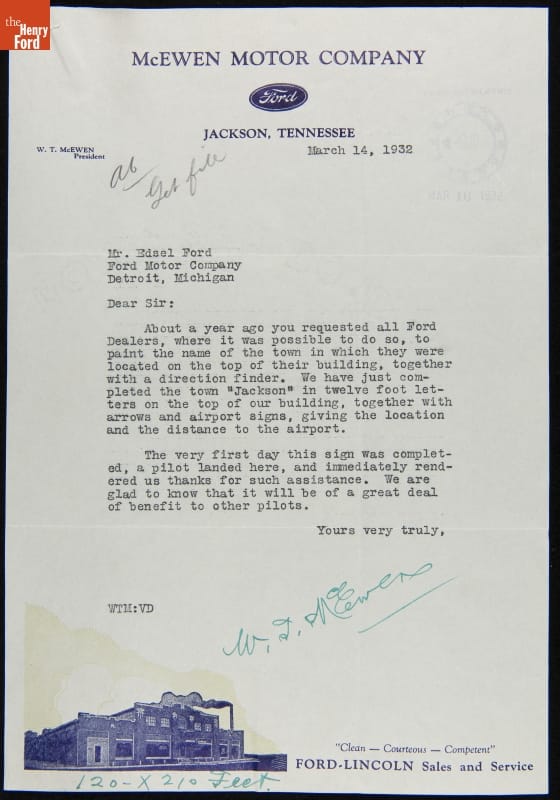
- Letter from a Ford Dealer Informing Edsel Ford Their Building's Airmarker is Being Used by Pilots, March 1932 - Edsel Ford championed the development of commercial aviation in the United States. As an aid to aerial navigation, he wrote letters to Ford dealers encouraging them to paint two things on each dealer's roof: the name of the city and an arrow pointing due north. More than 4,000 communities had aerial markings of some sort by 1929.
- March 14, 1932
- Collections - Artifact
Letter from a Ford Dealer Informing Edsel Ford Their Building's Airmarker is Being Used by Pilots, March 1932
Edsel Ford championed the development of commercial aviation in the United States. As an aid to aerial navigation, he wrote letters to Ford dealers encouraging them to paint two things on each dealer's roof: the name of the city and an arrow pointing due north. More than 4,000 communities had aerial markings of some sort by 1929.
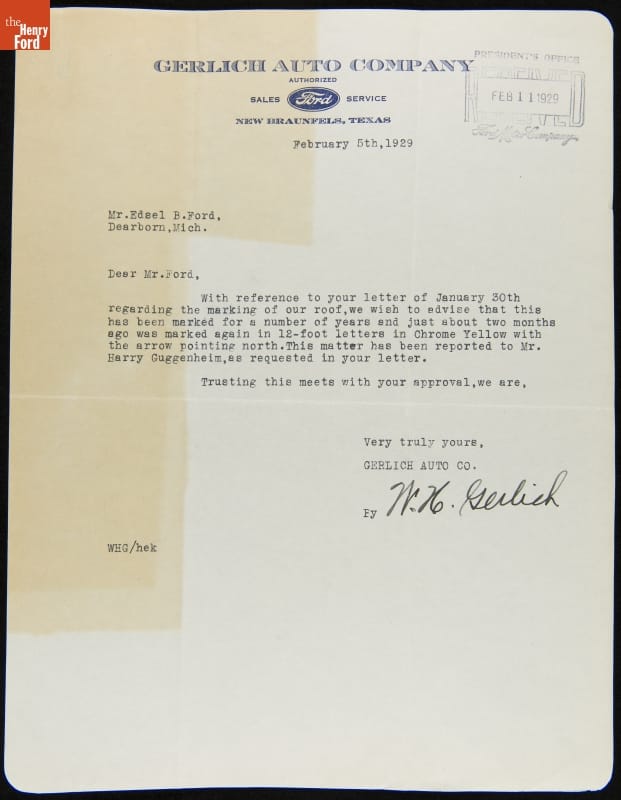
- Letter from a Ford Dealer Informing Edsel Ford Their Building's Roof Has a Painted Airmarker, February 5, 1929 - Edsel Ford championed the development of commercial aviation in the United States. As an aid to aerial navigation, he wrote letters to Ford dealers encouraging them to paint two things on each dealer's roof: the name of the city and an arrow pointing due north. More than 4,000 communities had aerial markings of some sort by 1929.
- February 08, 1929
- Collections - Artifact
Letter from a Ford Dealer Informing Edsel Ford Their Building's Roof Has a Painted Airmarker, February 5, 1929
Edsel Ford championed the development of commercial aviation in the United States. As an aid to aerial navigation, he wrote letters to Ford dealers encouraging them to paint two things on each dealer's roof: the name of the city and an arrow pointing due north. More than 4,000 communities had aerial markings of some sort by 1929.
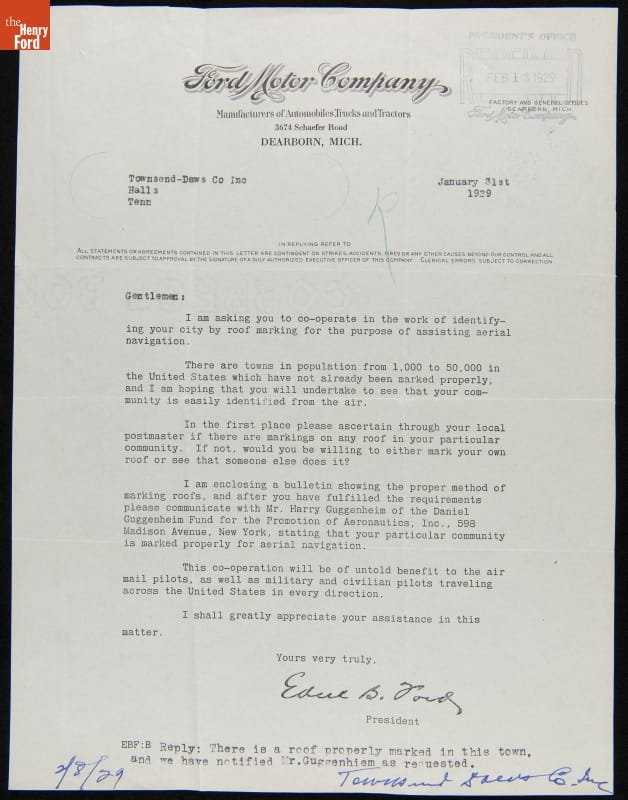
- Letter from Edsel Ford to a Ford Dealer regarding Airmarking a Building in Their City, January 31, 1929 - Edsel Ford championed the development of commercial aviation in the United States. As an aid to aerial navigation, he wrote letters to Ford dealers encouraging them to paint two things on each dealer's roof: the name of the city and an arrow pointing due north. More than 4,000 communities had aerial markings of some sort by 1929.
- January 31, 1929
- Collections - Artifact
Letter from Edsel Ford to a Ford Dealer regarding Airmarking a Building in Their City, January 31, 1929
Edsel Ford championed the development of commercial aviation in the United States. As an aid to aerial navigation, he wrote letters to Ford dealers encouraging them to paint two things on each dealer's roof: the name of the city and an arrow pointing due north. More than 4,000 communities had aerial markings of some sort by 1929.
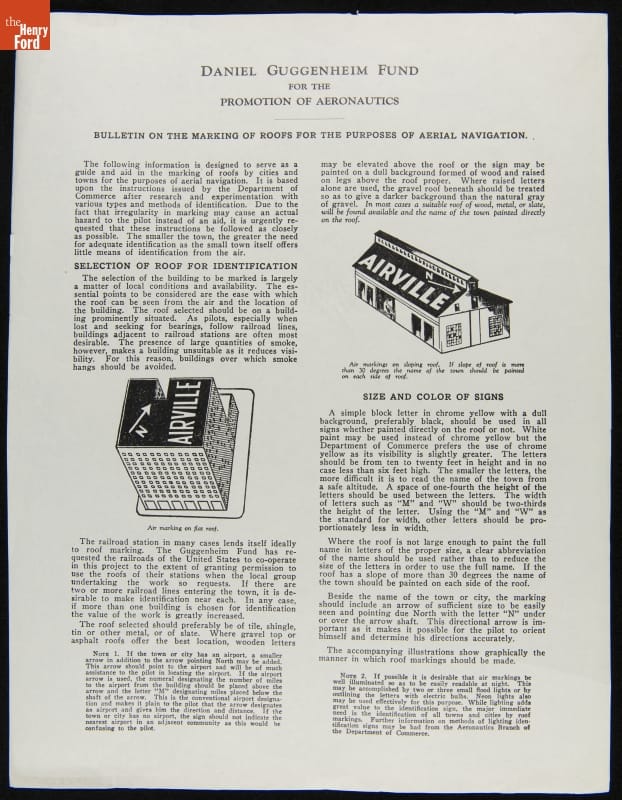
- "Bulletin on the Marking of Roofs for the Purpose of Aerial Navigation," 1926-1930 - Philanthropist Daniel Guggenheim established a Fund for the Promotion of Aeronautics in 1926. The fund supported a town identification project encouraging every American community to paint its name and a north-pointing arrow on the roof of a prominent building. Recommended letter height was 12 feet -- to be plainly visible from airplanes 3,000 feet in the sky.
- 1926-1930
- Collections - Artifact
"Bulletin on the Marking of Roofs for the Purpose of Aerial Navigation," 1926-1930
Philanthropist Daniel Guggenheim established a Fund for the Promotion of Aeronautics in 1926. The fund supported a town identification project encouraging every American community to paint its name and a north-pointing arrow on the roof of a prominent building. Recommended letter height was 12 feet -- to be plainly visible from airplanes 3,000 feet in the sky.