
Search
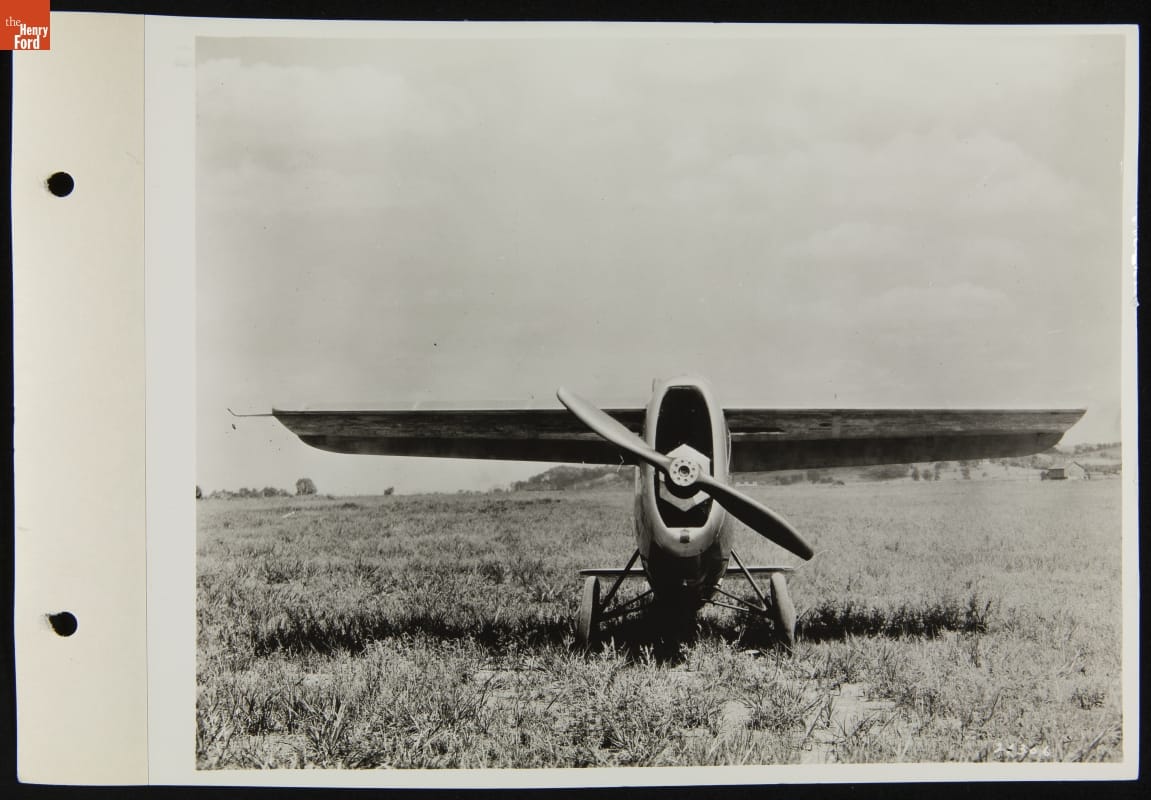
- Front View of the Dayton Wright RB-1 Racer, August 1920 - The Dayton-Wright RB-1 was built for speed. Designers Howard Rinehart and Milton Baumann gave the innovative airplane an enclosed cockpit, a single cantilevered wing with adjustable flaps, and retractable landing gear. Rinehart hoped to win the 1920 Gordon Bennett Air Race piloting the RB-1, but a failed control cable forced him out of the competition.
- August 01, 1920
- Collections - Artifact
Front View of the Dayton Wright RB-1 Racer, August 1920
The Dayton-Wright RB-1 was built for speed. Designers Howard Rinehart and Milton Baumann gave the innovative airplane an enclosed cockpit, a single cantilevered wing with adjustable flaps, and retractable landing gear. Rinehart hoped to win the 1920 Gordon Bennett Air Race piloting the RB-1, but a failed control cable forced him out of the competition.
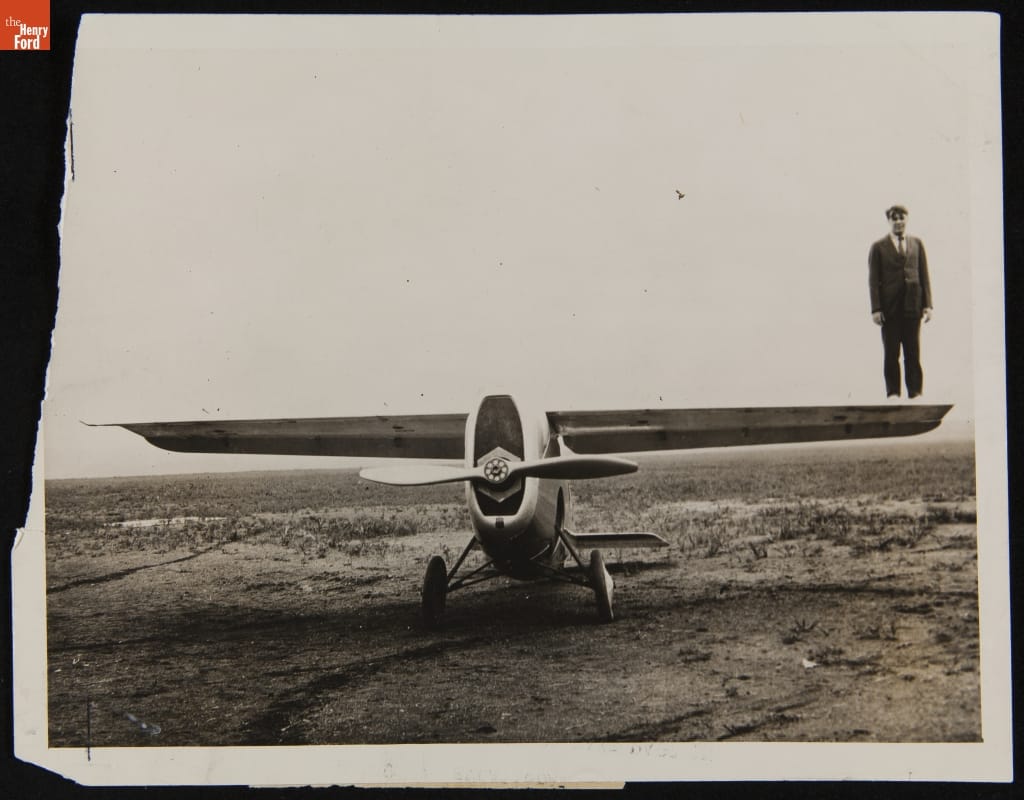
- Pilot Howard Rinehart Standing on Wing of the Dayton Wright RB-1 Racer, August 1920 - Howard Rinehart demonstrated the strength of the single cantilevered wing on his Dayton-Wright RB-1. Designed by Rinehart and Milton Baumann, the innovative airplane also featured movable wing flaps, retractable landing gear, and an enclosed cockpit. Rinehart hoped to win the 1920 Gordon Bennett Air Race flying the RB-1, but a failed control cable forced him out of the competition.
- August 19, 1920
- Collections - Artifact
Pilot Howard Rinehart Standing on Wing of the Dayton Wright RB-1 Racer, August 1920
Howard Rinehart demonstrated the strength of the single cantilevered wing on his Dayton-Wright RB-1. Designed by Rinehart and Milton Baumann, the innovative airplane also featured movable wing flaps, retractable landing gear, and an enclosed cockpit. Rinehart hoped to win the 1920 Gordon Bennett Air Race flying the RB-1, but a failed control cable forced him out of the competition.
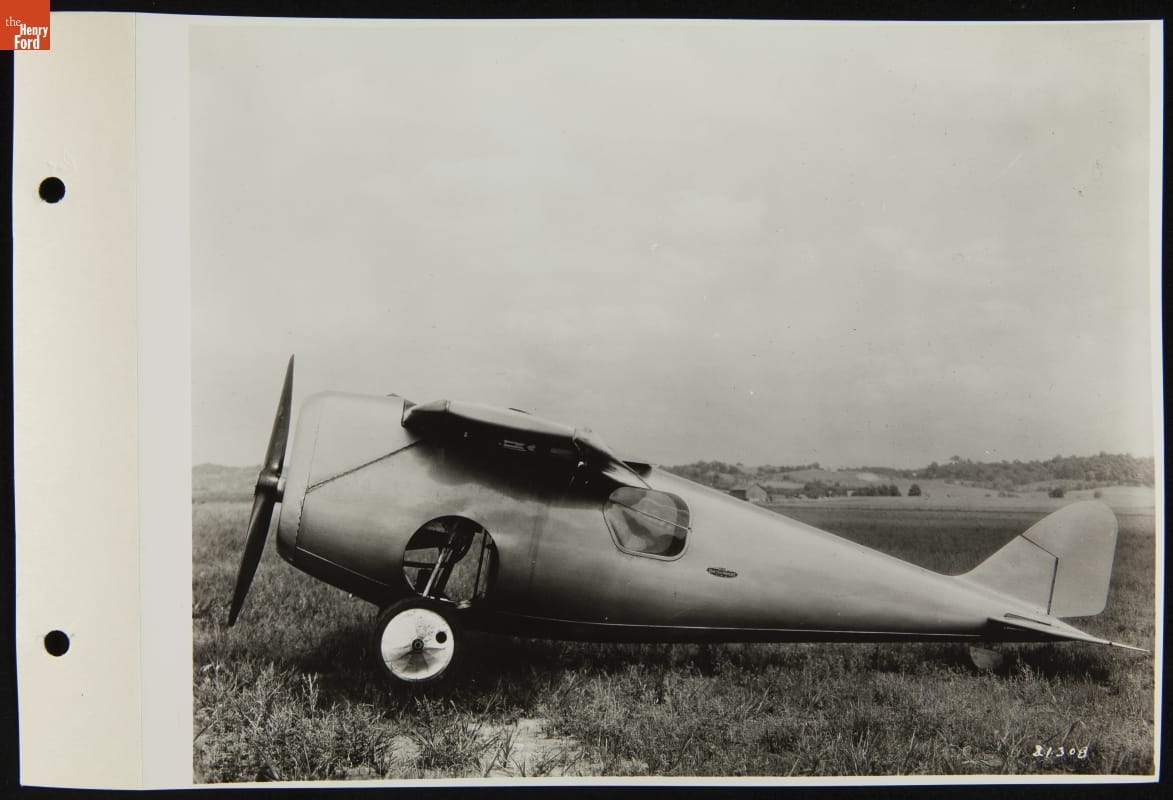
- Side View of the Dayton Wright RB-1 Racer, August 1920 - The Dayton-Wright RB-1 was built for speed. Designers Howard Rinehart and Milton Baumann gave the innovative airplane an enclosed cockpit, a single cantilevered wing with adjustable flaps, and retractable landing gear. Rinehart hoped to win the 1920 Gordon Bennett Air Race piloting the RB-1, but a failed control cable forced him out of the competition.
- August 01, 1920
- Collections - Artifact
Side View of the Dayton Wright RB-1 Racer, August 1920
The Dayton-Wright RB-1 was built for speed. Designers Howard Rinehart and Milton Baumann gave the innovative airplane an enclosed cockpit, a single cantilevered wing with adjustable flaps, and retractable landing gear. Rinehart hoped to win the 1920 Gordon Bennett Air Race piloting the RB-1, but a failed control cable forced him out of the competition.
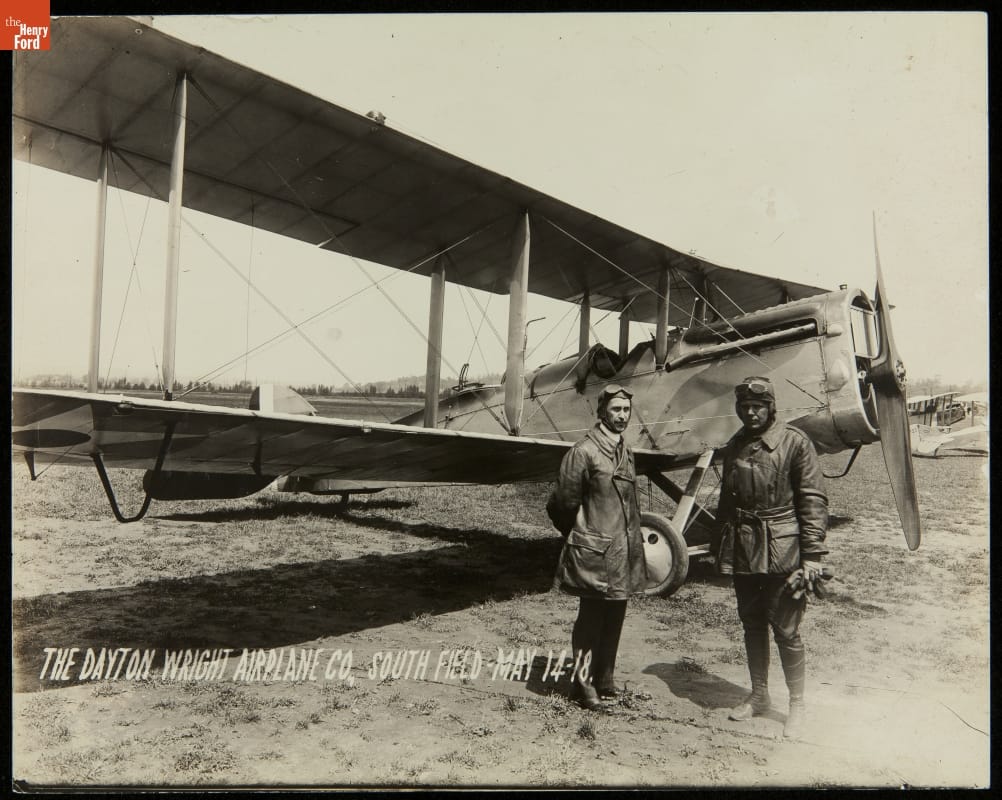
- Orville Wright and Howard Rinehart with DeHavilland DH-4 Bomber, Dayton-Wright Company, South Field, Dayton, Ohio, 1918 - Investors formed the Dayton-Wright Company of Dayton, Ohio, in 1917. Orville Wright lent the use of his name and served as a consultant to the firm. Dayton-Wright manufactured some 3,000 DH-4 military airplanes during World War I. General Motors purchased the company in 1919, and Dayton-Wright ended operations in 1923.
- May 14, 1918
- Collections - Artifact
Orville Wright and Howard Rinehart with DeHavilland DH-4 Bomber, Dayton-Wright Company, South Field, Dayton, Ohio, 1918
Investors formed the Dayton-Wright Company of Dayton, Ohio, in 1917. Orville Wright lent the use of his name and served as a consultant to the firm. Dayton-Wright manufactured some 3,000 DH-4 military airplanes during World War I. General Motors purchased the company in 1919, and Dayton-Wright ended operations in 1923.
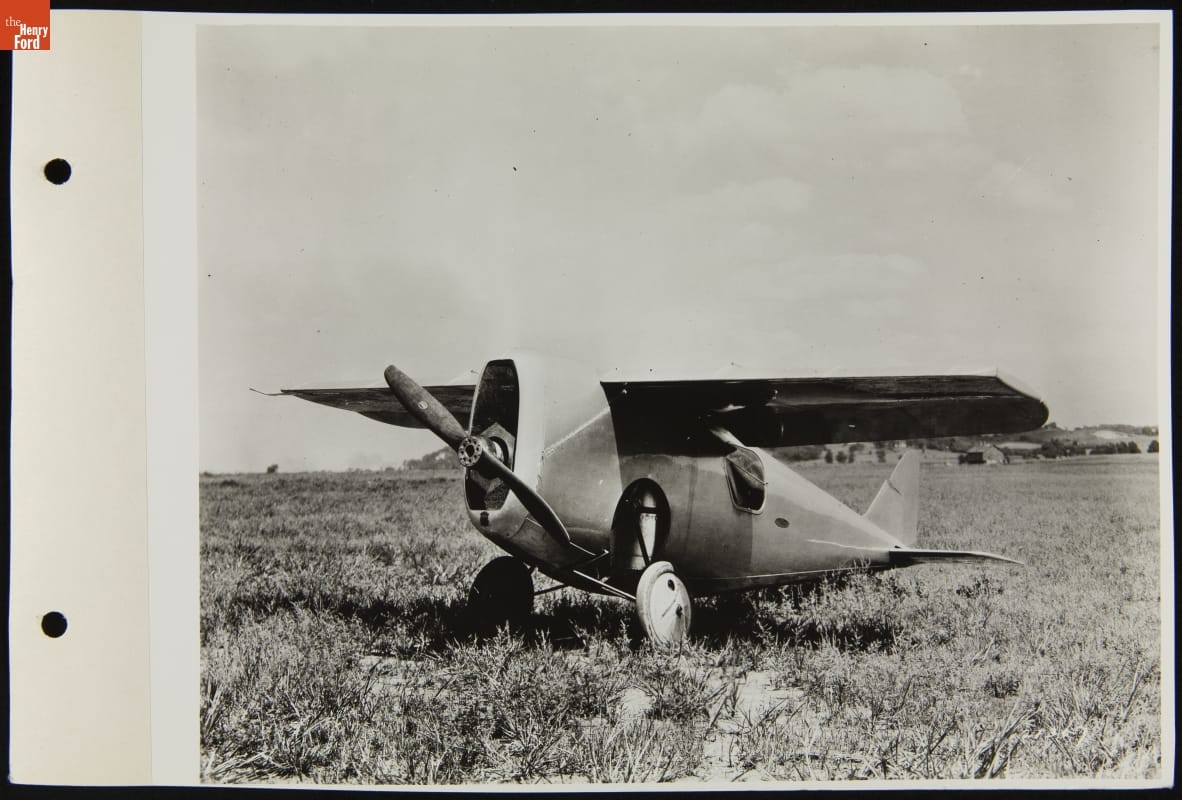
- View of the Dayton Wright RB-1 Racer, August 1920 - The Dayton-Wright RB-1 was built for speed. Designers Howard Rinehart and Milton Baumann gave the innovative airplane an enclosed cockpit, a single cantilevered wing with adjustable flaps, and retractable landing gear. Rinehart hoped to win the 1920 Gordon Bennett Air Race piloting the RB-1, but a failed control cable forced him out of the competition.
- August 01, 1920
- Collections - Artifact
View of the Dayton Wright RB-1 Racer, August 1920
The Dayton-Wright RB-1 was built for speed. Designers Howard Rinehart and Milton Baumann gave the innovative airplane an enclosed cockpit, a single cantilevered wing with adjustable flaps, and retractable landing gear. Rinehart hoped to win the 1920 Gordon Bennett Air Race piloting the RB-1, but a failed control cable forced him out of the competition.
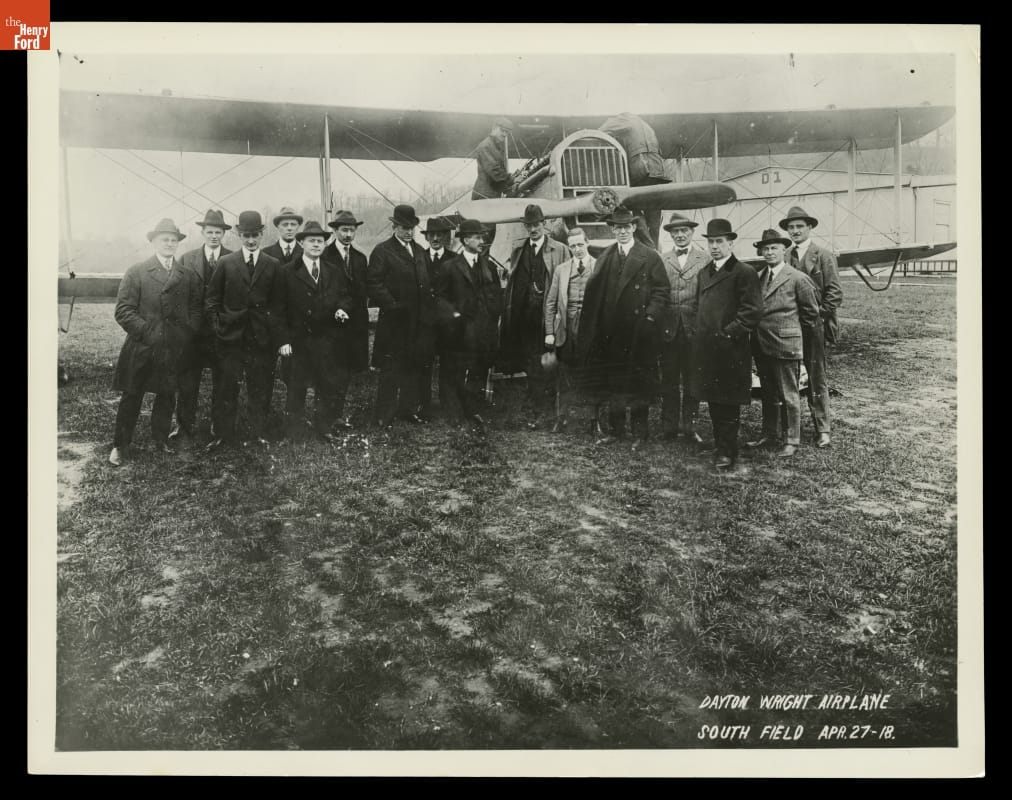
- Orville Wright, William B. Stout, Charles Kettering with De Havilland DH-4, Dayton-Wright Company, South Field, Dayton, Ohio, 1918 - Charles Kettering was one of a group of investors who formed the Dayton-Wright Company in 1917. Orville Wright lent the use of his name and served as a consultant to the firm. Dayton-Wright manufactured some 3,000 DH-4 military airplanes during World War I. General Motors purchased the company in 1919, and Dayton-Wright ended operations in 1923.
- April 27, 1918
- Collections - Artifact
Orville Wright, William B. Stout, Charles Kettering with De Havilland DH-4, Dayton-Wright Company, South Field, Dayton, Ohio, 1918
Charles Kettering was one of a group of investors who formed the Dayton-Wright Company in 1917. Orville Wright lent the use of his name and served as a consultant to the firm. Dayton-Wright manufactured some 3,000 DH-4 military airplanes during World War I. General Motors purchased the company in 1919, and Dayton-Wright ended operations in 1923.
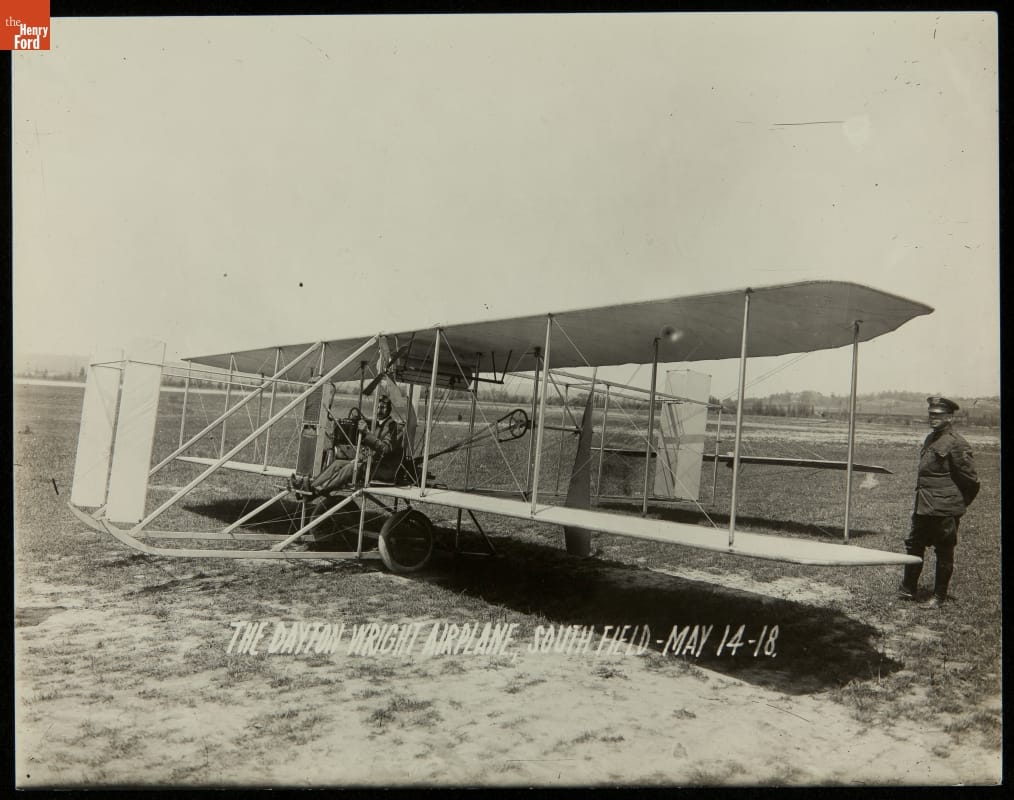
- Orville Wright at Controls of Wright Biplane, Dayton-Wright Company, South Field, Dayton, Ohio, 1918 - Orville Wright was photographed at the controls of a 1911 Wright Model B in May 1918. As part of a press event, he flew the biplane alongside the first Dayton-Wright DH-4 military plane built for World War I. Though Wright retired in 1915, he continued to consult on aviation projects. This was the last time Orville Wright piloted an airplane.
- May 14, 1918
- Collections - Artifact
Orville Wright at Controls of Wright Biplane, Dayton-Wright Company, South Field, Dayton, Ohio, 1918
Orville Wright was photographed at the controls of a 1911 Wright Model B in May 1918. As part of a press event, he flew the biplane alongside the first Dayton-Wright DH-4 military plane built for World War I. Though Wright retired in 1915, he continued to consult on aviation projects. This was the last time Orville Wright piloted an airplane.
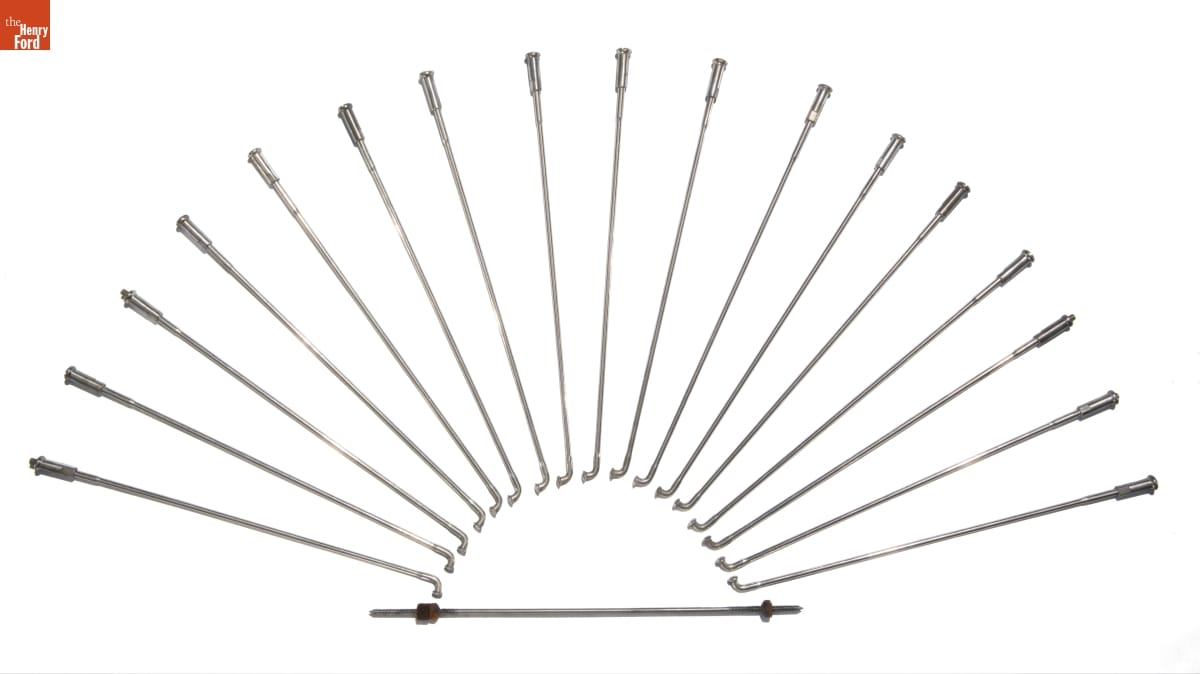
- Bicycle Spokes, Used by the Wright Brothers, Dayton, Ohio, circa 1900 - Wilbur and Orville Wright ran their bicycle business from 1892-1908. Wright Cycle Company operated at five different Dayton, Ohio, locations before settling at 1127 West Third Street in 1897. The Wrights sold and repaired bikes, and they carried a full line of cycling accessories and supplies. For a few years, the brothers even built bicycles under their own brands.
- circa 1900
- Collections - Artifact
Bicycle Spokes, Used by the Wright Brothers, Dayton, Ohio, circa 1900
Wilbur and Orville Wright ran their bicycle business from 1892-1908. Wright Cycle Company operated at five different Dayton, Ohio, locations before settling at 1127 West Third Street in 1897. The Wrights sold and repaired bikes, and they carried a full line of cycling accessories and supplies. For a few years, the brothers even built bicycles under their own brands.
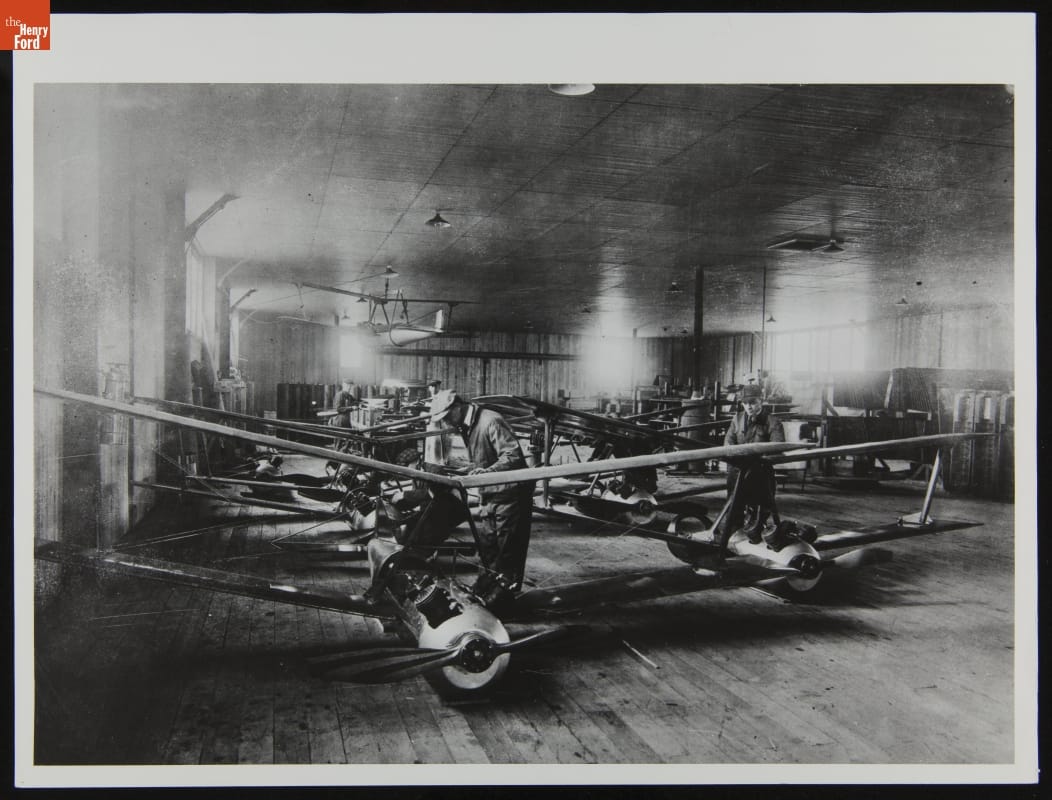
- Employees of the Dayton-Wright Airplane Company Working on the Kettering Bug, 1918 - Delco founder Charles Kettering designed the Kettering Bug for the U.S. Army during World War I. Powered by a four-cylinder engine, the Bug used a gyroscope and a system of electric and pneumatic controls to automatically fly a payload of explosives to a remote target. Unreliable in tests, the Bug was never used in combat.
- 1918
- Collections - Artifact
Employees of the Dayton-Wright Airplane Company Working on the Kettering Bug, 1918
Delco founder Charles Kettering designed the Kettering Bug for the U.S. Army during World War I. Powered by a four-cylinder engine, the Bug used a gyroscope and a system of electric and pneumatic controls to automatically fly a payload of explosives to a remote target. Unreliable in tests, the Bug was never used in combat.