
Search
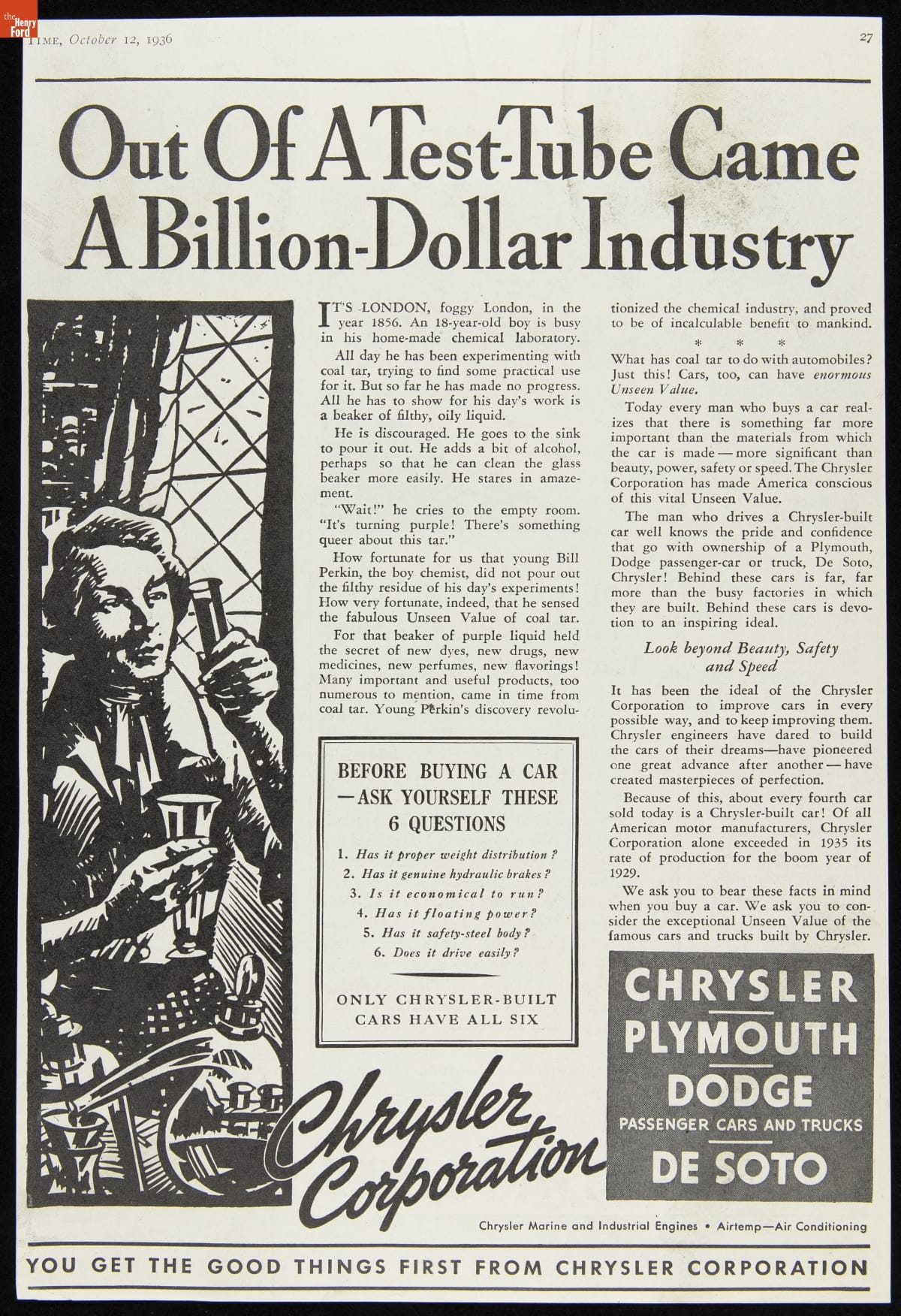
- Chrysler Corporation Advertisement, "Out of a Test-Tube Came a Billion-Dollar Industry," October 1936 - In this 1936 advertisement, Chrysler Corporation suggested that behind each of its vehicles was "something far more important than the materials from which the car is made." The ad made a comparison to British chemist William Henry Perkin who, in 1856, discovered a synthetic dye. Perkin recognized something special in his dye, just as Chrysler drivers did in their automobiles.
- October 12, 1936
- Collections - Artifact
Chrysler Corporation Advertisement, "Out of a Test-Tube Came a Billion-Dollar Industry," October 1936
In this 1936 advertisement, Chrysler Corporation suggested that behind each of its vehicles was "something far more important than the materials from which the car is made." The ad made a comparison to British chemist William Henry Perkin who, in 1856, discovered a synthetic dye. Perkin recognized something special in his dye, just as Chrysler drivers did in their automobiles.
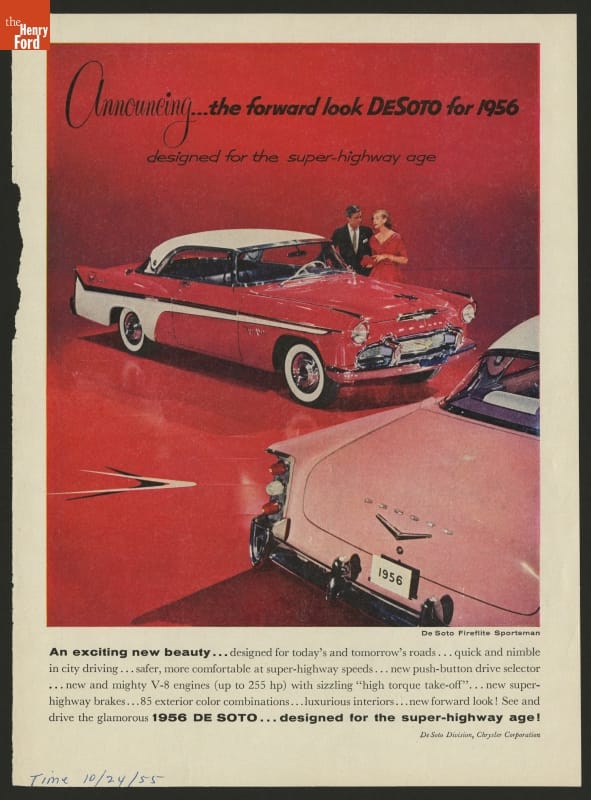
- 1956 DeSoto Ad, "Designed for the Super-Highway Age" - American roads and turnpikes of the 1950s and the future interstate highway system needed an automobile "designed for the super-highway age." This advertisement claimed that the 1956 DeSoto had the forward look and design needed for America's driving future.
- October 01, 1955
- Collections - Artifact
1956 DeSoto Ad, "Designed for the Super-Highway Age"
American roads and turnpikes of the 1950s and the future interstate highway system needed an automobile "designed for the super-highway age." This advertisement claimed that the 1956 DeSoto had the forward look and design needed for America's driving future.
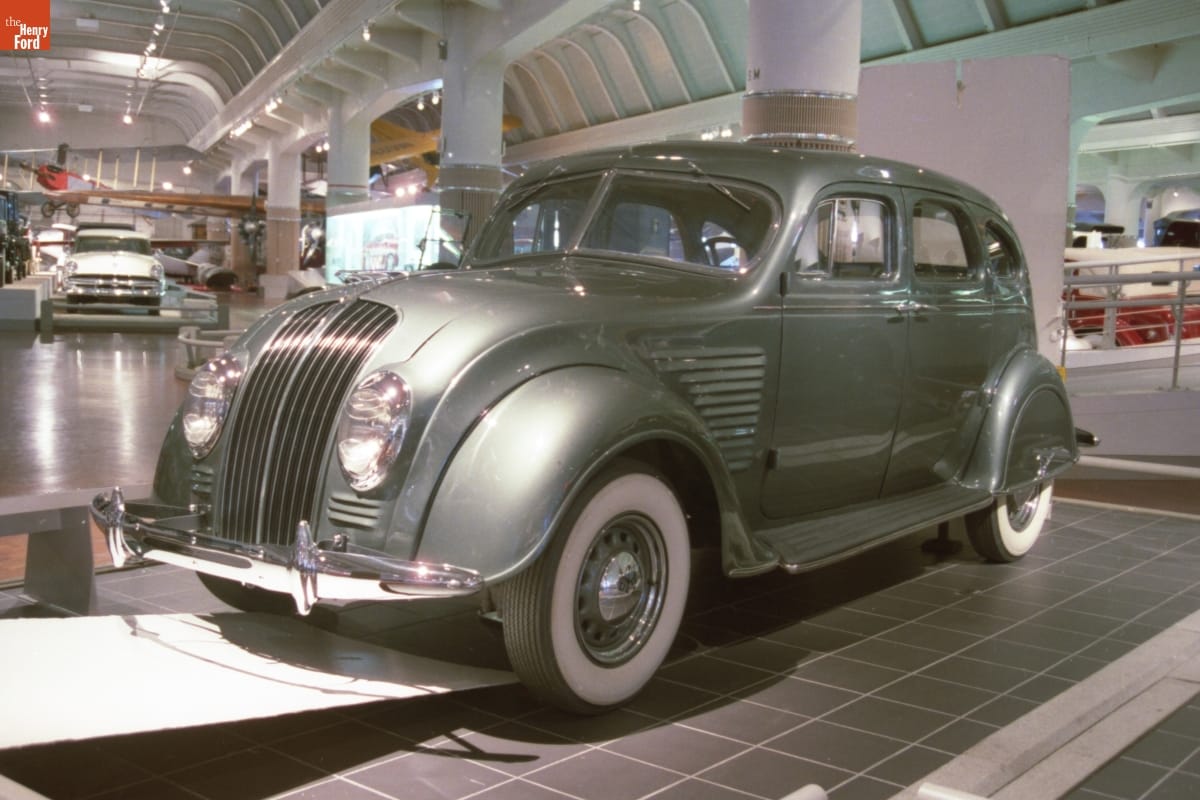
- 1934 DeSoto Airflow Sedan - The Airflow offers a cautionary tale: incredibly well-engineered, with a shape developed using wind tunnel tests and an interior that incorporated new and durable material -- its sales were hugely disappointing. The design was too advanced for the public, at a time when the market was strained. However, its influence on the <EM>style</EM> of other cars began to appear almost immediately.
- 1934
- Collections - Artifact
1934 DeSoto Airflow Sedan
The Airflow offers a cautionary tale: incredibly well-engineered, with a shape developed using wind tunnel tests and an interior that incorporated new and durable material -- its sales were hugely disappointing. The design was too advanced for the public, at a time when the market was strained. However, its influence on the style of other cars began to appear almost immediately.
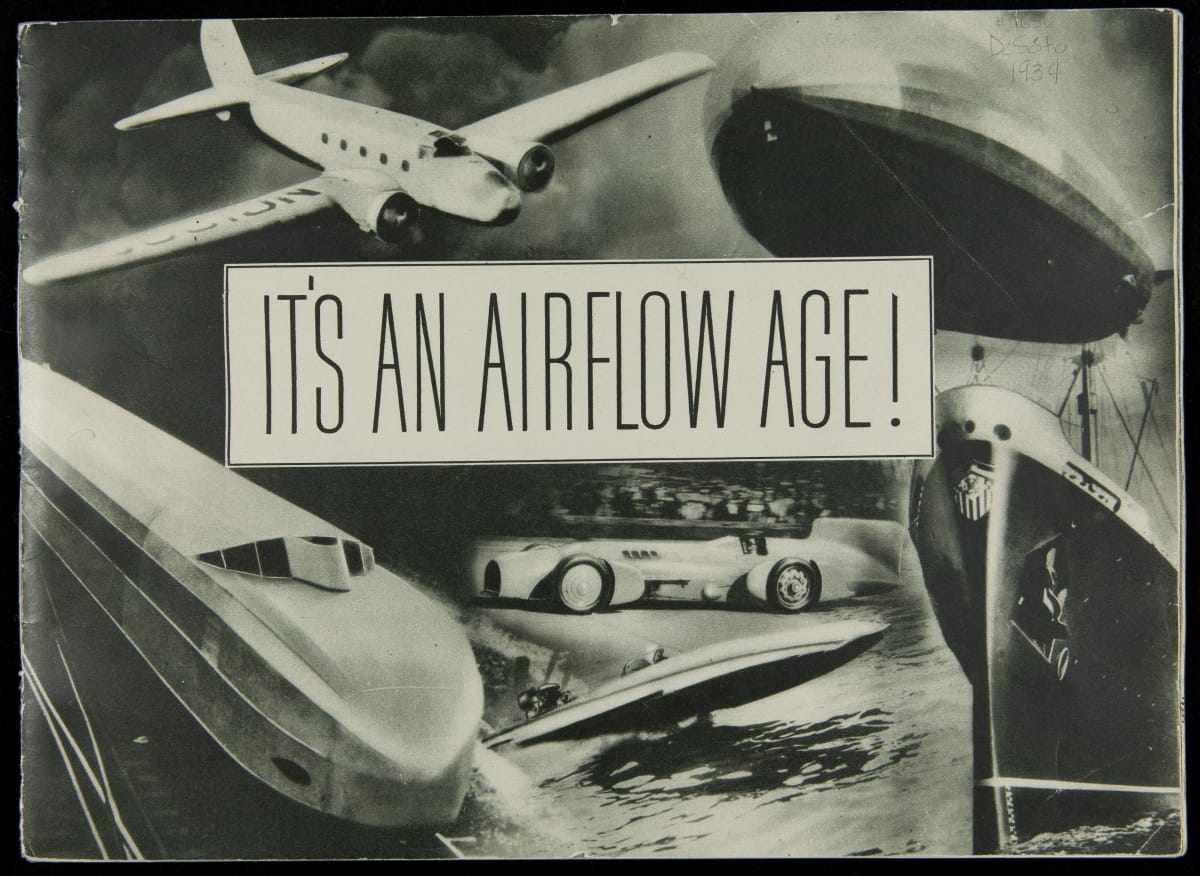
- Sales Brochure for the DeSoto Airflow, "It's an Airflow Age!," 1934 - Chrysler introduced the Airflow, sold under the Chrysler and DeSoto makes, for 1934. The car's streamlined appearance was in keeping with styling trends in airplanes, trains, and ships -- a point made clear by the cover of this sales brochure. But the Airflow's look was too unconventional for customers. Chrysler canceled DeSoto's version after three years of disappointing sales.
- 1934
- Collections - Artifact
Sales Brochure for the DeSoto Airflow, "It's an Airflow Age!," 1934
Chrysler introduced the Airflow, sold under the Chrysler and DeSoto makes, for 1934. The car's streamlined appearance was in keeping with styling trends in airplanes, trains, and ships -- a point made clear by the cover of this sales brochure. But the Airflow's look was too unconventional for customers. Chrysler canceled DeSoto's version after three years of disappointing sales.
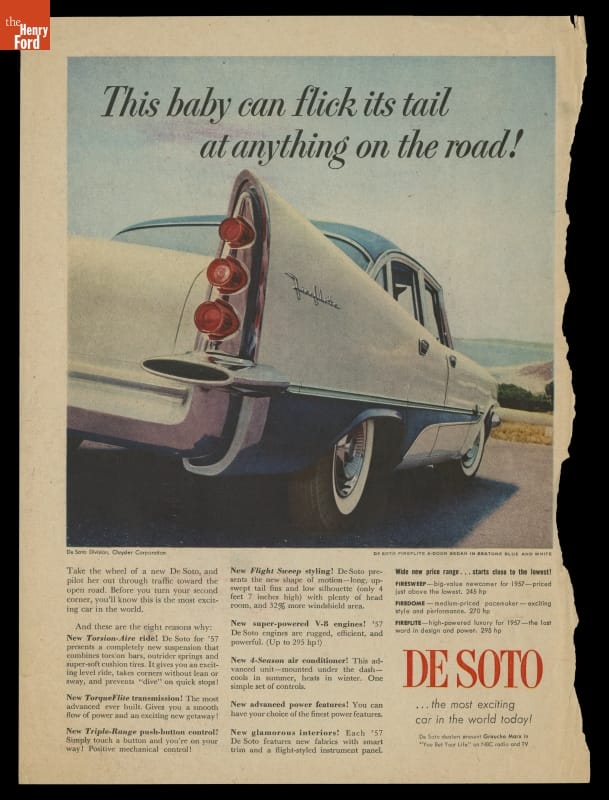
- 1957 DeSoto Fireflite Advertisement, "This Baby Can Flick its Tail at Anything on the Road!" - The automobile is a paradox -- a practical tool that plays host to both human needs and fantasies. Like car consumers, automotive ads seem to land somewhere between fantasy and reality, emotions and rationality. Many ads incorporate apparent opposites: fantasy can sell practicality, and vice versa. Sometimes the car has disappeared completely -- an emotional appeal prompts us to complete the ad.
- February 18, 1957
- Collections - Artifact
1957 DeSoto Fireflite Advertisement, "This Baby Can Flick its Tail at Anything on the Road!"
The automobile is a paradox -- a practical tool that plays host to both human needs and fantasies. Like car consumers, automotive ads seem to land somewhere between fantasy and reality, emotions and rationality. Many ads incorporate apparent opposites: fantasy can sell practicality, and vice versa. Sometimes the car has disappeared completely -- an emotional appeal prompts us to complete the ad.
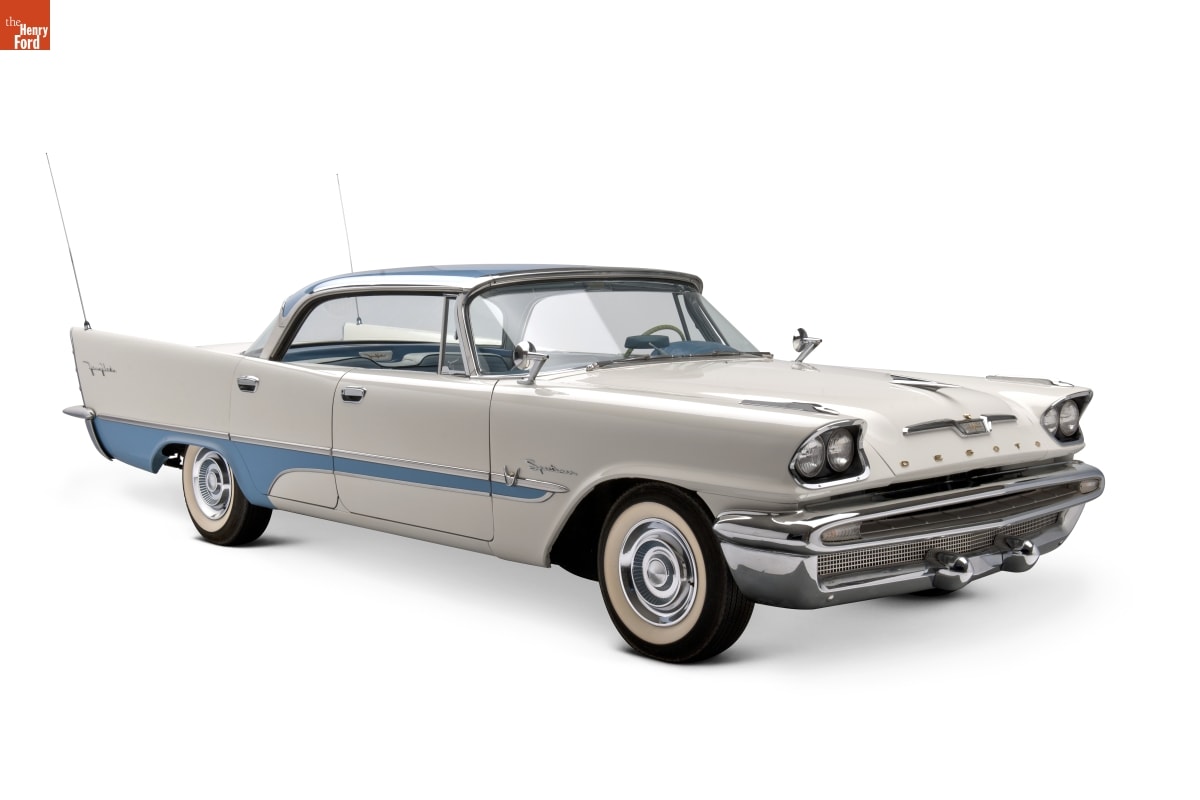
- 1957 De Soto Fireflite Hardtop - De Soto appealed to drivers who desired the cutting edge of technology. Soaring fins and an airy roof suggested military jet fighters. Pushbuttons replaced old-fashioned transmission levers. And De Sotos were powerful -- perfect for the new high-speed, four-lane turnpikes and the newly funded interstate highway system.
- 1957
- Collections - Artifact
1957 De Soto Fireflite Hardtop
De Soto appealed to drivers who desired the cutting edge of technology. Soaring fins and an airy roof suggested military jet fighters. Pushbuttons replaced old-fashioned transmission levers. And De Sotos were powerful -- perfect for the new high-speed, four-lane turnpikes and the newly funded interstate highway system.
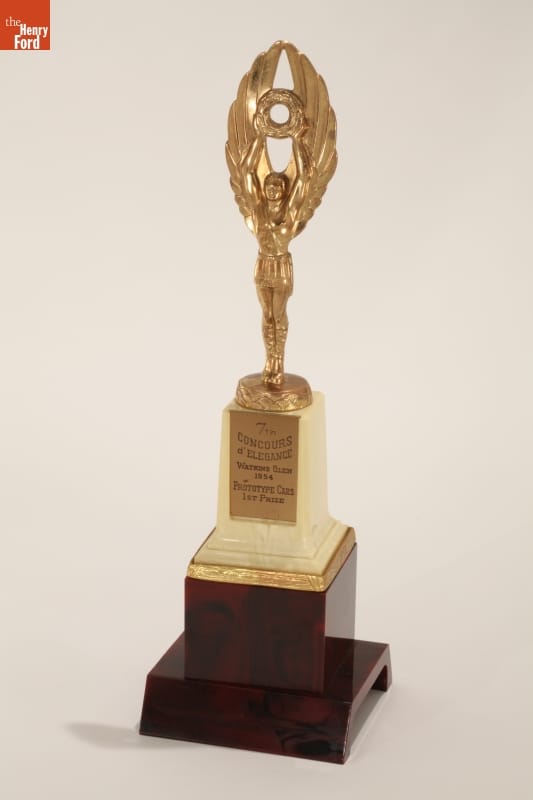
- Concours D'Elegance Automotive Design Trophy Won by Virgil Exner with Desoto Adventurer I, 1954 - The Concours d'Elegance -- translated from French as "competition of elegance" -- celebrates the design and beauty of the automobile. Significant vehicles are judged by experts on their appearance, and on the quality and accuracy of any restoration work done to them. Winning a prize at a prestigious concours can increase a car's historic and monetary value.
- 1954
- Collections - Artifact
Concours D'Elegance Automotive Design Trophy Won by Virgil Exner with Desoto Adventurer I, 1954
The Concours d'Elegance -- translated from French as "competition of elegance" -- celebrates the design and beauty of the automobile. Significant vehicles are judged by experts on their appearance, and on the quality and accuracy of any restoration work done to them. Winning a prize at a prestigious concours can increase a car's historic and monetary value.
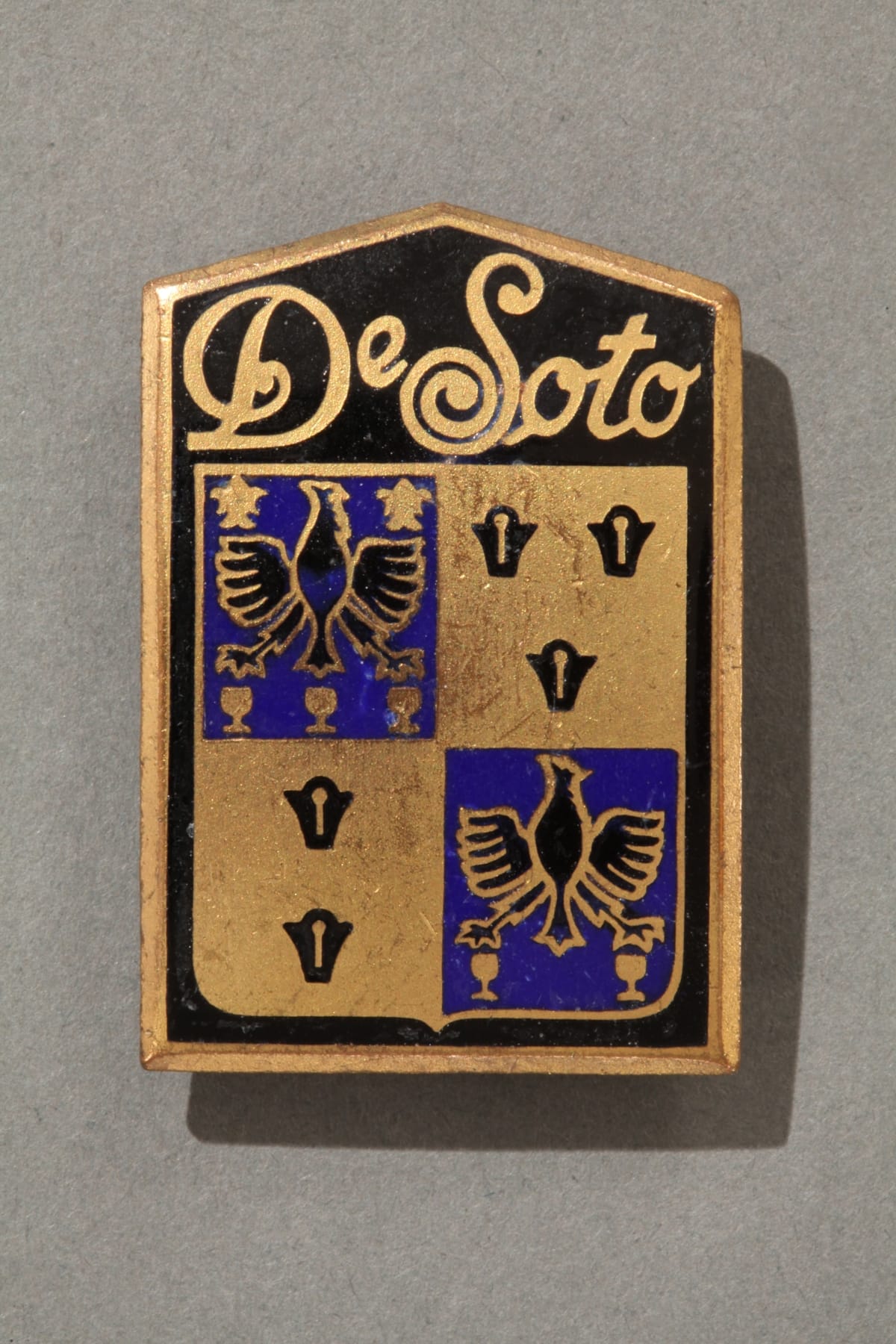
- DeSoto Automobile Emblem, 1925-1935 - Chrysler launched its DeSoto division in 1928. Customers bought more than 80,000 DeSoto cars in that first year -- a sales record for a new brand at the time. Chrysler positioned DeSoto between its low-price Plymouth and upscale Chrysler nameplates. DeSoto sales experienced a sharp decline in the late 1950s, and Chrysler closed the brand after the 1961 model year.
- 1925-1935
- Collections - Artifact
DeSoto Automobile Emblem, 1925-1935
Chrysler launched its DeSoto division in 1928. Customers bought more than 80,000 DeSoto cars in that first year -- a sales record for a new brand at the time. Chrysler positioned DeSoto between its low-price Plymouth and upscale Chrysler nameplates. DeSoto sales experienced a sharp decline in the late 1950s, and Chrysler closed the brand after the 1961 model year.
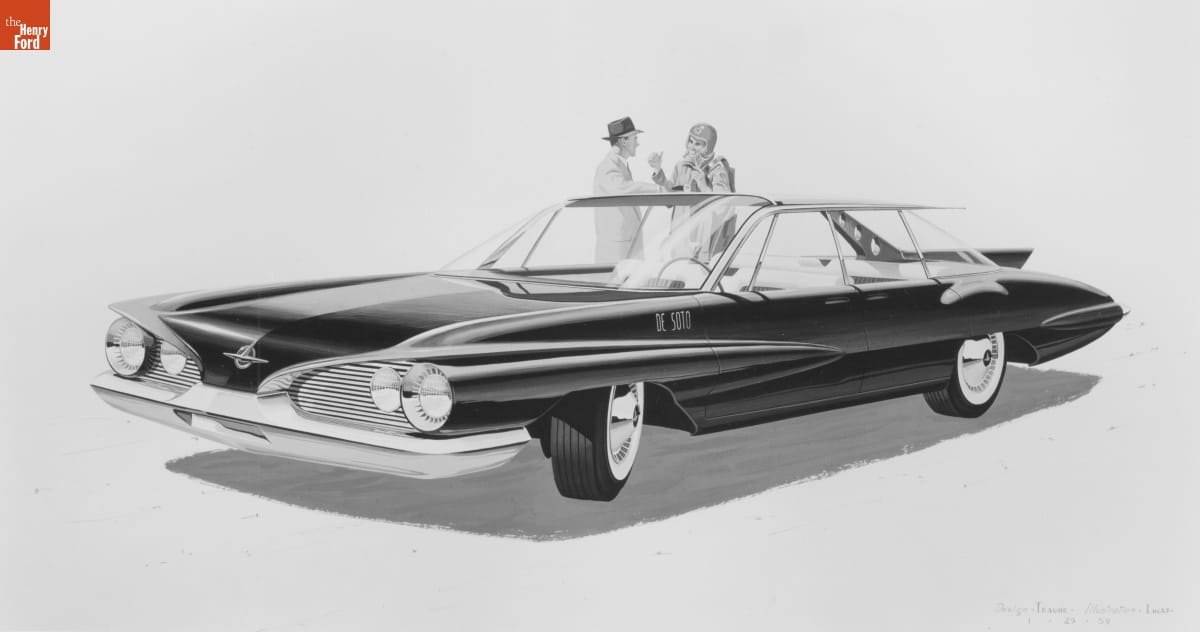
- Bill Lucas Drawing of a Design Idea by Richard Teague for a Chrysler DeSoto Car, 1959 - Dick Teague graduated from California's ArtCenter College of Design, and then joined General Motors' design studio in 1948. He later held positions with Packard and Chrysler. Teague is best remembered for his time as design head at American Motors Corporation from 1962-1983. Under his watch, AMC produced unique vehicles like the Gremlin and Pacer compacts and the second-generation Jeep Cherokee.
- February 24, 1959
- Collections - Artifact
Bill Lucas Drawing of a Design Idea by Richard Teague for a Chrysler DeSoto Car, 1959
Dick Teague graduated from California's ArtCenter College of Design, and then joined General Motors' design studio in 1948. He later held positions with Packard and Chrysler. Teague is best remembered for his time as design head at American Motors Corporation from 1962-1983. Under his watch, AMC produced unique vehicles like the Gremlin and Pacer compacts and the second-generation Jeep Cherokee.
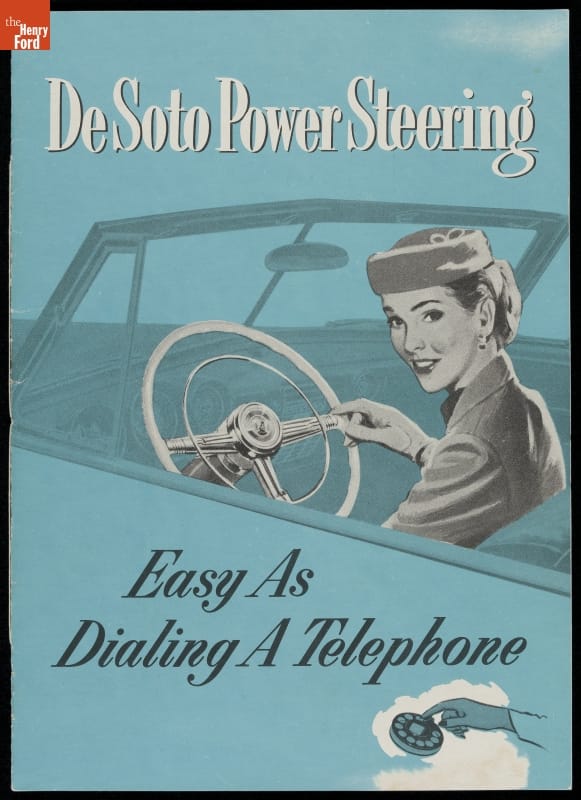
- "DeSoto Power Steering, as Easy as Dialing a Telephone," 1952 - Power steering allows drivers to control their cars with minimal effort. Assisted-steering mechanisms had been available for some time, but only after the Second World War did they become widespread on American cars. This 1952 brochure touted power steering's benefits -- safety, control, and ease of parking -- as available on new DeSoto vehicles.
- 1952
- Collections - Artifact
"DeSoto Power Steering, as Easy as Dialing a Telephone," 1952
Power steering allows drivers to control their cars with minimal effort. Assisted-steering mechanisms had been available for some time, but only after the Second World War did they become widespread on American cars. This 1952 brochure touted power steering's benefits -- safety, control, and ease of parking -- as available on new DeSoto vehicles.