
Search
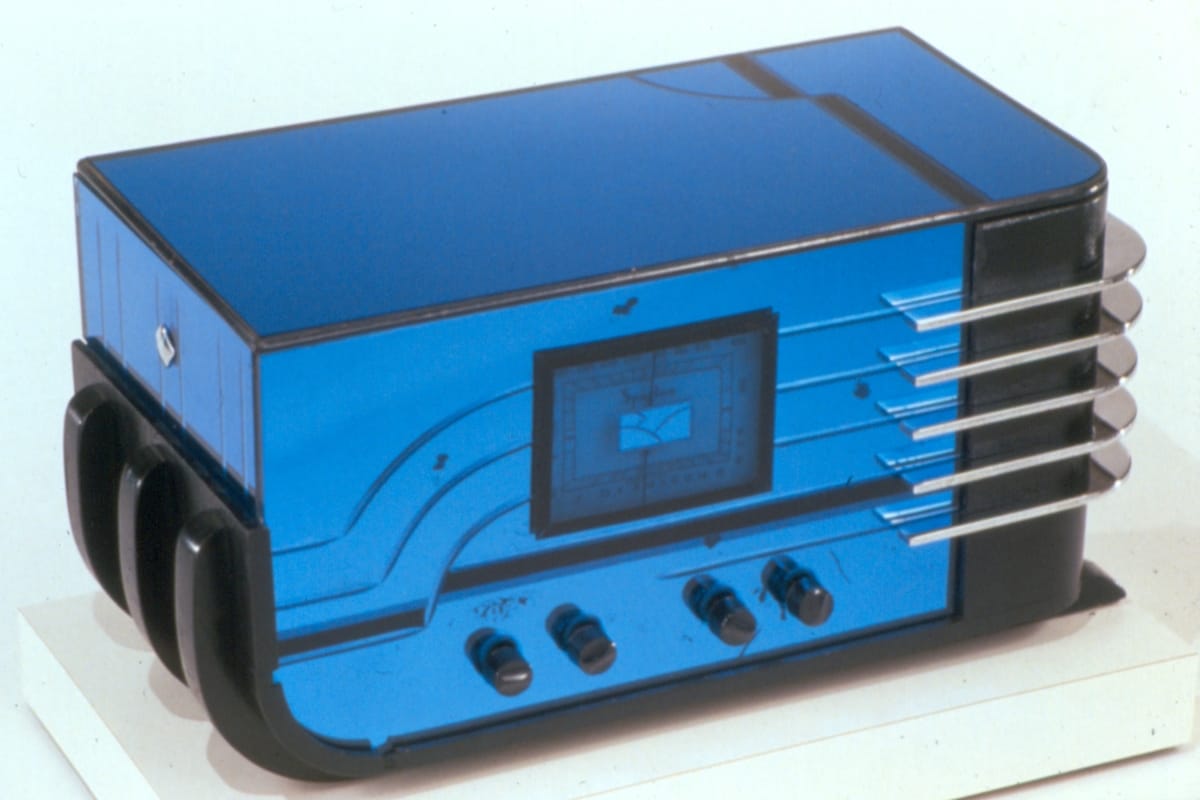
- Sparton Radio Model 558-B, 1937 - This 1937 Sparton radio was designed by Walter Dorwin Teague, a designer renowned for his use of streamlined forms. A study in contrasts -- the blue mirrored finish and curved sled-like base suggest speed while the five jutting parallel panels appear almost architectural -- this expensive and glamorous radio had a limited market during the Great Depression.
- 1937
- Collections - Artifact
Sparton Radio Model 558-B, 1937
This 1937 Sparton radio was designed by Walter Dorwin Teague, a designer renowned for his use of streamlined forms. A study in contrasts -- the blue mirrored finish and curved sled-like base suggest speed while the five jutting parallel panels appear almost architectural -- this expensive and glamorous radio had a limited market during the Great Depression.
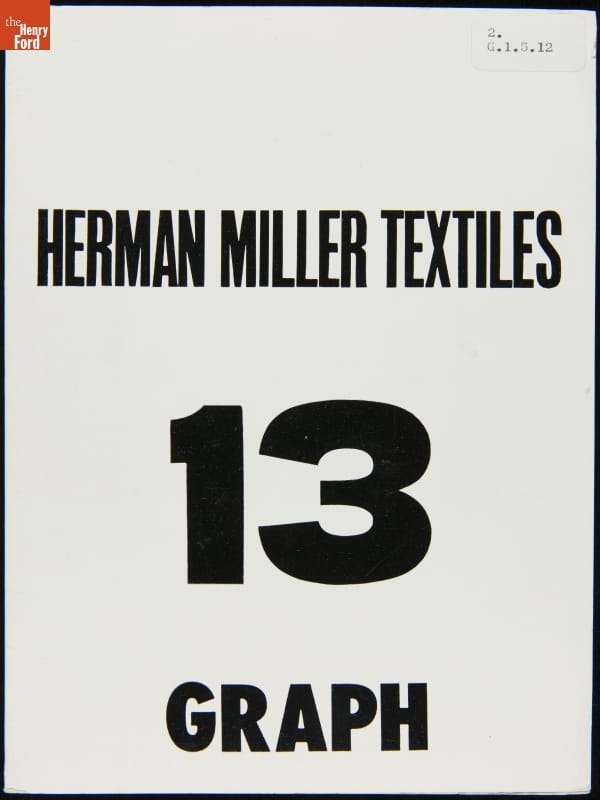
- Herman Miller Textiles Swatches, "13 Graph," 1964 - Early modernist design was starkly minimal, but mid-century modern designer Alexander Girard's work challenged and expanded the movement. Girard humanized modernism through his colorful and whimsical textile, furniture, graphic, and interior designs. As the Director of Design in Herman Miller's Textile Division from 1952 until 1973, Girard designed over 300 textiles, often using bold color combinations and abstract patterns.
- 1964
- Collections - Artifact
Herman Miller Textiles Swatches, "13 Graph," 1964
Early modernist design was starkly minimal, but mid-century modern designer Alexander Girard's work challenged and expanded the movement. Girard humanized modernism through his colorful and whimsical textile, furniture, graphic, and interior designs. As the Director of Design in Herman Miller's Textile Division from 1952 until 1973, Girard designed over 300 textiles, often using bold color combinations and abstract patterns.
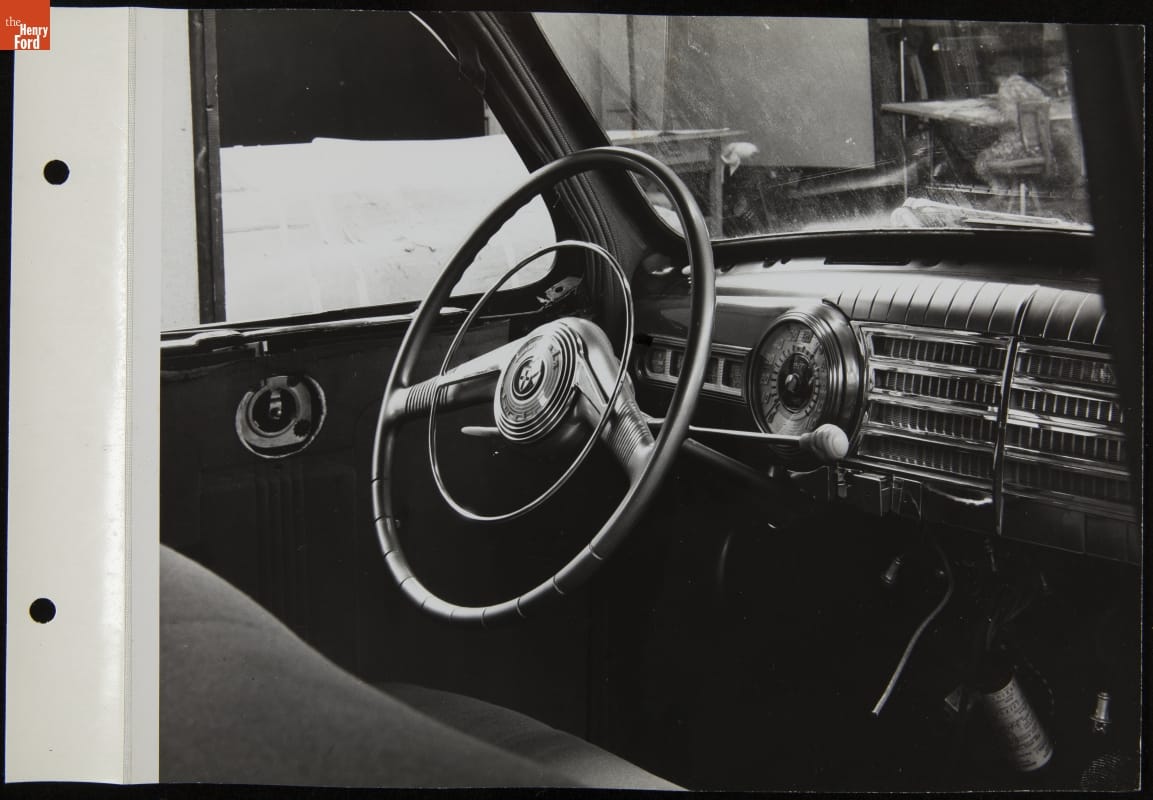
- Interior of Lincoln Zephyr Car in Design Department, Woman Designer in Background, October 1944 - With World War II moving toward a close, Lincoln designers began work on new civilian models. It was anticipated that the Lincoln Zephyr would return, so designers set about refreshing the 1942 model. However, the Zephyr name was dropped before the 1946 models -- the company's first postwar cars -- debuted.
- October 14, 1944
- Collections - Artifact
Interior of Lincoln Zephyr Car in Design Department, Woman Designer in Background, October 1944
With World War II moving toward a close, Lincoln designers began work on new civilian models. It was anticipated that the Lincoln Zephyr would return, so designers set about refreshing the 1942 model. However, the Zephyr name was dropped before the 1946 models -- the company's first postwar cars -- debuted.
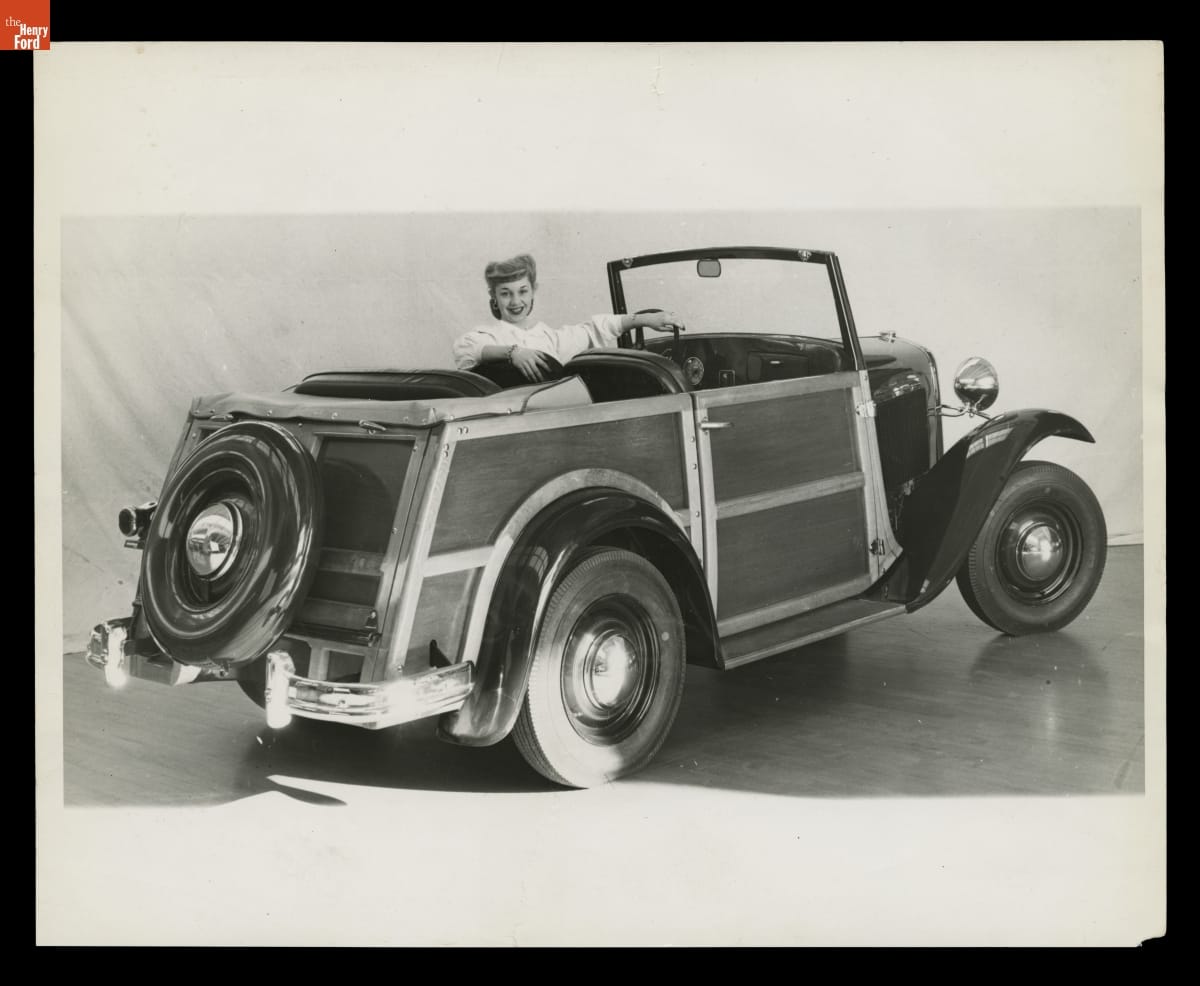
- Designer Leota Carroll Modeling the Ford "Estate Wagon" Custom-Built for Henry Ford II, January 1945 - Leota Carroll was the first woman hired into Ford Motor Company's Design Department. Carroll, a talented illustrator, joined the company during World War II -- a time when most men were off fighting. Her success prompted Ford to hire other women onto its design staff. In addition to her regular duties, Carroll also occasionally posed in Ford promotional photographs.
- January 31, 1945
- Collections - Artifact
Designer Leota Carroll Modeling the Ford "Estate Wagon" Custom-Built for Henry Ford II, January 1945
Leota Carroll was the first woman hired into Ford Motor Company's Design Department. Carroll, a talented illustrator, joined the company during World War II -- a time when most men were off fighting. Her success prompted Ford to hire other women onto its design staff. In addition to her regular duties, Carroll also occasionally posed in Ford promotional photographs.
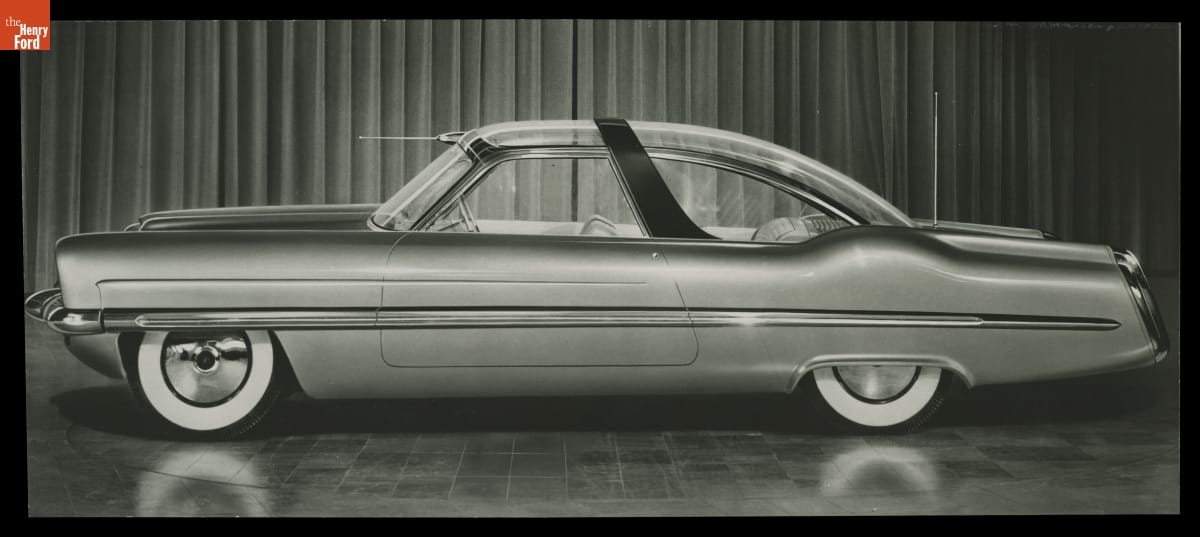
- Lincoln XL-500 Concept Car, 1953 - Ford Motor Company's Lincoln-Mercury Division revealed its Lincoln XL-500 concept car in 1953, to celebrate Ford's 50th anniversary. Promotional material heralded the car's power steering, power brakes, and push-button automatic transmission. In truth, the XL-500 was a non-running show piece. Even the "doors" were just grooves in the fiberglass body. But the XL-500's hooded headlights influenced Lincoln's 1956 production models.
- January 31, 1953
- Collections - Artifact
Lincoln XL-500 Concept Car, 1953
Ford Motor Company's Lincoln-Mercury Division revealed its Lincoln XL-500 concept car in 1953, to celebrate Ford's 50th anniversary. Promotional material heralded the car's power steering, power brakes, and push-button automatic transmission. In truth, the XL-500 was a non-running show piece. Even the "doors" were just grooves in the fiberglass body. But the XL-500's hooded headlights influenced Lincoln's 1956 production models.
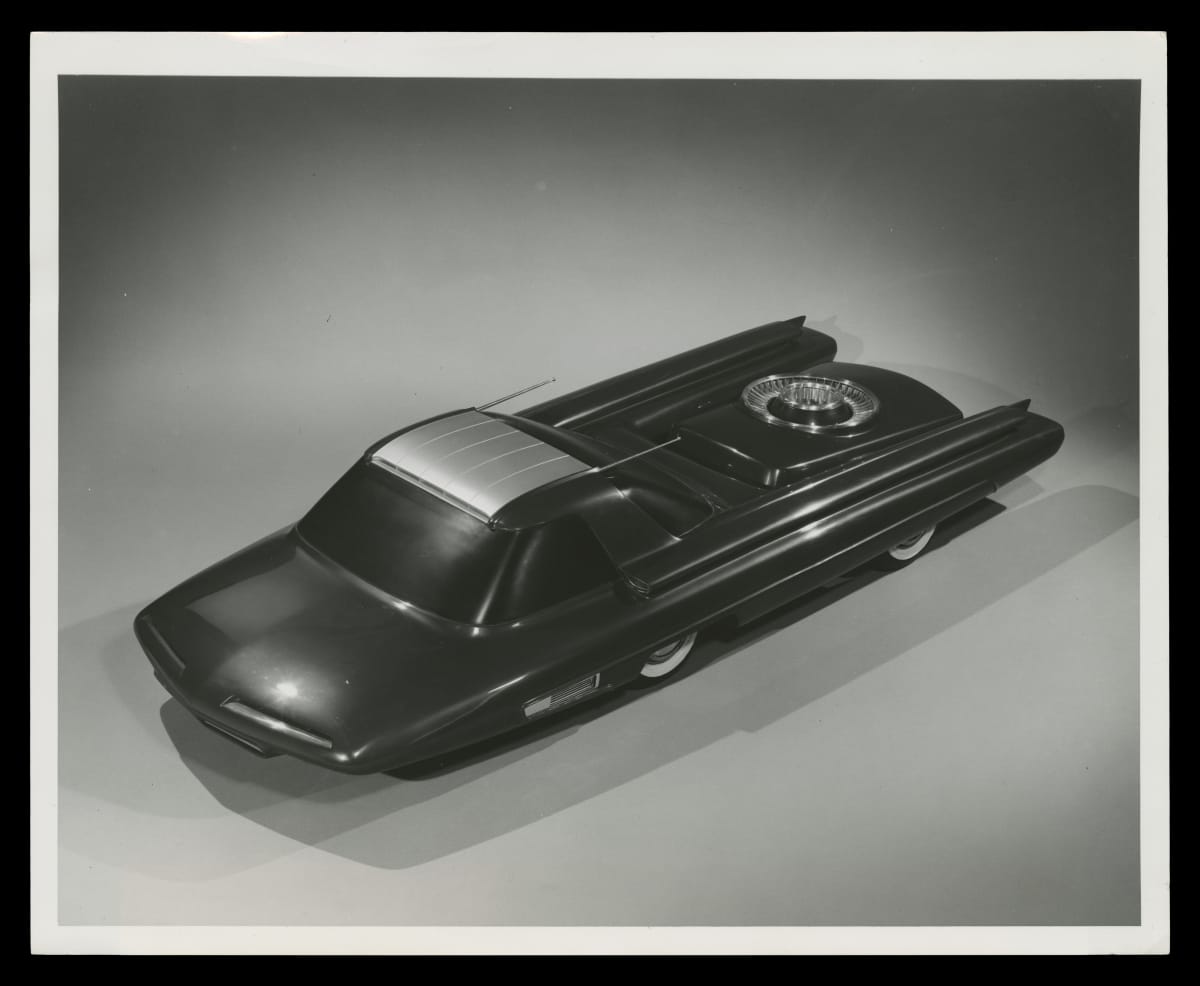
- Scale Model of the Nucleon, a 1958 Ford Motor Company Styling Conception for an Atomic-Powered Car - This 3/8-scale model was built to explore how the future of energy might affect the future of automotive design. The Ford Nucleon would have been powered by a rear-mounted, self-contained nuclear reactor. This atomic-automobile idea assumed, of course, that issues with nuclear safety and the size and weight of nuclear reactors would eventually be resolved. The Nucleon was never produced.
- 1958
- Collections - Artifact
Scale Model of the Nucleon, a 1958 Ford Motor Company Styling Conception for an Atomic-Powered Car
This 3/8-scale model was built to explore how the future of energy might affect the future of automotive design. The Ford Nucleon would have been powered by a rear-mounted, self-contained nuclear reactor. This atomic-automobile idea assumed, of course, that issues with nuclear safety and the size and weight of nuclear reactors would eventually be resolved. The Nucleon was never produced.
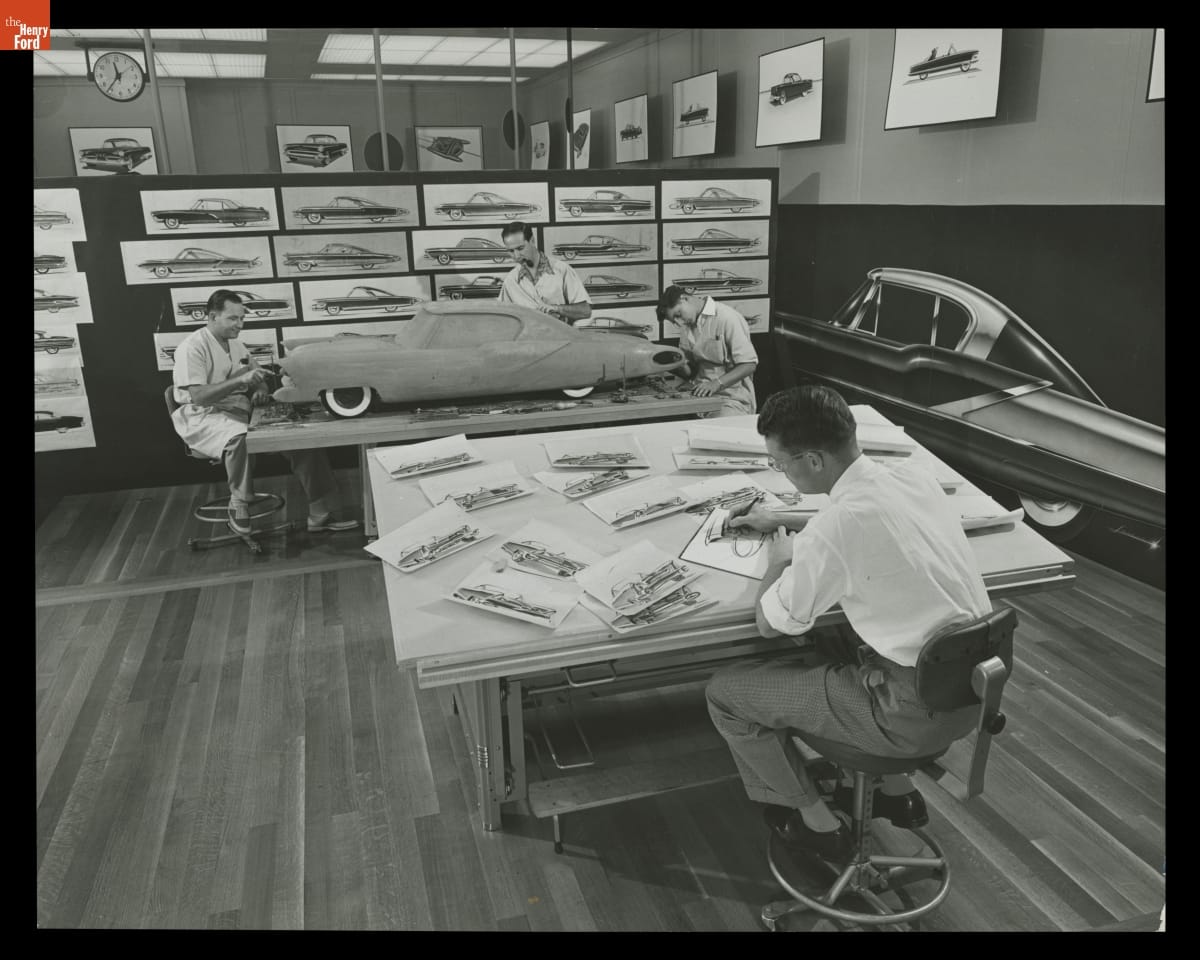
- Ford Motor Company Advanced Styling Section, circa 1953 -
- circa 1953
- Collections - Artifact
Ford Motor Company Advanced Styling Section, circa 1953
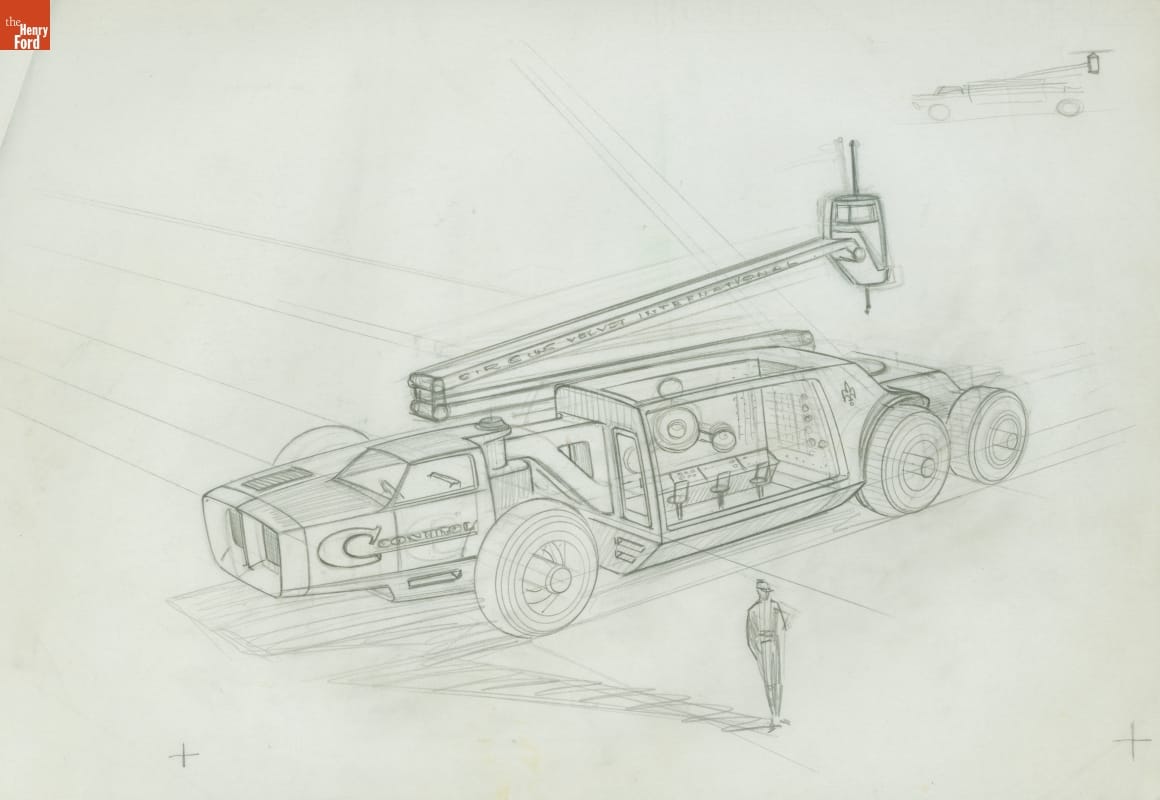
- Circus Performance Control Vehicle, 1967 - In 1966, automobile designer Virgil Exner was approached by a wealthy man with an unusual dream: to build a motorized circus with vehicles for transporting performers and constructing the big top. Exner was eager to begin the novel - though soon abandoned - project and created several concepts, including this control vehicle designed to erect the big top.
- 1967
- Collections - Artifact
Circus Performance Control Vehicle, 1967
In 1966, automobile designer Virgil Exner was approached by a wealthy man with an unusual dream: to build a motorized circus with vehicles for transporting performers and constructing the big top. Exner was eager to begin the novel - though soon abandoned - project and created several concepts, including this control vehicle designed to erect the big top.
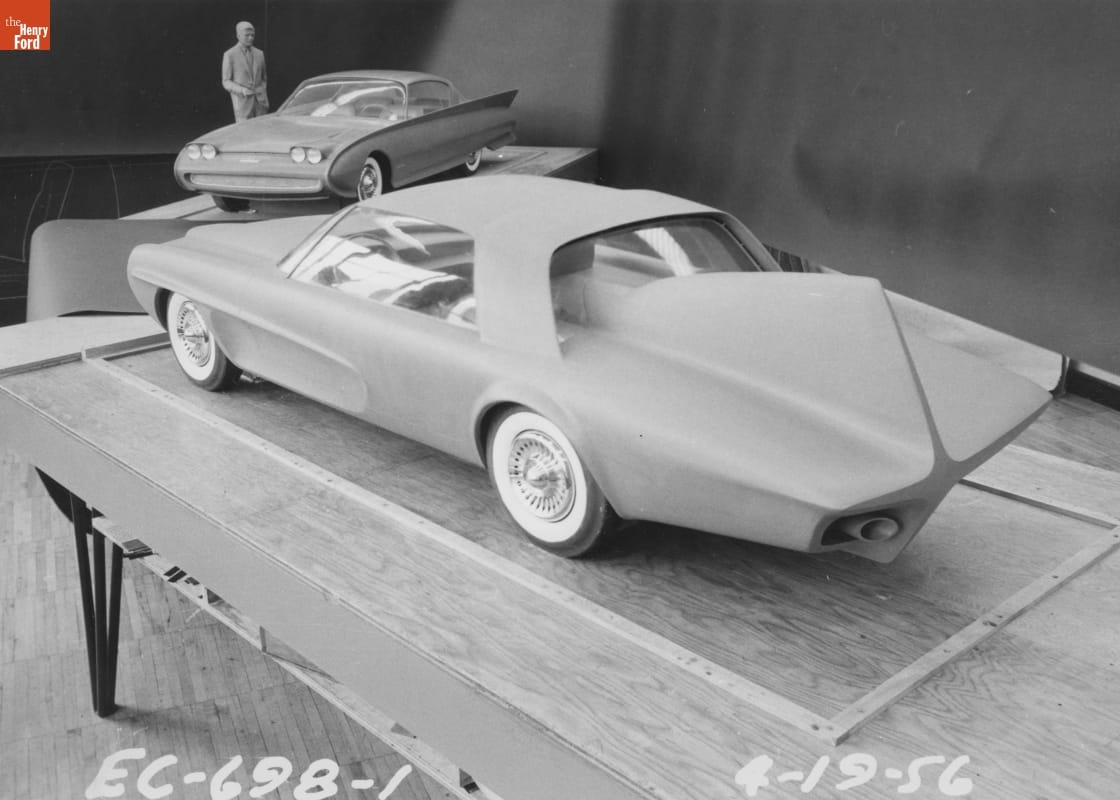
- Clay Model for the 1956 Chrysler Falcon Concept Car Designed by Virgil M. Exner - Virgil Exner designed the two-seat Chrysler Falcon concept car for the 1955 auto show season. The roadster was close in spirit to the contemporary Chevrolet Corvette and Ford Thunderbird, though the simulated knock-off wheels and external exhaust pipes gave the Falcon a somewhat racier appearance. Chrysler chose not to put the car into production.
- April 19, 1956
- Collections - Artifact
Clay Model for the 1956 Chrysler Falcon Concept Car Designed by Virgil M. Exner
Virgil Exner designed the two-seat Chrysler Falcon concept car for the 1955 auto show season. The roadster was close in spirit to the contemporary Chevrolet Corvette and Ford Thunderbird, though the simulated knock-off wheels and external exhaust pipes gave the Falcon a somewhat racier appearance. Chrysler chose not to put the car into production.
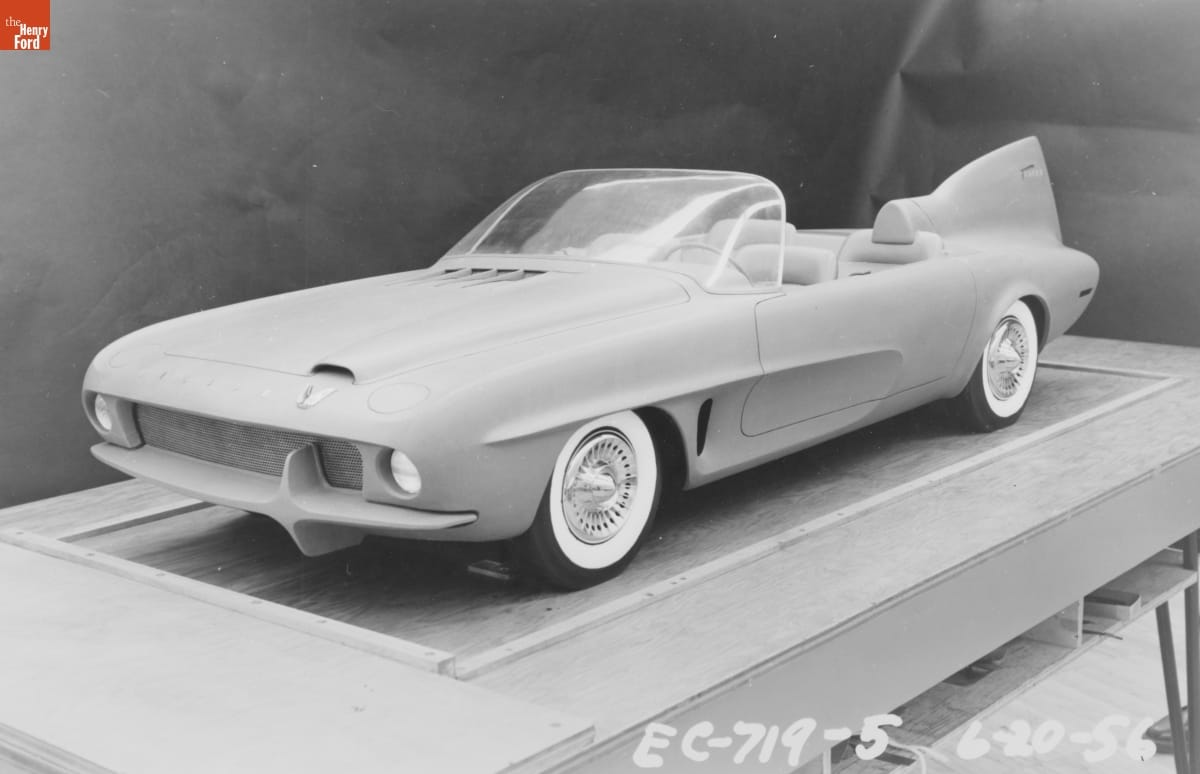
- Clay Model for the 1956 Chrysler Falcon Concept Car Designed by Virgil M. Exner - Virgil Exner designed the two-seat Chrysler Falcon concept car for the 1955 auto show season. The roadster was close in spirit to the contemporary Chevrolet Corvette and Ford Thunderbird, though the simulated knock-off wheels and external exhaust pipes gave the Falcon a somewhat racier appearance. Chrysler chose not to put the car into production.
- June 20, 1956
- Collections - Artifact
Clay Model for the 1956 Chrysler Falcon Concept Car Designed by Virgil M. Exner
Virgil Exner designed the two-seat Chrysler Falcon concept car for the 1955 auto show season. The roadster was close in spirit to the contemporary Chevrolet Corvette and Ford Thunderbird, though the simulated knock-off wheels and external exhaust pipes gave the Falcon a somewhat racier appearance. Chrysler chose not to put the car into production.