
Search
- Encyclopedia: or Dictionary of Sciences, Arts, and Trades, Volume 3, 1753 -
- 1753
- Collections - Artifact
Encyclopedia: or Dictionary of Sciences, Arts, and Trades, Volume 3, 1753
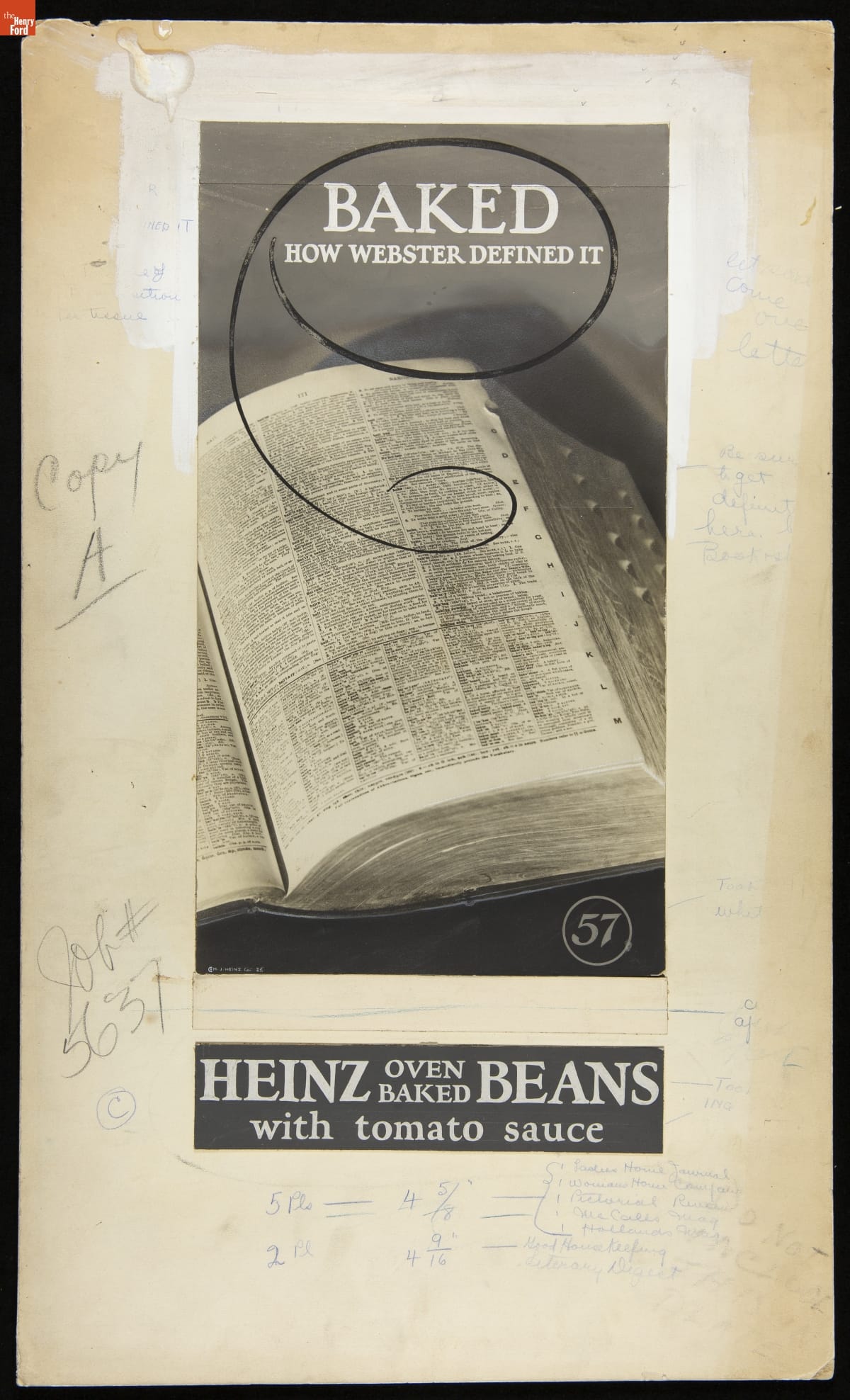
- Layout for Heinz Baked Beans Advertising Using Webster's Dictionary, 1925 - The H.J. Heinz Company employed ambitious and comprehensive advertising strategies to meet consumers at home, in stores, and everywhere in between. Advertising layouts were a step in the marketing process where the drawing, size, color, and arrangement were taken into consideration before the final advertisement was created. This layout shows an advertisement for Heinz Baked Beans.
- 1925
- Collections - Artifact
Layout for Heinz Baked Beans Advertising Using Webster's Dictionary, 1925
The H.J. Heinz Company employed ambitious and comprehensive advertising strategies to meet consumers at home, in stores, and everywhere in between. Advertising layouts were a step in the marketing process where the drawing, size, color, and arrangement were taken into consideration before the final advertisement was created. This layout shows an advertisement for Heinz Baked Beans.
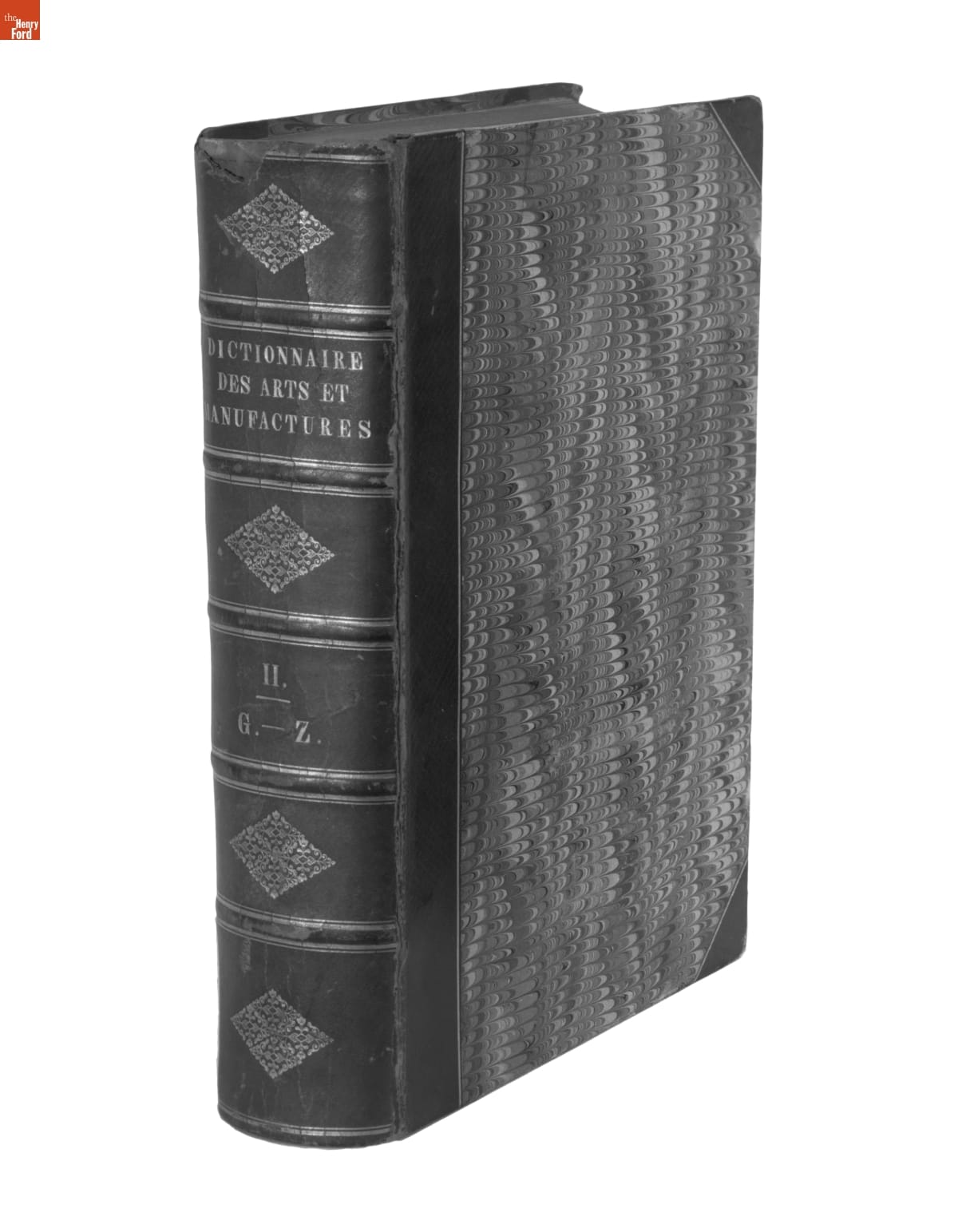
- Dictionnaire des Arts et Manufacturers G-Z, 1845 -
- 1845
- Collections - Artifact
Dictionnaire des Arts et Manufacturers G-Z, 1845
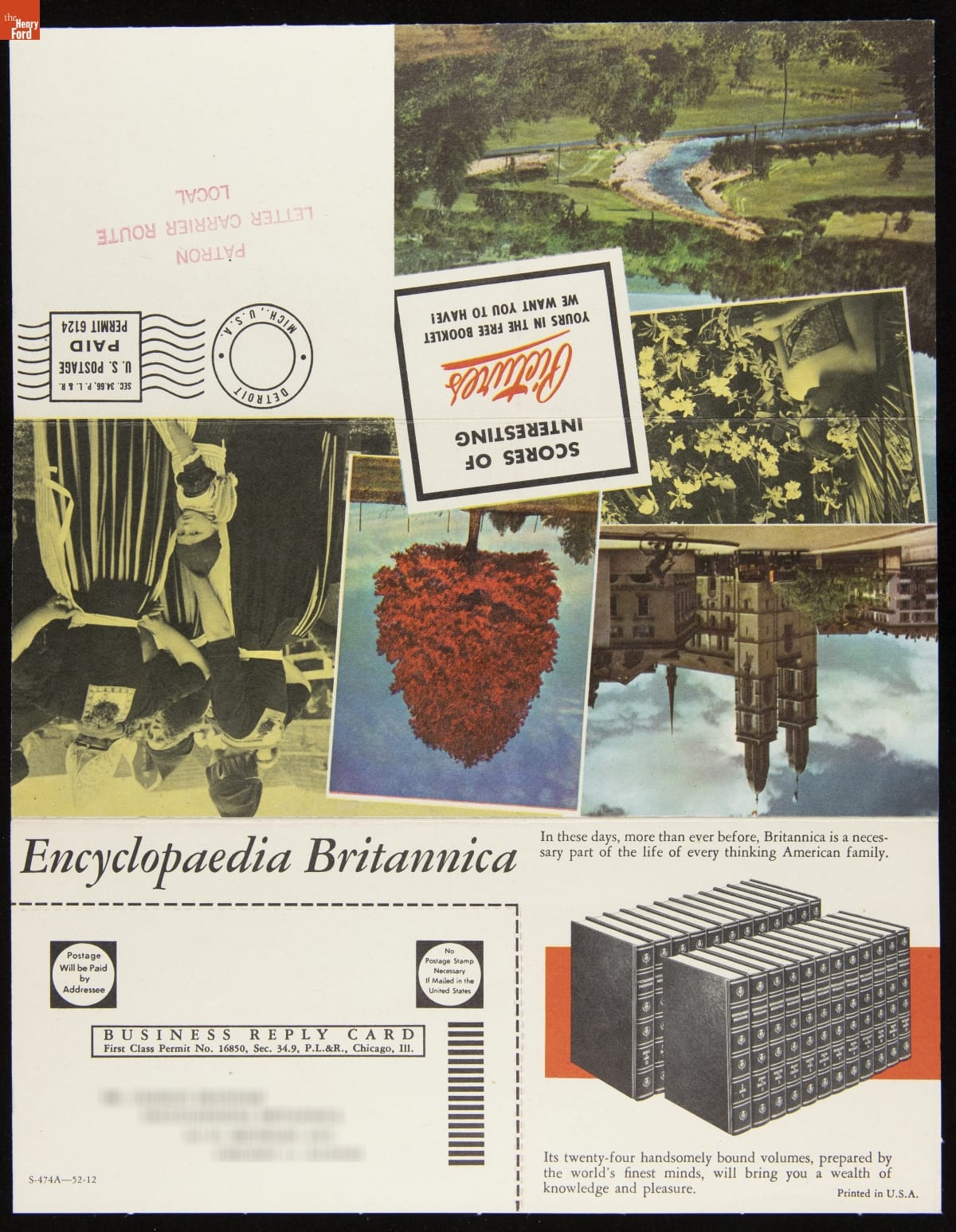
- Brochure Advertising the Encyclopaedia Britannica, circa 1952 -
- circa 1952
- Collections - Artifact
Brochure Advertising the Encyclopaedia Britannica, circa 1952
- Letter from Noah Webster to the Editor of the Westminster Review, 1831 -
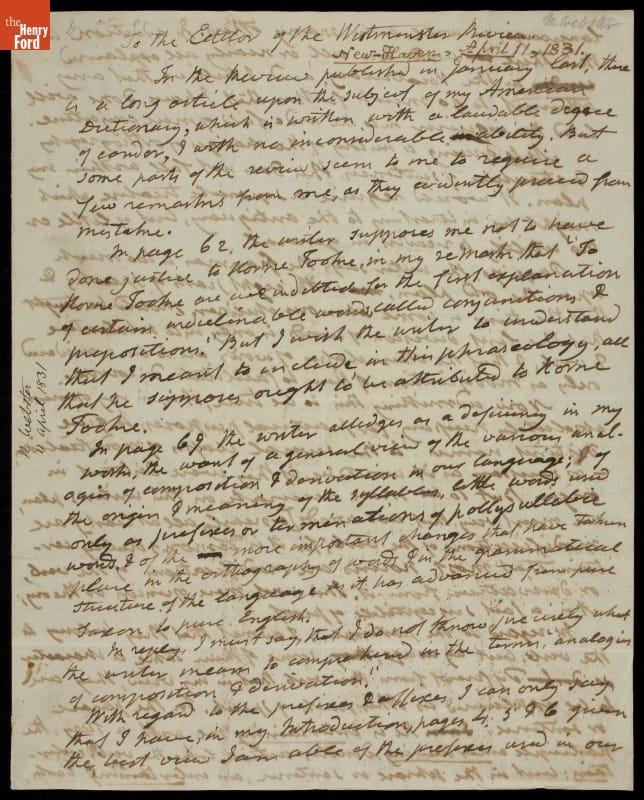
- April 11, 1831
- Collections - Artifact
Letter from Noah Webster to the Editor of the Westminster Review, 1831
- Dictionary Possibly Used by General Robert E. Lee's Staff during the Civil War, 1853 - Confederate General Robert E. Lee's staff used this dictionary from 1862 to 1865. After the Civil War, it was given to Lieutenant Colonel Walter H. Taylor. As chief aide-de-camp to Robert E. Lee, Taylor wrote countless dispatches and orders for Lee.
- 1853
- Collections - Artifact
Dictionary Possibly Used by General Robert E. Lee's Staff during the Civil War, 1853
Confederate General Robert E. Lee's staff used this dictionary from 1862 to 1865. After the Civil War, it was given to Lieutenant Colonel Walter H. Taylor. As chief aide-de-camp to Robert E. Lee, Taylor wrote countless dispatches and orders for Lee.
- Sales Letter from The Encyclopedia Britannica, 1914 -
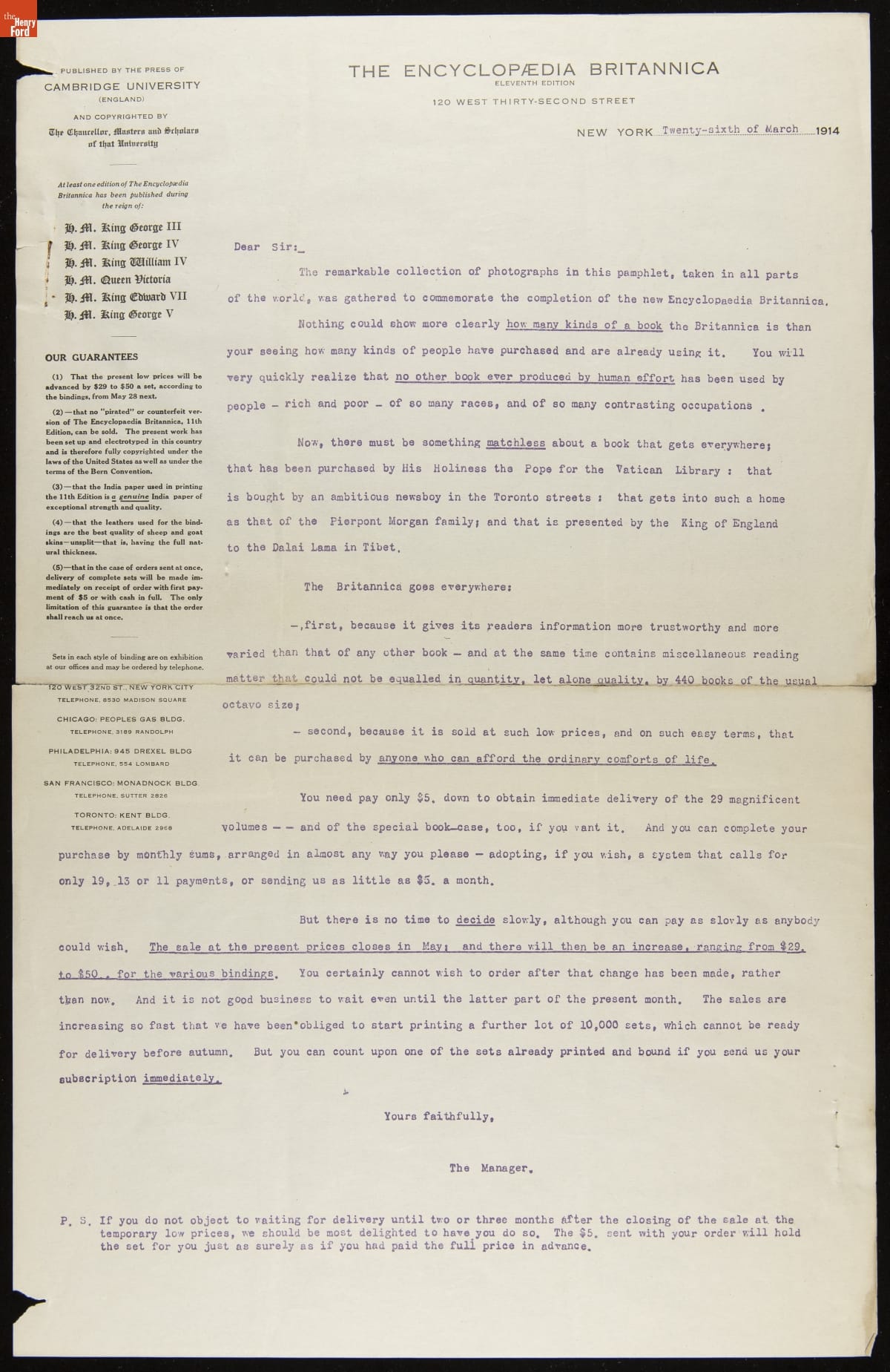
- 1914
- Collections - Artifact
Sales Letter from The Encyclopedia Britannica, 1914
- "An American Dictionary of the English Language" by Noah Webster, 1828, Volume 2 - Noah Webster wrote the first dictionary of American English. It was a radical attempt to foster a uniform language for the United States. Webster's first edition in 1828 contained about 70,000 entries -- some 12,000 more than had appeared in earlier vocabulary lists. Webster added many technical and scientific terms, included common Americanisms, and suggested new ways of spelling and pronouncing words.
- 1828
- Collections - Artifact
"An American Dictionary of the English Language" by Noah Webster, 1828, Volume 2
Noah Webster wrote the first dictionary of American English. It was a radical attempt to foster a uniform language for the United States. Webster's first edition in 1828 contained about 70,000 entries -- some 12,000 more than had appeared in earlier vocabulary lists. Webster added many technical and scientific terms, included common Americanisms, and suggested new ways of spelling and pronouncing words.
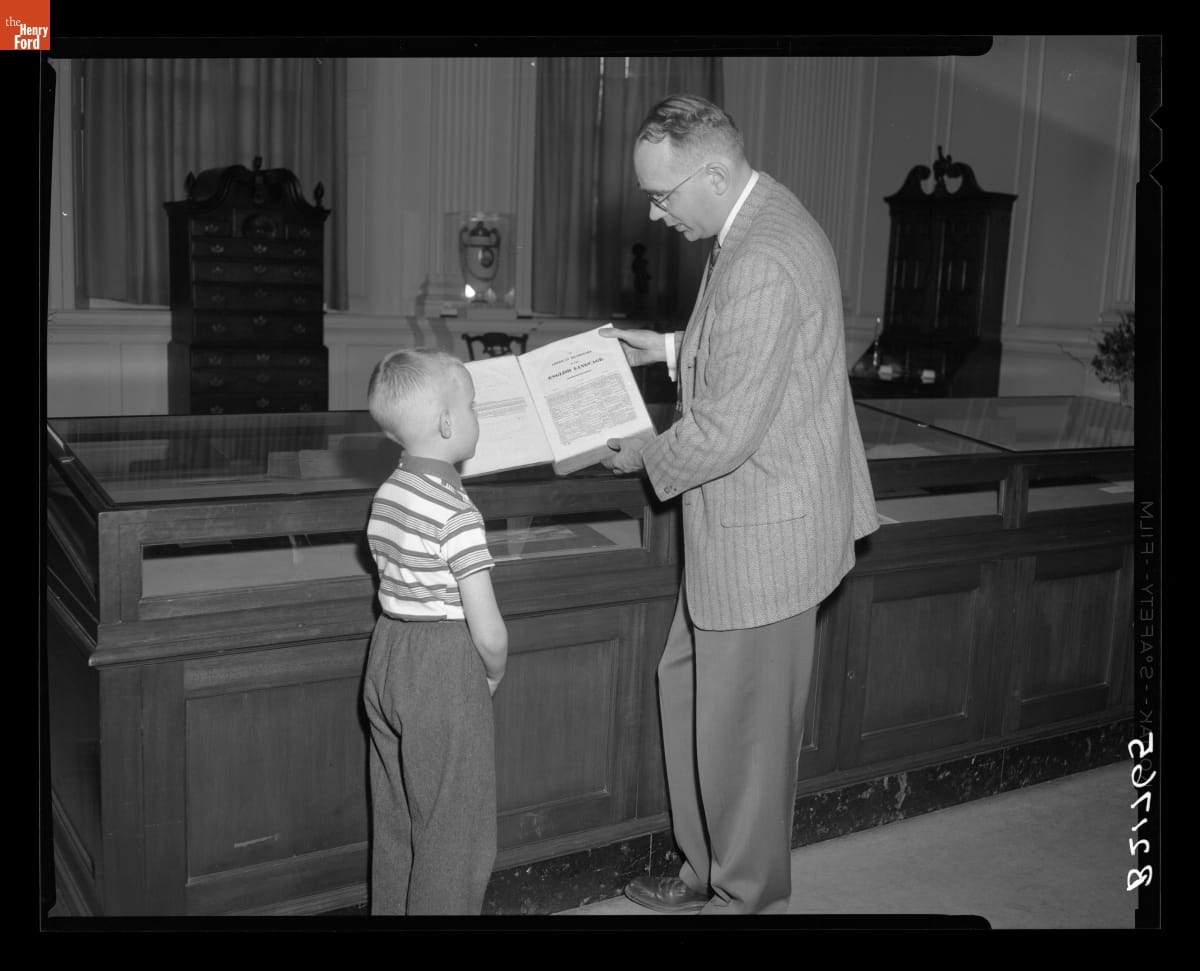
- Librarian Ken Metcalf and Son Mark Viewing an 1828 Webster Dictionary on Exhibit during National Library Week, April 8, 1959 - Detroit native Ken Metcalf earned degrees from Wayne State University and the University of Michigan. He joined the Edison Institute -- today's The Henry Ford -- as librarian in 1954. He later became deputy archivist as well. Metcalf expanded the library's holdings, contributed to museum exhibits, wrote multiple books, and frequently presented at professional and civic organizations.
- April 08, 1959
- Collections - Artifact
Librarian Ken Metcalf and Son Mark Viewing an 1828 Webster Dictionary on Exhibit during National Library Week, April 8, 1959
Detroit native Ken Metcalf earned degrees from Wayne State University and the University of Michigan. He joined the Edison Institute -- today's The Henry Ford -- as librarian in 1954. He later became deputy archivist as well. Metcalf expanded the library's holdings, contributed to museum exhibits, wrote multiple books, and frequently presented at professional and civic organizations.
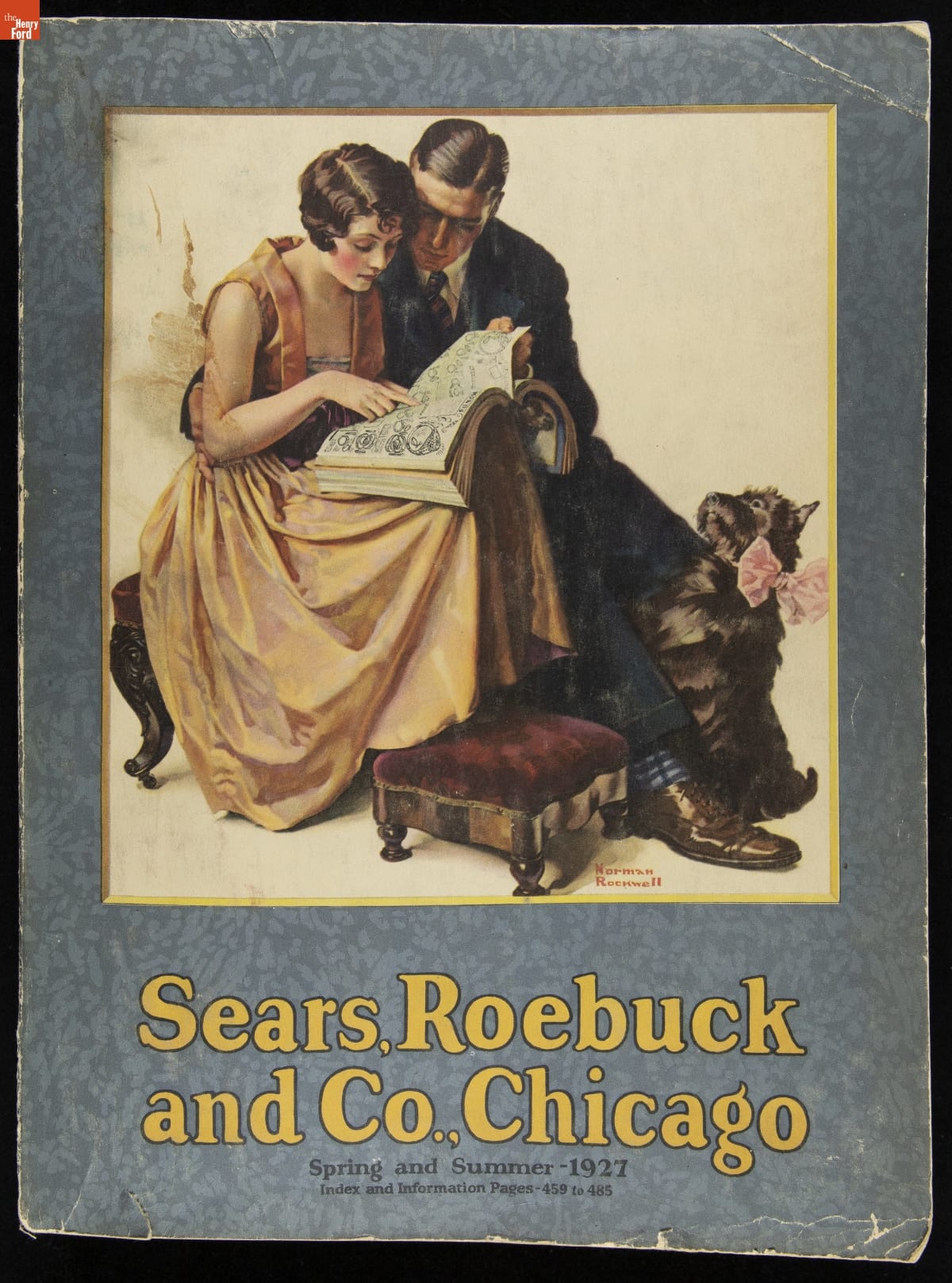
- Sears, Roebuck & Co. Catalog for Spring and Summer, 1927 -
- 1927
- Collections - Artifact
Sears, Roebuck & Co. Catalog for Spring and Summer, 1927