
Search
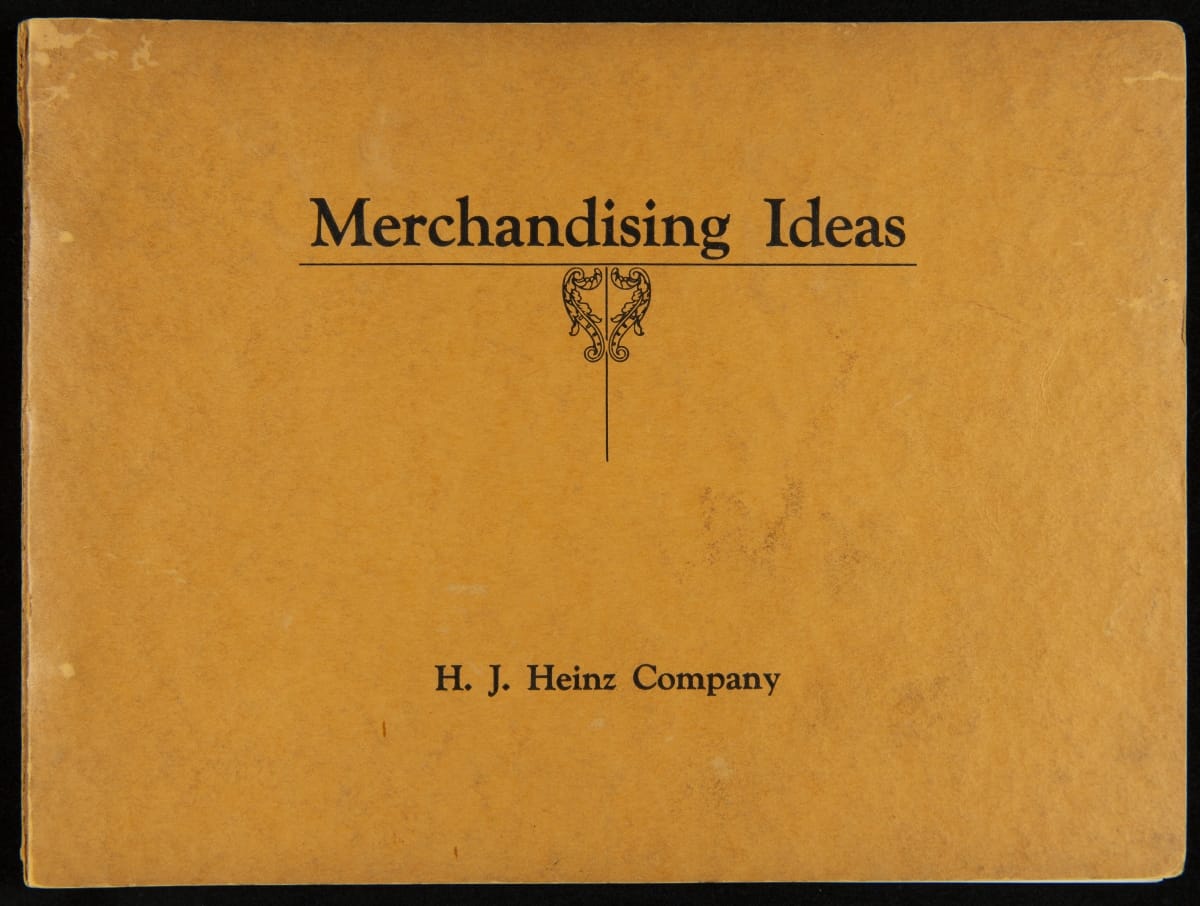
- "Merchandising Ideas," Instruction Booklet for Heinz Product and Advertising Displays, H. J. Heinz Company, circa 1935 - The H.J. Heinz Company's advertising strategy was a recipe for success. Elaborate and creative displays and signage encouraged customers to buy Heinz products. This booklet provided grocers with suggestions for counter, floor, and window displays, explained how to set-up a "Saturday sampling" table, and included an extensive selection of advertising designs available for purchase.
- circa 1935
- Collections - Artifact
"Merchandising Ideas," Instruction Booklet for Heinz Product and Advertising Displays, H. J. Heinz Company, circa 1935
The H.J. Heinz Company's advertising strategy was a recipe for success. Elaborate and creative displays and signage encouraged customers to buy Heinz products. This booklet provided grocers with suggestions for counter, floor, and window displays, explained how to set-up a "Saturday sampling" table, and included an extensive selection of advertising designs available for purchase.
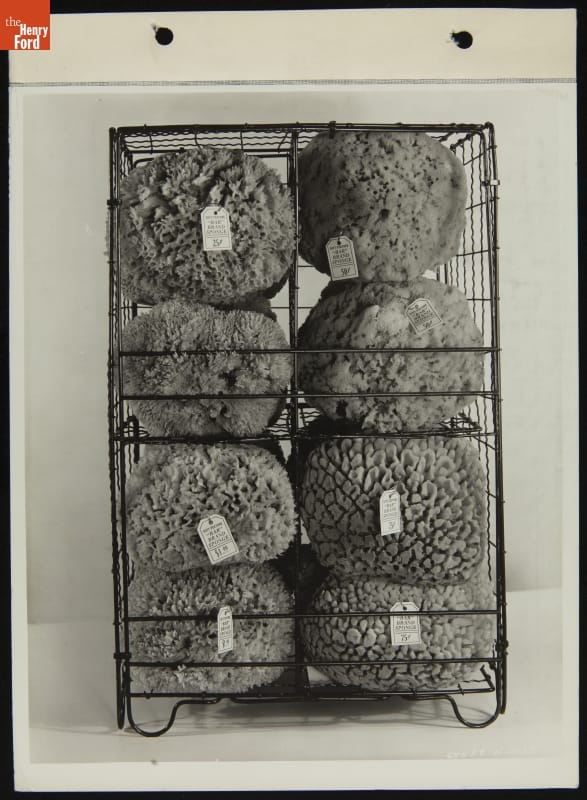
- Wire Basket with Sponges for Dealership Display, November 1935 -
- November 07, 1935
- Collections - Artifact
Wire Basket with Sponges for Dealership Display, November 1935
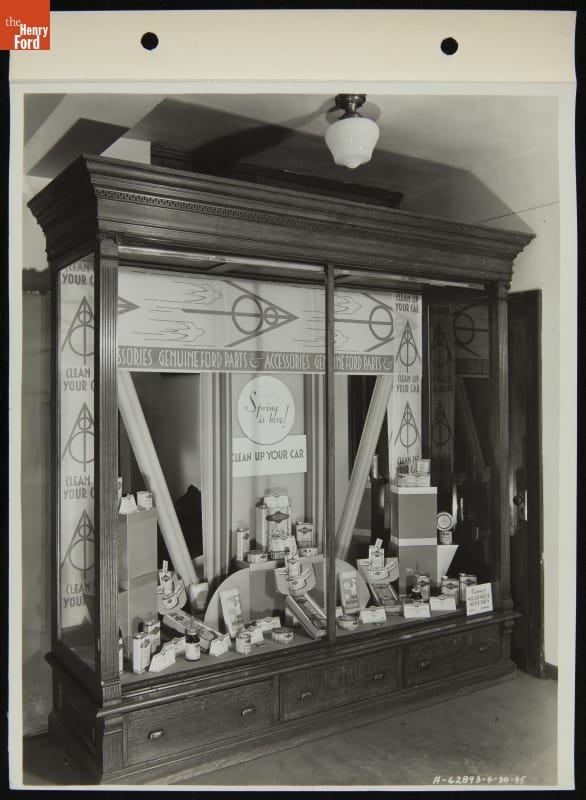
- Genuine Ford V-8 Parts and Accessories Window Display, 1935 - Ford Motor Company offered a variety of accessories for its cars, trucks and engines in the 1930s. Cleaners and polishes enhanced a vehicle's appearance. Lubricants and repair kits improved engine performance and economy. Convenience accessories like luggage carriers, clocks and radios added comfort and convenience while traveling.
- April 30, 1935
- Collections - Artifact
Genuine Ford V-8 Parts and Accessories Window Display, 1935
Ford Motor Company offered a variety of accessories for its cars, trucks and engines in the 1930s. Cleaners and polishes enhanced a vehicle's appearance. Lubricants and repair kits improved engine performance and economy. Convenience accessories like luggage carriers, clocks and radios added comfort and convenience while traveling.
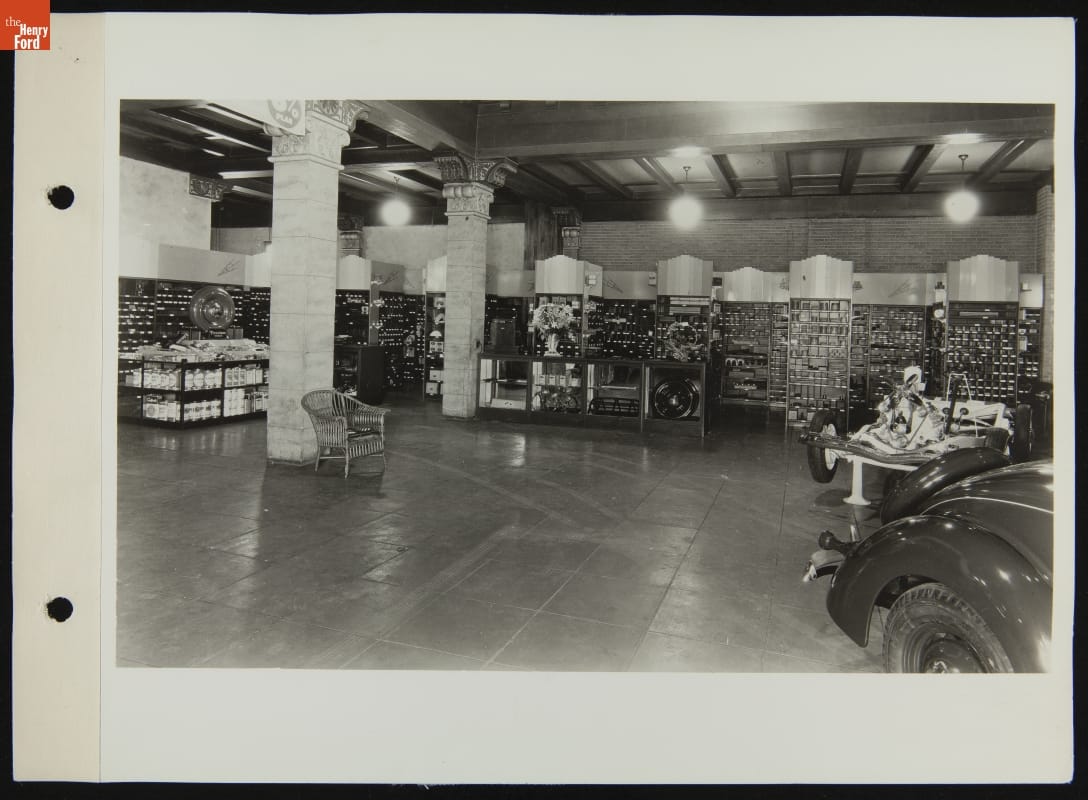
- Parts Display at Ford Dealer Showroom, 1936 - Ford Motor Company inaugurated a system of competing dealership franchises in 1914. Dealers sold Ford vehicles, offered repair services, and stocked spare parts and automobile accessories. Dealership parts and service departments lured customers with displays and advertisements. The department also served as a reminder to potential car buyers that the dealership provided extra services after the sale.
- June 25, 1936
- Collections - Artifact
Parts Display at Ford Dealer Showroom, 1936
Ford Motor Company inaugurated a system of competing dealership franchises in 1914. Dealers sold Ford vehicles, offered repair services, and stocked spare parts and automobile accessories. Dealership parts and service departments lured customers with displays and advertisements. The department also served as a reminder to potential car buyers that the dealership provided extra services after the sale.
- Bill Wood Motor Company Parts and Accessories Display, Oakland, California, February 1937 - Ford Motor Company inaugurated a system of competing dealership franchises in 1914. Dealers sold Ford vehicles, offered repair services, and stocked spare parts and automobile accessories. Dealership parts and service departments lured customers with displays and advertisements. The department also served as a reminder to potential car buyers that the dealership provided extra services after the sale.
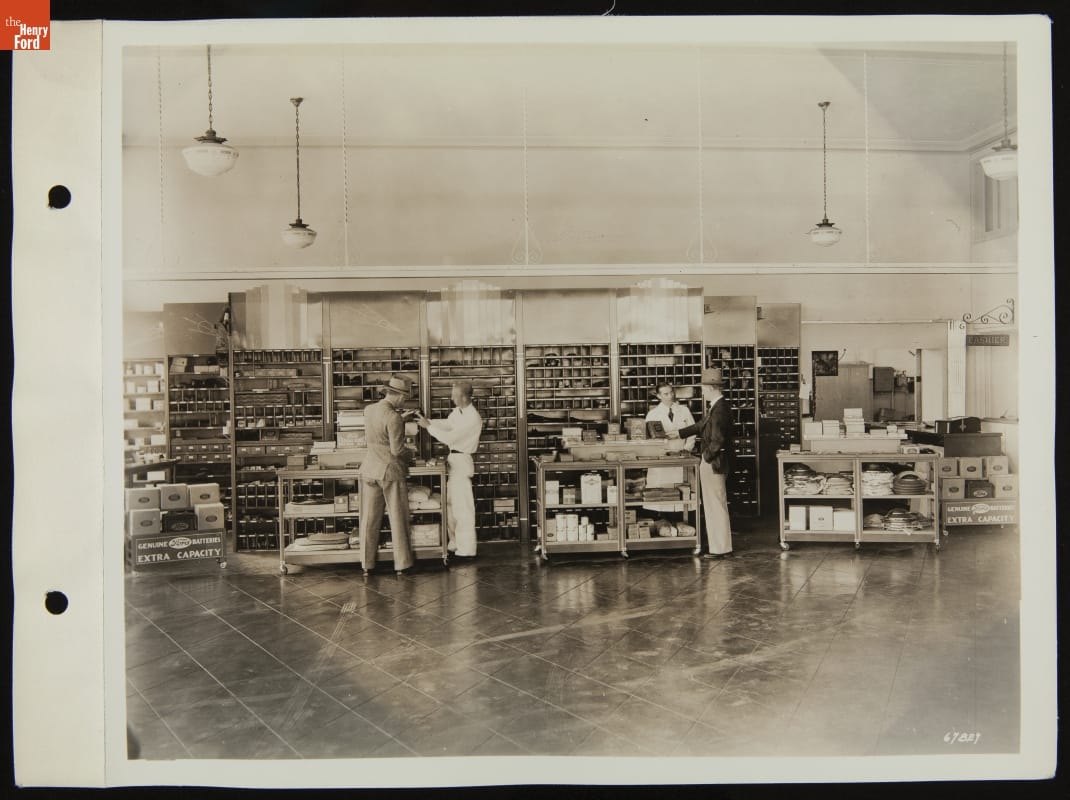
- February 08, 1937
- Collections - Artifact
Bill Wood Motor Company Parts and Accessories Display, Oakland, California, February 1937
Ford Motor Company inaugurated a system of competing dealership franchises in 1914. Dealers sold Ford vehicles, offered repair services, and stocked spare parts and automobile accessories. Dealership parts and service departments lured customers with displays and advertisements. The department also served as a reminder to potential car buyers that the dealership provided extra services after the sale.
- Consolidated Motors Parts and Accessories Display, Pheonix, Arizona, February 1937 - Ford Motor Company inaugurated a system of competing dealership franchises in 1914. Dealers sold Ford vehicles, offered repair services, and stocked spare parts and automobile accessories. Dealership parts and service departments lured customers with displays and advertisements. The department also served as a reminder to potential car buyers that the dealership provided extra services after the sale.
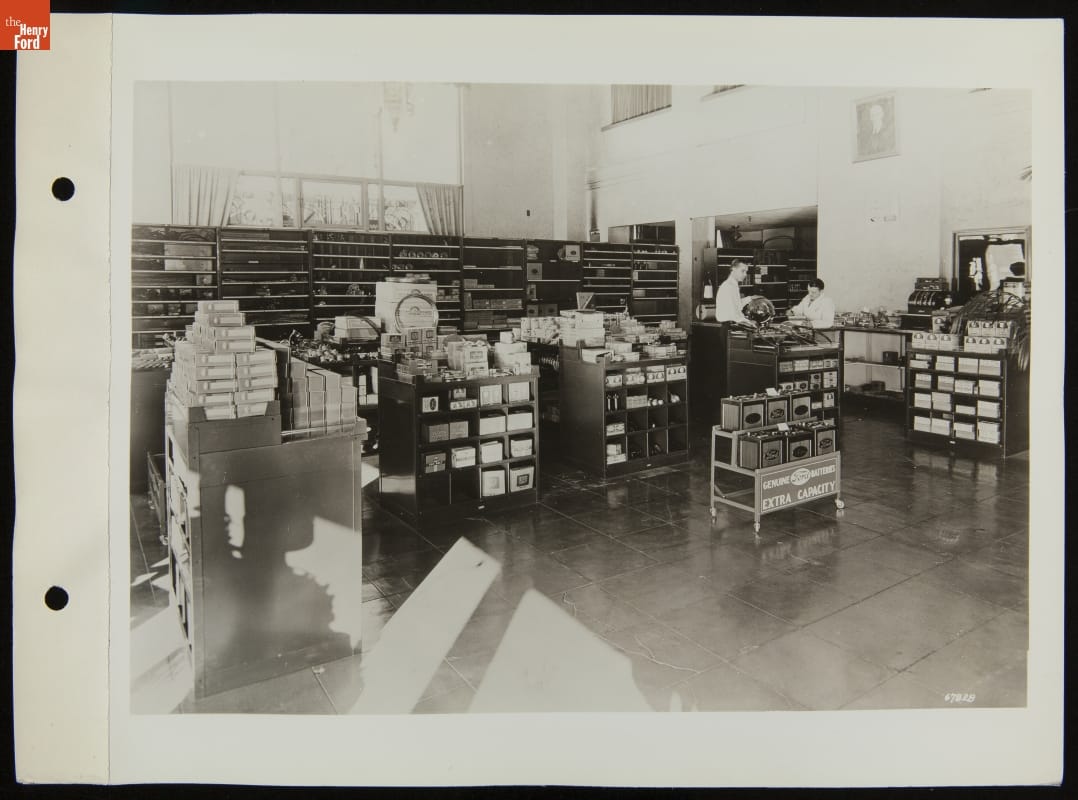
- February 08, 1937
- Collections - Artifact
Consolidated Motors Parts and Accessories Display, Pheonix, Arizona, February 1937
Ford Motor Company inaugurated a system of competing dealership franchises in 1914. Dealers sold Ford vehicles, offered repair services, and stocked spare parts and automobile accessories. Dealership parts and service departments lured customers with displays and advertisements. The department also served as a reminder to potential car buyers that the dealership provided extra services after the sale.
- Garry Sales Company Parts and Accessories Display, Trenton, New Jersey, February 1937 - Ford Motor Company inaugurated a system of competing dealership franchises in 1914. Dealers sold Ford vehicles, offered repair services, and stocked spare parts and automobile accessories. Dealership parts and service departments lured customers with displays and advertisements. The department also served as a reminder to potential car buyers that the dealership provided extra services after the sale.
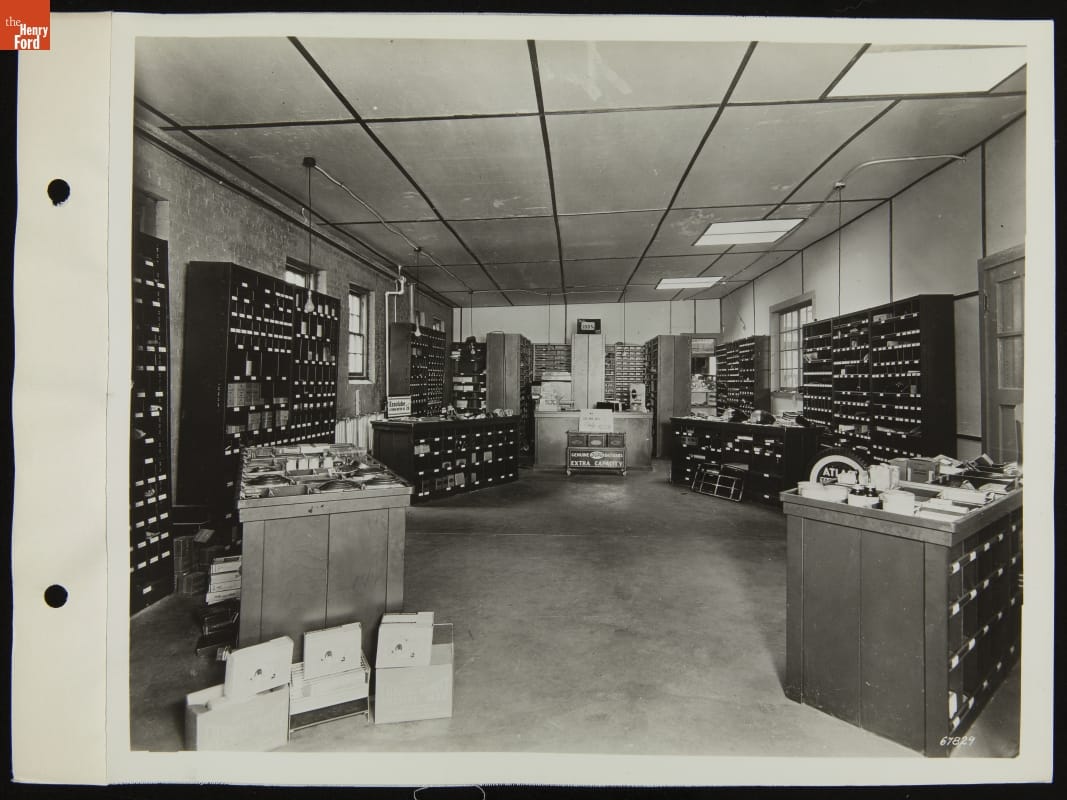
- February 08, 1937
- Collections - Artifact
Garry Sales Company Parts and Accessories Display, Trenton, New Jersey, February 1937
Ford Motor Company inaugurated a system of competing dealership franchises in 1914. Dealers sold Ford vehicles, offered repair services, and stocked spare parts and automobile accessories. Dealership parts and service departments lured customers with displays and advertisements. The department also served as a reminder to potential car buyers that the dealership provided extra services after the sale.
- Parts Room with Open Bin Displays, Dalyrimple Ford Dealership, March 1937 - Ford Motor Company inaugurated a system of competing dealership franchises in 1914. Dealers sold Ford vehicles, offered repair services, and stocked spare parts and automobile accessories. Dealership parts and service departments lured customers with displays and advertisements. The department also served as a reminder to potential car buyers that the dealership provided extra services after the sale.
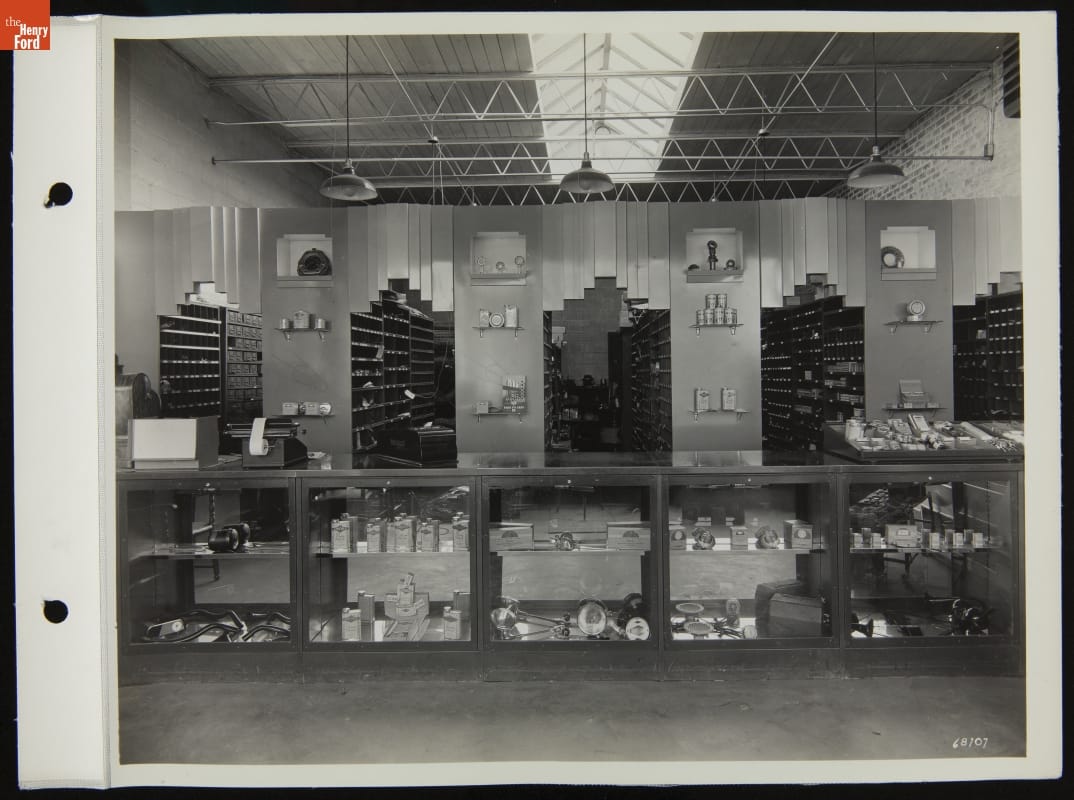
- March 29, 1937
- Collections - Artifact
Parts Room with Open Bin Displays, Dalyrimple Ford Dealership, March 1937
Ford Motor Company inaugurated a system of competing dealership franchises in 1914. Dealers sold Ford vehicles, offered repair services, and stocked spare parts and automobile accessories. Dealership parts and service departments lured customers with displays and advertisements. The department also served as a reminder to potential car buyers that the dealership provided extra services after the sale.
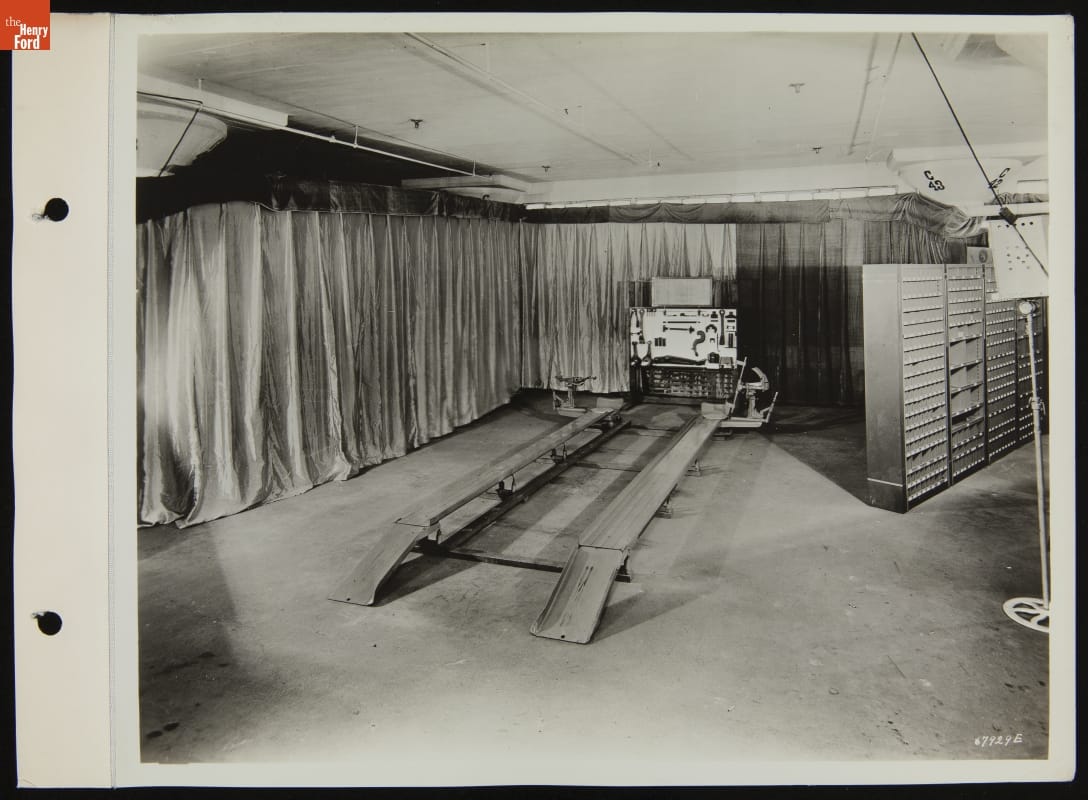
- Ford Service Exhibit at Dallas Centennial Exposition, February 1937 - The Texas Centennial Exposition in Dallas celebrated the frontier past of Texas, especially its 1836 victory over Mexico. The Ford Motor Company Pavilion, among the largest of industrial firms' buildings at the fair, was designed by industrial designer Walter Dorwin Teague. Its interior displays focused on how agriculture and natural resources of the Southwest could be transformed into car parts.
- February 16, 1937
- Collections - Artifact
Ford Service Exhibit at Dallas Centennial Exposition, February 1937
The Texas Centennial Exposition in Dallas celebrated the frontier past of Texas, especially its 1836 victory over Mexico. The Ford Motor Company Pavilion, among the largest of industrial firms' buildings at the fair, was designed by industrial designer Walter Dorwin Teague. Its interior displays focused on how agriculture and natural resources of the Southwest could be transformed into car parts.
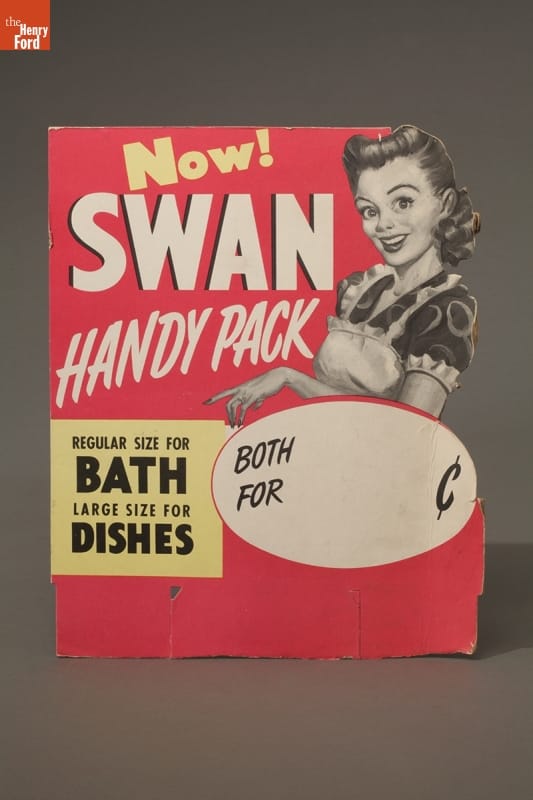
- Swan Soap Display Board, 1940-1950 -
- 1940-1950
- Collections - Artifact
Swan Soap Display Board, 1940-1950