
Search
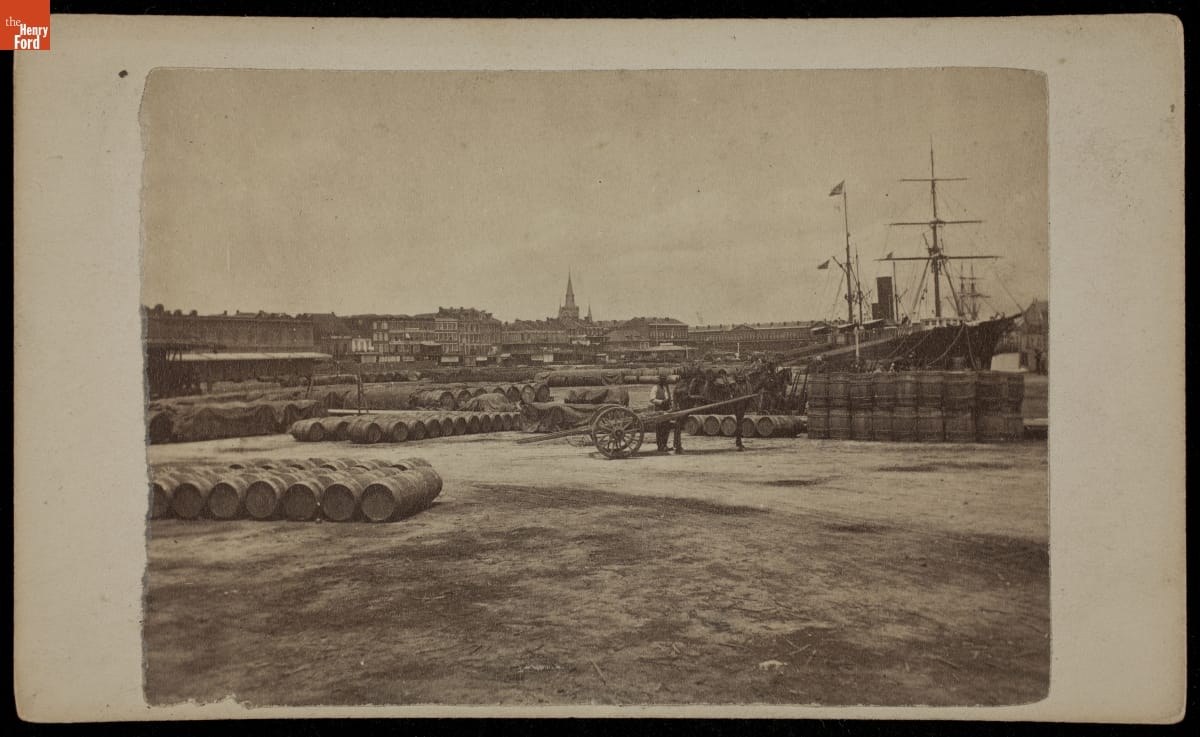
- Steamboat and Cargo at a Landing, New Orleans, Louisiana, 1866-1890 -
- 1866-1890
- Collections - Artifact
Steamboat and Cargo at a Landing, New Orleans, Louisiana, 1866-1890
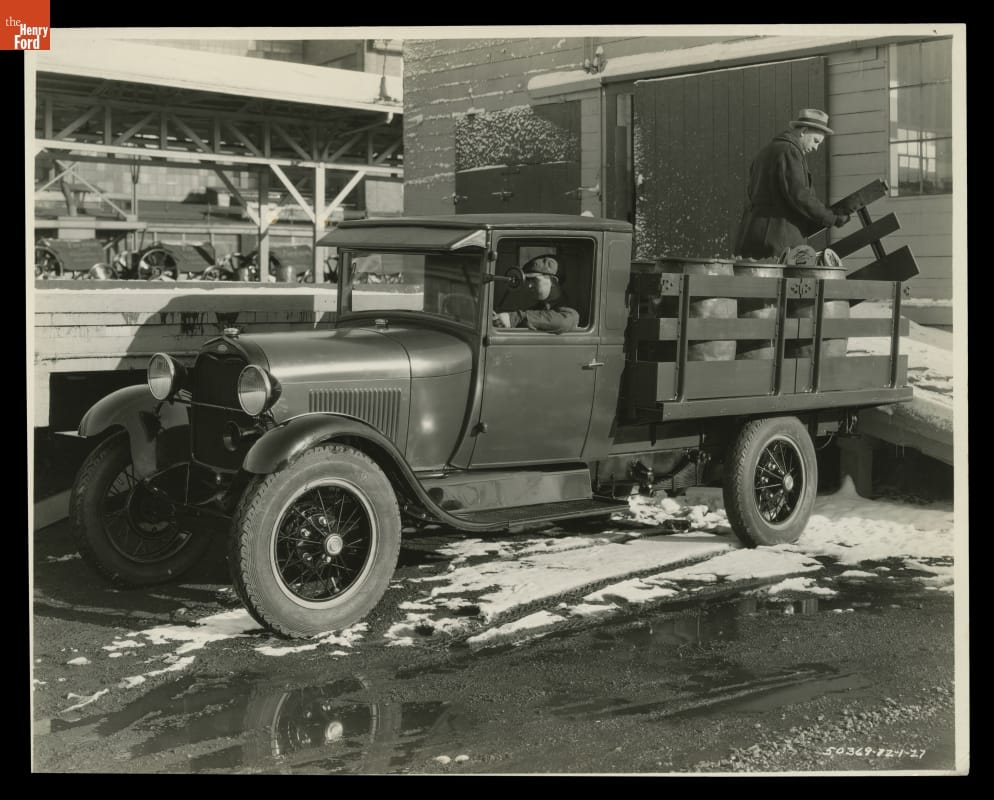
- 1928 Ford Model AA Stake Truck Parked at Loading Dock, December 1927 - Ford Motor Company's Model AA truck was based on its Model A automobile platform, but with a longer wheelbase, a stronger frame, and generally sturdier chassis components. The Model AA was available in several body styles to permit its use as a panel truck, an express delivery truck, a garbage truck, a bus, or an ambulance, among other options.
- December 01, 1927
- Collections - Artifact
1928 Ford Model AA Stake Truck Parked at Loading Dock, December 1927
Ford Motor Company's Model AA truck was based on its Model A automobile platform, but with a longer wheelbase, a stronger frame, and generally sturdier chassis components. The Model AA was available in several body styles to permit its use as a panel truck, an express delivery truck, a garbage truck, a bus, or an ambulance, among other options.
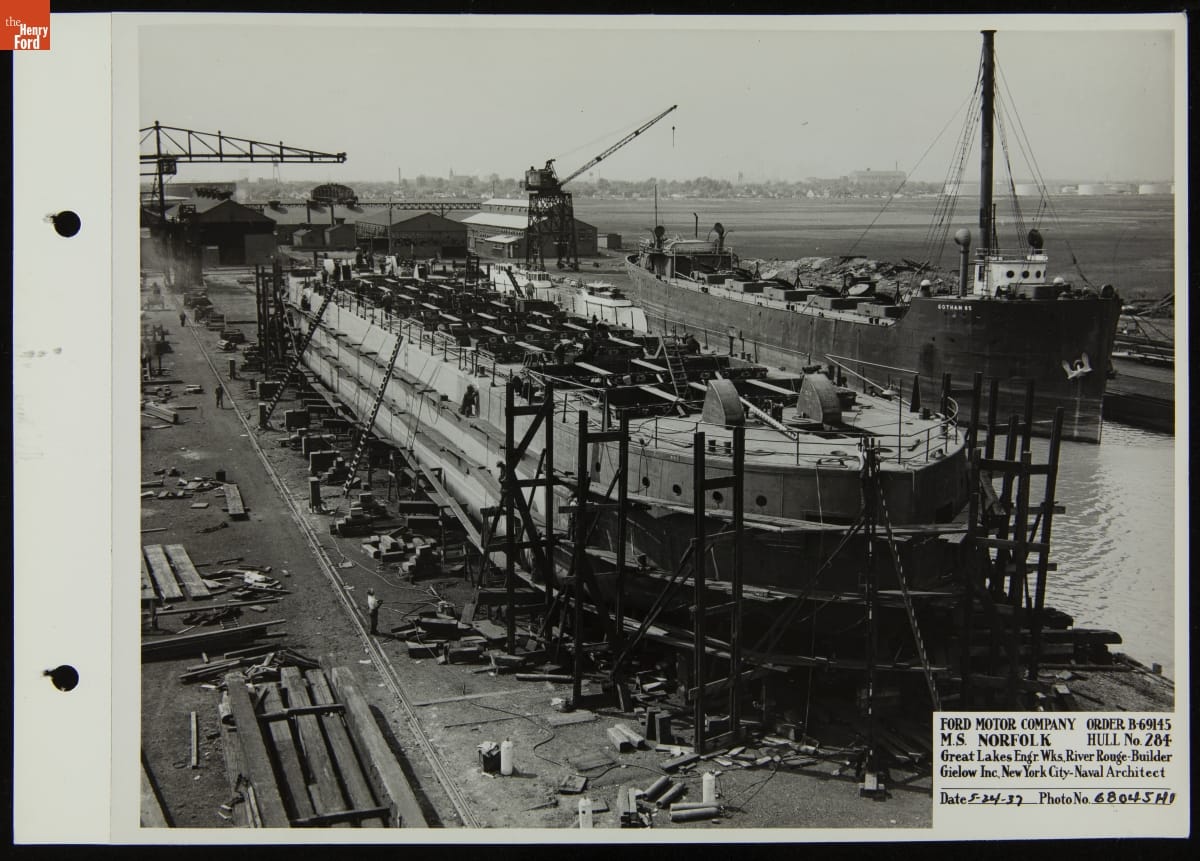
- Ford Freighter "Norfolk" under Construction at Great Lakes Engineering Works, May 24, 1937 - Ford Motor Company built four canal boats in the 1930s to transport finished auto parts between Ford's production plants on the East Coast and its River Rouge complex in Michigan. The freighters were designed to travel on the New York State Barge Canal. The <em>Norfolk</em>, named for the location of one of the Ford's East Coast plants, began service in 1937.
- April 30, 1937
- Collections - Artifact
Ford Freighter "Norfolk" under Construction at Great Lakes Engineering Works, May 24, 1937
Ford Motor Company built four canal boats in the 1930s to transport finished auto parts between Ford's production plants on the East Coast and its River Rouge complex in Michigan. The freighters were designed to travel on the New York State Barge Canal. The Norfolk, named for the location of one of the Ford's East Coast plants, began service in 1937.
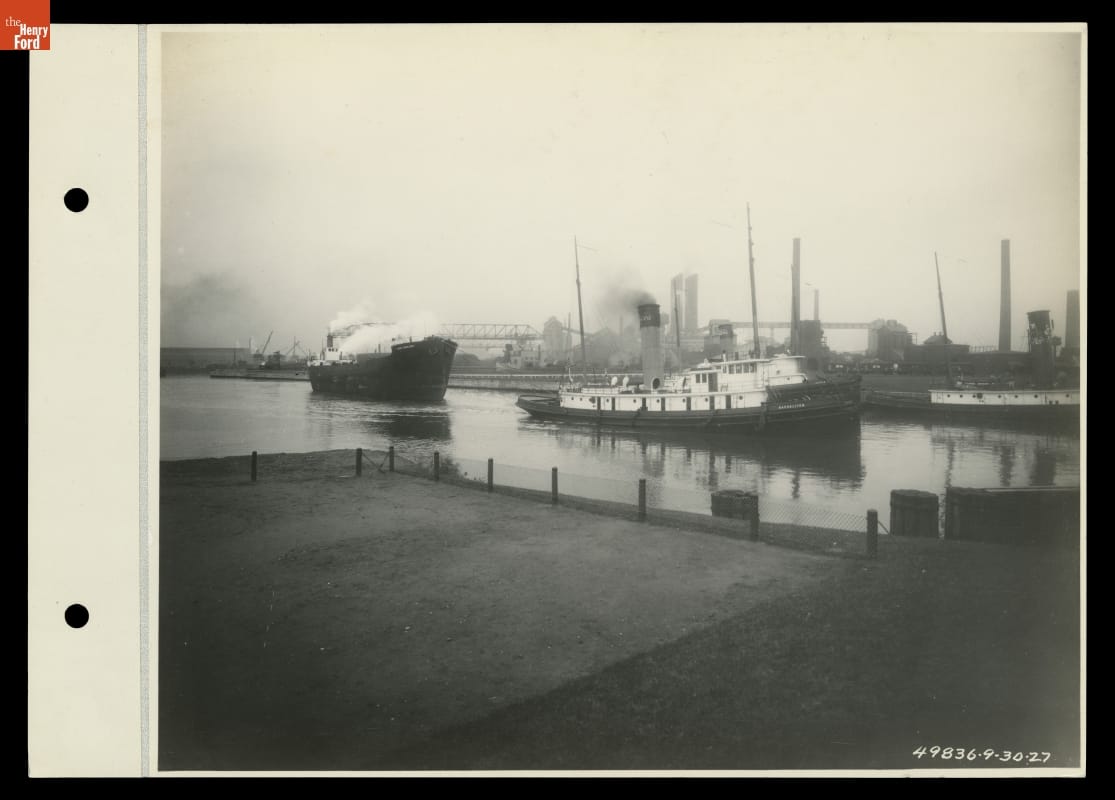
- Tugboat Towing the "Lake Hemlock" to be Salvaged at Ford Motor Company Rouge Plant Shipyard, 1927 - Completed in 1928 along the newly dredged River Rouge, Ford Motor Company's Rouge Plant quickly became an icon of modern industrial productivity. The factory's ship salvaging project exemplified Henry Ford's vision of efficiency at the plant. Workers disassembled surplus vessels, saving hardware and reconditioning functional machinery. Then, in the Rouge's production foundry, they melted down remaining scraps into reusable steel.
- September 30, 1927
- Collections - Artifact
Tugboat Towing the "Lake Hemlock" to be Salvaged at Ford Motor Company Rouge Plant Shipyard, 1927
Completed in 1928 along the newly dredged River Rouge, Ford Motor Company's Rouge Plant quickly became an icon of modern industrial productivity. The factory's ship salvaging project exemplified Henry Ford's vision of efficiency at the plant. Workers disassembled surplus vessels, saving hardware and reconditioning functional machinery. Then, in the Rouge's production foundry, they melted down remaining scraps into reusable steel.
- Bathers on the Dock at The Old Club, St. Clair Flats, Michigan, circa 1916 - From 1895 to 1924, the Detroit Publishing Company was one of the major image publishers in the world. The company's wide-ranging stock of original photographs documented life and landscapes from across the nation and around the globe. From the tens of thousands of negatives, the company created prints, postcards, lantern slides, panoramas, and other merchandise for sale to educators, businessmen, advertisers, homeowners and travelers.

- circa 1916
- Collections - Artifact
Bathers on the Dock at The Old Club, St. Clair Flats, Michigan, circa 1916
From 1895 to 1924, the Detroit Publishing Company was one of the major image publishers in the world. The company's wide-ranging stock of original photographs documented life and landscapes from across the nation and around the globe. From the tens of thousands of negatives, the company created prints, postcards, lantern slides, panoramas, and other merchandise for sale to educators, businessmen, advertisers, homeowners and travelers.
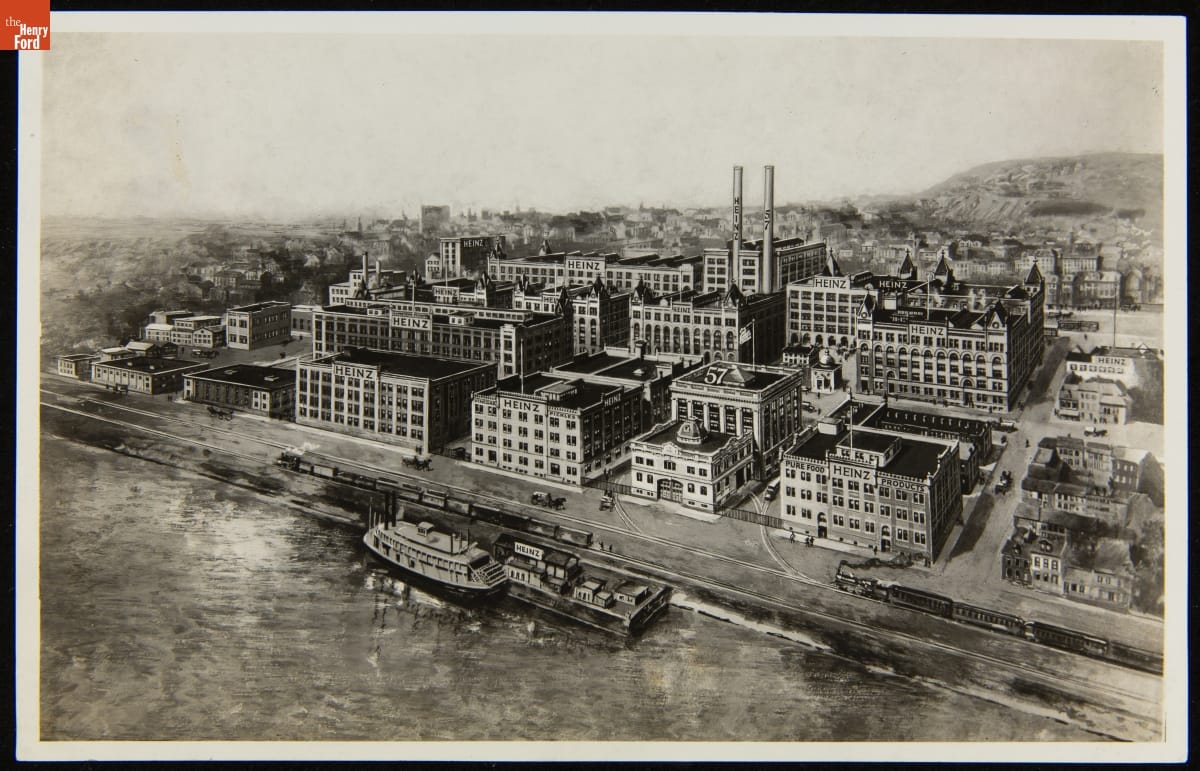
- H. J. Heinz Company Main Plant, Pittsburgh, Pennsylvania, circa 1910 - The H.J. Heinz Company had humble beginnings in 1869 when its founder began selling horseradish out his parents' home in Sharpsburg, Pennsylvania. With a rapidly expanding product line and extensive marketing, the Heinz brand became a household name by the turn of the century. Its main plant in Pittsburgh, Pennsylvania (seen here), was known as the "Home of the 57" and offered tours for visitors.
- circa 1910
- Collections - Artifact
H. J. Heinz Company Main Plant, Pittsburgh, Pennsylvania, circa 1910
The H.J. Heinz Company had humble beginnings in 1869 when its founder began selling horseradish out his parents' home in Sharpsburg, Pennsylvania. With a rapidly expanding product line and extensive marketing, the Heinz brand became a household name by the turn of the century. Its main plant in Pittsburgh, Pennsylvania (seen here), was known as the "Home of the 57" and offered tours for visitors.
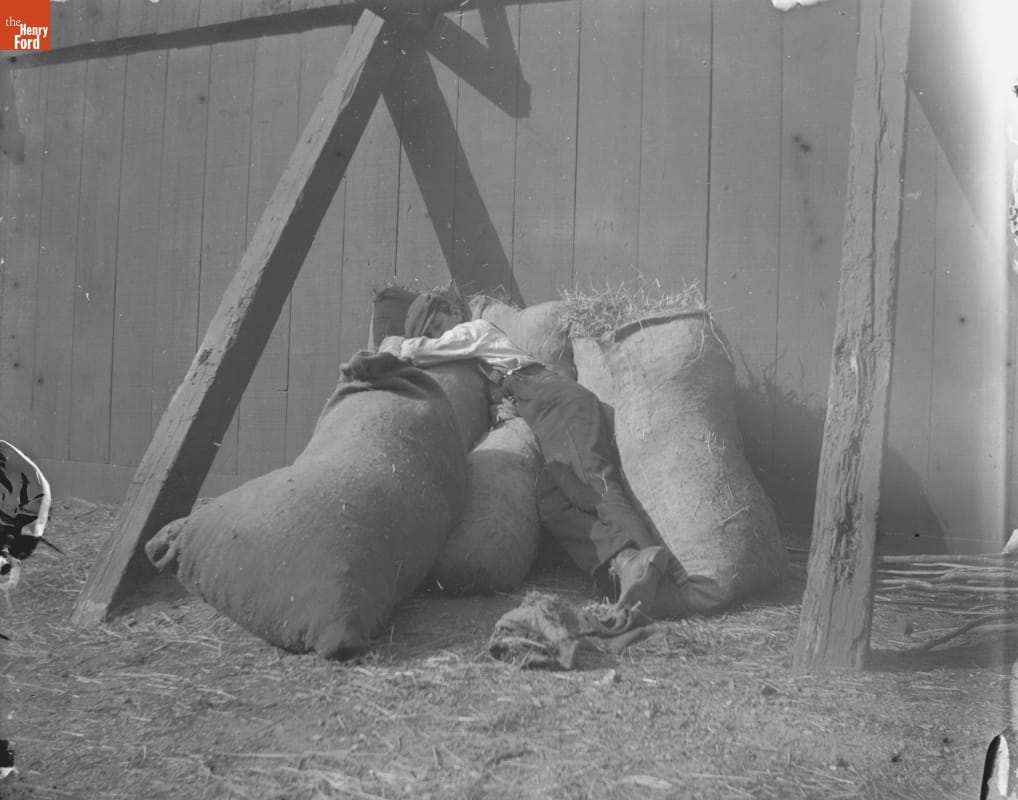
- Boy on Palmer's Dock, Brooklyn, New York, 1890-1915 - In 1890, Jenny Young Chandler, 25 years old and recently widowed, began working for the <EM>New York Herald</EM>. As a photojournalist and feature writer, Chandler captured life in Brooklyn, New York, and vicinity. By 1922, the time of her death, she had produced over 800 glass plate negatives. Her sensitive, insightful photographs depict people from all walks of life and the world in which they lived.
- 1890-1915
- Collections - Artifact
Boy on Palmer's Dock, Brooklyn, New York, 1890-1915
In 1890, Jenny Young Chandler, 25 years old and recently widowed, began working for the New York Herald. As a photojournalist and feature writer, Chandler captured life in Brooklyn, New York, and vicinity. By 1922, the time of her death, she had produced over 800 glass plate negatives. Her sensitive, insightful photographs depict people from all walks of life and the world in which they lived.
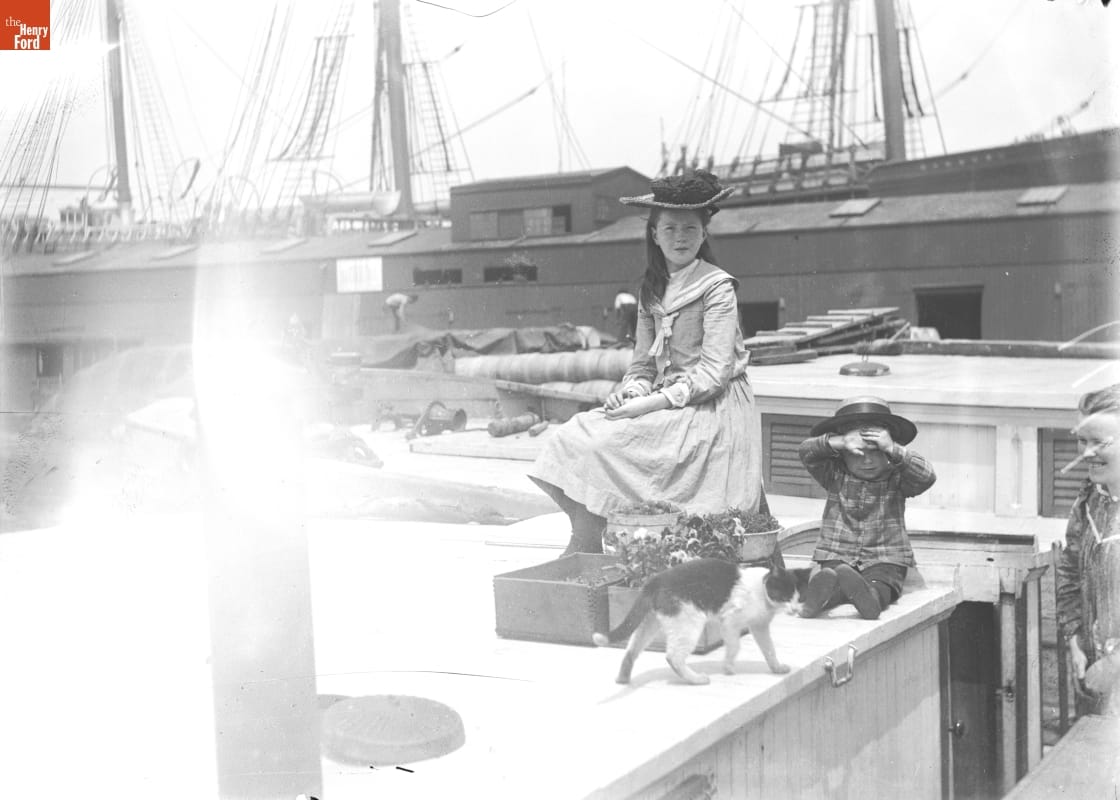
- Engineer and Children on Canal Boat at Palmer's Dock, 1890-1915 - In 1890, Jenny Young Chandler, 25 years old and recently widowed, began working for the <EM>New York Herald</EM>. As a photojournalist and feature writer, Chandler captured life in Brooklyn, New York, and vicinity. By 1922, the time of her death, she had produced over 800 glass plate negatives. Her sensitive, insightful photographs depict people from all walks of life and the world in which they lived.
- 1890-1915
- Collections - Artifact
Engineer and Children on Canal Boat at Palmer's Dock, 1890-1915
In 1890, Jenny Young Chandler, 25 years old and recently widowed, began working for the New York Herald. As a photojournalist and feature writer, Chandler captured life in Brooklyn, New York, and vicinity. By 1922, the time of her death, she had produced over 800 glass plate negatives. Her sensitive, insightful photographs depict people from all walks of life and the world in which they lived.
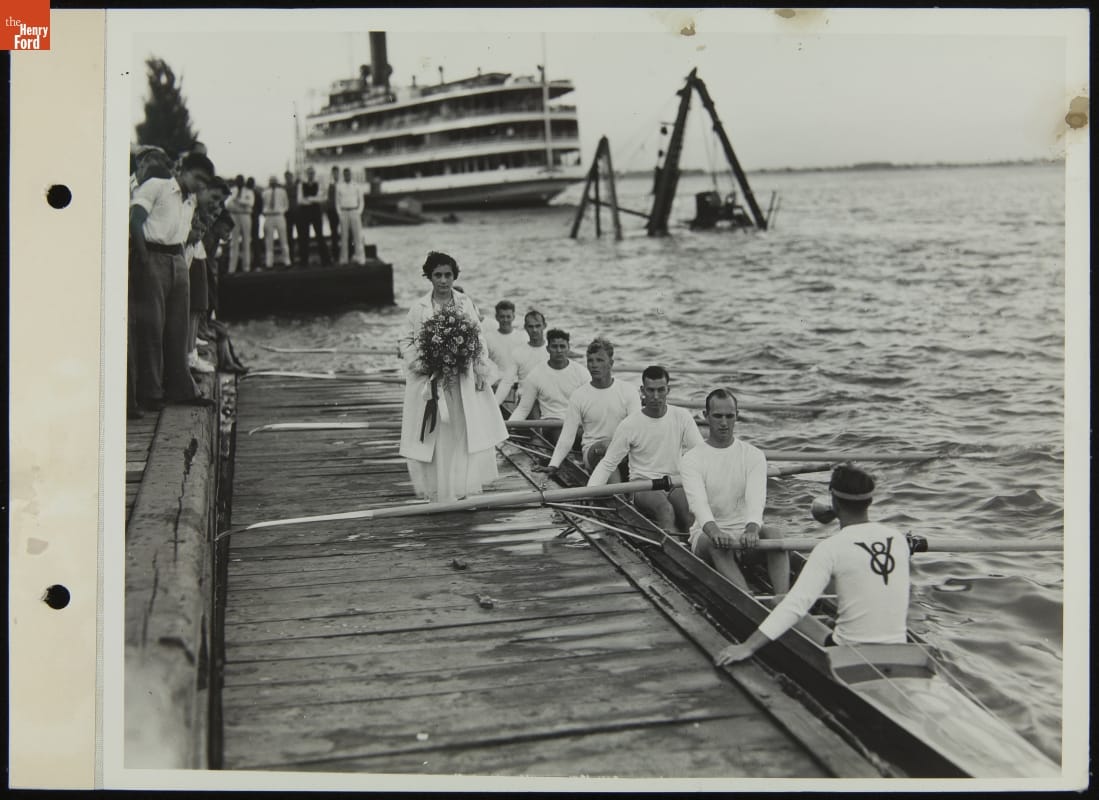
- Wyandotte Boat Club "V-8" Rowing Team, July 1934 -
- July 16, 1934
- Collections - Artifact
Wyandotte Boat Club "V-8" Rowing Team, July 1934
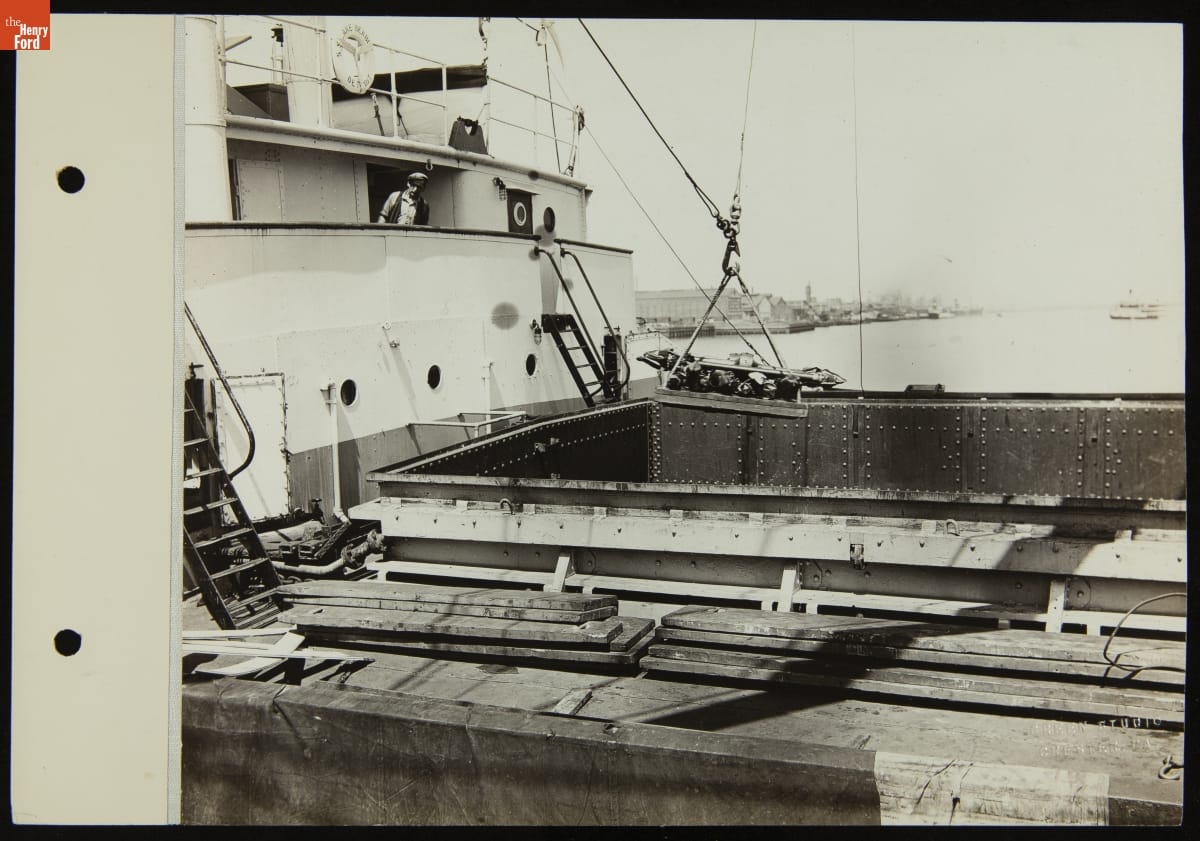
- Ford Freighter "Lake Benbow" Loaded with Cargo in Chester, Pennsylvania, circa 1929 - Henry Ford purchased 199 surplus World War I merchant ships from the United States government in 1925. Most of these ships were scrapped. But a few, like the <em>Lake Benbow</em>, were refitted into ocean-going freighters. The freighters transported parts and supplies between Ford facilities located in cities along the American seaboard and to the Ford plant in Manchester, England.
- circa 1929
- Collections - Artifact
Ford Freighter "Lake Benbow" Loaded with Cargo in Chester, Pennsylvania, circa 1929
Henry Ford purchased 199 surplus World War I merchant ships from the United States government in 1925. Most of these ships were scrapped. But a few, like the Lake Benbow, were refitted into ocean-going freighters. The freighters transported parts and supplies between Ford facilities located in cities along the American seaboard and to the Ford plant in Manchester, England.