
Search
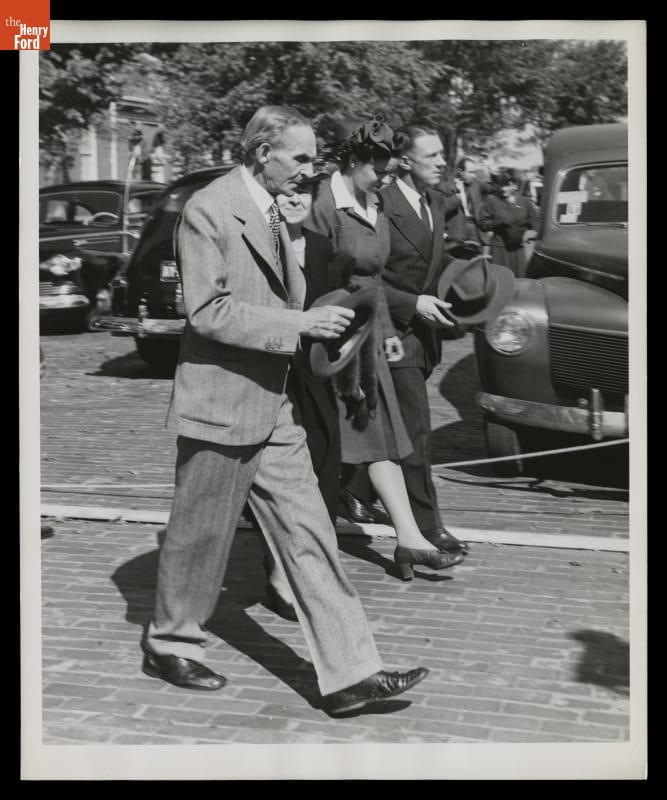
- Henry Ford and Clara Ford at Henry Ford Museum for the Presentation of the Sikorsky VS-300 Helicopter, October 7, 1943 - Henry Ford never intended his Edison Institute -- today's The Henry Ford -- only to be about the past. Henry Ford Museum and Greenfield Village would inspire the institute's students and visitors to create the future. Ford collected modern inventions alongside historic items. He acquired the VS-300 helicopter from inventor Igor Sikorsky in 1943 -- only four years after the aircraft's introduction.
- October 07, 1943
- Collections - Artifact
Henry Ford and Clara Ford at Henry Ford Museum for the Presentation of the Sikorsky VS-300 Helicopter, October 7, 1943
Henry Ford never intended his Edison Institute -- today's The Henry Ford -- only to be about the past. Henry Ford Museum and Greenfield Village would inspire the institute's students and visitors to create the future. Ford collected modern inventions alongside historic items. He acquired the VS-300 helicopter from inventor Igor Sikorsky in 1943 -- only four years after the aircraft's introduction.
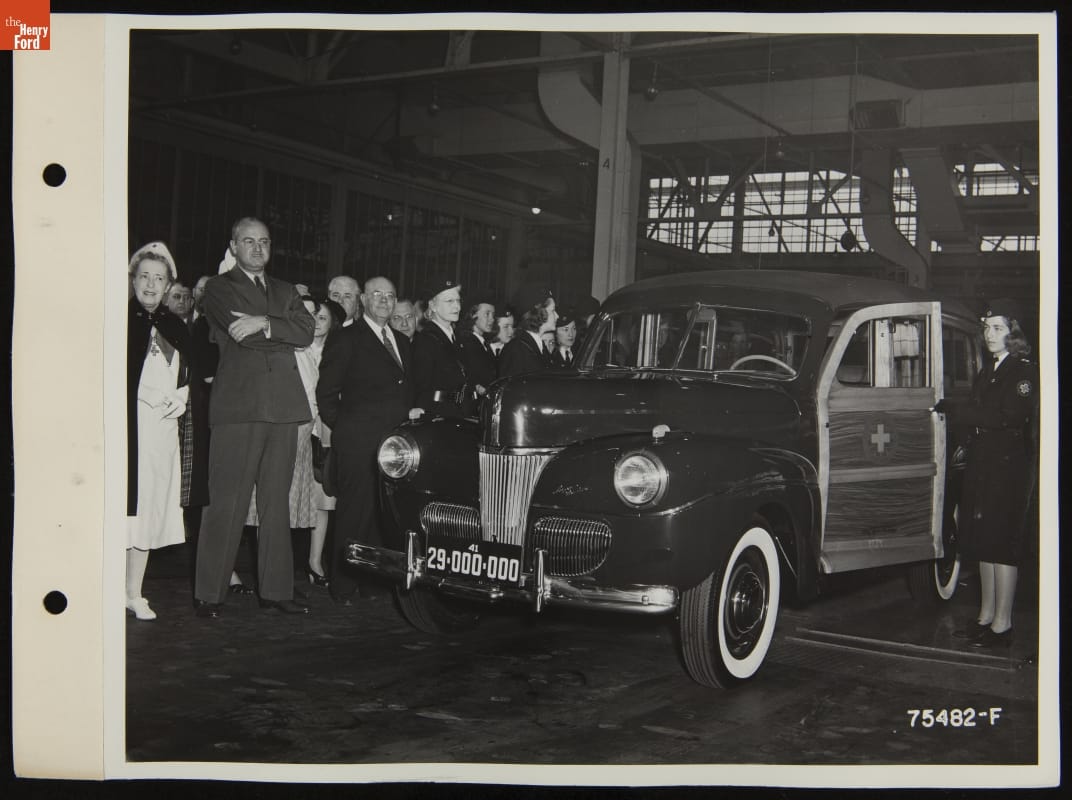
- Presenting the 29-Millionth Ford to the Red Cross Women's Motor Corps, April 29, 1941 - The 29 millionth Ford automobile rolled off the Rouge Plant assembly line in April 1941. Edsel Ford presented the Super DeLuxe station wagon to the Detroit chapter of the Red Cross. This production milestone vehicle became one of the vehicles used by the Red Cross Volunteer Motor Corps. Ford Motor Company had worked with this group previously, providing automobile maintenance training for its members.
- April 29, 1941
- Collections - Artifact
Presenting the 29-Millionth Ford to the Red Cross Women's Motor Corps, April 29, 1941
The 29 millionth Ford automobile rolled off the Rouge Plant assembly line in April 1941. Edsel Ford presented the Super DeLuxe station wagon to the Detroit chapter of the Red Cross. This production milestone vehicle became one of the vehicles used by the Red Cross Volunteer Motor Corps. Ford Motor Company had worked with this group previously, providing automobile maintenance training for its members.
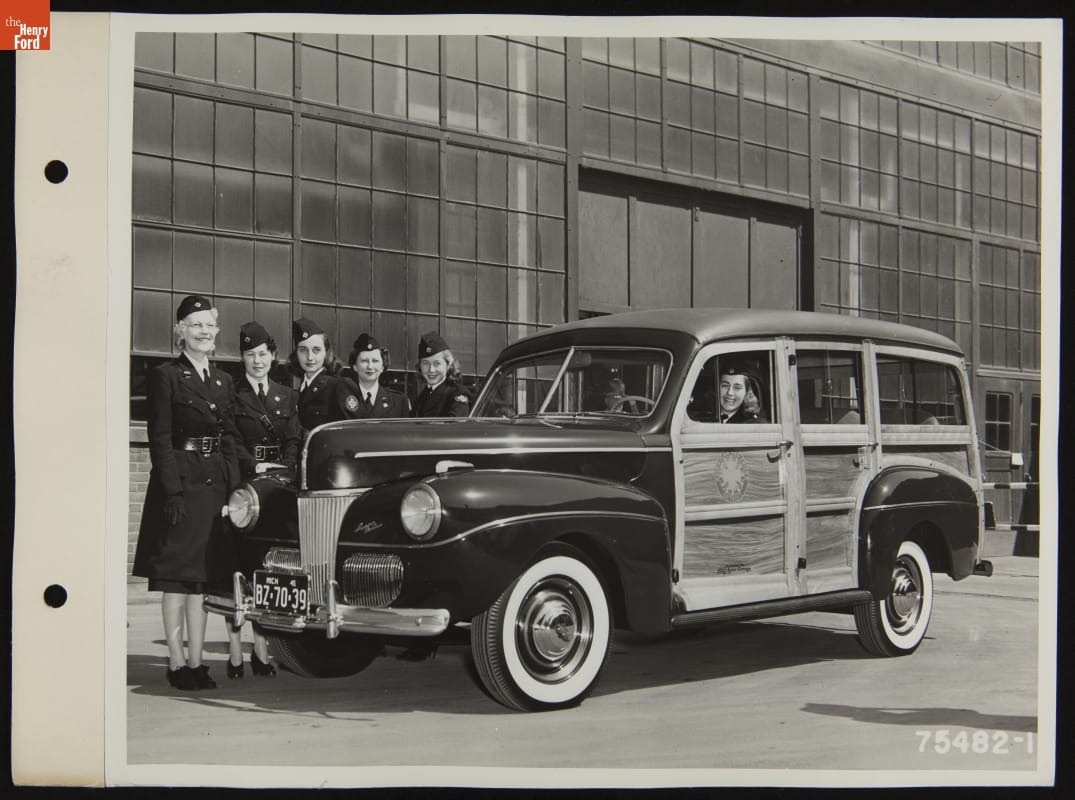
- The 29-Millionth Ford is Presented to the Red Cross Women's Motor Corps, April 29, 1941 - The 29 millionth Ford automobile rolled off the Rouge Plant assembly line in April 1941. Edsel Ford presented the Super DeLuxe station wagon to the Detroit chapter of the Red Cross. This production milestone vehicle became one of the vehicles used by the Red Cross Volunteer Motor Corps. Ford Motor Company had worked with this group previously, providing automobile maintenance training for its members.
- April 29, 1941
- Collections - Artifact
The 29-Millionth Ford is Presented to the Red Cross Women's Motor Corps, April 29, 1941
The 29 millionth Ford automobile rolled off the Rouge Plant assembly line in April 1941. Edsel Ford presented the Super DeLuxe station wagon to the Detroit chapter of the Red Cross. This production milestone vehicle became one of the vehicles used by the Red Cross Volunteer Motor Corps. Ford Motor Company had worked with this group previously, providing automobile maintenance training for its members.
- The 29-Millionth Ford, Presented to the Red Cross Women's Motor Corps, April 29, 1941 - The 29 millionth Ford automobile rolled off the Rouge Plant assembly line in April 1941. Edsel Ford presented the Super DeLuxe station wagon to the Detroit chapter of the Red Cross. This production milestone vehicle became one of the vehicles used by the Red Cross Volunteer Motor Corps. Ford Motor Company had worked with this group previously, providing automobile maintenance training for its members.

- April 29, 1941
- Collections - Artifact
The 29-Millionth Ford, Presented to the Red Cross Women's Motor Corps, April 29, 1941
The 29 millionth Ford automobile rolled off the Rouge Plant assembly line in April 1941. Edsel Ford presented the Super DeLuxe station wagon to the Detroit chapter of the Red Cross. This production milestone vehicle became one of the vehicles used by the Red Cross Volunteer Motor Corps. Ford Motor Company had worked with this group previously, providing automobile maintenance training for its members.
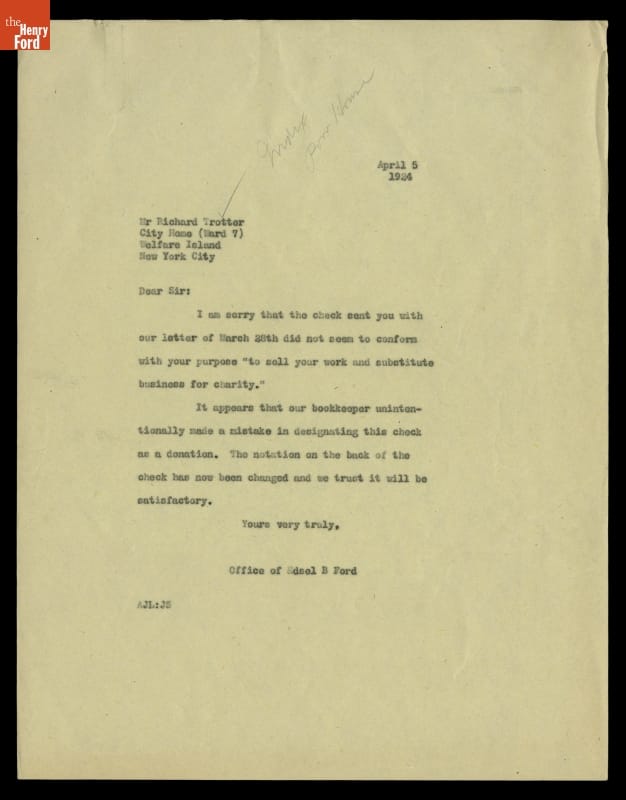
- Letter of Apology from the Office of Edsel Ford to Richard Trotter, April 5, 1924 -
- April 05, 1924
- Collections - Artifact
Letter of Apology from the Office of Edsel Ford to Richard Trotter, April 5, 1924
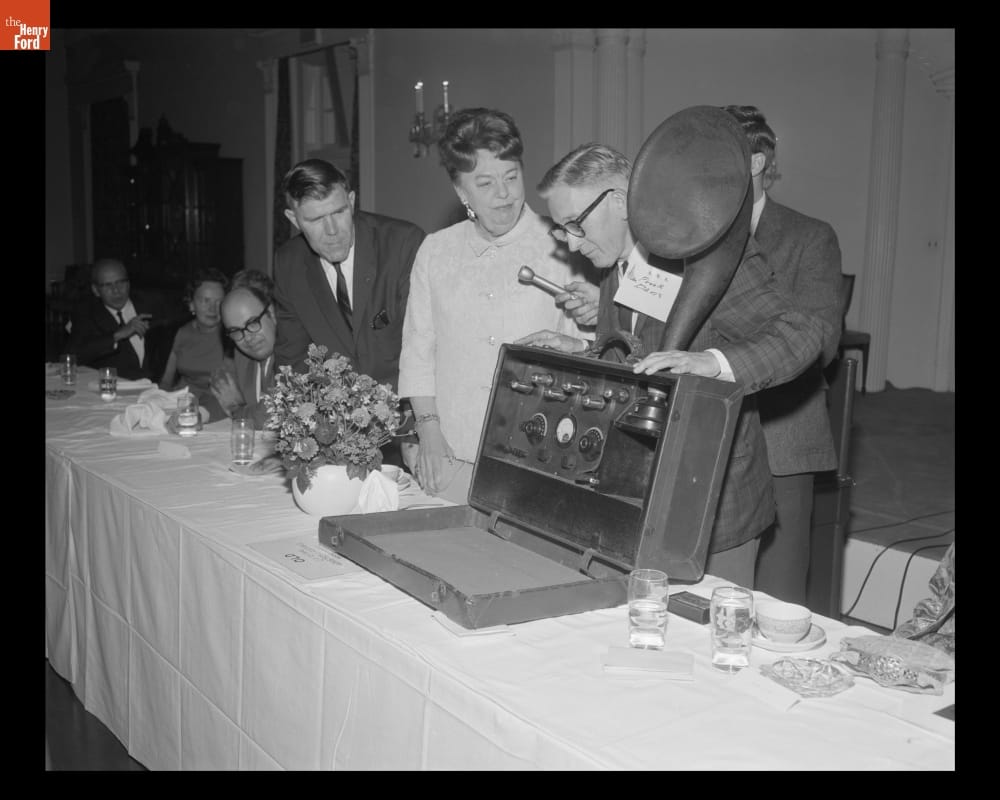
- Marion Armstrong Presents the First Portable Superheterodyne Radio Receiver to Henry Ford Museum, September 22, 1967 - This photograph shows the first portable superheterodyne radio receiver, designed by Edwin Armstrong. Superheterodying was a major communications discovery made by Armstrong. High and low frequencies were mixed to produce powerful, selective radio waves. Following his untimely death, Edwin's wife Marion Armstrong continued to preserve his legacy; she donated this radio to The Henry Ford museum in 1967.
- September 22, 1967
- Collections - Artifact
Marion Armstrong Presents the First Portable Superheterodyne Radio Receiver to Henry Ford Museum, September 22, 1967
This photograph shows the first portable superheterodyne radio receiver, designed by Edwin Armstrong. Superheterodying was a major communications discovery made by Armstrong. High and low frequencies were mixed to produce powerful, selective radio waves. Following his untimely death, Edwin's wife Marion Armstrong continued to preserve his legacy; she donated this radio to The Henry Ford museum in 1967.
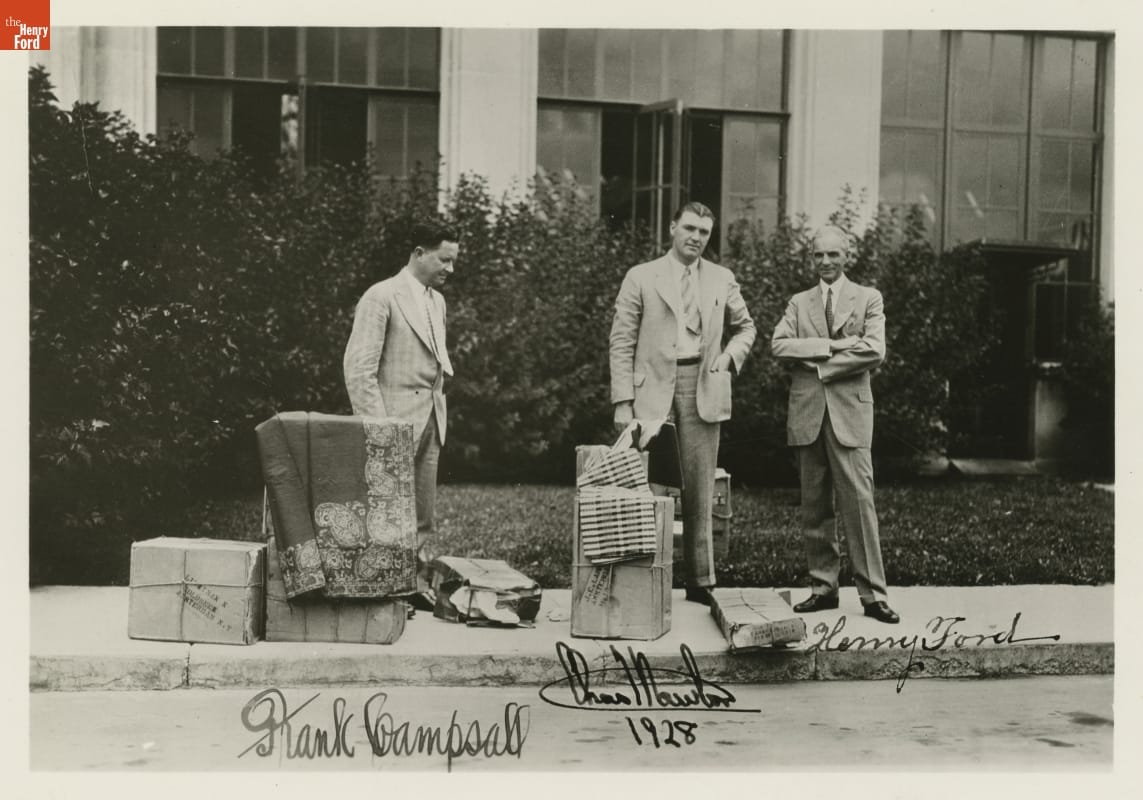
- Frank Campsall, Charles Newton, and Henry Ford at the Ford Engineering Laboratory with Donations for Henry Ford's Museum, 1928 - Henry Ford began large-scale collecting of historic items in the early 1920s. When his plans for a museum became public, offers of additional material poured into his office. Ford posed for this 1928 photo with two men who helped manage the flood: secretary Frank Campsall (left), who responded to offers, and attorney Charles Newton (center), who handled the legal transactions.
- 1928
- Collections - Artifact
Frank Campsall, Charles Newton, and Henry Ford at the Ford Engineering Laboratory with Donations for Henry Ford's Museum, 1928
Henry Ford began large-scale collecting of historic items in the early 1920s. When his plans for a museum became public, offers of additional material poured into his office. Ford posed for this 1928 photo with two men who helped manage the flood: secretary Frank Campsall (left), who responded to offers, and attorney Charles Newton (center), who handled the legal transactions.
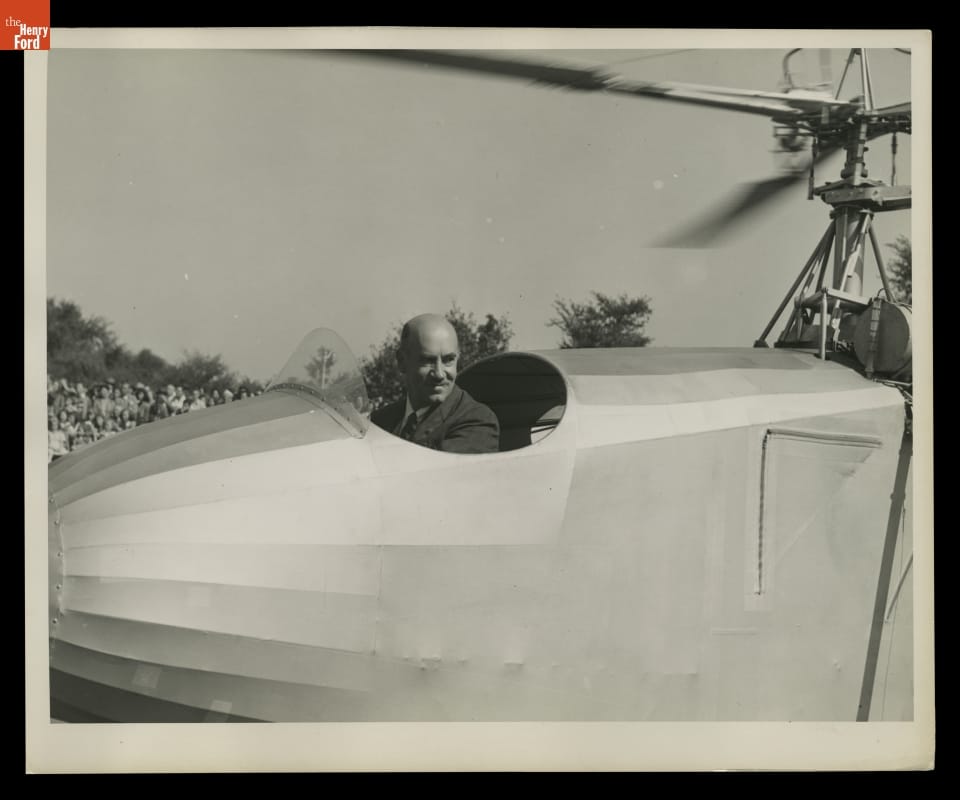
- Igor Sikorsky in the VS-300 Helicopter before Presenting it to Henry Ford Museum, October 7, 1943 - Russian-American inventor Igor Sikorsky first experimented with helicopters in 1909, but he soon realized that the technology of that time was insufficient. He moved to fixed-wing craft and built the first four-engine airplane in 1913. Sikorsky returned to helicopters in 1939 with the successful VS-300. After further refinements, Sikorsky donated the helicopter to The Henry Ford in 1943.
- October 07, 1943
- Collections - Artifact
Igor Sikorsky in the VS-300 Helicopter before Presenting it to Henry Ford Museum, October 7, 1943
Russian-American inventor Igor Sikorsky first experimented with helicopters in 1909, but he soon realized that the technology of that time was insufficient. He moved to fixed-wing craft and built the first four-engine airplane in 1913. Sikorsky returned to helicopters in 1939 with the successful VS-300. After further refinements, Sikorsky donated the helicopter to The Henry Ford in 1943.
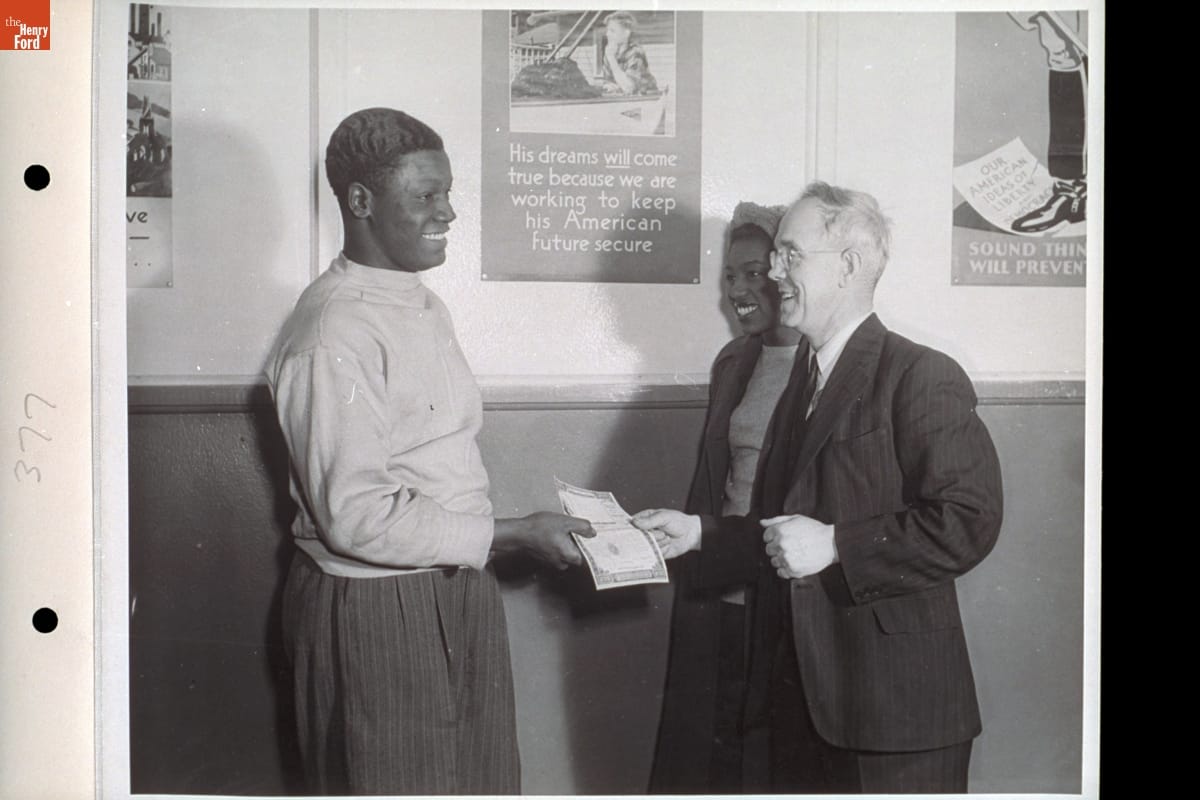
- Blood Donor Receiving a Certificate at the Ford Motor Company Rouge Plant, November 15, 1943 -
- November 15, 1943
- Collections - Artifact
Blood Donor Receiving a Certificate at the Ford Motor Company Rouge Plant, November 15, 1943
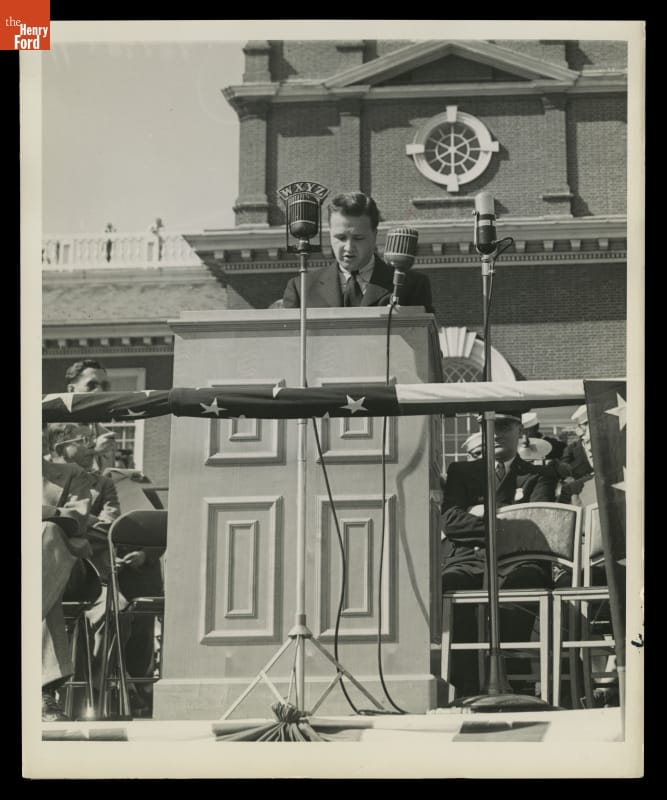
- Henry Ford II Speaking during the Presentation of the Vought-Sikorsky VS-300 Helicopter to Henry Ford Museum, October 7, 1943 - Henry Ford II addressed the crowd during the presentation of Igor Sikorsky's VS-300 helicopter to Henry Ford Museum in October 1943. Only four years had passed since Sikorsky made his first flight in the aircraft. Ford anticipated the helicopter's enormous impact, noting "we won't fully realize what [Sikorsky's] research and invention will mean to the future of air transportation."
- October 07, 1943
- Collections - Artifact
Henry Ford II Speaking during the Presentation of the Vought-Sikorsky VS-300 Helicopter to Henry Ford Museum, October 7, 1943
Henry Ford II addressed the crowd during the presentation of Igor Sikorsky's VS-300 helicopter to Henry Ford Museum in October 1943. Only four years had passed since Sikorsky made his first flight in the aircraft. Ford anticipated the helicopter's enormous impact, noting "we won't fully realize what [Sikorsky's] research and invention will mean to the future of air transportation."