
Search
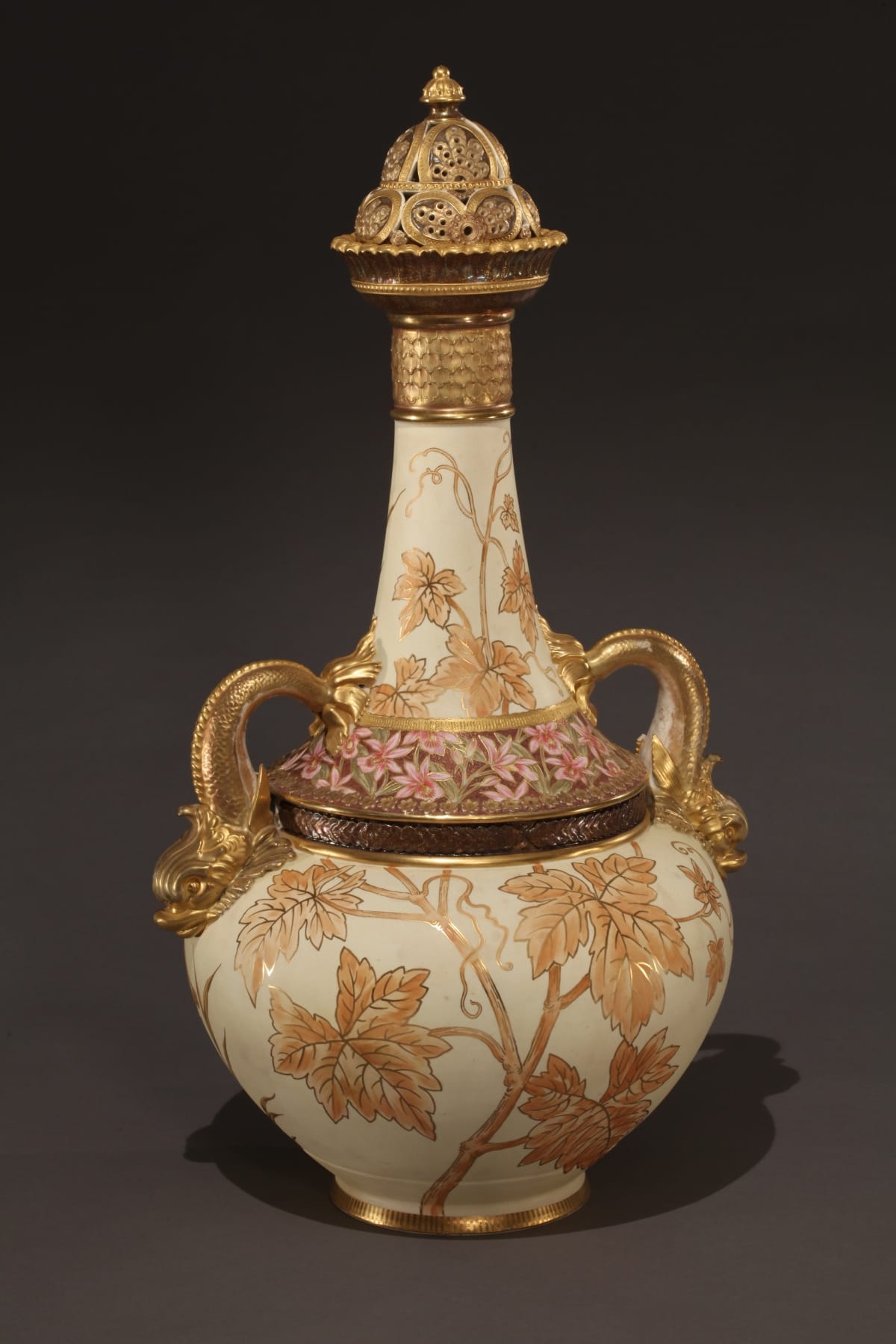
- Covered Vase, 1889 -
- 1889
- Collections - Artifact
Covered Vase, 1889
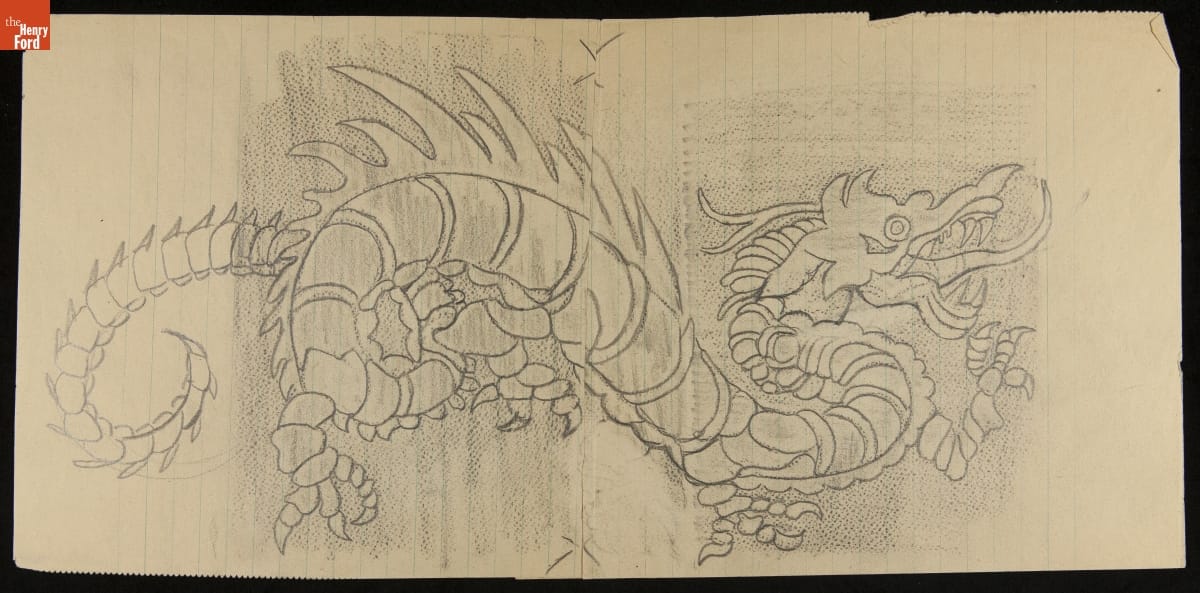
- Tattoo Sketch, 1915-1950 - Tattoos communicate stories. Their content ranges from deeply personal and traditional--to regrettable and frivolous. In the early 1900s, "Professor" Waters apprenticed as a tattoo artist in carnivals and New York's Bowery District. He ran a successful supply shop in Detroit (1918-1939), patenting the standard "two-coil" tattoo machine in 1929. Designs from his flash sheets continue to inspire tattooists today.
- 1915-1950
- Collections - Artifact
Tattoo Sketch, 1915-1950
Tattoos communicate stories. Their content ranges from deeply personal and traditional--to regrettable and frivolous. In the early 1900s, "Professor" Waters apprenticed as a tattoo artist in carnivals and New York's Bowery District. He ran a successful supply shop in Detroit (1918-1939), patenting the standard "two-coil" tattoo machine in 1929. Designs from his flash sheets continue to inspire tattooists today.
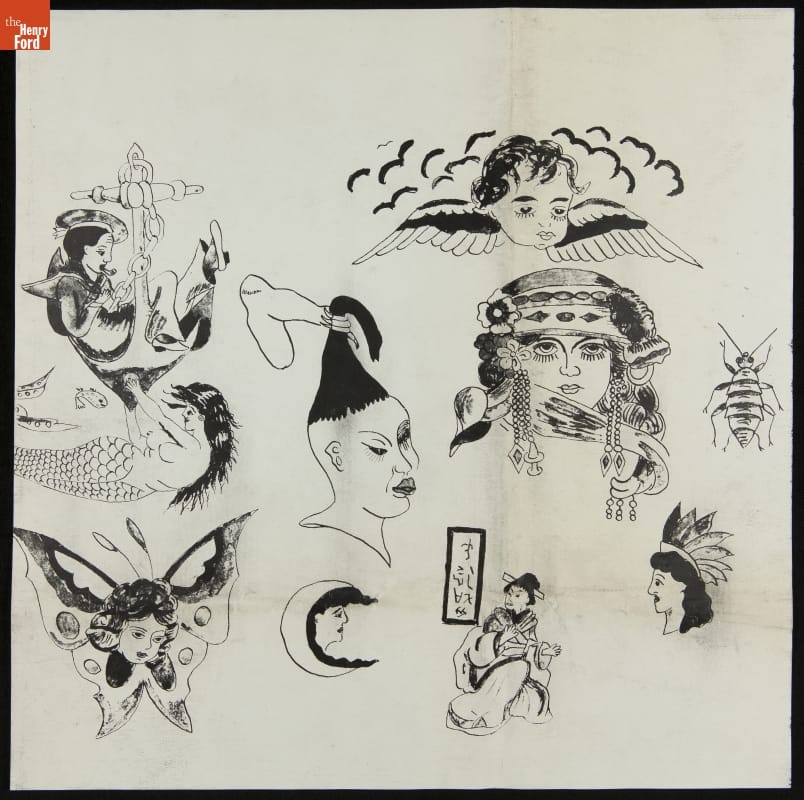
- Tattoo Flash, circa 1925 - Tattoos communicate stories. Their content ranges from deeply personal and traditional--to regrettable and frivolous. In the early 1900s, "Professor" Waters apprenticed as a tattoo artist in carnivals and New York's Bowery District. He ran a successful supply shop in Detroit (1918-1939), patenting the standard "two-coil" tattoo machine in 1929. Designs from his flash sheets continue to inspire tattooists today.
- circa 1925
- Collections - Artifact
Tattoo Flash, circa 1925
Tattoos communicate stories. Their content ranges from deeply personal and traditional--to regrettable and frivolous. In the early 1900s, "Professor" Waters apprenticed as a tattoo artist in carnivals and New York's Bowery District. He ran a successful supply shop in Detroit (1918-1939), patenting the standard "two-coil" tattoo machine in 1929. Designs from his flash sheets continue to inspire tattooists today.
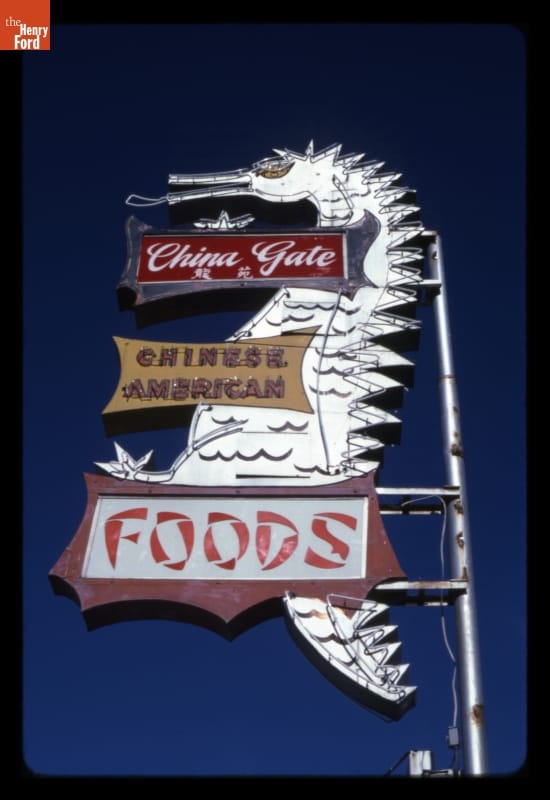
- China Gate Restaurant Sign, Coeur D'Alene, Idaho, 2004 - In the mid-1970s, John Margolies began to assemble a visual record of America's built roadside landscape. Over the following three decades, he traveled thousands of miles to photograph the overlooked and often quickly vanishing structures that had grown out of American automobile culture and main street commerce. His photographs of hotels, motels, diners, service stations, drive-ins and attractions celebrate and capture a unique chapter of American history.
- 2004
- Collections - Artifact
China Gate Restaurant Sign, Coeur D'Alene, Idaho, 2004
In the mid-1970s, John Margolies began to assemble a visual record of America's built roadside landscape. Over the following three decades, he traveled thousands of miles to photograph the overlooked and often quickly vanishing structures that had grown out of American automobile culture and main street commerce. His photographs of hotels, motels, diners, service stations, drive-ins and attractions celebrate and capture a unique chapter of American history.
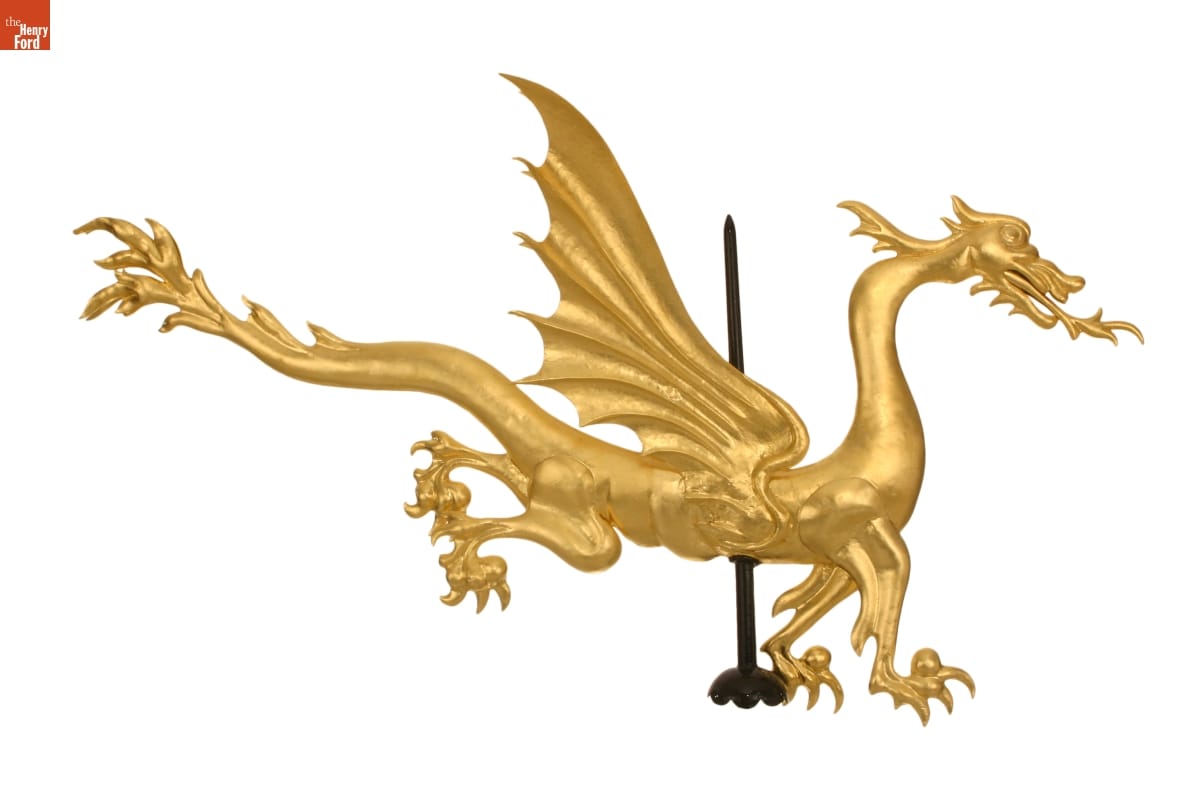
- Dragon Weathervane from the Sir John Bennett Shop, 1850-1900 - This dragon weathervane is one of the most vivid elements of Sir John Bennett's shop in Greenfield Village. Made of hammered copper in striking detail, it is a quiet masterpiece of design, craftsmanship, and balance. During restoration work in 2005, The Henry Ford staff made structural repairs and returned the dragon to its original splendor with a coat of gold leaf.
- 1850-1900
- Collections - Artifact
Dragon Weathervane from the Sir John Bennett Shop, 1850-1900
This dragon weathervane is one of the most vivid elements of Sir John Bennett's shop in Greenfield Village. Made of hammered copper in striking detail, it is a quiet masterpiece of design, craftsmanship, and balance. During restoration work in 2005, The Henry Ford staff made structural repairs and returned the dragon to its original splendor with a coat of gold leaf.
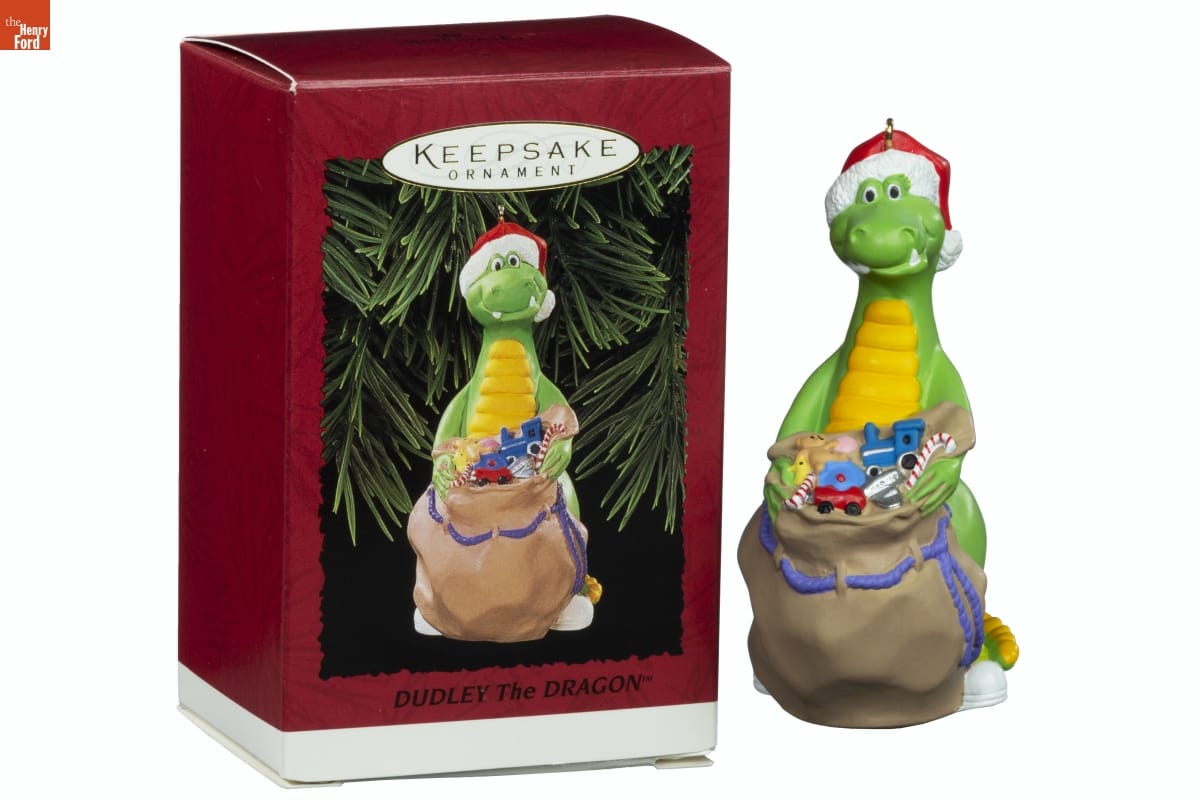
- Hallmark "Dudley the Dragon" Christmas Ornament, 1995 - Already known for greeting cards, Hallmark introduced a line of Christmas ornaments in 1973. The company's annual release of an increasing array of ornaments revolutionized Christmas decorating, appealing to customers' interest in marking memories and milestones as well as expressing one's personality and unique tastes.
- 1995
- Collections - Artifact
Hallmark "Dudley the Dragon" Christmas Ornament, 1995
Already known for greeting cards, Hallmark introduced a line of Christmas ornaments in 1973. The company's annual release of an increasing array of ornaments revolutionized Christmas decorating, appealing to customers' interest in marking memories and milestones as well as expressing one's personality and unique tastes.
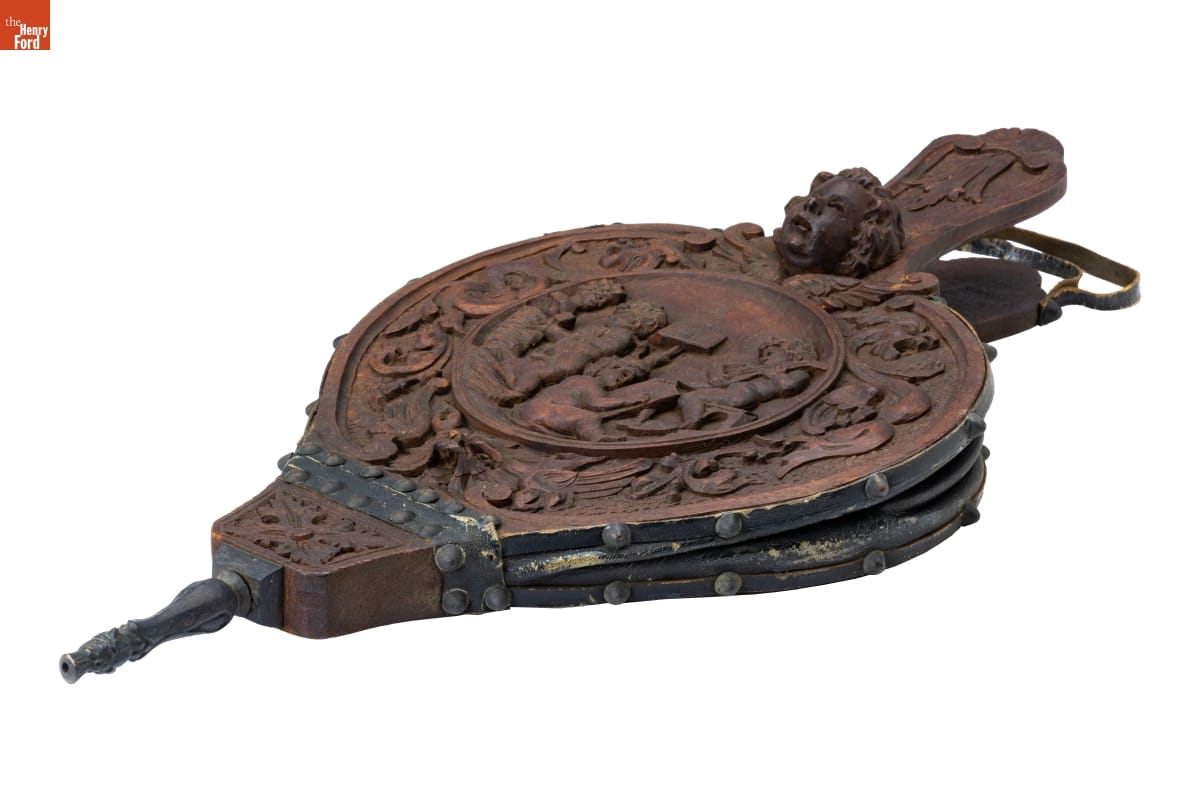
- Bellows - Have you ever fanned a fire? Historically, people used bellows to create updrafts of air to help ignite or sustain a fire in a hearth or stove. Moving the handled wood panels back and forth captured air in a leather chamber and expelled it out a metal nozzle. Some bellows were simple and undecorated; others were elaborately painted or carved; all were utilitarian.
- Collections - Artifact
Bellows
Have you ever fanned a fire? Historically, people used bellows to create updrafts of air to help ignite or sustain a fire in a hearth or stove. Moving the handled wood panels back and forth captured air in a leather chamber and expelled it out a metal nozzle. Some bellows were simple and undecorated; others were elaborately painted or carved; all were utilitarian.
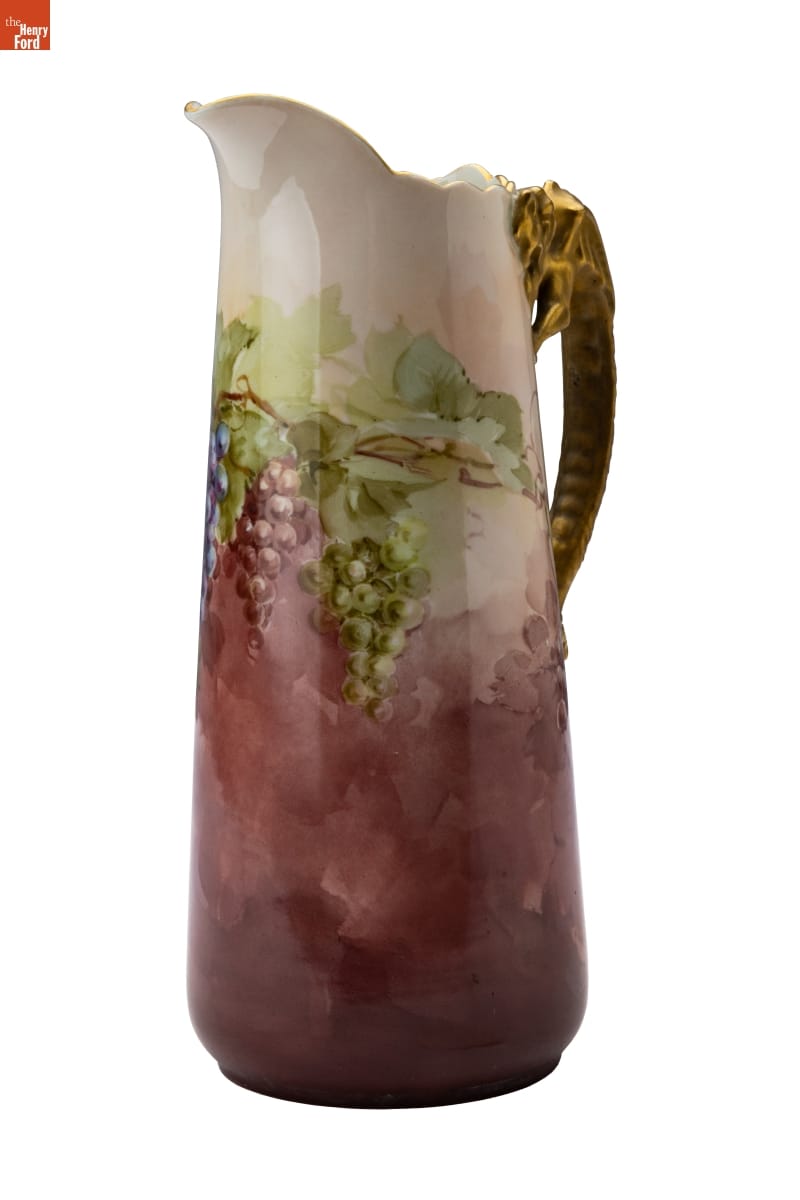
- Pitcher, 1887-1910 -
- 1887-1910
- Collections - Artifact
Pitcher, 1887-1910
- Carousel Seat Panel, circa 1912 -
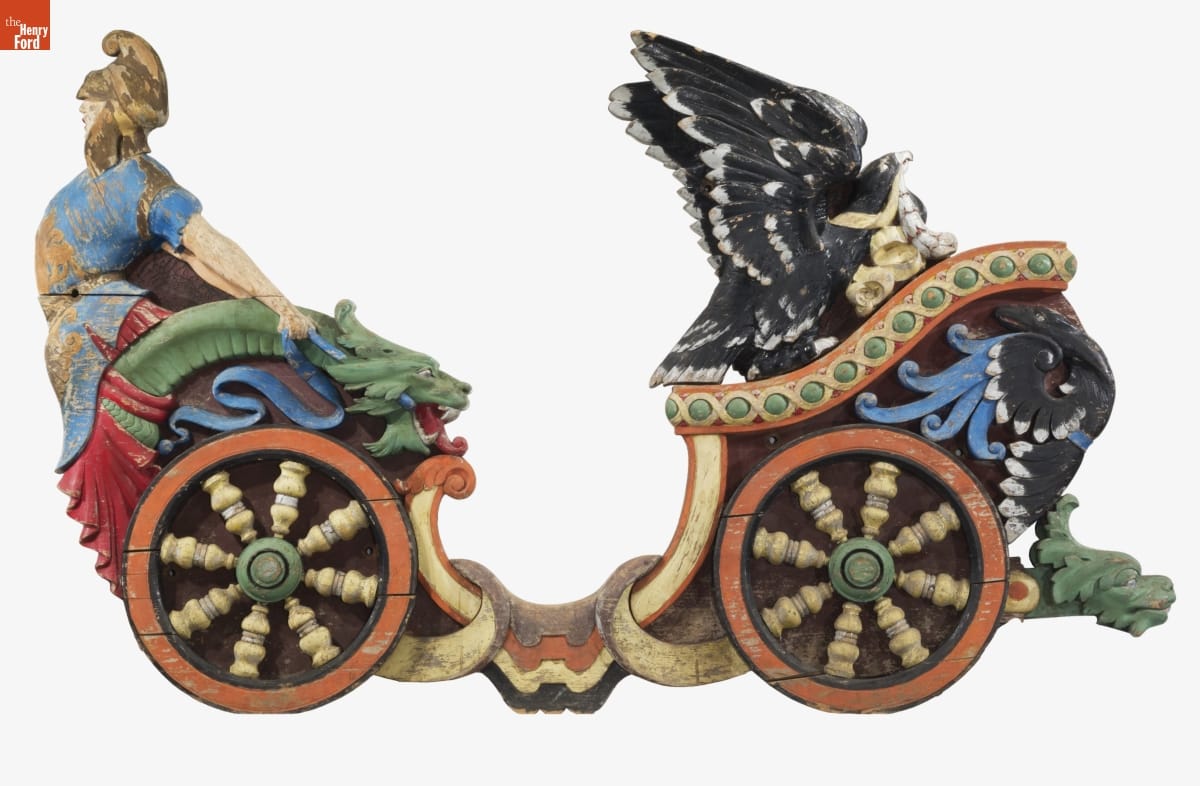
- circa 1912
- Collections - Artifact
Carousel Seat Panel, circa 1912
- Tattoo Flash, circa 1920 - Tattoos communicate stories. Their content ranges from deeply personal and traditional--to regrettable and frivolous. In the early 1900s, "Professor" Waters apprenticed as a tattoo artist in carnivals and New York's Bowery District. He ran a successful supply shop in Detroit (1918-1939), patenting the standard "two-coil" tattoo machine in 1929. Designs from his flash sheets continue to inspire tattooists today.
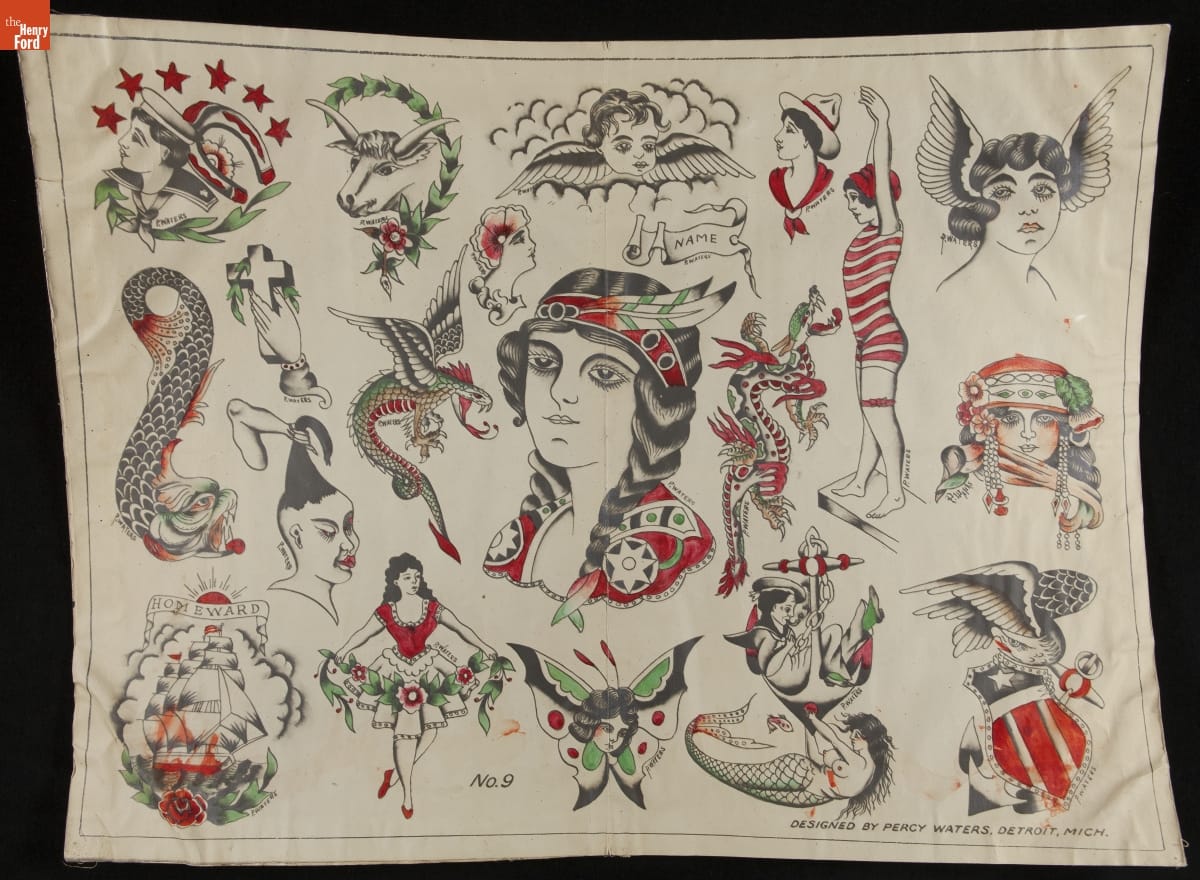
- circa 1920
- Collections - Artifact
Tattoo Flash, circa 1920
Tattoos communicate stories. Their content ranges from deeply personal and traditional--to regrettable and frivolous. In the early 1900s, "Professor" Waters apprenticed as a tattoo artist in carnivals and New York's Bowery District. He ran a successful supply shop in Detroit (1918-1939), patenting the standard "two-coil" tattoo machine in 1929. Designs from his flash sheets continue to inspire tattooists today.