
Search
- Drawer Pull, 1830-1840 -
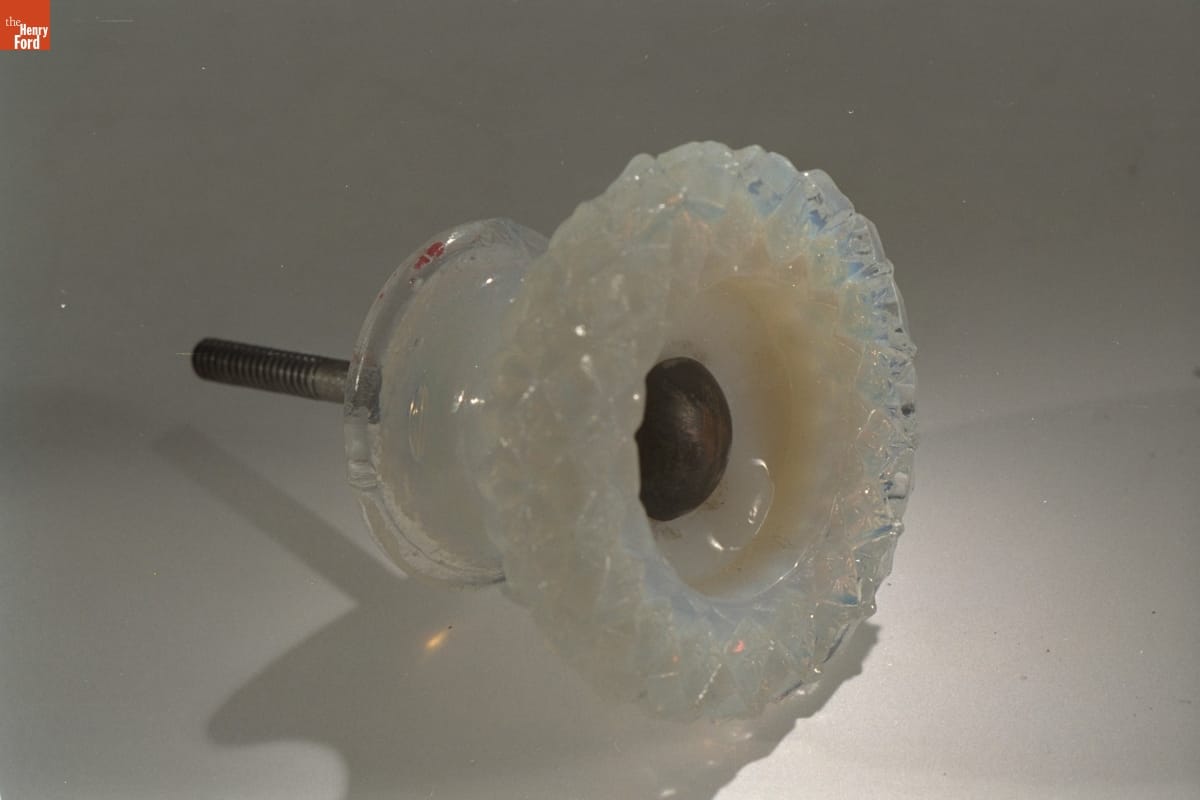
- 1830-1840
- Collections - Artifact
Drawer Pull, 1830-1840
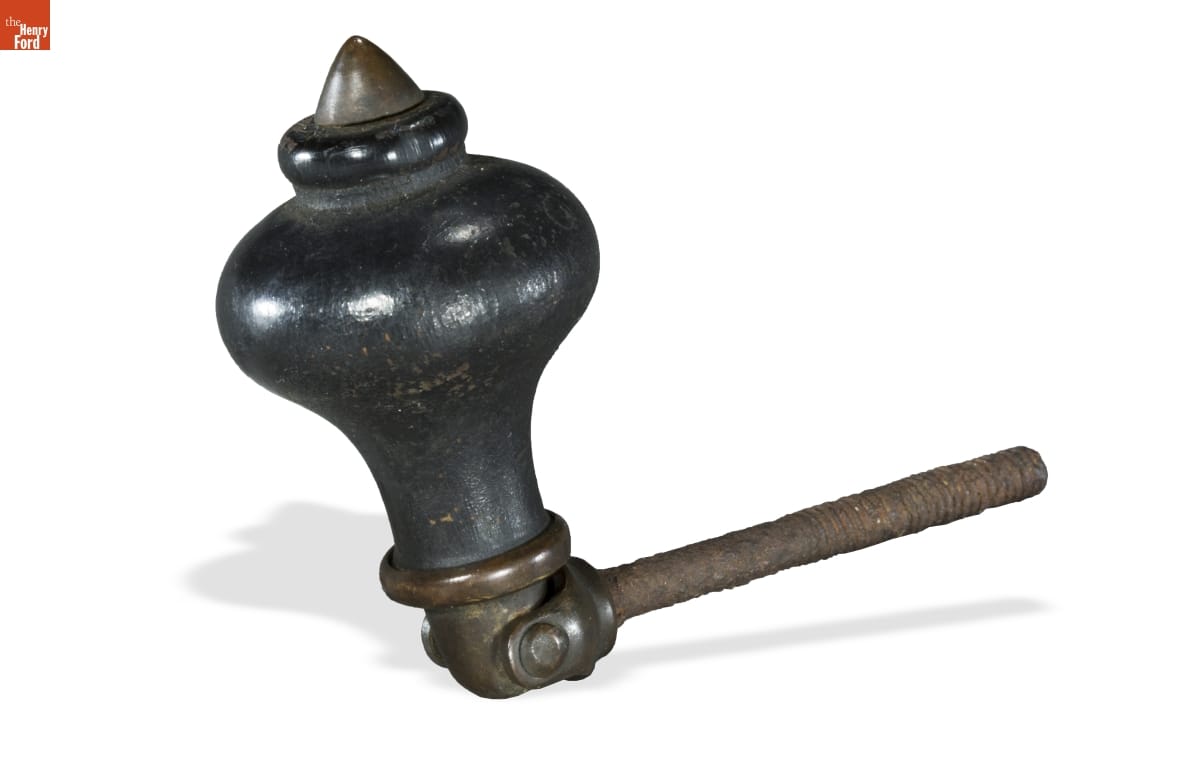
- Drawer Pull, 1860-1890 - Furnituremakers would have attached this handle or "pull" to a drawer on a chest or desk -- a screw, threaded to the iron post, secured the pull to the drawer. This pull with a simple, turned wood drop allowed access to what was stored inside.
- 1860-1890
- Collections - Artifact
Drawer Pull, 1860-1890
Furnituremakers would have attached this handle or "pull" to a drawer on a chest or desk -- a screw, threaded to the iron post, secured the pull to the drawer. This pull with a simple, turned wood drop allowed access to what was stored inside.
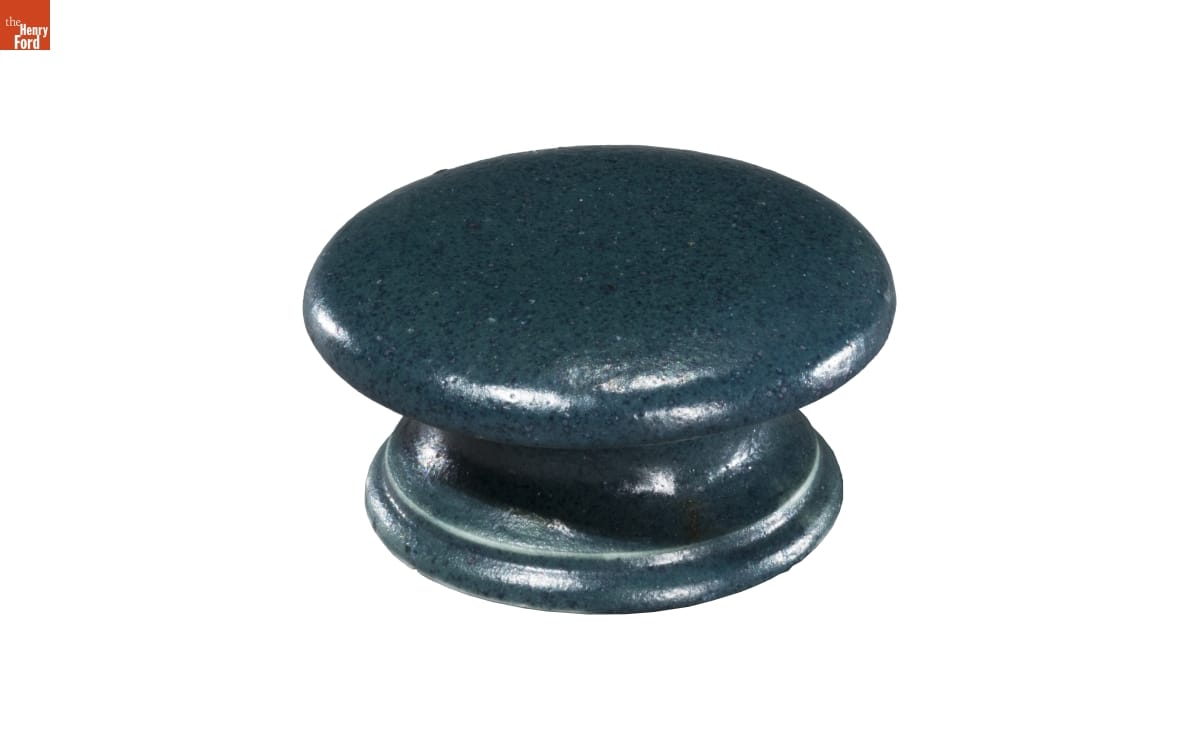
- Drawer Pull, 1903-1928 - Adelaide Alsop Robineau (1865-1929) is regarded as one of the most important figures in American art pottery. This is a small example of her now famous body of work. In addition to creating her own pottery, Robineau published and edited the monthly ceramic arts magazine <em>Keramic Studio</em> and operated a ceramic school adjacent to her home in Syracuse, New York.
- 1903-1928
- Collections - Artifact
Drawer Pull, 1903-1928
Adelaide Alsop Robineau (1865-1929) is regarded as one of the most important figures in American art pottery. This is a small example of her now famous body of work. In addition to creating her own pottery, Robineau published and edited the monthly ceramic arts magazine Keramic Studio and operated a ceramic school adjacent to her home in Syracuse, New York.
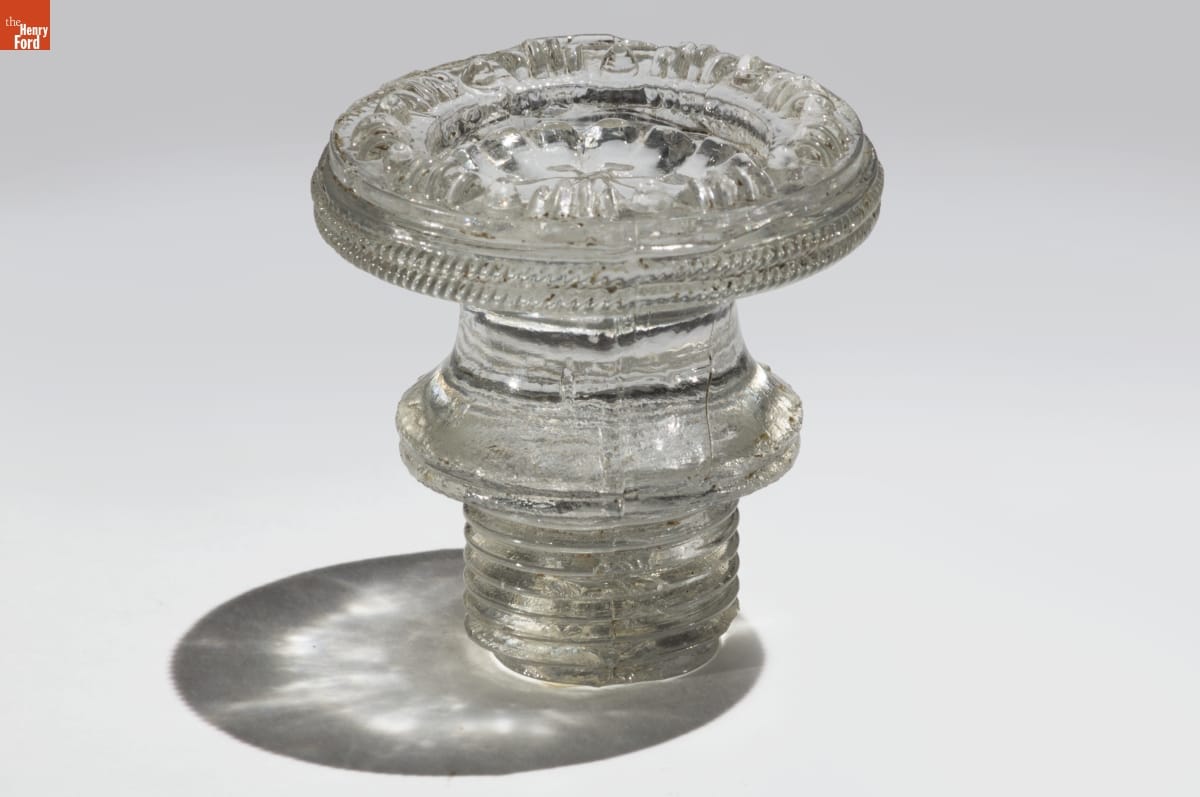
- Drawer Pull, 1830-1845 - Mechanically pressed glass was an innovation in glass history, making decorative, "patterned" glass available to a broad audience. One of the earliest types of pressed glass, dating to the 1830s is known as "Lacy Glass". Complex stippled patterns were developed to help hide technical defects caused by early presses, when the glass gather was cut off and dropped into a mold.
- 1830-1845
- Collections - Artifact
Drawer Pull, 1830-1845
Mechanically pressed glass was an innovation in glass history, making decorative, "patterned" glass available to a broad audience. One of the earliest types of pressed glass, dating to the 1830s is known as "Lacy Glass". Complex stippled patterns were developed to help hide technical defects caused by early presses, when the glass gather was cut off and dropped into a mold.