
Search
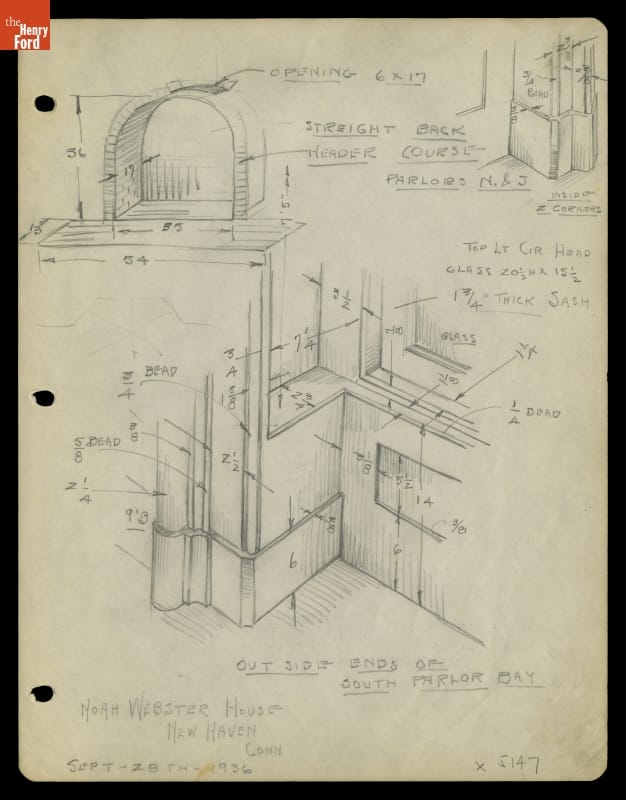
- Drawing, Outside Ends of South Parlor Bay, Noah Webster House, New Haven, Connecticut, September 28, 1936 -
- September 28, 1936
- Collections - Artifact
Drawing, Outside Ends of South Parlor Bay, Noah Webster House, New Haven, Connecticut, September 28, 1936
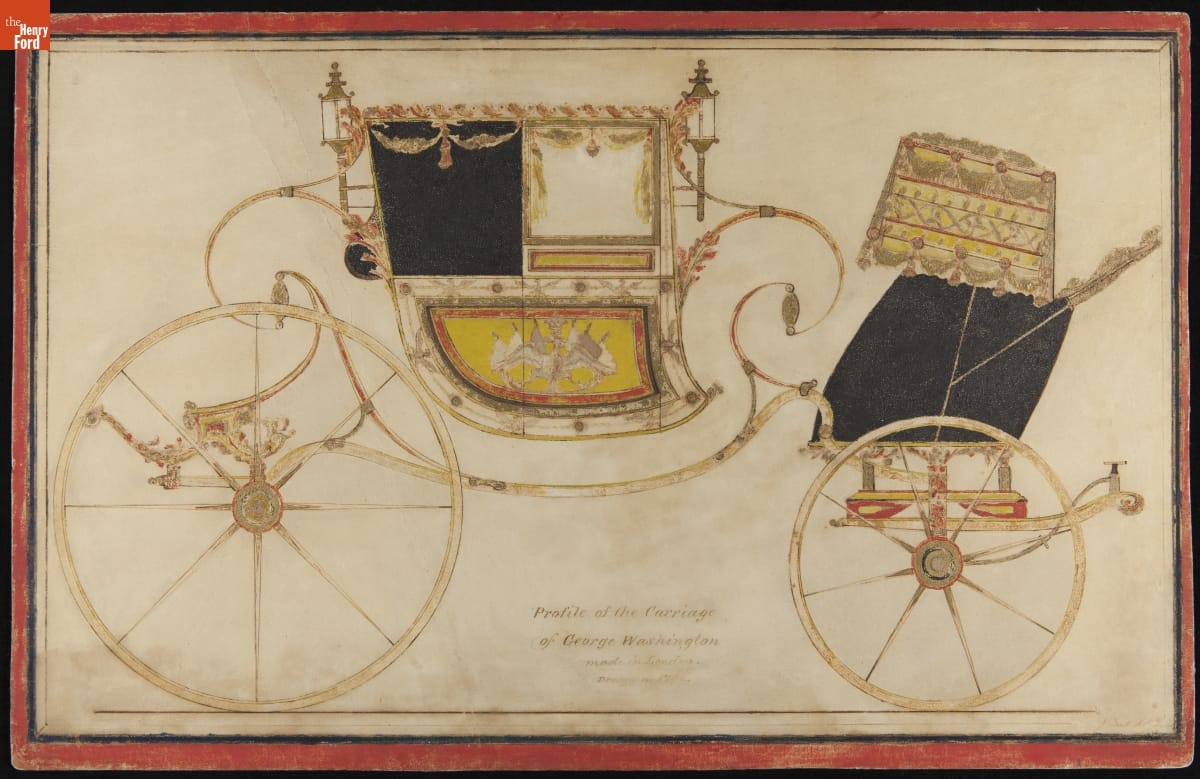
- "Profile of the Carriage of George Washington," 1792 - This elegant carriage, used by George Washington at one of his two presidential inaugurations, is quite different from the armored limousines used by the White House now. But, with its formal lines and stately appointments, the carriage appropriately reflects the power and the dignity of the American presidency -- something still required of presidential vehicles today.
- 1792
- Collections - Artifact
"Profile of the Carriage of George Washington," 1792
This elegant carriage, used by George Washington at one of his two presidential inaugurations, is quite different from the armored limousines used by the White House now. But, with its formal lines and stately appointments, the carriage appropriately reflects the power and the dignity of the American presidency -- something still required of presidential vehicles today.
- Drawing, Wright Cycle Shop, Dayton, Ohio, 1936 - In October 1936, Henry Ford purchased the bicycle shop used by Wilbur and Orville Wright in Dayton, Ohio. Over the next 18 months, Ford relocated and reassembled the building at his Greenfield Village museum complex in Dearborn, Michigan. Before the move, architect Edward Cutler made detailed drawings of the shop to ensure the project's accuracy.
- 1936
- Collections - Artifact
Drawing, Wright Cycle Shop, Dayton, Ohio, 1936
In October 1936, Henry Ford purchased the bicycle shop used by Wilbur and Orville Wright in Dayton, Ohio. Over the next 18 months, Ford relocated and reassembled the building at his Greenfield Village museum complex in Dearborn, Michigan. Before the move, architect Edward Cutler made detailed drawings of the shop to ensure the project's accuracy.
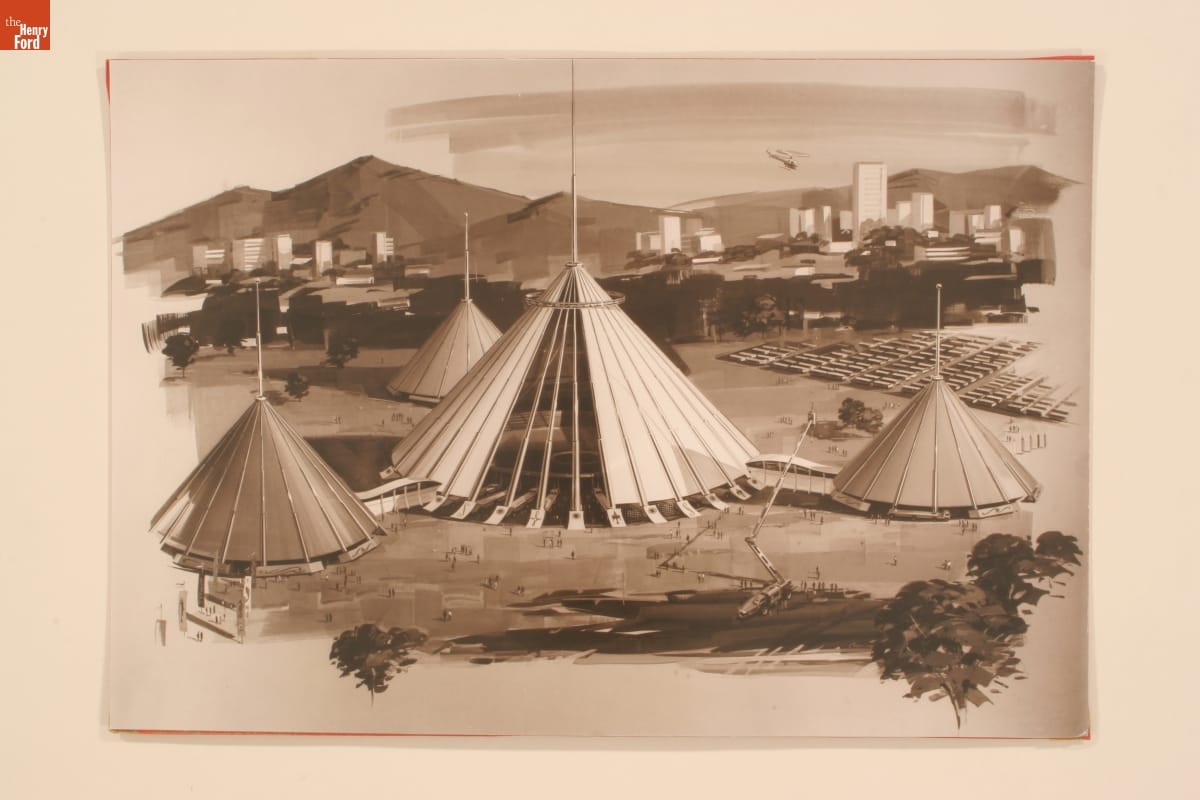
- "Circus Velvet," circa 1967 - In 1966, automobile designer Virgil Exner was approached by a wealthy man with an unusual dream: to build a motorized circus with vehicles for transporting performers and constructing the big top. Exner was eager to begin the novel, though soon abandoned, project. He created several concept vehicles and structures for the spectacle, known as Circus Velvet.
- circa 1967
- Collections - Artifact
"Circus Velvet," circa 1967
In 1966, automobile designer Virgil Exner was approached by a wealthy man with an unusual dream: to build a motorized circus with vehicles for transporting performers and constructing the big top. Exner was eager to begin the novel, though soon abandoned, project. He created several concept vehicles and structures for the spectacle, known as Circus Velvet.
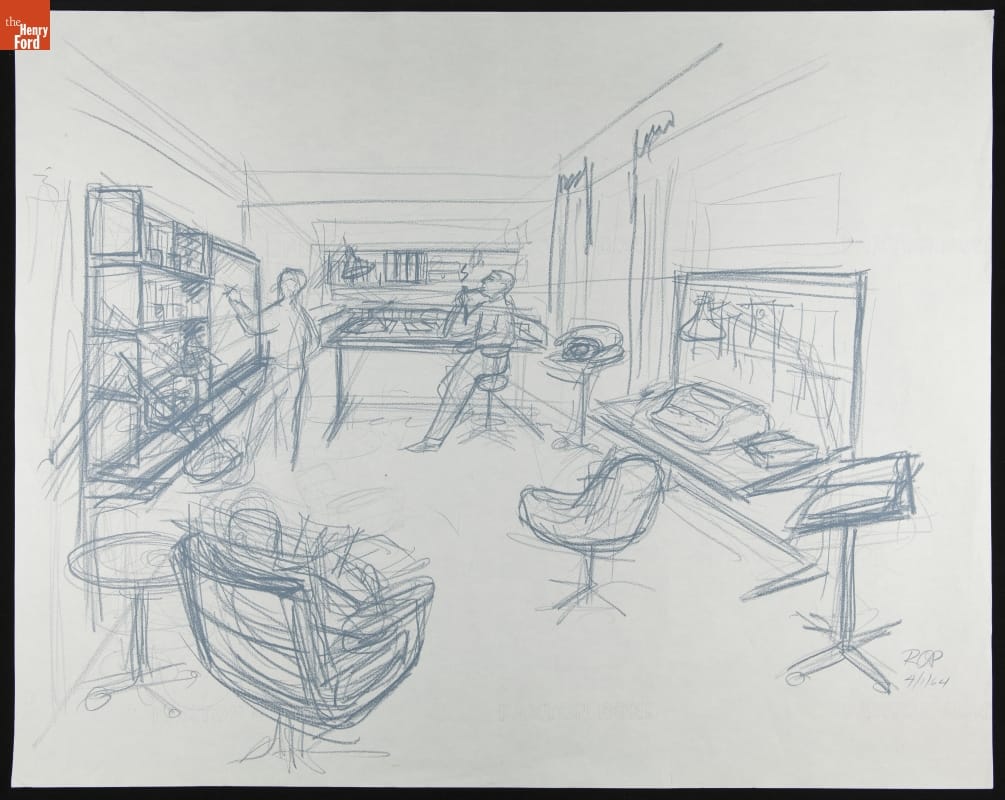
- Action Office Project Drawing by Robert Propst, April 1, 1964 - Action Office, conceptualized by Robert Propst with final design by George Nelson, was rooted in Propst's research into office function and worker behavior. The system was not a commercial success: manufacturing costs were high, and it was, in Propst's words, "too showy and bright for serious consideration as a middle management tool." Propst went on to design the hugely successful Action Office 2 cubicle-based system.
- April 01, 1964
- Collections - Artifact
Action Office Project Drawing by Robert Propst, April 1, 1964
Action Office, conceptualized by Robert Propst with final design by George Nelson, was rooted in Propst's research into office function and worker behavior. The system was not a commercial success: manufacturing costs were high, and it was, in Propst's words, "too showy and bright for serious consideration as a middle management tool." Propst went on to design the hugely successful Action Office 2 cubicle-based system.
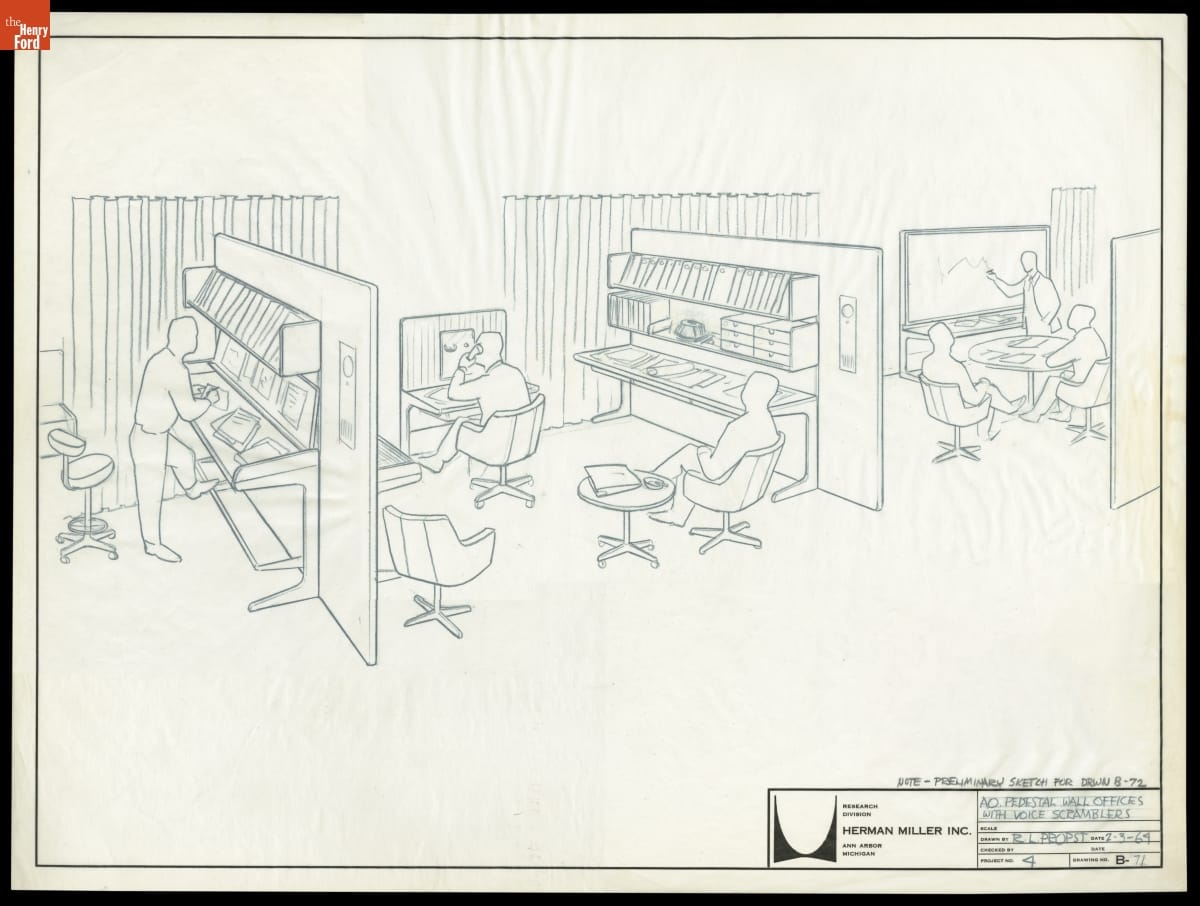
- Herman Miller Action Office Concept Drawing, "Action Office Pedestal Wall Offices with Voice Scramblers," February 3, 1964 -
- February 03, 1964
- Collections - Artifact
Herman Miller Action Office Concept Drawing, "Action Office Pedestal Wall Offices with Voice Scramblers," February 3, 1964
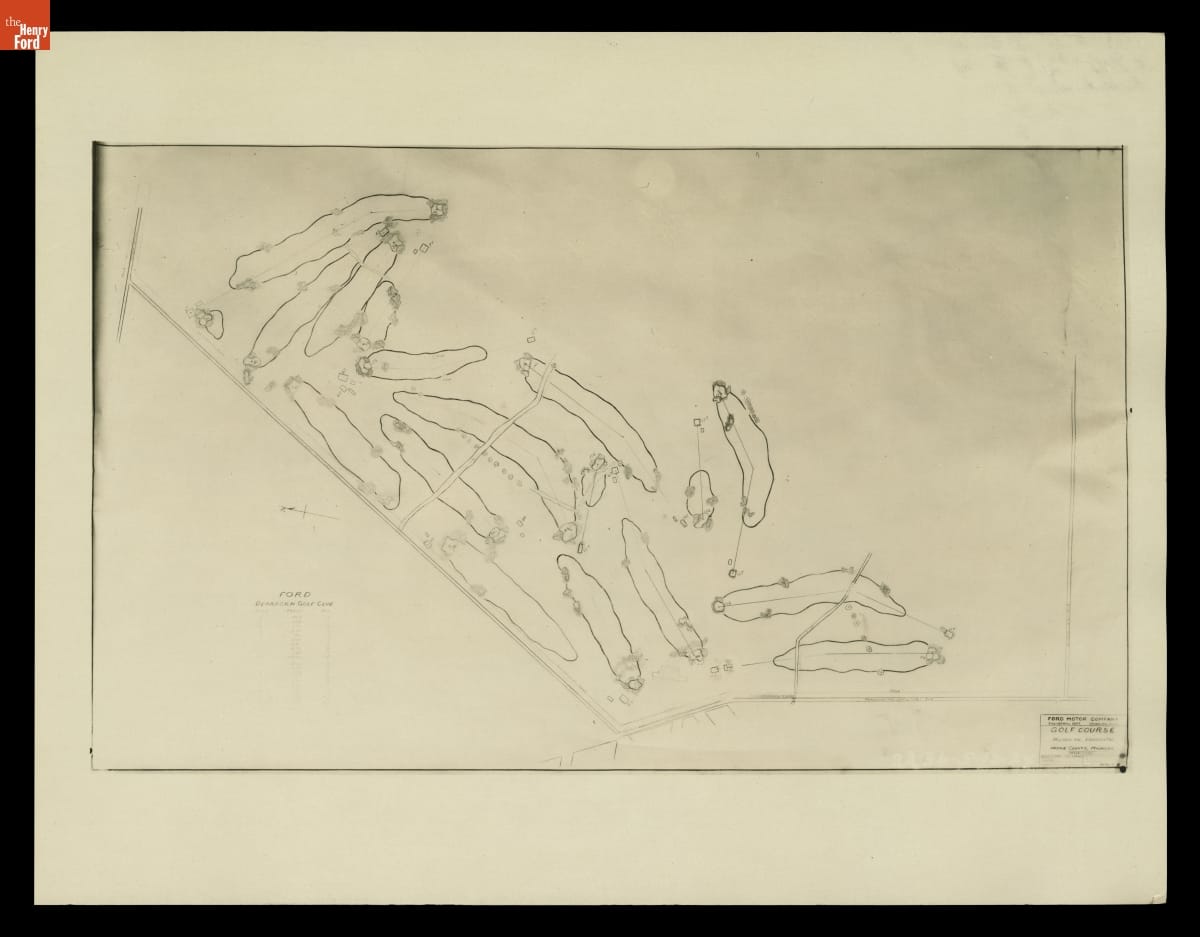
- Map of Golf Course at Dearborn Country Club, May 12, 1924 - Henry Ford established the Dearborn Country Club, with an 18-hole golf course and a clubhouse designed by Albert Kahn, in 1925. Ford himself was not a golfer, but the club helped attract and keep executive talent at Ford Motor Company's Dearborn, Michigan, offices. Club members purchased the facility from Ford interests in 1952.
- May 10, 1924
- Collections - Artifact
Map of Golf Course at Dearborn Country Club, May 12, 1924
Henry Ford established the Dearborn Country Club, with an 18-hole golf course and a clubhouse designed by Albert Kahn, in 1925. Ford himself was not a golfer, but the club helped attract and keep executive talent at Ford Motor Company's Dearborn, Michigan, offices. Club members purchased the facility from Ford interests in 1952.
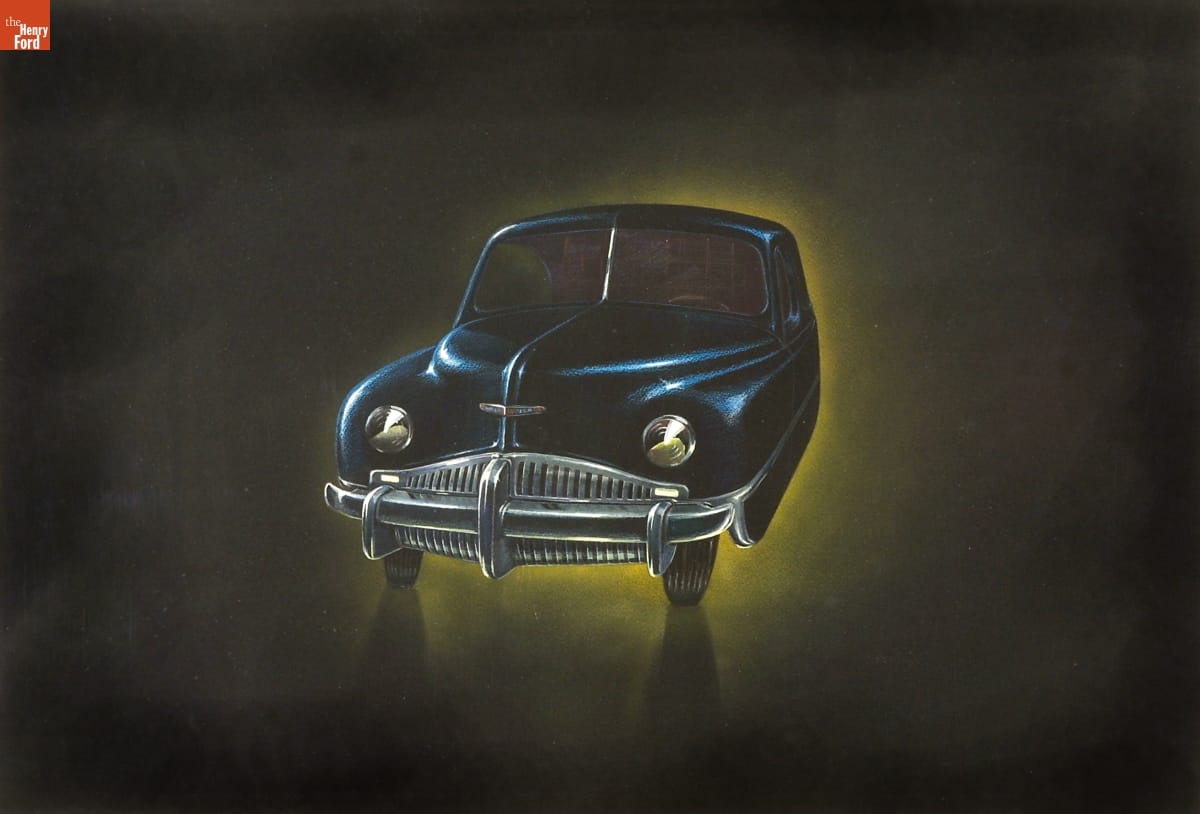
- Willys Automobile Concept, Front View, November 13, 1944 - A pioneer of industrial design, Walter Dorwin Teague is best remembered for his work for the Eastman Kodak Company and the 1933 Chicago and 1939 New York World's Fairs. At both fairs, he designed buildings for Ford Motor Company. Teague's studio produced this automobile concept drawing for a Ford rival: Willys-Overland of Toledo, Ohio.
- November 13, 1944
- Collections - Artifact
Willys Automobile Concept, Front View, November 13, 1944
A pioneer of industrial design, Walter Dorwin Teague is best remembered for his work for the Eastman Kodak Company and the 1933 Chicago and 1939 New York World's Fairs. At both fairs, he designed buildings for Ford Motor Company. Teague's studio produced this automobile concept drawing for a Ford rival: Willys-Overland of Toledo, Ohio.
- Drawing, "Chimney, M. Wells House Union Conn." (now Daggett Farmhouse), June 26, 1977 -
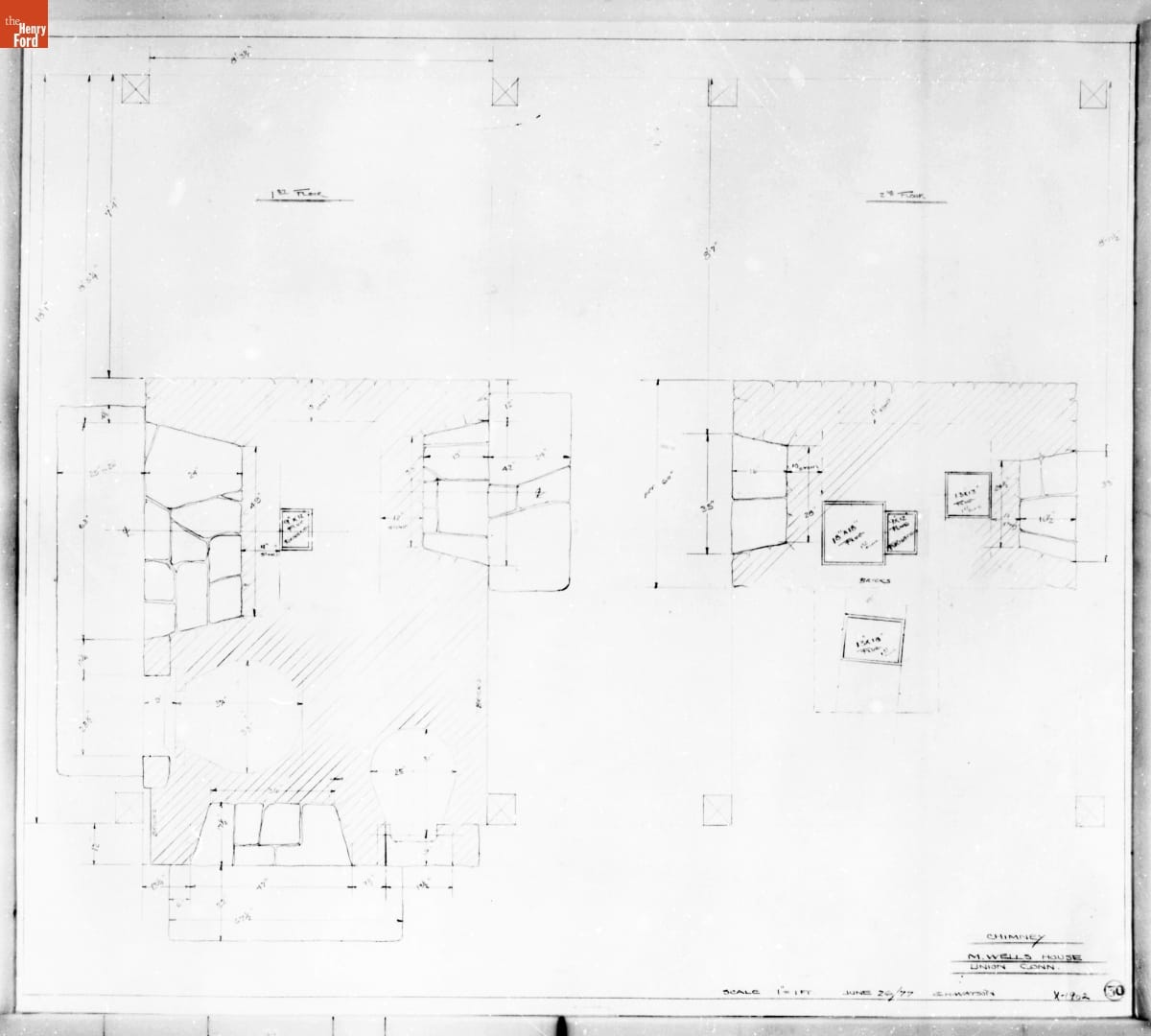
- June 26, 1977
- Collections - Artifact
Drawing, "Chimney, M. Wells House Union Conn." (now Daggett Farmhouse), June 26, 1977
- Drawing, "Liv. Rm Fire Place and Kitchen Fire Place Mrs. Wells House Union Conn" (now Daggett Farmhouse), April 5, 1977 -
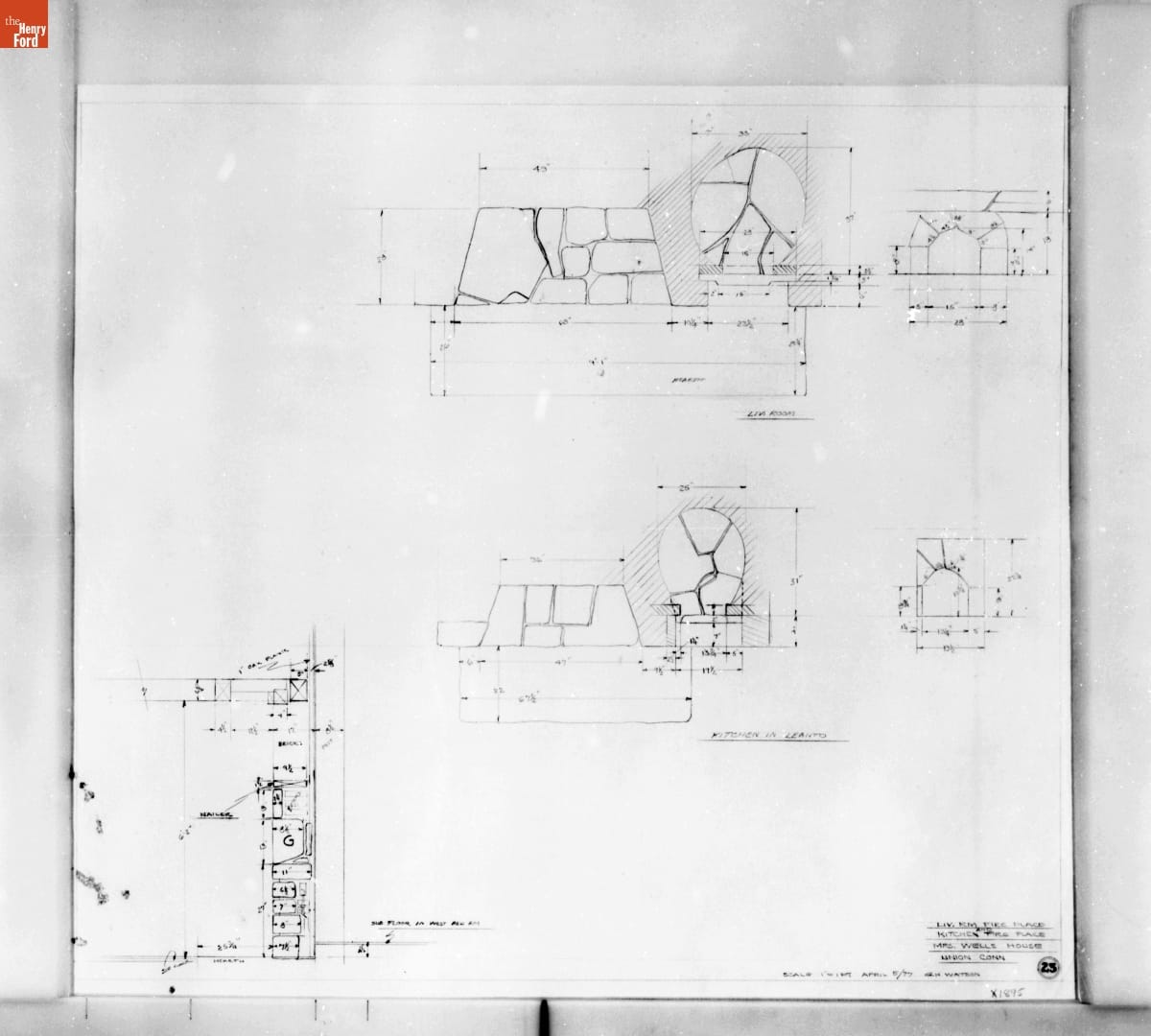
- April 05, 1977
- Collections - Artifact
Drawing, "Liv. Rm Fire Place and Kitchen Fire Place Mrs. Wells House Union Conn" (now Daggett Farmhouse), April 5, 1977