
Search
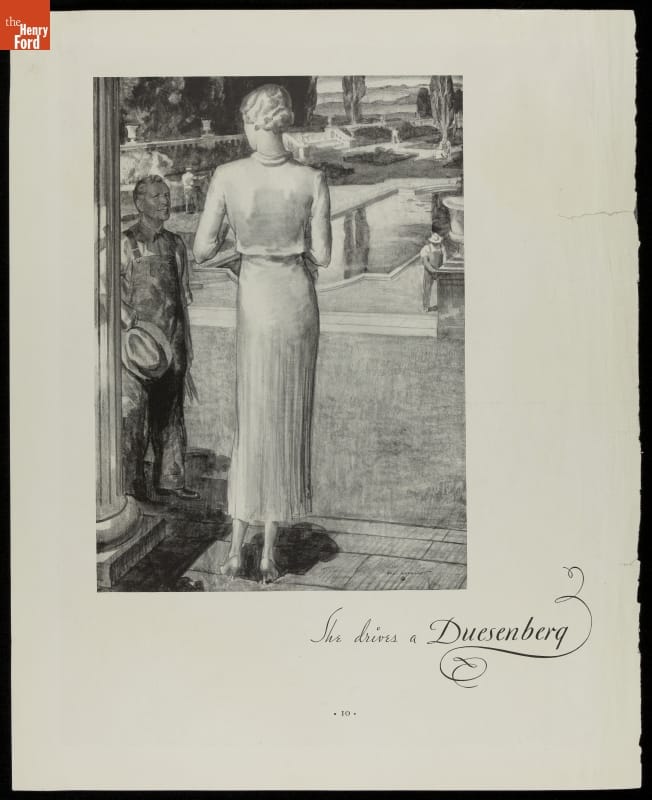
- Advertisement for Duesenberg Automobile & Motors Company, "She Drives a Duesenberg," 1934 - Luxury automakers often preferred to let their cars speak for themselves. The companies favored brief, understated taglines in their advertisements. Duesenberg had a prime example in its "He/She drives a Duesenberg" campaign. People were depicted in regal settings that projected wealth and good taste. The ads implied that Duesenberg ownership was a marker of high status.
- July 01, 1934
- Collections - Artifact
Advertisement for Duesenberg Automobile & Motors Company, "She Drives a Duesenberg," 1934
Luxury automakers often preferred to let their cars speak for themselves. The companies favored brief, understated taglines in their advertisements. Duesenberg had a prime example in its "He/She drives a Duesenberg" campaign. People were depicted in regal settings that projected wealth and good taste. The ads implied that Duesenberg ownership was a marker of high status.
- 1930 Duesenberg Sales Catalog, "The World's Finest Motor Car" - These pages from the 1930 Duesenberg catalog highlight a few of the many body styles offered. But that was just a starting point -- each car was customized to the owner's taste.
- 1930
- Collections - Artifact
1930 Duesenberg Sales Catalog, "The World's Finest Motor Car"
These pages from the 1930 Duesenberg catalog highlight a few of the many body styles offered. But that was just a starting point -- each car was customized to the owner's taste.
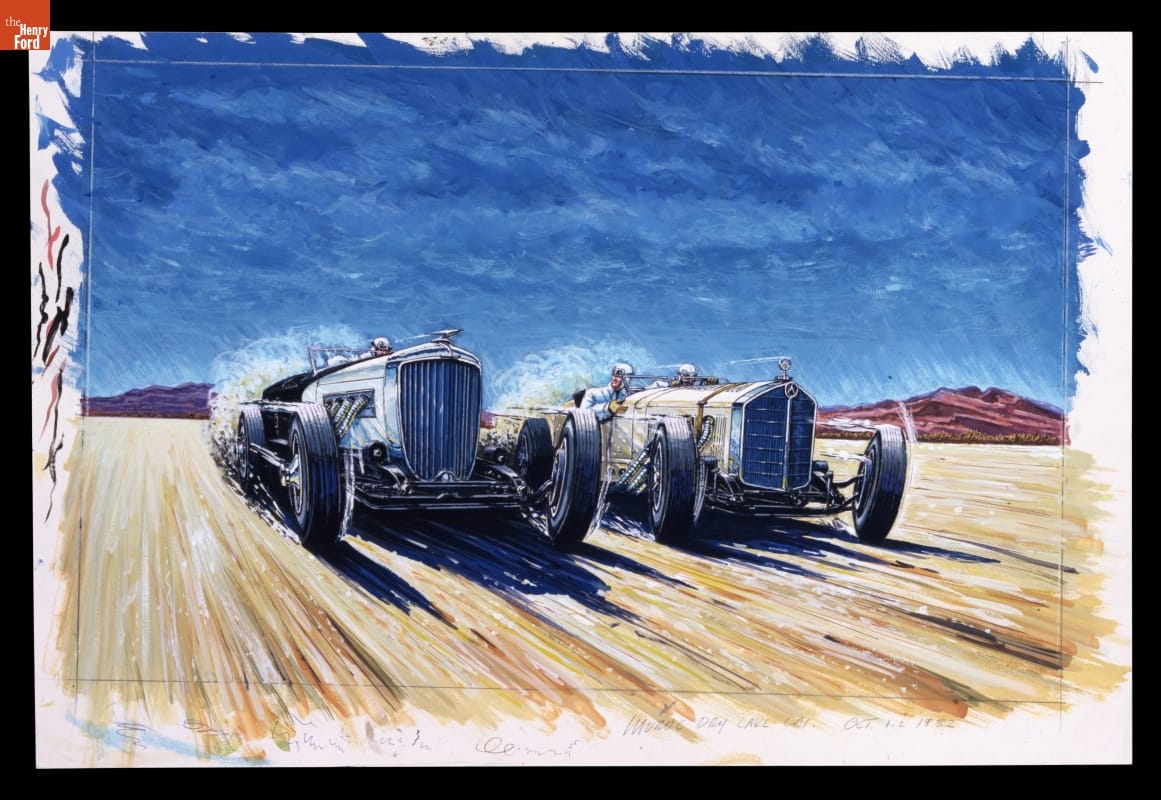
- 1932 Muroc Dry Lake, California, Race, Painted by William L. Mitchell 1977-1987 - Bill Mitchell, head of design at General Motors from 1958 to 1977, painted this scene following his retirement. It shows a 1932 race on Muroc (now Rogers) Dry Lake. The lakebed, located in southern California's Mojave Desert, was used for racing and land speed runs into the 1930s, when it became a part of Edwards Air Force Base.
- 1932
- Collections - Artifact
1932 Muroc Dry Lake, California, Race, Painted by William L. Mitchell 1977-1987
Bill Mitchell, head of design at General Motors from 1958 to 1977, painted this scene following his retirement. It shows a 1932 race on Muroc (now Rogers) Dry Lake. The lakebed, located in southern California's Mojave Desert, was used for racing and land speed runs into the 1930s, when it became a part of Edwards Air Force Base.
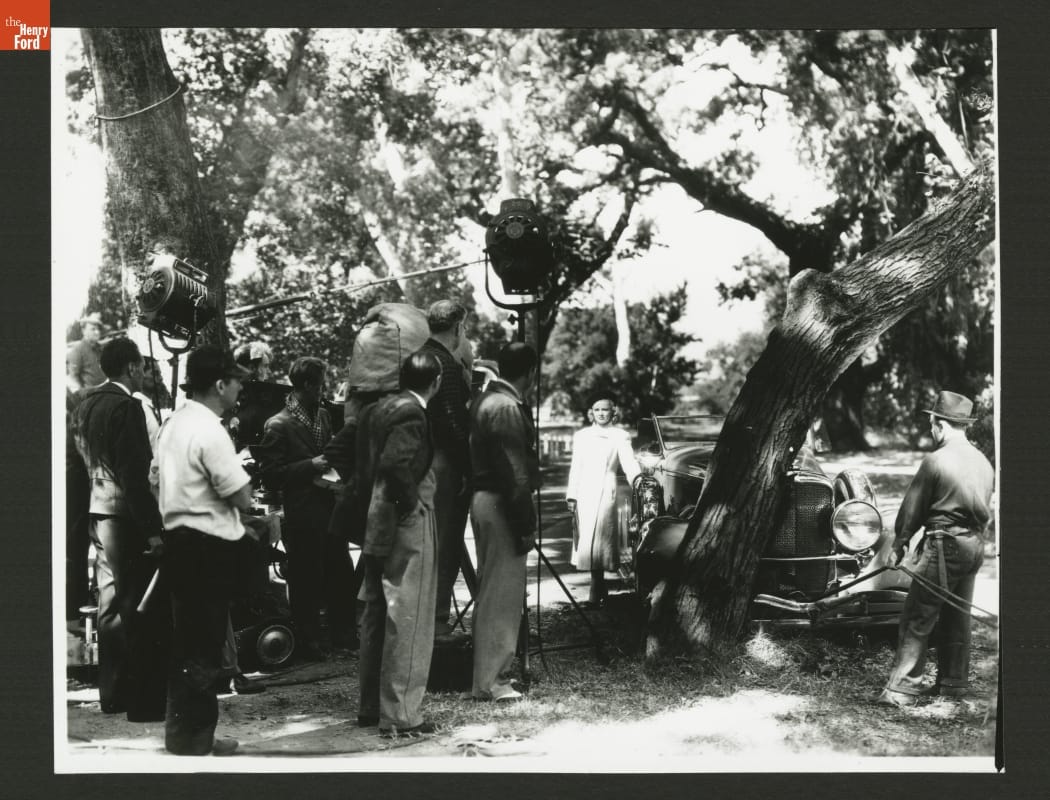
- Claire Trevor Beside a 1932 Duesenberg Phaeton on Set of "Big Town Girl," 1937 - People flocked to see the escapist films of Hollywood's golden age, featuring carefree actors and idyllic landscapes. A luxurious Duesenberg was featured in the 1937 movie <EM>Big Town Girl</EM>.
- 1937
- Collections - Artifact
Claire Trevor Beside a 1932 Duesenberg Phaeton on Set of "Big Town Girl," 1937
People flocked to see the escapist films of Hollywood's golden age, featuring carefree actors and idyllic landscapes. A luxurious Duesenberg was featured in the 1937 movie Big Town Girl.
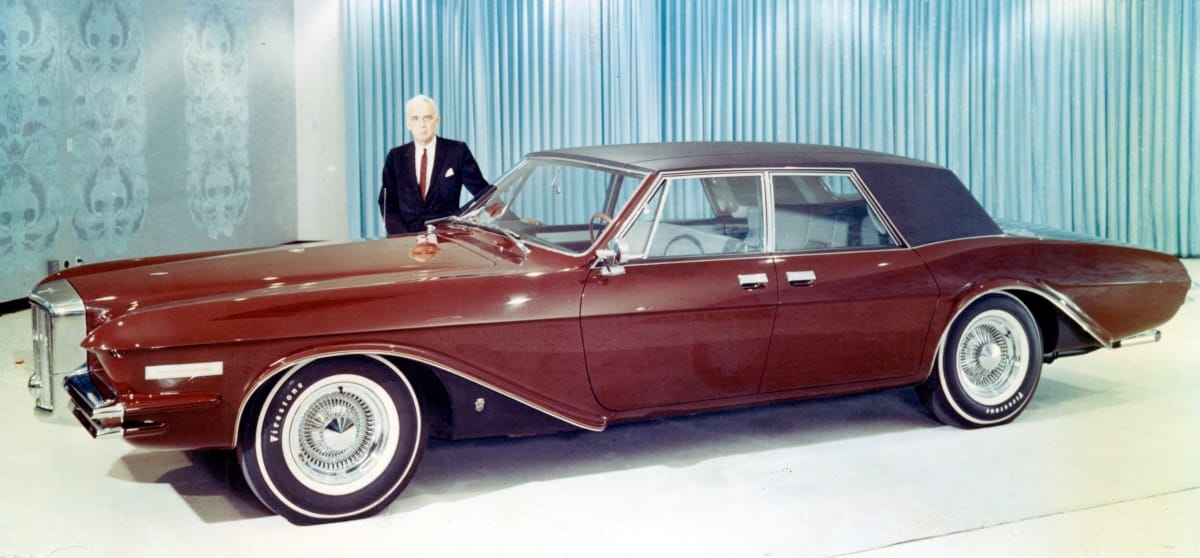
- Virgil Exner with 1966 Duesenberg Sedan - Virgil Exner's long career in automotive design included work with General Motors, Raymond Loewy Associates, and Studebaker. He is best remembered for his work at Chrysler, where he headed design from 1953 to 1961. Exner designed a revived Duesenberg in 1966, with a prototype built by Ghia. Financial difficulties canceled plans for commercial production of the car.
- circa 1966
- Collections - Artifact
Virgil Exner with 1966 Duesenberg Sedan
Virgil Exner's long career in automotive design included work with General Motors, Raymond Loewy Associates, and Studebaker. He is best remembered for his work at Chrysler, where he headed design from 1953 to 1961. Exner designed a revived Duesenberg in 1966, with a prototype built by Ghia. Financial difficulties canceled plans for commercial production of the car.
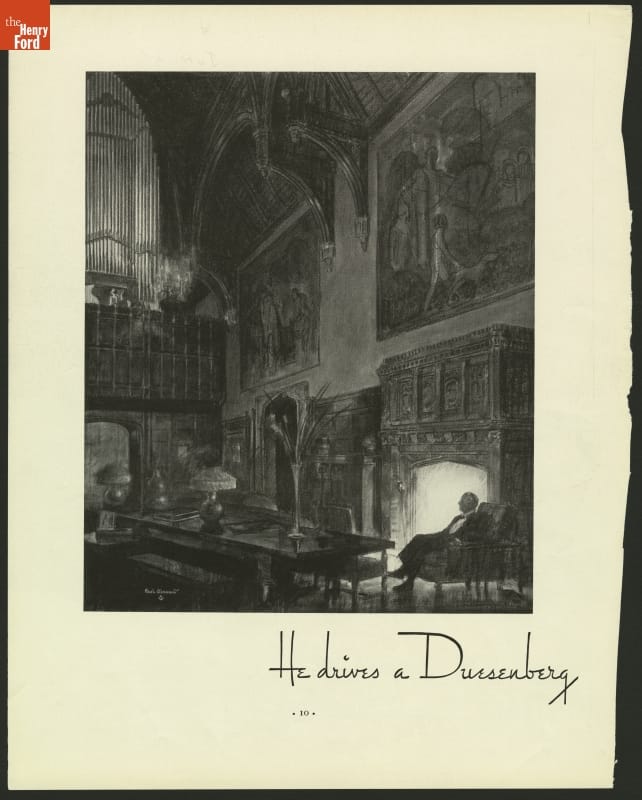
- Advertisement, "He Drives a Duesenberg," 1935 - Luxury automakers often preferred to let their cars speak for themselves. The companies favored brief, understated taglines in their advertisements. Duesenberg had a prime example in its "He/She drives a Duesenberg" campaign. People were depicted in regal settings that projected wealth and good taste. The ads implied that Duesenberg ownership was a marker of high status.
- June 01, 1935
- Collections - Artifact
Advertisement, "He Drives a Duesenberg," 1935
Luxury automakers often preferred to let their cars speak for themselves. The companies favored brief, understated taglines in their advertisements. Duesenberg had a prime example in its "He/She drives a Duesenberg" campaign. People were depicted in regal settings that projected wealth and good taste. The ads implied that Duesenberg ownership was a marker of high status.
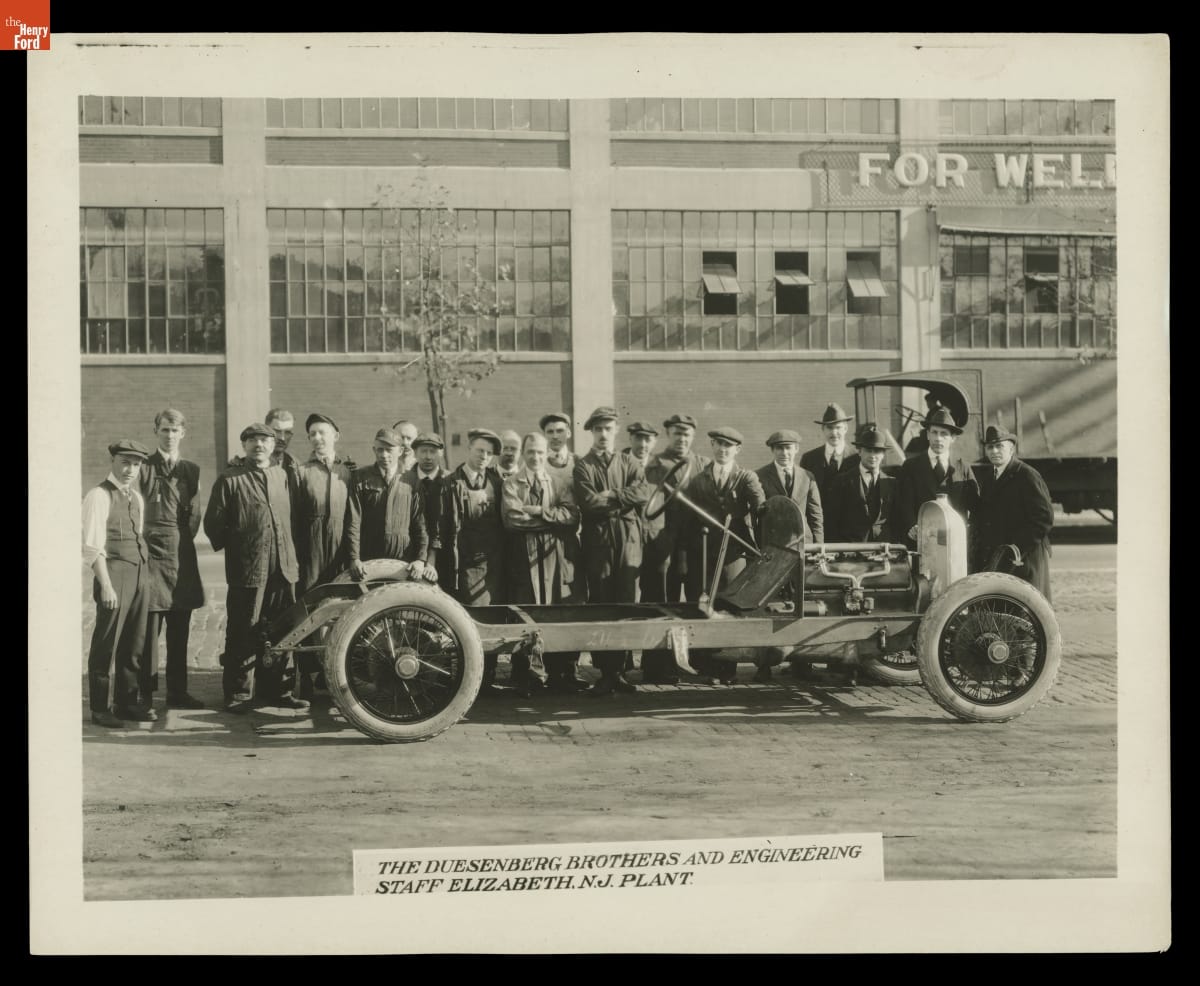
- Fred and Augie Duesenberg with Engineering Staff outside Duesenberg Plant in Elizabeth, New Jersey, 1920-1928 - Brothers Fred and August Duesenberg formed Duesenberg Automobile & Motors Company in Minnesota in 1913. They relocated their headquarters to Indiana in 1920, and they built a reputation on successful race cars and superb luxury cars. The Duesenberg Model J, produced from 1928-1937, is still regarded as one of America's finest automobiles. The company ended operations in 1937.
- 1920-1928
- Collections - Artifact
Fred and Augie Duesenberg with Engineering Staff outside Duesenberg Plant in Elizabeth, New Jersey, 1920-1928
Brothers Fred and August Duesenberg formed Duesenberg Automobile & Motors Company in Minnesota in 1913. They relocated their headquarters to Indiana in 1920, and they built a reputation on successful race cars and superb luxury cars. The Duesenberg Model J, produced from 1928-1937, is still regarded as one of America's finest automobiles. The company ended operations in 1937.
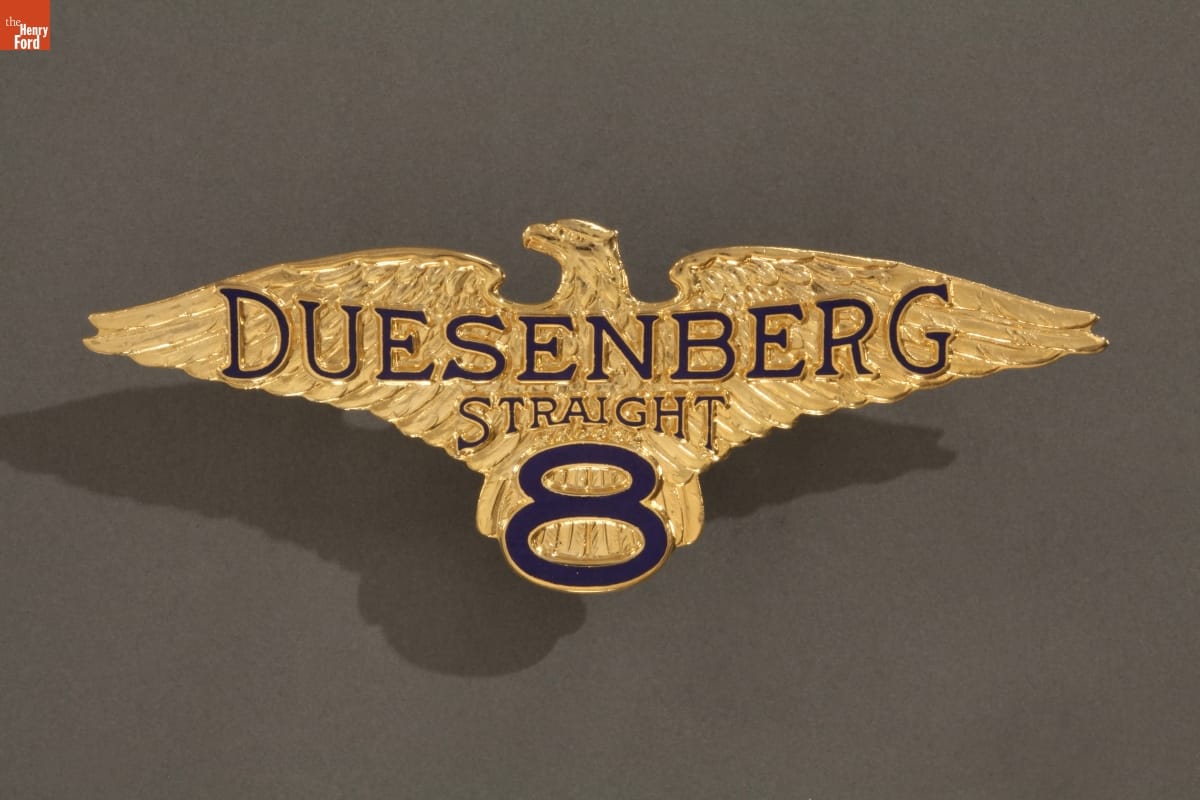
- Duesenberg Automobile Emblem, circa 1930 - Fred and August Duesenberg were respected builders of racing engines when they introduced their first production car, the Duesenberg Straight Eight, in 1921. The new car used a single-overhead-camshaft, eight-cylinder engine derived from their competition engines. It also featured industry-first four-wheel hydraulic brakes. Production ended in 1927, but the car was followed by the sporty Model X and the luxurious Model J.
- circa 1930
- Collections - Artifact
Duesenberg Automobile Emblem, circa 1930
Fred and August Duesenberg were respected builders of racing engines when they introduced their first production car, the Duesenberg Straight Eight, in 1921. The new car used a single-overhead-camshaft, eight-cylinder engine derived from their competition engines. It also featured industry-first four-wheel hydraulic brakes. Production ended in 1927, but the car was followed by the sporty Model X and the luxurious Model J.
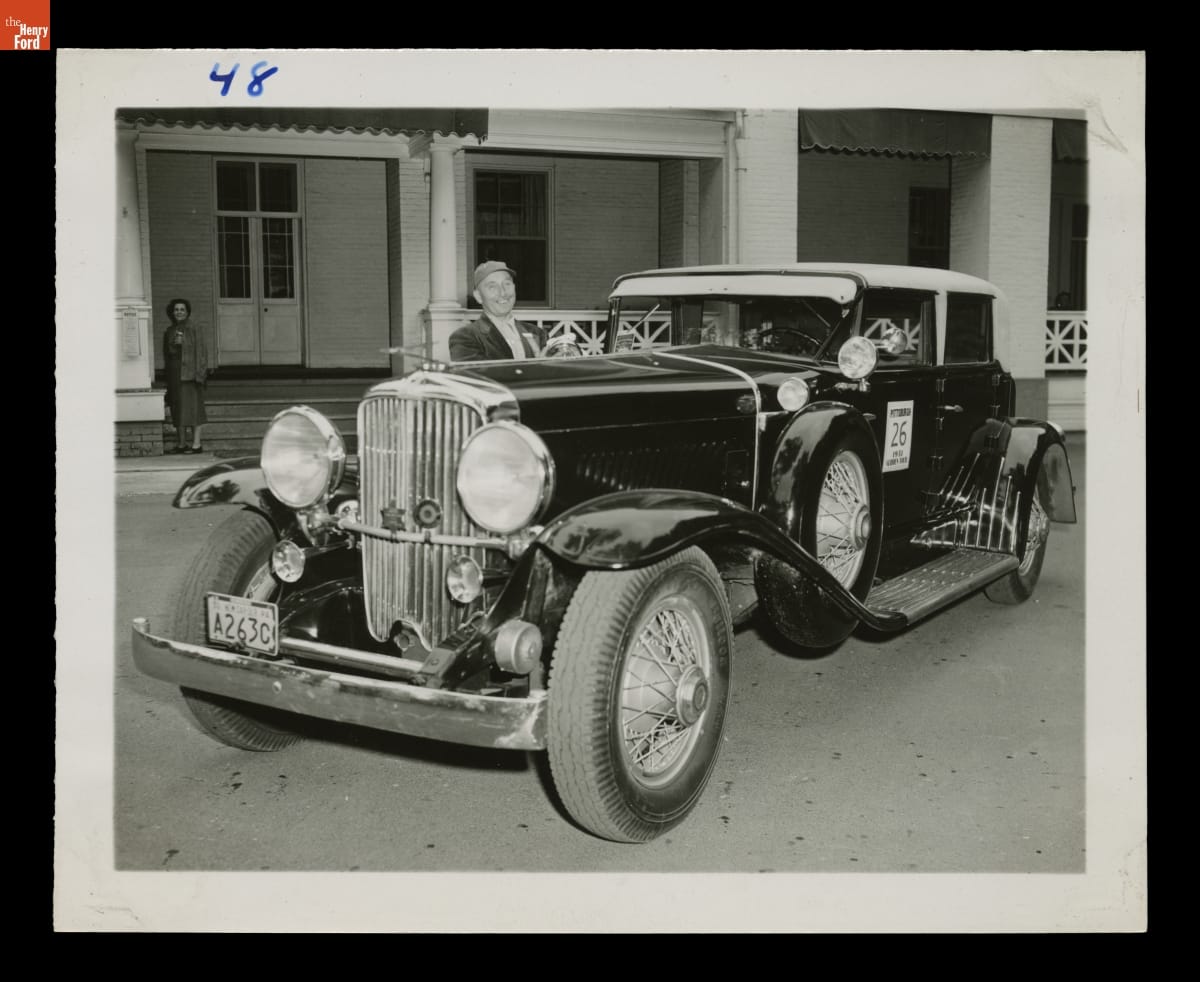
- 1933 Duesenberg Automobile Participating in Glidden Tour, September 1951 - The original Glidden Tours, sponsored by AAA from 1904-1913, promoted both automobiles and road improvements. AAA and the Veteran Motor Car Club of America revived the annual tours in 1946 for owners of vintage automobiles. This time, the focus was more on pleasure than promotion. Participants often dressed in period costume, and they staged impromptu car shows along the way.
- September 01, 1951
- Collections - Artifact
1933 Duesenberg Automobile Participating in Glidden Tour, September 1951
The original Glidden Tours, sponsored by AAA from 1904-1913, promoted both automobiles and road improvements. AAA and the Veteran Motor Car Club of America revived the annual tours in 1946 for owners of vintage automobiles. This time, the focus was more on pleasure than promotion. Participants often dressed in period costume, and they staged impromptu car shows along the way.
- Sales Brochure, 1931 Duesenberg Automobile - Fred Duesenberg set out to build a masterpiece in the Duesenberg Model J, and he succeeded. Its superlative engineering included a 265-horsepower engine that could push the car to a top speed of 116 mph. The buyer purchased a chassis from Duesenberg for around $9,000. An independent coachbuilder crafted the body to the buyer's specifications.
- 1931
- Collections - Artifact
Sales Brochure, 1931 Duesenberg Automobile
Fred Duesenberg set out to build a masterpiece in the Duesenberg Model J, and he succeeded. Its superlative engineering included a 265-horsepower engine that could push the car to a top speed of 116 mph. The buyer purchased a chassis from Duesenberg for around $9,000. An independent coachbuilder crafted the body to the buyer's specifications.