
Search
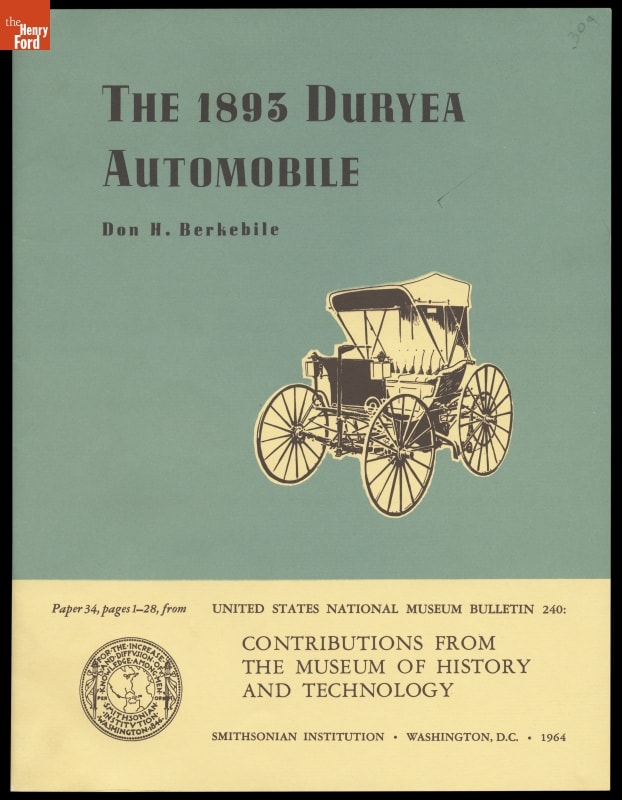
- The 1893 Duryea Automobile in the Museum of History and Technology, 1964 - Charles and Frank Duryea built their first automobile in 1893. Three years later the brothers established the Duryea Motor Wagon Company. The company built thirteen identical vehicles in its first year. This Smithsonian Institution publication contains a photograph of factory employees working on some of the thirteen vehicles.
- 1893-1964
- Collections - Artifact
The 1893 Duryea Automobile in the Museum of History and Technology, 1964
Charles and Frank Duryea built their first automobile in 1893. Three years later the brothers established the Duryea Motor Wagon Company. The company built thirteen identical vehicles in its first year. This Smithsonian Institution publication contains a photograph of factory employees working on some of the thirteen vehicles.
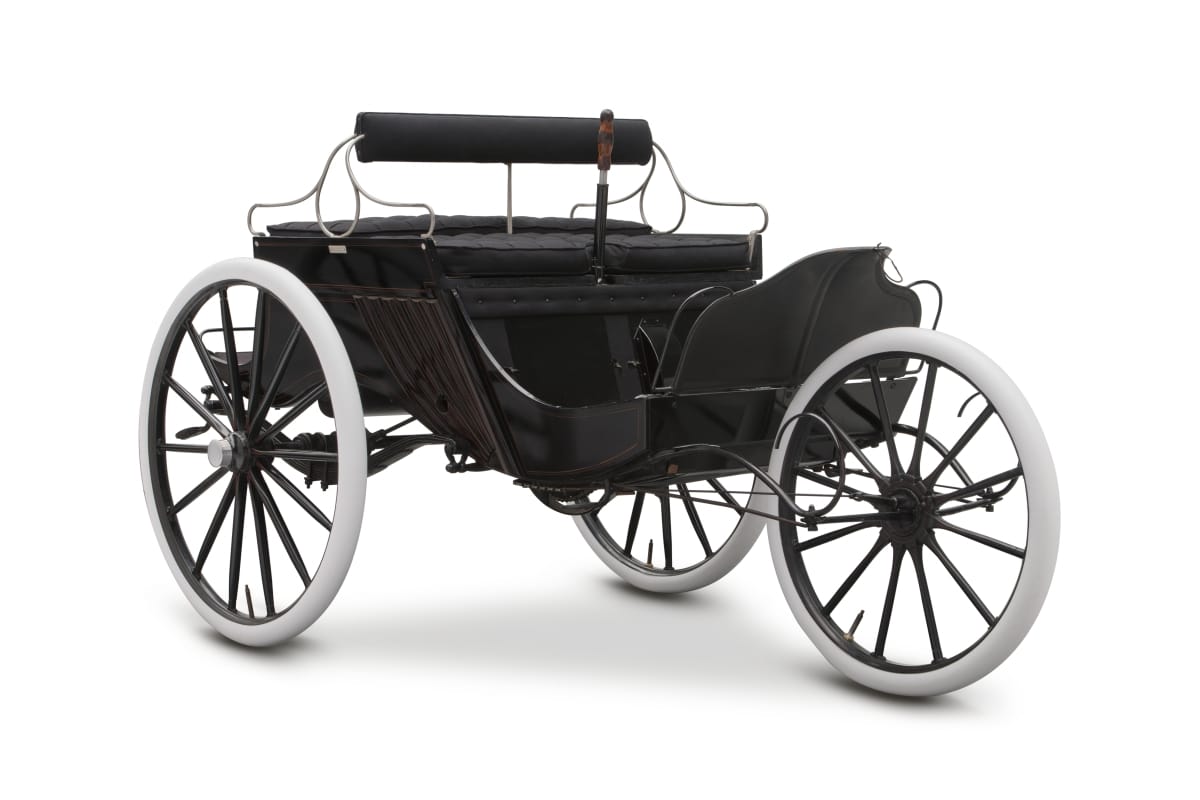
- 1899 Duryea Trap - Cars of this era usually looked like squarish horse-drawn buggies. But Charles Duryea was inspired by the more graceful curves of a victoria carriage. The curling front forks support the single front wheel and flex to absorb jolts. The driver used a control stick to steer, shift gears, and accelerate. The automobile may have looked good, but passengers sat back to back, making conversation difficult.
- 1899
- Collections - Artifact
1899 Duryea Trap
Cars of this era usually looked like squarish horse-drawn buggies. But Charles Duryea was inspired by the more graceful curves of a victoria carriage. The curling front forks support the single front wheel and flex to absorb jolts. The driver used a control stick to steer, shift gears, and accelerate. The automobile may have looked good, but passengers sat back to back, making conversation difficult.
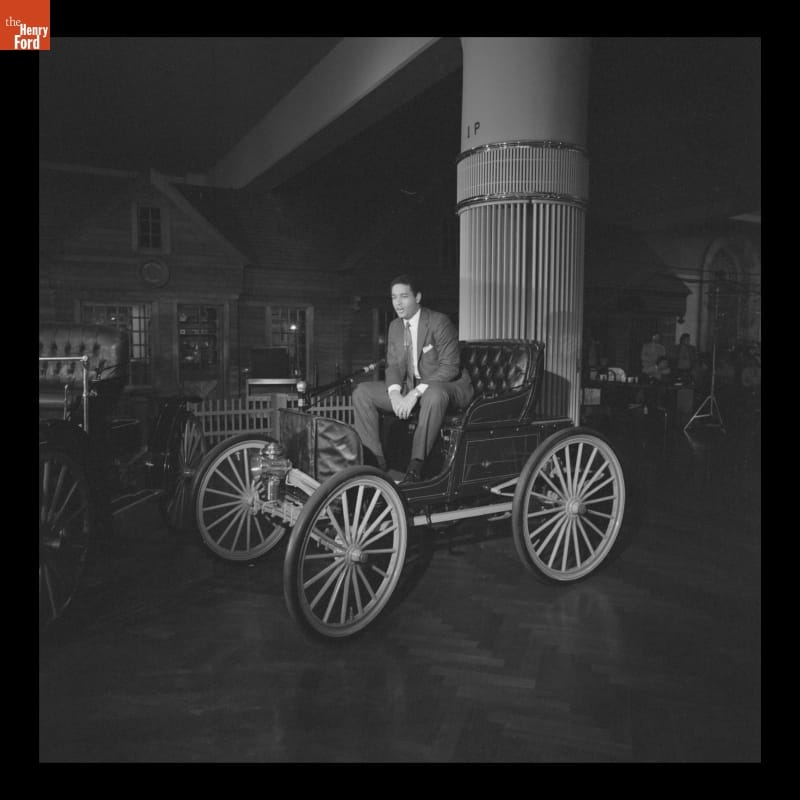
- Bryant Gumbel Broadcasting the "Today" Show from Henry Ford Museum, March 11, 1983 - NBC's <EM>Today</EM> show broadcast from the floor of the Henry Ford Museum on March 11, 1983. The show's host, Bryant Gumbel, interviewed several U.S. auto executives as well as the president of the United Auto Workers. The museum's Hall of Technology provided a perfect backdrop for the morning news show's theme.
- March 11, 1983
- Collections - Artifact
Bryant Gumbel Broadcasting the "Today" Show from Henry Ford Museum, March 11, 1983
NBC's Today show broadcast from the floor of the Henry Ford Museum on March 11, 1983. The show's host, Bryant Gumbel, interviewed several U.S. auto executives as well as the president of the United Auto Workers. The museum's Hall of Technology provided a perfect backdrop for the morning news show's theme.
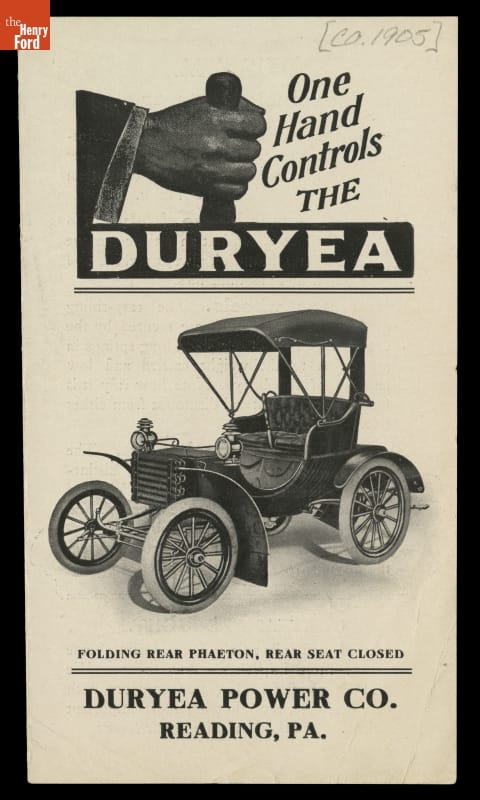
- Brochure, "One Hand Controls the Duryea," circa 1905 - Car brochures have evolved from straightforward product catalogues into polished creative sales tools. Their quality paper, rich color, inventive formats, and sophisticated graphic design all contribute to a buyer's developing impression of a car in a showroom. Advertising might entice people to a dealership, but brochures extend and deepen the relationship between vehicle and potential buyer.
- circa 1905
- Collections - Artifact
Brochure, "One Hand Controls the Duryea," circa 1905
Car brochures have evolved from straightforward product catalogues into polished creative sales tools. Their quality paper, rich color, inventive formats, and sophisticated graphic design all contribute to a buyer's developing impression of a car in a showroom. Advertising might entice people to a dealership, but brochures extend and deepen the relationship between vehicle and potential buyer.
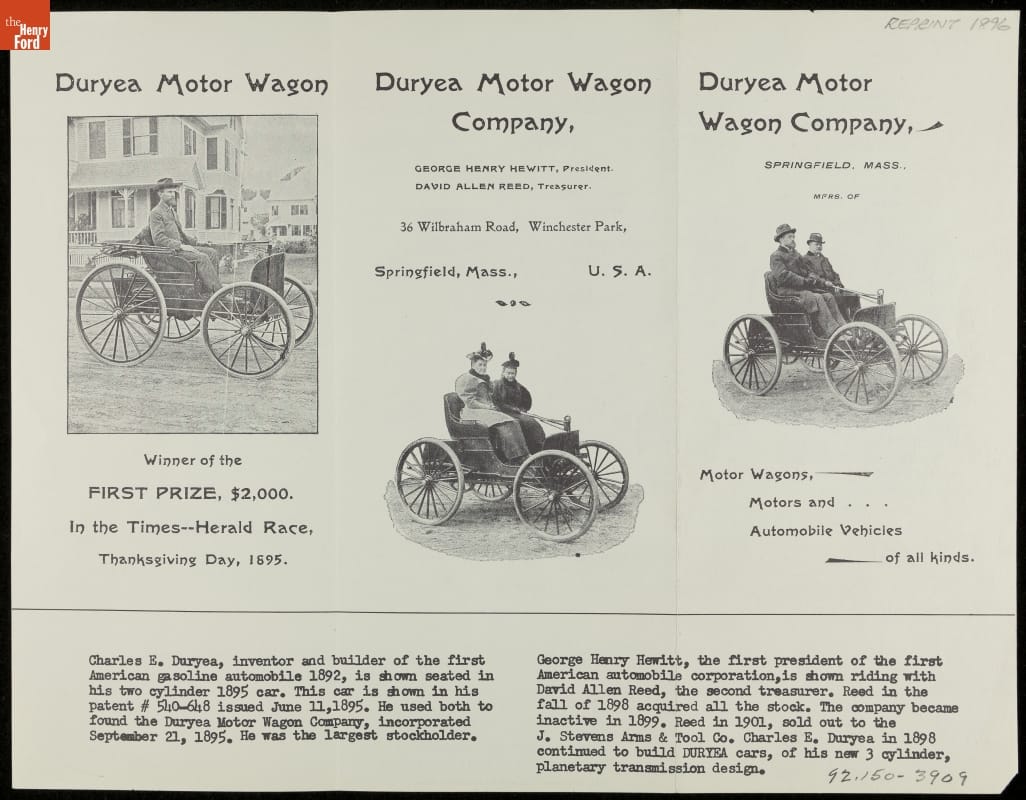
- 1896 Duryea Motor Wagon Company Catalog Reprinted in 1951 - The Duryea Motor Wagon Company, run by Charles and Frank Duryea, became the first in America to produce a series of identical vehicles. This accomplishment marked the beginning of the U.S. auto industry. M.J. Duryea, son of Charles Duryea, reproduced one of the original 1896 company brochures and made it available to automobile enthusiasts.
- 1896
- Collections - Artifact
1896 Duryea Motor Wagon Company Catalog Reprinted in 1951
The Duryea Motor Wagon Company, run by Charles and Frank Duryea, became the first in America to produce a series of identical vehicles. This accomplishment marked the beginning of the U.S. auto industry. M.J. Duryea, son of Charles Duryea, reproduced one of the original 1896 company brochures and made it available to automobile enthusiasts.
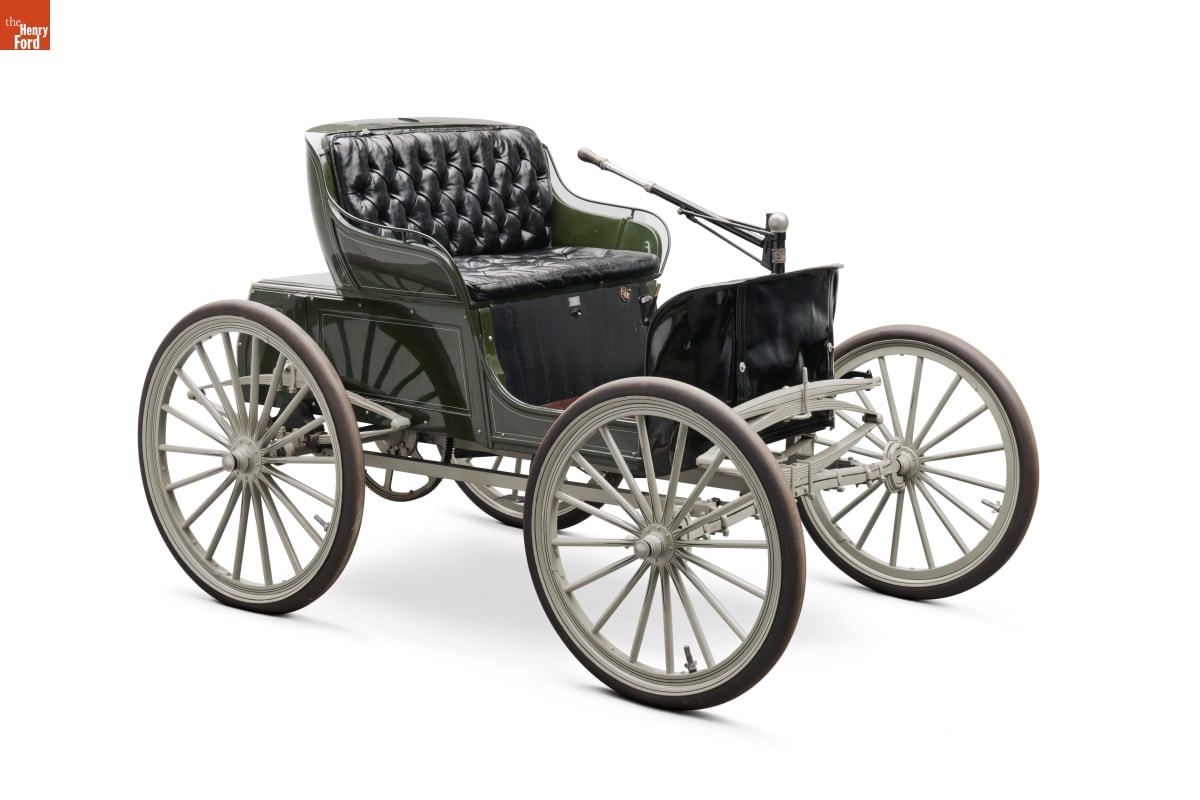
- 1896 Duryea Runabout - Early automobile inventors tended to make one-of-a-kind vehicles. Charles and Frank Duryea had a different idea. In 1896, they established the Duryea Motor Wagon Company and built thirteen identical vehicles. Based on their second model that had recently won America's first automobile race, this car was user friendly. A single lever controlled steering, shifting, and accelerating. The Henry Ford owns the only known surviving 1896 Duryea.
- 1896
- Collections - Artifact
1896 Duryea Runabout
Early automobile inventors tended to make one-of-a-kind vehicles. Charles and Frank Duryea had a different idea. In 1896, they established the Duryea Motor Wagon Company and built thirteen identical vehicles. Based on their second model that had recently won America's first automobile race, this car was user friendly. A single lever controlled steering, shifting, and accelerating. The Henry Ford owns the only known surviving 1896 Duryea.
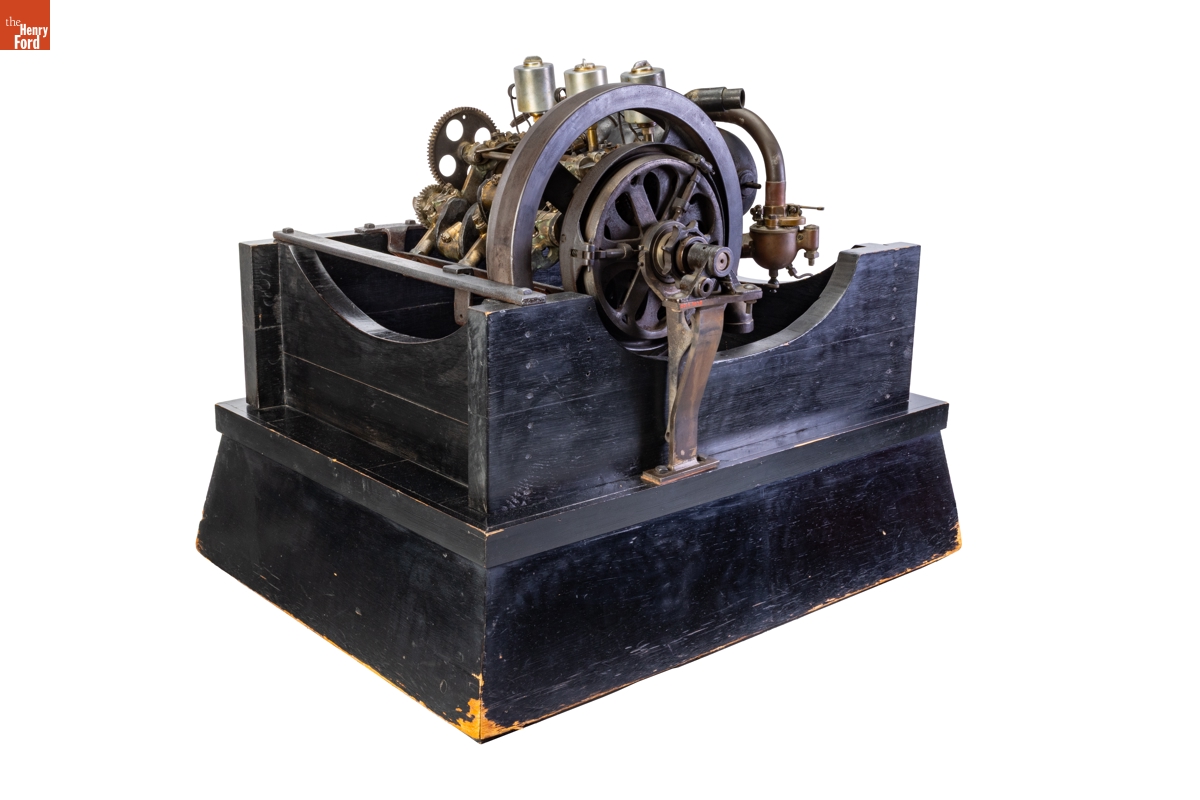
- Duryea 3-Cylinder Automobile Engine, circa 1915 - When established in 1895, the Duryea Motor Wagon Company of Massachusetts was America's first company formed to produce gasoline automobiles. By the turn of the 20th century, Duryea had relocated to Pennsylvania and was manufacturing three-wheel cars powered by three-cylinder engines like this one. The company later shifted to two-cylinder high-wheelers and cyclecars.
- circa 1915
- Collections - Artifact
Duryea 3-Cylinder Automobile Engine, circa 1915
When established in 1895, the Duryea Motor Wagon Company of Massachusetts was America's first company formed to produce gasoline automobiles. By the turn of the 20th century, Duryea had relocated to Pennsylvania and was manufacturing three-wheel cars powered by three-cylinder engines like this one. The company later shifted to two-cylinder high-wheelers and cyclecars.
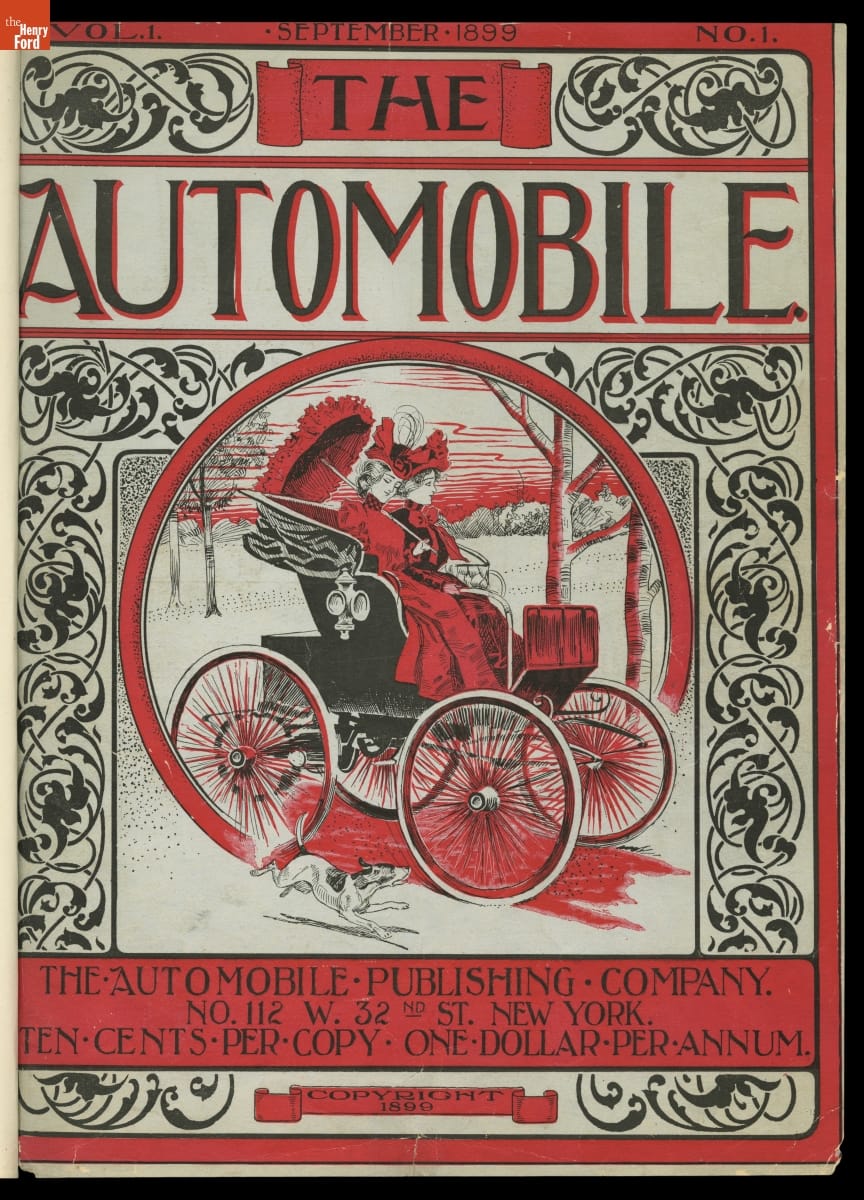
- "The Automobile Magazine" for September 1899 - <EM>The Automobile</EM> provided readers with articles, photographs, illustrations, and advertisement about the new industry. One image in this first issue shows a Duryea traveling in deep snow.
- 1899
- Collections - Artifact
"The Automobile Magazine" for September 1899
The Automobile provided readers with articles, photographs, illustrations, and advertisement about the new industry. One image in this first issue shows a Duryea traveling in deep snow.
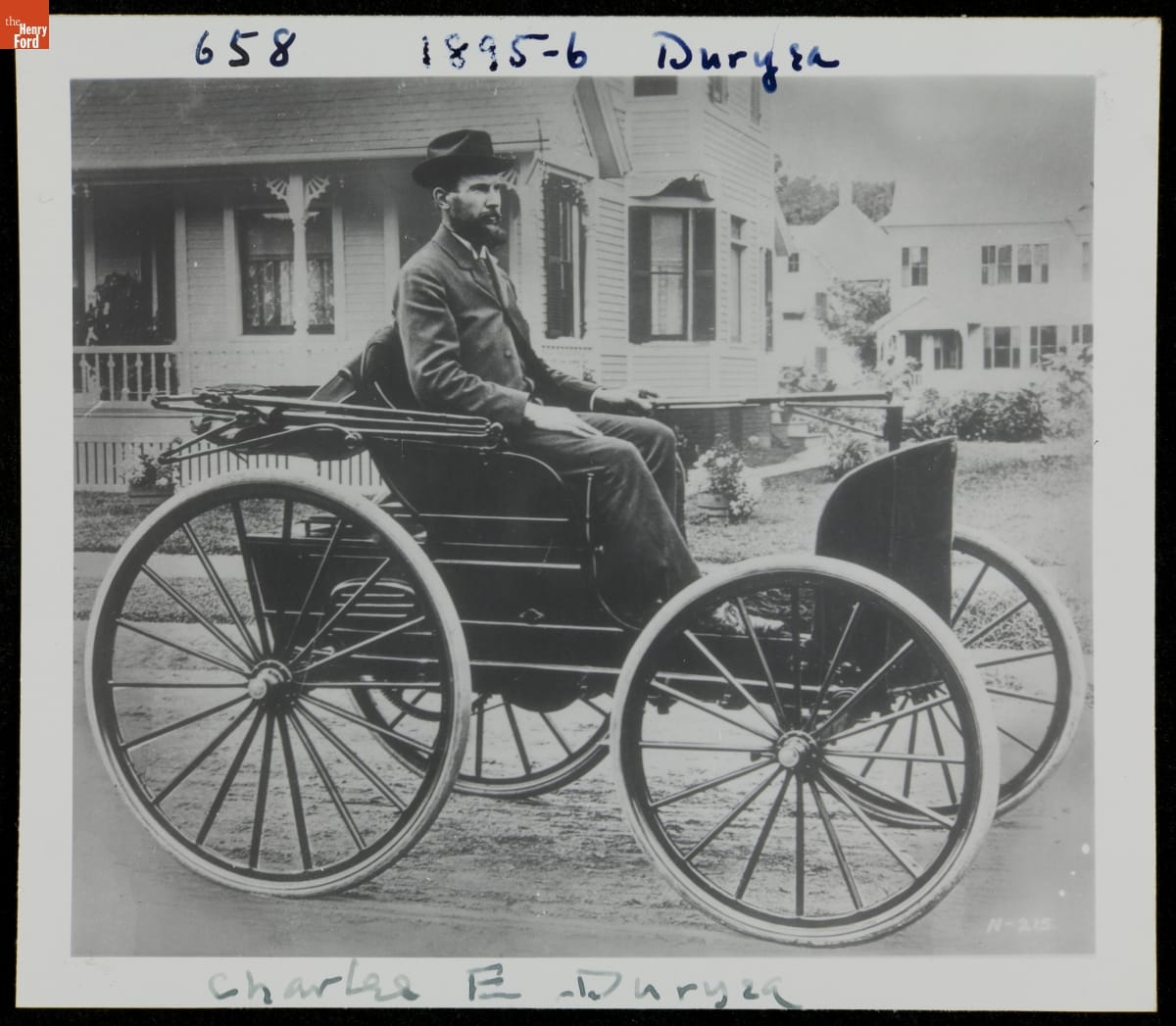
- Charles E. Duryea, circa 1895 - Charles E. Duryea sits in a horseless carriage designed and built by his brother Frank. The picture was taken in the summer of 1895 in Springfield, Massachusetts. Later that year, on November 28, Frank drove the same car to victory in the first official auto race in the United States, an event sponsored by the <em>Chicago Times-Herald</em> newspaper.
- circa 1895
- Collections - Artifact
Charles E. Duryea, circa 1895
Charles E. Duryea sits in a horseless carriage designed and built by his brother Frank. The picture was taken in the summer of 1895 in Springfield, Massachusetts. Later that year, on November 28, Frank drove the same car to victory in the first official auto race in the United States, an event sponsored by the Chicago Times-Herald newspaper.
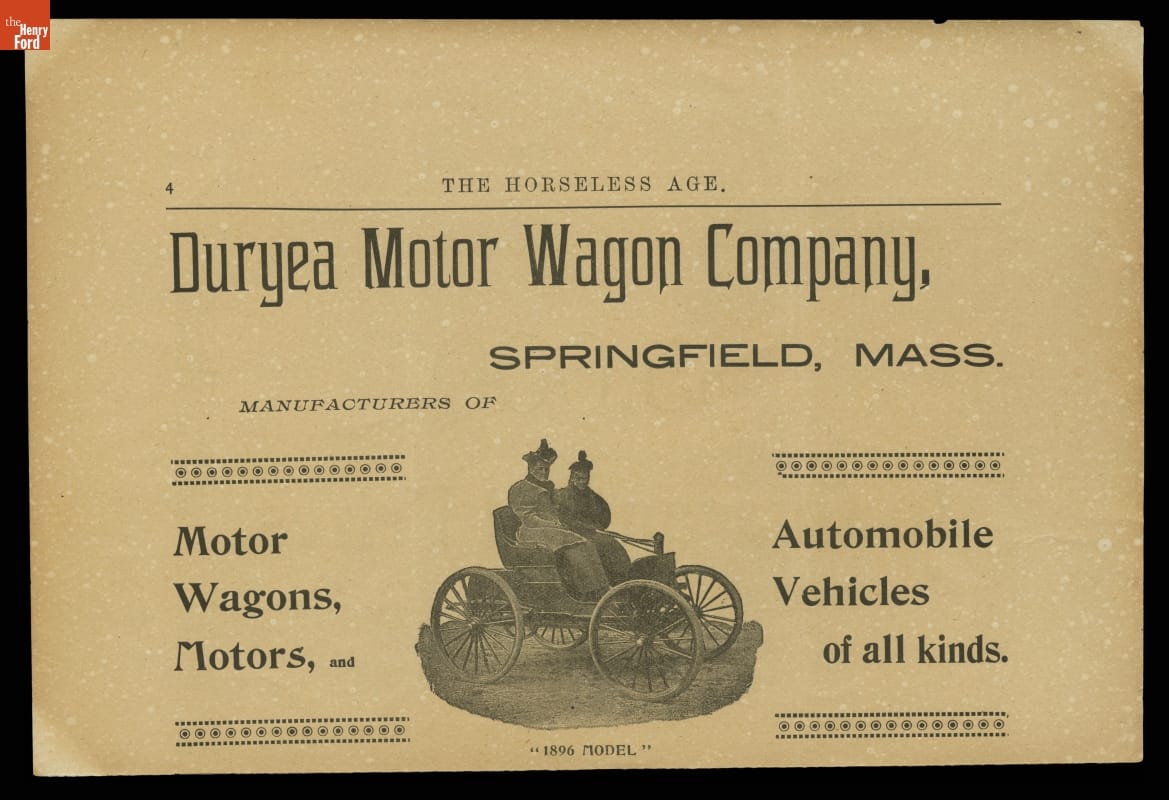
- Duryea Motor Wagon Company Advertisement, 1896 - This 1896 ad promoted the Duryea Motor Wagon Company. Duryea became the first in America to produce a series of identical vehicles, an accomplishment that marked the beginning of the U.S. auto industry. They made 13 vehicles in their first year.
- 1896
- Collections - Artifact
Duryea Motor Wagon Company Advertisement, 1896
This 1896 ad promoted the Duryea Motor Wagon Company. Duryea became the first in America to produce a series of identical vehicles, an accomplishment that marked the beginning of the U.S. auto industry. They made 13 vehicles in their first year.