
Search
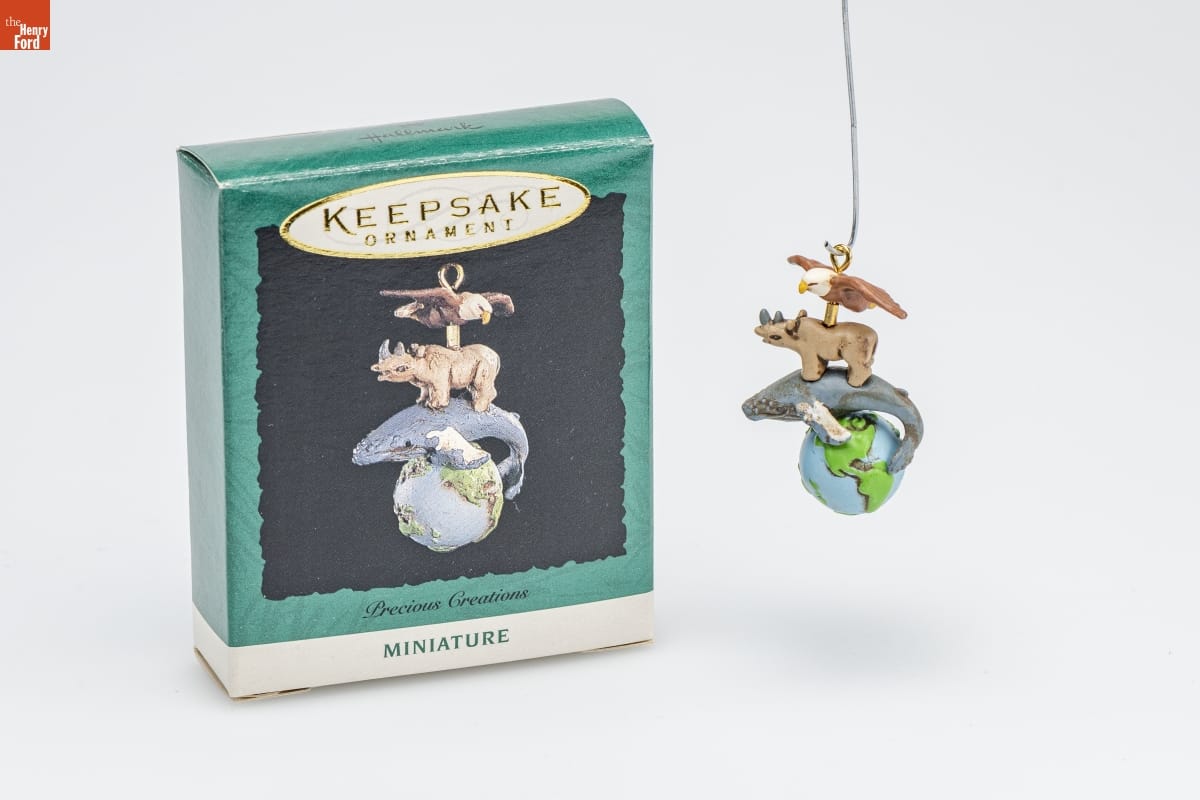
- Hallmark "Precious Creations" Miniature Christmas Ornament, 1995 - Already known for greeting cards, Hallmark introduced a line of Christmas ornaments in 1973. The company's annual release of an increasing array of ornaments revolutionized Christmas decorating, appealing to customers' interest in marking memories and milestones as well as expressing one's personality and unique tastes.
- 1995
- Collections - Artifact
Hallmark "Precious Creations" Miniature Christmas Ornament, 1995
Already known for greeting cards, Hallmark introduced a line of Christmas ornaments in 1973. The company's annual release of an increasing array of ornaments revolutionized Christmas decorating, appealing to customers' interest in marking memories and milestones as well as expressing one's personality and unique tastes.
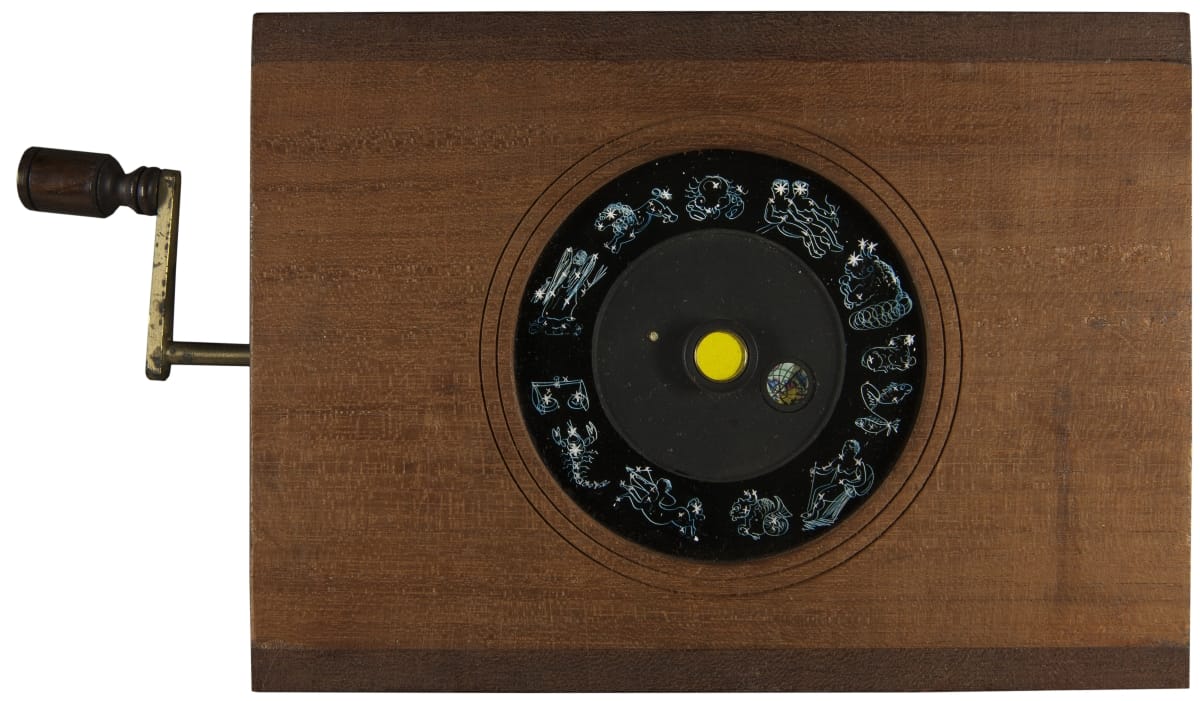
- Mechanical Lantern Slide, Earth's Orbit and Astrological Constellations, 1860-1900 - Magic lanterns use a concave mirror and light source to project images on glass slides with painted or photographic scenes. Developed in the 17th century, magic lanterns predate slide projectors and motion pictures. In the hands of magicians, they became "lanterns of fright," projecting wondrous images and apparitions. Slide themes ranged widely: exotic travel, folklore, advertising, history, science, and art.
- 1860-1900
- Collections - Artifact
Mechanical Lantern Slide, Earth's Orbit and Astrological Constellations, 1860-1900
Magic lanterns use a concave mirror and light source to project images on glass slides with painted or photographic scenes. Developed in the 17th century, magic lanterns predate slide projectors and motion pictures. In the hands of magicians, they became "lanterns of fright," projecting wondrous images and apparitions. Slide themes ranged widely: exotic travel, folklore, advertising, history, science, and art.
- Button, "Give Earth a Chance," 1970 - University of Michigan students formed the Environmental Action for Survival Committee (ENACT) in 1969. They created this button to promote a four-day "Teach-in on the Environment," held in March 1970 (before the official Earth Day, April 22, 1970). It was sold to Earth Day advocates who wore it in support of environmental education, direct action to reduce pollution, and regulation to ensure a future for the planet and its inhabitants.

- 1970
- Collections - Artifact
Button, "Give Earth a Chance," 1970
University of Michigan students formed the Environmental Action for Survival Committee (ENACT) in 1969. They created this button to promote a four-day "Teach-in on the Environment," held in March 1970 (before the official Earth Day, April 22, 1970). It was sold to Earth Day advocates who wore it in support of environmental education, direct action to reduce pollution, and regulation to ensure a future for the planet and its inhabitants.
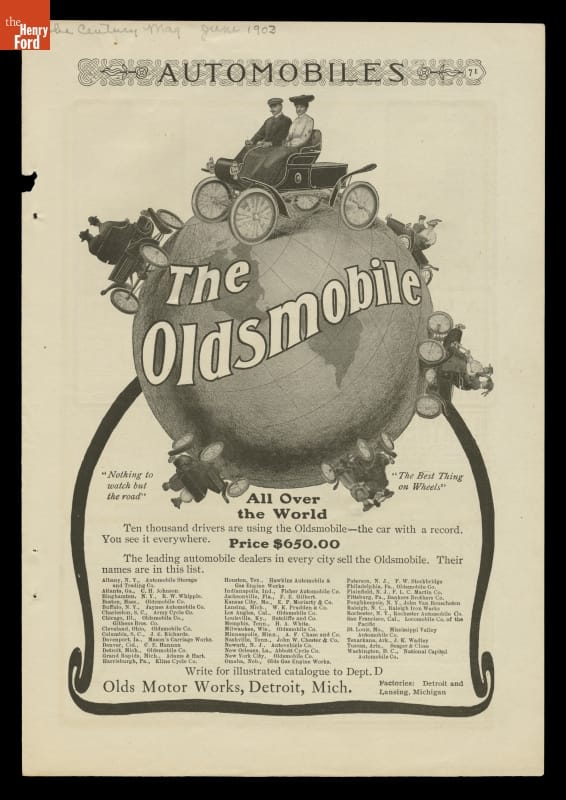
- Olds Motor Works Advertisement from June 1903, "The Oldsmobile All Over the World" - The Curved Dash Oldsmobile arguably was the world's first mass-produced automobile. By 1904, Olds Motor Works built 5,000 cars a year. At just $650, the little runabout was within the means of middle-class buyers. This 1903 advertisement promotes the Oldsmobile's wide use and availability. It also hints at the car's dependability: "Nothing to watch but the road."
- June 01, 1903
- Collections - Artifact
Olds Motor Works Advertisement from June 1903, "The Oldsmobile All Over the World"
The Curved Dash Oldsmobile arguably was the world's first mass-produced automobile. By 1904, Olds Motor Works built 5,000 cars a year. At just $650, the little runabout was within the means of middle-class buyers. This 1903 advertisement promotes the Oldsmobile's wide use and availability. It also hints at the car's dependability: "Nothing to watch but the road."
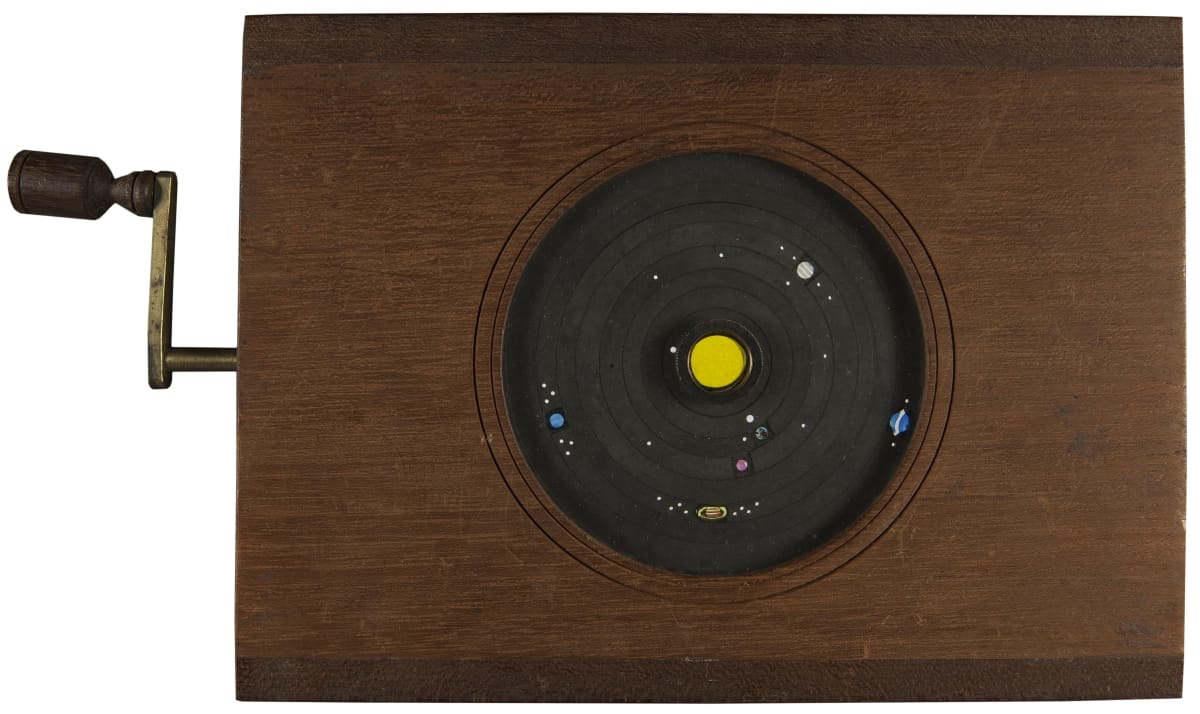
- Mechanical Lantern Slide, the Solar System, 1860-1900 - Magic lanterns use a concave mirror and light source to project images on glass slides with painted or photographic scenes. Developed in the 17th century, magic lanterns predate slide projectors and motion pictures. In the hands of magicians, they became "lanterns of fright," projecting wondrous images and apparitions. Slide themes ranged widely: exotic travel, folklore, advertising, history, science, and art.
- 1860-1900
- Collections - Artifact
Mechanical Lantern Slide, the Solar System, 1860-1900
Magic lanterns use a concave mirror and light source to project images on glass slides with painted or photographic scenes. Developed in the 17th century, magic lanterns predate slide projectors and motion pictures. In the hands of magicians, they became "lanterns of fright," projecting wondrous images and apparitions. Slide themes ranged widely: exotic travel, folklore, advertising, history, science, and art.
- Hallmark "Laser Gallery Collection: A Wish for Peace" Christmas Ornament, 1999 - Already known for greeting cards, Hallmark introduced a line of Christmas ornaments in 1973. The company's annual release of an increasing array of ornaments revolutionized Christmas decorating, appealing to customers' interest in marking memories and milestones as well as expressing one's personality and unique tastes.

- 1999
- Collections - Artifact
Hallmark "Laser Gallery Collection: A Wish for Peace" Christmas Ornament, 1999
Already known for greeting cards, Hallmark introduced a line of Christmas ornaments in 1973. The company's annual release of an increasing array of ornaments revolutionized Christmas decorating, appealing to customers' interest in marking memories and milestones as well as expressing one's personality and unique tastes.
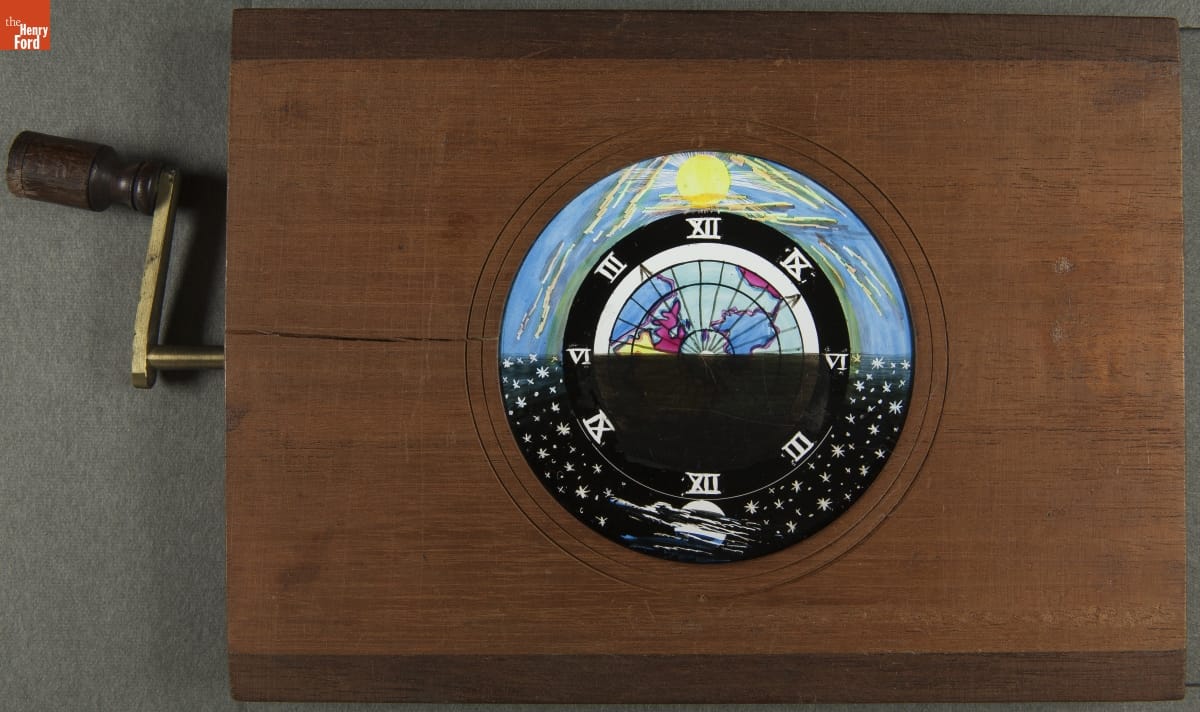
- Mechanical Lantern Slide, Night and Day on Earth, 1860-1900 - Magic lanterns use a concave mirror and light source to project images on glass slides with painted or photographic scenes. Developed in the 17th century, magic lanterns predate slide projectors and motion pictures. In the hands of magicians, they became "lanterns of fright," projecting wondrous images and apparitions. Slide themes ranged widely: exotic travel, folklore, advertising, history, science, and art.
- 1860-1900
- Collections - Artifact
Mechanical Lantern Slide, Night and Day on Earth, 1860-1900
Magic lanterns use a concave mirror and light source to project images on glass slides with painted or photographic scenes. Developed in the 17th century, magic lanterns predate slide projectors and motion pictures. In the hands of magicians, they became "lanterns of fright," projecting wondrous images and apparitions. Slide themes ranged widely: exotic travel, folklore, advertising, history, science, and art.
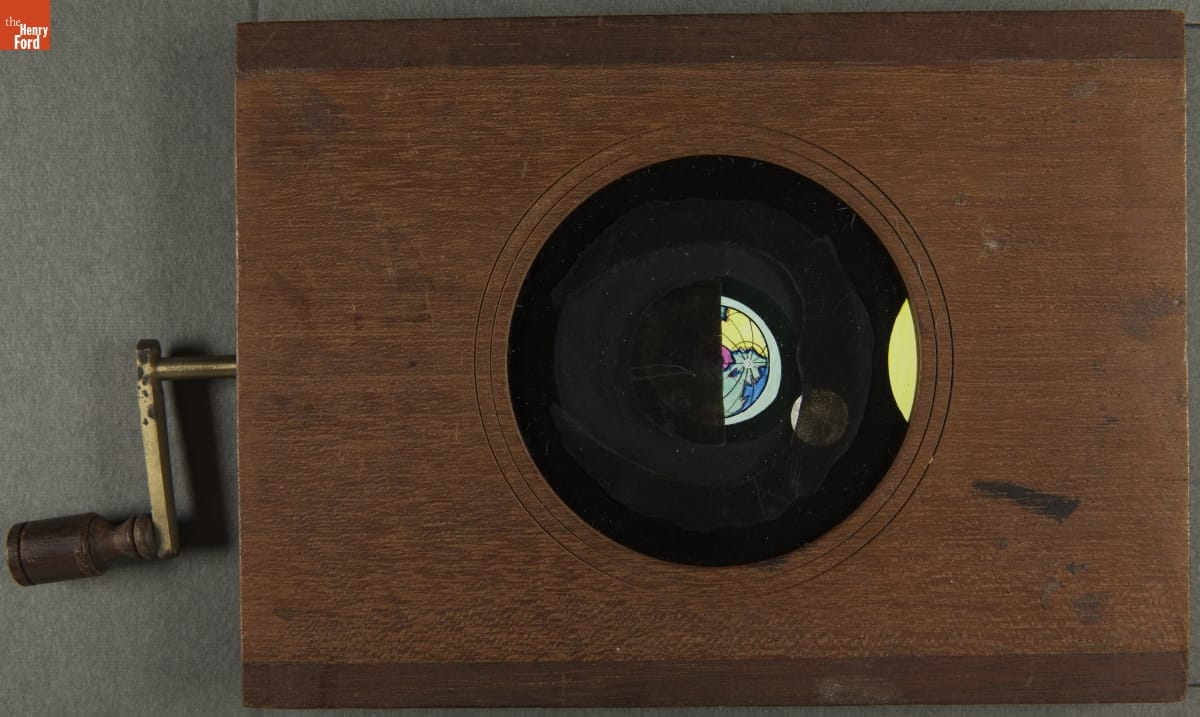
- Mechanical Lantern Slide, Orbit of the Moon around the Earth, 1860-1900 - Magic lanterns use a concave mirror and light source to project images on glass slides with painted or photographic scenes. Developed in the 17th century, magic lanterns predate slide projectors and motion pictures. In the hands of magicians, they became "lanterns of fright," projecting wondrous images and apparitions. Slide themes ranged widely: exotic travel, folklore, advertising, history, science, and art.
- 1860-1900
- Collections - Artifact
Mechanical Lantern Slide, Orbit of the Moon around the Earth, 1860-1900
Magic lanterns use a concave mirror and light source to project images on glass slides with painted or photographic scenes. Developed in the 17th century, magic lanterns predate slide projectors and motion pictures. In the hands of magicians, they became "lanterns of fright," projecting wondrous images and apparitions. Slide themes ranged widely: exotic travel, folklore, advertising, history, science, and art.
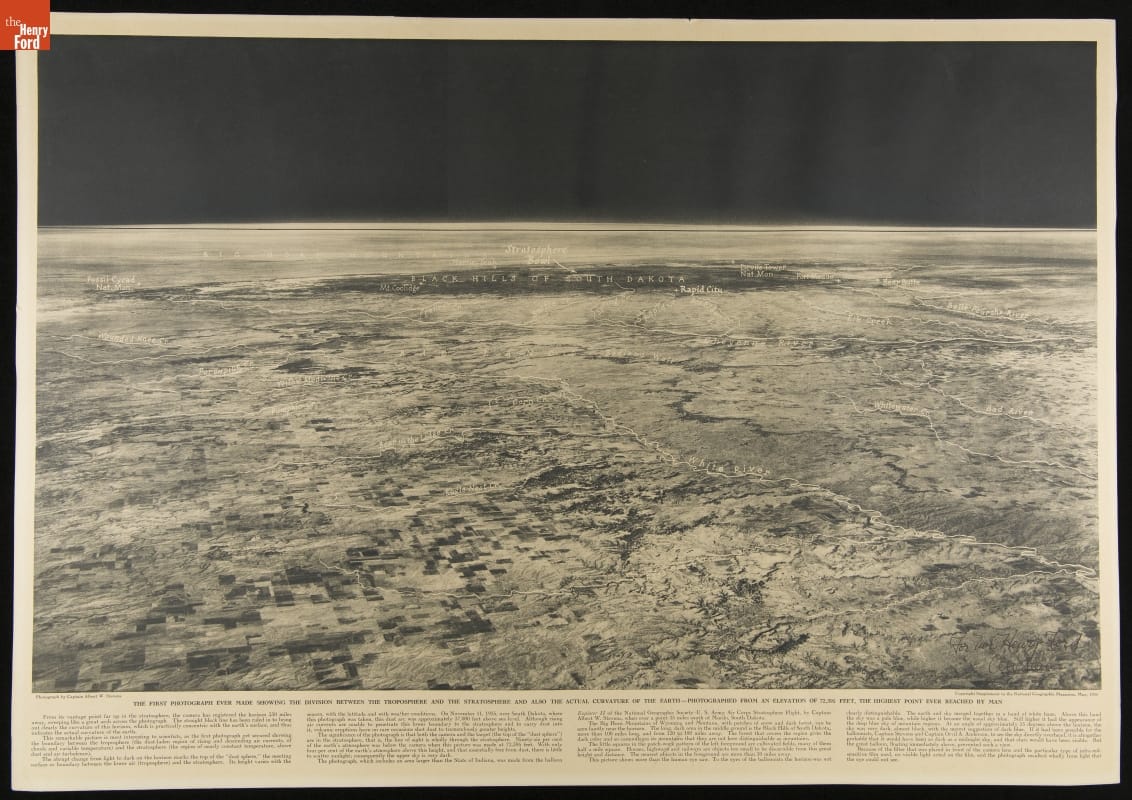
- Photograph Showing the Troposphere, the Stratosphere and the Curvature of the Earth, November 1935 - Taken from a balloon at the record-setting altitude of 72,395 feet, this was the first photograph depicting the division between the lowest two layers of Earth's atmosphere. The photographer, U.S. Army Air Corps Captain and aerial photography pioneer Albert W. Stevens, also captured the curvature of the Earth, the Bighorn Mountains of Montana and Wyoming, and the Black Hills of South Dakota.
- November 11, 1935
- Collections - Artifact
Photograph Showing the Troposphere, the Stratosphere and the Curvature of the Earth, November 1935
Taken from a balloon at the record-setting altitude of 72,395 feet, this was the first photograph depicting the division between the lowest two layers of Earth's atmosphere. The photographer, U.S. Army Air Corps Captain and aerial photography pioneer Albert W. Stevens, also captured the curvature of the Earth, the Bighorn Mountains of Montana and Wyoming, and the Black Hills of South Dakota.
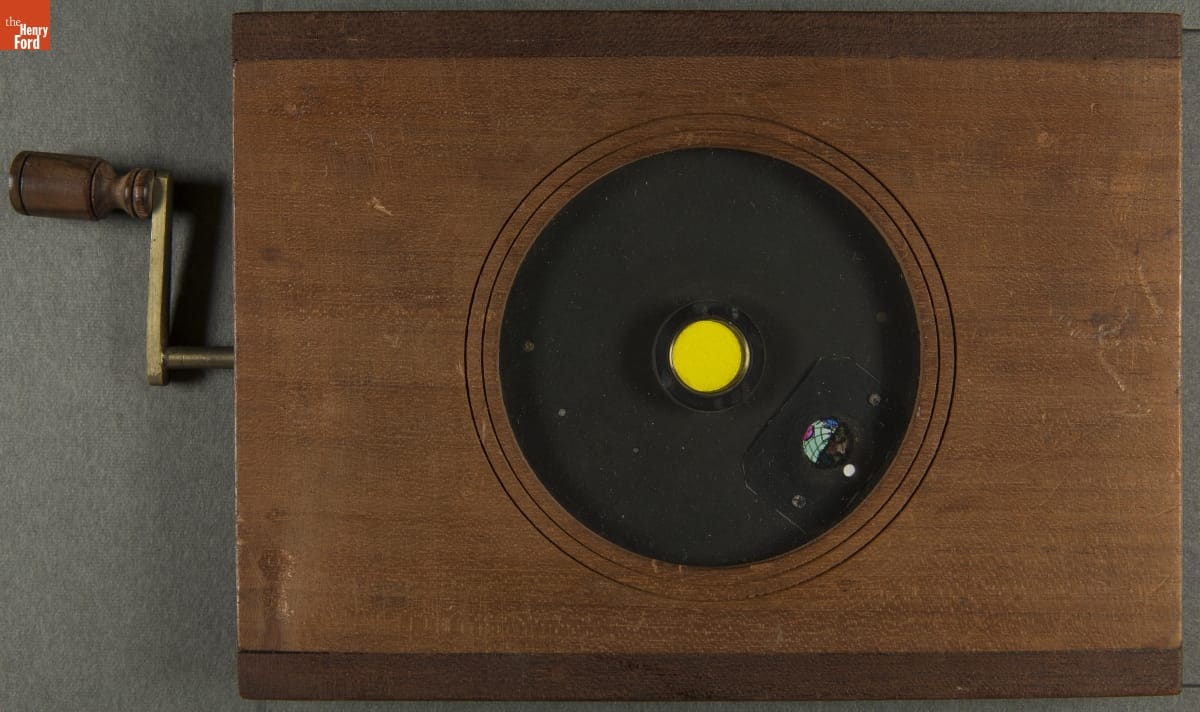
- Mechanical Lantern Slide, Orbit of the Earth and its Moon, 1860-1900 - Magic lanterns use a concave mirror and light source to project images on glass slides with painted or photographic scenes. Developed in the 17th century, magic lanterns predate slide projectors and motion pictures. In the hands of magicians, they became "lanterns of fright," projecting wondrous images and apparitions. Slide themes ranged widely: exotic travel, folklore, advertising, history, science, and art.
- 1860-1900
- Collections - Artifact
Mechanical Lantern Slide, Orbit of the Earth and its Moon, 1860-1900
Magic lanterns use a concave mirror and light source to project images on glass slides with painted or photographic scenes. Developed in the 17th century, magic lanterns predate slide projectors and motion pictures. In the hands of magicians, they became "lanterns of fright," projecting wondrous images and apparitions. Slide themes ranged widely: exotic travel, folklore, advertising, history, science, and art.