
Search
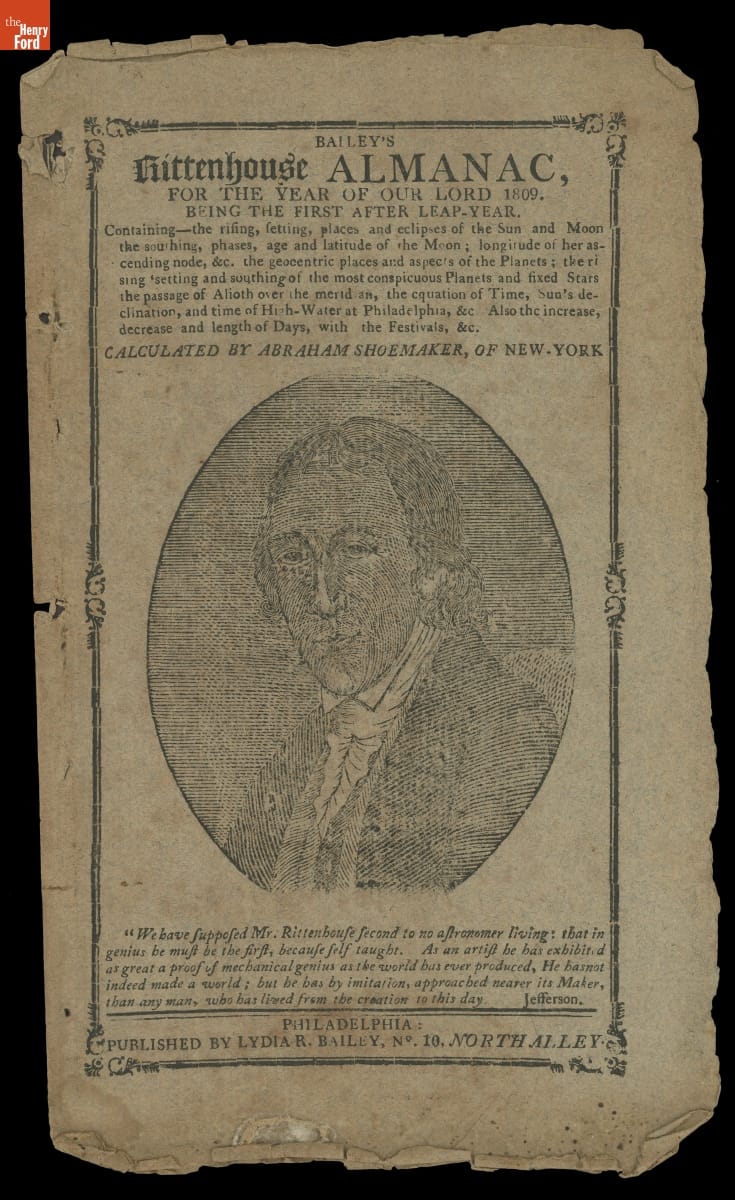
- "Bailey's Rittenhouse Almanac, for the Year of our Lord 1809" - Bailey's Rittenhouse Almanac, named for the noted astronomer David Rittenhouse (1732-1796), was a Philadelphia-focused almanac providing astronomical calculations (times of sunrises and sets, the tides, moon phases, and eclipses, etc.) The almanac also provided remedies, recipes, court schedules, and bits of sage advice among its pages. The almanac's printer, Lydia Bailey, operated one of Philadelphia's largest printing shops.
- 1809
- Collections - Artifact
"Bailey's Rittenhouse Almanac, for the Year of our Lord 1809"
Bailey's Rittenhouse Almanac, named for the noted astronomer David Rittenhouse (1732-1796), was a Philadelphia-focused almanac providing astronomical calculations (times of sunrises and sets, the tides, moon phases, and eclipses, etc.) The almanac also provided remedies, recipes, court schedules, and bits of sage advice among its pages. The almanac's printer, Lydia Bailey, operated one of Philadelphia's largest printing shops.
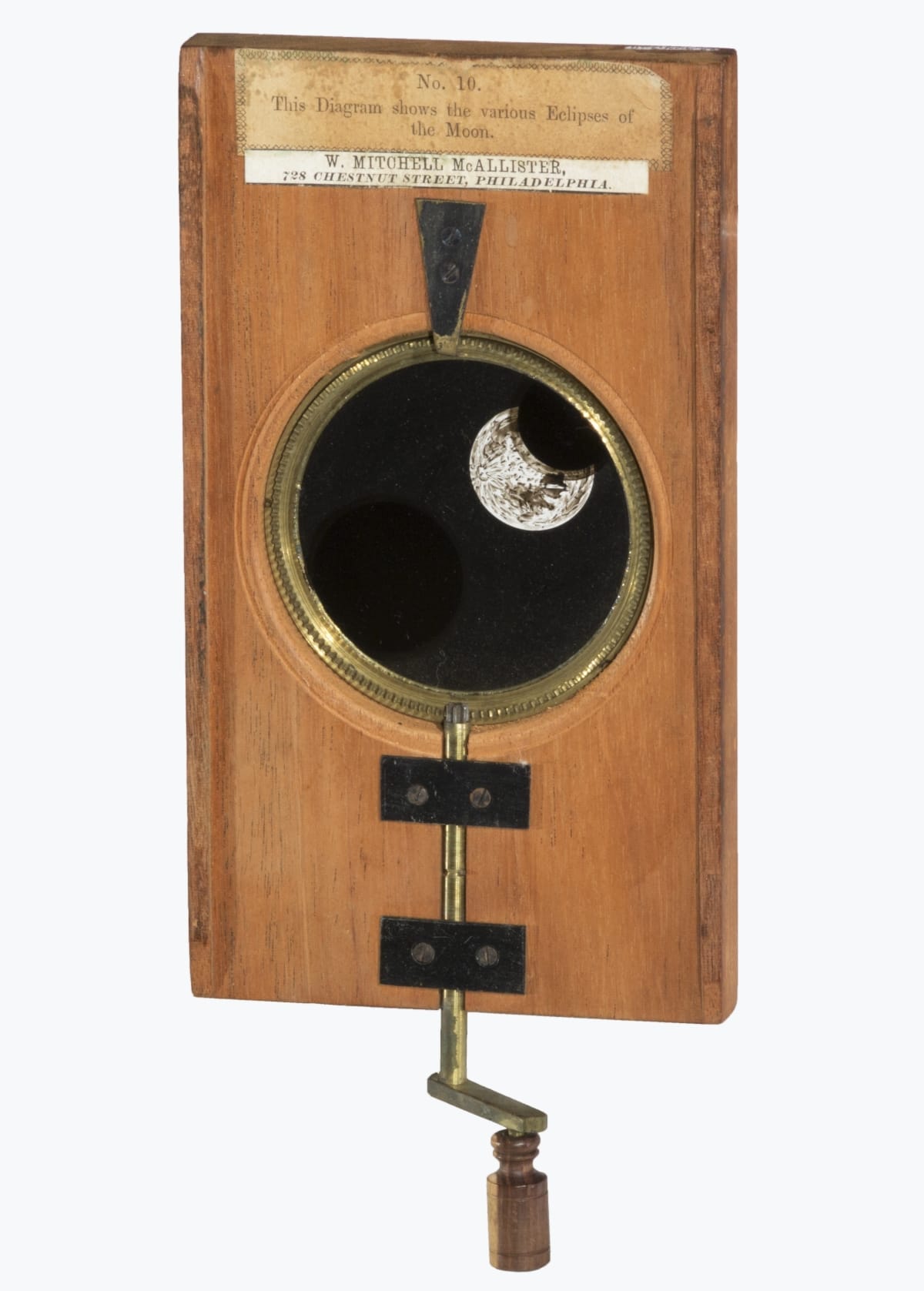
- Lantern Slide, Lunar Eclipses, 1872-1900 - Magic lanterns use a concave mirror and light source to project images on glass slides with painted or photographic scenes. Developed in the 17th century, magic lanterns predate slide projectors and motion pictures. In the hands of magicians, they became "lanterns of fright," projecting wondrous images and apparitions. Slide themes ranged widely: exotic travel, folklore, advertising, history, science, and art.
- 1872-1900
- Collections - Artifact
Lantern Slide, Lunar Eclipses, 1872-1900
Magic lanterns use a concave mirror and light source to project images on glass slides with painted or photographic scenes. Developed in the 17th century, magic lanterns predate slide projectors and motion pictures. In the hands of magicians, they became "lanterns of fright," projecting wondrous images and apparitions. Slide themes ranged widely: exotic travel, folklore, advertising, history, science, and art.
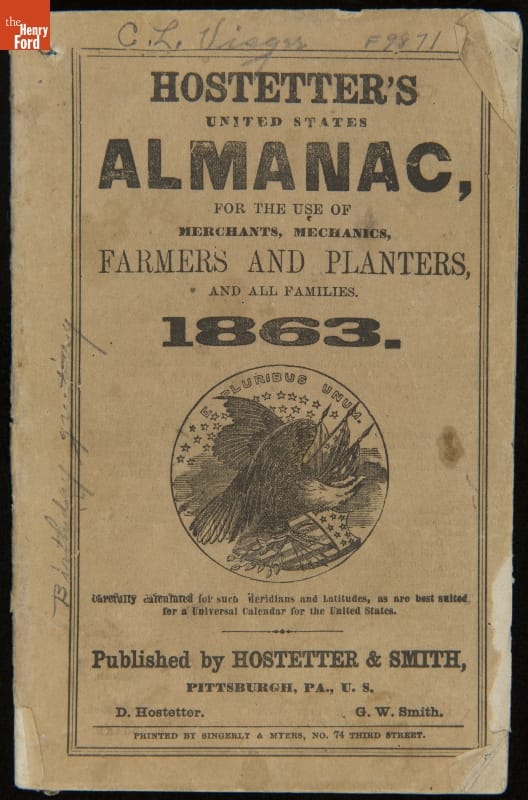
- "Hostetter's United States Almanac, for the Use of Merchants, Mechanics, Farmers and Planters, and All Families," 1863 - Almanacs contained practical information about the coming year. Readers normally found a calendar, weather predictions, tide schedules, and information related to astronomical events, agriculture, health, politics and other matters. Interspersed were jokes and witty sayings. Beginning in the late 1800s, makers of Hostetter's Bitters -- a self-proclaimed cure-all with high alcohol content -- published almanacs to entice the public to buy their products.
- 1863
- Collections - Artifact
"Hostetter's United States Almanac, for the Use of Merchants, Mechanics, Farmers and Planters, and All Families," 1863
Almanacs contained practical information about the coming year. Readers normally found a calendar, weather predictions, tide schedules, and information related to astronomical events, agriculture, health, politics and other matters. Interspersed were jokes and witty sayings. Beginning in the late 1800s, makers of Hostetter's Bitters -- a self-proclaimed cure-all with high alcohol content -- published almanacs to entice the public to buy their products.
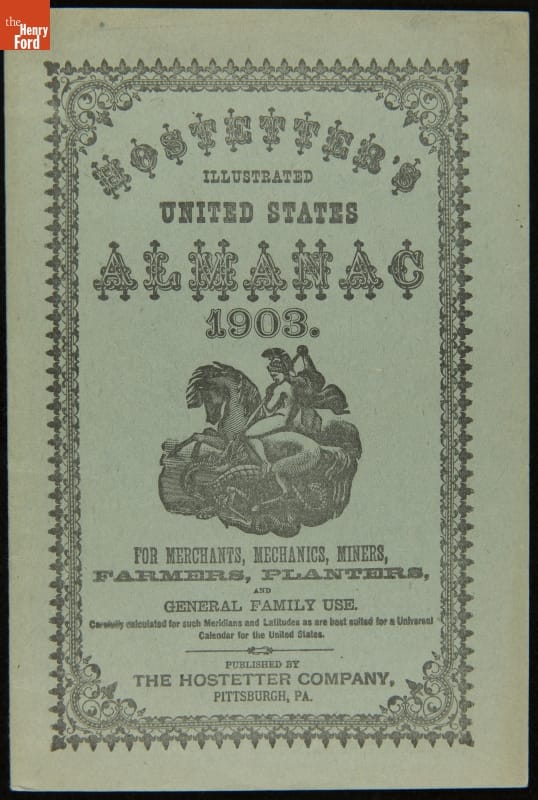
- Hostetter's Illustrated United States Almanac, 1903 - Almanacs contained practical information about the coming year. Readers normally found a calendar, weather predictions, tide schedules, and information related to astronomical events, agriculture, health, politics and other matters. Interspersed were jokes and witty sayings. Beginning in the late 1800s, makers of Hostetter's Bitters -- a self-proclaimed cure-all with high alcohol content -- published almanacs to entice the public to buy their products.
- 1903
- Collections - Artifact
Hostetter's Illustrated United States Almanac, 1903
Almanacs contained practical information about the coming year. Readers normally found a calendar, weather predictions, tide schedules, and information related to astronomical events, agriculture, health, politics and other matters. Interspersed were jokes and witty sayings. Beginning in the late 1800s, makers of Hostetter's Bitters -- a self-proclaimed cure-all with high alcohol content -- published almanacs to entice the public to buy their products.
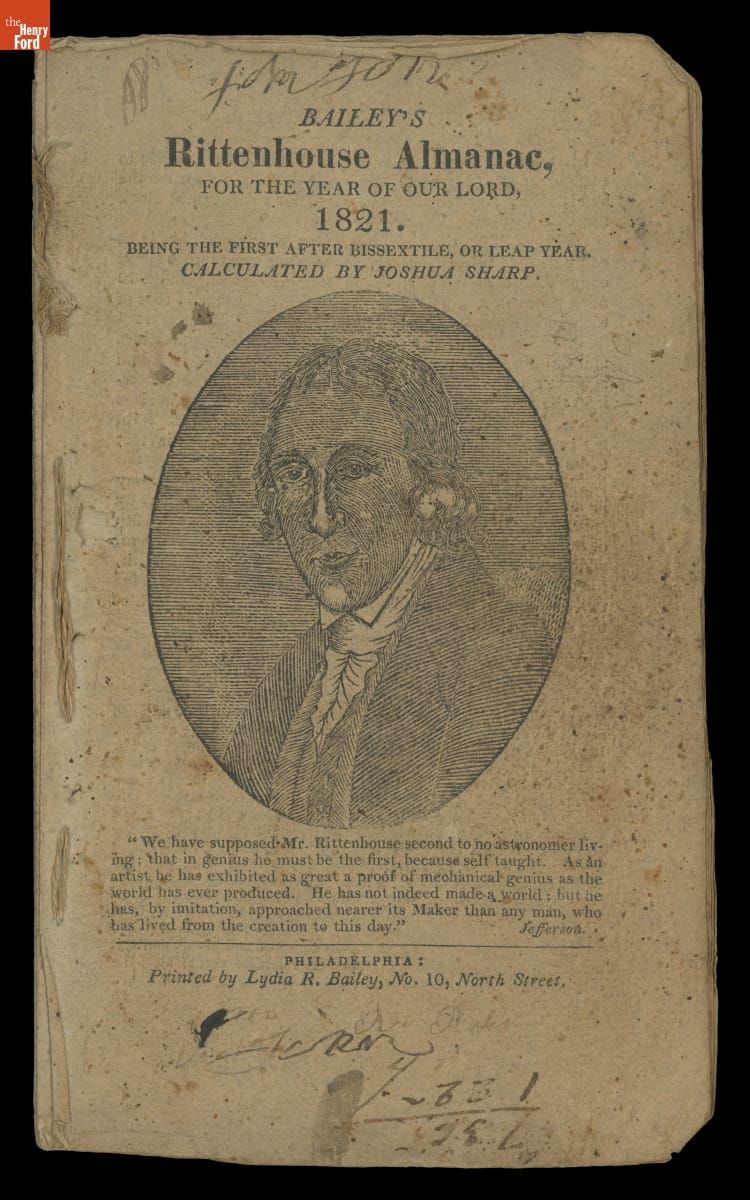
- "Bailey's Rittenhouse Almanac, for the Year of our Lord 1821" - Bailey's Rittenhouse Almanac, named for the noted astronomer David Rittenhouse (1732-1796), was a Philadelphia-focused almanac providing astronomical calculations (times of sunrises and sets, the tides, moon phases, and eclipses, etc.) The almanac also provided remedies, recipes, court schedules, and bits of sage advice among its pages. The almanac's printer, Lydia Bailey, operated one of Philadelphia's largest printing shops.
- 1821
- Collections - Artifact
"Bailey's Rittenhouse Almanac, for the Year of our Lord 1821"
Bailey's Rittenhouse Almanac, named for the noted astronomer David Rittenhouse (1732-1796), was a Philadelphia-focused almanac providing astronomical calculations (times of sunrises and sets, the tides, moon phases, and eclipses, etc.) The almanac also provided remedies, recipes, court schedules, and bits of sage advice among its pages. The almanac's printer, Lydia Bailey, operated one of Philadelphia's largest printing shops.
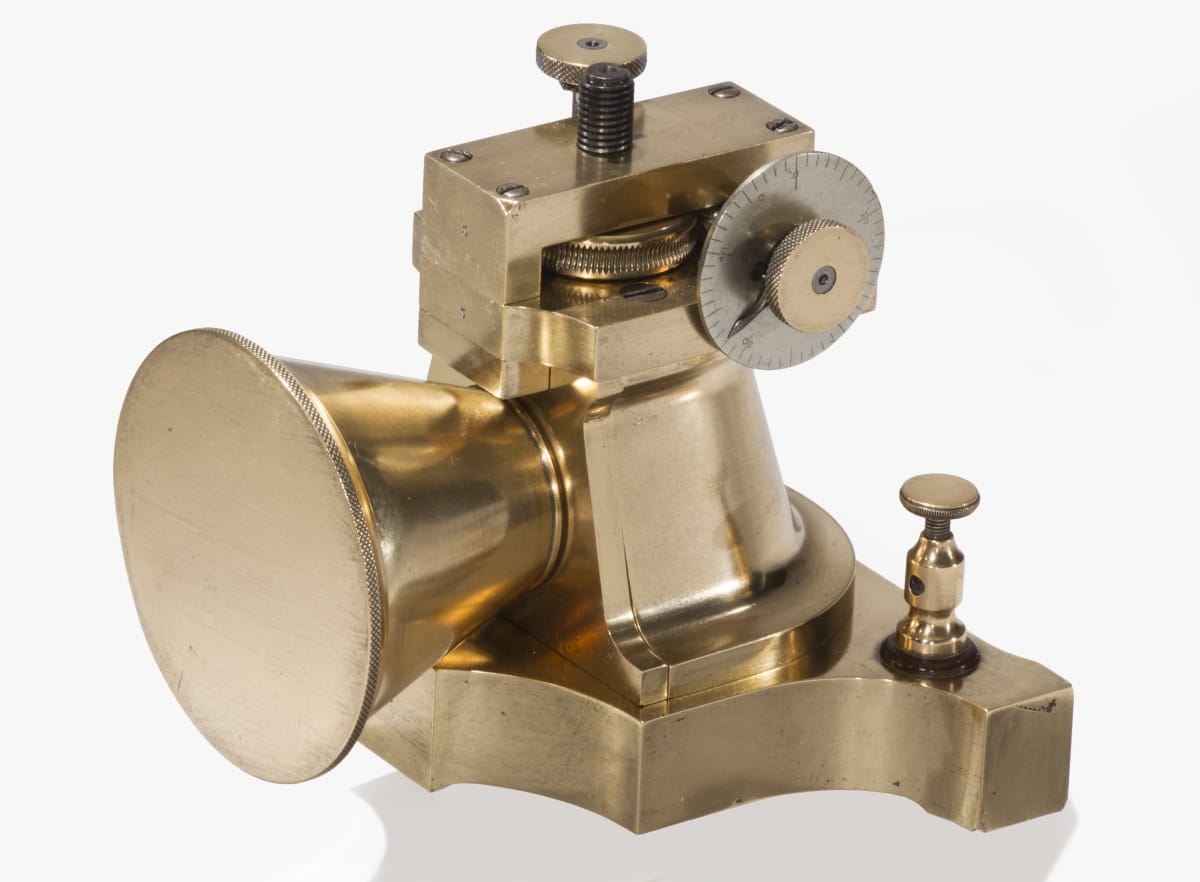
- Edison Tasimeter, 1878 - This tasimeter is a heat-measuring device, invented by Thomas Edison. On July 29, 1878, Edison travelled to Wyoming as part of the "Draper Expedition" to study a total solar eclipse along its path of totality. Mounting a tasimeter to a telescope, Edison conducted experiments to measure the energy levels of the sun's corona, amplified by the eclipse.
- 1878
- Collections - Artifact
Edison Tasimeter, 1878
This tasimeter is a heat-measuring device, invented by Thomas Edison. On July 29, 1878, Edison travelled to Wyoming as part of the "Draper Expedition" to study a total solar eclipse along its path of totality. Mounting a tasimeter to a telescope, Edison conducted experiments to measure the energy levels of the sun's corona, amplified by the eclipse.
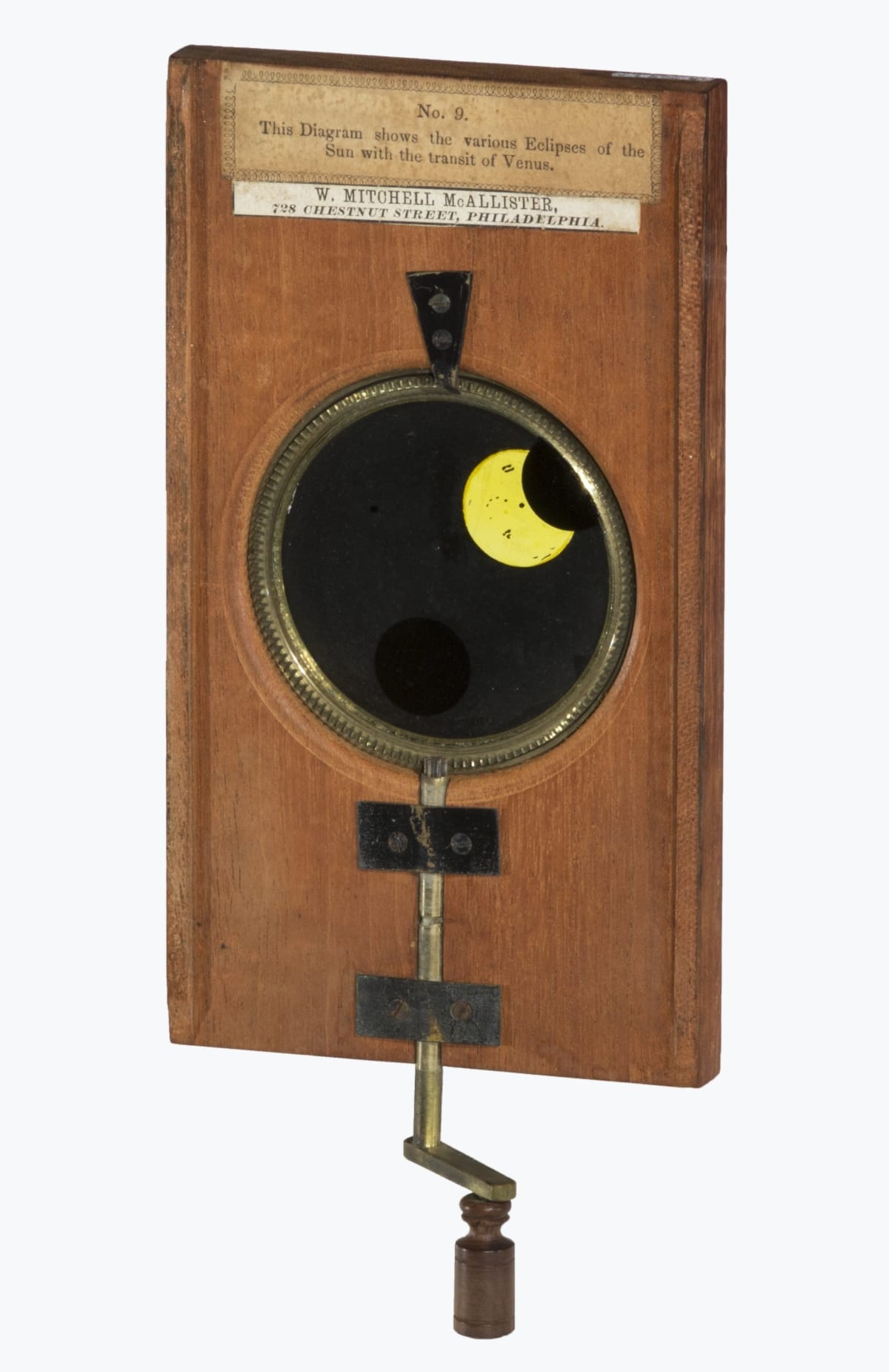
- Lantern Slide, Solar Eclipses, 1872-1900 - Magic lanterns use a concave mirror and light source to project images on glass slides with painted or photographic scenes. Developed in the 17th century, magic lanterns predate slide projectors and motion pictures. In the hands of magicians, they became "lanterns of fright," projecting wondrous images and apparitions. Slide themes ranged widely: exotic travel, folklore, advertising, history, science, and art.
- 1872-1900
- Collections - Artifact
Lantern Slide, Solar Eclipses, 1872-1900
Magic lanterns use a concave mirror and light source to project images on glass slides with painted or photographic scenes. Developed in the 17th century, magic lanterns predate slide projectors and motion pictures. In the hands of magicians, they became "lanterns of fright," projecting wondrous images and apparitions. Slide themes ranged widely: exotic travel, folklore, advertising, history, science, and art.