
Search
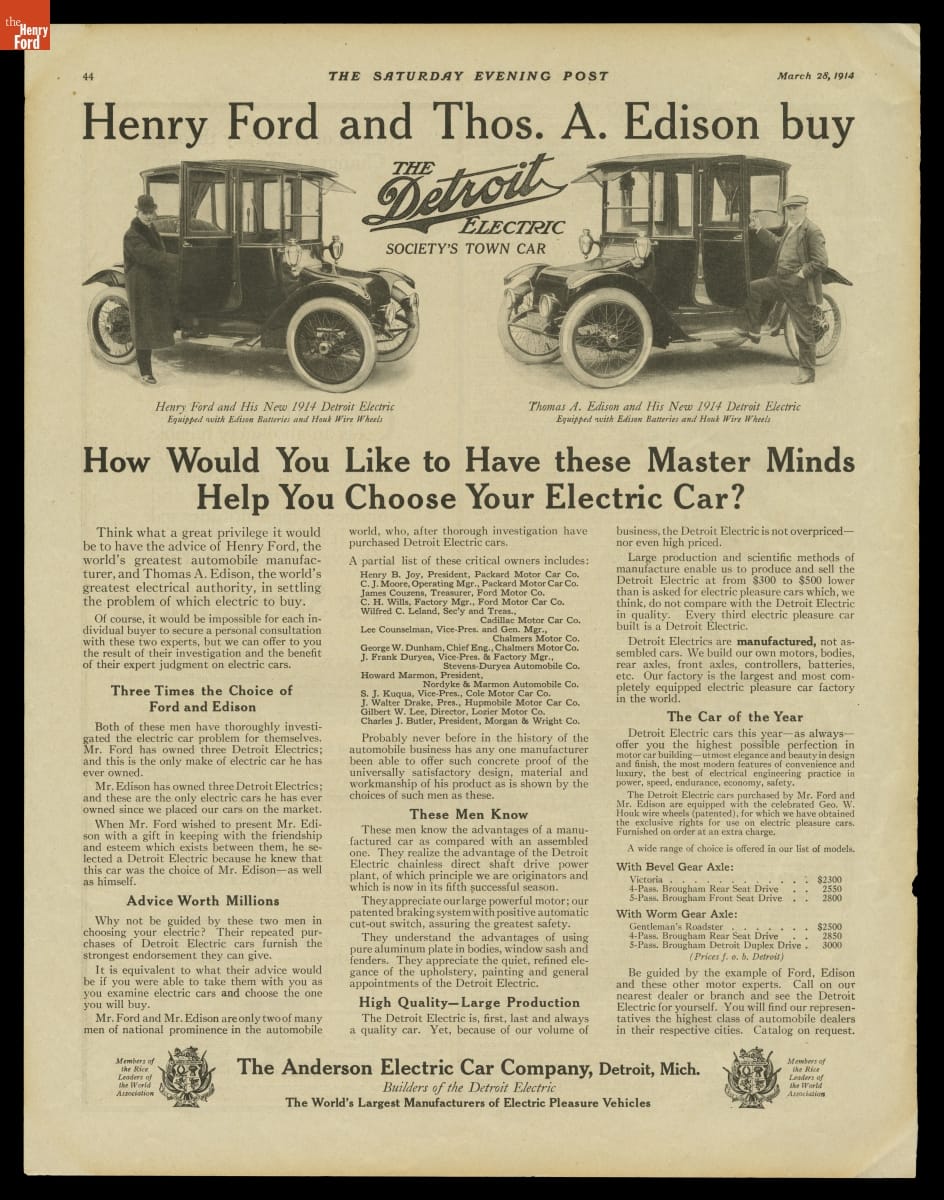
- "Henry Ford and Thomas A. Edison Buy the Detroit Electric," 1914 - Detroit Electric was the best-known and longest-lived American electric car company, producing automobiles from 1907-1939. The company marketed its cars to well-to-do customers -- particularly women -- looking for a clean, quiet car in which to take short trips in cities, where electricity was readily available and range wasn't an issue. Detroit Electric buyers included Henry Ford and Thomas Edison.
- March 28, 1914
- Collections - Artifact
"Henry Ford and Thomas A. Edison Buy the Detroit Electric," 1914
Detroit Electric was the best-known and longest-lived American electric car company, producing automobiles from 1907-1939. The company marketed its cars to well-to-do customers -- particularly women -- looking for a clean, quiet car in which to take short trips in cities, where electricity was readily available and range wasn't an issue. Detroit Electric buyers included Henry Ford and Thomas Edison.
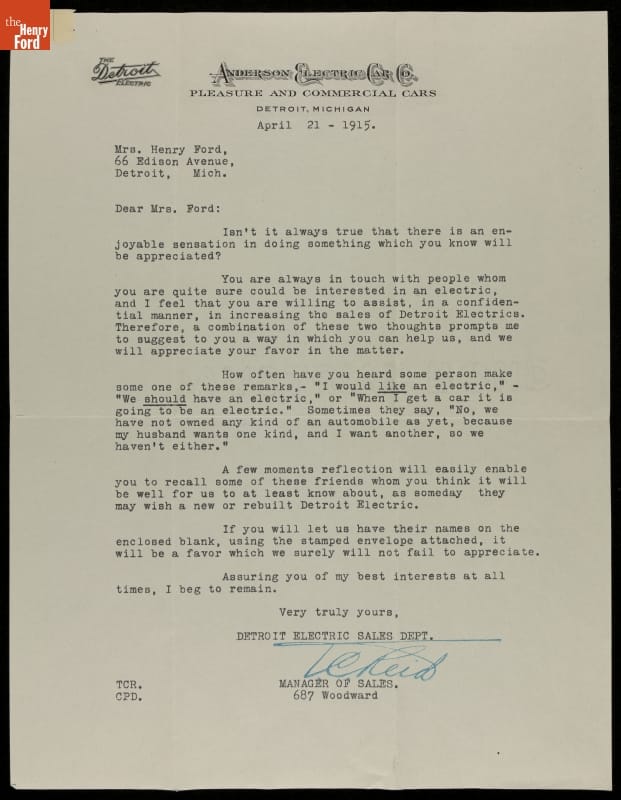
- Letter to Clara Ford from Anderson Electric Car Company, 1915 - Surprisingly, Clara Ford -- wife of Henry Ford -- drove an electric car instead of a Ford Model T. Early electrics were often marketed to women because of the cars' cleanliness and ease of operation. Anderson Electric, maker of Mrs. Ford's car, sent this letter hoping she might suggest a few friends interested in buying an electric vehicle.
- April 21, 1915
- Collections - Artifact
Letter to Clara Ford from Anderson Electric Car Company, 1915
Surprisingly, Clara Ford -- wife of Henry Ford -- drove an electric car instead of a Ford Model T. Early electrics were often marketed to women because of the cars' cleanliness and ease of operation. Anderson Electric, maker of Mrs. Ford's car, sent this letter hoping she might suggest a few friends interested in buying an electric vehicle.
- Child Charging a Rauch & Lang Electric Car in a Home Garage, 1917 - Safety was a frequent theme in electric automobile advertising. Certainly, electric cars were safer to start than hand-cranked gasoline cars. But manufacturers also stressed that electrics were safe to charge. This illustration, from a 1917 Rauch and Lang Carriage Company catalog, vividly makes the point with a child holding the plug while mother turns on the power.

- 1917
- Collections - Artifact
Child Charging a Rauch & Lang Electric Car in a Home Garage, 1917
Safety was a frequent theme in electric automobile advertising. Certainly, electric cars were safer to start than hand-cranked gasoline cars. But manufacturers also stressed that electrics were safe to charge. This illustration, from a 1917 Rauch and Lang Carriage Company catalog, vividly makes the point with a child holding the plug while mother turns on the power.
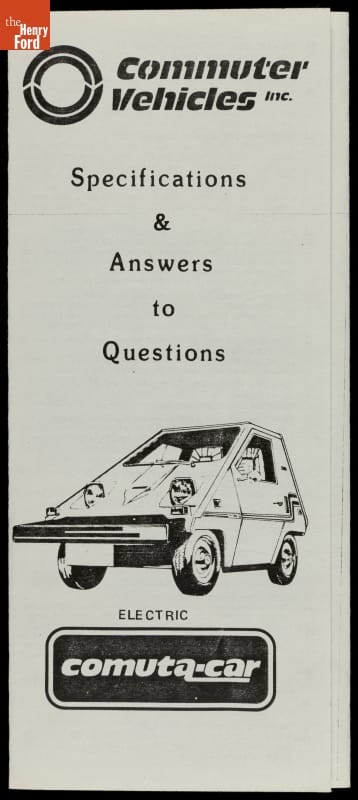
- "Commuter Vehicles Inc. Specifications & Answers to Questions," 1982 - This brochure from 1982 provided specifications and answers to questions about the electric Comuta-Car. Sharp increases in gasoline prices in the 1970s persuaded some buyers to purchase small vehicles from Commuter Vehicles, Inc. But every time the price of fuel spiked, it always fell again, and demand for electrics-- designed for limited use in cities--always fell along with it.
- 1982
- Collections - Artifact
"Commuter Vehicles Inc. Specifications & Answers to Questions," 1982
This brochure from 1982 provided specifications and answers to questions about the electric Comuta-Car. Sharp increases in gasoline prices in the 1970s persuaded some buyers to purchase small vehicles from Commuter Vehicles, Inc. But every time the price of fuel spiked, it always fell again, and demand for electrics-- designed for limited use in cities--always fell along with it.
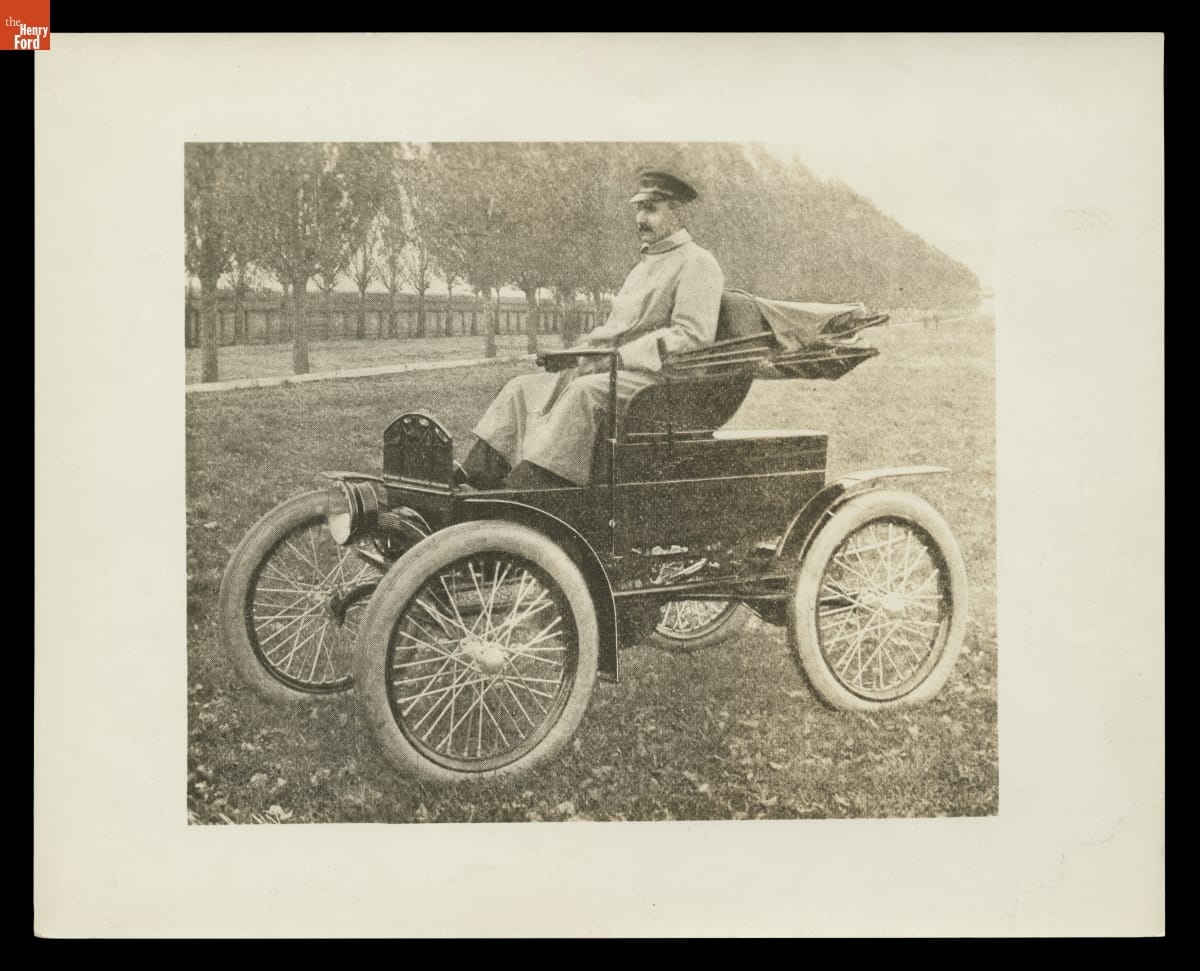
- Baker Electric Automobile, 1900 - Walter C. Baker and F. Philip Dorn co-founded Baker Motor Vehicle Company in Cleveland, Ohio, in 1899. From the start, the company specialized in electric vehicles. The electric runabout in this photo was priced at $850. Baker production continued until 1916, by which time gasoline-powered vehicles with internal combustion engines were dominating the market.
- circa 1901
- Collections - Artifact
Baker Electric Automobile, 1900
Walter C. Baker and F. Philip Dorn co-founded Baker Motor Vehicle Company in Cleveland, Ohio, in 1899. From the start, the company specialized in electric vehicles. The electric runabout in this photo was priced at $850. Baker production continued until 1916, by which time gasoline-powered vehicles with internal combustion engines were dominating the market.
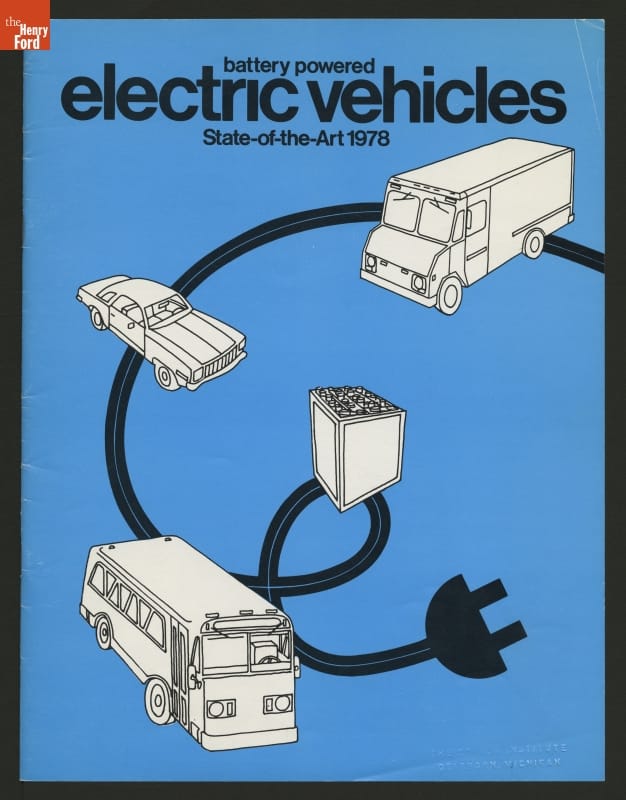
- Battery Powered Electric Vehicles: State of the Art 1978 - This informational book promotes the value of battery-powered vehicles.
- 1978
- Collections - Artifact
Battery Powered Electric Vehicles: State of the Art 1978
This informational book promotes the value of battery-powered vehicles.
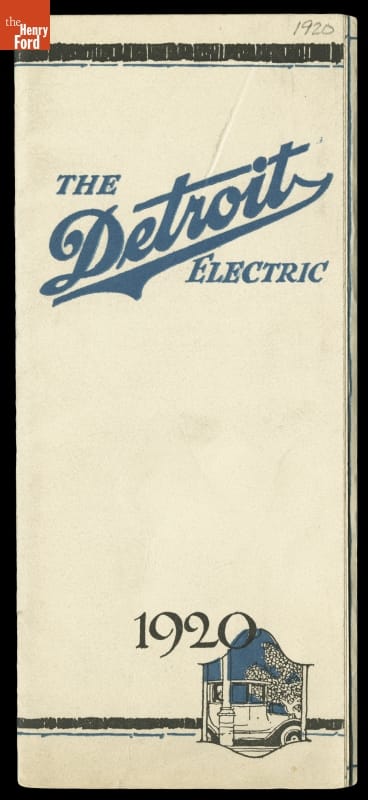
- Sales Catalog, "The Detroit Electric," 1920 - Detroit Electric was the best-known and longest-lived American electric car company. The firm built its first electric vehicles in 1907, promoting them for use in cities where electricity was readily available and range generally wasn't an issue. Detroit Electric moved away from passenger cars in the 1920s to focus on commercial vehicles. The company ended all production in 1939.
- 1920
- Collections - Artifact
Sales Catalog, "The Detroit Electric," 1920
Detroit Electric was the best-known and longest-lived American electric car company. The firm built its first electric vehicles in 1907, promoting them for use in cities where electricity was readily available and range generally wasn't an issue. Detroit Electric moved away from passenger cars in the 1920s to focus on commercial vehicles. The company ended all production in 1939.
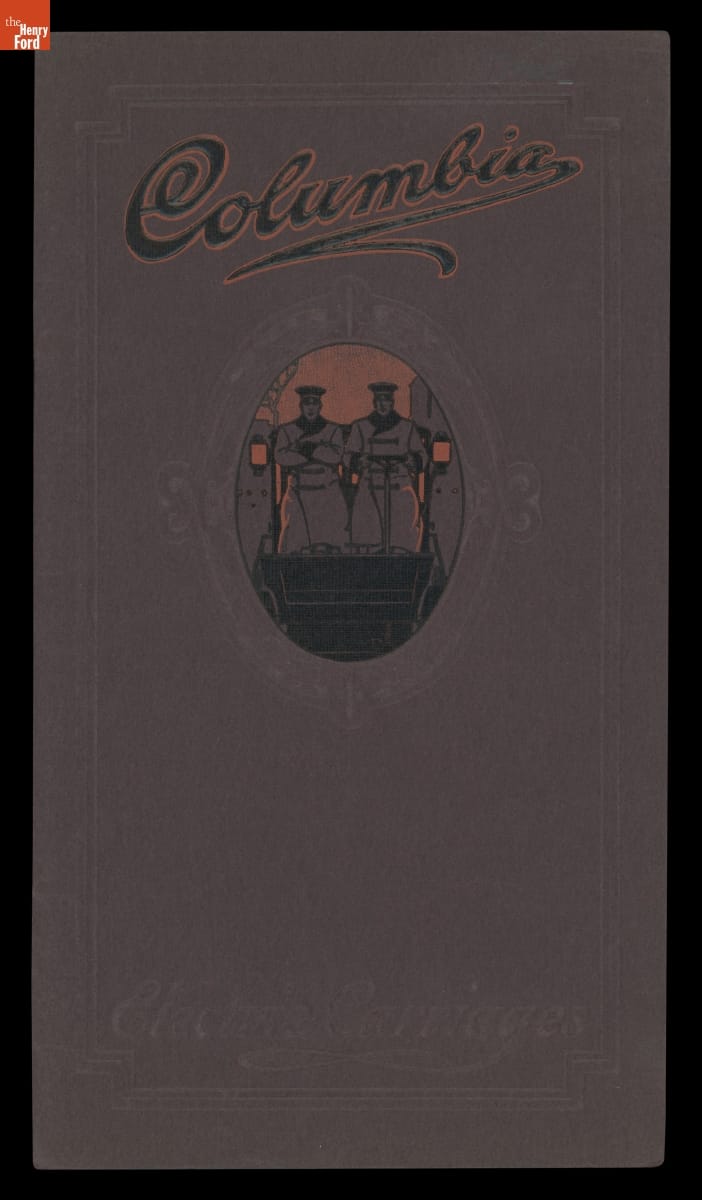
- "Columbia Electric Carriages," 1905 - Columbia, built by the Pope Manufacturing Company of Hartford, Connecticut, was America's leading bicycle brand in the late 19th century. Founder Albert A. Pope hoped to duplicate that success with automobiles. Both electric and gasoline Columbia motor vehicles were produced in a range of body styles. But high prices hampered sales, and the last Columbia cars were built in 1913.
- 1905
- Collections - Artifact
"Columbia Electric Carriages," 1905
Columbia, built by the Pope Manufacturing Company of Hartford, Connecticut, was America's leading bicycle brand in the late 19th century. Founder Albert A. Pope hoped to duplicate that success with automobiles. Both electric and gasoline Columbia motor vehicles were produced in a range of body styles. But high prices hampered sales, and the last Columbia cars were built in 1913.
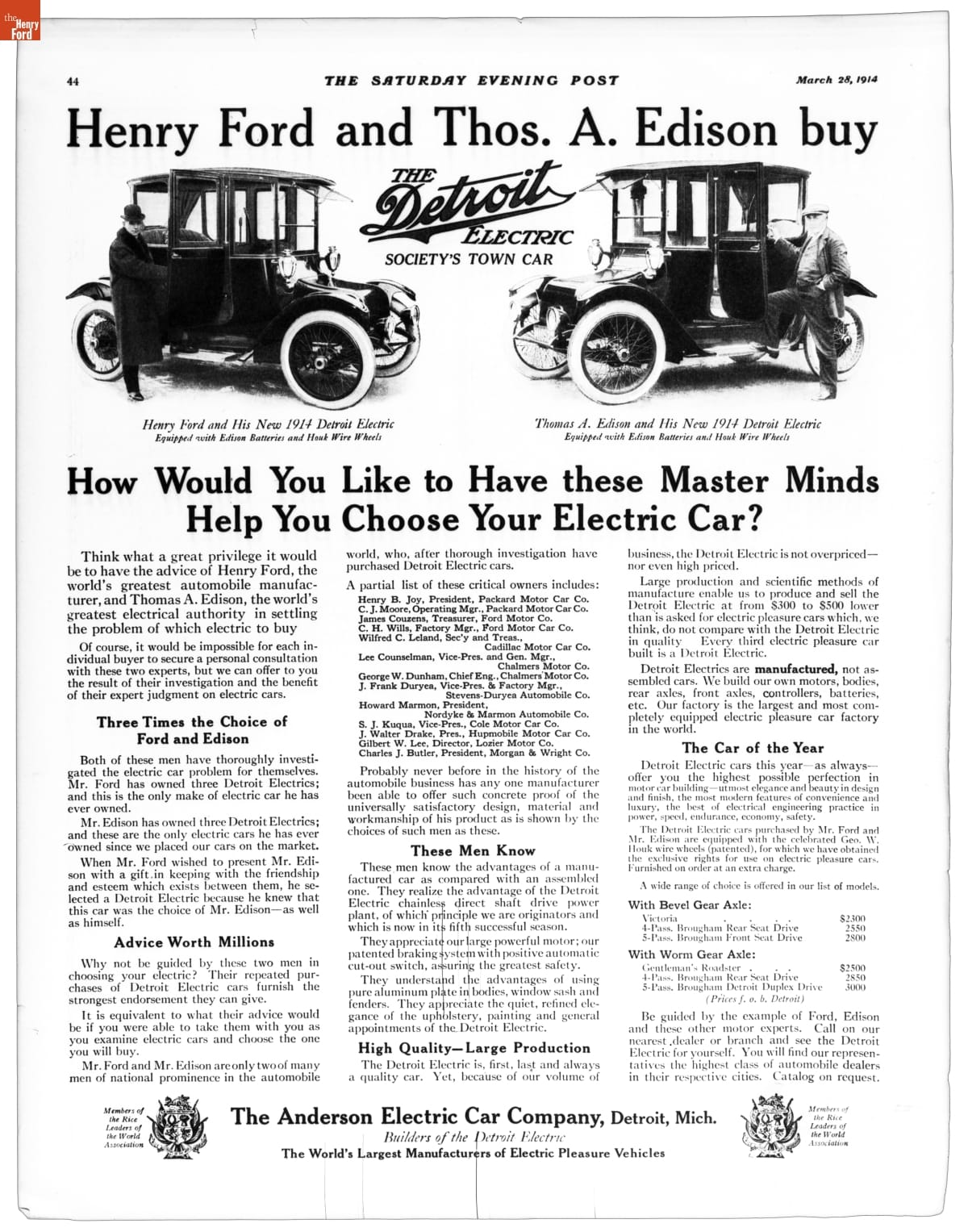
- Anderson Electric Car Company Advertisement, "Henry Ford and Thos. A. Edison Buy the Detroit Electric," 1914 - Henry Ford and Thomas Edison figured prominently in this 1914 advertisement for the Anderson Electric Car Company. According to the ad, each had owned three electric vehicles -- all Detroit Electrics. The ad also lists other well-known motor company executives who owned Detroit Electrics. Anderson Electric Car Company hoped to parlay these ownership examples into larger sales.
- March 28, 1914
- Collections - Artifact
Anderson Electric Car Company Advertisement, "Henry Ford and Thos. A. Edison Buy the Detroit Electric," 1914
Henry Ford and Thomas Edison figured prominently in this 1914 advertisement for the Anderson Electric Car Company. According to the ad, each had owned three electric vehicles -- all Detroit Electrics. The ad also lists other well-known motor company executives who owned Detroit Electrics. Anderson Electric Car Company hoped to parlay these ownership examples into larger sales.
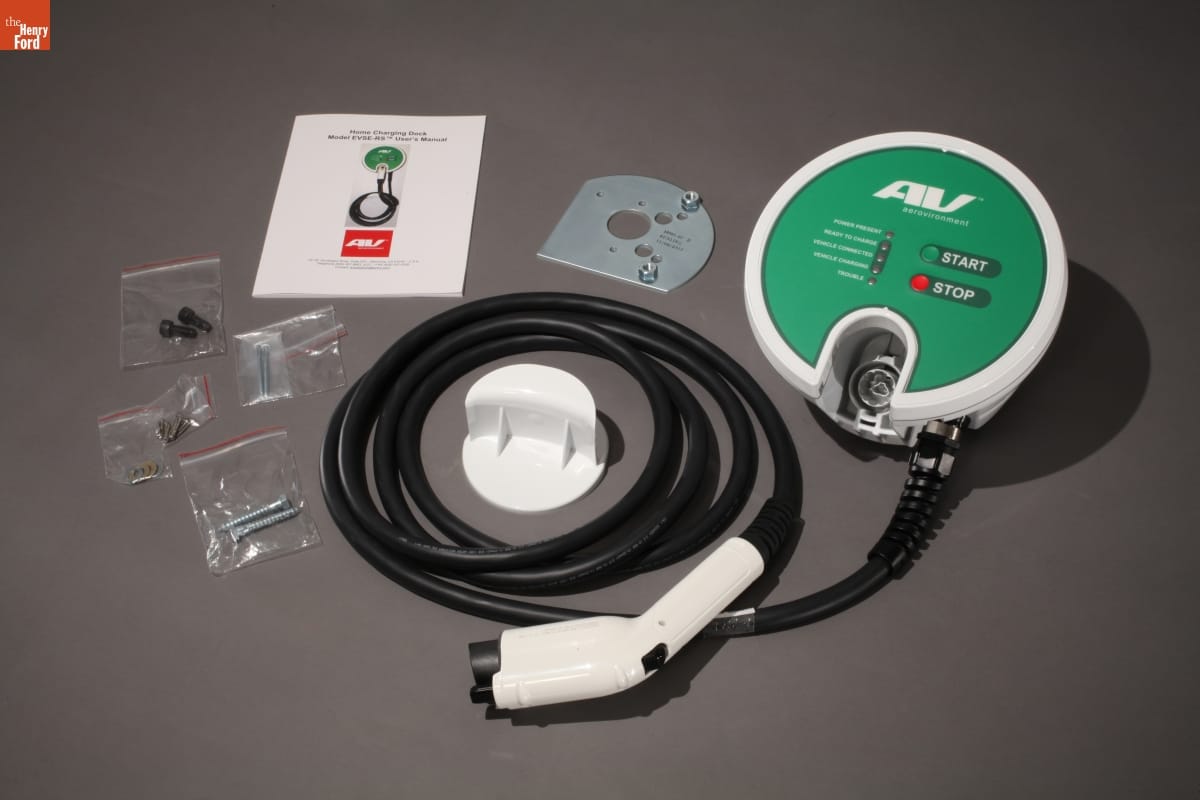
- Charging Station For Nissan Leaf Automobile, 2011 - As new environmental problems emerged and gas prices rose at the end of the 20th century, electric vehicles seemed viable again. But if electric cars are to be widely used, battery recharging must be convenient. AeroVironment, a California-based company, produced an at-home charging station for Nissan and other electric car manufacturers. This standardized connector and plug are part of that equipment.
- 2011
- Collections - Artifact
Charging Station For Nissan Leaf Automobile, 2011
As new environmental problems emerged and gas prices rose at the end of the 20th century, electric vehicles seemed viable again. But if electric cars are to be widely used, battery recharging must be convenient. AeroVironment, a California-based company, produced an at-home charging station for Nissan and other electric car manufacturers. This standardized connector and plug are part of that equipment.