
Search
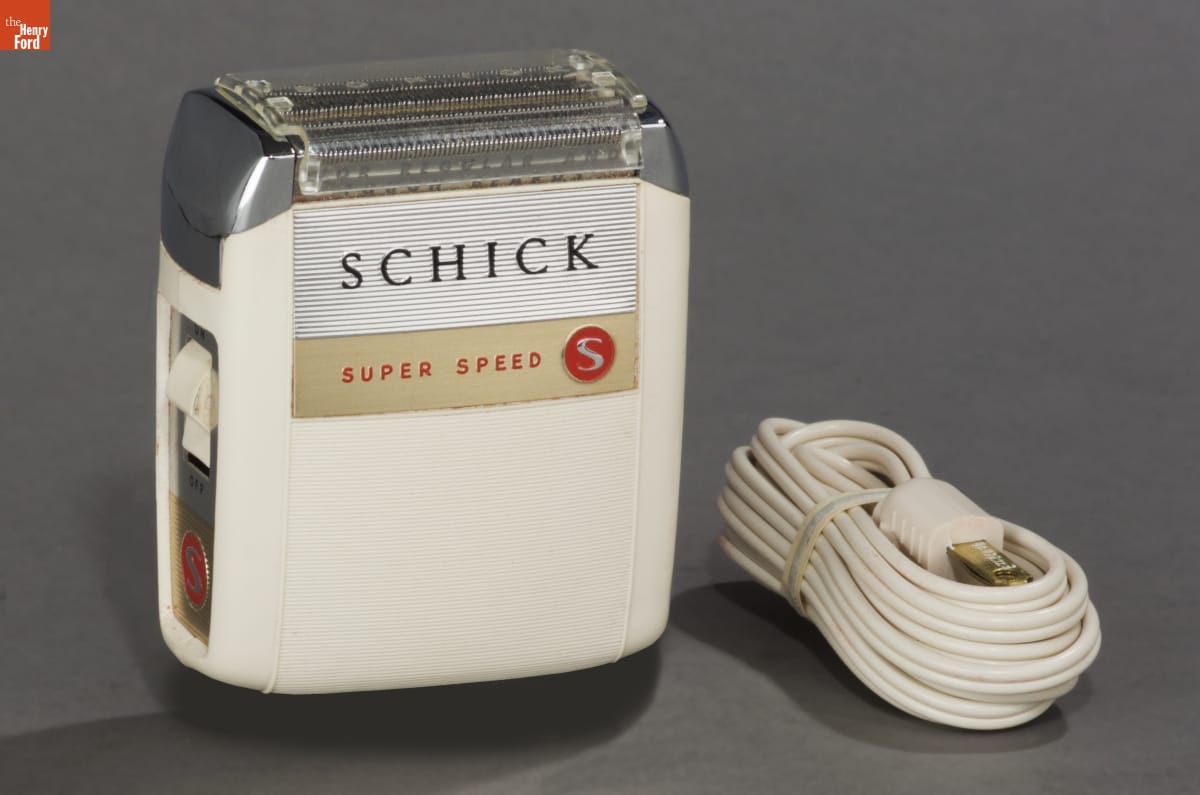
- Schick Super Speed Electric Shaver, 1962-1966 - Jacob Schick patented the first successful electric razor in 1930 and began manufacturing his invention. The razors removed facial hair without lather or water, relying on an electric motor to move the cutting blades. Innovations and modern designs followed. Schick's company contracted with Mel Boldt and Associates to design the distinctive look of this razor from the 1960s.
- 1962-1966
- Collections - Artifact
Schick Super Speed Electric Shaver, 1962-1966
Jacob Schick patented the first successful electric razor in 1930 and began manufacturing his invention. The razors removed facial hair without lather or water, relying on an electric motor to move the cutting blades. Innovations and modern designs followed. Schick's company contracted with Mel Boldt and Associates to design the distinctive look of this razor from the 1960s.
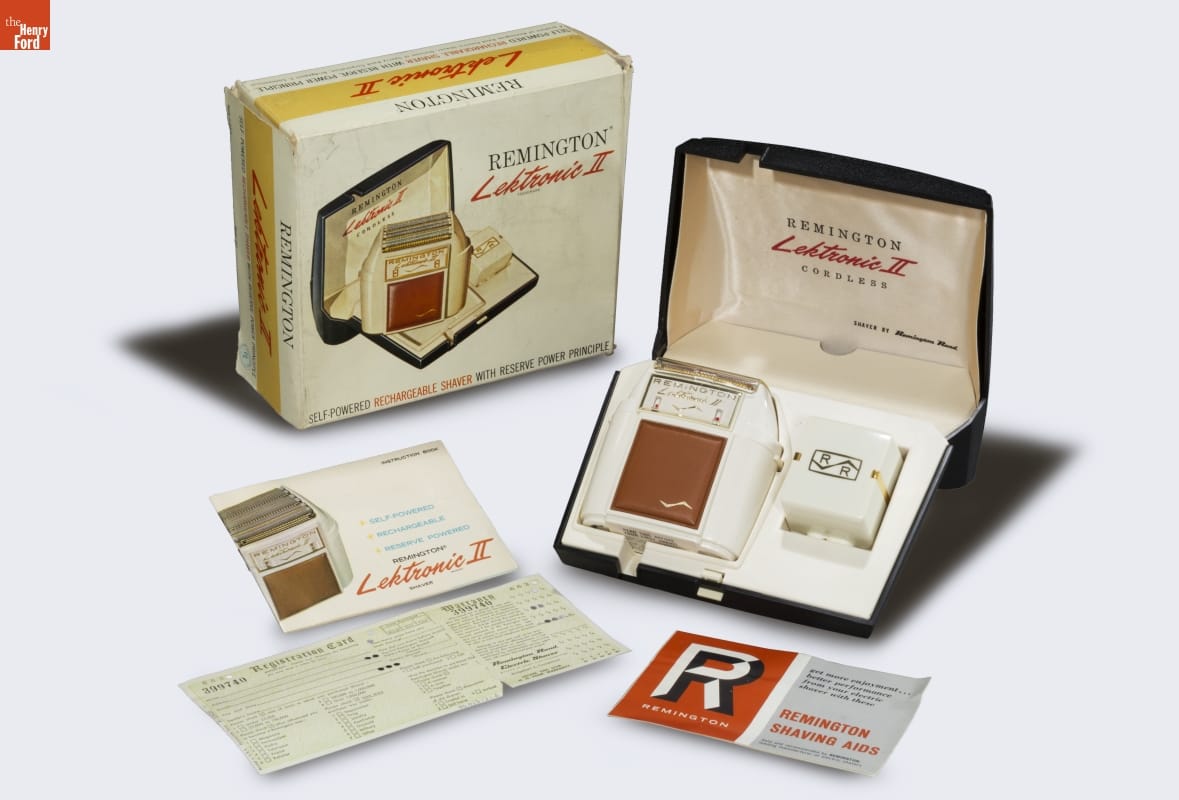
- Remington Lektronic II Electric Shaver, circa 1962 - Remington sold its first electric razor in 1937. It had a thin metal foil covering the cutting blades, a feature that would become standard on other electric razors. The company continued to innovate and produce new designs. In 1960, Remington introduced the Lektronic, the first cordless shaver. The company also contracted with Mel Boldt and Associates to design its products' distinctive look.
- circa 1962
- Collections - Artifact
Remington Lektronic II Electric Shaver, circa 1962
Remington sold its first electric razor in 1937. It had a thin metal foil covering the cutting blades, a feature that would become standard on other electric razors. The company continued to innovate and produce new designs. In 1960, Remington introduced the Lektronic, the first cordless shaver. The company also contracted with Mel Boldt and Associates to design its products' distinctive look.
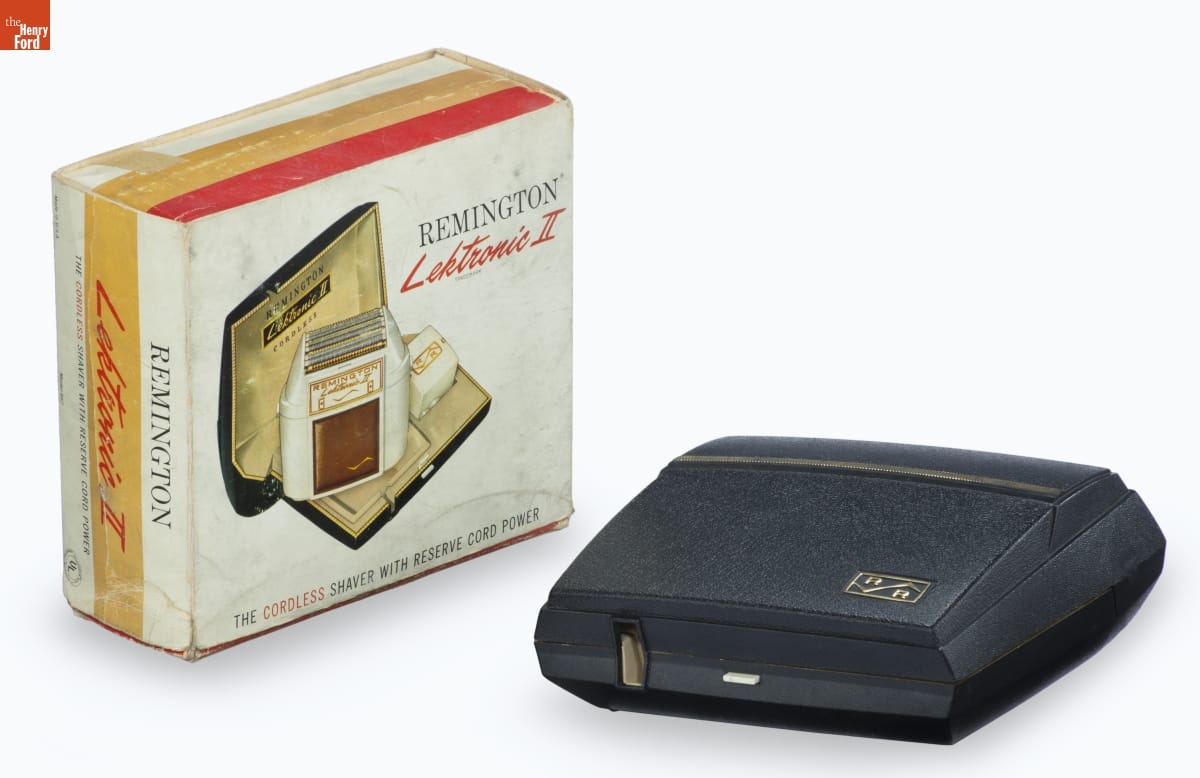
- Remington Lektronic II Electric Razor, circa 1962 - Remington sold its first electric razor in 1937. It had a thin metal foil covering the cutting blades, a feature that would become standard on other electric razors. The company continued to innovate and produce new designs. In 1960, Remington introduced the Lektronic, the first cordless shaver. The company also contracted with Mel Boldt and Associates to design its products' distinctive look.
- circa 1962
- Collections - Artifact
Remington Lektronic II Electric Razor, circa 1962
Remington sold its first electric razor in 1937. It had a thin metal foil covering the cutting blades, a feature that would become standard on other electric razors. The company continued to innovate and produce new designs. In 1960, Remington introduced the Lektronic, the first cordless shaver. The company also contracted with Mel Boldt and Associates to design its products' distinctive look.
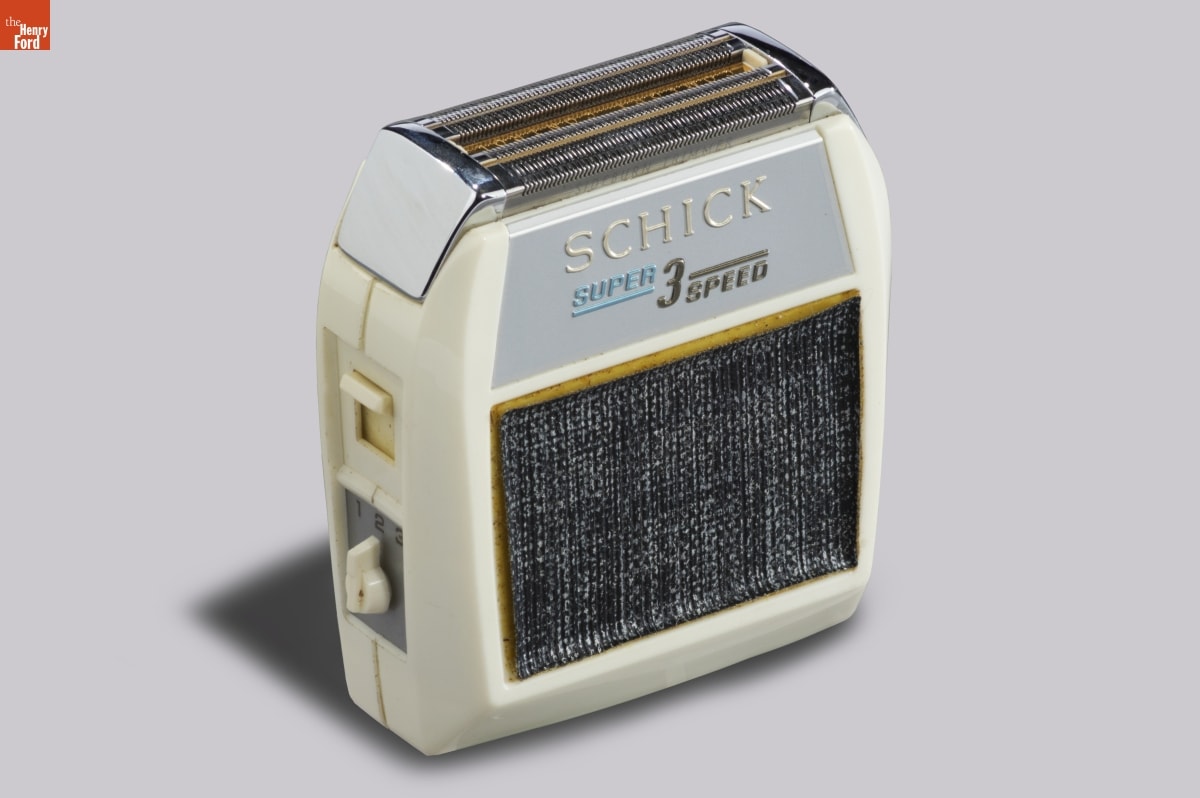
- Schick Super 3 Speed Electric Shaver, 1965-1970 - Jacob Schick patented the first successful electric razor in 1930 and began manufacturing his invention. The razors removed facial hair without lather or water, relying on an electric motor to move the cutting blades. Innovations and modern designs followed. Schick's company contracted with Mel Boldt and Associates to design the distinctive look of this razor from the 1960s.
- 1965-1970
- Collections - Artifact
Schick Super 3 Speed Electric Shaver, 1965-1970
Jacob Schick patented the first successful electric razor in 1930 and began manufacturing his invention. The razors removed facial hair without lather or water, relying on an electric motor to move the cutting blades. Innovations and modern designs followed. Schick's company contracted with Mel Boldt and Associates to design the distinctive look of this razor from the 1960s.
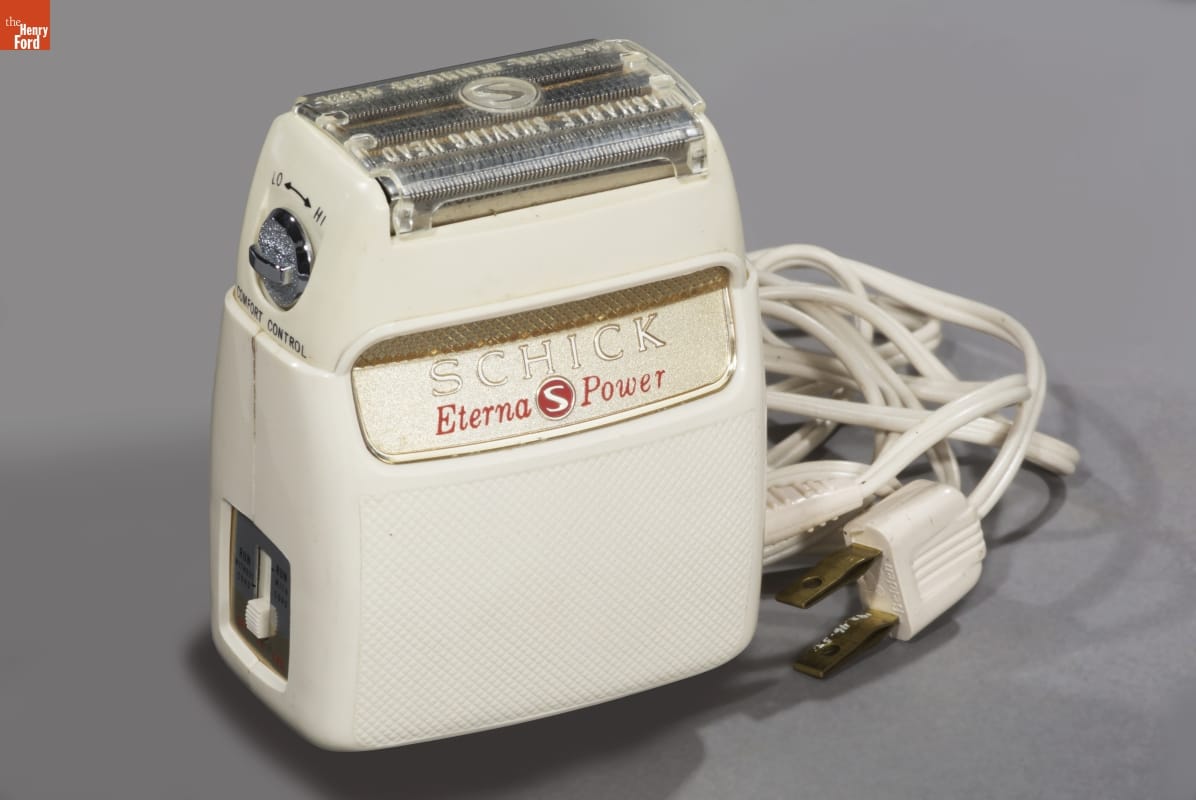
- Schick Eterna Power Razor, circa 1963 - Jacob Schick patented the first successful electric razor in 1930 and began manufacturing his invention. The razors removed facial hair without lather or water, relying on an electric motor to move the cutting blades. Innovations and modern designs followed. Schick's company contracted with Mel Boldt and Associates to design the distinctive look of this razor from the 1960s.
- circa 1963
- Collections - Artifact
Schick Eterna Power Razor, circa 1963
Jacob Schick patented the first successful electric razor in 1930 and began manufacturing his invention. The razors removed facial hair without lather or water, relying on an electric motor to move the cutting blades. Innovations and modern designs followed. Schick's company contracted with Mel Boldt and Associates to design the distinctive look of this razor from the 1960s.
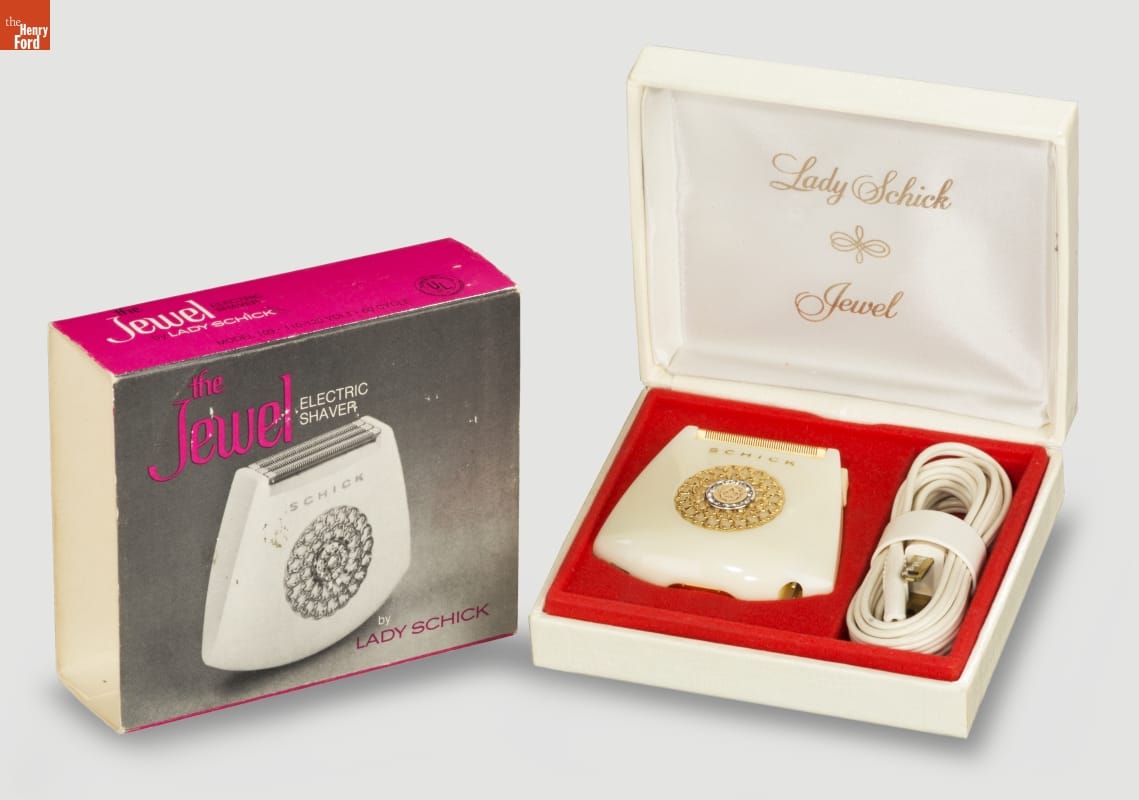
- Lady Schick Jewel Electric Shaver, circa 1972 - Starting in the 1940s, electric shavers were marketed and sold to women as an alternative to disposable razors. Advertisers claimed the shavers were gentler on skin than the ones for men. Women's shavers were made distinct from men's shavers by the softer design, wide range of colors, and decorative flourishes. Noted industrial designer Mel Boldt and Associates designed this product.
- circa 1972
- Collections - Artifact
Lady Schick Jewel Electric Shaver, circa 1972
Starting in the 1940s, electric shavers were marketed and sold to women as an alternative to disposable razors. Advertisers claimed the shavers were gentler on skin than the ones for men. Women's shavers were made distinct from men's shavers by the softer design, wide range of colors, and decorative flourishes. Noted industrial designer Mel Boldt and Associates designed this product.
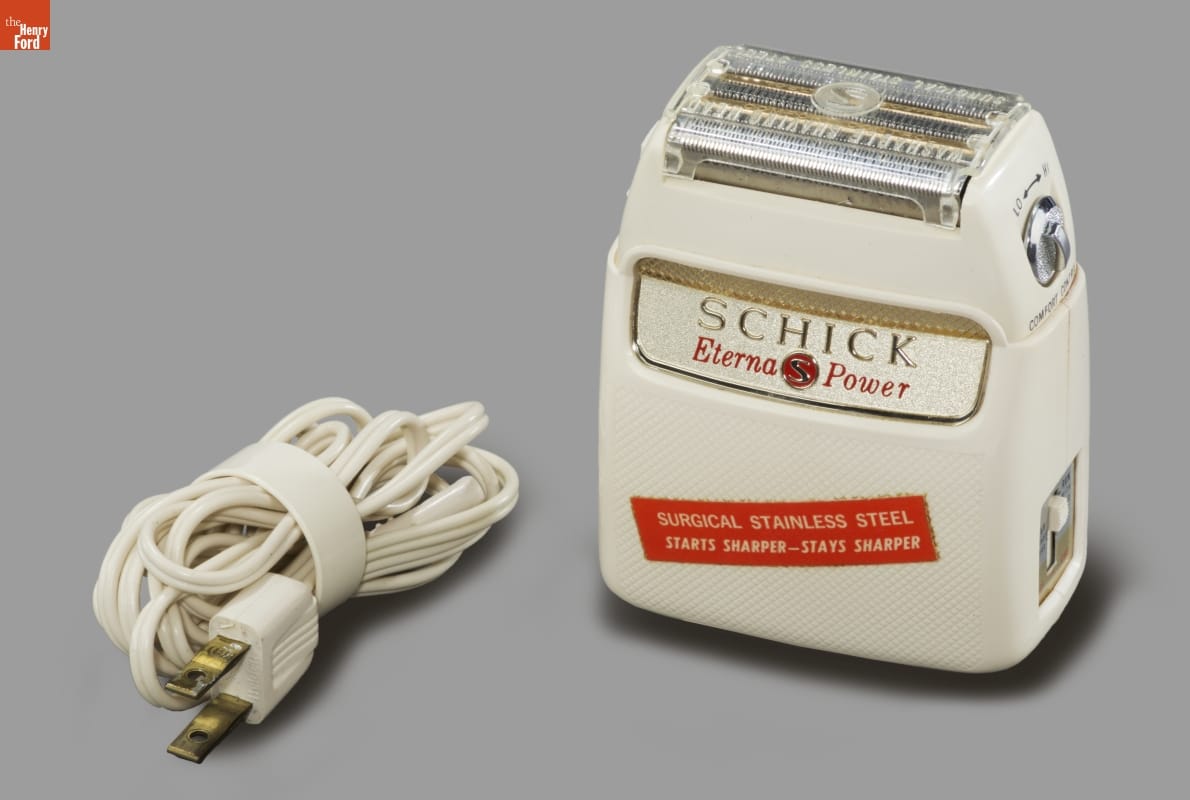
- Schick Eterna Power Shaver, Used by Harvey S. Firestone, circa 1963 - Jacob Schick patented the first successful electric razor in 1930 and began manufacturing his invention. The razors removed facial hair without lather or water, relying on an electric motor to move the cutting blades. Innovations and modern designs followed. Schick's company contracted with Mel Boldt and Associates to design the distinctive look of this razor from the 1960s.
- circa 1963
- Collections - Artifact
Schick Eterna Power Shaver, Used by Harvey S. Firestone, circa 1963
Jacob Schick patented the first successful electric razor in 1930 and began manufacturing his invention. The razors removed facial hair without lather or water, relying on an electric motor to move the cutting blades. Innovations and modern designs followed. Schick's company contracted with Mel Boldt and Associates to design the distinctive look of this razor from the 1960s.
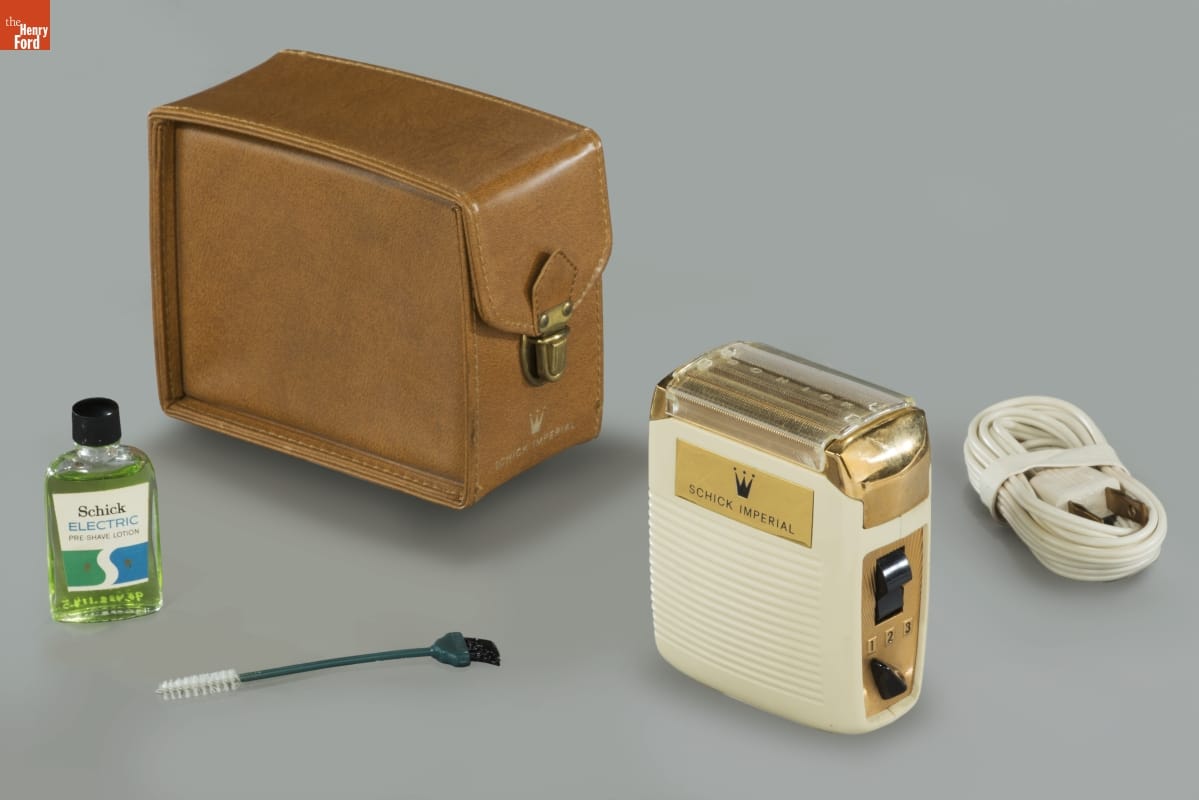
- Schick Imperial Electric Shaver, 1960-1965 - Jacob Schick patented the first successful electric razor in 1930 and began manufacturing his invention. The razors removed facial hair without lather or water, relying on an electric motor to move the cutting blades. Innovations and modern designs followed. Schick's company contracted with Mel Boldt and Associates to design the distinctive look of this razor from the 1960s.
- 1960-1965
- Collections - Artifact
Schick Imperial Electric Shaver, 1960-1965
Jacob Schick patented the first successful electric razor in 1930 and began manufacturing his invention. The razors removed facial hair without lather or water, relying on an electric motor to move the cutting blades. Innovations and modern designs followed. Schick's company contracted with Mel Boldt and Associates to design the distinctive look of this razor from the 1960s.
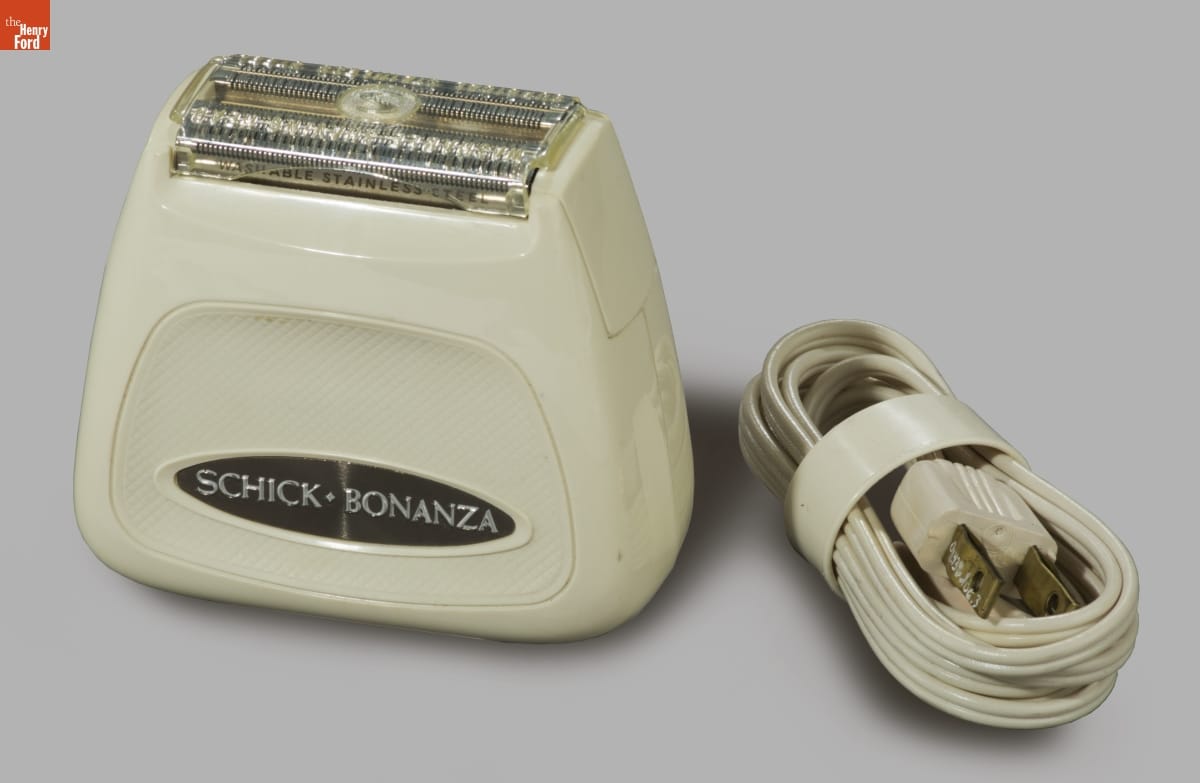
- Schick Bonanza Electric Shaver, circa 1964 - Jacob Schick patented the first successful electric razor in 1930 and began manufacturing his invention. The razors removed facial hair without lather or water, relying on an electric motor to move the cutting blades. Innovations and modern designs followed. Schick's company contracted with Mel Boldt and Associates to design the distinctive look of this razor from the 1960s.
- circa 1964
- Collections - Artifact
Schick Bonanza Electric Shaver, circa 1964
Jacob Schick patented the first successful electric razor in 1930 and began manufacturing his invention. The razors removed facial hair without lather or water, relying on an electric motor to move the cutting blades. Innovations and modern designs followed. Schick's company contracted with Mel Boldt and Associates to design the distinctive look of this razor from the 1960s.
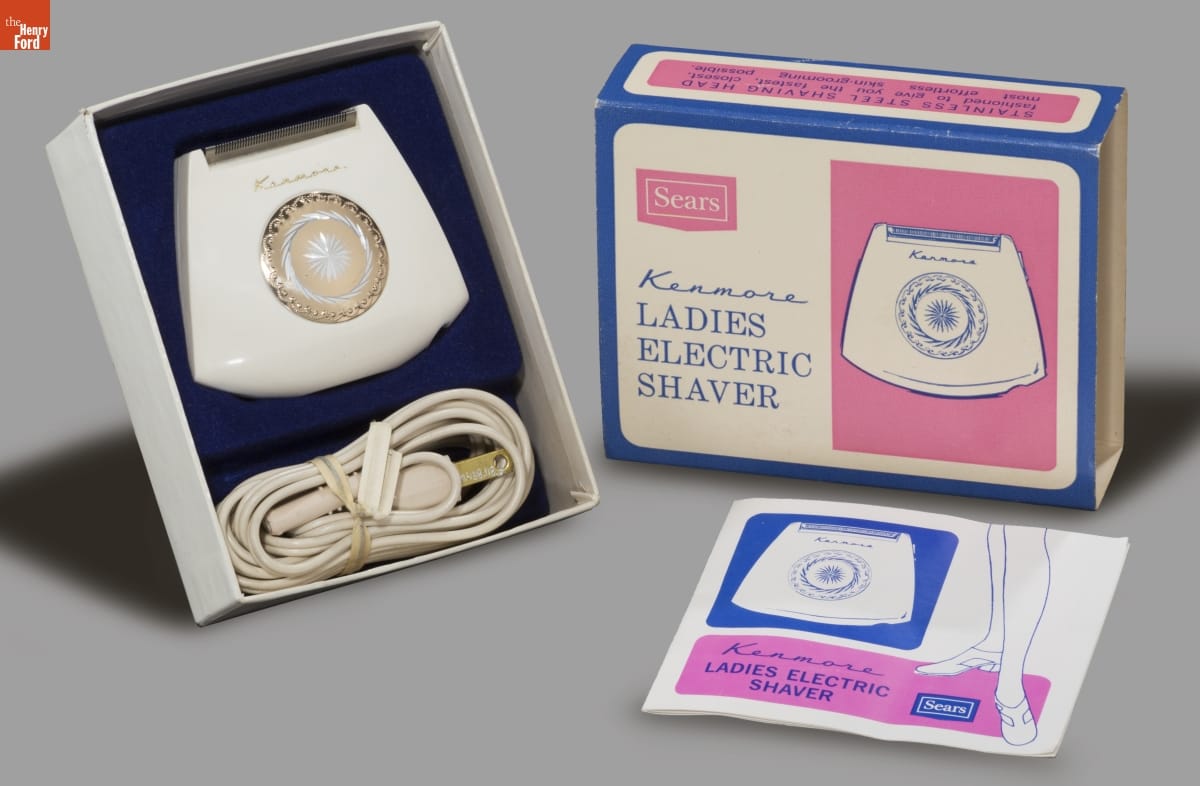
- Sears Kenmore Model 820-93942 Electric Shaver, 1960-1970 - Starting in the 1940s, electric shavers were marketed and sold to women as an alternative to disposable razors. Advertisers claimed the shavers were gentler on skin than the ones for men. Women's shavers were made distinct from men's shavers by the softer design, wide range of colors, and decorative flourishes. Noted industrial designer Mel Boldt and Associates designed this product.
- 1960-1970
- Collections - Artifact
Sears Kenmore Model 820-93942 Electric Shaver, 1960-1970
Starting in the 1940s, electric shavers were marketed and sold to women as an alternative to disposable razors. Advertisers claimed the shavers were gentler on skin than the ones for men. Women's shavers were made distinct from men's shavers by the softer design, wide range of colors, and decorative flourishes. Noted industrial designer Mel Boldt and Associates designed this product.