
Search
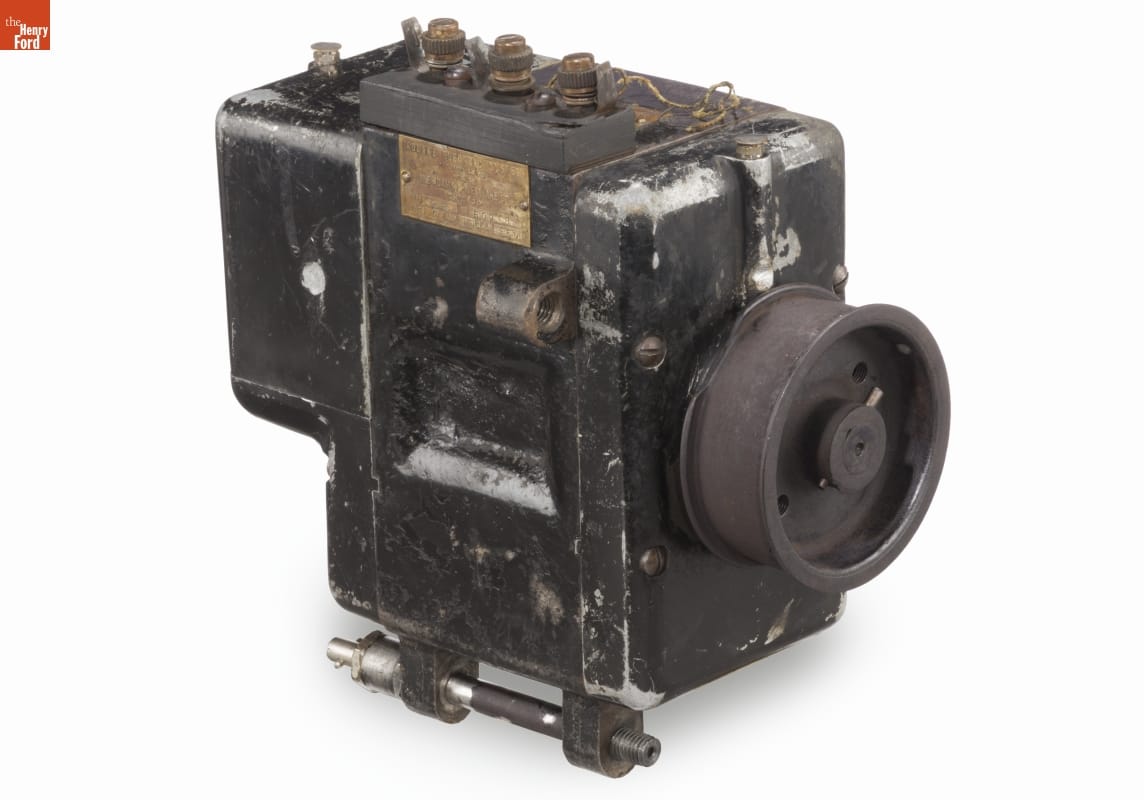
- Adams & Westlake Co. Type 3205 Adlake Electric System, 1910-1915 -
- 1910-1915
- Collections - Artifact
Adams & Westlake Co. Type 3205 Adlake Electric System, 1910-1915
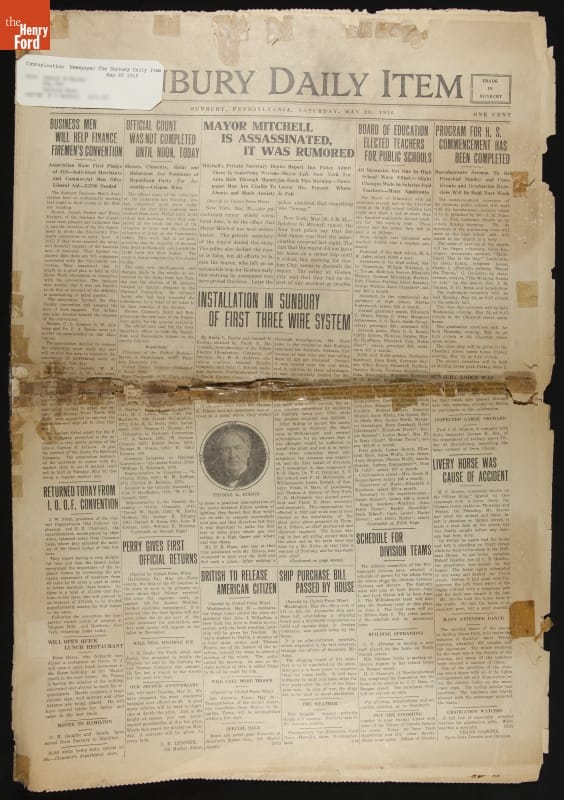
- Sunbury Daily Item Newspaper for May 20, 1916 -
- May 20, 1916
- Collections - Artifact
Sunbury Daily Item Newspaper for May 20, 1916
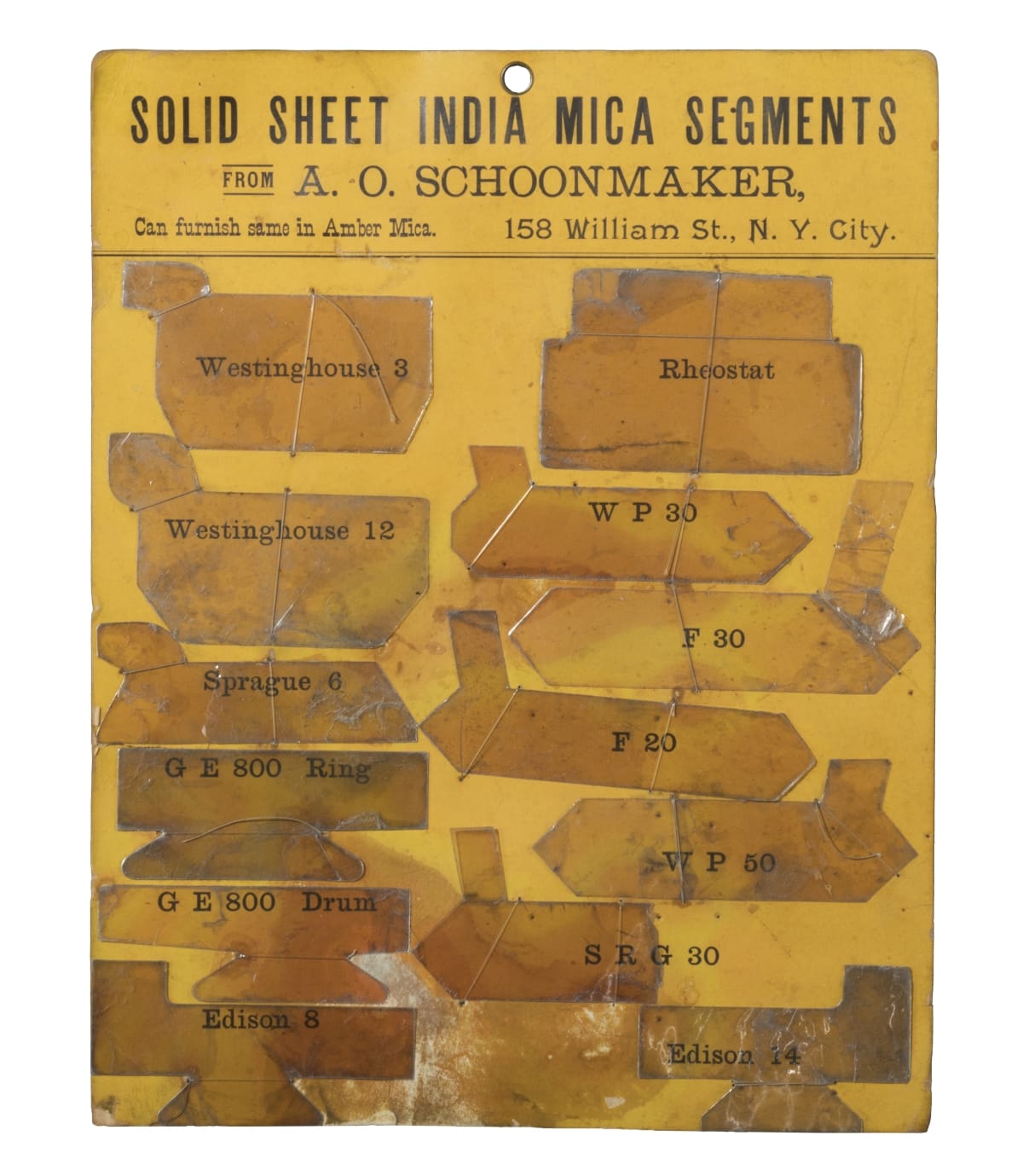
- A.O. Schoonmaker Mica Segment Display Board, circa 1900 -
- circa 1900
- Collections - Artifact
A.O. Schoonmaker Mica Segment Display Board, circa 1900
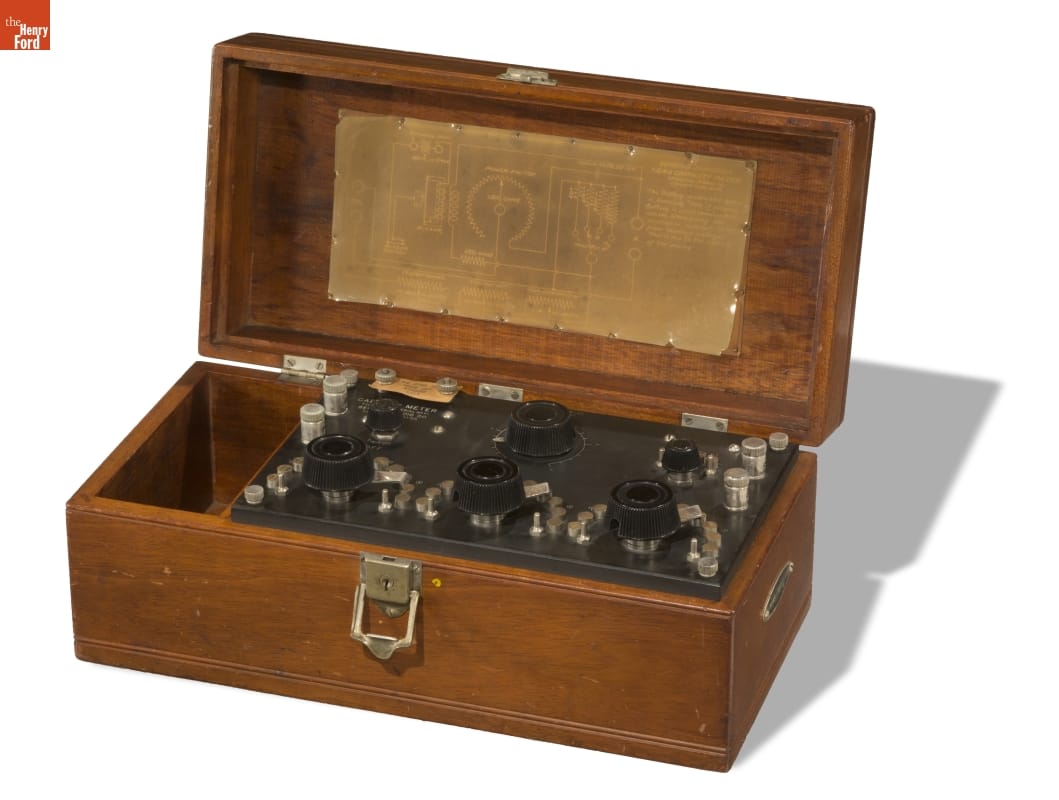
- Capacity Meter, Type 240, Used at Ford Motor Company, 1920-1940 -
- 1920-1940
- Collections - Artifact
Capacity Meter, Type 240, Used at Ford Motor Company, 1920-1940
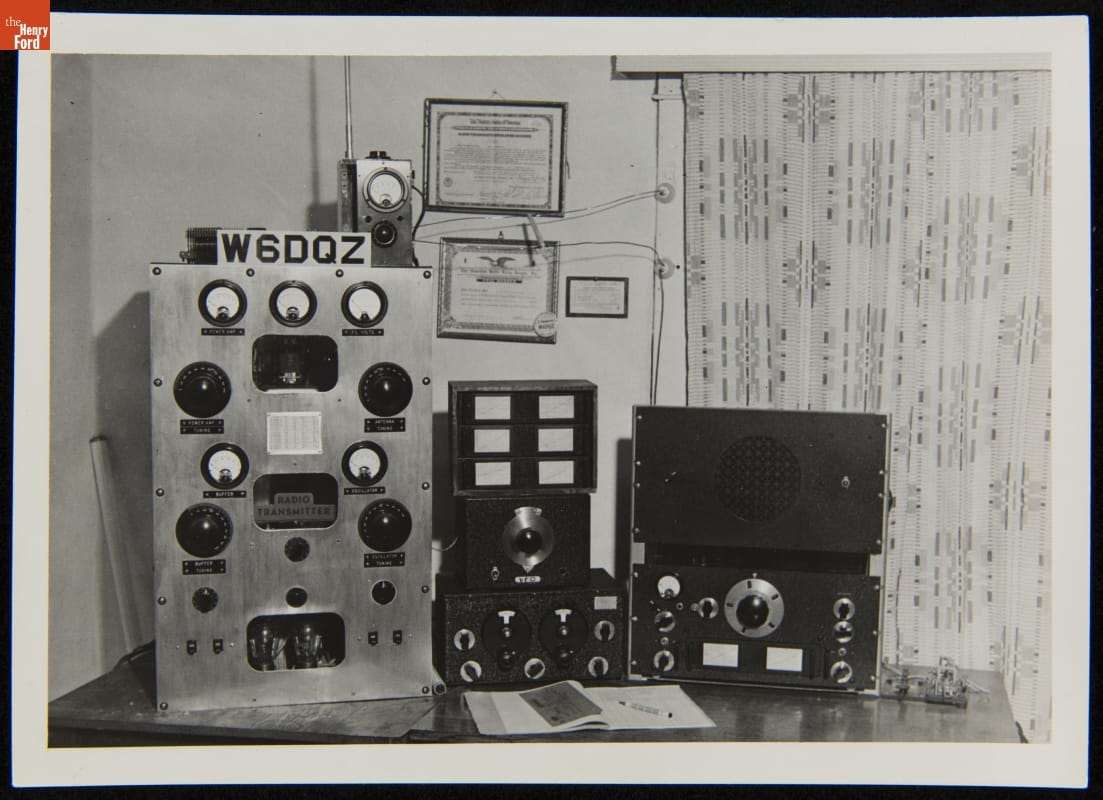
- Amateur Radio Station W6DQZ, 1931-1994 - Hamid (Charlie) Durmisevich, call sign W6DQZ, connected to the world from his ham radio station in Los Angeles. Amateur radio operators use two-way radios to talk to global networks of other "hams" about technology, weather, emergency preparedness and daily life. This ham, who emigrated from Eastern Europe in 1920, was active in amateur radio communities from the 1930s to 1990s.
- 1931-1994
- Collections - Artifact
Amateur Radio Station W6DQZ, 1931-1994
Hamid (Charlie) Durmisevich, call sign W6DQZ, connected to the world from his ham radio station in Los Angeles. Amateur radio operators use two-way radios to talk to global networks of other "hams" about technology, weather, emergency preparedness and daily life. This ham, who emigrated from Eastern Europe in 1920, was active in amateur radio communities from the 1930s to 1990s.
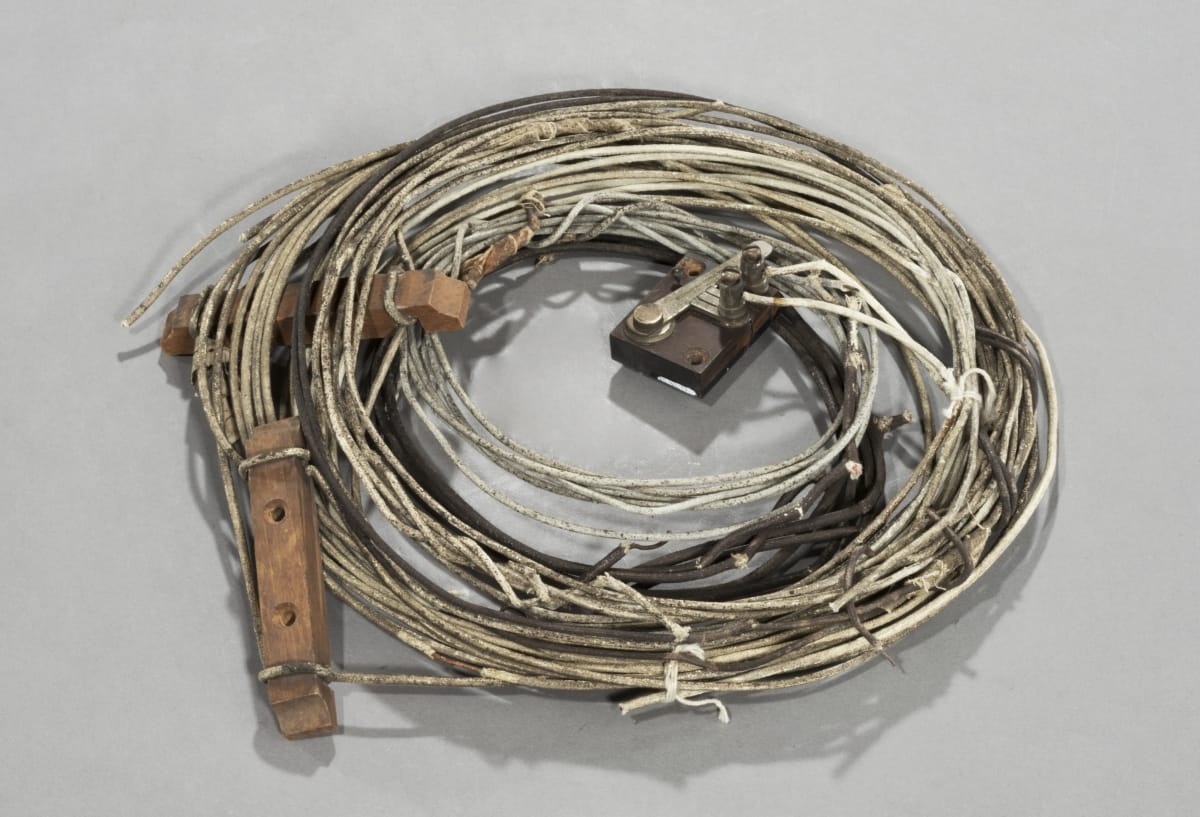
- Electrical Wiring with Cleats and Switch, Used at Boone Electric Light Company, 1885 -
- 1885
- Collections - Artifact
Electrical Wiring with Cleats and Switch, Used at Boone Electric Light Company, 1885
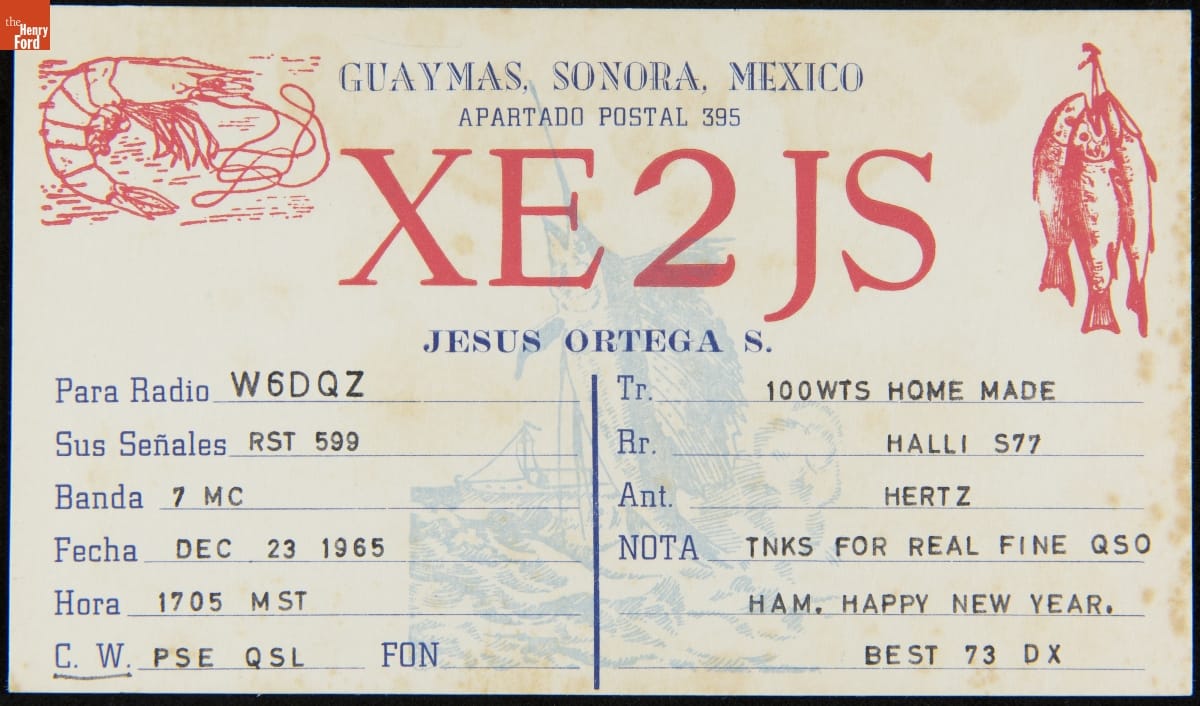
- QSL Card from XE2JS (Guaymas, Sonora, Mexico) to W6DQZ (Hamid Durmisevich, Los Angeles, California), December 23, 1965 - It was customary for ham radio operators (hams) to exchange these "QSL cards" with one another through the mail after their first conversation. Long-time hams amassed collections of thousands of cards, some from far-flung places. There is a story embedded in each example: the ham's call sign dominates the design, with additional details about location, reception reports, and weather conditions.
- Collections - Artifact
QSL Card from XE2JS (Guaymas, Sonora, Mexico) to W6DQZ (Hamid Durmisevich, Los Angeles, California), December 23, 1965
It was customary for ham radio operators (hams) to exchange these "QSL cards" with one another through the mail after their first conversation. Long-time hams amassed collections of thousands of cards, some from far-flung places. There is a story embedded in each example: the ham's call sign dominates the design, with additional details about location, reception reports, and weather conditions.
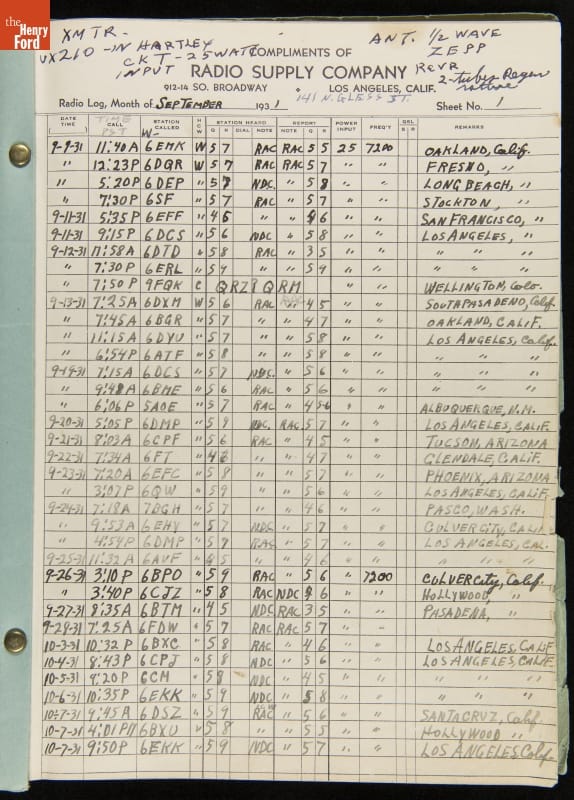
- Amateur Radio Station W6DQZ Log, September 9, 1931 - March 31, 1934 - Hamid (Charlie) Durmisevich, call sign W6DQZ, connected to the world from his ham radio station in Los Angeles. Amateur radio operators use two-way radios to talk to global networks of other "hams" about technology, weather, emergency preparedness and daily life. This ham, who emigrated from Eastern Europe in 1920, was active in amateur radio communities from the 1930s to 1990s.
- 09 September 1931 - 31 March 1934
- Collections - Artifact
Amateur Radio Station W6DQZ Log, September 9, 1931 - March 31, 1934
Hamid (Charlie) Durmisevich, call sign W6DQZ, connected to the world from his ham radio station in Los Angeles. Amateur radio operators use two-way radios to talk to global networks of other "hams" about technology, weather, emergency preparedness and daily life. This ham, who emigrated from Eastern Europe in 1920, was active in amateur radio communities from the 1930s to 1990s.
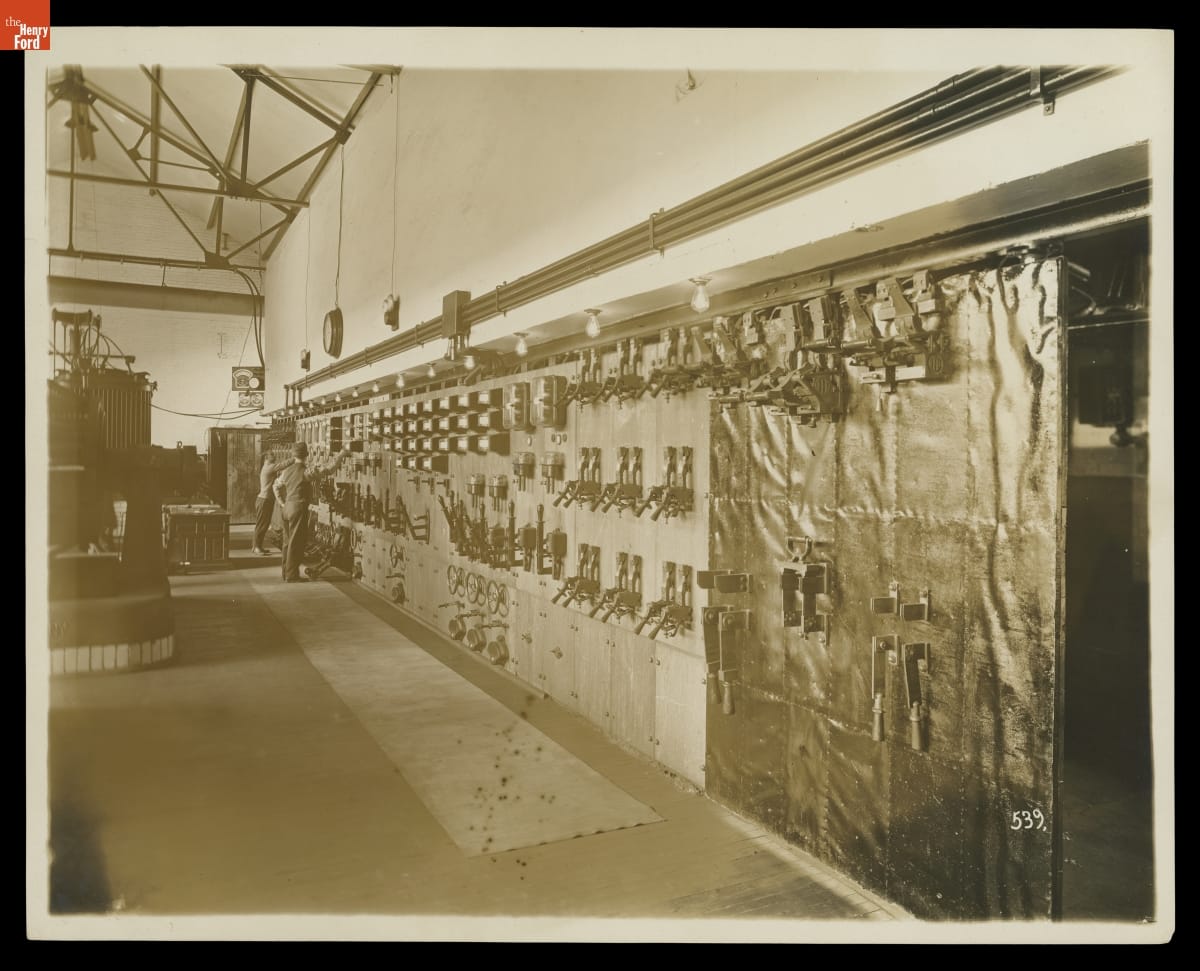
- Wall of Electrical Controls at the Ford Motor Company Highland Park Plant Powerhouse, 1913-1940 - Ford Motor Company opened its Highland Park plant in 1910. It was here that Ford produced most of its 15 million Model T cars, developed its moving assembly line, and instituted its Five Dollar Day. The plant's electricity was supplied by an on-site powerhouse with generators connected to nine gas-steam hybrid engines. Together, the nine engines produced 53,000 horsepower.
- 1913-1940
- Collections - Artifact
Wall of Electrical Controls at the Ford Motor Company Highland Park Plant Powerhouse, 1913-1940
Ford Motor Company opened its Highland Park plant in 1910. It was here that Ford produced most of its 15 million Model T cars, developed its moving assembly line, and instituted its Five Dollar Day. The plant's electricity was supplied by an on-site powerhouse with generators connected to nine gas-steam hybrid engines. Together, the nine engines produced 53,000 horsepower.
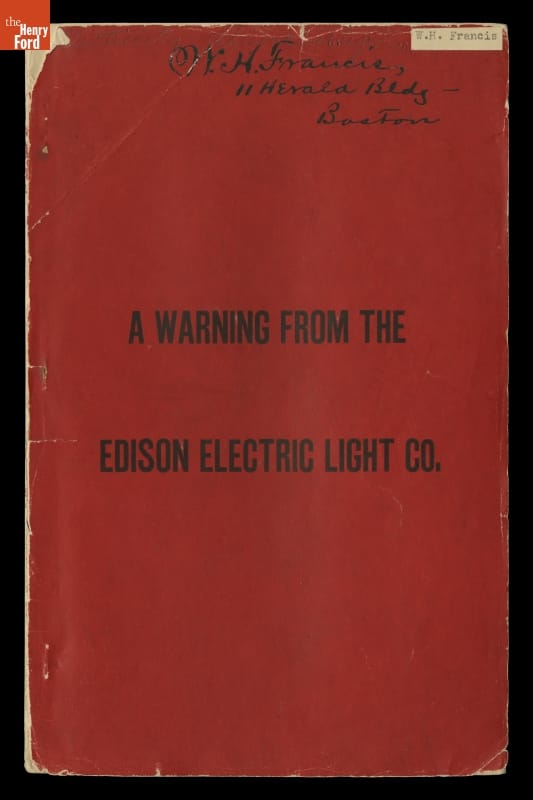
- "A Warning from the Edison Electric Light Company," 1887 - The late-nineteenth-century "War of Currents" pitted the backers of direct current (DC) against those who believed alternating current (AC) was the best way to transmit electricity. In this partisan publication the Edison Electric Light Company touted the advantages of their DC system, fueled the public's fear by reprinting reports of horrific deaths caused by high-voltage AC, and attacked the backers of AC who, company officials believed, misled investors.
- 1887
- Collections - Artifact
"A Warning from the Edison Electric Light Company," 1887
The late-nineteenth-century "War of Currents" pitted the backers of direct current (DC) against those who believed alternating current (AC) was the best way to transmit electricity. In this partisan publication the Edison Electric Light Company touted the advantages of their DC system, fueled the public's fear by reprinting reports of horrific deaths caused by high-voltage AC, and attacked the backers of AC who, company officials believed, misled investors.