
Search
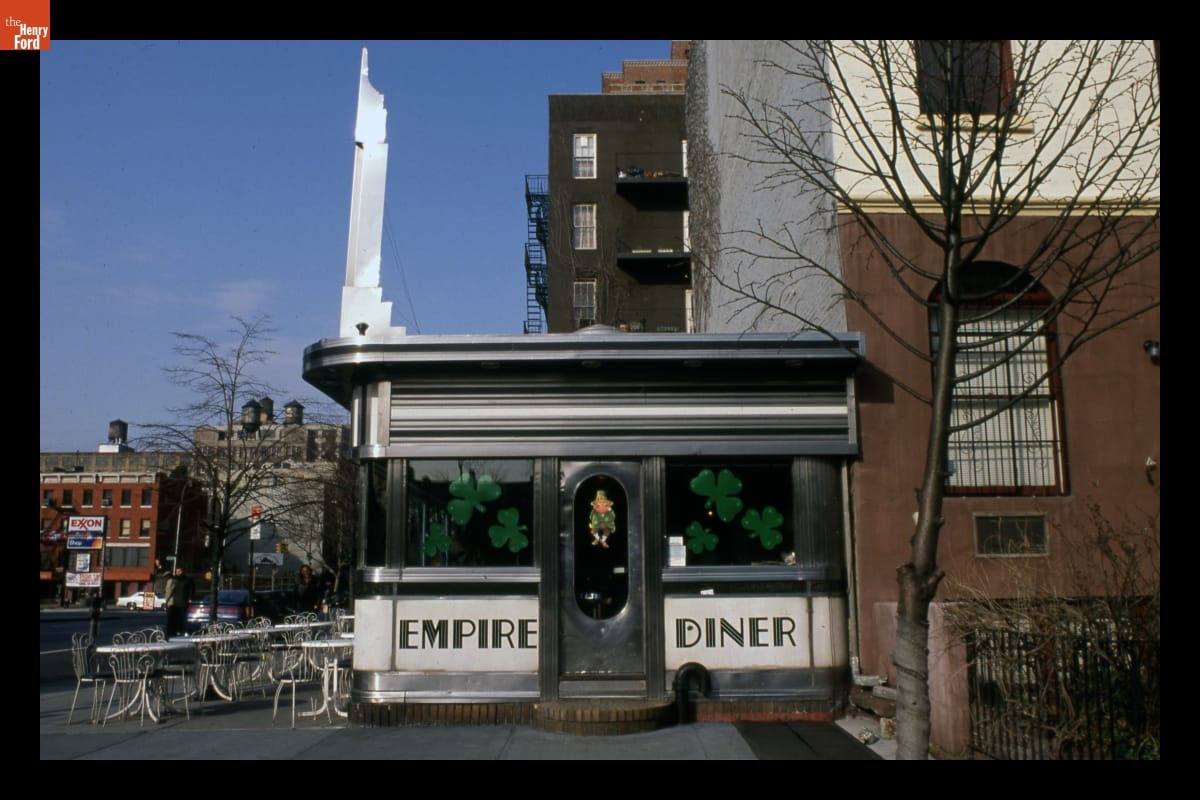
- Empire Diner at 10th Ave. and West 22nd St., New York City, March 1992 -
- March 01, 1992
- Collections - Artifact
Empire Diner at 10th Ave. and West 22nd St., New York City, March 1992
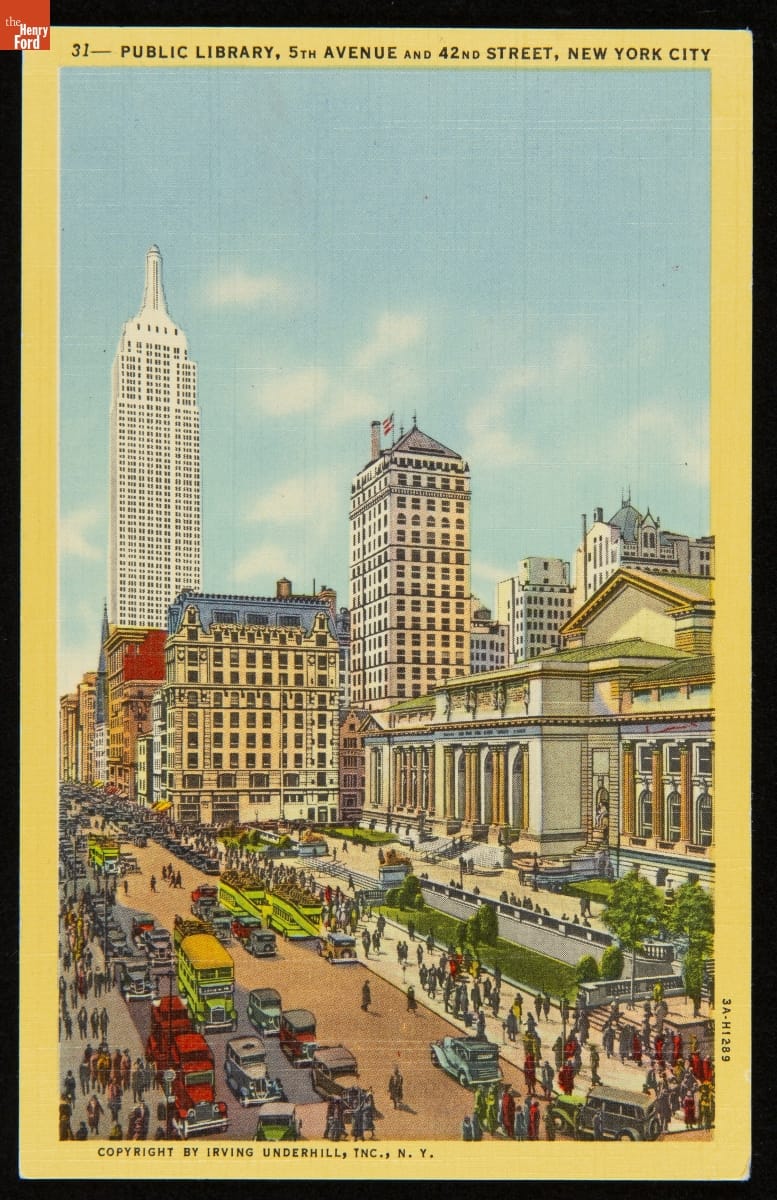
- Postcard, "Public Library, 5th Avenue and 42nd Street, New York City," 1933 - Until the 20th century, most book collections were not available to everyday Americans. They were either privately owned, accessible only by paid subscription, or stored away haphazardly. Free public libraries gained traction in the early 1900s. Library buildings remained sources of civic pride even in large cities like New York, where more imposing buildings might dwarf the structures.
- 1933
- Collections - Artifact
Postcard, "Public Library, 5th Avenue and 42nd Street, New York City," 1933
Until the 20th century, most book collections were not available to everyday Americans. They were either privately owned, accessible only by paid subscription, or stored away haphazardly. Free public libraries gained traction in the early 1900s. Library buildings remained sources of civic pride even in large cities like New York, where more imposing buildings might dwarf the structures.
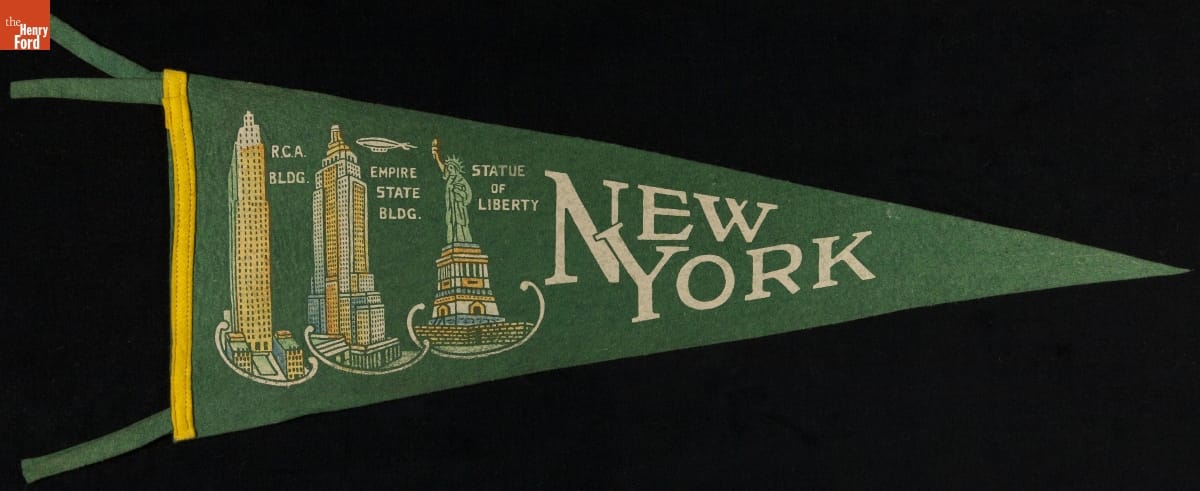
- Pennant, "New York," circa 1935 - Tourists purchase simple, inexpensive souvenirs as proof of their travels. These mementos transport vacationers back to the places they visited and the things they did. In the mid-20th century, felt pennants were trendy. Pennants from large cities usually depict a single famous, not-to-be-missed landmark -- but not New York. This colorful pennant from the 1930s shows three.
- circa 1935
- Collections - Artifact
Pennant, "New York," circa 1935
Tourists purchase simple, inexpensive souvenirs as proof of their travels. These mementos transport vacationers back to the places they visited and the things they did. In the mid-20th century, felt pennants were trendy. Pennants from large cities usually depict a single famous, not-to-be-missed landmark -- but not New York. This colorful pennant from the 1930s shows three.
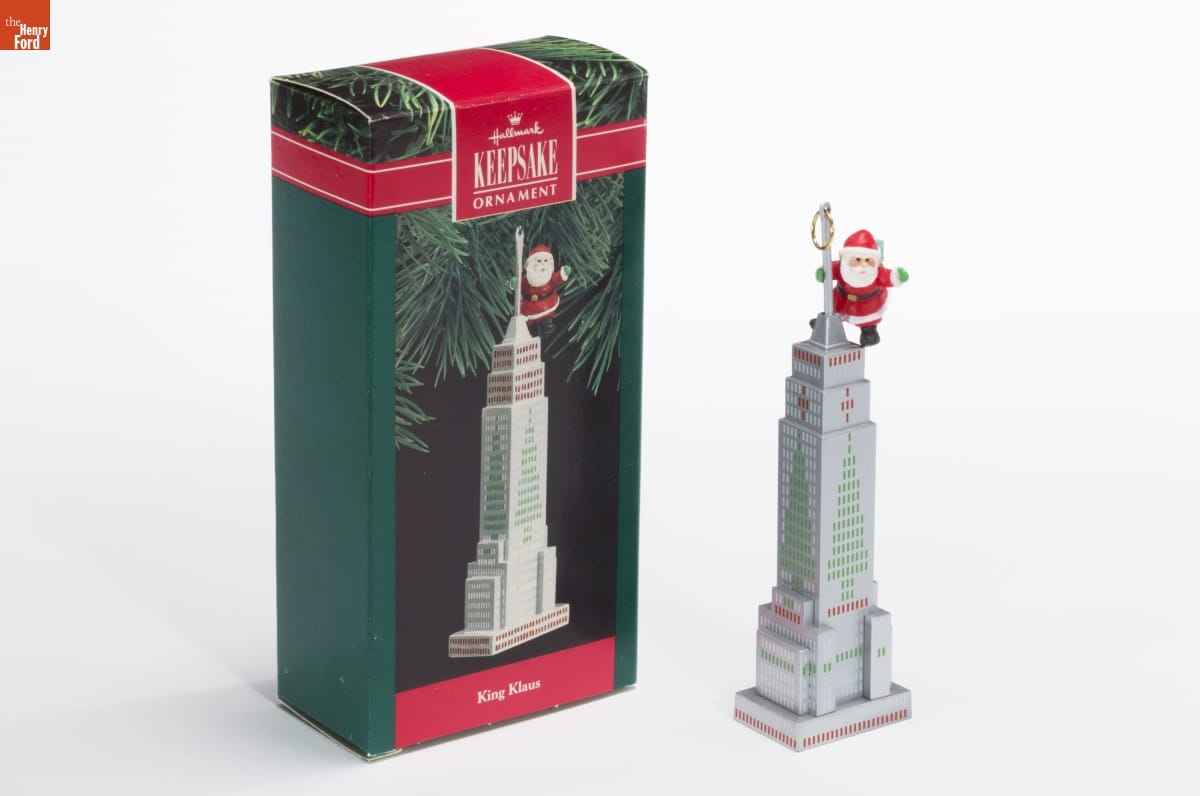
- Hallmark "King Klaus" Christmas Ornament, 1990 - Already known for greeting cards, Hallmark introduced a line of Christmas ornaments in 1973. The company's annual release of an increasing array of ornaments revolutionized Christmas decorating, appealing to customers' interest in marking memories and milestones as well as expressing one's personality and unique tastes.
- 1990
- Collections - Artifact
Hallmark "King Klaus" Christmas Ornament, 1990
Already known for greeting cards, Hallmark introduced a line of Christmas ornaments in 1973. The company's annual release of an increasing array of ornaments revolutionized Christmas decorating, appealing to customers' interest in marking memories and milestones as well as expressing one's personality and unique tastes.
- Empire Diner, New York City, March 1992 -
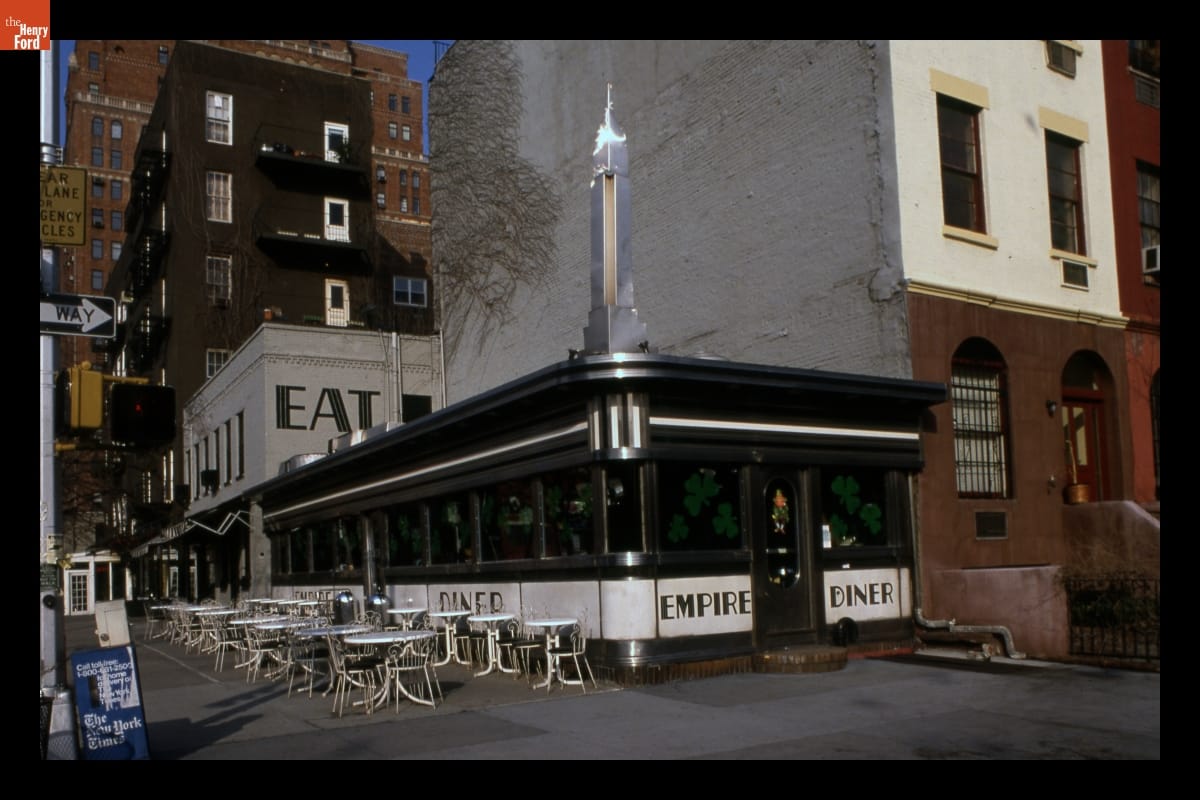
- March 01, 1992
- Collections - Artifact
Empire Diner, New York City, March 1992
- Pennant, "New York," circa 1935 - Tourists purchase simple, inexpensive souvenirs as proof of their travels. These mementos transport vacationers back to the places they visited and the things they did. In the mid-20th century, felt pennants were trendy. Pennants from large cities usually depict a single famous, not-to-be-missed landmark -- but not New York. This colorful pennant from the 1930s shows three.
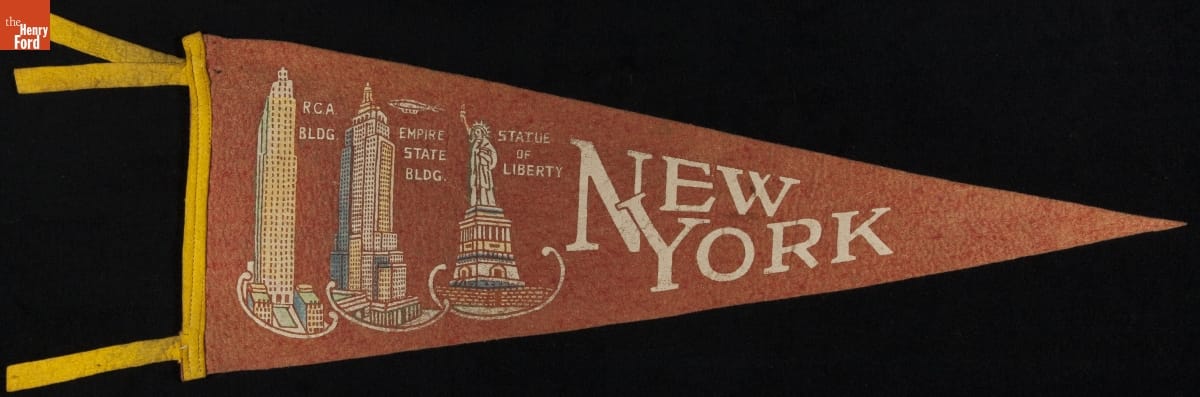
- circa 1935
- Collections - Artifact
Pennant, "New York," circa 1935
Tourists purchase simple, inexpensive souvenirs as proof of their travels. These mementos transport vacationers back to the places they visited and the things they did. In the mid-20th century, felt pennants were trendy. Pennants from large cities usually depict a single famous, not-to-be-missed landmark -- but not New York. This colorful pennant from the 1930s shows three.
- New York World's Fair Souvenir Medal, 1939 - The 1939-40 New York World's Fair encouraged a depression-weary public that the future would be rosy. Souvenirs often reflected the exposition's utopian "Building the World of Tomorrow" theme and reminded fairgoers of the nation's proud history. This medal features the fair's futuristic architectural icons, the Trylon and Perisphere, and New York City's Empire State Building, then the world's tallest skyscraper.
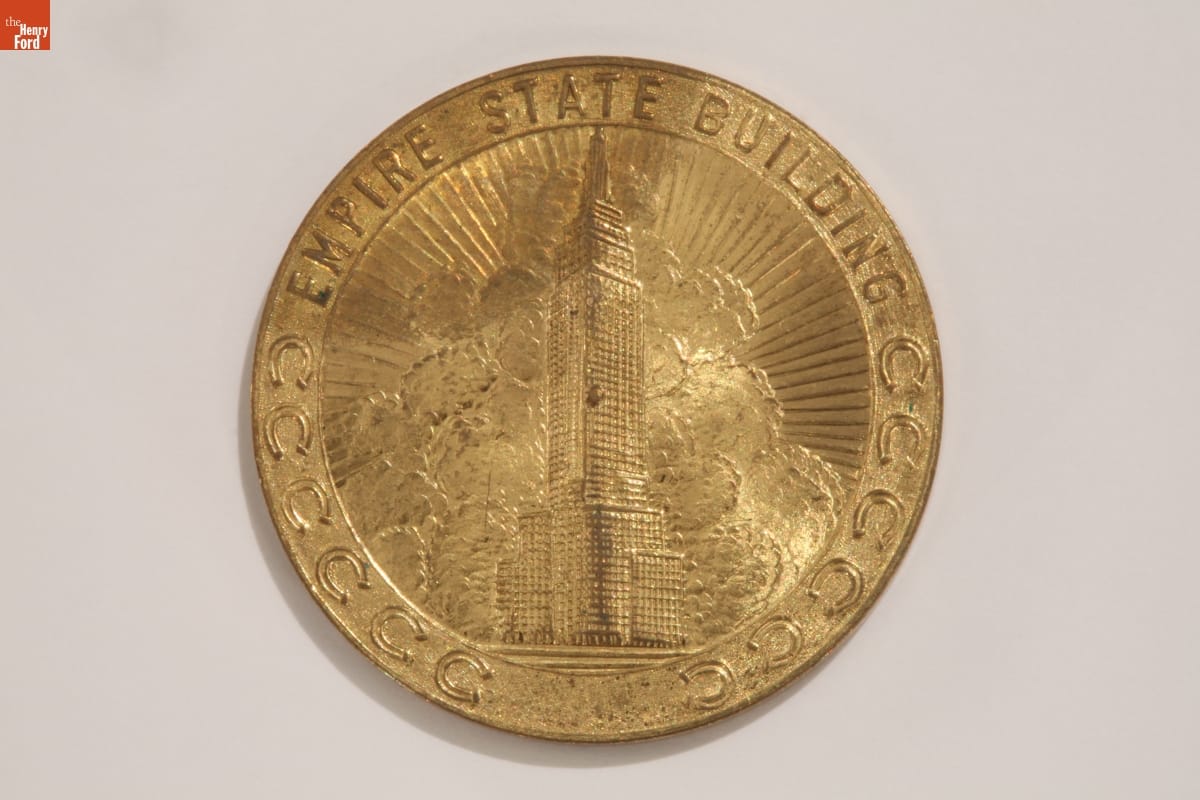
- 1939
- Collections - Artifact
New York World's Fair Souvenir Medal, 1939
The 1939-40 New York World's Fair encouraged a depression-weary public that the future would be rosy. Souvenirs often reflected the exposition's utopian "Building the World of Tomorrow" theme and reminded fairgoers of the nation's proud history. This medal features the fair's futuristic architectural icons, the Trylon and Perisphere, and New York City's Empire State Building, then the world's tallest skyscraper.