
Search
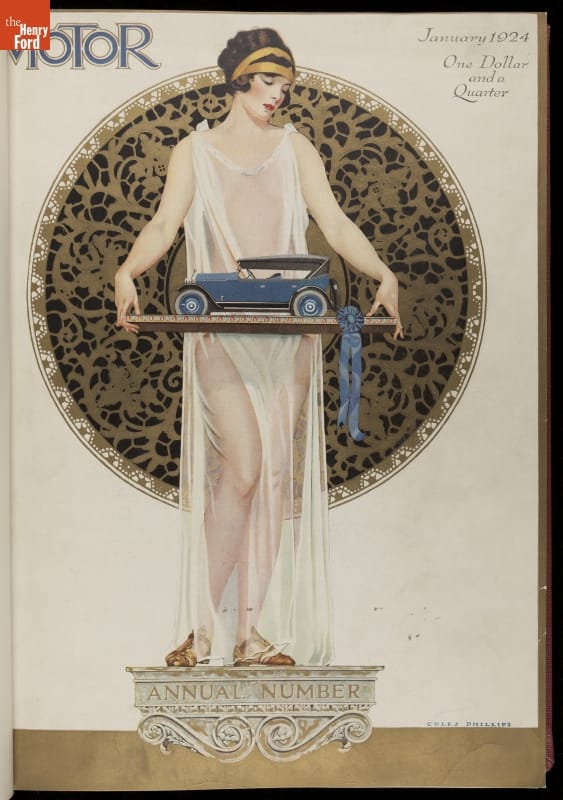
- Magazine, "Motor," January 1924 - <EM>Motor</EM> magazine was filled with useful information for car owners. In this issue is an ad for the "Safe-T-Arm," a device to help drivers indicate whether they were going to turn left or right, drive forward -- or stop. It was one of many signaling systems on the market. In the early 1920s, hand or mechanical signals were not legally required of drivers!
- January 01, 1924
- Collections - Artifact
Magazine, "Motor," January 1924
Motor magazine was filled with useful information for car owners. In this issue is an ad for the "Safe-T-Arm," a device to help drivers indicate whether they were going to turn left or right, drive forward -- or stop. It was one of many signaling systems on the market. In the early 1920s, hand or mechanical signals were not legally required of drivers!
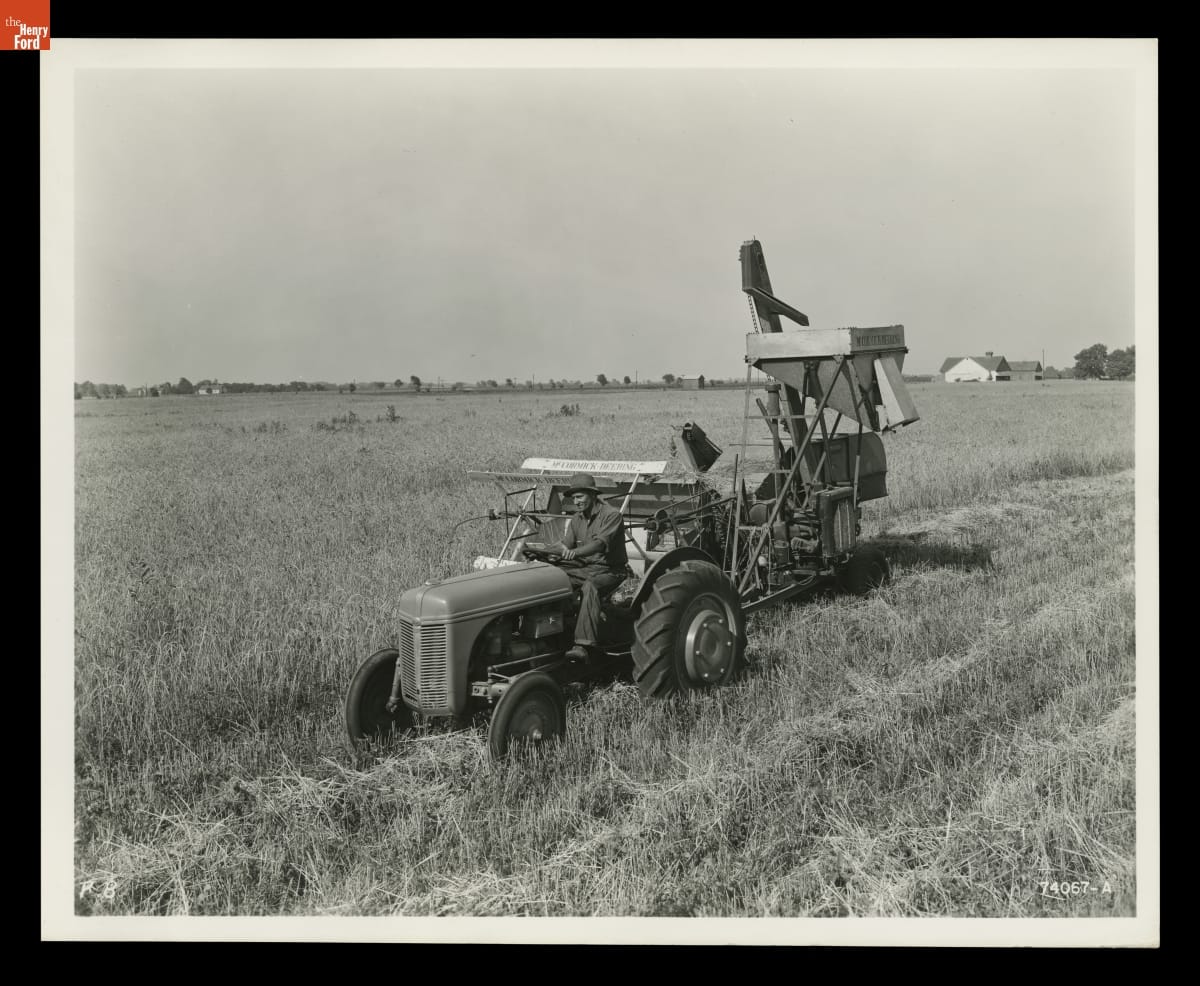
- Man Harvesting Wheat Using a Ford-Ferguson Tractor with Combine Attached, Indiana, August 1940 - Ford Motor Company introduced the 9N tractor in 1939. It featured the "Ferguson System:" a 3-point hydraulic hitch-and-lift system invented by Irishman Harry Ferguson. Ferguson's revolutionary hitch kept agricultural implements, like the combine seen here, in line with the tractor. It also provided stability. By 1940, nearly 8 percent of tractors sold in the U.S. were 9Ns.
- August 05, 1940
- Collections - Artifact
Man Harvesting Wheat Using a Ford-Ferguson Tractor with Combine Attached, Indiana, August 1940
Ford Motor Company introduced the 9N tractor in 1939. It featured the "Ferguson System:" a 3-point hydraulic hitch-and-lift system invented by Irishman Harry Ferguson. Ferguson's revolutionary hitch kept agricultural implements, like the combine seen here, in line with the tractor. It also provided stability. By 1940, nearly 8 percent of tractors sold in the U.S. were 9Ns.
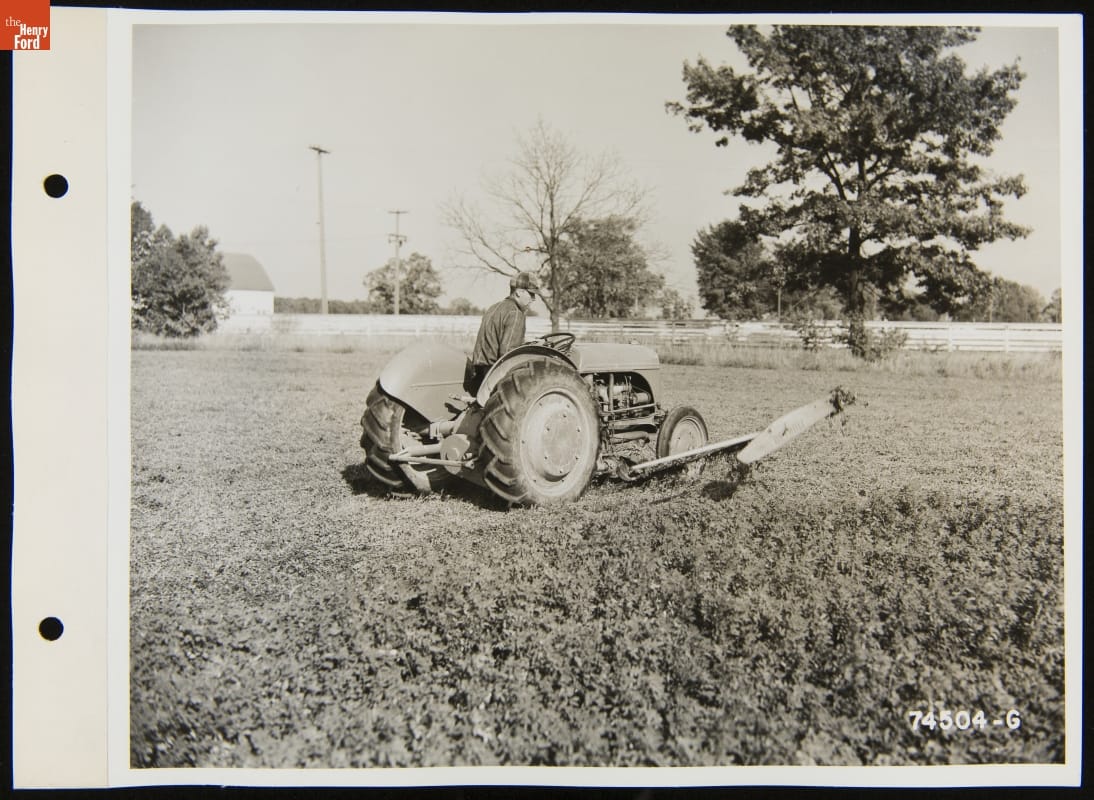
- Ford-Ferguson 9N Tractor Plowing and Mowing, October 9, 1940 -
- October 09, 1940
- Collections - Artifact
Ford-Ferguson 9N Tractor Plowing and Mowing, October 9, 1940
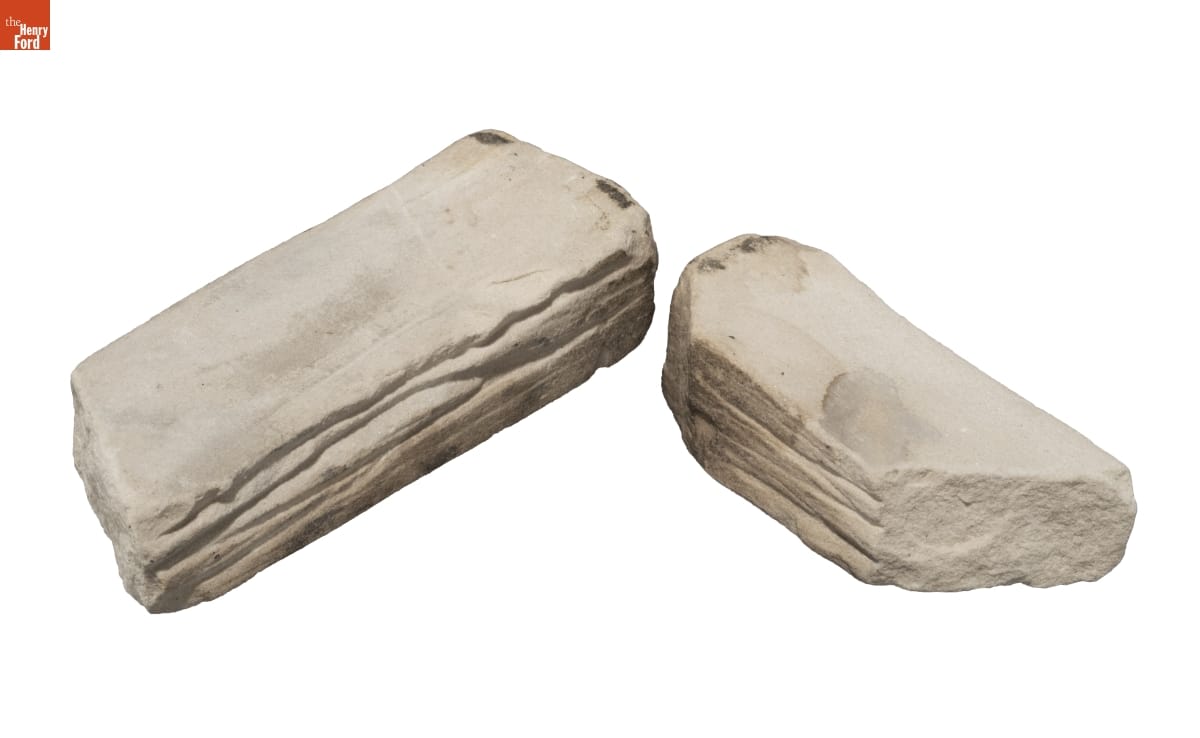
- Whetstones -
- Collections - Artifact
Whetstones
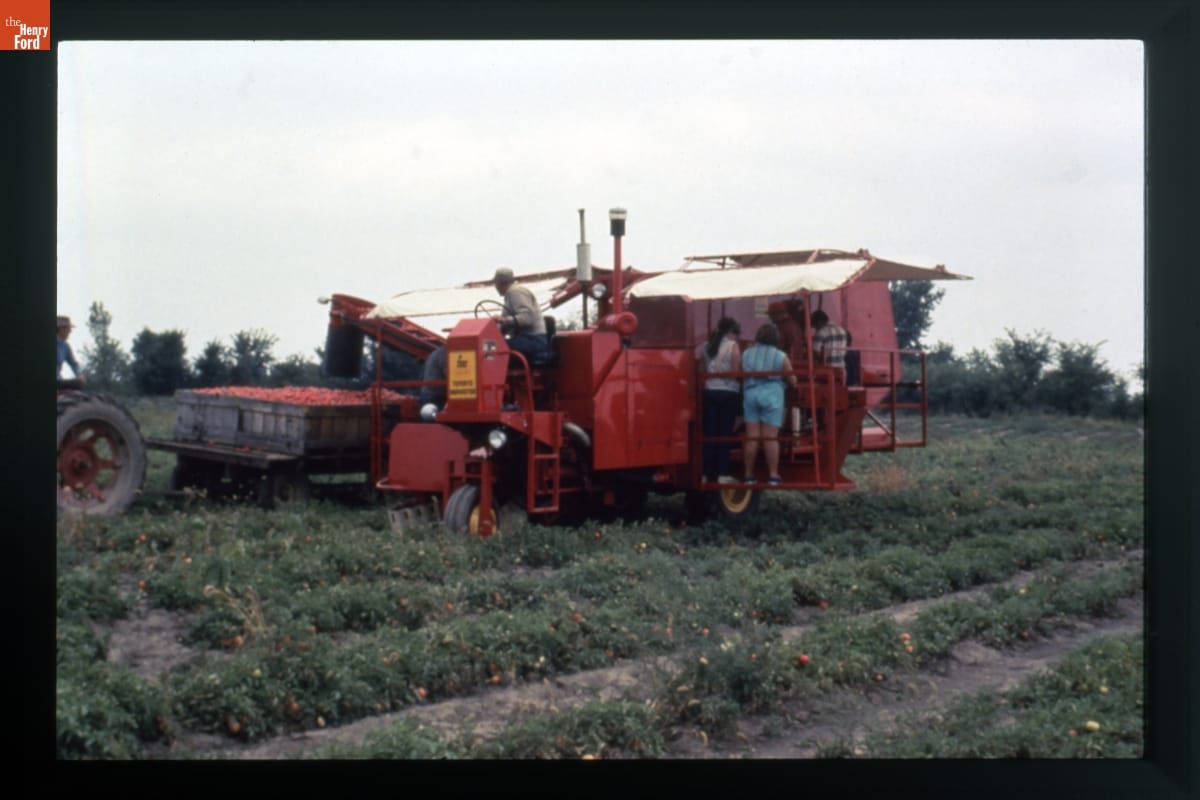
- FMC Cascade Tomato Harvester in Use, circa 1985 -
- circa 1985
- Collections - Artifact
FMC Cascade Tomato Harvester in Use, circa 1985
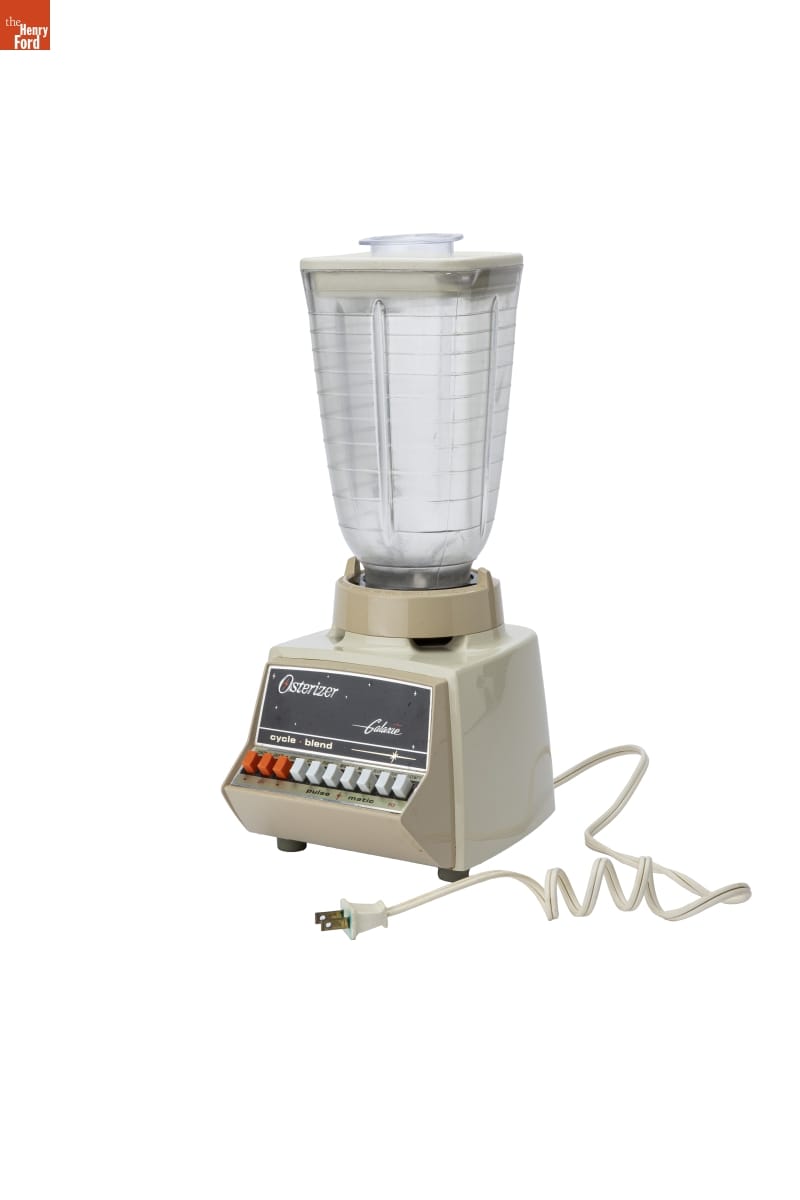
- Osterizer Galaxie Blender, 1970-1980 -
- 1970-1980
- Collections - Artifact
Osterizer Galaxie Blender, 1970-1980
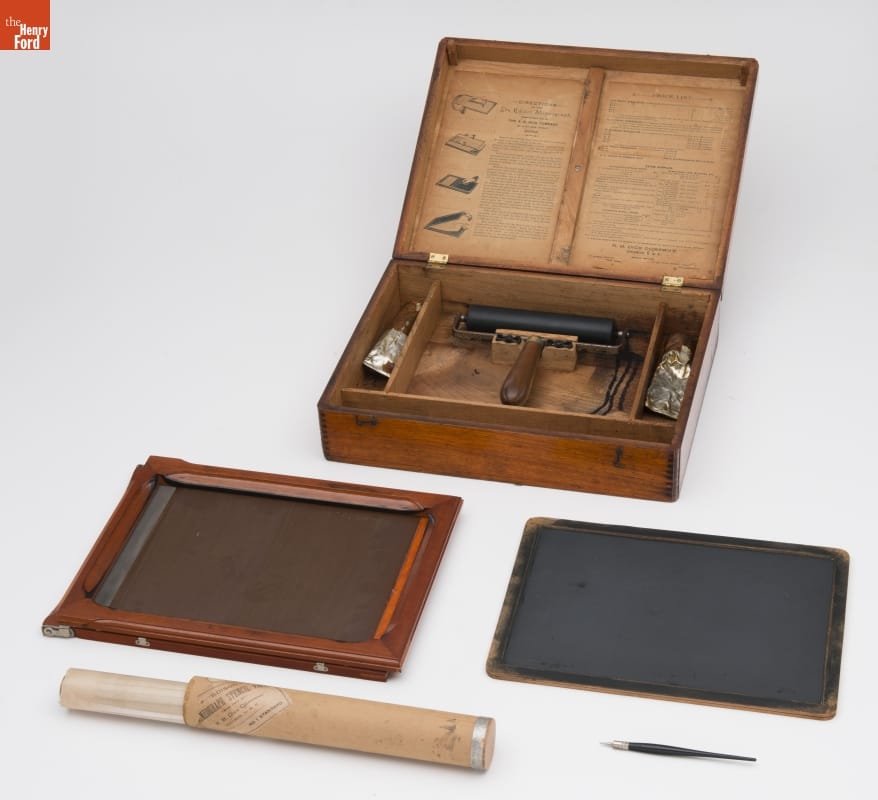
- Edison No. 1 Mimeograph, 1887 - Thomas Edison received a patent in 1876 for "Autographic Printing," covering the electric pen and flatbed press; a patent for "Autographic Stencils" followed in 1880. The mimeograph was invented by Albert Blake Dick in 1887, who licensed and refined Edison's patents. This low-cost, stencil-based printing technology was popular until displaced by photocopying machines and offset printing in the 1960s.
- 1887
- Collections - Artifact
Edison No. 1 Mimeograph, 1887
Thomas Edison received a patent in 1876 for "Autographic Printing," covering the electric pen and flatbed press; a patent for "Autographic Stencils" followed in 1880. The mimeograph was invented by Albert Blake Dick in 1887, who licensed and refined Edison's patents. This low-cost, stencil-based printing technology was popular until displaced by photocopying machines and offset printing in the 1960s.
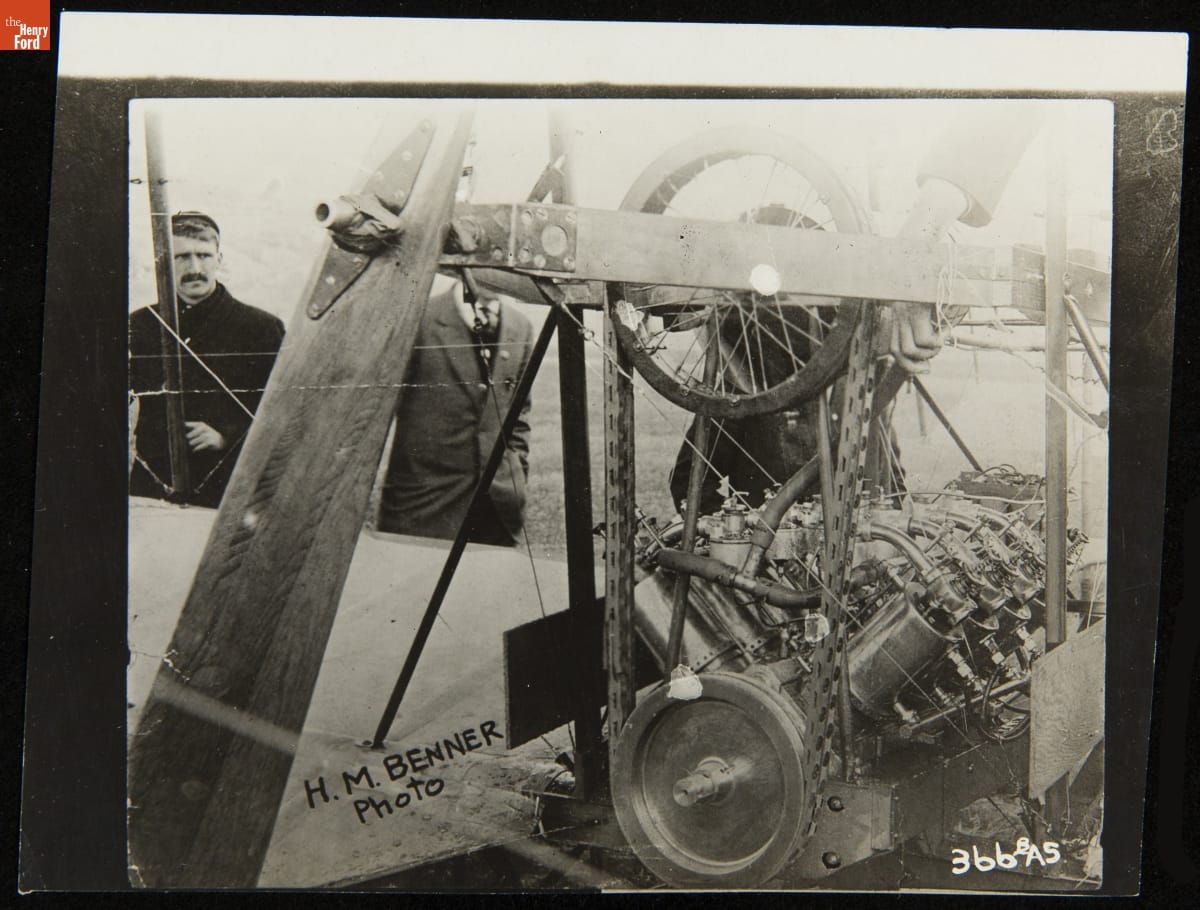
- Engine Designed by Glenn Curtiss for the Aerial Experiment Association's "Silver Dart" Airplane, 1908-1909 - In 1907, Alexander Graham Bell recruited a team of young aviation enthusiasts for his elite Aerial Experiment Association (AEA). The group produced a string of airplanes that ultimately achieved manned flight and contributed key developments to the fledgling field of aviation. AEA "motor expert" Glenn Curtiss designed this water-cooled engine to prevent overheating and allow for longer flights.
- 1908-1909
- Collections - Artifact
Engine Designed by Glenn Curtiss for the Aerial Experiment Association's "Silver Dart" Airplane, 1908-1909
In 1907, Alexander Graham Bell recruited a team of young aviation enthusiasts for his elite Aerial Experiment Association (AEA). The group produced a string of airplanes that ultimately achieved manned flight and contributed key developments to the fledgling field of aviation. AEA "motor expert" Glenn Curtiss designed this water-cooled engine to prevent overheating and allow for longer flights.
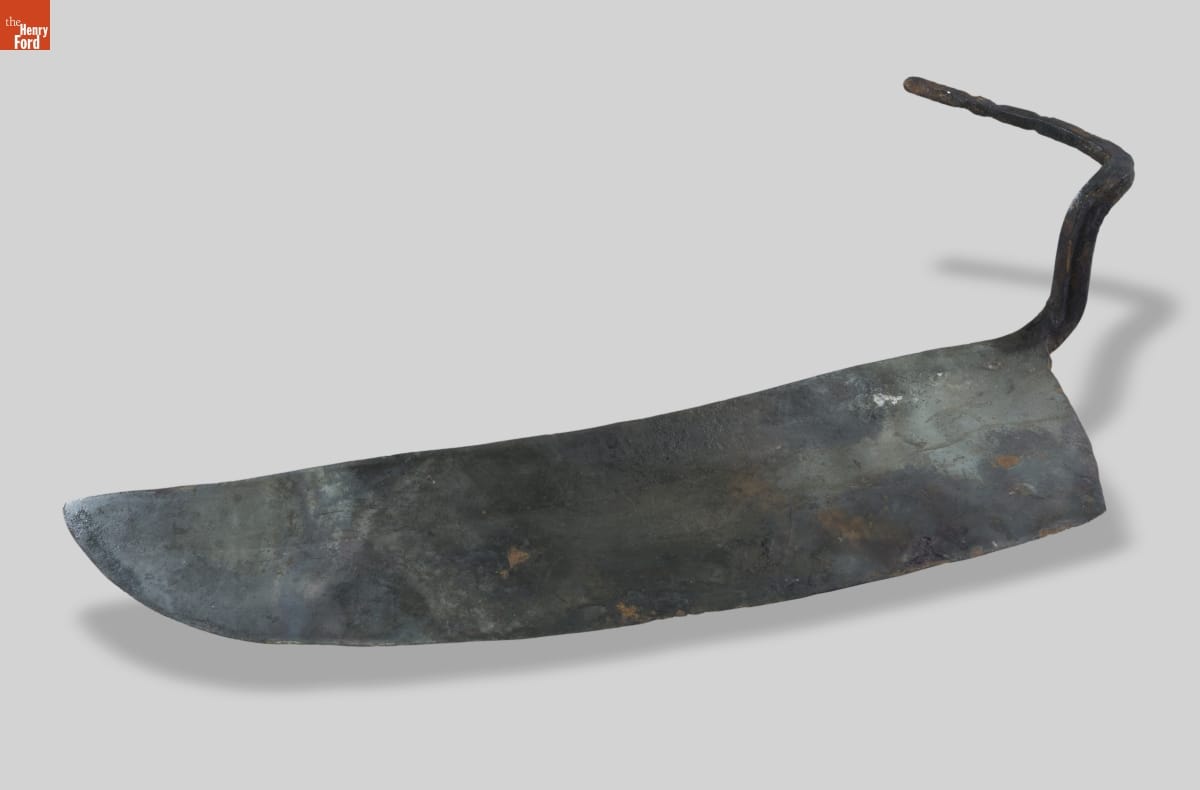
- Hay Knife - Farm families cut and cured enough grass each summer to feed hay to their livestock all winter. Stored hay settled over time and farmers used special knives made by blacksmiths to cut out chunks for feed. The smiths forged wrought-iron blades with a long cutting edge. The wooden handle was set on a tang (a pointed metal extension of the handle) and secured with a metal collar for durability.
- Collections - Artifact
Hay Knife
Farm families cut and cured enough grass each summer to feed hay to their livestock all winter. Stored hay settled over time and farmers used special knives made by blacksmiths to cut out chunks for feed. The smiths forged wrought-iron blades with a long cutting edge. The wooden handle was set on a tang (a pointed metal extension of the handle) and secured with a metal collar for durability.
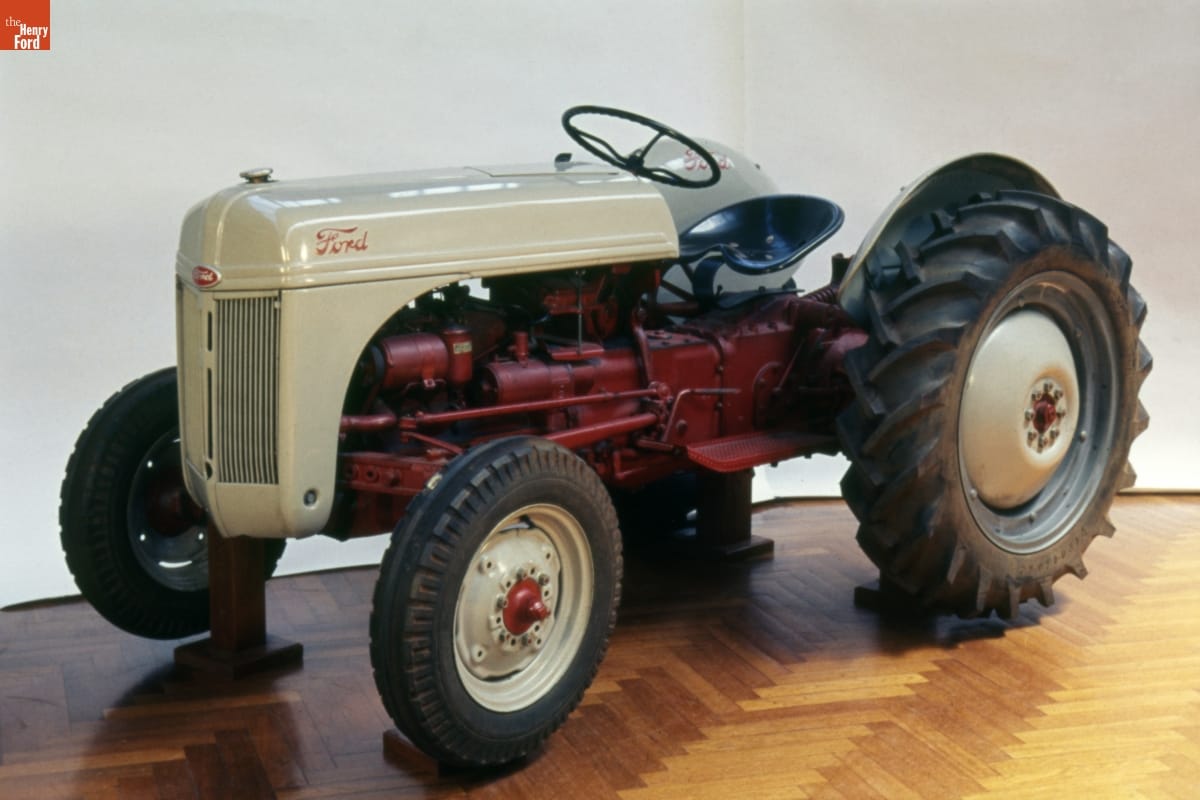
- 1952 Ford Model 8N Tractor - The Ford Motor Company, after Henry Ford's death, released its most popular tractor in 1948. The 8N broke with Ford tradition by sporting new paint colors. Farmers bought the affordable tractor because it retained Ferguson's revolutionary 3-point hitch system and included a "crawler" gear and PTO (power-take-off) that transferred engine power to new equipment like forage choppers.
- 1952
- Collections - Artifact
1952 Ford Model 8N Tractor
The Ford Motor Company, after Henry Ford's death, released its most popular tractor in 1948. The 8N broke with Ford tradition by sporting new paint colors. Farmers bought the affordable tractor because it retained Ferguson's revolutionary 3-point hitch system and included a "crawler" gear and PTO (power-take-off) that transferred engine power to new equipment like forage choppers.