
Search
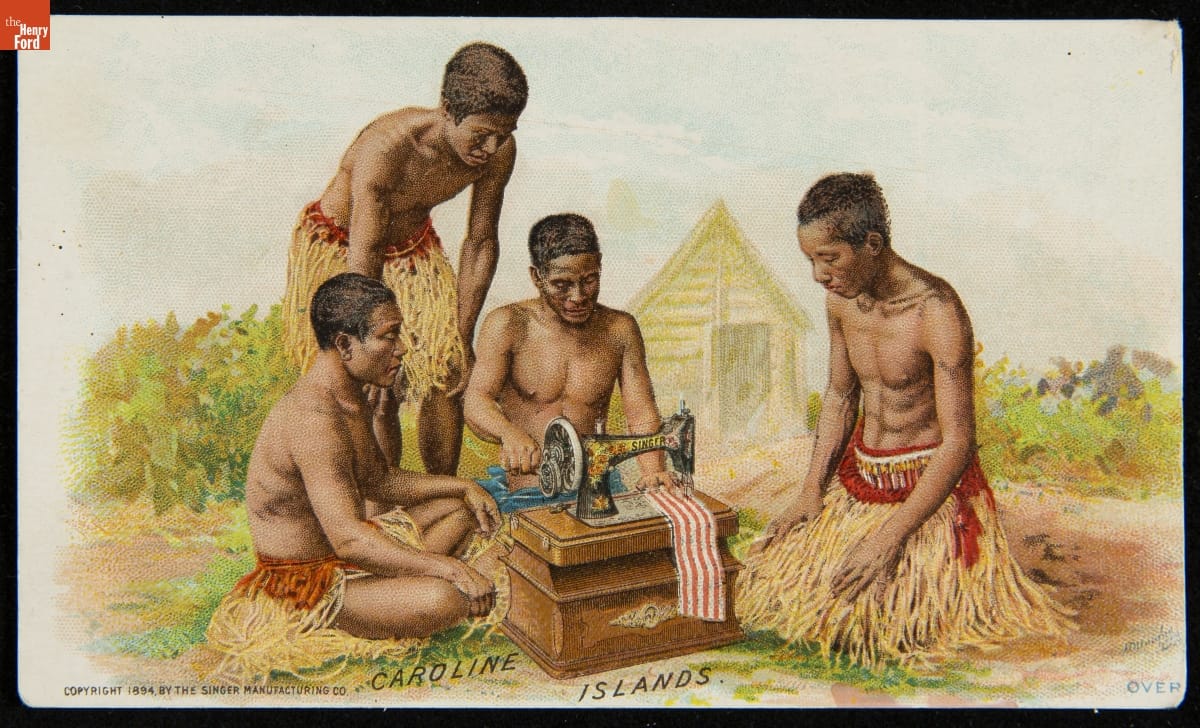
- Trade Card for Singer Sewing Machines, 1894 - As color printing gained momentum in the late 19th century, trade cards became a major means of advertising goods and services. Americans enjoyed and often saved the vibrant little advertisements found in product packages or distributed by local merchants. The Singer Sewing Machine Company had a series of trade cards, like this one, offering images of Singer machine users from around the world in their national dress.
- 1894
- Collections - Artifact
Trade Card for Singer Sewing Machines, 1894
As color printing gained momentum in the late 19th century, trade cards became a major means of advertising goods and services. Americans enjoyed and often saved the vibrant little advertisements found in product packages or distributed by local merchants. The Singer Sewing Machine Company had a series of trade cards, like this one, offering images of Singer machine users from around the world in their national dress.
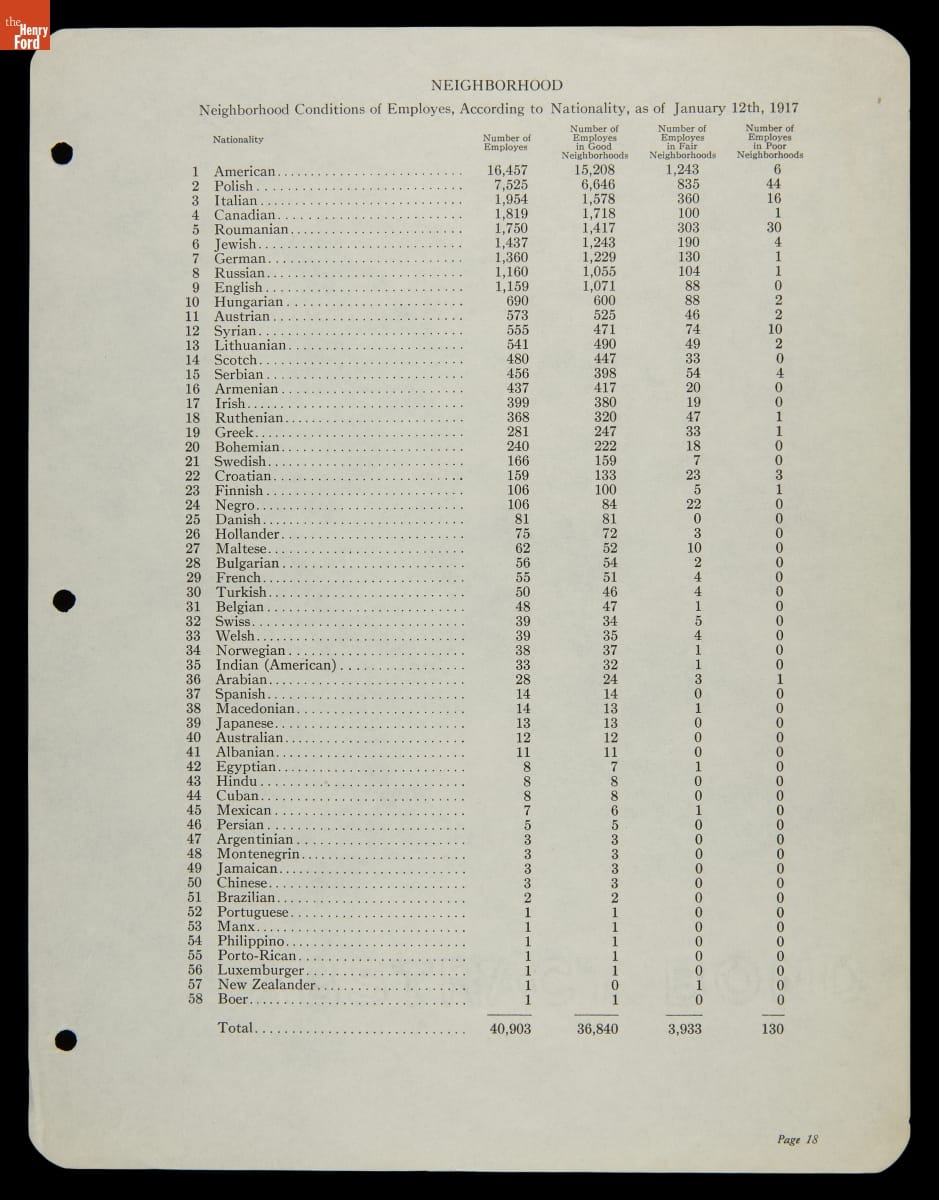
- "Neighborhood Conditions of Employees, According to Nationality, as of January 12th, 1917" - This document is from the publication "Educational Statistics Home Plant, as of January 12th, 1917." It was produced by the Ford Motor Company Sociological (or Educational) Department, and it rates employees' neighborhoods, organized by nationality. The department was created to ensure that employees used their $5 per day wages wisely -- for instance, to escape cheap, ramshackle tenement houses crowded with boarders.
- January 12, 1917
- Collections - Artifact
"Neighborhood Conditions of Employees, According to Nationality, as of January 12th, 1917"
This document is from the publication "Educational Statistics Home Plant, as of January 12th, 1917." It was produced by the Ford Motor Company Sociological (or Educational) Department, and it rates employees' neighborhoods, organized by nationality. The department was created to ensure that employees used their $5 per day wages wisely -- for instance, to escape cheap, ramshackle tenement houses crowded with boarders.
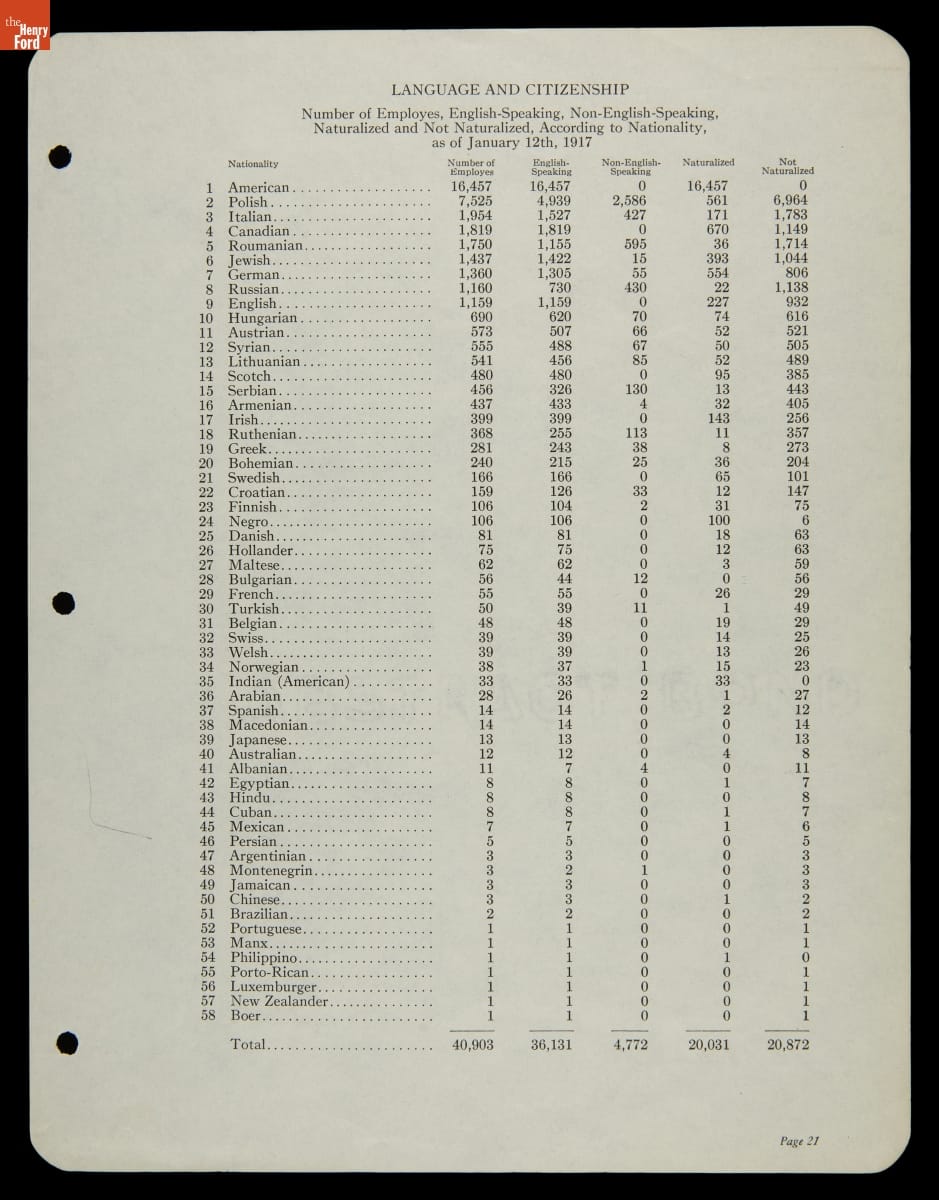
- Language and Citizenship of Ford Motor Company Employees, According to Nationality, as of January 12th, 1917 - This document is from the publication "Educational Statistics Home Plant, as of January 12th, 1917." It classifies employees by nationality as English speakers and American citizens. The document was produced by the Ford Sociological (or Educational) Department, which ensured that employees were responsible with their pay. Ford required workers to learn English in order to earn the $5 per day wage.
- January 12, 1917
- Collections - Artifact
Language and Citizenship of Ford Motor Company Employees, According to Nationality, as of January 12th, 1917
This document is from the publication "Educational Statistics Home Plant, as of January 12th, 1917." It classifies employees by nationality as English speakers and American citizens. The document was produced by the Ford Sociological (or Educational) Department, which ensured that employees were responsible with their pay. Ford required workers to learn English in order to earn the $5 per day wage.
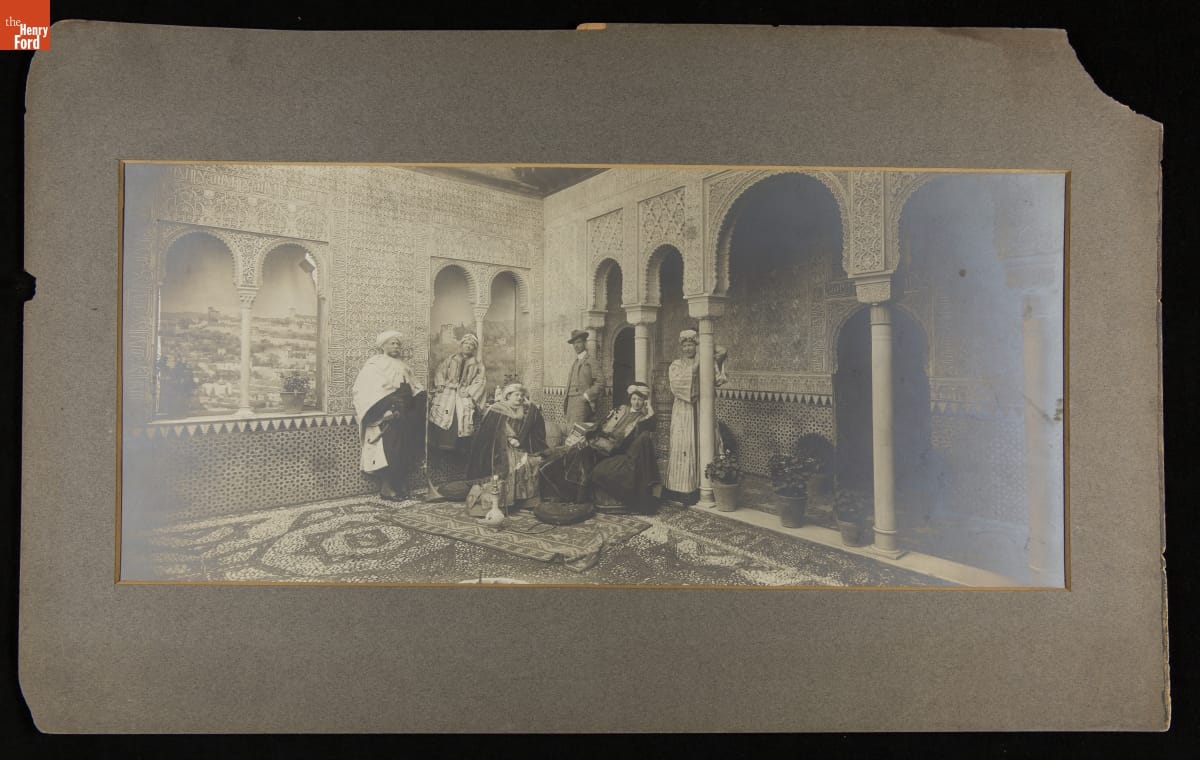
- H. J. Heinz and Others in Ethnic Attire, circa 1905 - The H.J. Heinz Company had humble beginnings in 1869 and has since become one of the most recognized names in the food industry today. This artifact, from the H.J. Heinz Company Collection, is one from The Henry Ford's sizeable collection of material dedicated to telling the company's history of innovative business practices and marketing techniques.
- circa 1905
- Collections - Artifact
H. J. Heinz and Others in Ethnic Attire, circa 1905
The H.J. Heinz Company had humble beginnings in 1869 and has since become one of the most recognized names in the food industry today. This artifact, from the H.J. Heinz Company Collection, is one from The Henry Ford's sizeable collection of material dedicated to telling the company's history of innovative business practices and marketing techniques.
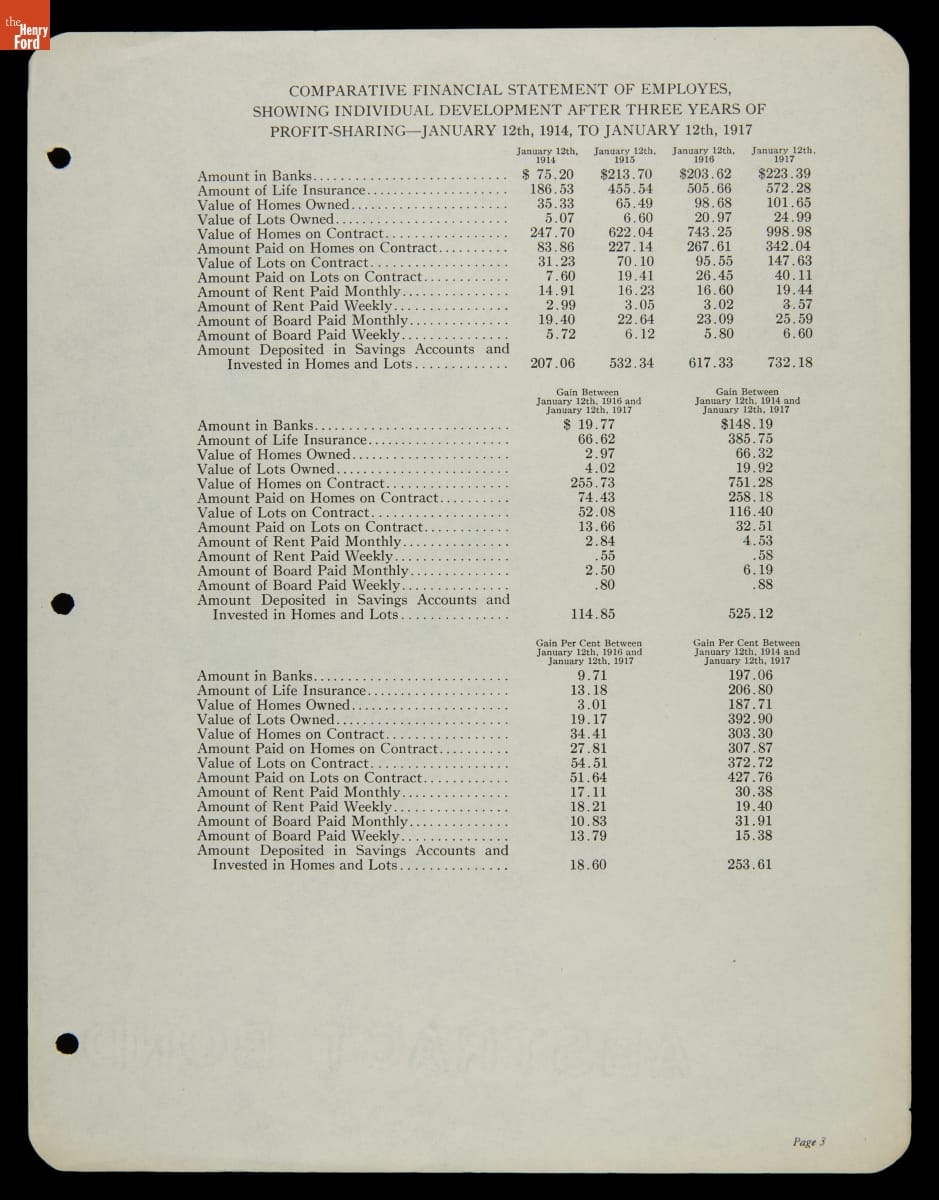
- "Comparative Financial Statement of Employees...After Three Years of Profit-Sharing - January 12th, 1914 to January 12th, 1917" -
- January 12, 1917
- Collections - Artifact
"Comparative Financial Statement of Employees...After Three Years of Profit-Sharing - January 12th, 1914 to January 12th, 1917"
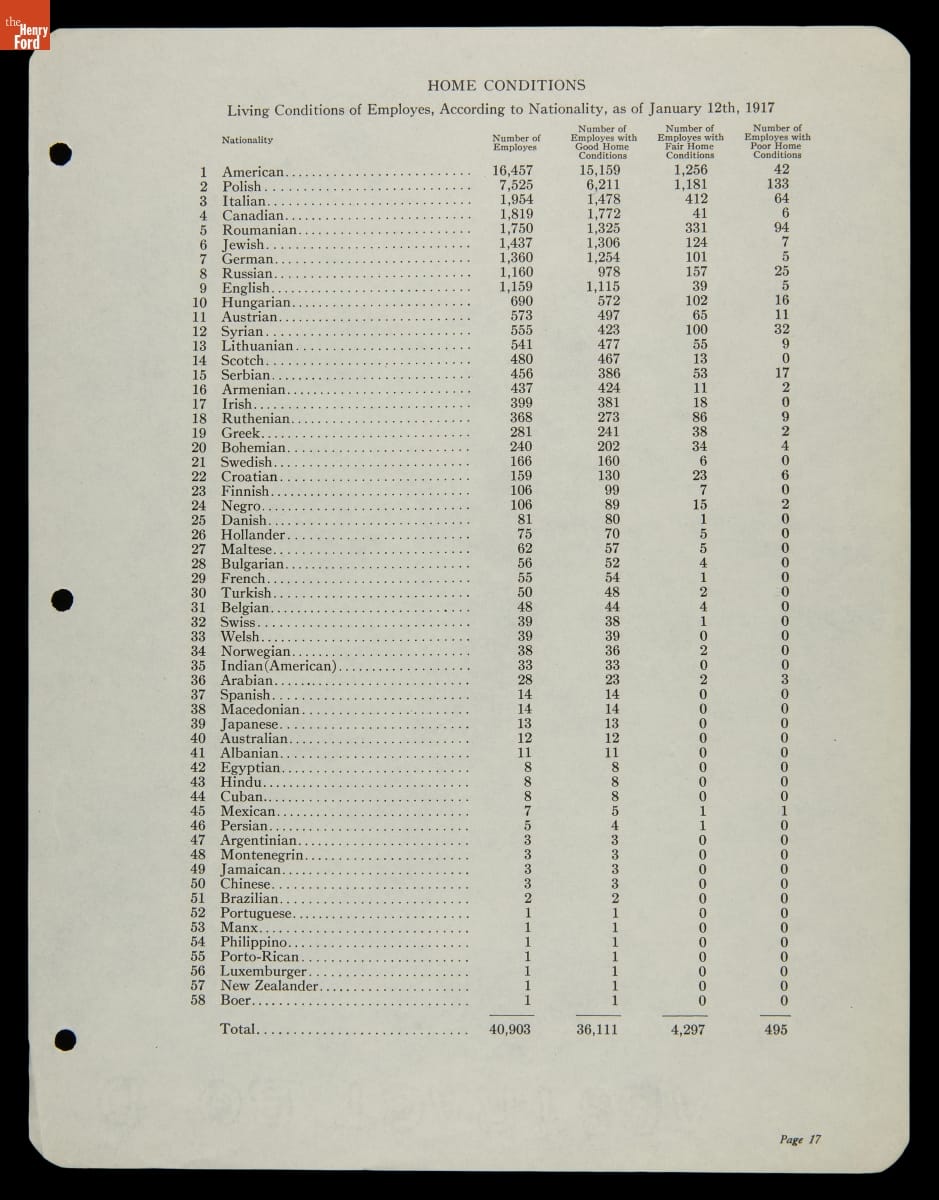
- Document Noting Living Conditions of Ford Motor Company Employees, According to Nationality, as of January 12th, 1917 - Ford Motor Company's Sociological Department, established in 1914, sent investigators to make unannounced visits to evaluate the cleanliness and safety of an employee's household. Investigators that entered workers' homes took notes, filled out forms, and compiled statistics based on their findings. This document organized living conditions by employee nationality and gave ratings of "Good," "Fair" and "Poor" conditions.
- January 12, 1917
- Collections - Artifact
Document Noting Living Conditions of Ford Motor Company Employees, According to Nationality, as of January 12th, 1917
Ford Motor Company's Sociological Department, established in 1914, sent investigators to make unannounced visits to evaluate the cleanliness and safety of an employee's household. Investigators that entered workers' homes took notes, filled out forms, and compiled statistics based on their findings. This document organized living conditions by employee nationality and gave ratings of "Good," "Fair" and "Poor" conditions.
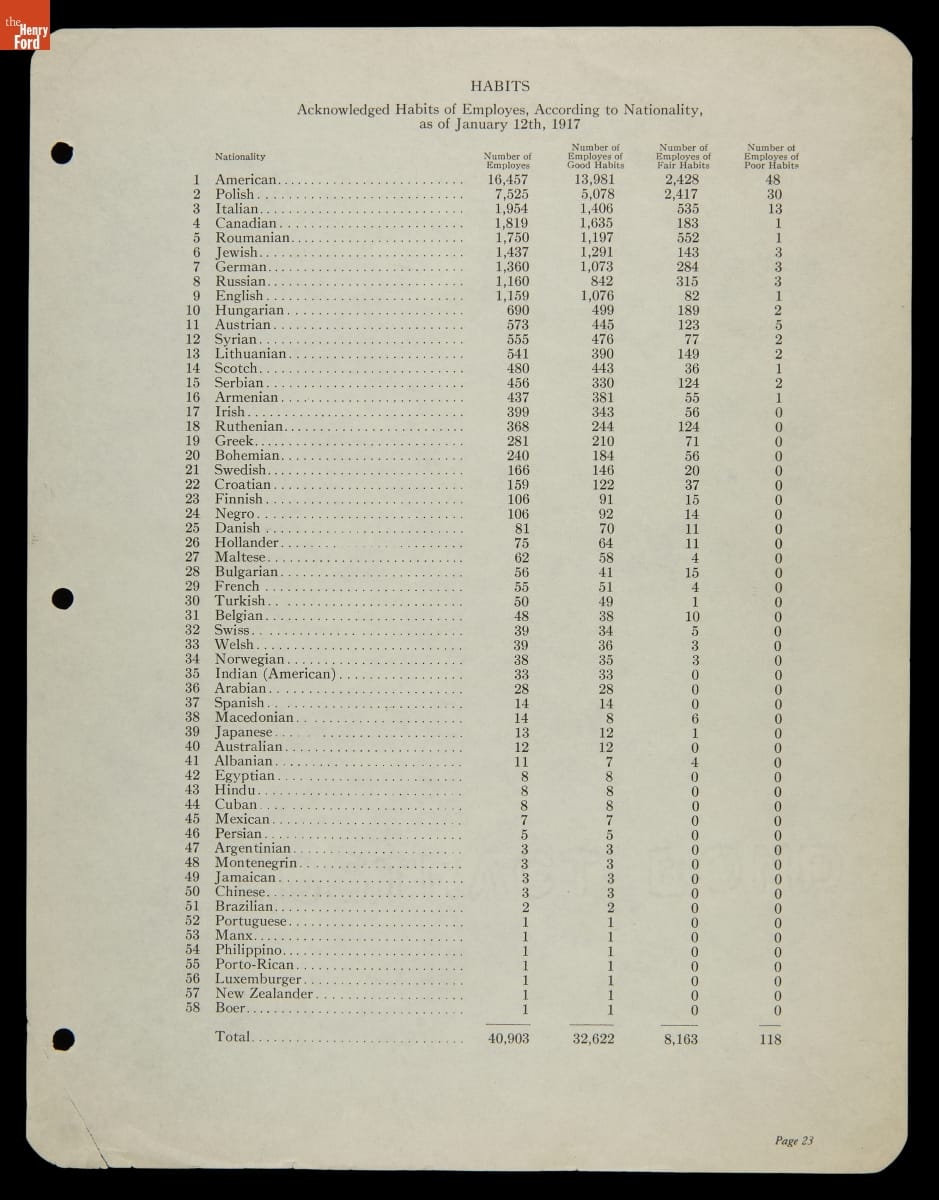
- The Quality of Habits of Ford Motor Company Employees, According to Nationality, as of January 12th, 1917 - After the announcement of the $5 day in January 1914, Ford wanted to ensure that employees did not squander their money. To this end, the Ford Sociological (or Educational) Department was created to investigate and monitor employees' personal and work lives. In order to be considered a good employee, workers needed to be sober, thrifty, and maintain a positive attitude.
- January 12, 1917
- Collections - Artifact
The Quality of Habits of Ford Motor Company Employees, According to Nationality, as of January 12th, 1917
After the announcement of the $5 day in January 1914, Ford wanted to ensure that employees did not squander their money. To this end, the Ford Sociological (or Educational) Department was created to investigate and monitor employees' personal and work lives. In order to be considered a good employee, workers needed to be sober, thrifty, and maintain a positive attitude.
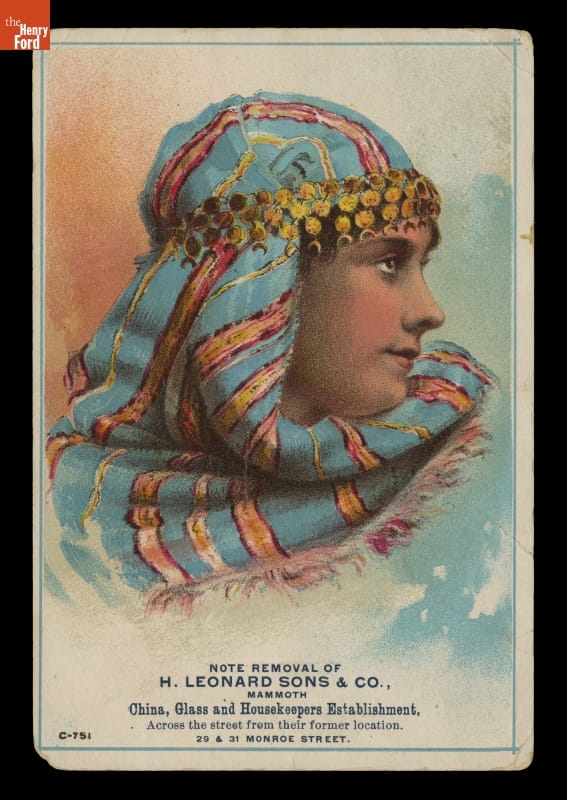
- Trade Card for H. Leonard Sons & Company China, Glass and Housekeepers Establishment, 1870-1890 - In the last third of the nineteenth century, an unprecedented variety of consumer goods and services flooded the American market. Advertisers, armed with new methods of color printing, bombarded potential customers with trade cards. Americans enjoyed and often saved the vibrant little advertisements found in product packages or distributed by local merchants. Many survive as historical records of commercialism in the United States.
- 1870-1890
- Collections - Artifact
Trade Card for H. Leonard Sons & Company China, Glass and Housekeepers Establishment, 1870-1890
In the last third of the nineteenth century, an unprecedented variety of consumer goods and services flooded the American market. Advertisers, armed with new methods of color printing, bombarded potential customers with trade cards. Americans enjoyed and often saved the vibrant little advertisements found in product packages or distributed by local merchants. Many survive as historical records of commercialism in the United States.