
Search
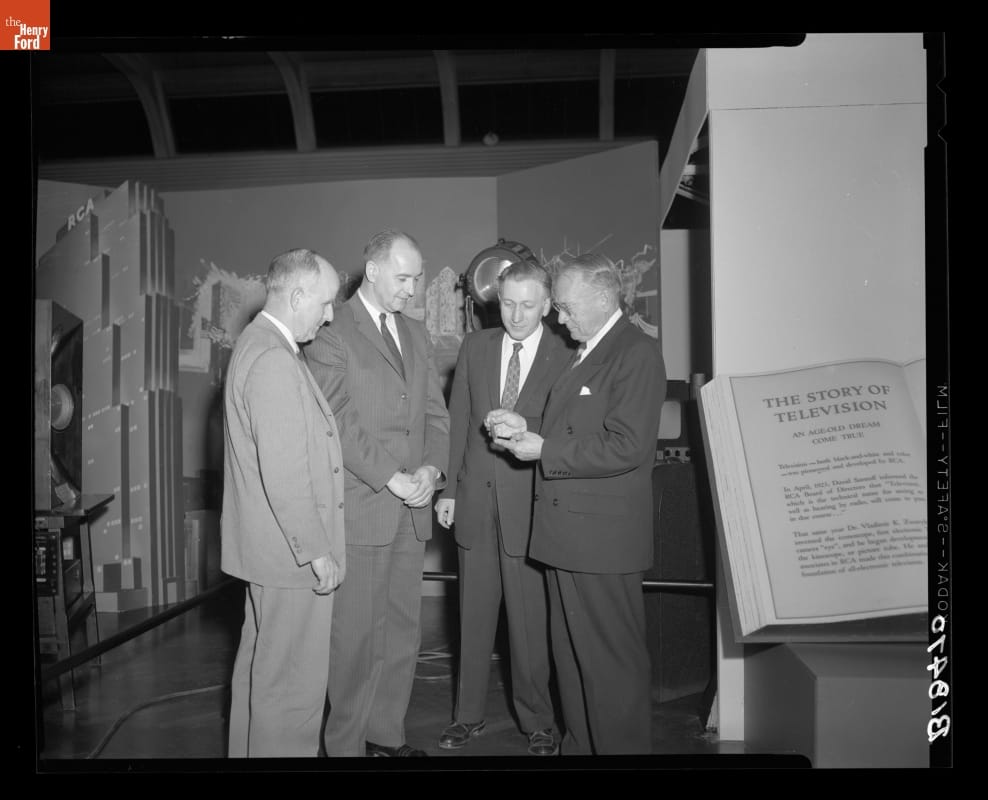
- Dr. Vladimir Zworykin Showing a Vidicon Television Camera Tube, Dearborn, Michigan, 1958 - Vladimir Zworykin was an early pioneer of television development, employed by Westinghouse and the Radio Corporation of America. Here he presents a Vidicon camera tube, to be donated to the museum. Vidicon tubes allowed bulky, expensive broadcast television cameras to become smaller and cheaper beginning in the 1950s. Zworykin's iconoscope and kinescope picture tubes were breakthroughs in television history.
- April 30, 1958
- Collections - Artifact
Dr. Vladimir Zworykin Showing a Vidicon Television Camera Tube, Dearborn, Michigan, 1958
Vladimir Zworykin was an early pioneer of television development, employed by Westinghouse and the Radio Corporation of America. Here he presents a Vidicon camera tube, to be donated to the museum. Vidicon tubes allowed bulky, expensive broadcast television cameras to become smaller and cheaper beginning in the 1950s. Zworykin's iconoscope and kinescope picture tubes were breakthroughs in television history.
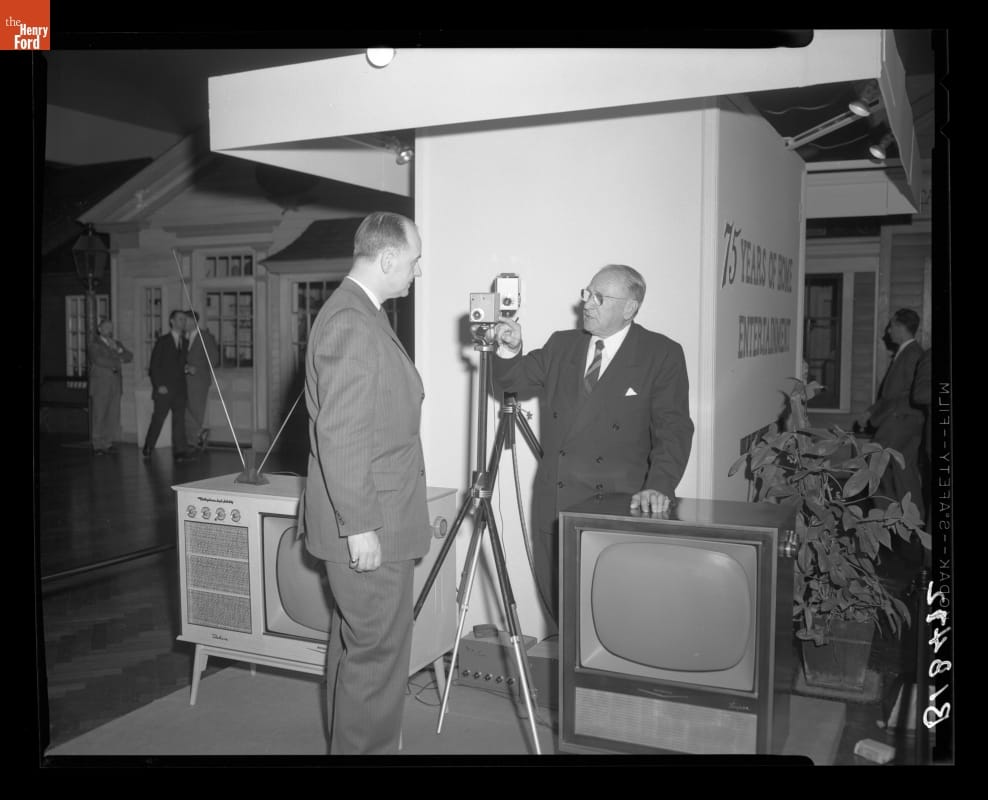
- Dr. Vladimir Zworykin Showing Donald Shelley a Portable Television Camera, Dearborn, Michigan, 1958 -
- April 30, 1958
- Collections - Artifact
Dr. Vladimir Zworykin Showing Donald Shelley a Portable Television Camera, Dearborn, Michigan, 1958
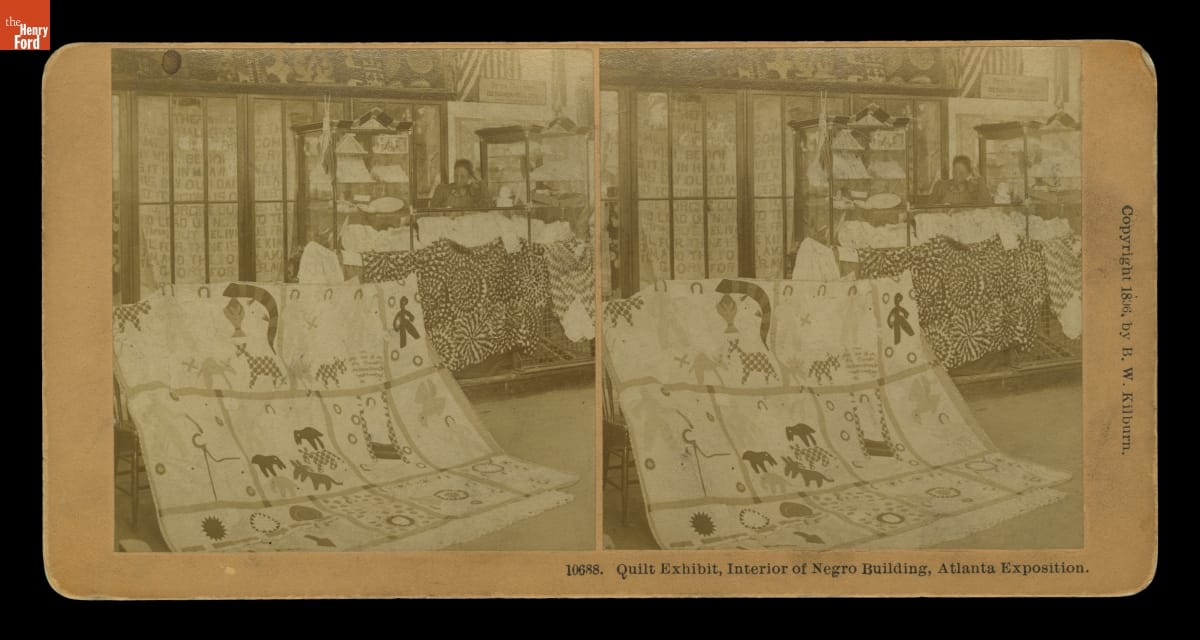
- "Quilt Exhibit, Interior of Negro Building at Atlanta Exposition," 1895 - Former slave Harriet Powers made this striking Bible quilt, with its bold figures that depict biblical events, during the mid-1880s. A decade later, the quilt--sold by Powers out of need--was exhibited at this 1895 exposition in Atlanta. For decades, Powers received little recognition for her work. Today, she is one of the best-known Southern quilt makers.
- 1895
- Collections - Artifact
"Quilt Exhibit, Interior of Negro Building at Atlanta Exposition," 1895
Former slave Harriet Powers made this striking Bible quilt, with its bold figures that depict biblical events, during the mid-1880s. A decade later, the quilt--sold by Powers out of need--was exhibited at this 1895 exposition in Atlanta. For decades, Powers received little recognition for her work. Today, she is one of the best-known Southern quilt makers.
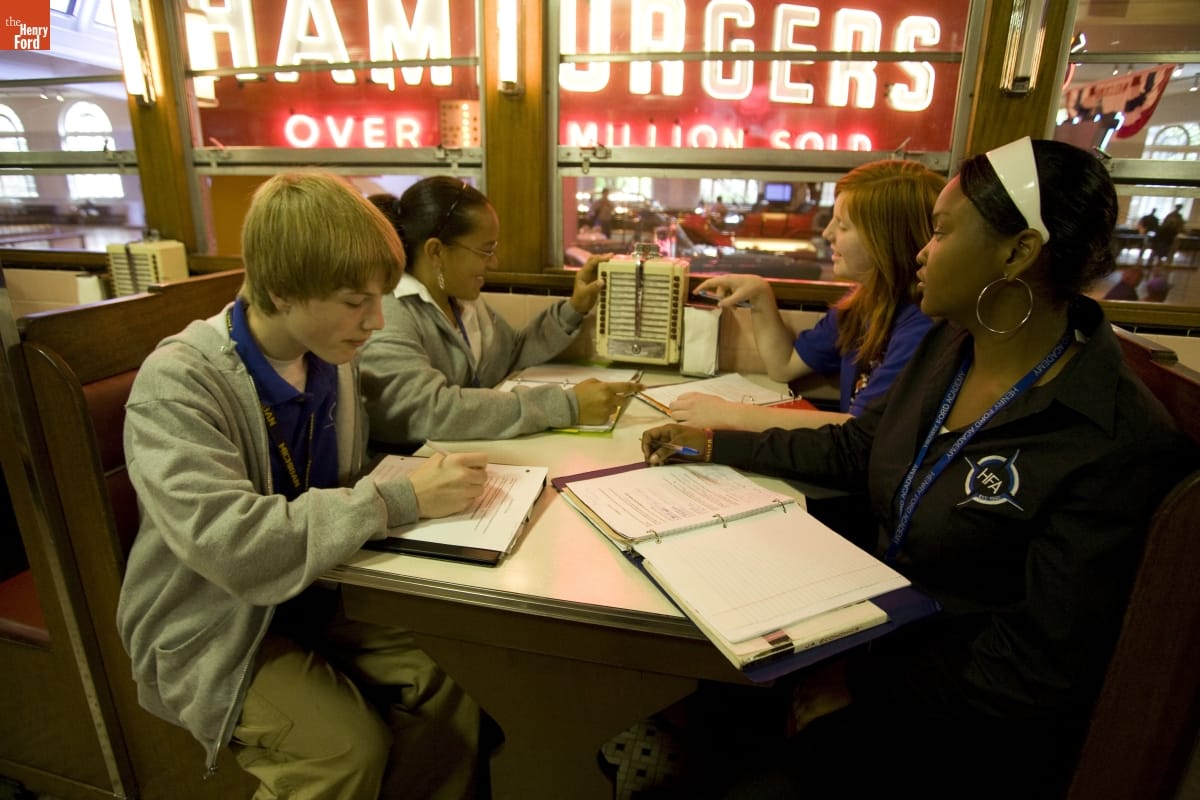
- Henry Ford Academy Students in Lamy's Diner in Henry Ford Museum, October 2007 - Henry Ford Academy, a charter high school on the campus of The Henry Ford, opened in 1997. These students were photographed having a lesson in Lamy's Diner, inside Henry Ford Museum, in October 2007.
- October 01, 2007
- Collections - Artifact
Henry Ford Academy Students in Lamy's Diner in Henry Ford Museum, October 2007
Henry Ford Academy, a charter high school on the campus of The Henry Ford, opened in 1997. These students were photographed having a lesson in Lamy's Diner, inside Henry Ford Museum, in October 2007.
- Marine Corps' Mascot, Ford Exposition, New York World's Fair, 1940 -
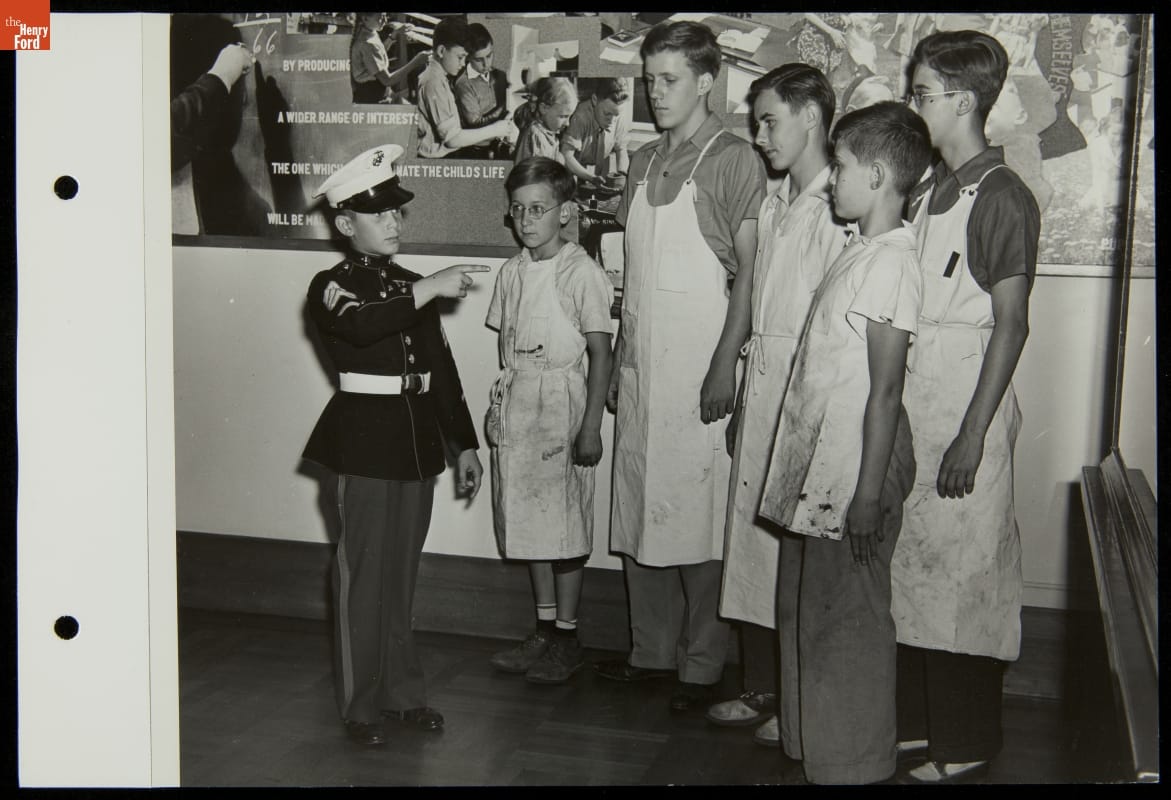
- September 05, 1940
- Collections - Artifact
Marine Corps' Mascot, Ford Exposition, New York World's Fair, 1940
- Florida Girls at Ford Exposition, New York World's Fair, 1939 -
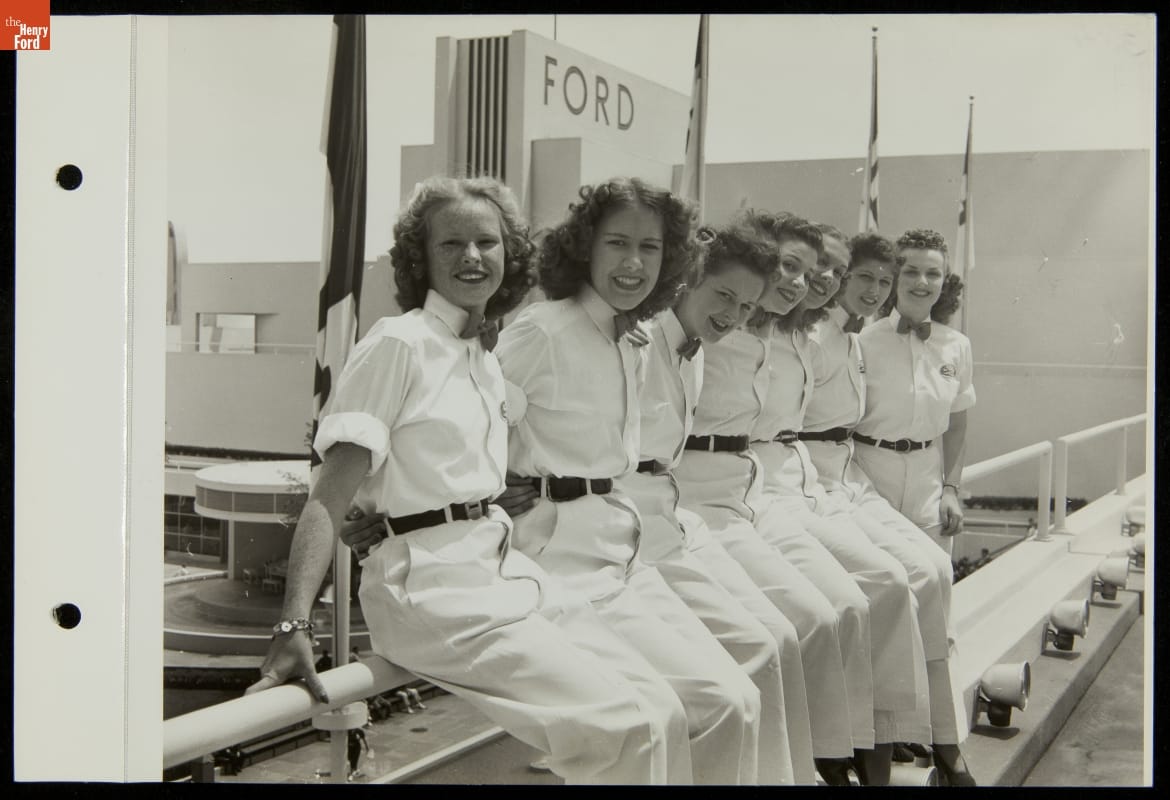
- 1939
- Collections - Artifact
Florida Girls at Ford Exposition, New York World's Fair, 1939
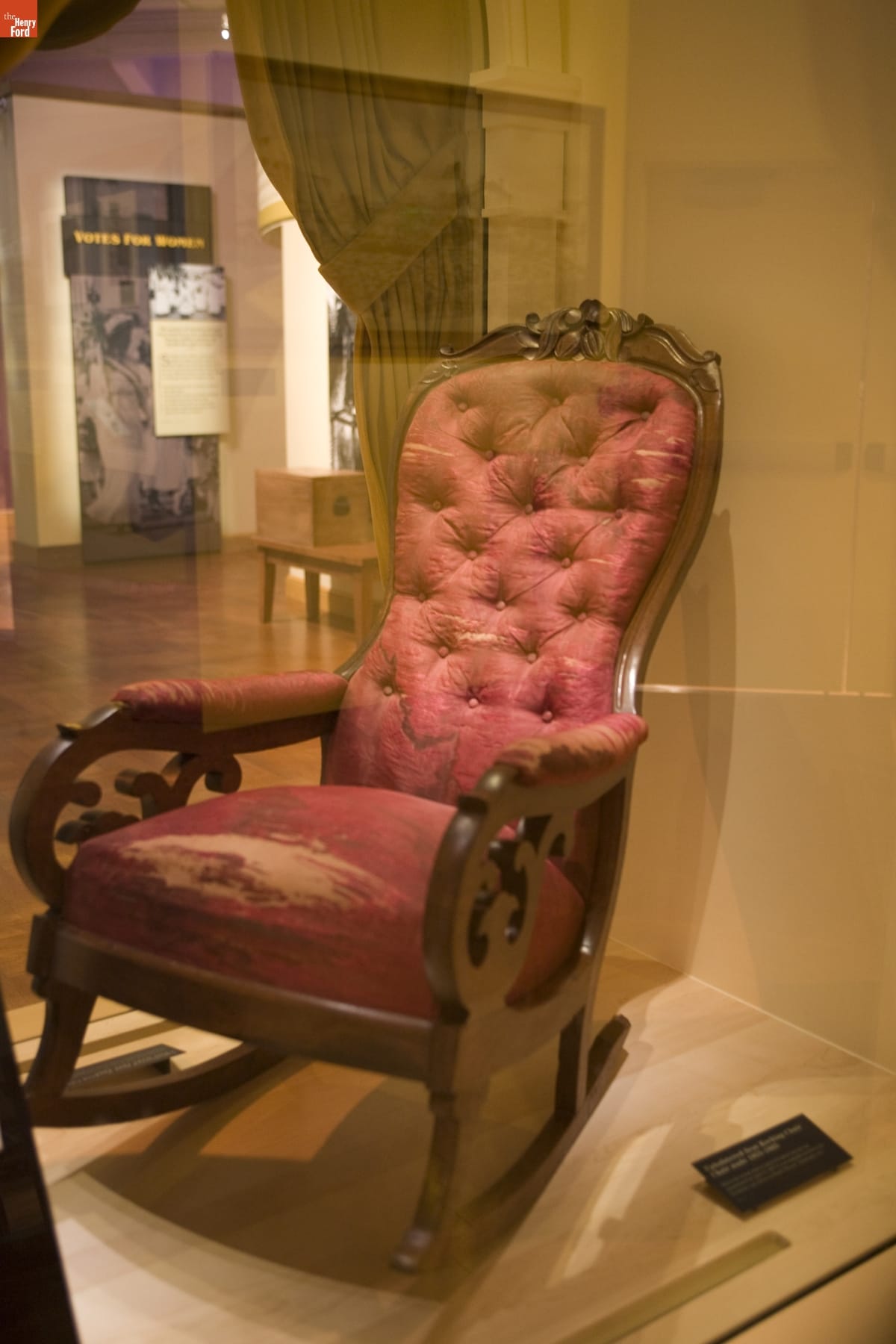
- The Chair in Which Abraham Lincoln Was Shot at Ford's Theatre, on Exhibit at Henry Ford Museum, June 2007 - President Abraham Lincoln was sitting in this rocking chair during a production of <EM>Our American Cousin</EM> at Ford's Theatre in Washington, D.C., when he was assassinated on April 14, 1865. Henry Ford purchased the chair in 1929 for the Museum, where it remains one of the most revered objects associated with the "man who saved the Union."
- June 01, 2007
- Collections - Artifact
The Chair in Which Abraham Lincoln Was Shot at Ford's Theatre, on Exhibit at Henry Ford Museum, June 2007
President Abraham Lincoln was sitting in this rocking chair during a production of Our American Cousin at Ford's Theatre in Washington, D.C., when he was assassinated on April 14, 1865. Henry Ford purchased the chair in 1929 for the Museum, where it remains one of the most revered objects associated with the "man who saved the Union."
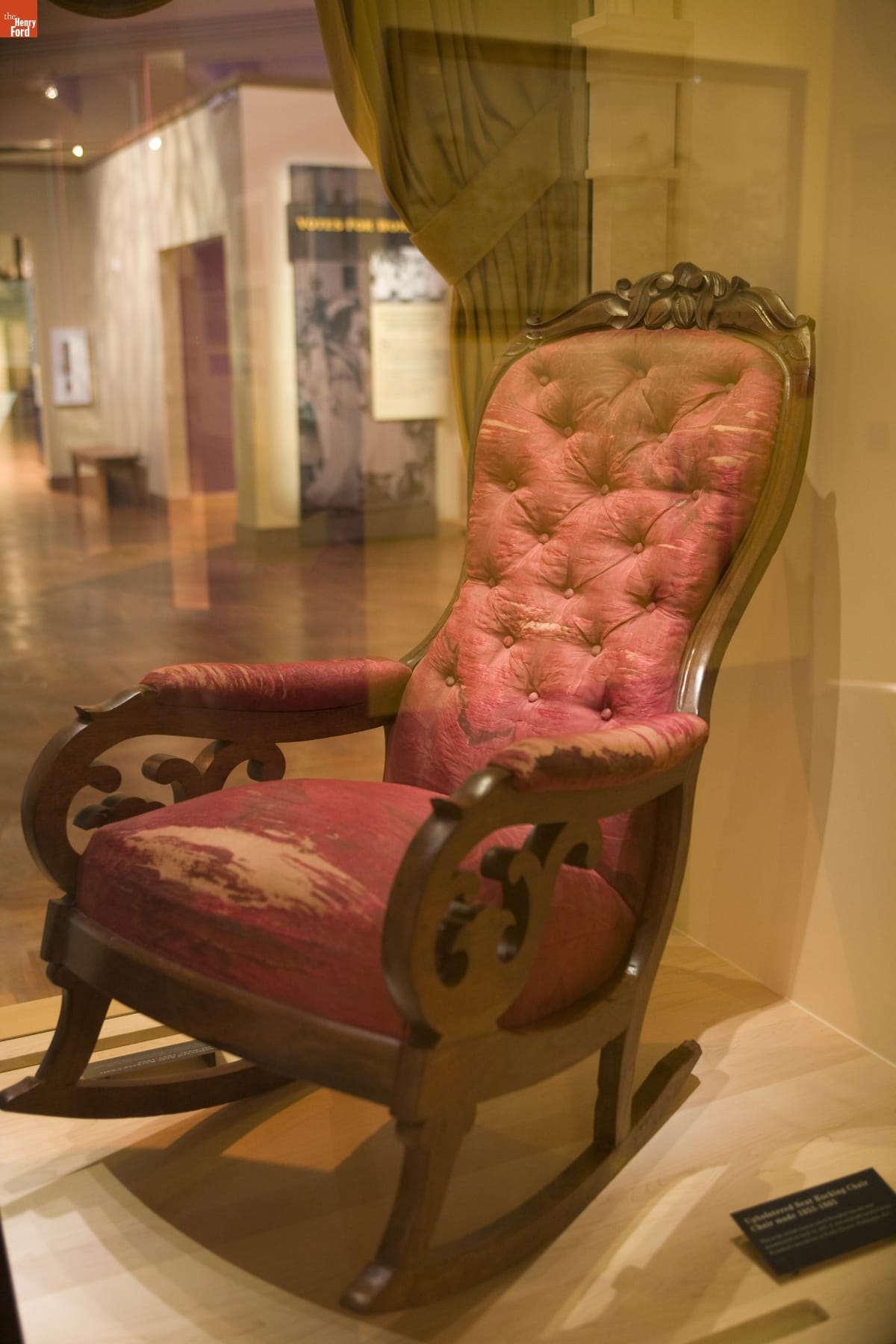
- The Chair in Which Abraham Lincoln Was Shot at Ford's Theatre, on Exhibit at Henry Ford Museum, June 2007 - President Abraham Lincoln was sitting in this rocking chair during a production of <EM>Our American Cousin</EM> at Ford's Theatre in Washington, D.C., when he was assassinated on April 14, 1865. Henry Ford purchased the chair in 1929 for the Museum, where it remains one of the most revered objects associated with the "man who saved the Union."
- June 01, 2007
- Collections - Artifact
The Chair in Which Abraham Lincoln Was Shot at Ford's Theatre, on Exhibit at Henry Ford Museum, June 2007
President Abraham Lincoln was sitting in this rocking chair during a production of Our American Cousin at Ford's Theatre in Washington, D.C., when he was assassinated on April 14, 1865. Henry Ford purchased the chair in 1929 for the Museum, where it remains one of the most revered objects associated with the "man who saved the Union."
- Soybean Display Board, April 13, 1937 -
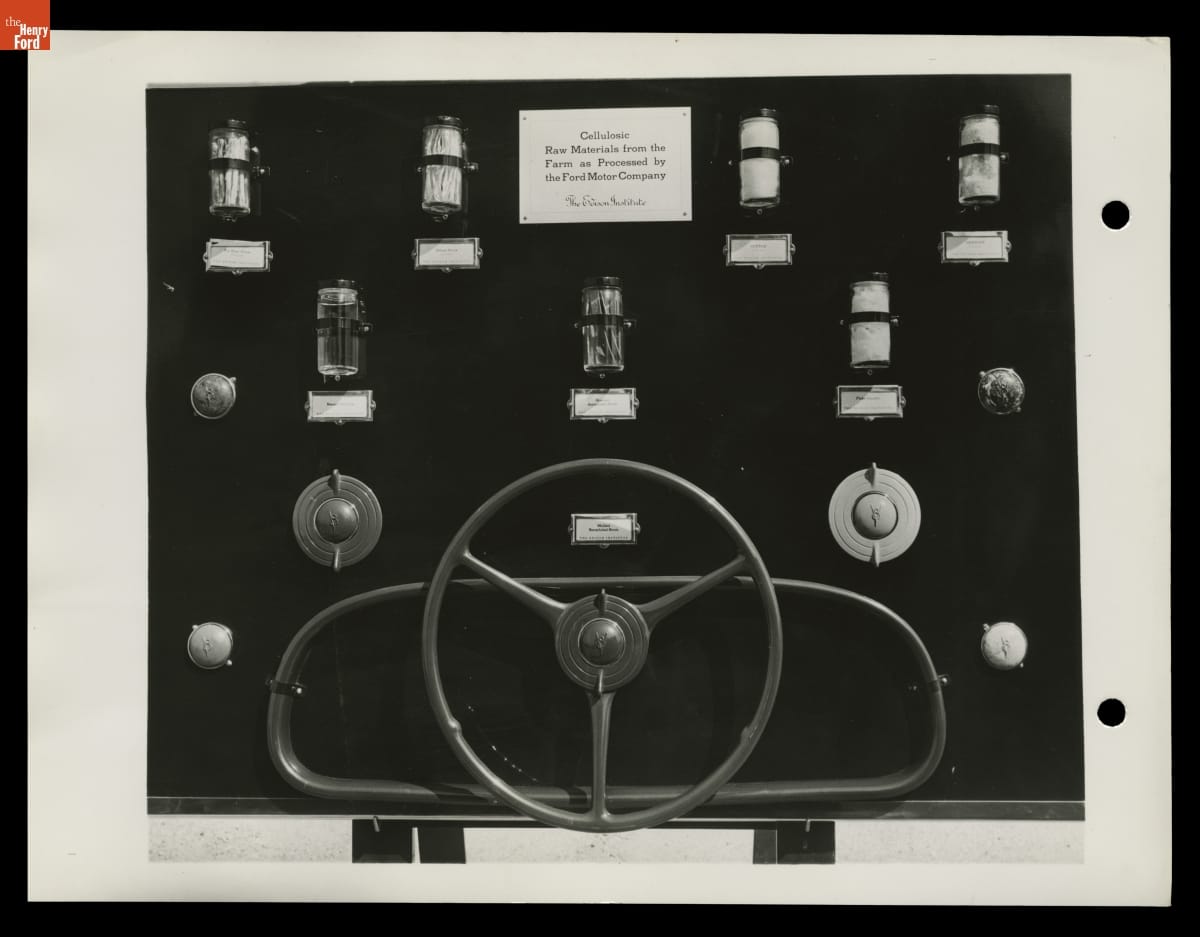
- April 13, 1937
- Collections - Artifact
Soybean Display Board, April 13, 1937
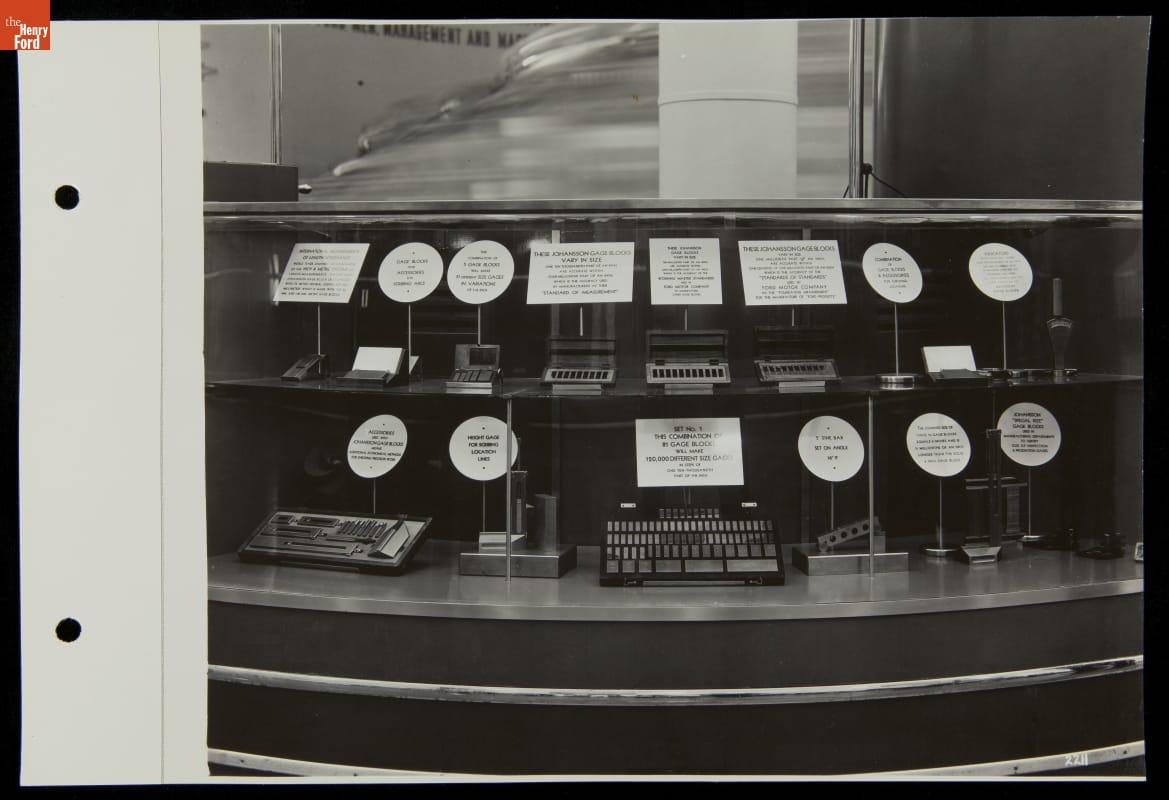
- Johansson Gage Blocks Exhibit, Ford Exposition, New York World's Fair, 1939 - Henry Ford viewed national expositions as business opportunities <EM>and</EM> platforms for public education. During the 1939-40 New York World's Fair, Ford Motor Company spent more than $5 million to build and maintain an elaborate exposition space. Informative displays and manufacturing demonstrations inside Ford's massive fair building offered visitors an in-depth, entertaining, and educational look at industrial processes.
- May 29, 1940
- Collections - Artifact
Johansson Gage Blocks Exhibit, Ford Exposition, New York World's Fair, 1939
Henry Ford viewed national expositions as business opportunities and platforms for public education. During the 1939-40 New York World's Fair, Ford Motor Company spent more than $5 million to build and maintain an elaborate exposition space. Informative displays and manufacturing demonstrations inside Ford's massive fair building offered visitors an in-depth, entertaining, and educational look at industrial processes.