
Search
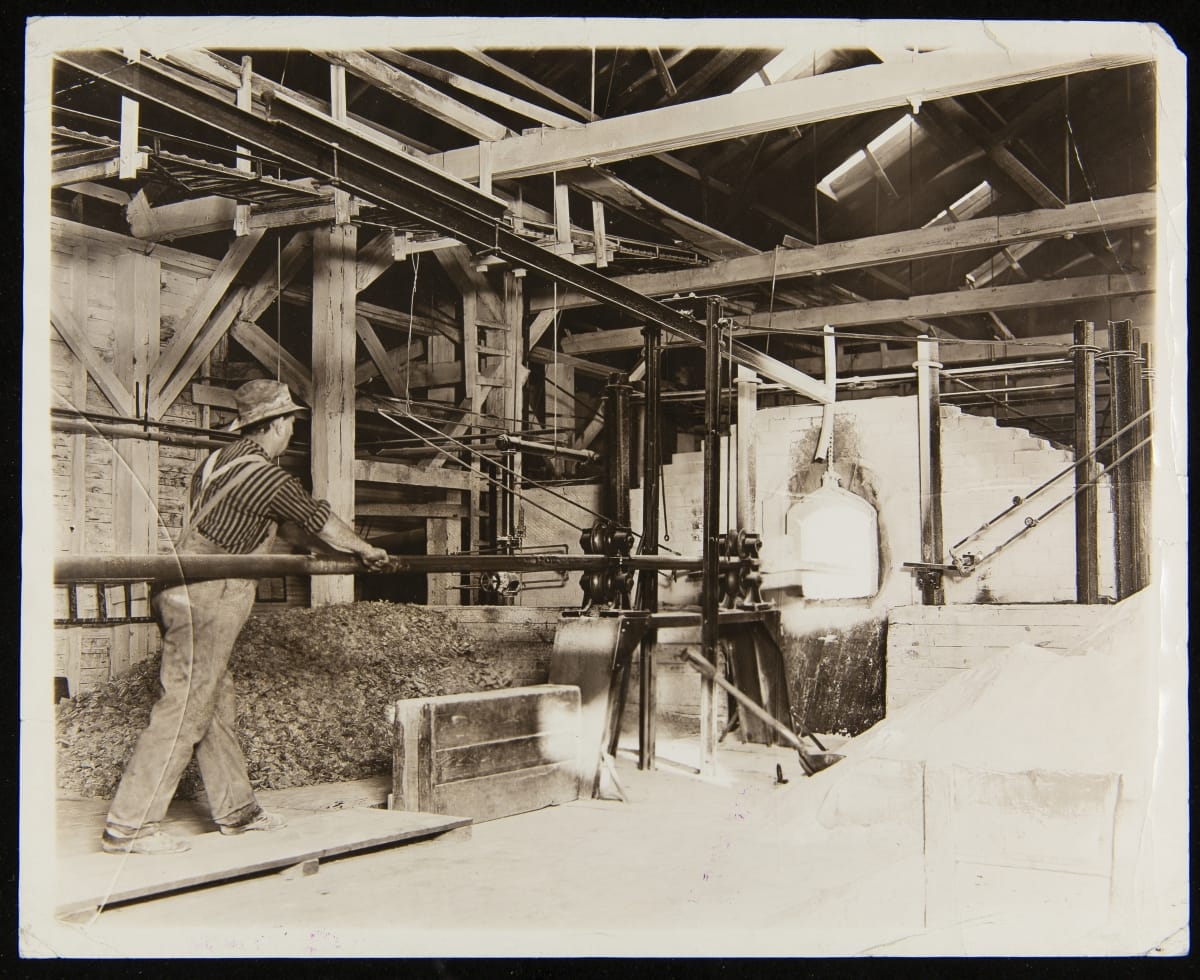
- Employee Working at Heinz Glass Factory, Sharpsburg, Pennsylvania, 1885-1910 - Before complete mechanization of the manufacturing process, many tasks at the Heinz factory were done by hand. The H.J. Heinz Company made their own boxes, glassware, cans, advertisements, and labels, allowing most production to be completed in-house. This photograph features a worker at the Heinz Glass Factory.
- 1885-1910
- Collections - Artifact
Employee Working at Heinz Glass Factory, Sharpsburg, Pennsylvania, 1885-1910
Before complete mechanization of the manufacturing process, many tasks at the Heinz factory were done by hand. The H.J. Heinz Company made their own boxes, glassware, cans, advertisements, and labels, allowing most production to be completed in-house. This photograph features a worker at the Heinz Glass Factory.
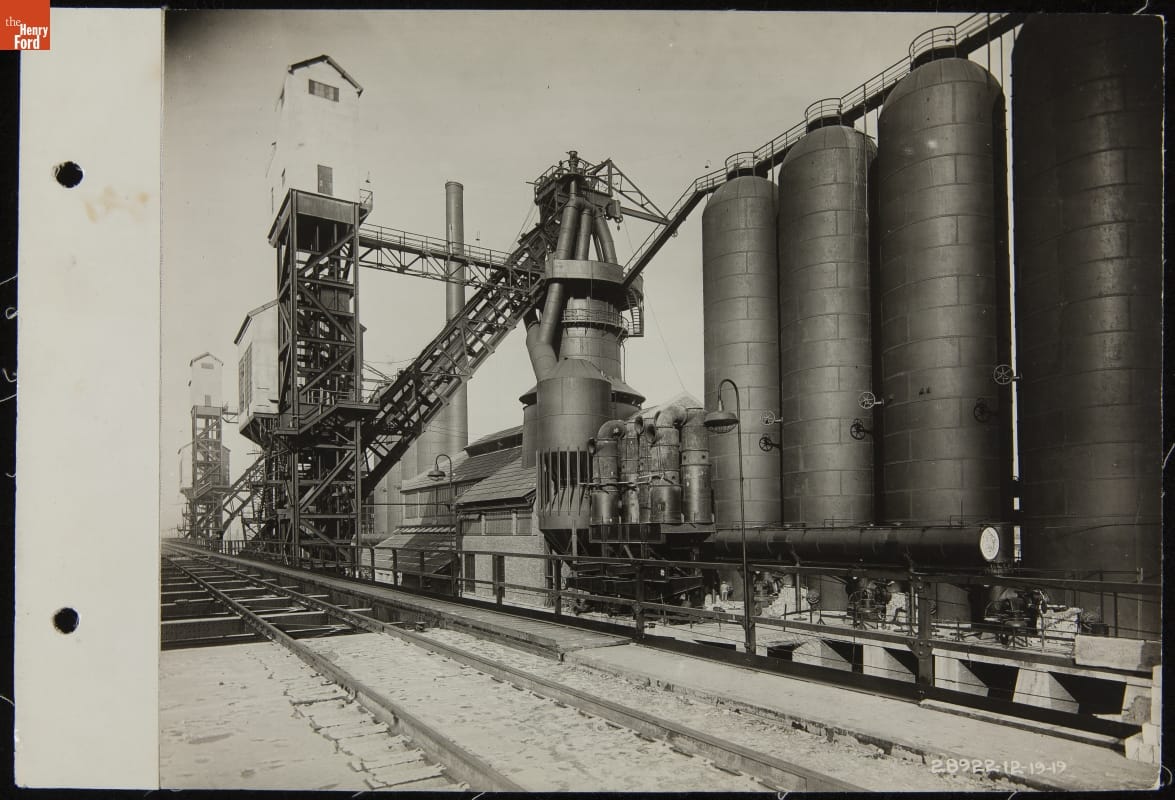
- Ford Motor Company Rouge Plant, December 1919 - Three blast furnaces at Ford's Rouge plant converted raw iron oxide ore into metallic iron. The furnaces were named for Henry Ford's grandsons. Blast Furnace A, the "Henry Ford II," opened in May 1920, while the identical Blast Furnace B, the "Benson Ford," followed in October 1922. The larger Blast Furnace C, the "William Clay Ford," opened in November 1948.
- December 19, 2019
- Collections - Artifact
Ford Motor Company Rouge Plant, December 1919
Three blast furnaces at Ford's Rouge plant converted raw iron oxide ore into metallic iron. The furnaces were named for Henry Ford's grandsons. Blast Furnace A, the "Henry Ford II," opened in May 1920, while the identical Blast Furnace B, the "Benson Ford," followed in October 1922. The larger Blast Furnace C, the "William Clay Ford," opened in November 1948.
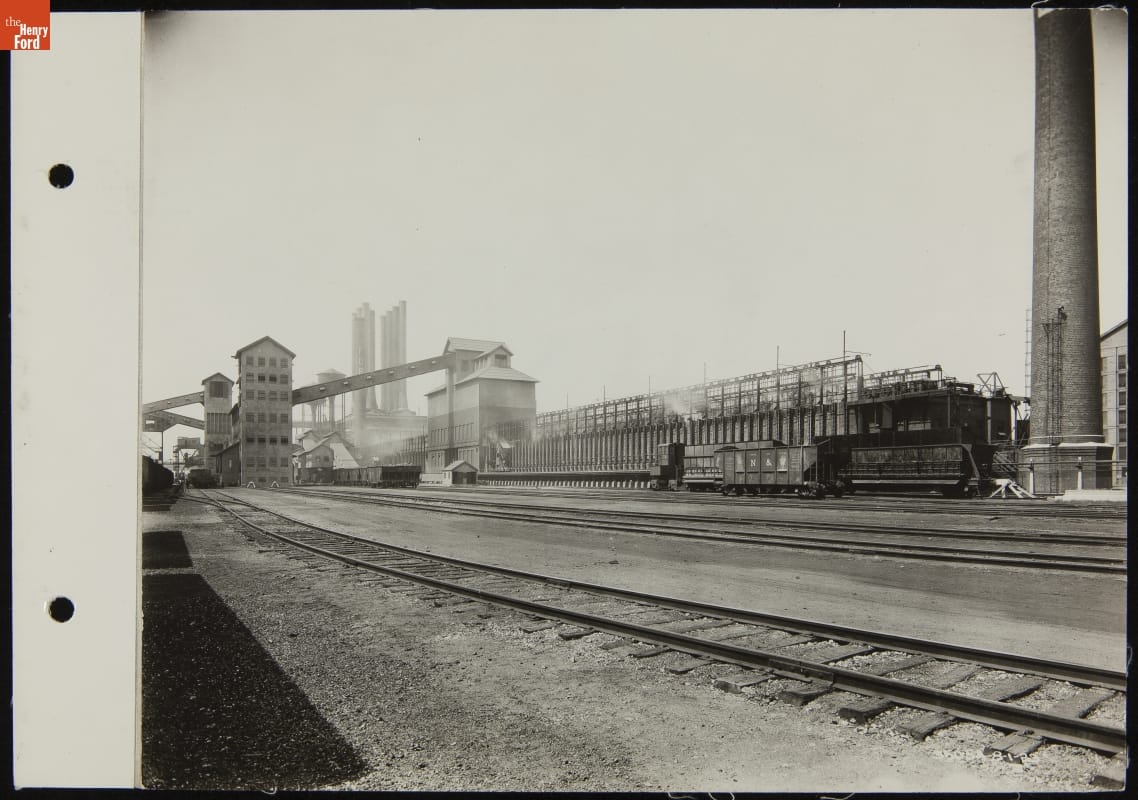
- Ford Motor Company Rouge Plant Coke Ovens from Southwest Corner, August 1923 - Coke ovens at Ford Motor Company's Rouge plant converted coal into high-carbon coke, used in the factory's blast furnaces to produce iron. In 1921, the Rouge's ovens could produce up to 3,600 tons of coke daily. New, more efficient coke ovens opened in 1937. The coking process also produced gas used to heat some of the factory's other furnaces.
- August 01, 1923
- Collections - Artifact
Ford Motor Company Rouge Plant Coke Ovens from Southwest Corner, August 1923
Coke ovens at Ford Motor Company's Rouge plant converted coal into high-carbon coke, used in the factory's blast furnaces to produce iron. In 1921, the Rouge's ovens could produce up to 3,600 tons of coke daily. New, more efficient coke ovens opened in 1937. The coking process also produced gas used to heat some of the factory's other furnaces.
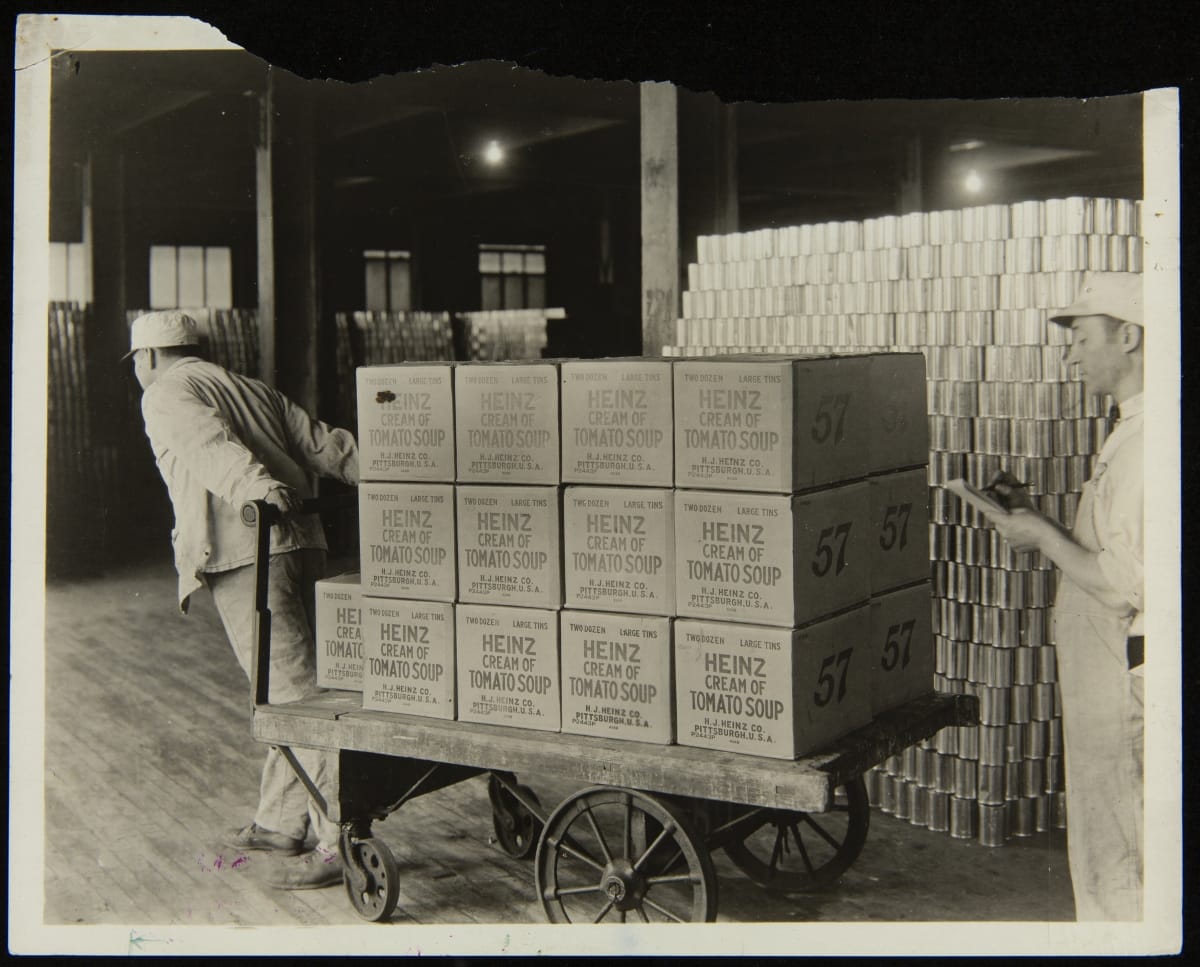
- Employee Moving Boxes of H. J. Heinz Cream of Tomato Soup, Pittsburgh, Pennsylvania, circa 1920 - Before complete mechanization of the manufacturing process, many tasks at the Heinz factory were done by hand. The H.J. Heinz Company documented the many departments of the manufacturing process through photographs. This photograph shows an employee moving boxes. These boxes were possibly heading for the shipping dock to be loaded onto a train or truck.
- circa 1920
- Collections - Artifact
Employee Moving Boxes of H. J. Heinz Cream of Tomato Soup, Pittsburgh, Pennsylvania, circa 1920
Before complete mechanization of the manufacturing process, many tasks at the Heinz factory were done by hand. The H.J. Heinz Company documented the many departments of the manufacturing process through photographs. This photograph shows an employee moving boxes. These boxes were possibly heading for the shipping dock to be loaded onto a train or truck.
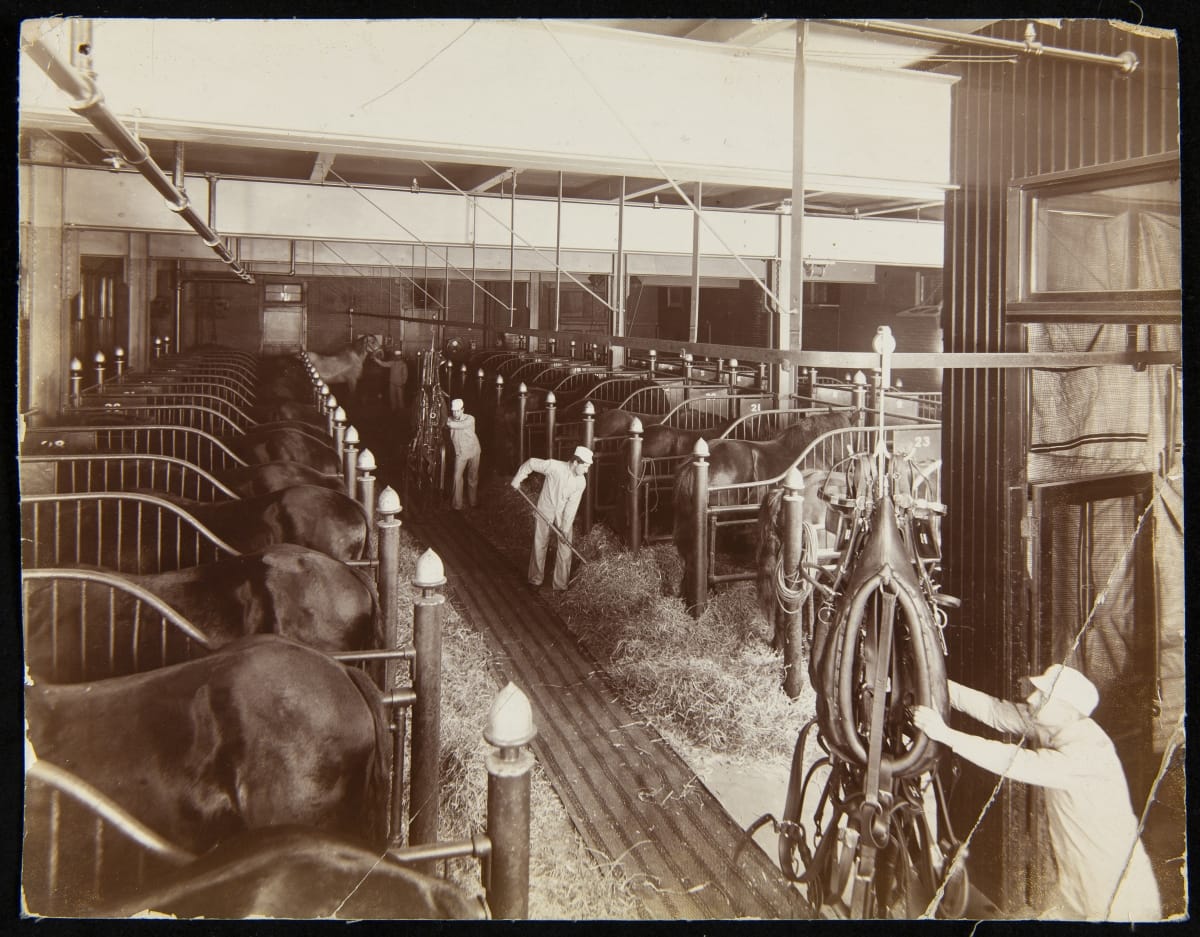
- Second Floor of H. J. Heinz Company Stables, Pittsburgh, Pennsylvania, circa 1910 - The H.J. Heinz Company spared no expense when caring for its Percheron horses. The processed food manufacturer stabled horses on the second floor of a three-story "equine palace" in Pittsburgh. Grooms spread high-quality bedding, as this photograph shows, to help keep their charges clean between shifts hitched to Heinz delivery wagons.
- circa 1910
- Collections - Artifact
Second Floor of H. J. Heinz Company Stables, Pittsburgh, Pennsylvania, circa 1910
The H.J. Heinz Company spared no expense when caring for its Percheron horses. The processed food manufacturer stabled horses on the second floor of a three-story "equine palace" in Pittsburgh. Grooms spread high-quality bedding, as this photograph shows, to help keep their charges clean between shifts hitched to Heinz delivery wagons.
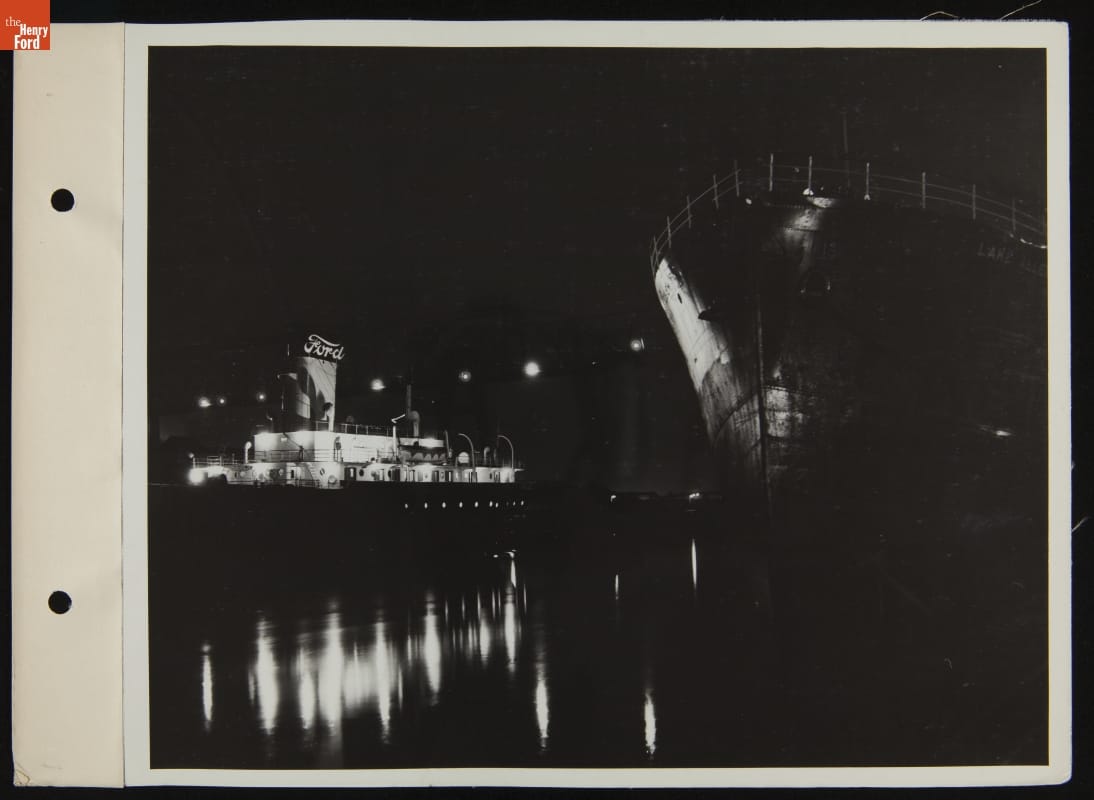
- Ships in Ford Rouge Plant Boat Slip at Night, May 1936 - Unlike Ford's Highland Park plant, the Rouge enjoyed direct access to Great Lakes marine traffic via the Rouge and Detroit Rivers. Raw materials -- like iron ore for the blast furnaces -- came in by boat, while finished products moved out the same way. Ford ultimately owned more than 30 vessels including barges, tugs, canal boats, ocean-going ships, and lake-going ore boats.
- May 14, 1936
- Collections - Artifact
Ships in Ford Rouge Plant Boat Slip at Night, May 1936
Unlike Ford's Highland Park plant, the Rouge enjoyed direct access to Great Lakes marine traffic via the Rouge and Detroit Rivers. Raw materials -- like iron ore for the blast furnaces -- came in by boat, while finished products moved out the same way. Ford ultimately owned more than 30 vessels including barges, tugs, canal boats, ocean-going ships, and lake-going ore boats.
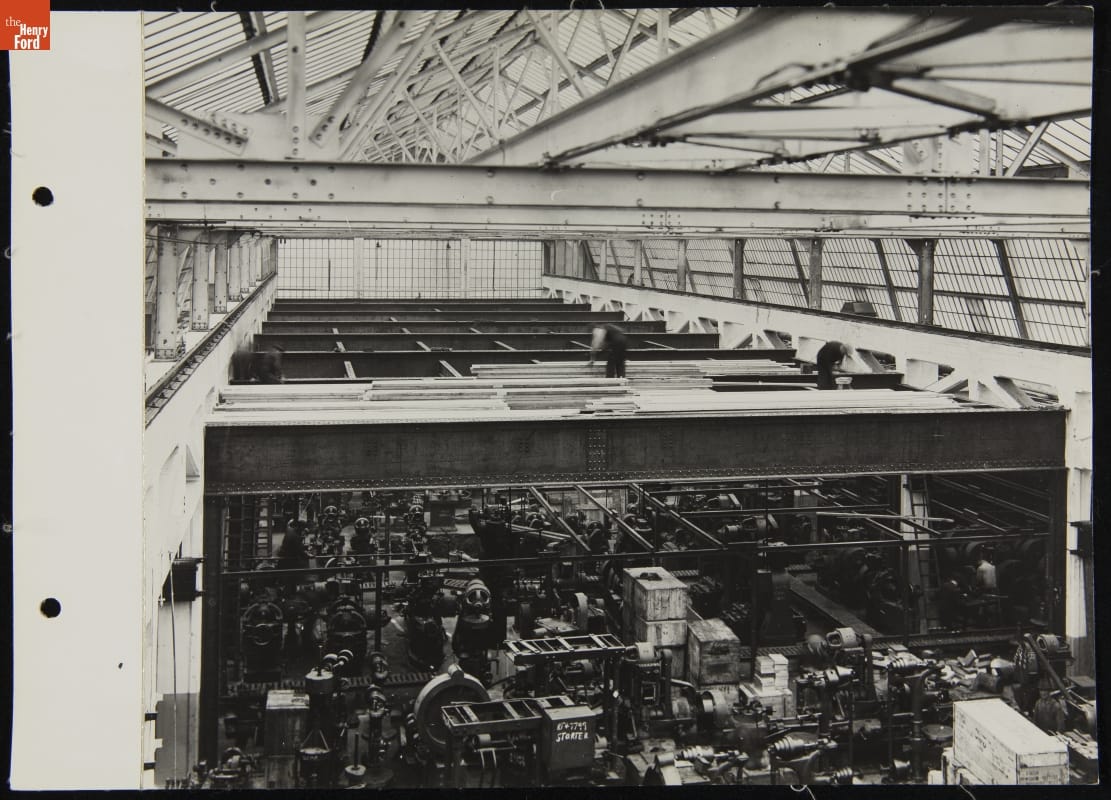
- Steelwork Craneway Balcony, Ford Plant in Cork, Ireland, January 1929 - Henry Ford formed an Irish subsidiary company, Henry Ford & Son Limited, in 1917. Two years later, he opened a tractor plant in County Cork, Ireland -- his father's birthplace. Soon the factory began producing automobile engines and parts for Ford factories in England. Apart from a temporary closure during World War II, the plant remained in operation until 1984.
- January 10, 1929
- Collections - Artifact
Steelwork Craneway Balcony, Ford Plant in Cork, Ireland, January 1929
Henry Ford formed an Irish subsidiary company, Henry Ford & Son Limited, in 1917. Two years later, he opened a tractor plant in County Cork, Ireland -- his father's birthplace. Soon the factory began producing automobile engines and parts for Ford factories in England. Apart from a temporary closure during World War II, the plant remained in operation until 1984.
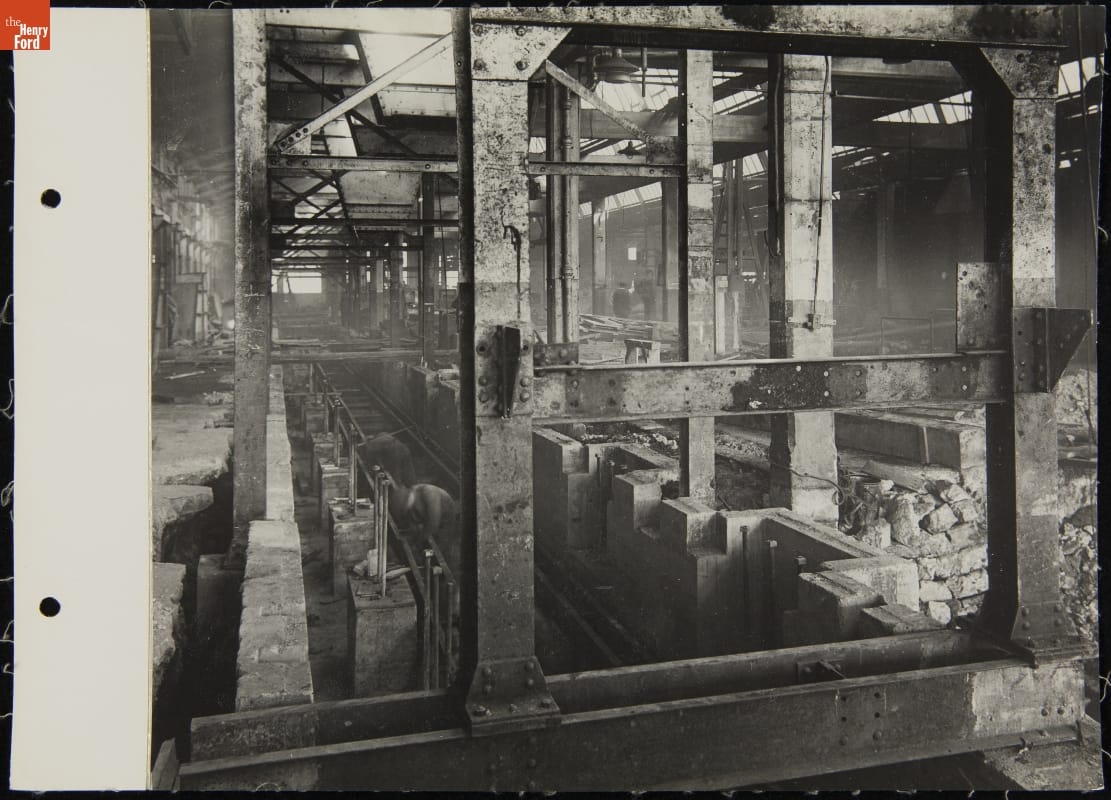
- Drag Conveyor in Foundry, Ford Plant in Cork, Ireland, February 1929 - Henry Ford formed an Irish subsidiary company, Henry Ford & Son Limited, in 1917. Two years later, he opened a tractor plant in County Cork, Ireland -- his father's birthplace. Soon the factory began producing automobile engines and parts for Ford factories in England. Apart from a temporary closure during World War II, the plant remained in operation until 1984.
- February 05, 1929
- Collections - Artifact
Drag Conveyor in Foundry, Ford Plant in Cork, Ireland, February 1929
Henry Ford formed an Irish subsidiary company, Henry Ford & Son Limited, in 1917. Two years later, he opened a tractor plant in County Cork, Ireland -- his father's birthplace. Soon the factory began producing automobile engines and parts for Ford factories in England. Apart from a temporary closure during World War II, the plant remained in operation until 1984.
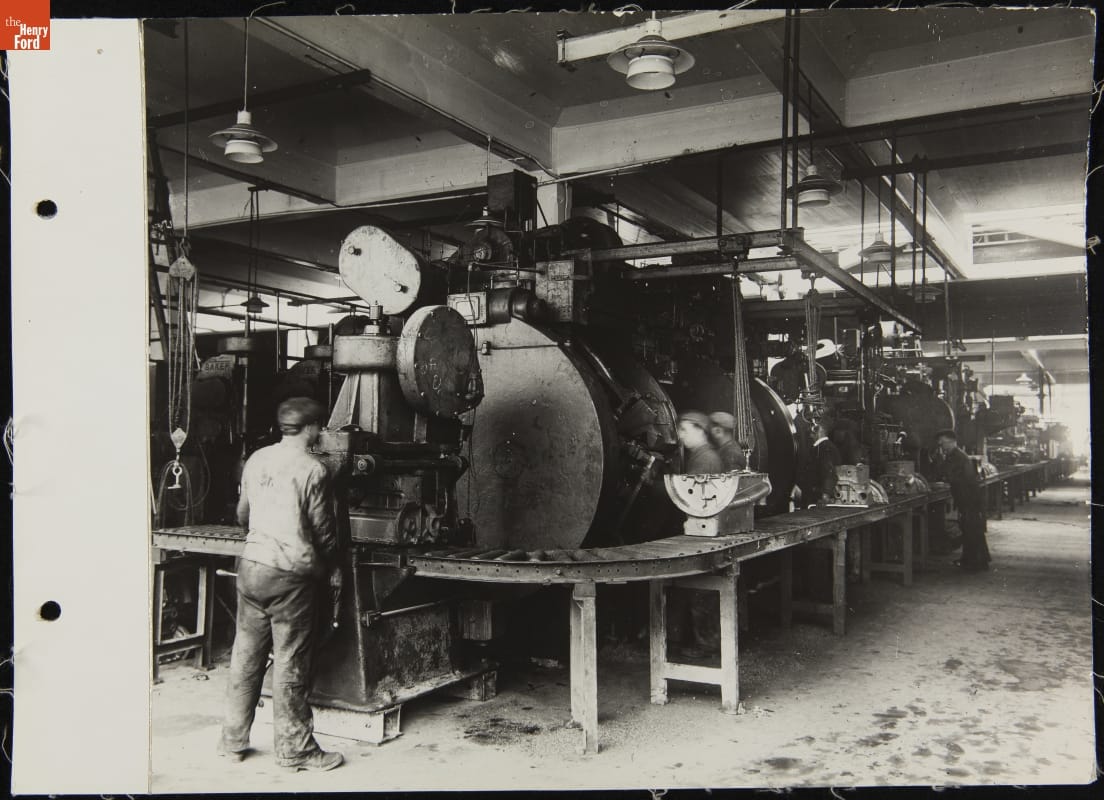
- Cylinder Block Line, Ford Plant in Cork, Ireland, February 1929 - Henry Ford formed an Irish subsidiary company, Henry Ford & Son Limited, in 1917. Two years later, he opened a tractor plant in County Cork, Ireland -- his father's birthplace. Soon the factory began producing automobile engines and parts for Ford factories in England. Apart from a temporary closure during World War II, the plant remained in operation until 1984.
- February 12, 1929
- Collections - Artifact
Cylinder Block Line, Ford Plant in Cork, Ireland, February 1929
Henry Ford formed an Irish subsidiary company, Henry Ford & Son Limited, in 1917. Two years later, he opened a tractor plant in County Cork, Ireland -- his father's birthplace. Soon the factory began producing automobile engines and parts for Ford factories in England. Apart from a temporary closure during World War II, the plant remained in operation until 1984.
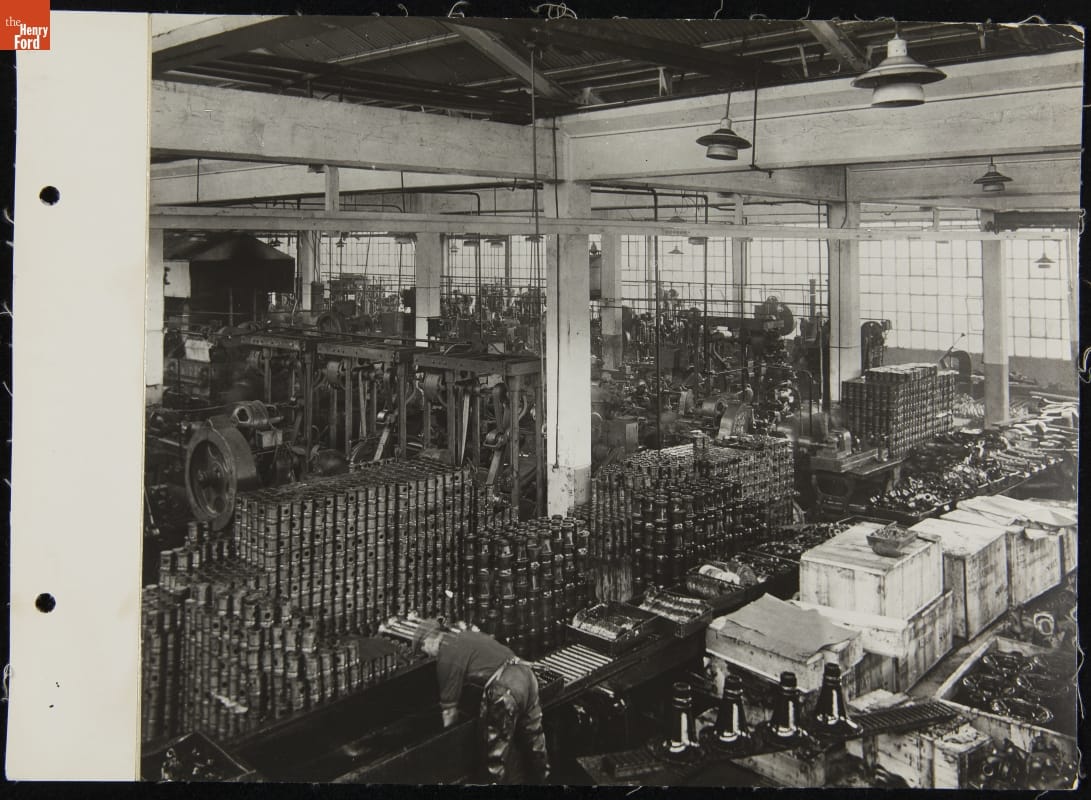
- Oiling and Packing Parts for Shipping, Ford Plant at Cork, Ireland, March 1929 - Henry Ford formed an Irish subsidiary company, Henry Ford & Son Limited, in 1917. Two years later, he opened a tractor plant in County Cork, Ireland -- his father's birthplace. Soon the factory began producing automobile engines and parts for Ford factories in England. Apart from a temporary closure during World War II, the plant remained in operation until 1984.
- March 13, 1929
- Collections - Artifact
Oiling and Packing Parts for Shipping, Ford Plant at Cork, Ireland, March 1929
Henry Ford formed an Irish subsidiary company, Henry Ford & Son Limited, in 1917. Two years later, he opened a tractor plant in County Cork, Ireland -- his father's birthplace. Soon the factory began producing automobile engines and parts for Ford factories in England. Apart from a temporary closure during World War II, the plant remained in operation until 1984.