
Search
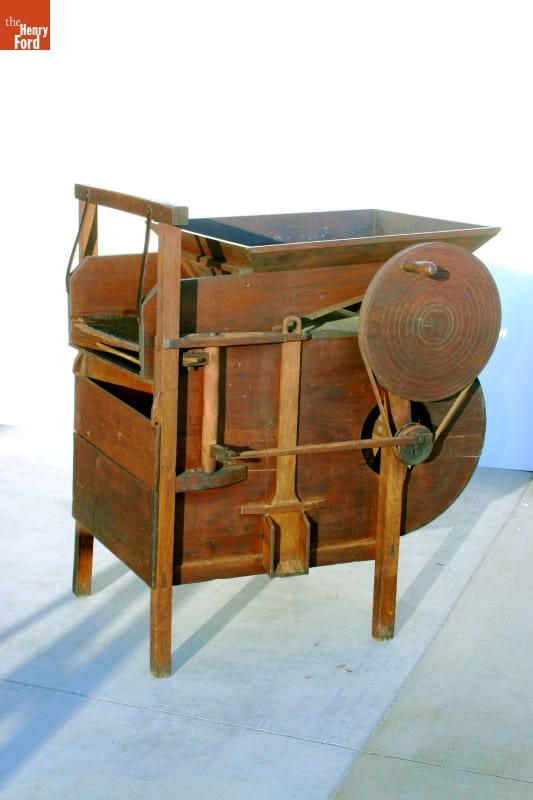
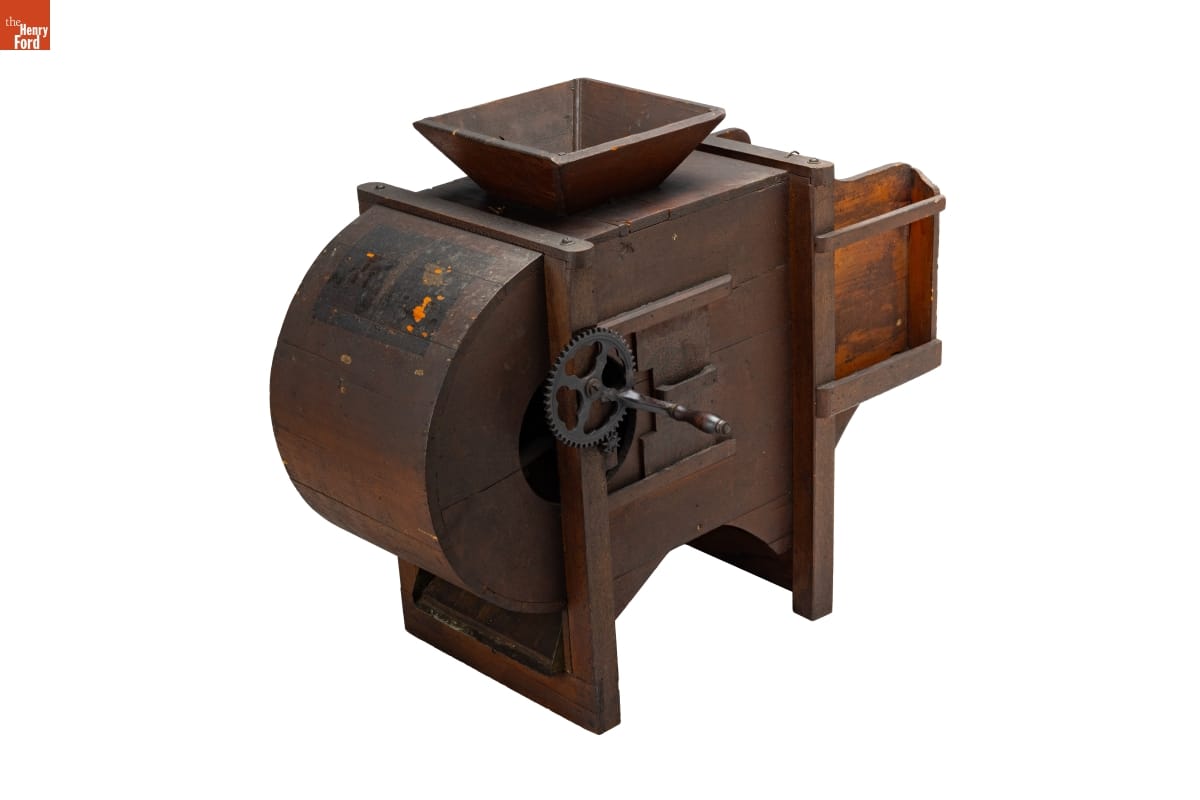
- Fanning Mill, circa 1830 - Fanning mills, one of the earliest farm machines, mechanized the winnowing process which separates the grain from the lighter chaff and straw with a breeze created by the wind or flapping a bedsheet. A hand-cranked fan blows the grain and chaff across vibrating screens. The heavier grain kernels fall through the screens, and the chaff and straw is blown out.
- circa 1830
- Collections - Artifact
Fanning Mill, circa 1830
Fanning mills, one of the earliest farm machines, mechanized the winnowing process which separates the grain from the lighter chaff and straw with a breeze created by the wind or flapping a bedsheet. A hand-cranked fan blows the grain and chaff across vibrating screens. The heavier grain kernels fall through the screens, and the chaff and straw is blown out.
- Fanning Mill -
- Collections - Artifact
Fanning Mill
- Illustrated Industries and Geography of America, 1882 -
- 1882
- Collections - Artifact
Illustrated Industries and Geography of America, 1882
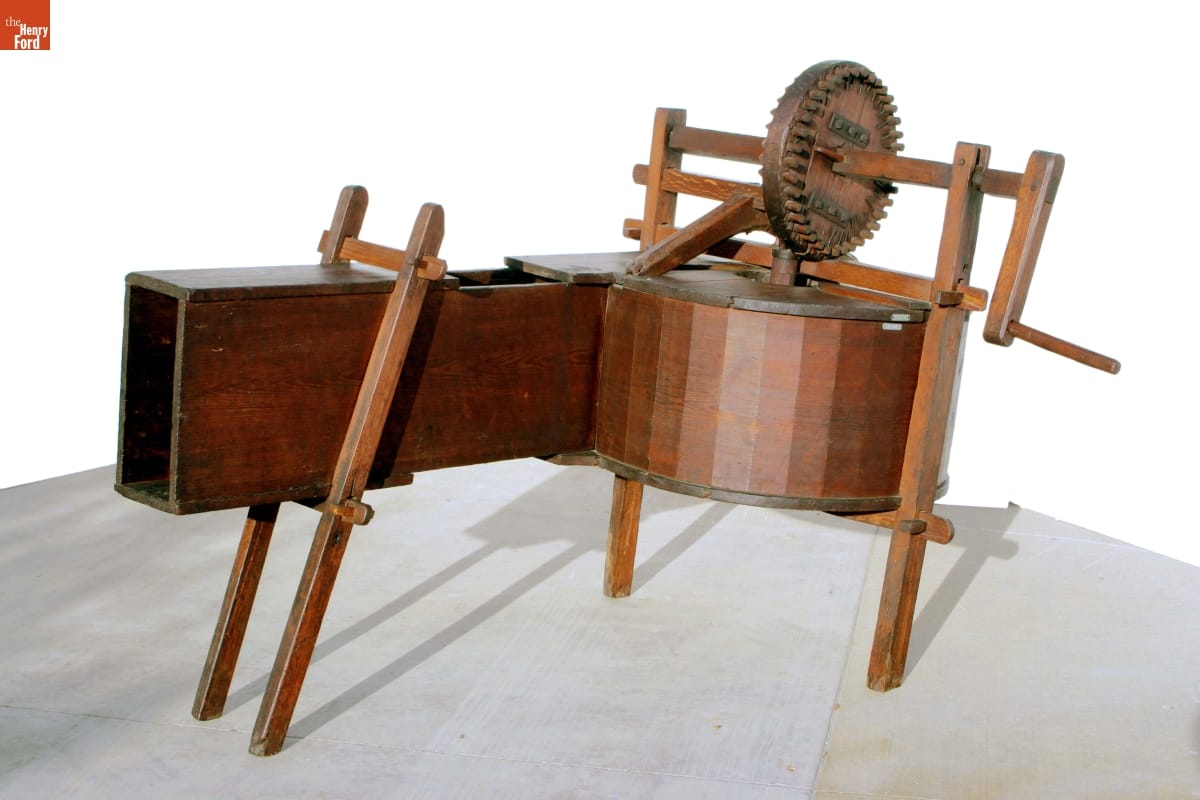
- Fanning Mill, circa 1835 - For centuries, agricultural laborers used flails to remove kernels from grain heads and a winnowing basket and natural breeze to separate grain from chaff. A mechanic built this machine around 1835 to speed up the winnowing process. One person turned a crank to operate the fan and another poured grain through the chute. Heavy kernels fell through while bits of straw blew out.
- circa 1835
- Collections - Artifact
Fanning Mill, circa 1835
For centuries, agricultural laborers used flails to remove kernels from grain heads and a winnowing basket and natural breeze to separate grain from chaff. A mechanic built this machine around 1835 to speed up the winnowing process. One person turned a crank to operate the fan and another poured grain through the chute. Heavy kernels fell through while bits of straw blew out.
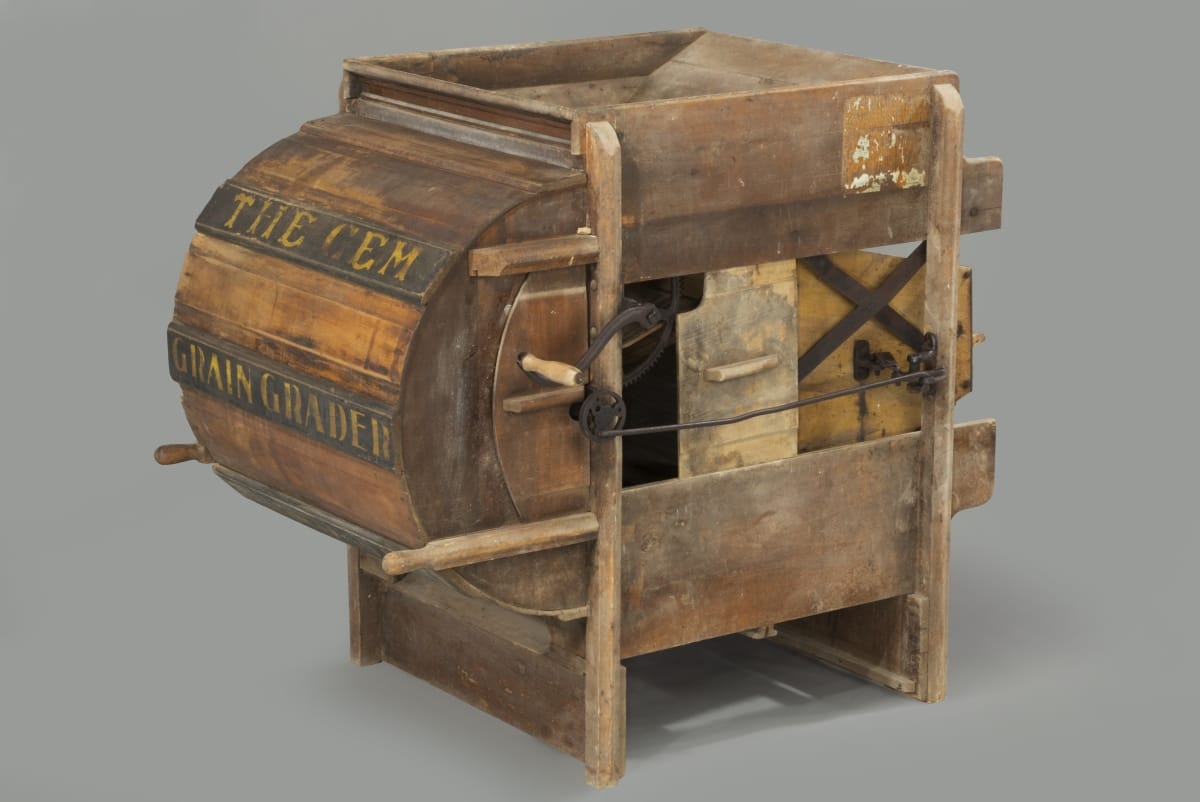
- Johnston & Linihan "Gem Grain Grader," 1899-1916 - Farmers used grain graders to clean seed saved for use in the next planting or sold to commercial seed companies. Farmers could purchase screens of different sizes to match small, medium, or large seeds, such as clover, oats, peas, and beans. The hand crank moved the screens and turned the fan blades that blew air, removing debris to ensure a clean and uniform seed crop.
- 1899-1916
- Collections - Artifact
Johnston & Linihan "Gem Grain Grader," 1899-1916
Farmers used grain graders to clean seed saved for use in the next planting or sold to commercial seed companies. Farmers could purchase screens of different sizes to match small, medium, or large seeds, such as clover, oats, peas, and beans. The hand crank moved the screens and turned the fan blades that blew air, removing debris to ensure a clean and uniform seed crop.
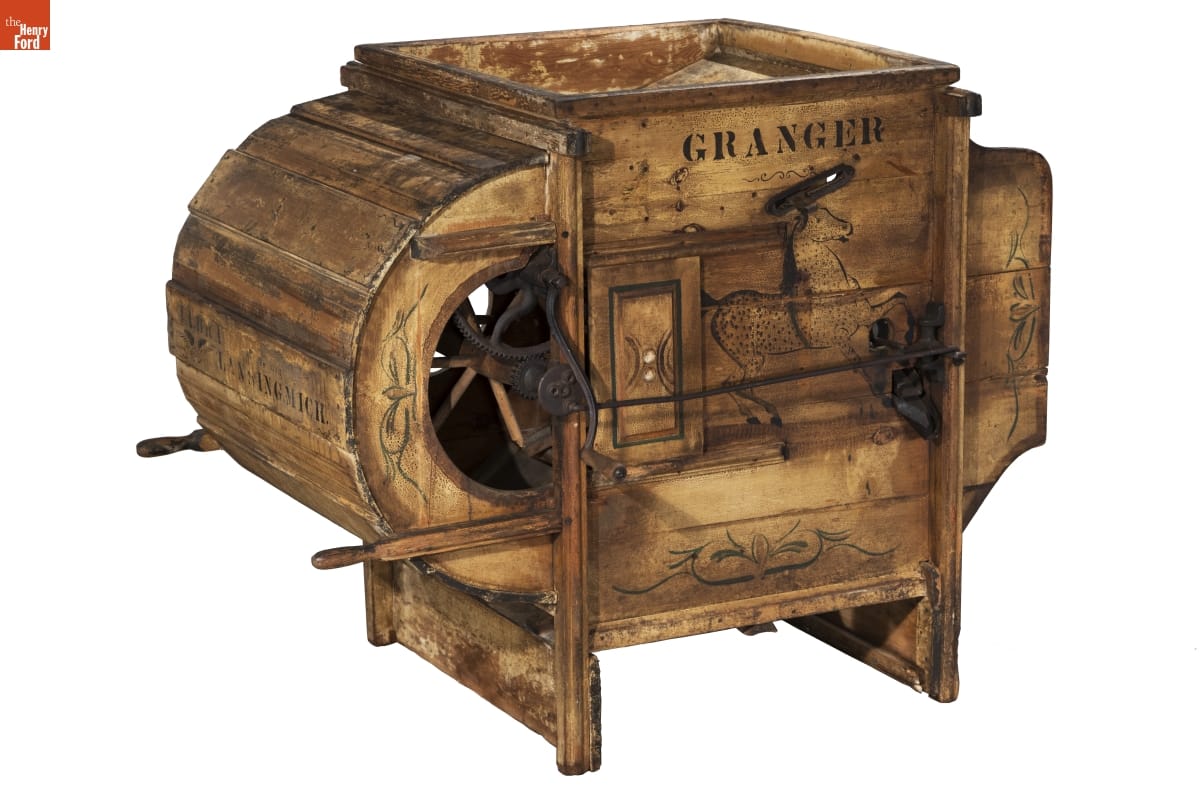
- Granger #201 Fanning Mill, 1886 - Farmers had no control over markets, but fanning mills helped them secure a higher price per bushel of clean grain. A special-interest organization, the Grange, helped farmers leverage better prices through cooperative marketing and purchasing, and by lobbying congressmen to regulate markets. J. A. Bradmon of Lansing, Michigan, made this mill distinctive by branding it "Granger" and by colorfully decorating it.
- 1886
- Collections - Artifact
Granger #201 Fanning Mill, 1886
Farmers had no control over markets, but fanning mills helped them secure a higher price per bushel of clean grain. A special-interest organization, the Grange, helped farmers leverage better prices through cooperative marketing and purchasing, and by lobbying congressmen to regulate markets. J. A. Bradmon of Lansing, Michigan, made this mill distinctive by branding it "Granger" and by colorfully decorating it.
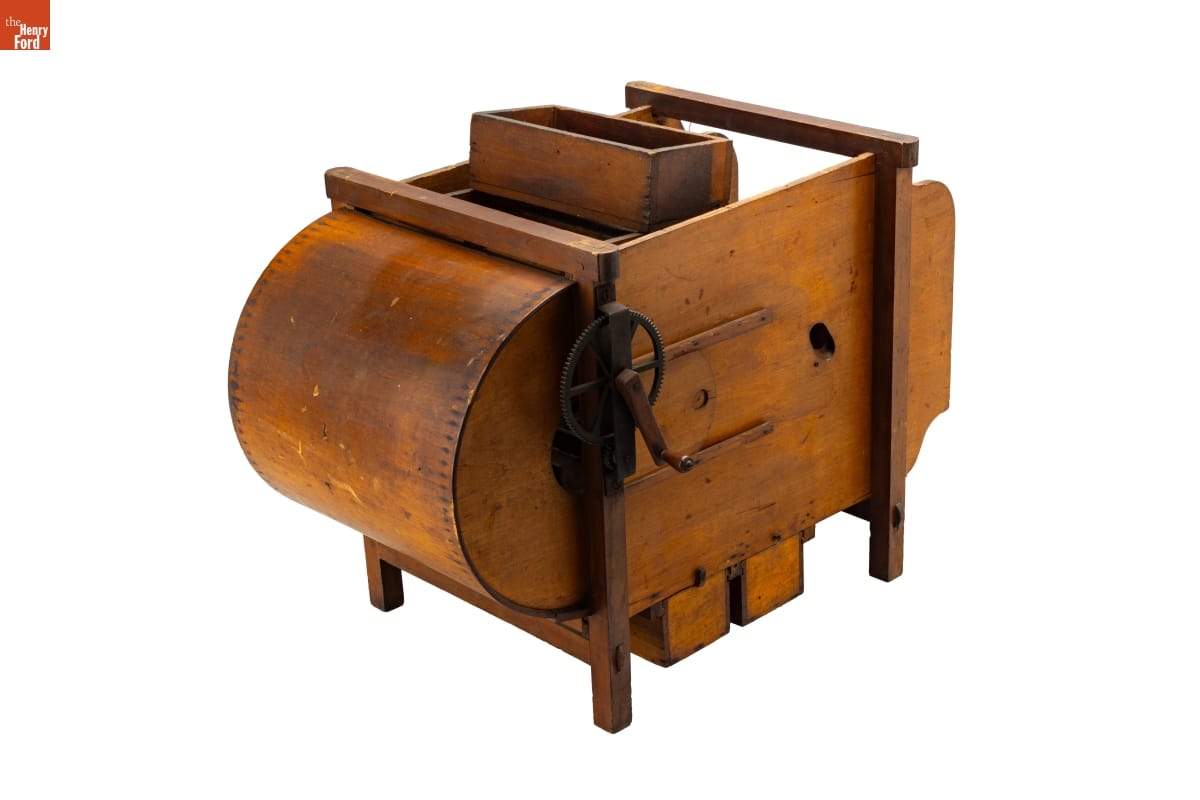
- Fanning Mill -
- Collections - Artifact
Fanning Mill