
Search
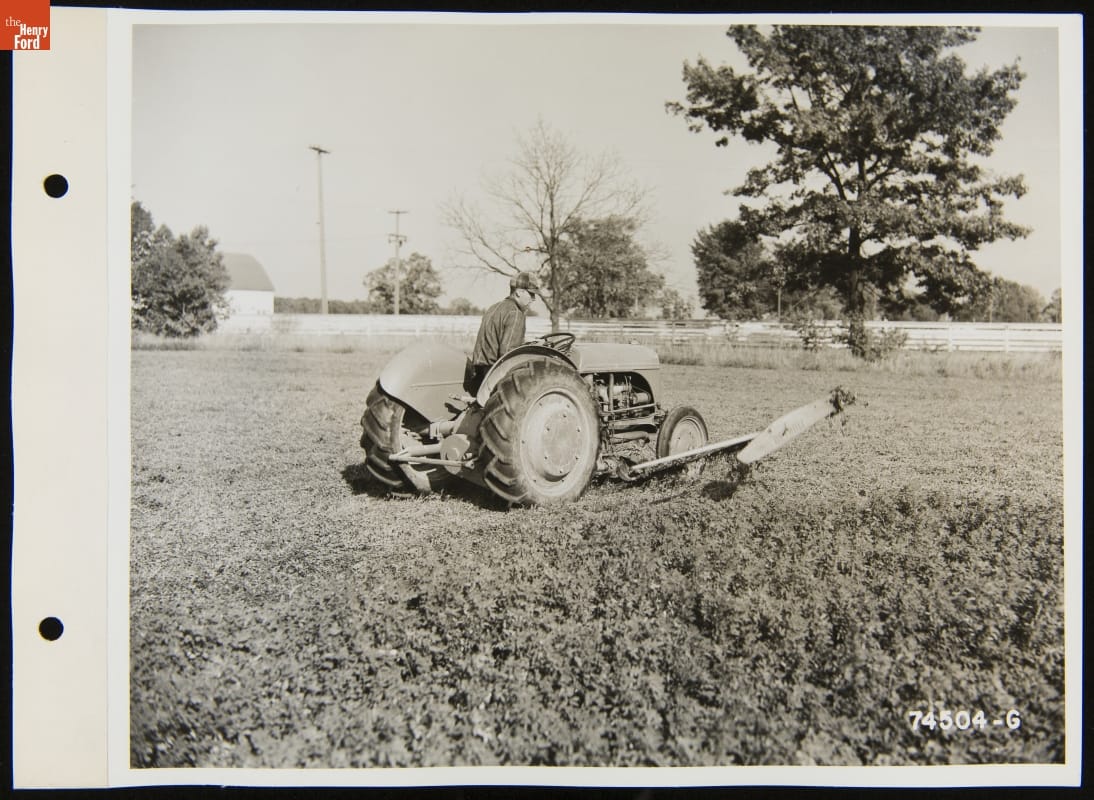
- Ford-Ferguson 9N Tractor Plowing and Mowing, October 9, 1940 -
- October 09, 1940
- Collections - Artifact
Ford-Ferguson 9N Tractor Plowing and Mowing, October 9, 1940
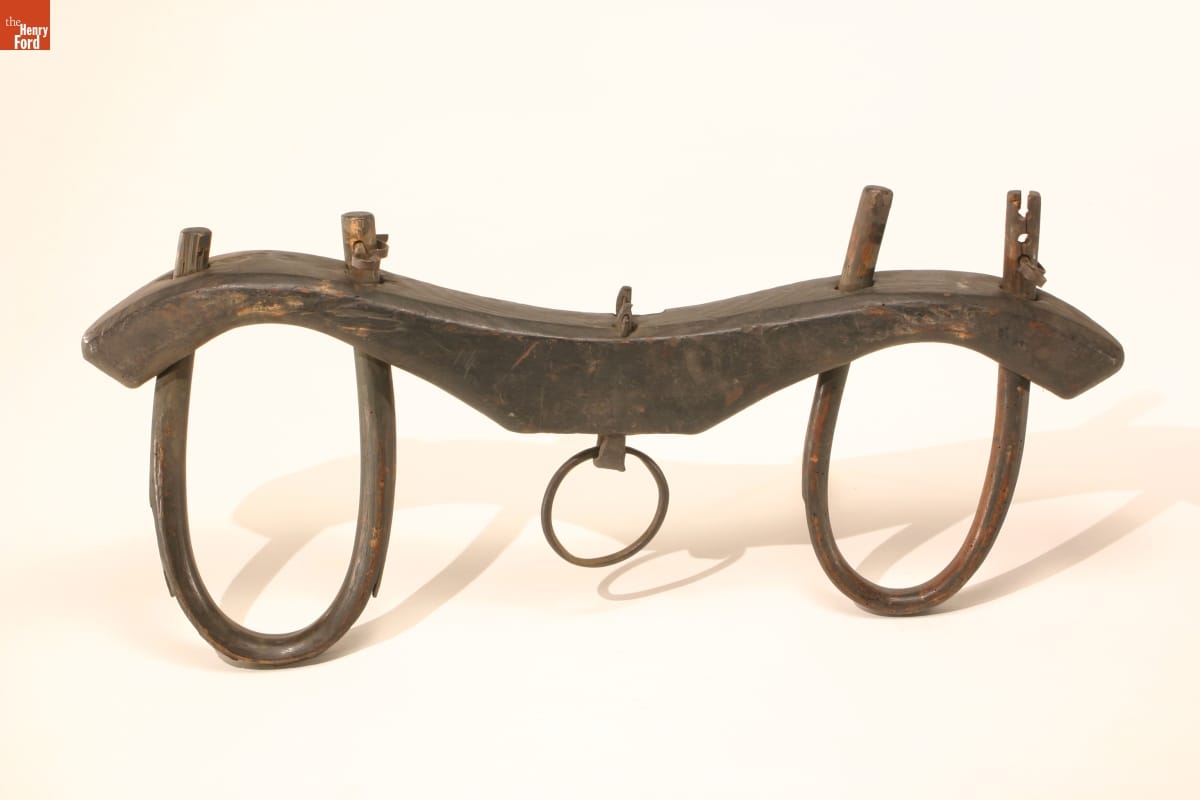
- Ox Yoke with Two Bows, 1800-1900 - This carved, wooden yoke captures the strength of oxen's necks and shoulders. The carved beam is placed across the back of the neck and shoulders of a team of oxen while the curved wood bows are secured around each ox's neck. Once trained and fitted with a yoke, these large, powerful animals can pull wagons, transport heavy loads, and plow fields.
- 1800-1900
- Collections - Artifact
Ox Yoke with Two Bows, 1800-1900
This carved, wooden yoke captures the strength of oxen's necks and shoulders. The carved beam is placed across the back of the neck and shoulders of a team of oxen while the curved wood bows are secured around each ox's neck. Once trained and fitted with a yoke, these large, powerful animals can pull wagons, transport heavy loads, and plow fields.
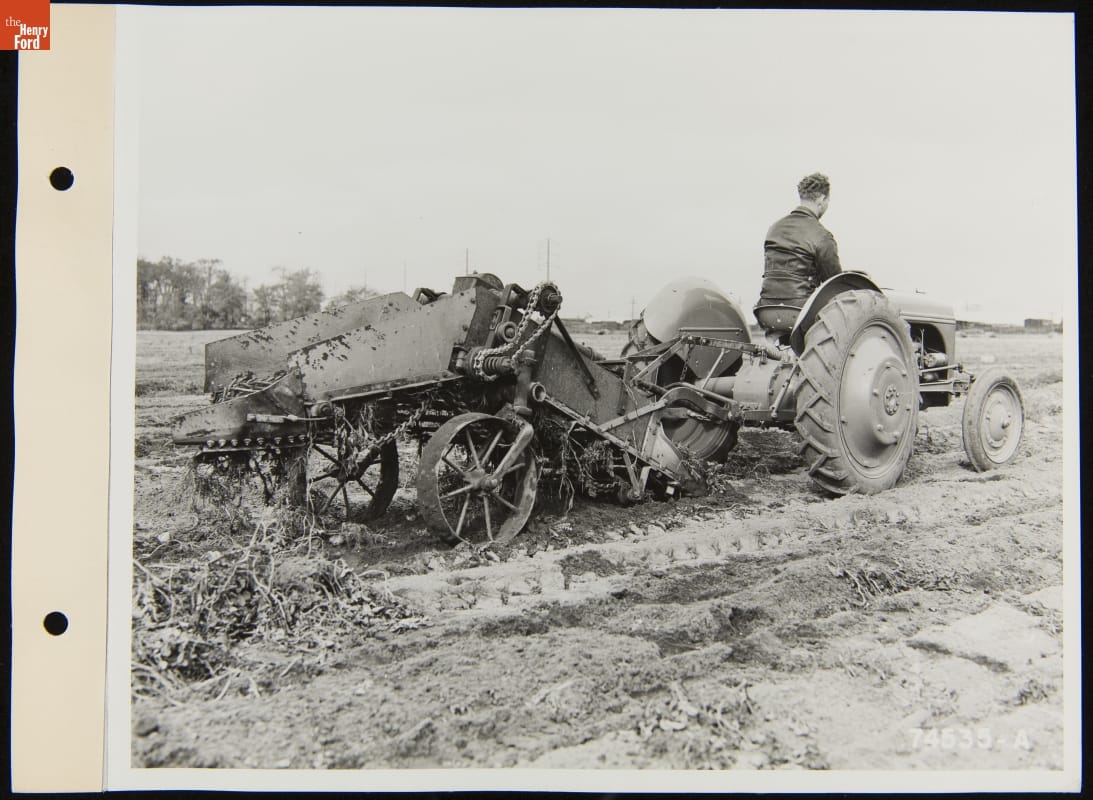
- Ford-Ferguson 9N Tractor and Potato Digging Machine, October 18, 1940 - Ford Motor Company lost money on every Ford-Ferguson tractor it sold. Yet, its affordable price tag appealed to cash-strapped farmers in 1939 when the tractor entered the market. It became an indispensable tool on smaller farms, including those raising specialty crops such as potatoes. The 9N reduced the physical strain on farmers' backs without adding too much to their burden of debt.
- October 18, 1940
- Collections - Artifact
Ford-Ferguson 9N Tractor and Potato Digging Machine, October 18, 1940
Ford Motor Company lost money on every Ford-Ferguson tractor it sold. Yet, its affordable price tag appealed to cash-strapped farmers in 1939 when the tractor entered the market. It became an indispensable tool on smaller farms, including those raising specialty crops such as potatoes. The 9N reduced the physical strain on farmers' backs without adding too much to their burden of debt.
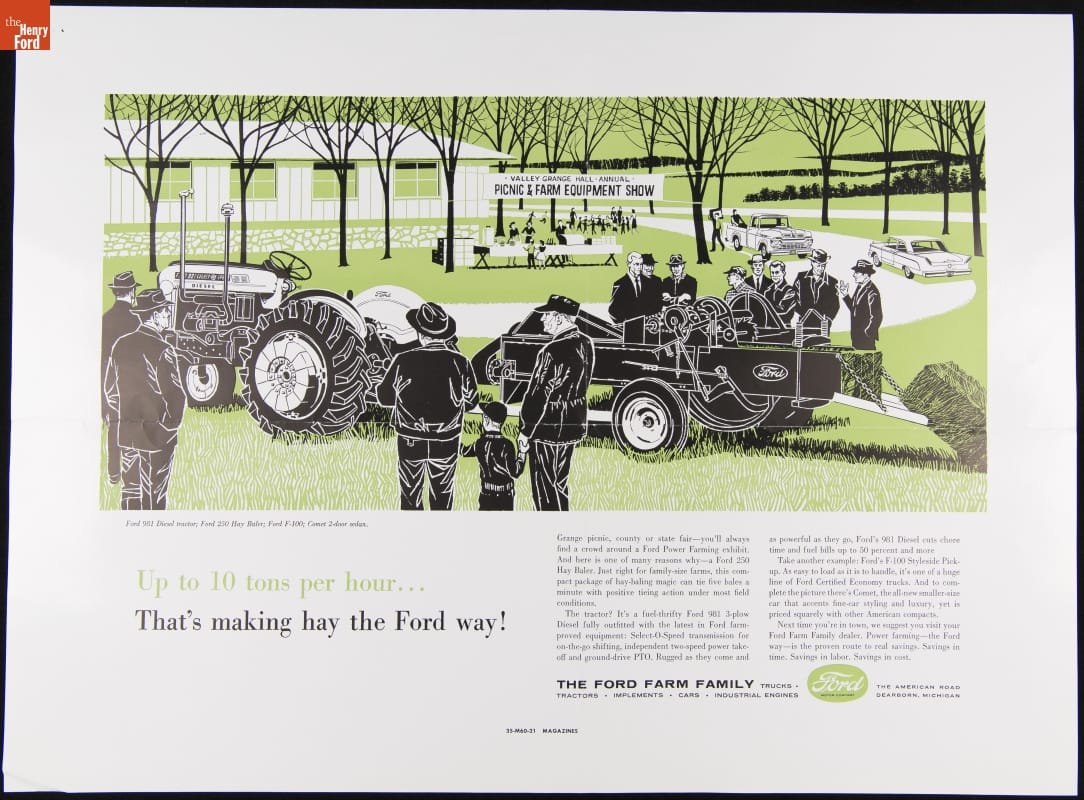
- 1960 Advertisement for the Ford 981 Diesel Tractor and Ford 250 Hay Baler, "Up To 10 Tons Per Hour...That's Making Hay the Ford Way!" -
- 1960
- Collections - Artifact
1960 Advertisement for the Ford 981 Diesel Tractor and Ford 250 Hay Baler, "Up To 10 Tons Per Hour...That's Making Hay the Ford Way!"
- Picking Corn with Ford-Ferguson 9N Tractor, October 18, 1940 -
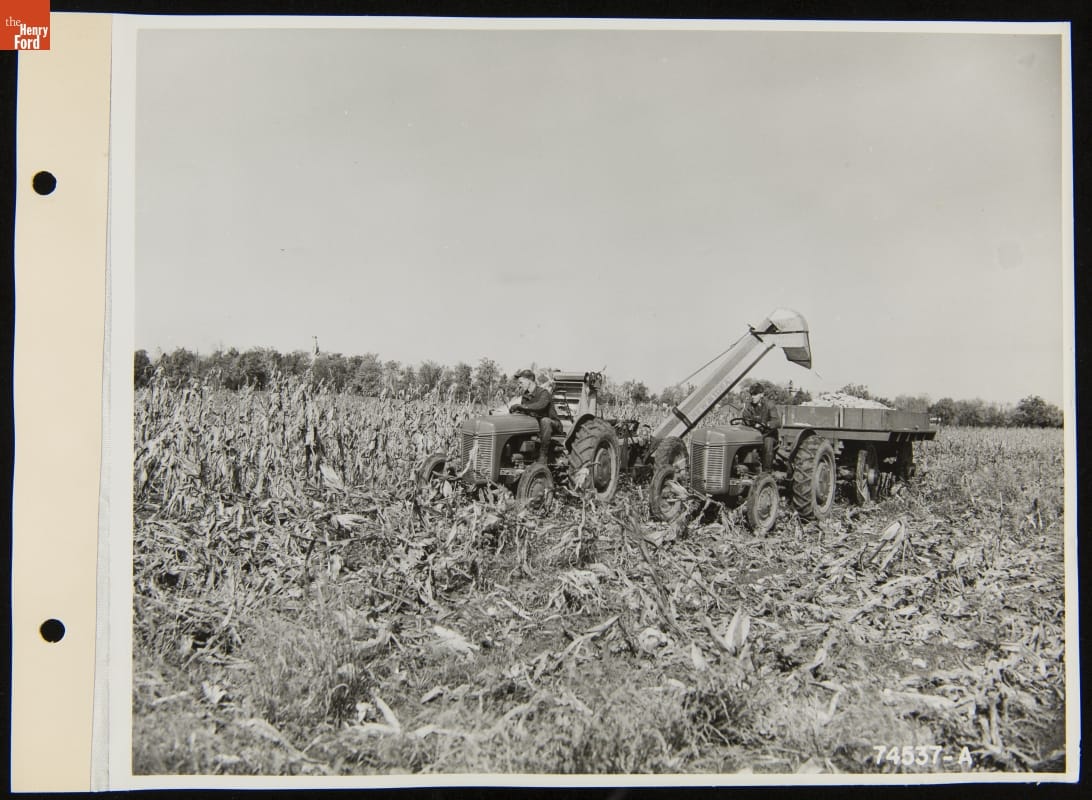
- October 18, 1940
- Collections - Artifact
Picking Corn with Ford-Ferguson 9N Tractor, October 18, 1940
- Men Chopping Sillage with a Ford-Ferguson 9N Tractor, January 16, 1941 -
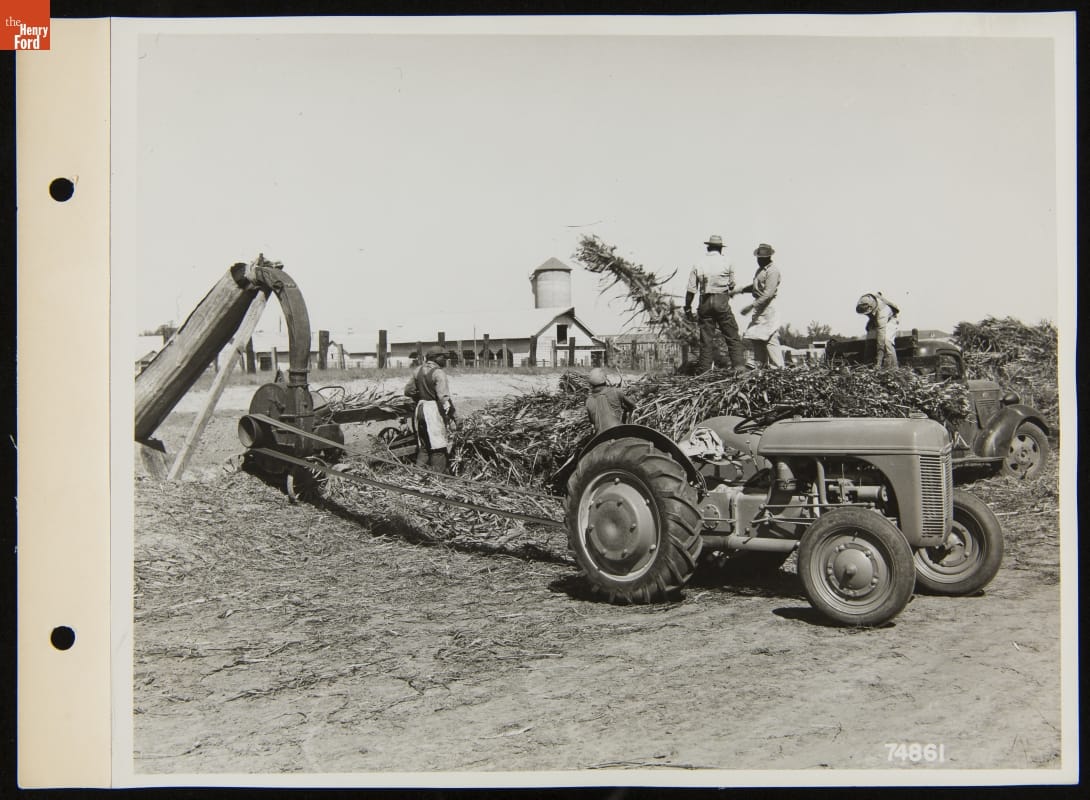
- January 16, 1941
- Collections - Artifact
Men Chopping Sillage with a Ford-Ferguson 9N Tractor, January 16, 1941
- Ford-Ferguson 9N Tractor Discing a Field, September 9, 1940 -
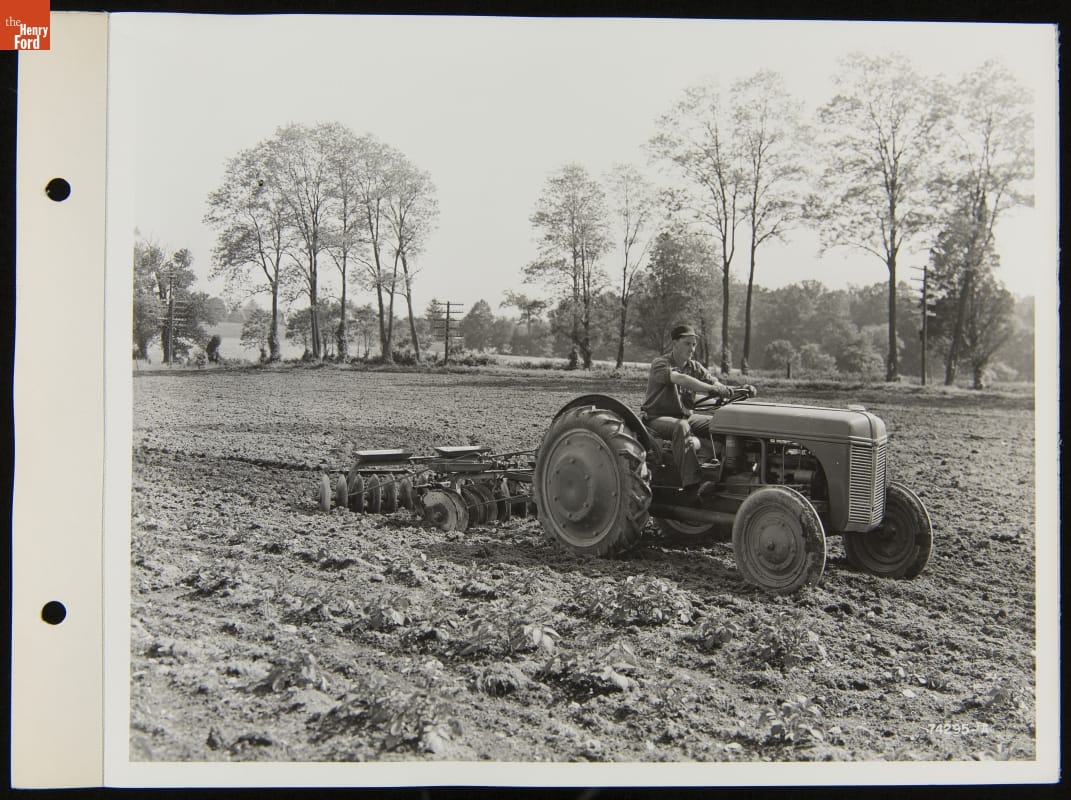
- September 09, 1940
- Collections - Artifact
Ford-Ferguson 9N Tractor Discing a Field, September 9, 1940
- Ox Yoke with Two Bows, 1836 - This carved, wooden yoke captures the strength of oxen's necks and shoulders. The carved beam is placed across the back of the neck and shoulders of a team of oxen while the curved wood bows are secured around each ox's neck. Once trained and fitted with a yoke, these large, powerful animals can pull wagons, transport heavy loads, and plow fields.
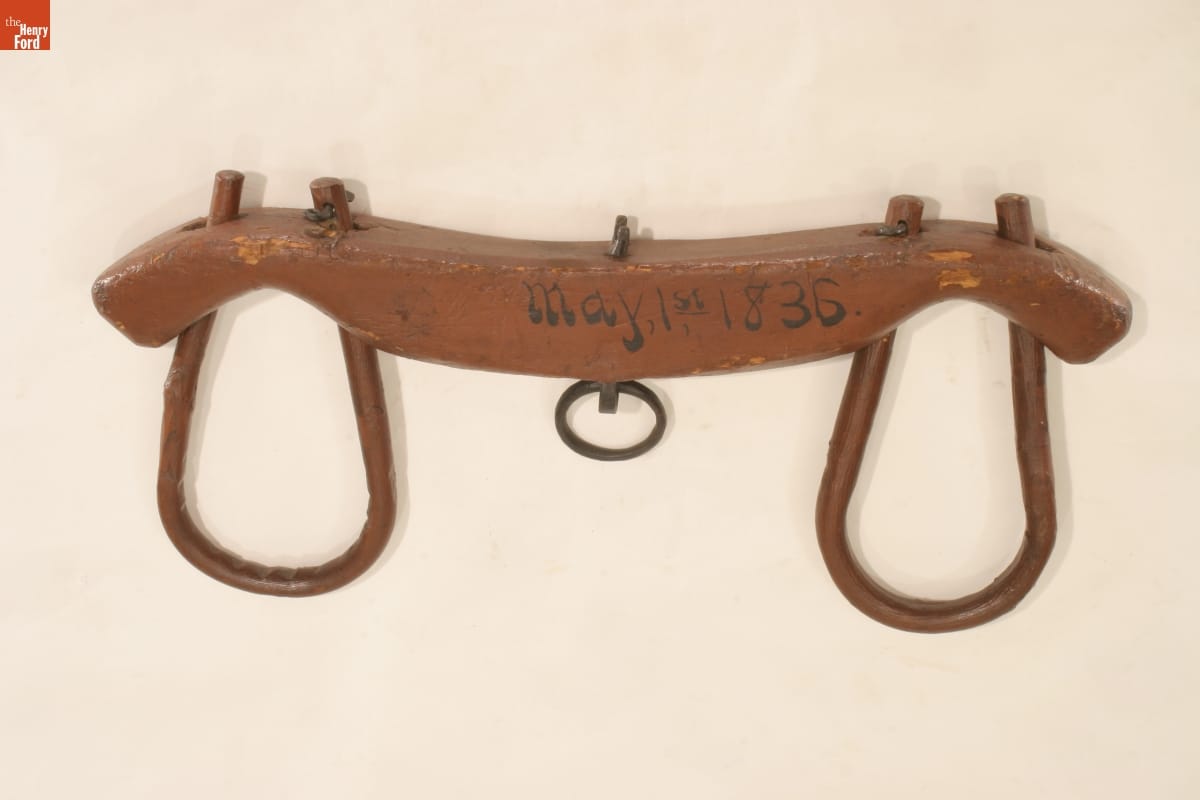
- May 01, 1936
- Collections - Artifact
Ox Yoke with Two Bows, 1836
This carved, wooden yoke captures the strength of oxen's necks and shoulders. The carved beam is placed across the back of the neck and shoulders of a team of oxen while the curved wood bows are secured around each ox's neck. Once trained and fitted with a yoke, these large, powerful animals can pull wagons, transport heavy loads, and plow fields.
- Ox Yoke with Two Bows, 1800-1900 - This carved, wooden yoke captures the strength of oxen's necks and shoulders. The carved beam is placed across the back of the neck and shoulders of a team of oxen while the curved wood bows are secured around each ox's neck. Once trained and fitted with a yoke, these large, powerful animals can pull wagons, transport heavy loads, and plow fields.
- 1800-1900
- Collections - Artifact
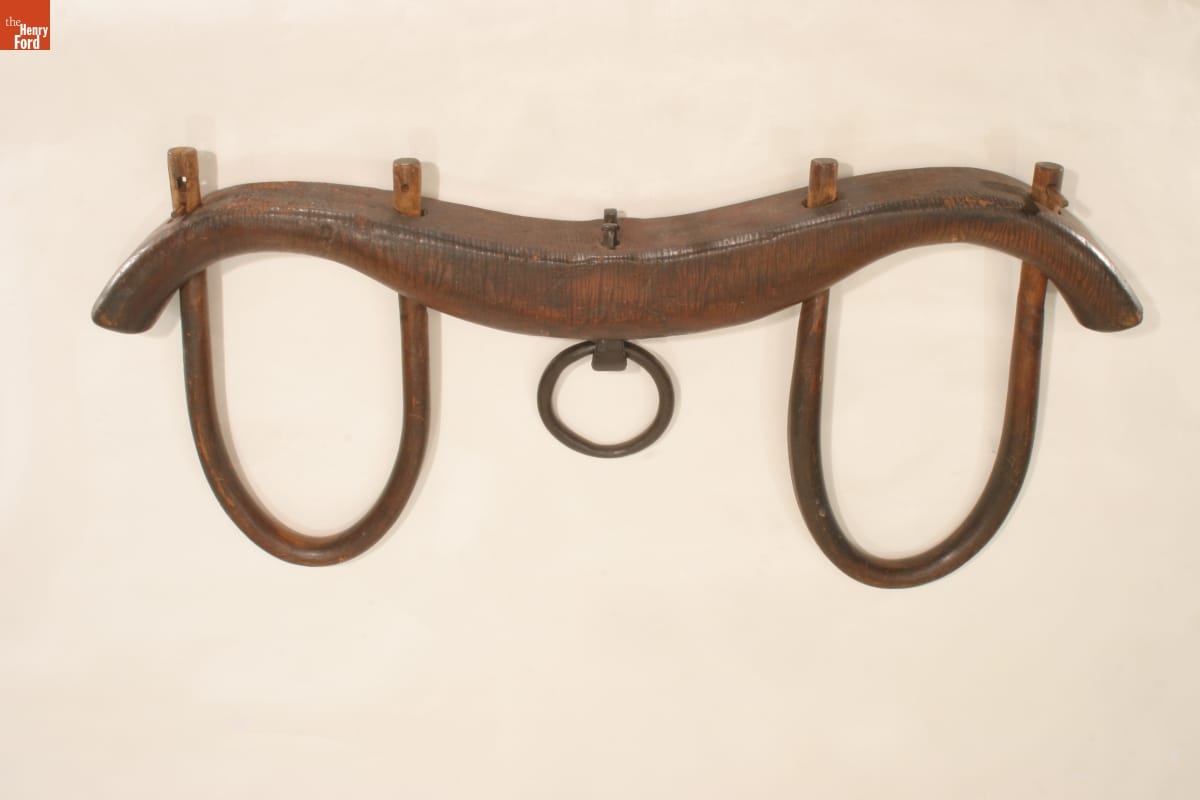
Ox Yoke with Two Bows, 1800-1900
This carved, wooden yoke captures the strength of oxen's necks and shoulders. The carved beam is placed across the back of the neck and shoulders of a team of oxen while the curved wood bows are secured around each ox's neck. Once trained and fitted with a yoke, these large, powerful animals can pull wagons, transport heavy loads, and plow fields.
- Ford-Ferguson 9N Tractor Spreading Manure with New Idea Spreader, October 11, 1940 -
- October 11, 1940
- Collections - Artifact
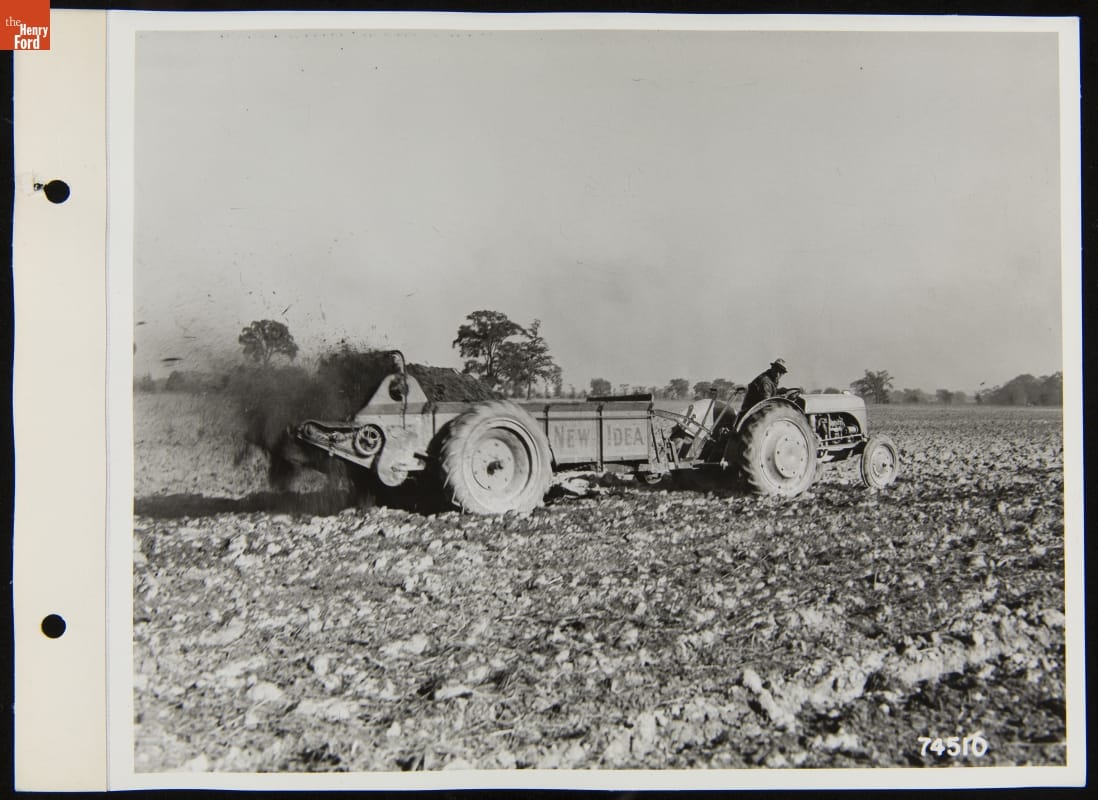
Ford-Ferguson 9N Tractor Spreading Manure with New Idea Spreader, October 11, 1940