
Search
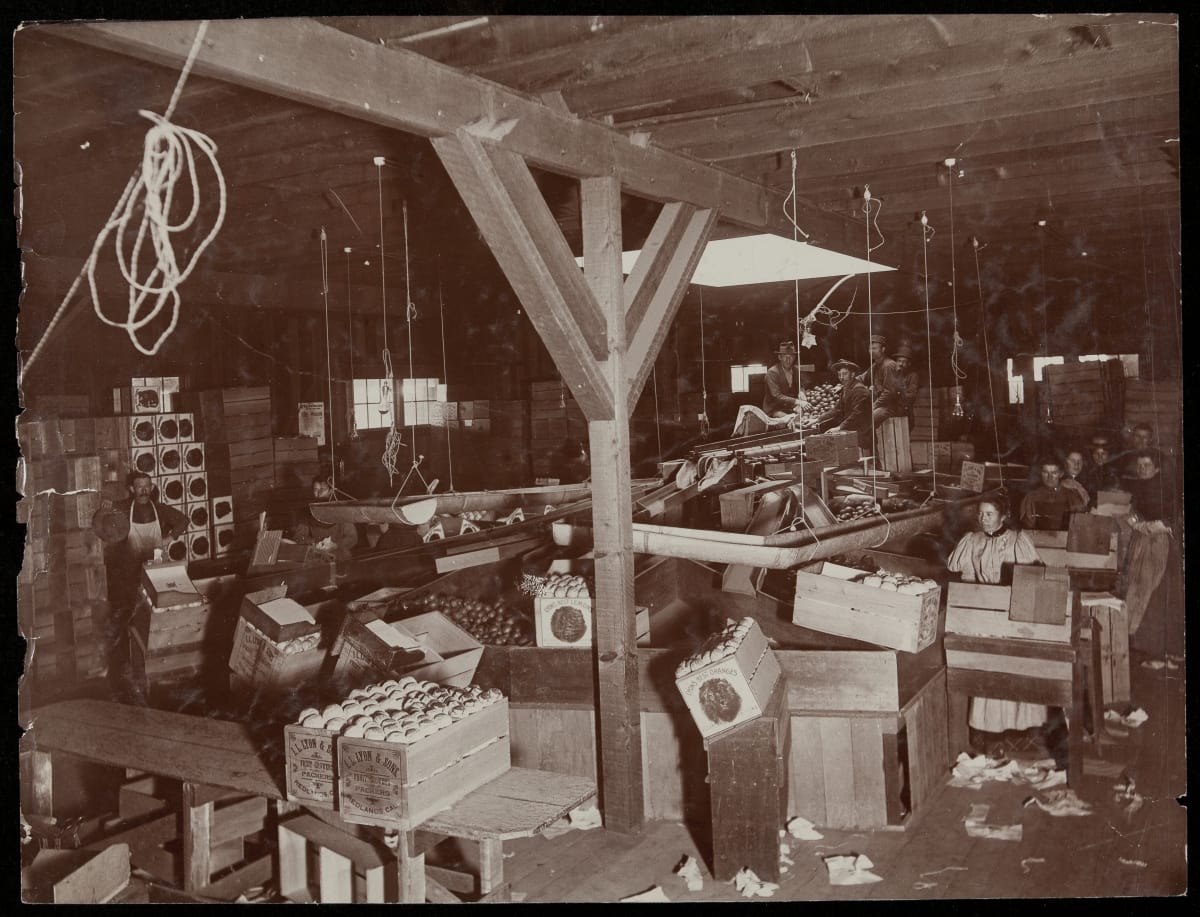
- Workers at L. L. Lyon & Sons Fruit Growers & Packers, Redlands, California, circa 1900 - For nearly thirty years, 1895 to 1924, the Detroit Publishing Company was one of the major image publishers in the world. The company had a wide-ranging stock of original photographs, including many scenes from across North America. Here, workers in California pack lemons and oranges for shipping.
- circa 1900
- Collections - Artifact
Workers at L. L. Lyon & Sons Fruit Growers & Packers, Redlands, California, circa 1900
For nearly thirty years, 1895 to 1924, the Detroit Publishing Company was one of the major image publishers in the world. The company had a wide-ranging stock of original photographs, including many scenes from across North America. Here, workers in California pack lemons and oranges for shipping.
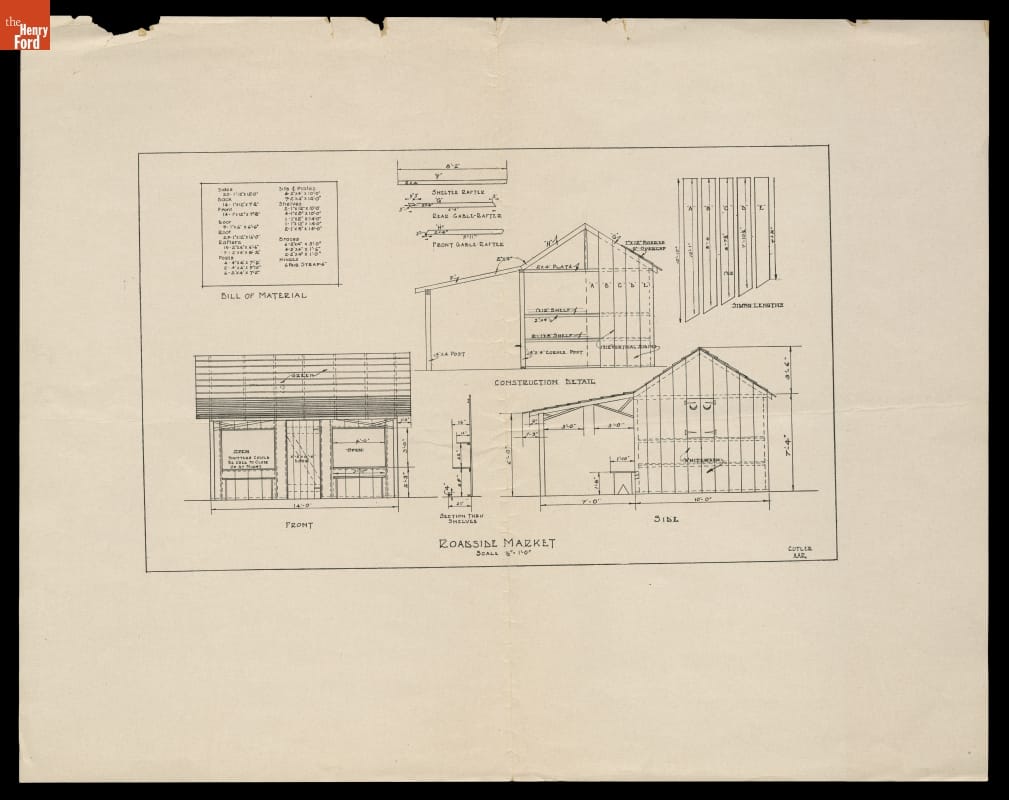
- Building Plans for a Roadside Market, for Selling Produce Grown by Greenfield Village School Students, 1930 - Clara Ford tried to help rural farm women during her presidency of the National Women's Farm & Garden Association. She developed a design for a neat but inexpensive roadside market building that could show off fresh farm produce. She had Edward Cutler, the Historical Architect of Greenfield Village, draw up these plans for the building.
- 1930
- Collections - Artifact
Building Plans for a Roadside Market, for Selling Produce Grown by Greenfield Village School Students, 1930
Clara Ford tried to help rural farm women during her presidency of the National Women's Farm & Garden Association. She developed a design for a neat but inexpensive roadside market building that could show off fresh farm produce. She had Edward Cutler, the Historical Architect of Greenfield Village, draw up these plans for the building.
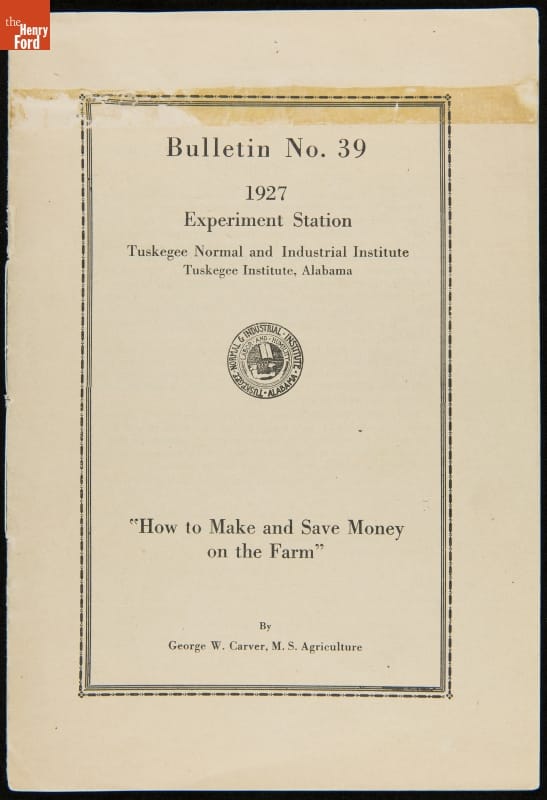
- How to Make and Save Money on the Farm, Bulletin No. 39, 1927 -
- 1927
- Collections - Artifact
How to Make and Save Money on the Farm, Bulletin No. 39, 1927
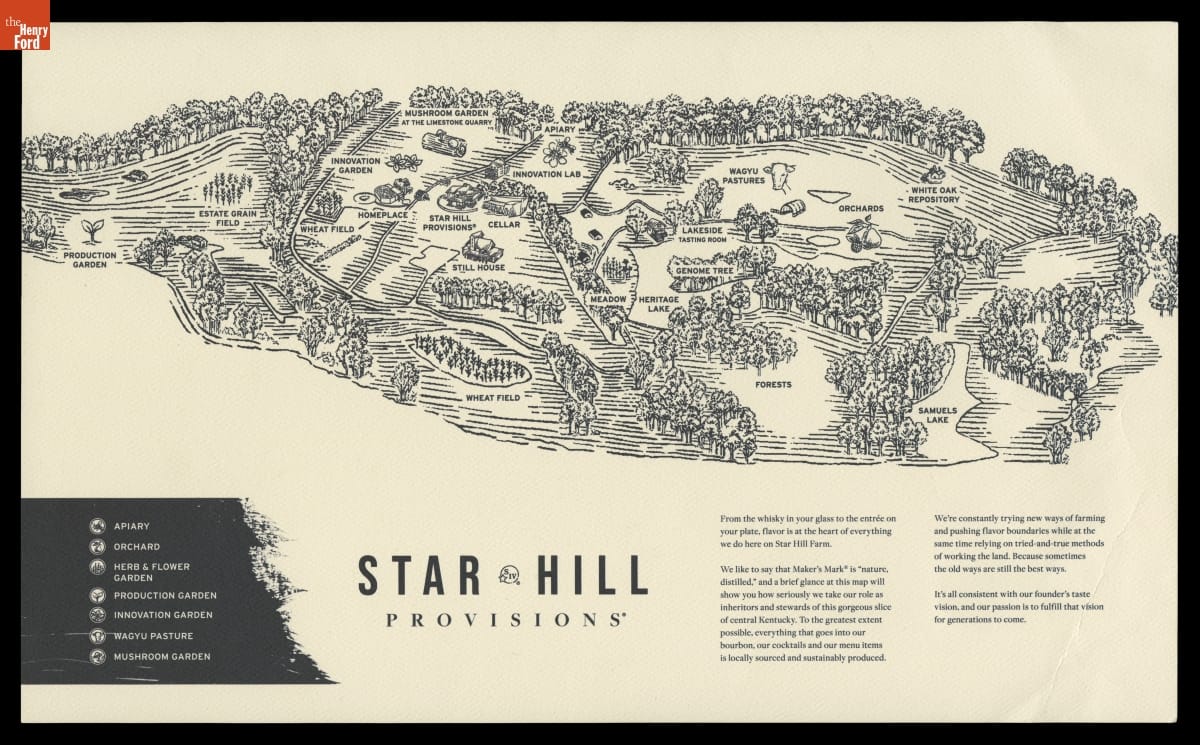
- Star Hill Provisions Menu, 2024 -
- 2024
- Collections - Artifact
Star Hill Provisions Menu, 2024
- Postcard, "We Are Growing Them Like This," circa 1910 -
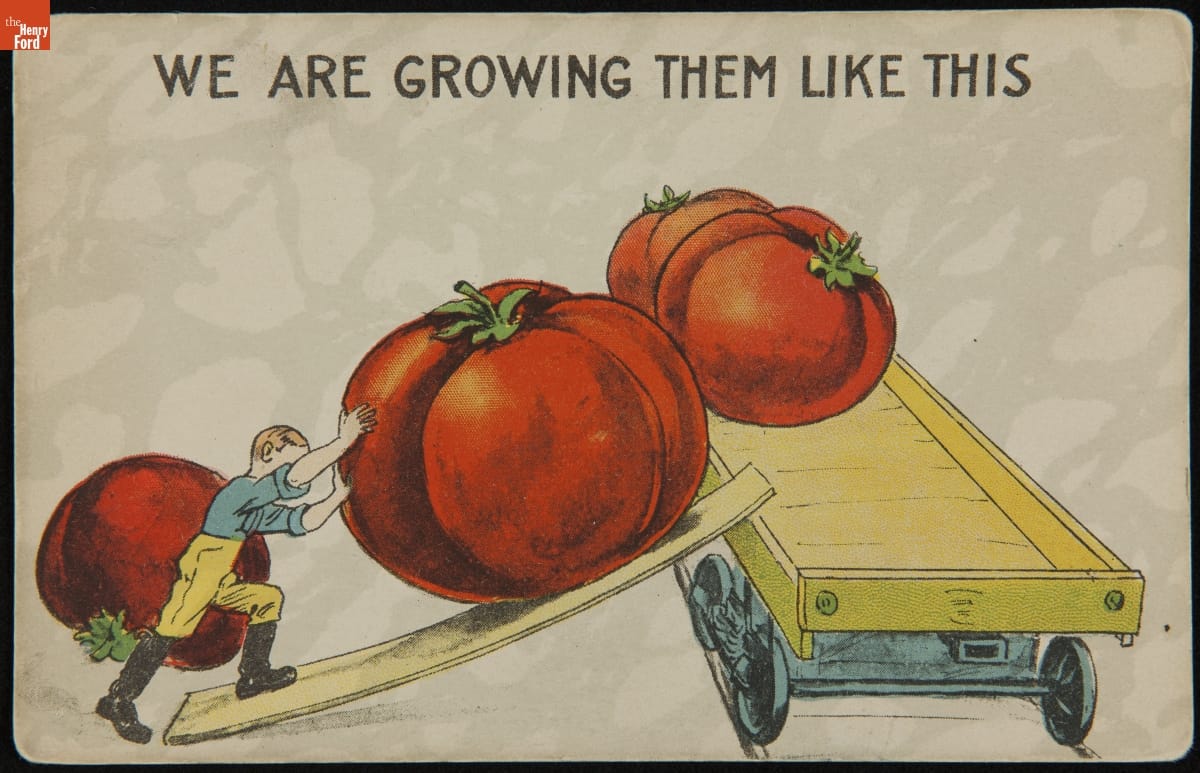
- circa 1910
- Collections - Artifact
Postcard, "We Are Growing Them Like This," circa 1910
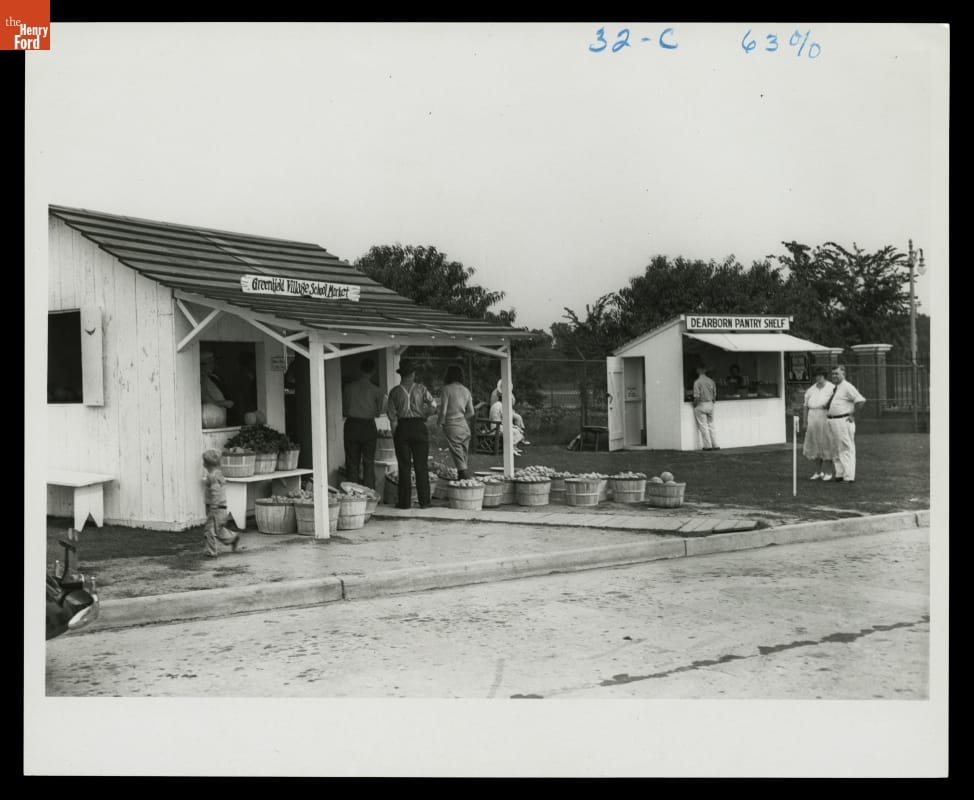
- Roadside Market Stand Selling Produce Grown by Greenfield Village School Students, 1934 - Clara Ford tried to help rural farm women during her presidency of the National Women's Farm & Garden Association. She developed a design for a neat but inexpensive roadside market building that could show off fresh farm produce. This market, of her design, was run by Greenfield Village School students, who sold the produce of their school gardens.
- September 03, 1938
- Collections - Artifact
Roadside Market Stand Selling Produce Grown by Greenfield Village School Students, 1934
Clara Ford tried to help rural farm women during her presidency of the National Women's Farm & Garden Association. She developed a design for a neat but inexpensive roadside market building that could show off fresh farm produce. This market, of her design, was run by Greenfield Village School students, who sold the produce of their school gardens.
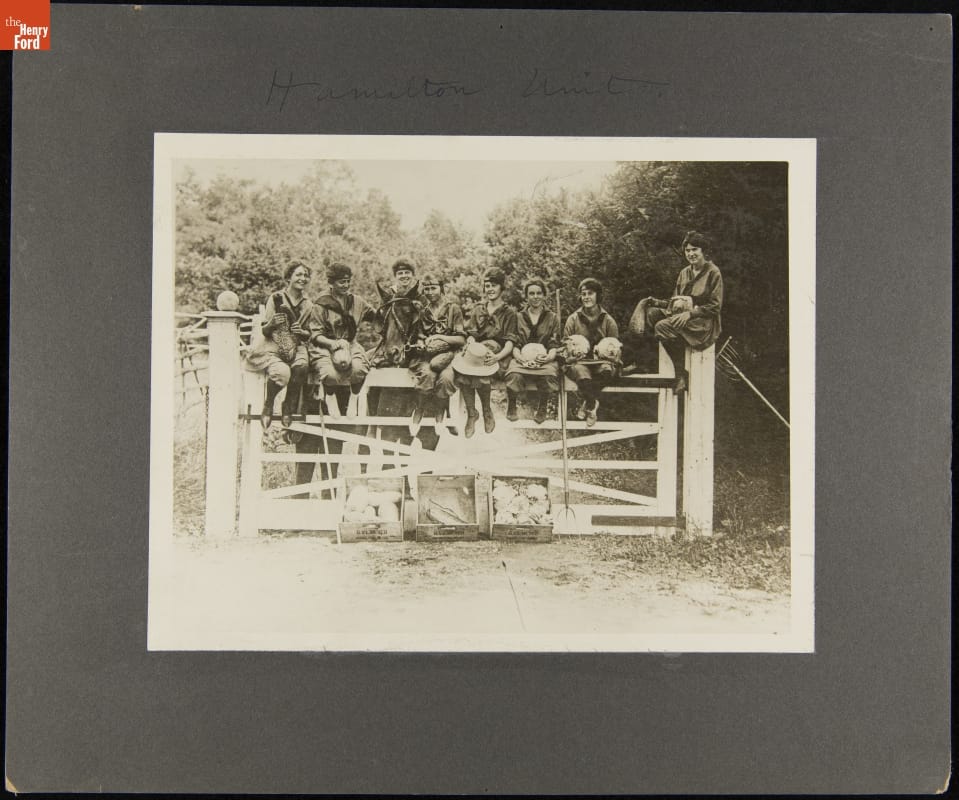
- Members of the Unit of Woman's National Farm and Garden Association, 1918 - After the United States entered World War I in 1917, Americans worried about labor and food shortages as a result of men going off to fight. Organizations like the Woman's Land Army of America and the Woman's National Farm and Garden Association recruited and trained women to perform agricultural work. The women in this photograph gathered to show off the product of the day's work.
- 1918
- Collections - Artifact
Members of the Unit of Woman's National Farm and Garden Association, 1918
After the United States entered World War I in 1917, Americans worried about labor and food shortages as a result of men going off to fight. Organizations like the Woman's Land Army of America and the Woman's National Farm and Garden Association recruited and trained women to perform agricultural work. The women in this photograph gathered to show off the product of the day's work.
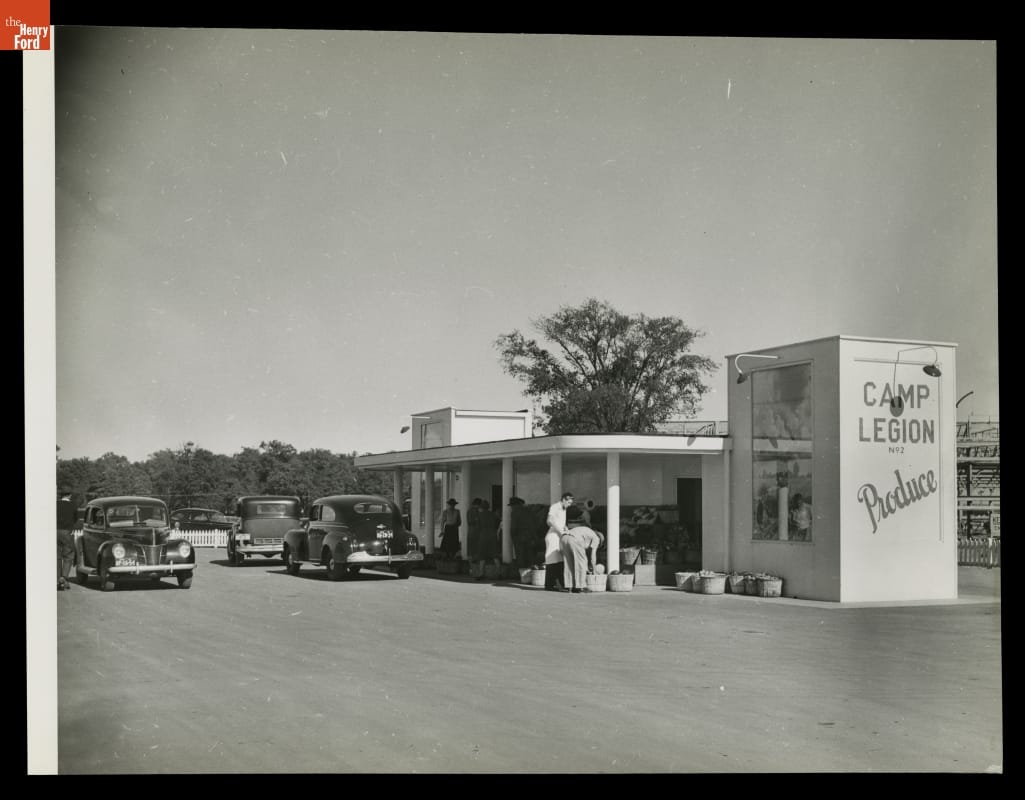
- Market Selling Produce from Camp Legion, Dearborn, Michigan, September 1941 - In 1938, Henry Ford opened Camp Legion for the sons of World War I veterans. Groups of young men lived and worked here from April until November, sleeping in tents and earning $2 for each eight-hour workday. The camp was designed to provide income to otherwise unemployed teenagers while teaching vocational skills, instilling a strong work ethic, and fostering good health.
- September 17, 1941
- Collections - Artifact
Market Selling Produce from Camp Legion, Dearborn, Michigan, September 1941
In 1938, Henry Ford opened Camp Legion for the sons of World War I veterans. Groups of young men lived and worked here from April until November, sleeping in tents and earning $2 for each eight-hour workday. The camp was designed to provide income to otherwise unemployed teenagers while teaching vocational skills, instilling a strong work ethic, and fostering good health.
- "Fresh Tastes Better When It's Local," Kroger Sticker, 2023 -

- 2023
- Collections - Artifact
"Fresh Tastes Better When It's Local," Kroger Sticker, 2023
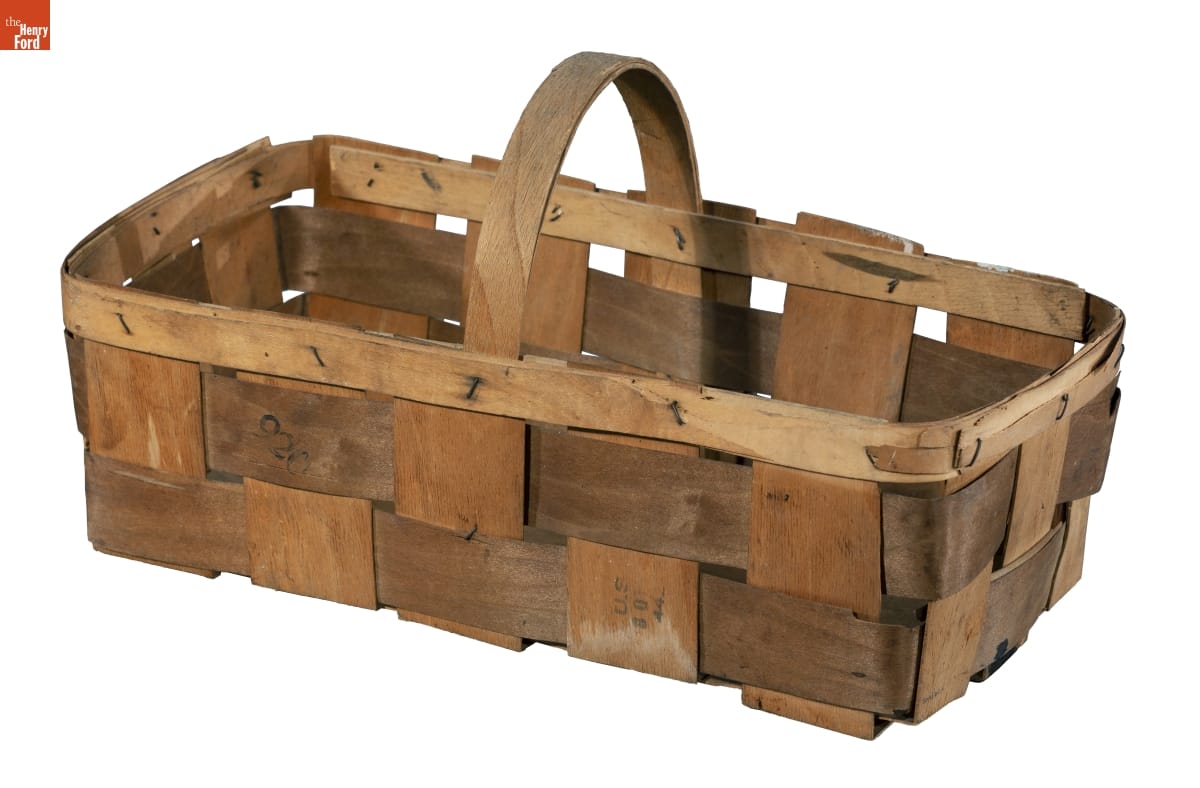
- Produce Basket, Used at Pickering Fruit Farm, 1925-1964 -
- 1925-1964
- Collections - Artifact
Produce Basket, Used at Pickering Fruit Farm, 1925-1964