
Search
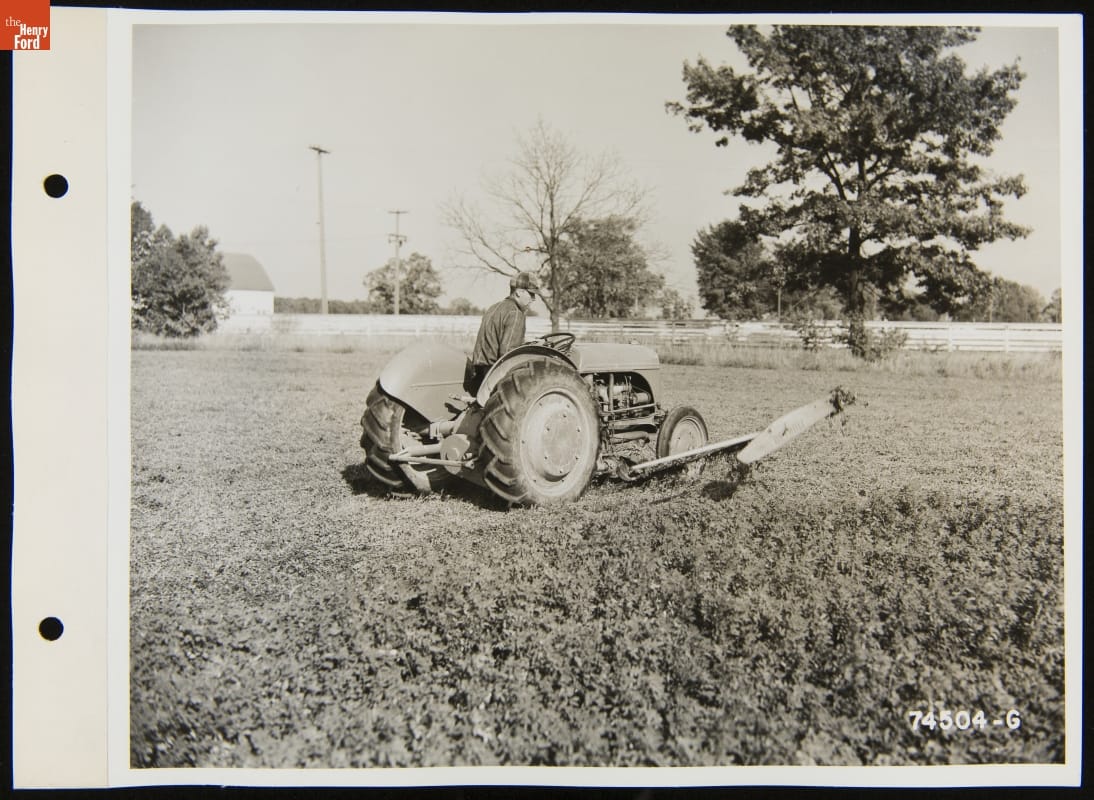
- Ford-Ferguson 9N Tractor Plowing and Mowing, October 9, 1940 -
- October 09, 1940
- Collections - Artifact
Ford-Ferguson 9N Tractor Plowing and Mowing, October 9, 1940
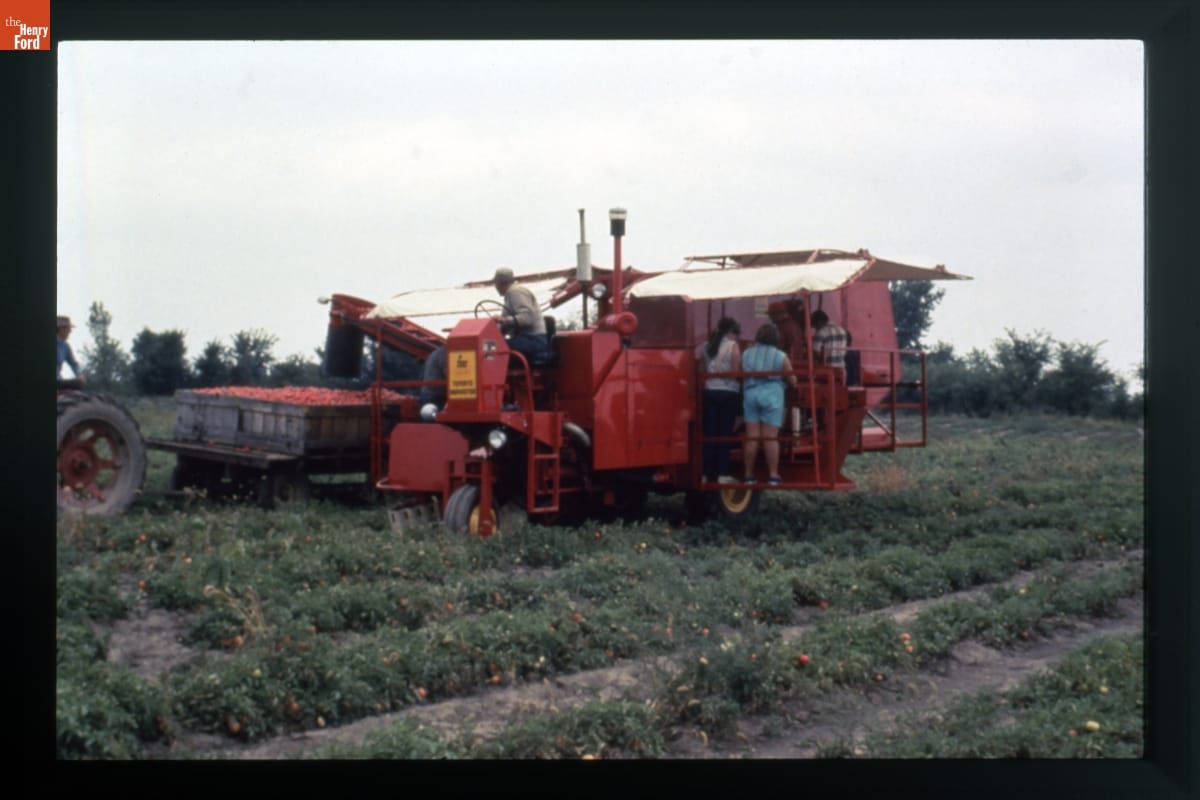
- FMC Cascade Tomato Harvester in Use, circa 1985 -
- circa 1985
- Collections - Artifact
FMC Cascade Tomato Harvester in Use, circa 1985
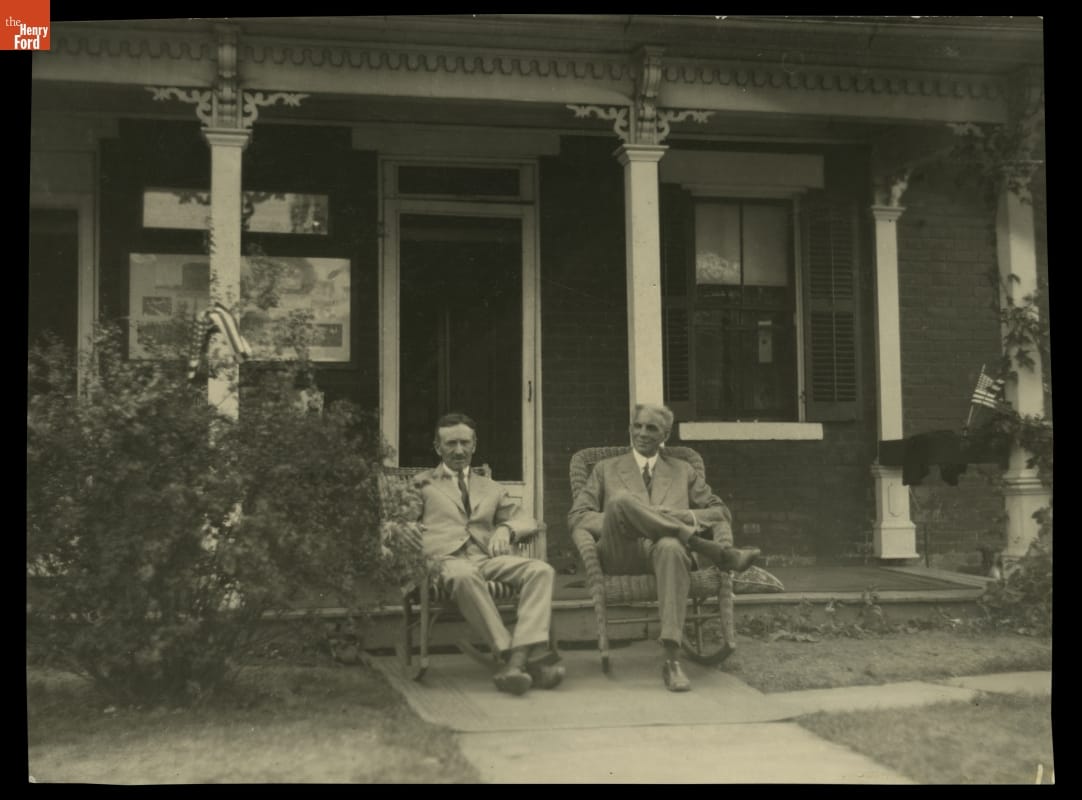
- Harvey Firestone and Henry Ford at Firestone Farm, Columbiana County, Ohio, 1918 - Henry Ford and Harvey Firestone went on several camping trips as "vagabonds," a group that also included Thomas Edison and naturalist John Burroughs. In August 1918, Ford met Firestone at his old homestead near Columbiana, Ohio, (now in Greenfield Village) before joining Edison and Burroughs in Pittsburgh. The foursome then traveled through Appalachian Mountains for the next couple weeks.
- 1918
- Collections - Artifact
Harvey Firestone and Henry Ford at Firestone Farm, Columbiana County, Ohio, 1918
Henry Ford and Harvey Firestone went on several camping trips as "vagabonds," a group that also included Thomas Edison and naturalist John Burroughs. In August 1918, Ford met Firestone at his old homestead near Columbiana, Ohio, (now in Greenfield Village) before joining Edison and Burroughs in Pittsburgh. The foursome then traveled through Appalachian Mountains for the next couple weeks.
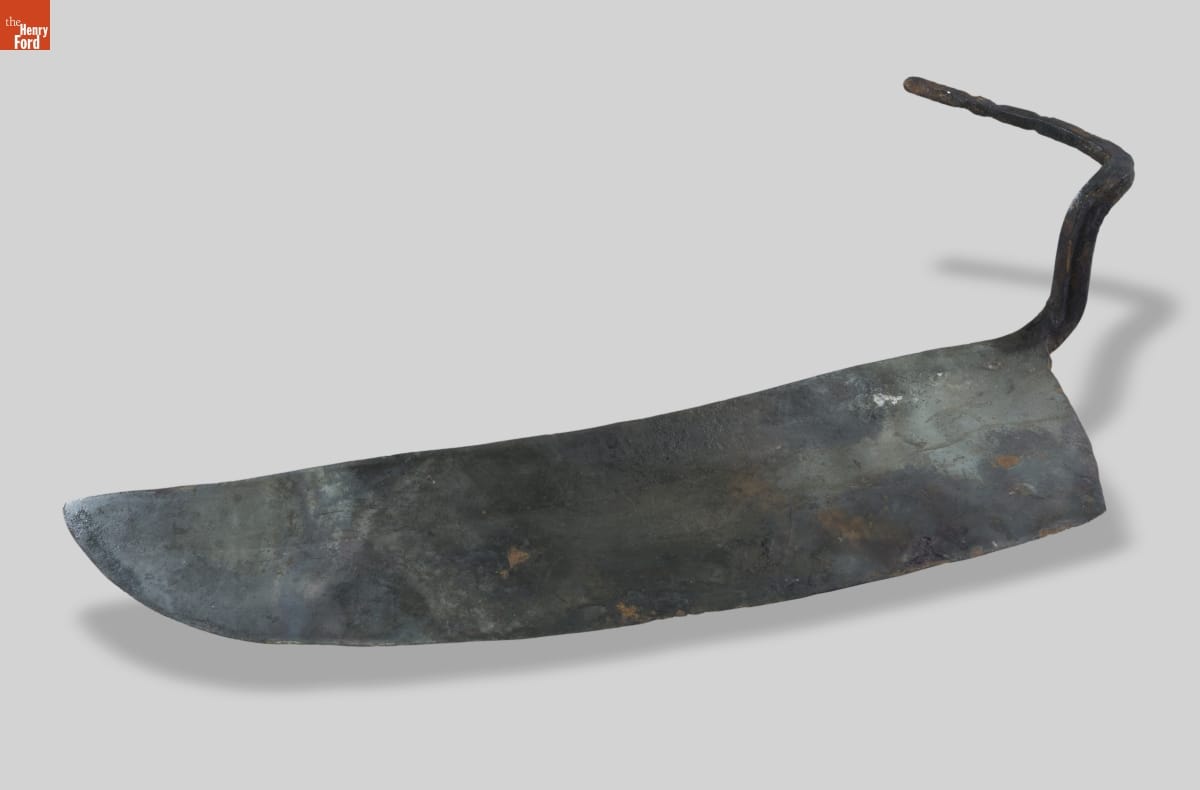
- Hay Knife - Farm families cut and cured enough grass each summer to feed hay to their livestock all winter. Stored hay settled over time and farmers used special knives made by blacksmiths to cut out chunks for feed. The smiths forged wrought-iron blades with a long cutting edge. The wooden handle was set on a tang (a pointed metal extension of the handle) and secured with a metal collar for durability.
- Collections - Artifact
Hay Knife
Farm families cut and cured enough grass each summer to feed hay to their livestock all winter. Stored hay settled over time and farmers used special knives made by blacksmiths to cut out chunks for feed. The smiths forged wrought-iron blades with a long cutting edge. The wooden handle was set on a tang (a pointed metal extension of the handle) and secured with a metal collar for durability.
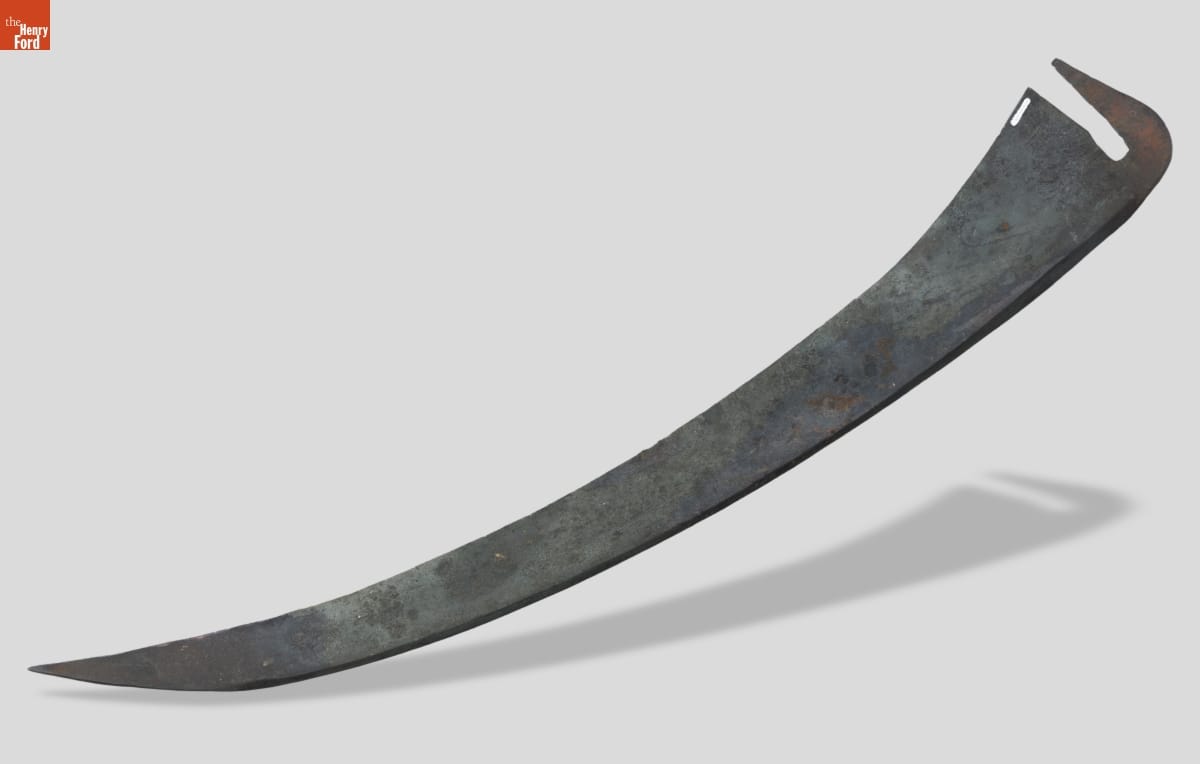
- Scythe Blade -
- Collections - Artifact
Scythe Blade
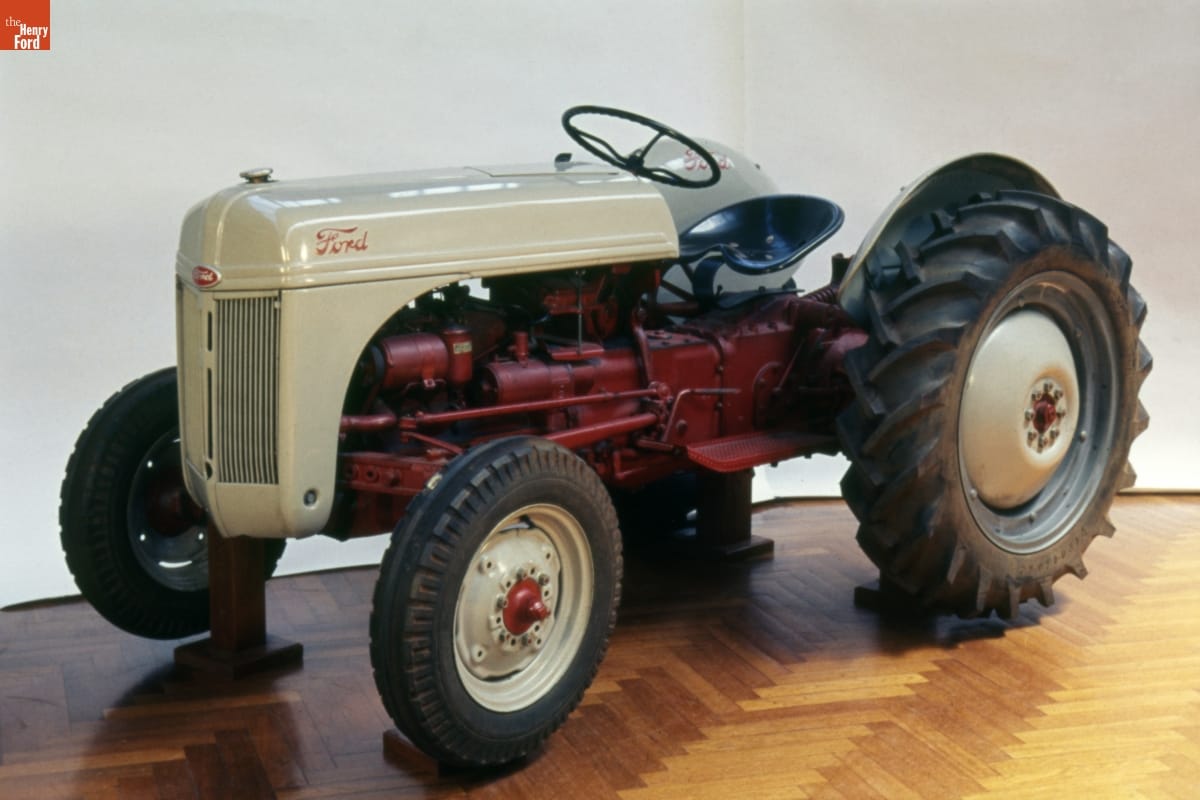
- 1952 Ford Model 8N Tractor - The Ford Motor Company, after Henry Ford's death, released its most popular tractor in 1948. The 8N broke with Ford tradition by sporting new paint colors. Farmers bought the affordable tractor because it retained Ferguson's revolutionary 3-point hitch system and included a "crawler" gear and PTO (power-take-off) that transferred engine power to new equipment like forage choppers.
- 1952
- Collections - Artifact
1952 Ford Model 8N Tractor
The Ford Motor Company, after Henry Ford's death, released its most popular tractor in 1948. The 8N broke with Ford tradition by sporting new paint colors. Farmers bought the affordable tractor because it retained Ferguson's revolutionary 3-point hitch system and included a "crawler" gear and PTO (power-take-off) that transferred engine power to new equipment like forage choppers.
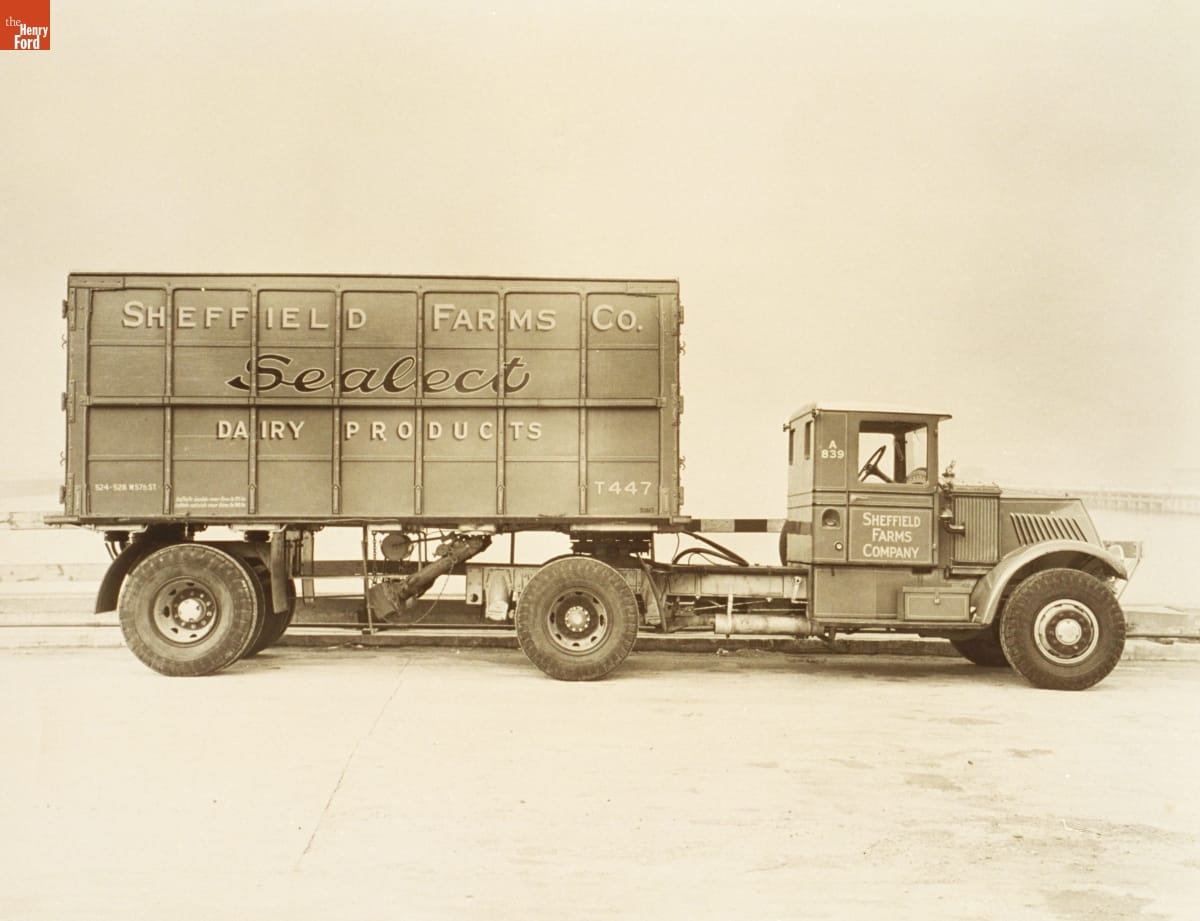
- 1934 Mack Model AK6 Truck with Semi-trailer, "Sheffield Farms Co.," December 1934 - Founded in Brooklyn, New York, in 1900, Mack Brothers Company relocated to Allentown, Pennsylvania, in 1905 and adopted the name Mack Trucks in 1922. Motorized trucks began to replace horse-drawn dairy delivery wagons early in the 20th century. Larger trucks delivered milk and other dairy products to commercial users like grocery stores and restaurants.
- December 01, 1934
- Collections - Artifact
1934 Mack Model AK6 Truck with Semi-trailer, "Sheffield Farms Co.," December 1934
Founded in Brooklyn, New York, in 1900, Mack Brothers Company relocated to Allentown, Pennsylvania, in 1905 and adopted the name Mack Trucks in 1922. Motorized trucks began to replace horse-drawn dairy delivery wagons early in the 20th century. Larger trucks delivered milk and other dairy products to commercial users like grocery stores and restaurants.
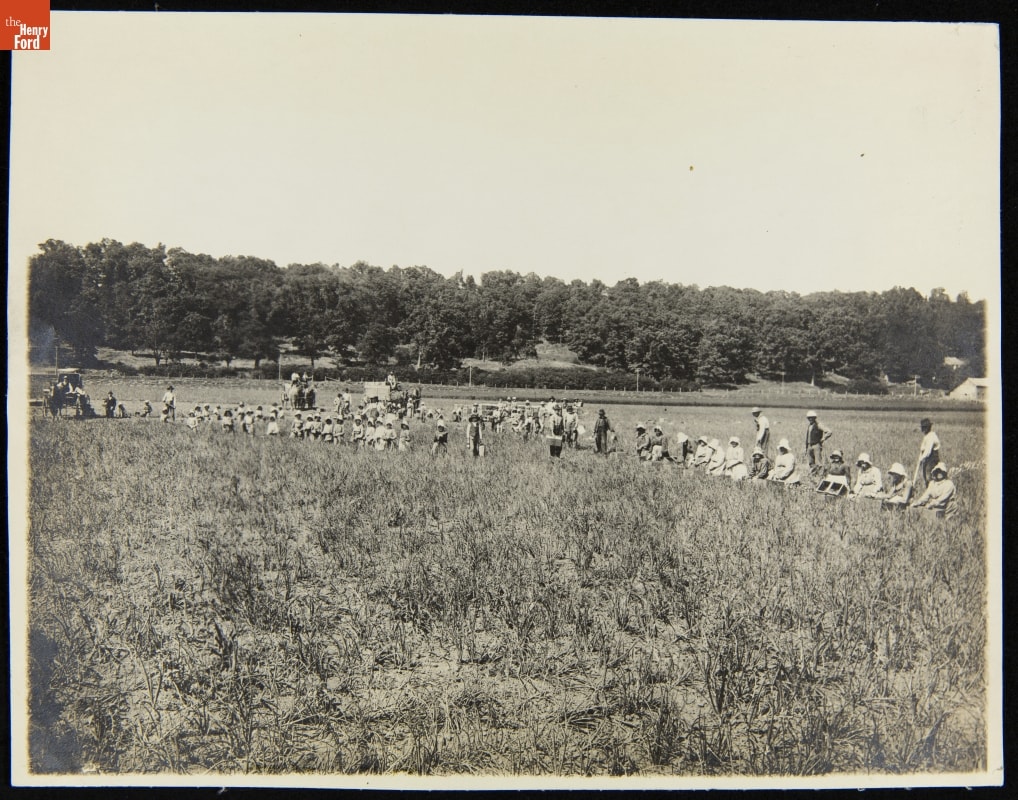
- Workers in an Onion Field, H. J. Heinz Company, circa 1910 - Entrepreneur H.J. Heinz recognized that producing the highest quality products began with where the ingredients were grown and how they were harvested. He took great care in managing every aspect of the process to ensure the best ingredients for his line of pickled foods, preserves, and condiments. This photograph shows workers spread out across one of Heinz's many onion fields.
- circa 1910
- Collections - Artifact
Workers in an Onion Field, H. J. Heinz Company, circa 1910
Entrepreneur H.J. Heinz recognized that producing the highest quality products began with where the ingredients were grown and how they were harvested. He took great care in managing every aspect of the process to ensure the best ingredients for his line of pickled foods, preserves, and condiments. This photograph shows workers spread out across one of Heinz's many onion fields.
- Ford-Ferguson Model 9N Tractor Pulling a Combine, Macon, Michigan, November 1939 - Henry Ford acquired thousands of acres of farmland in southeast Michigan, collectively known as the Ford Farms. Much of the Farms' acreage was dedicated to one of Ford's agricultural interests at that time: soybeans. This 1939 image shows a tractor-drawn combine harvesting soybeans in Macon, Michigan.
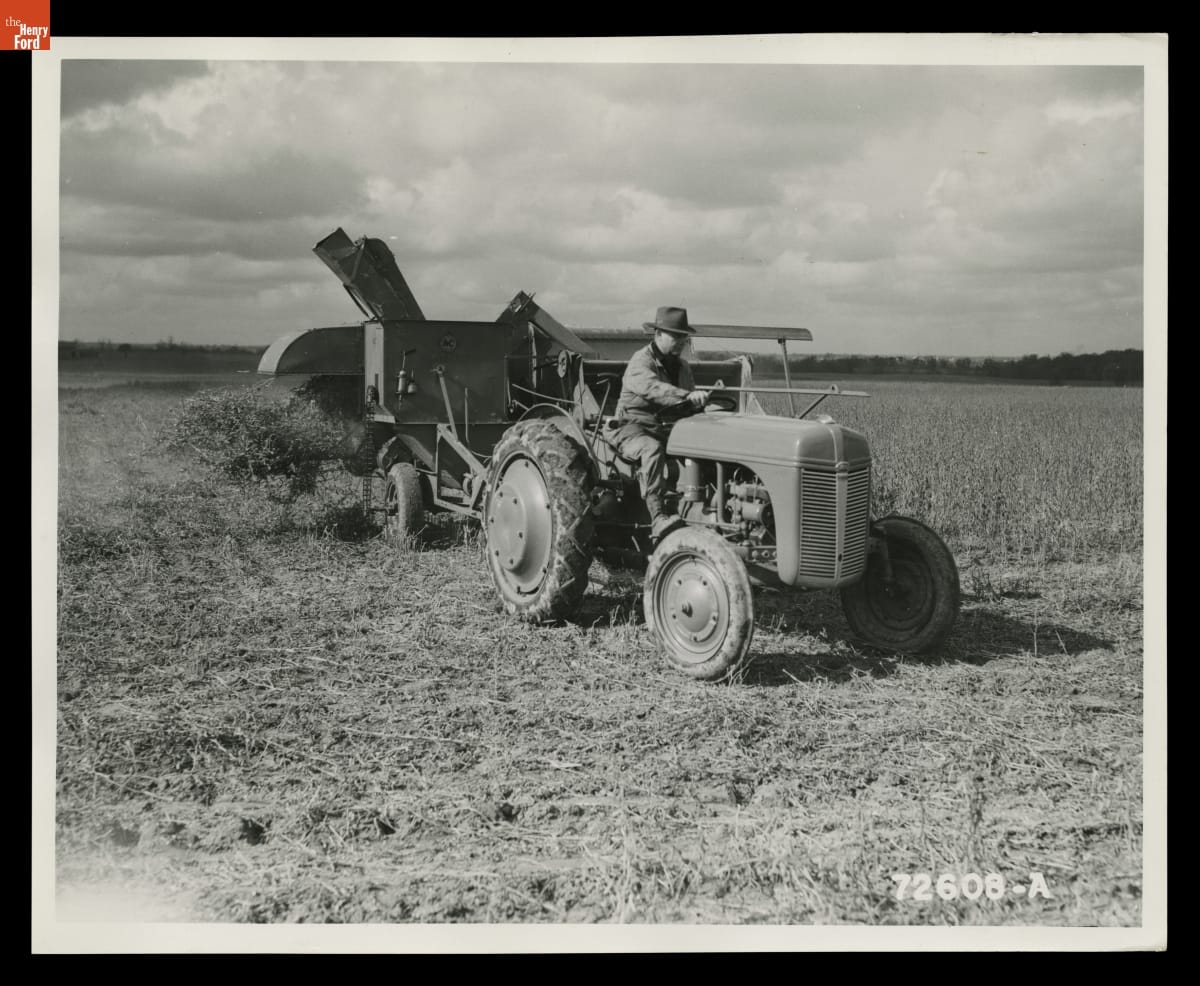
- November 01, 1939
- Collections - Artifact
Ford-Ferguson Model 9N Tractor Pulling a Combine, Macon, Michigan, November 1939
Henry Ford acquired thousands of acres of farmland in southeast Michigan, collectively known as the Ford Farms. Much of the Farms' acreage was dedicated to one of Ford's agricultural interests at that time: soybeans. This 1939 image shows a tractor-drawn combine harvesting soybeans in Macon, Michigan.
- Port Huron Steam Traction Engine, "Longfellow," 1916 - The late 19th to early 20th centuries saw huge steam engines like this used for threshing grain. They could move over the roads under their own power. Individual farmers generally did not own such machines. Rather, men made a business of moving from farm to farm, threshing grain during harvest time. Joseph Freund of Westphalia, Michigan, bought this machine in 1917 and used it to power a Port Huron "Rusher" thresher-separator in Clinton and Ionia Counties, Michigan.
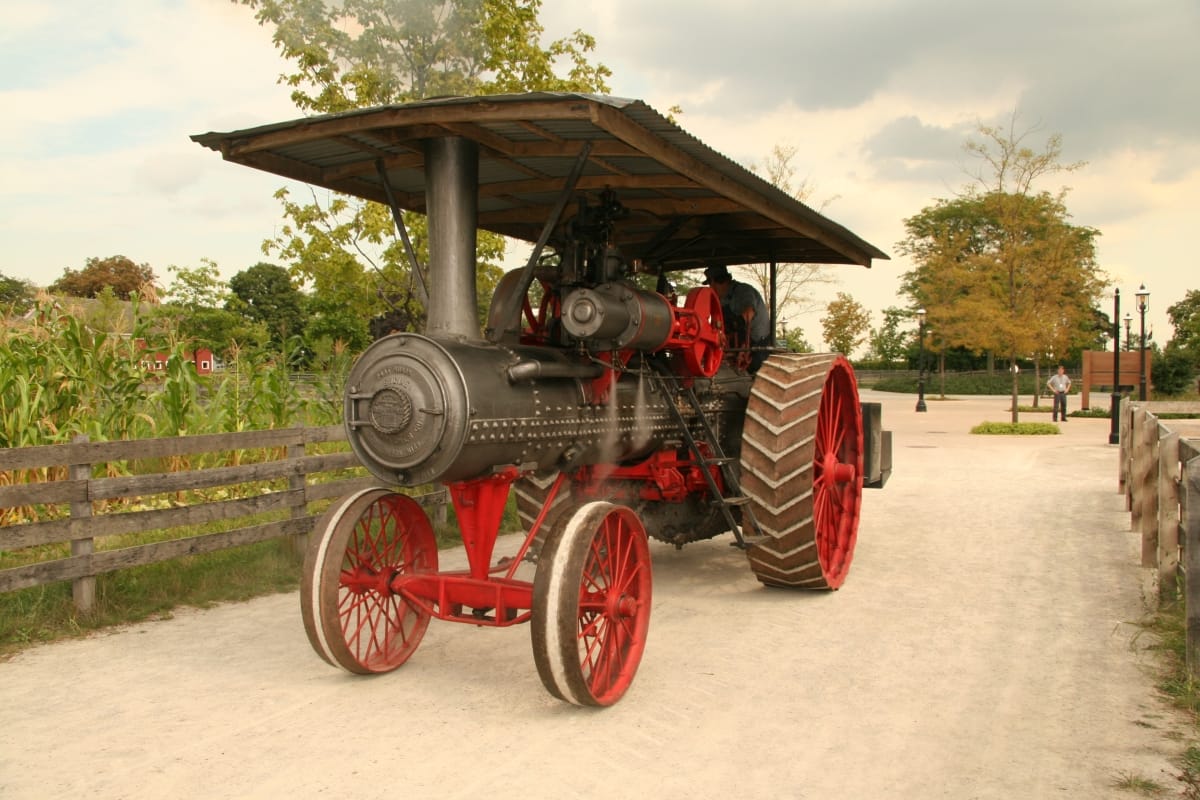
- December 22, 1916
- Collections - Artifact
Port Huron Steam Traction Engine, "Longfellow," 1916
The late 19th to early 20th centuries saw huge steam engines like this used for threshing grain. They could move over the roads under their own power. Individual farmers generally did not own such machines. Rather, men made a business of moving from farm to farm, threshing grain during harvest time. Joseph Freund of Westphalia, Michigan, bought this machine in 1917 and used it to power a Port Huron "Rusher" thresher-separator in Clinton and Ionia Counties, Michigan.