
Search
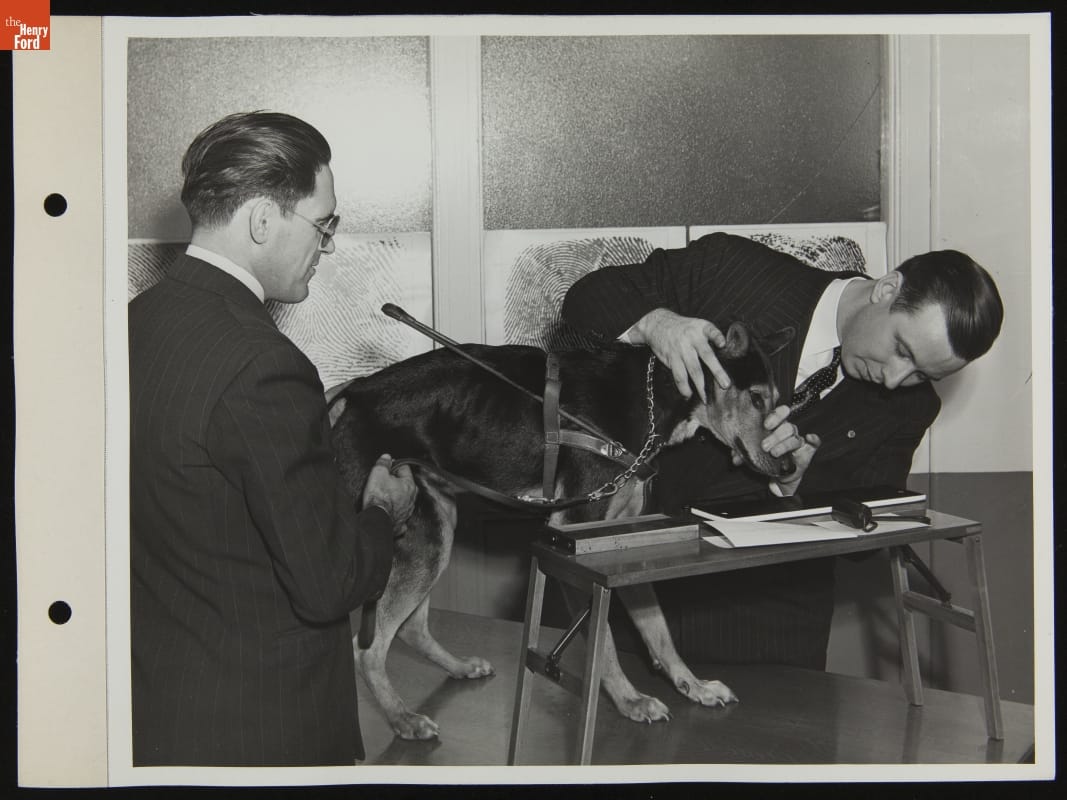
- Ford Employee's Service Dog Being "Noseprinted" for Identification, October 1942 - Blackie was a leader or service dog that helped blind employee Sylvester Rypkowski travel to and from his job at the Ford Rouge factory during World War II. The dog, like his human coworkers, was finger (or "paw") printed and received a photo identification badge -- standard for war workers. Local and regional newspapers ran articles about Blackie and his role in wartime production.
- October 05, 1942
- Collections - Artifact
Ford Employee's Service Dog Being "Noseprinted" for Identification, October 1942
Blackie was a leader or service dog that helped blind employee Sylvester Rypkowski travel to and from his job at the Ford Rouge factory during World War II. The dog, like his human coworkers, was finger (or "paw") printed and received a photo identification badge -- standard for war workers. Local and regional newspapers ran articles about Blackie and his role in wartime production.
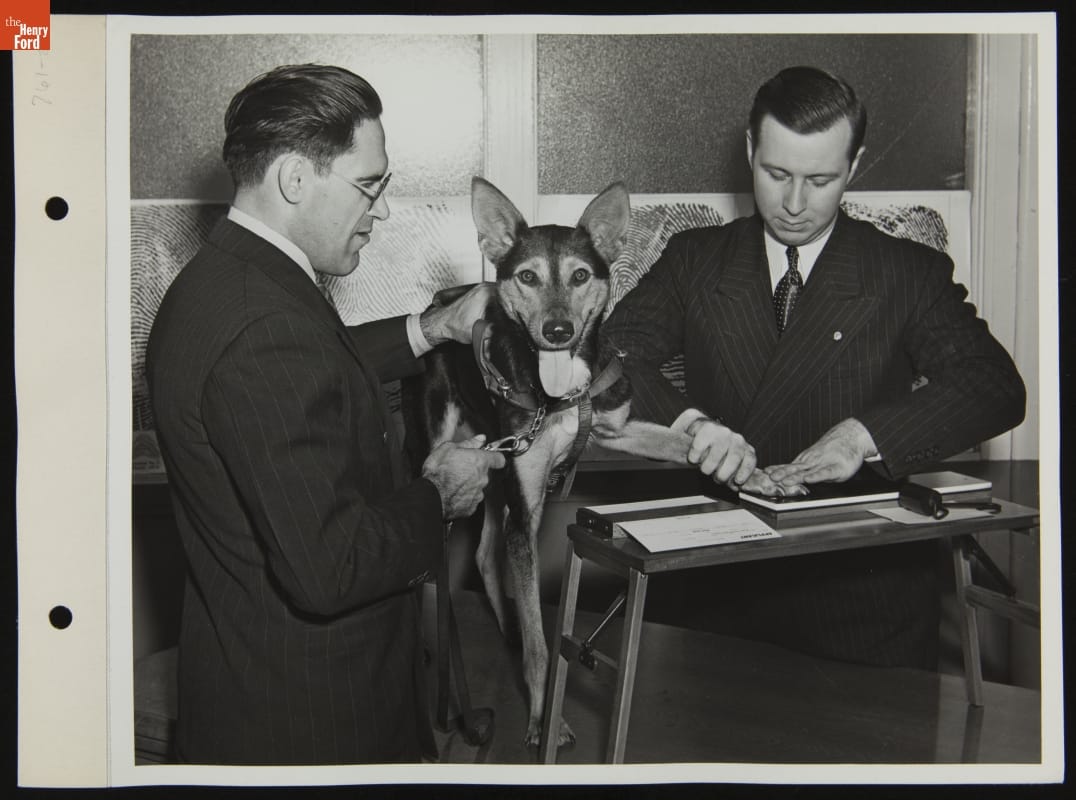
- Ford Employee's Service Dog Being "Pawprinted" for Identification, October 1942 - Blackie was a leader or service dog that helped blind employee Sylvester Rypkowski travel to and from his job at the Ford Rouge factory during World War II. The dog, like his human coworkers, was finger (or "paw") printed and received a photo identification badge -- standard for war workers. Local and regional newspapers ran articles about Blackie and his role in wartime production.
- October 05, 1942
- Collections - Artifact
Ford Employee's Service Dog Being "Pawprinted" for Identification, October 1942
Blackie was a leader or service dog that helped blind employee Sylvester Rypkowski travel to and from his job at the Ford Rouge factory during World War II. The dog, like his human coworkers, was finger (or "paw") printed and received a photo identification badge -- standard for war workers. Local and regional newspapers ran articles about Blackie and his role in wartime production.
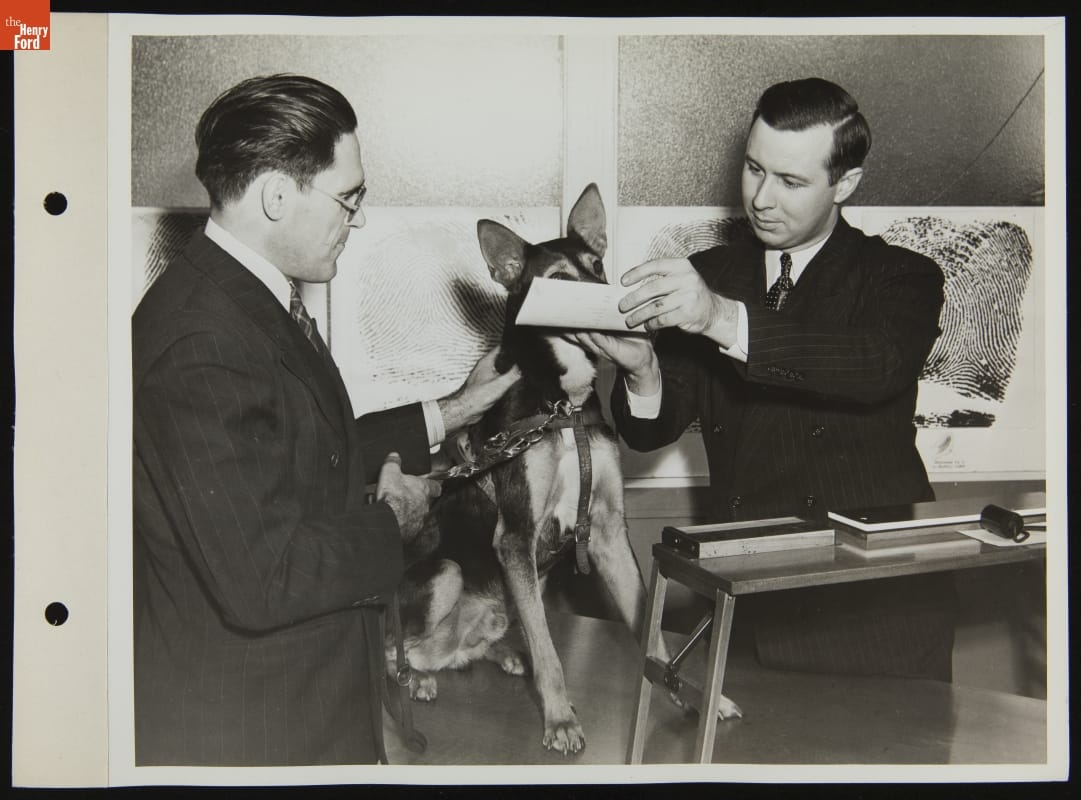
- Ford Employee's Service Dog Being "Noseprinted" for Identification, October 1942 - Blackie was a leader or service dog that helped blind employee Sylvester Rypkowski travel to and from his job at the Ford Rouge factory during World War II. The dog, like his human coworkers, was finger (or "paw") printed and received a photo identification badge -- standard for war workers. Local and regional newspapers ran articles about Blackie and his role in wartime production.
- October 05, 1942
- Collections - Artifact
Ford Employee's Service Dog Being "Noseprinted" for Identification, October 1942
Blackie was a leader or service dog that helped blind employee Sylvester Rypkowski travel to and from his job at the Ford Rouge factory during World War II. The dog, like his human coworkers, was finger (or "paw") printed and received a photo identification badge -- standard for war workers. Local and regional newspapers ran articles about Blackie and his role in wartime production.
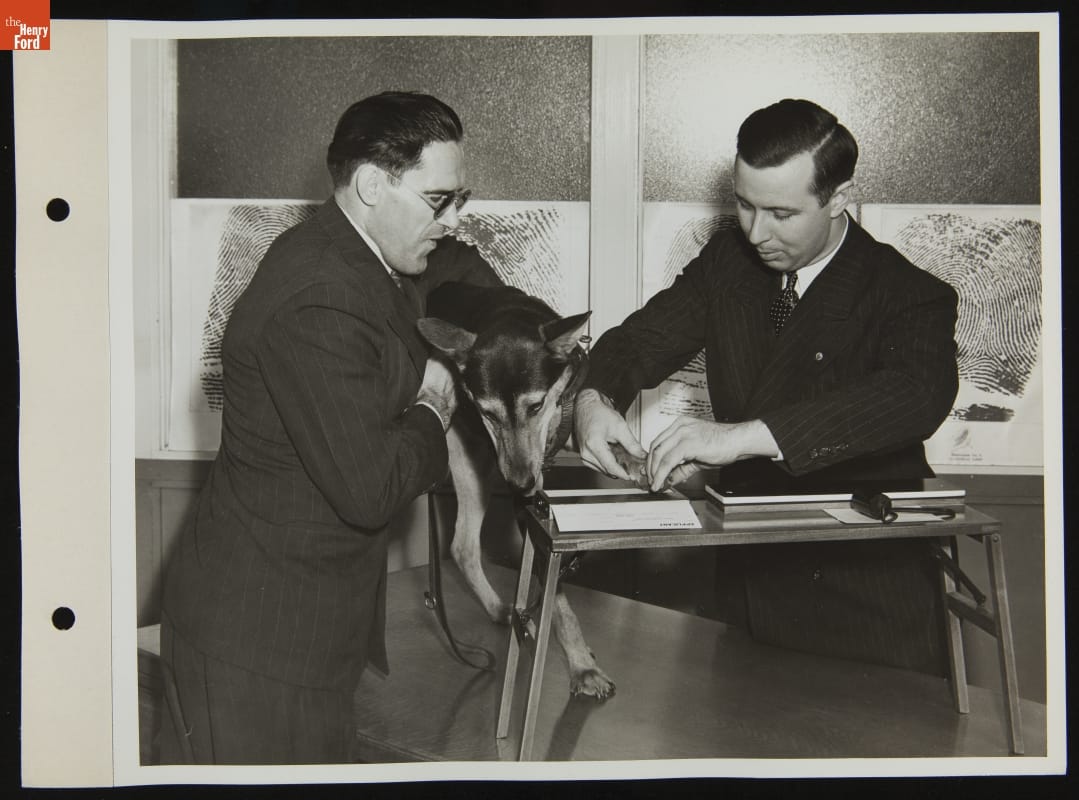
- Ford Employee's Service Dog Being "Pawprinted" for Identification, October 1942 - Blackie was a leader or service dog that helped blind employee Sylvester Rypkowski travel to and from his job at the Ford Rouge factory during World War II. The dog, like his human coworkers, was finger (or "paw") printed and received a photo identification badge -- standard for war workers. Local and regional newspapers ran articles about Blackie and his role in wartime production.
- October 05, 1942
- Collections - Artifact
Ford Employee's Service Dog Being "Pawprinted" for Identification, October 1942
Blackie was a leader or service dog that helped blind employee Sylvester Rypkowski travel to and from his job at the Ford Rouge factory during World War II. The dog, like his human coworkers, was finger (or "paw") printed and received a photo identification badge -- standard for war workers. Local and regional newspapers ran articles about Blackie and his role in wartime production.
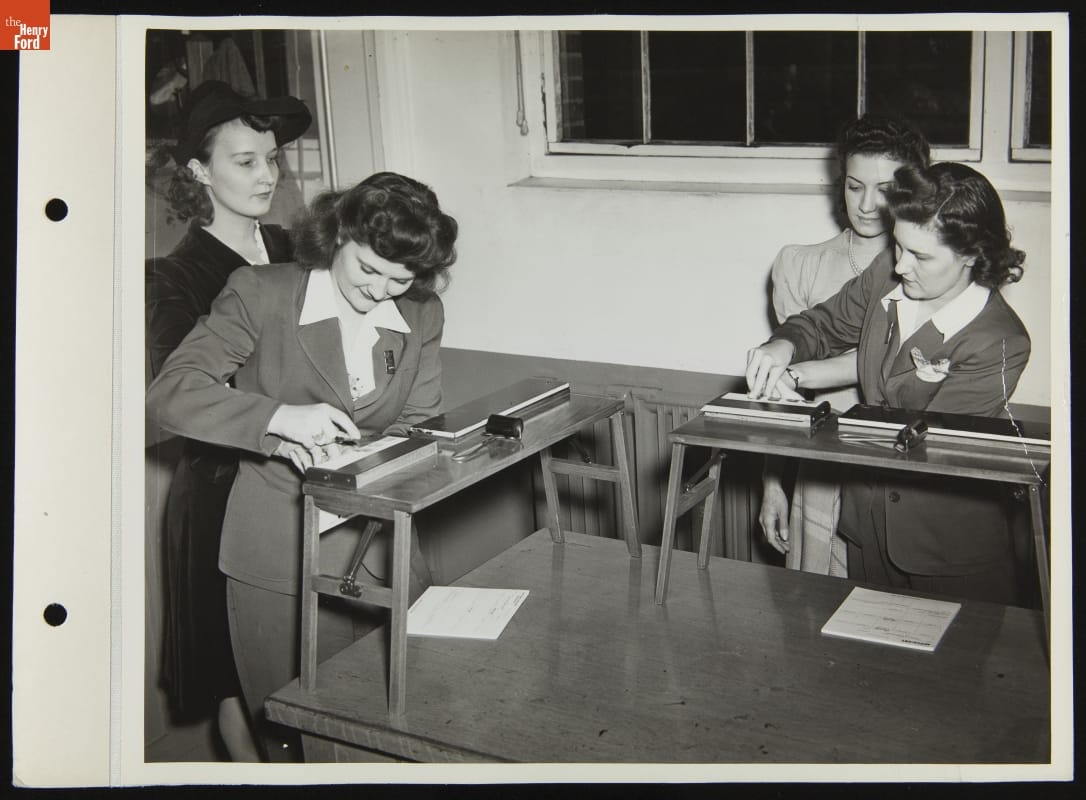
- Women Employees Taking Fingerprints, Ford Rouge Plant Employment Building, November 1942 - During World War II, women joined the workforce in record numbers to take on essential jobs traditionally held by men now serving in the armed forces. The women in this photo fingerprinted new employees for identification purposes at Ford Motor Company's Rouge factory complex. It was no small task at a major wartime factory where worker turnover was constant.
- November 23, 1942
- Collections - Artifact
Women Employees Taking Fingerprints, Ford Rouge Plant Employment Building, November 1942
During World War II, women joined the workforce in record numbers to take on essential jobs traditionally held by men now serving in the armed forces. The women in this photo fingerprinted new employees for identification purposes at Ford Motor Company's Rouge factory complex. It was no small task at a major wartime factory where worker turnover was constant.
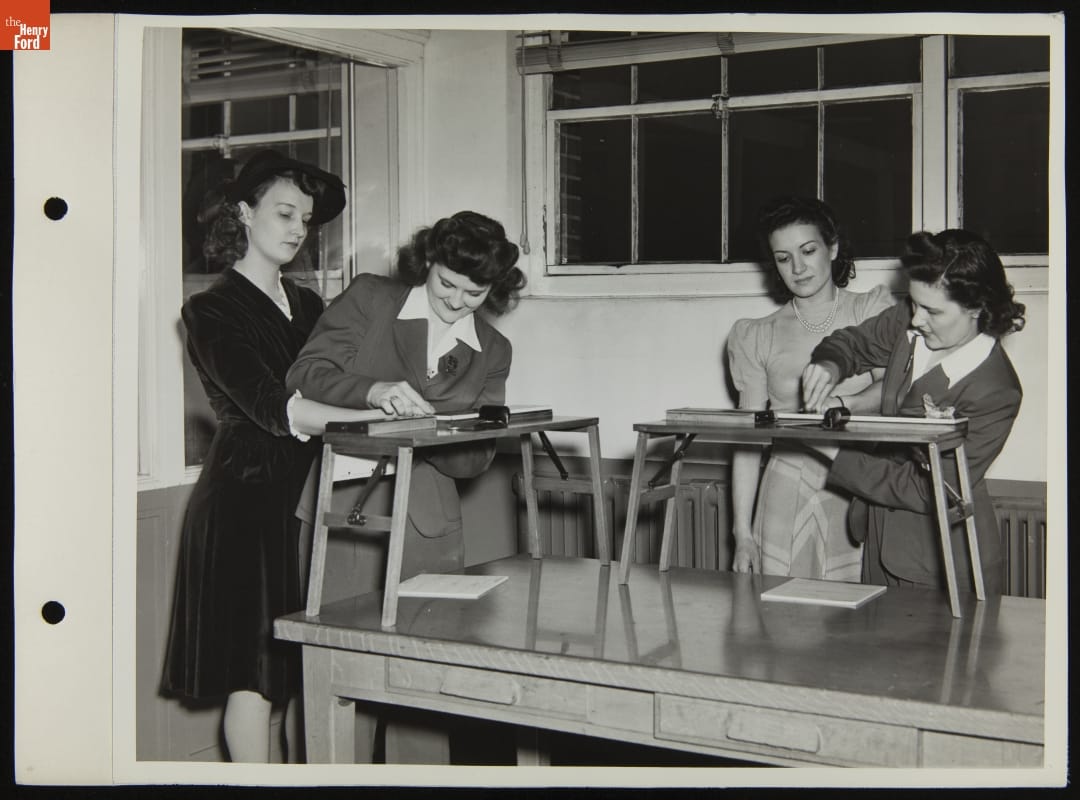
- Women Employees Taking Fingerprints, Rouge Plant Employment Building, November 1942 - During World War II, women joined the workforce in record numbers to take on essential jobs traditionally held by men now serving in the armed forces. The women in this photo fingerprinted new employees for identification purposes at Ford Motor Company's Rouge factory complex. It was no small task at a major wartime factory where worker turnover was constant.
- November 23, 1942
- Collections - Artifact
Women Employees Taking Fingerprints, Rouge Plant Employment Building, November 1942
During World War II, women joined the workforce in record numbers to take on essential jobs traditionally held by men now serving in the armed forces. The women in this photo fingerprinted new employees for identification purposes at Ford Motor Company's Rouge factory complex. It was no small task at a major wartime factory where worker turnover was constant.
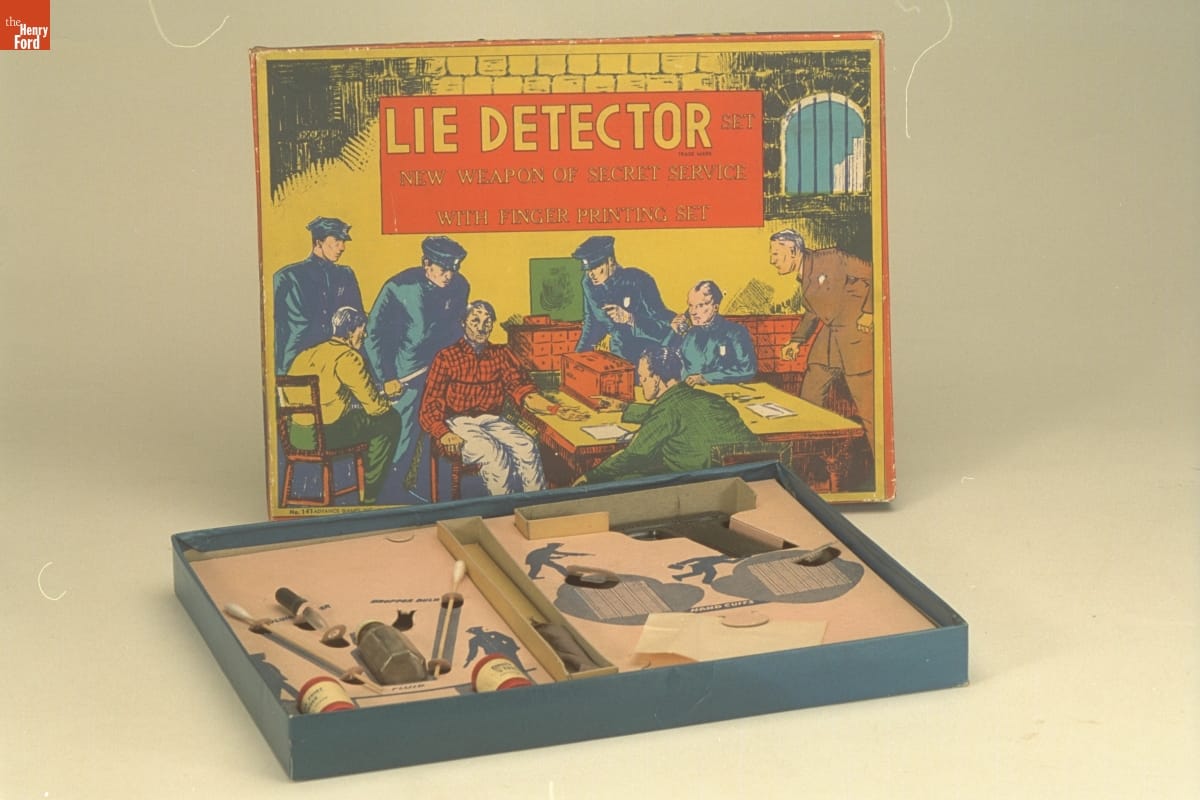
- Toy Lie Detector Set, Used by James Greenhoe, 1937-1946 -
- 1937-1946
- Collections - Artifact
Toy Lie Detector Set, Used by James Greenhoe, 1937-1946
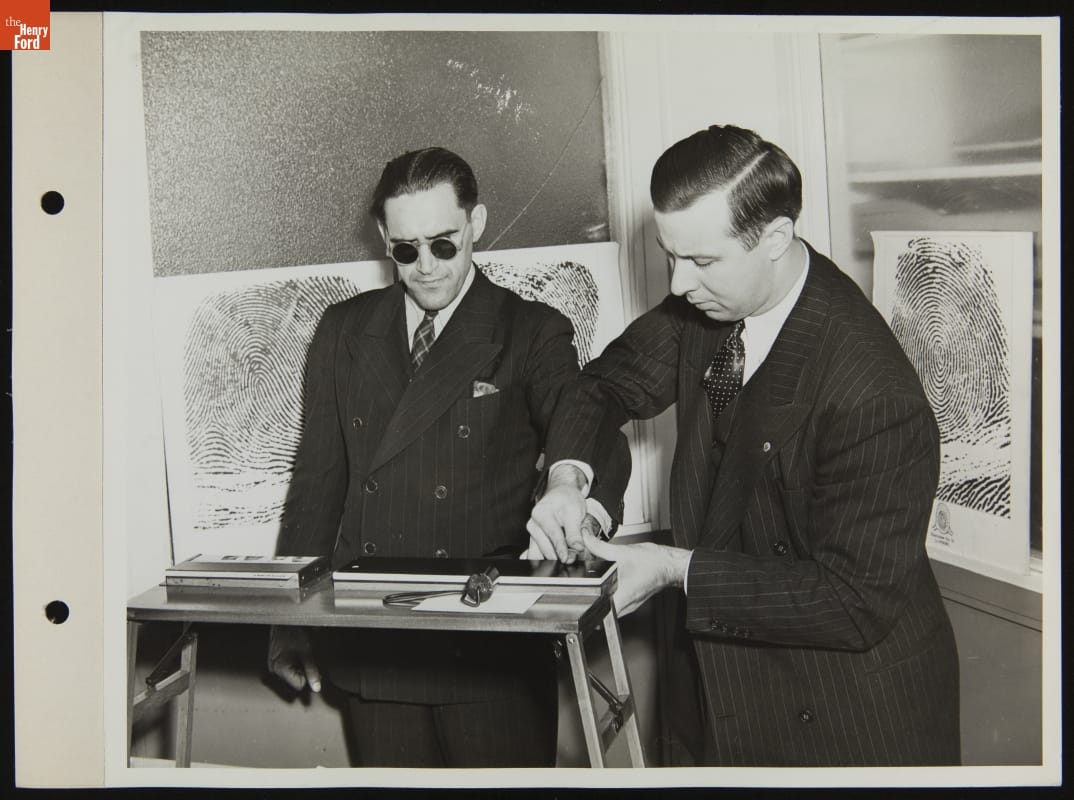
- Ford Employee Sylvester Rypkowski Being Fingerprinted at Work for Identification, October 1942 - Henry Ford believed in providing equal employment opportunities to people with disabilities -- a practice he began in the early years of his company. During World War II, Ford employed thousands of workers with disabilities. In October 1942, Ford Motor Company photographed Sylvester Rypkowski and his service dog, Blackie, as they became members of the Rouge plant's workforce.
- October 05, 1942
- Collections - Artifact
Ford Employee Sylvester Rypkowski Being Fingerprinted at Work for Identification, October 1942
Henry Ford believed in providing equal employment opportunities to people with disabilities -- a practice he began in the early years of his company. During World War II, Ford employed thousands of workers with disabilities. In October 1942, Ford Motor Company photographed Sylvester Rypkowski and his service dog, Blackie, as they became members of the Rouge plant's workforce.
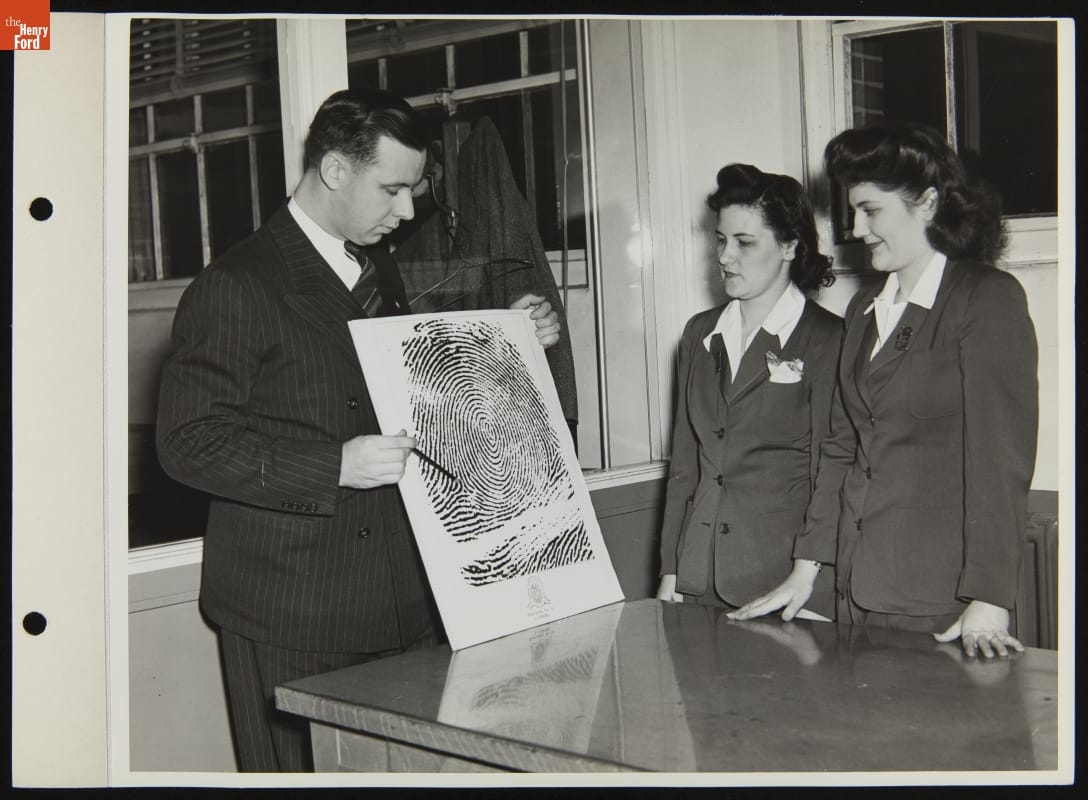
- Women Employees Learning Fingerprinting Procedure, Ford Rouge Plant Employment Building, November 1942 - During World War II, women joined the workforce in record numbers to take on essential jobs traditionally held by men now serving in the armed forces. The women in this photo fingerprinted new employees for identification purposes at Ford Motor Company's Rouge factory complex. It was no small task at a major wartime factory where worker turnover was constant.
- November 23, 1942
- Collections - Artifact
Women Employees Learning Fingerprinting Procedure, Ford Rouge Plant Employment Building, November 1942
During World War II, women joined the workforce in record numbers to take on essential jobs traditionally held by men now serving in the armed forces. The women in this photo fingerprinted new employees for identification purposes at Ford Motor Company's Rouge factory complex. It was no small task at a major wartime factory where worker turnover was constant.
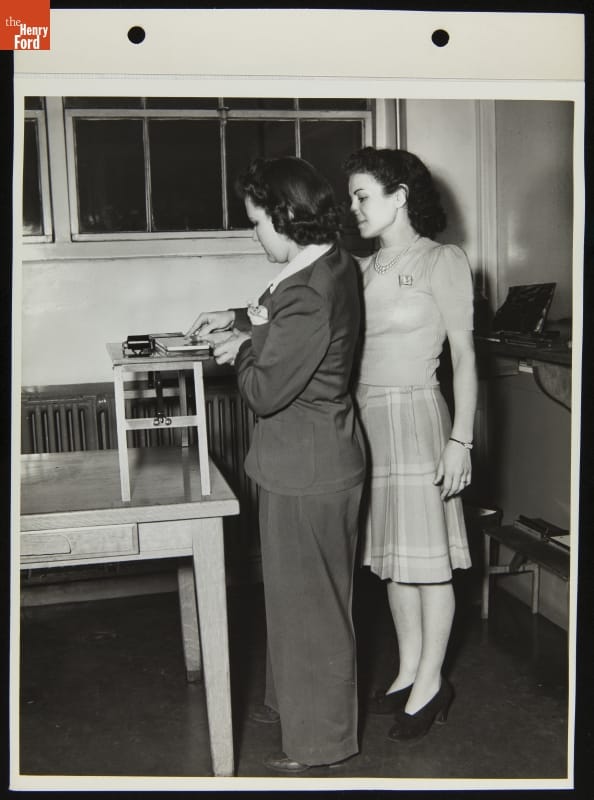
- Woman Employee Taking Fingerprints, Rouge Plant Employment Building, November 1942 - During World War II, women joined the workforce in record numbers to take on essential jobs traditionally held by men now serving in the armed forces. The women in this photo fingerprinted new employees for identification purposes at Ford Motor Company's Rouge factory complex. It was no small task at a major wartime factory where worker turnover was constant.
- November 23, 1942
- Collections - Artifact
Woman Employee Taking Fingerprints, Rouge Plant Employment Building, November 1942
During World War II, women joined the workforce in record numbers to take on essential jobs traditionally held by men now serving in the armed forces. The women in this photo fingerprinted new employees for identification purposes at Ford Motor Company's Rouge factory complex. It was no small task at a major wartime factory where worker turnover was constant.