
Search
- Fire Bucket, 1803 - Many home and business owners in colonial and early America kept leather fire buckets in case of emergency. When a fire broke out in the community, owners tossed their buckets into the street, where firefighters and local citizens used them to carry water to put out the fire. Buckets decorated with names, initials and numbers helped owners identify their buckets after the fire had been extinguished.
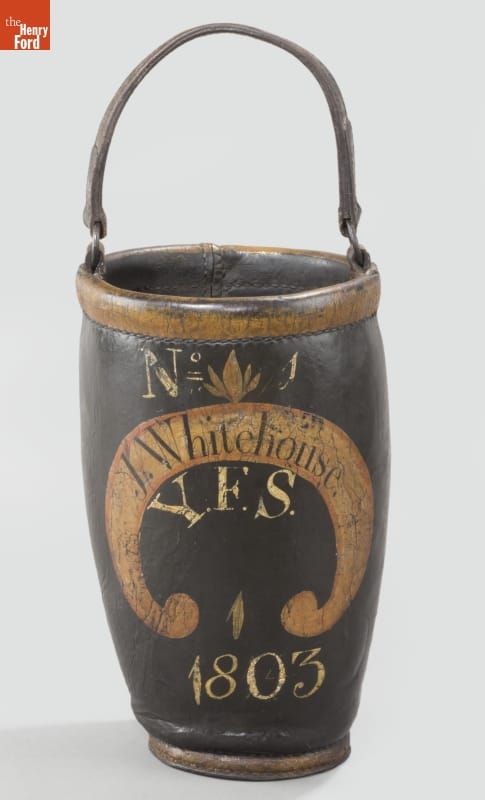
- 1803
- Collections - Artifact
Fire Bucket, 1803
Many home and business owners in colonial and early America kept leather fire buckets in case of emergency. When a fire broke out in the community, owners tossed their buckets into the street, where firefighters and local citizens used them to carry water to put out the fire. Buckets decorated with names, initials and numbers helped owners identify their buckets after the fire had been extinguished.
- Fire Bucket, Used by Levi Huntington, circa 1795 - Many home and business owners in colonial and early America kept leather fire buckets in case of emergency. When a fire broke out in the community, owners tossed their buckets into the street, where firefighters and local citizens used them to carry water to put out the fire. Buckets decorated with names, initials and numbers helped owners identify their buckets after the fire had been extinguished.
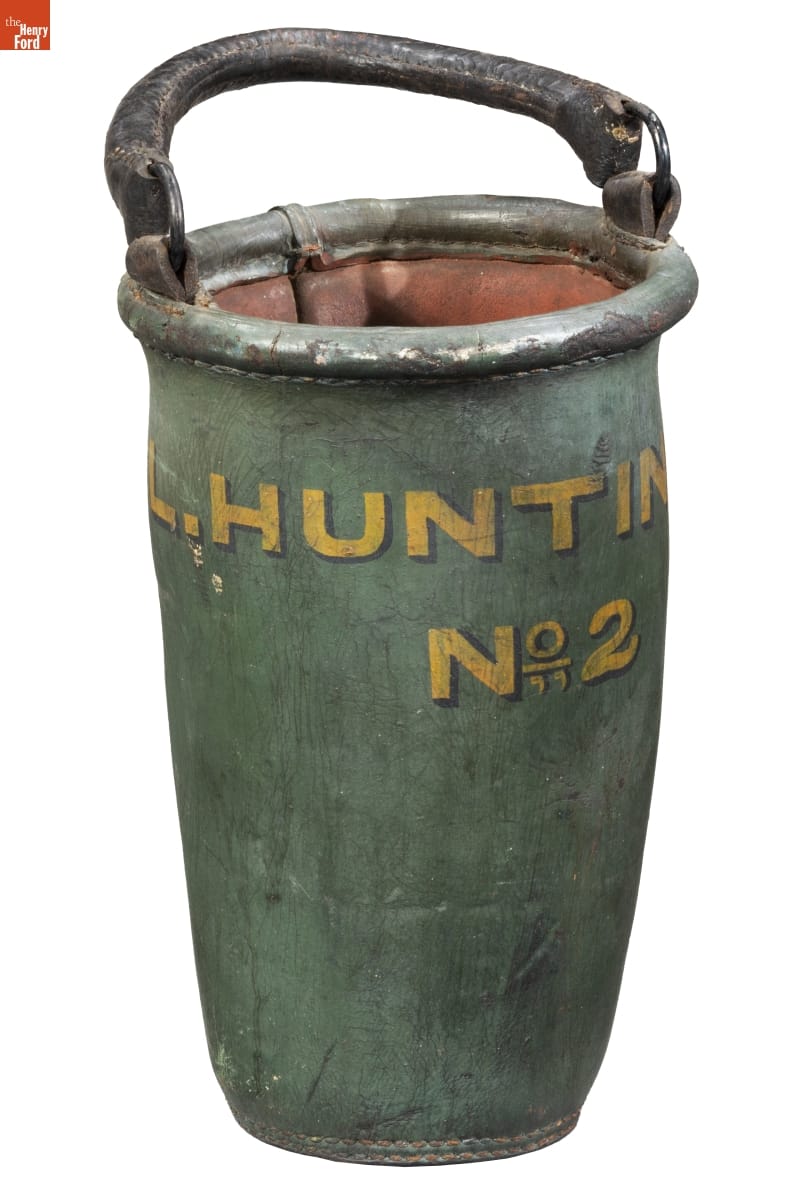
- circa 1795
- Collections - Artifact
Fire Bucket, Used by Levi Huntington, circa 1795
Many home and business owners in colonial and early America kept leather fire buckets in case of emergency. When a fire broke out in the community, owners tossed their buckets into the street, where firefighters and local citizens used them to carry water to put out the fire. Buckets decorated with names, initials and numbers helped owners identify their buckets after the fire had been extinguished.
- Long Island Historical Museum, Fire Bucket, 1890-1915 - In 1890, Jenny Young Chandler, 25 years old and recently widowed, began working for the <EM>New York Herald</EM>. As a photojournalist and feature writer, Chandler captured life in Brooklyn, New York, and vicinity. She also documented collections of private individuals and museums -- some of which were featured in magazine articles for collectors. By 1922, the time of her death, she had produced over 800 glass plate negatives.
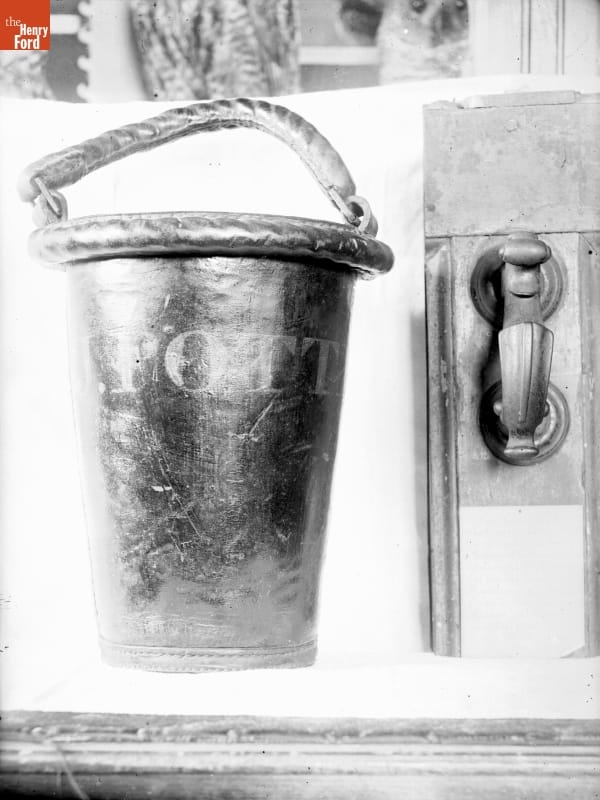
- 1890-1915
- Collections - Artifact
Long Island Historical Museum, Fire Bucket, 1890-1915
In 1890, Jenny Young Chandler, 25 years old and recently widowed, began working for the New York Herald. As a photojournalist and feature writer, Chandler captured life in Brooklyn, New York, and vicinity. She also documented collections of private individuals and museums -- some of which were featured in magazine articles for collectors. By 1922, the time of her death, she had produced over 800 glass plate negatives.
- Fire Bucket, 1820 - Many home and business owners in colonial and early America kept leather fire buckets in case of emergency. When a fire broke out in the community, owners tossed their buckets into the street, where firefighters and local citizens used them to carry water to put out the fire. Buckets decorated with names, initials and numbers helped owners identify their buckets after the fire had been extinguished.
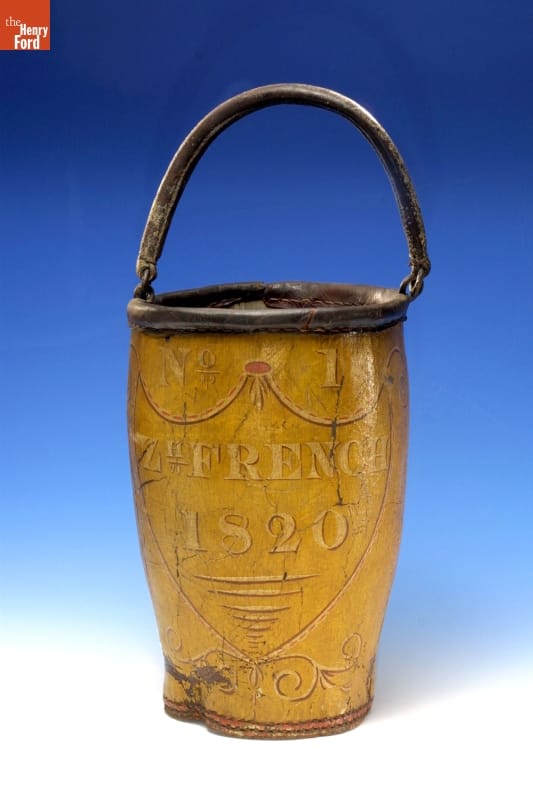
- 1820
- Collections - Artifact
Fire Bucket, 1820
Many home and business owners in colonial and early America kept leather fire buckets in case of emergency. When a fire broke out in the community, owners tossed their buckets into the street, where firefighters and local citizens used them to carry water to put out the fire. Buckets decorated with names, initials and numbers helped owners identify their buckets after the fire had been extinguished.
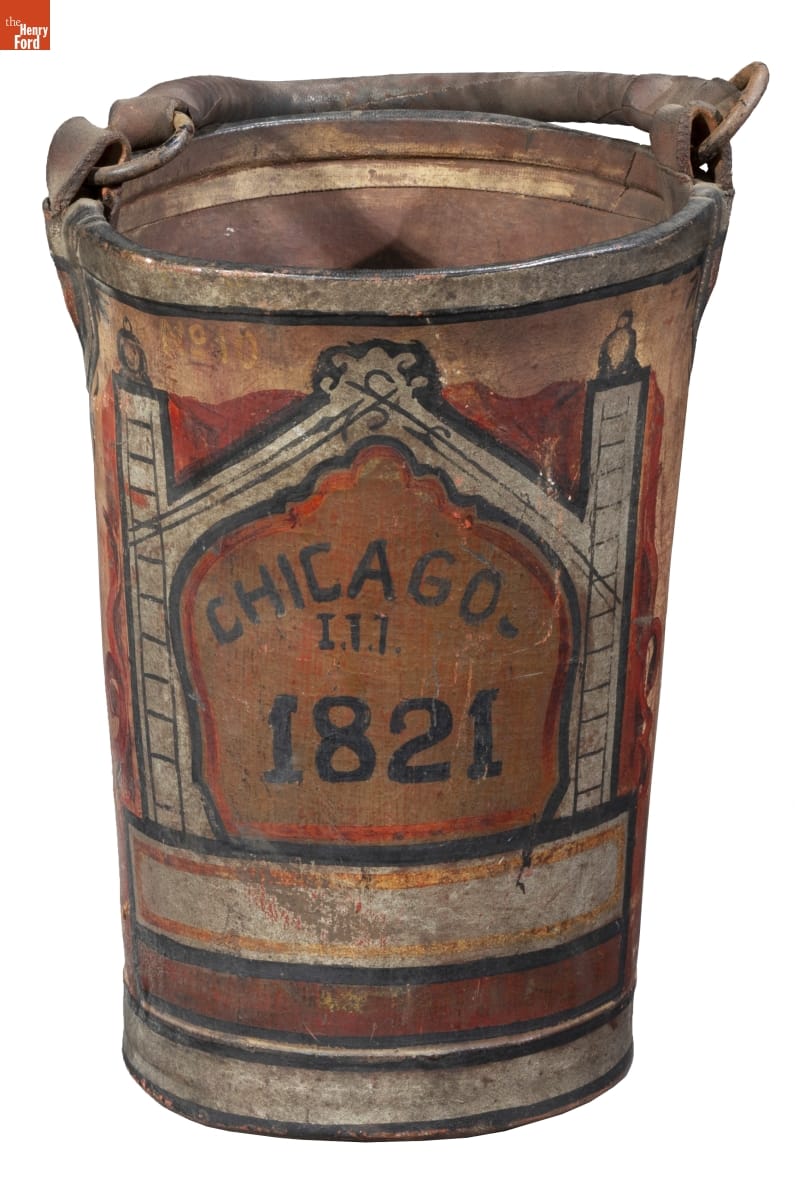
- Fire Bucket, "CHICAGO. I.L.L. 1821", circa 1821 - Many home and business owners in colonial and early America kept leather fire buckets in case of emergency. When a fire broke out in the community, owners tossed their buckets into the street, where firefighters and local citizens used them to carry water to put out the fire. Buckets decorated with names, initials and numbers helped owners identify their buckets after the fire had been extinguished.
- circa 1821
- Collections - Artifact
Fire Bucket, "CHICAGO. I.L.L. 1821", circa 1821
Many home and business owners in colonial and early America kept leather fire buckets in case of emergency. When a fire broke out in the community, owners tossed their buckets into the street, where firefighters and local citizens used them to carry water to put out the fire. Buckets decorated with names, initials and numbers helped owners identify their buckets after the fire had been extinguished.
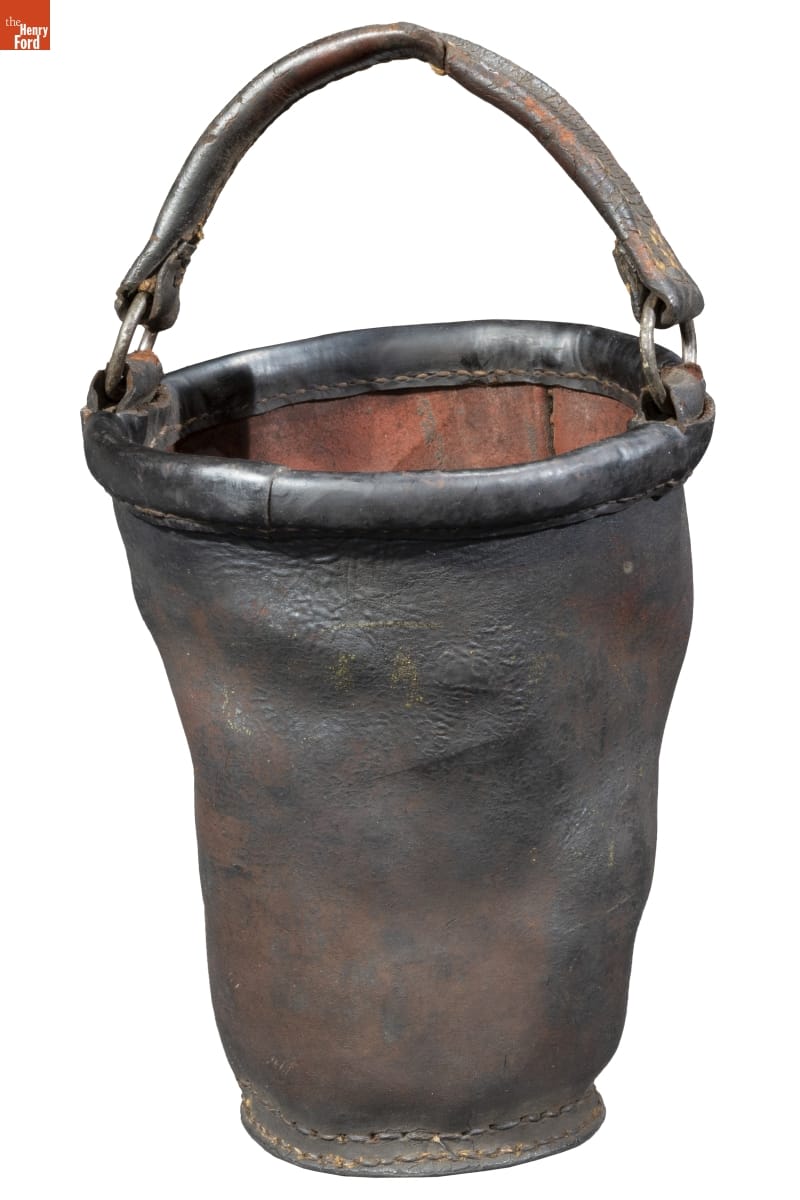
- Fire Bucket, 1800-1840 - Many home and business owners in colonial and early America kept leather fire buckets in case of emergency. When a fire broke out in the community, owners tossed their buckets into the street, where firefighters and local citizens used them to carry water to put out the fire. Buckets decorated with names, initials and numbers helped owners identify their buckets after the fire had been extinguished.
- 1800-1840
- Collections - Artifact
Fire Bucket, 1800-1840
Many home and business owners in colonial and early America kept leather fire buckets in case of emergency. When a fire broke out in the community, owners tossed their buckets into the street, where firefighters and local citizens used them to carry water to put out the fire. Buckets decorated with names, initials and numbers helped owners identify their buckets after the fire had been extinguished.
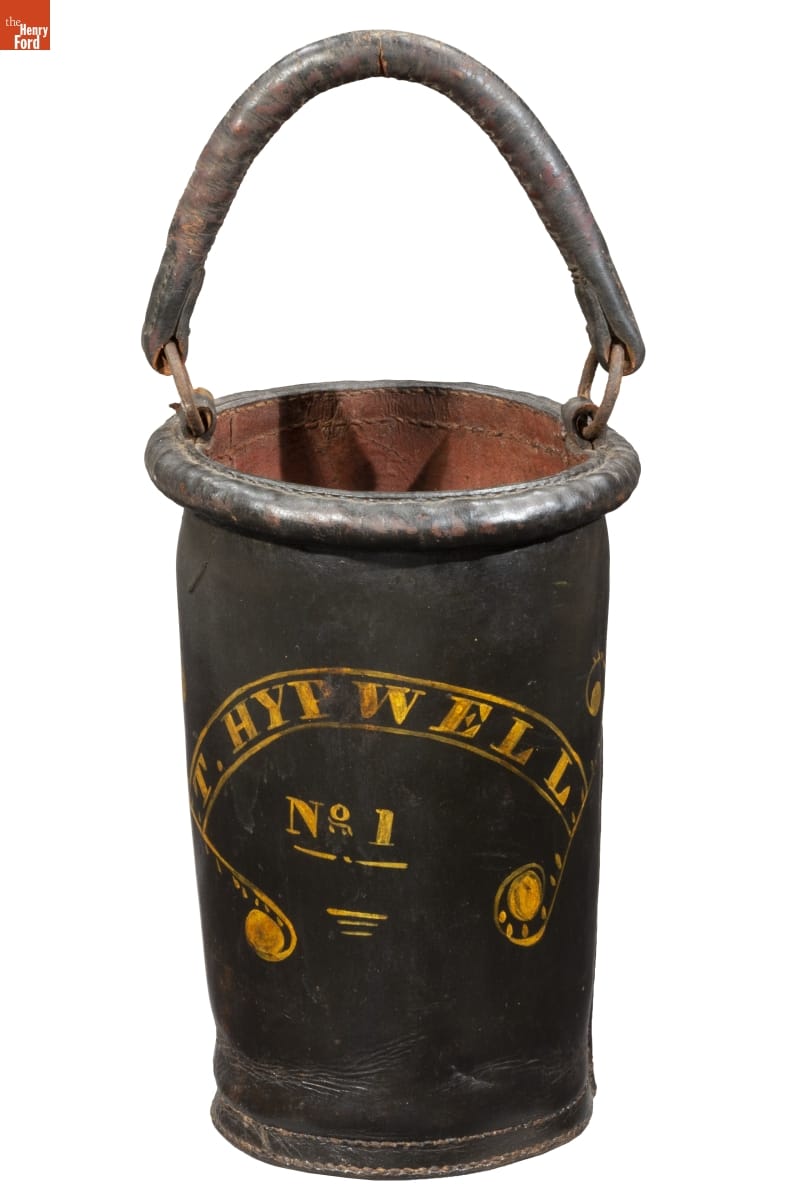
- Fire Bucket, "T. HYPWELL", 1800-1840 - Many home and business owners in colonial and early America kept leather fire buckets in case of emergency. When a fire broke out in the community, owners tossed their buckets into the street, where firefighters and local citizens used them to carry water to put out the fire. Buckets decorated with names, initials and numbers helped owners identify their buckets after the fire had been extinguished.
- 1800-1840
- Collections - Artifact
Fire Bucket, "T. HYPWELL", 1800-1840
Many home and business owners in colonial and early America kept leather fire buckets in case of emergency. When a fire broke out in the community, owners tossed their buckets into the street, where firefighters and local citizens used them to carry water to put out the fire. Buckets decorated with names, initials and numbers helped owners identify their buckets after the fire had been extinguished.
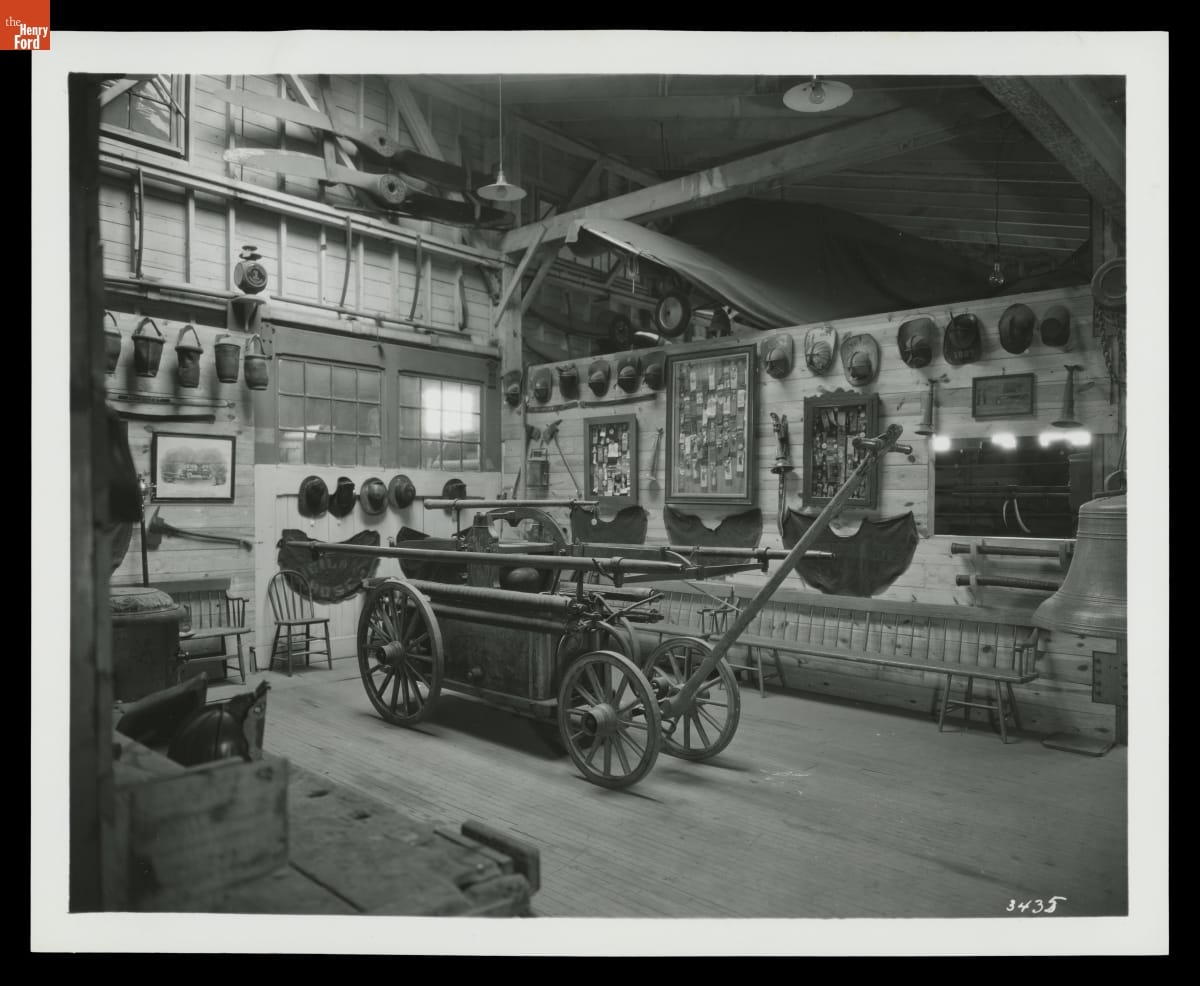
- Proposed "Fire Hall" Exhibit for Henry Ford Museum, Staged in Ford Motor Company Engineering Laboratory, December 1930 - Firefighting equipment was an early focus of collecting efforts at The Henry Ford. This photograph shows a mock-up for a firefighting exhibit tested at Ford Motor Company's Engineering Laboratory -- where Henry Ford stored many of his artifacts before the museum opened. Buckets, helmets, trumpets, and tools are all visible in the display.
- December 08, 1930
- Collections - Artifact
Proposed "Fire Hall" Exhibit for Henry Ford Museum, Staged in Ford Motor Company Engineering Laboratory, December 1930
Firefighting equipment was an early focus of collecting efforts at The Henry Ford. This photograph shows a mock-up for a firefighting exhibit tested at Ford Motor Company's Engineering Laboratory -- where Henry Ford stored many of his artifacts before the museum opened. Buckets, helmets, trumpets, and tools are all visible in the display.
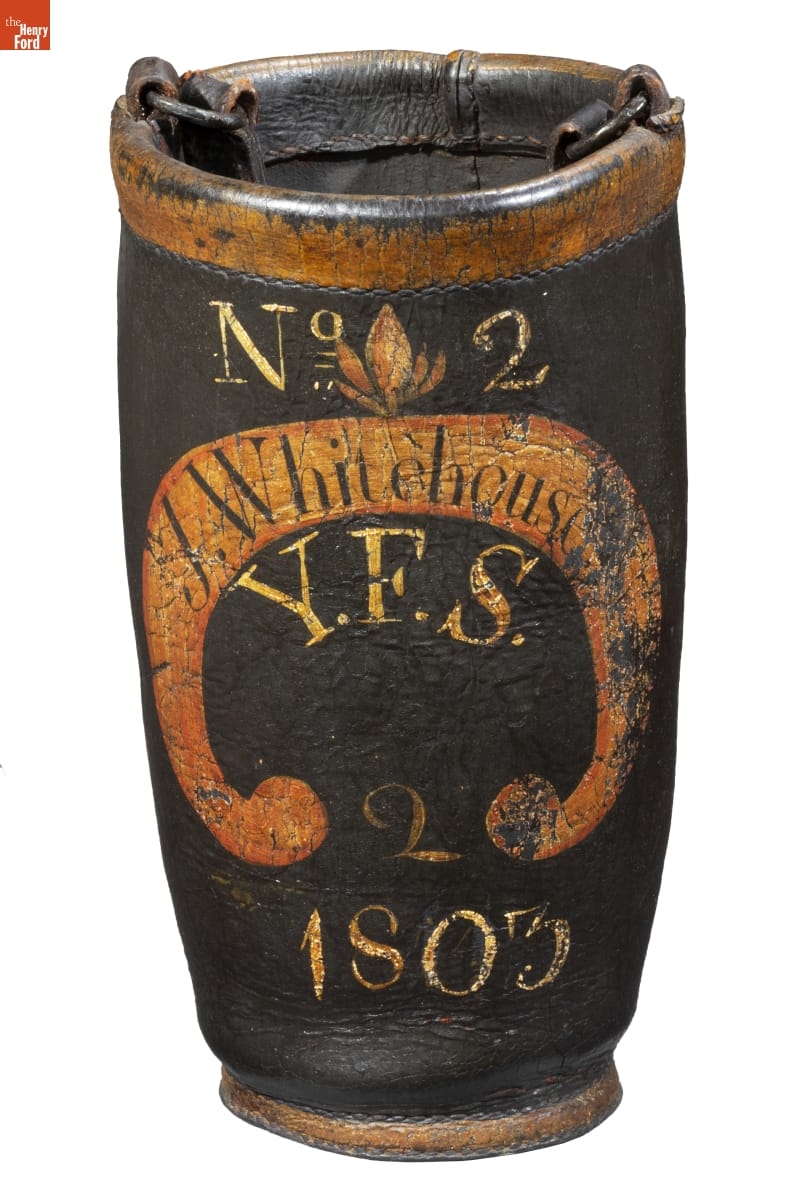
- Fire Bucket, "J. Whitehouse Y.F.S.", circa 1803 - Many home and business owners in colonial and early America kept leather fire buckets in case of emergency. When a fire broke out in the community, owners tossed their buckets into the street, where firefighters and local citizens used them to carry water to put out the fire. Buckets decorated with names, initials and numbers helped owners identify their buckets after the fire had been extinguished.
- circa 1803
- Collections - Artifact
Fire Bucket, "J. Whitehouse Y.F.S.", circa 1803
Many home and business owners in colonial and early America kept leather fire buckets in case of emergency. When a fire broke out in the community, owners tossed their buckets into the street, where firefighters and local citizens used them to carry water to put out the fire. Buckets decorated with names, initials and numbers helped owners identify their buckets after the fire had been extinguished.
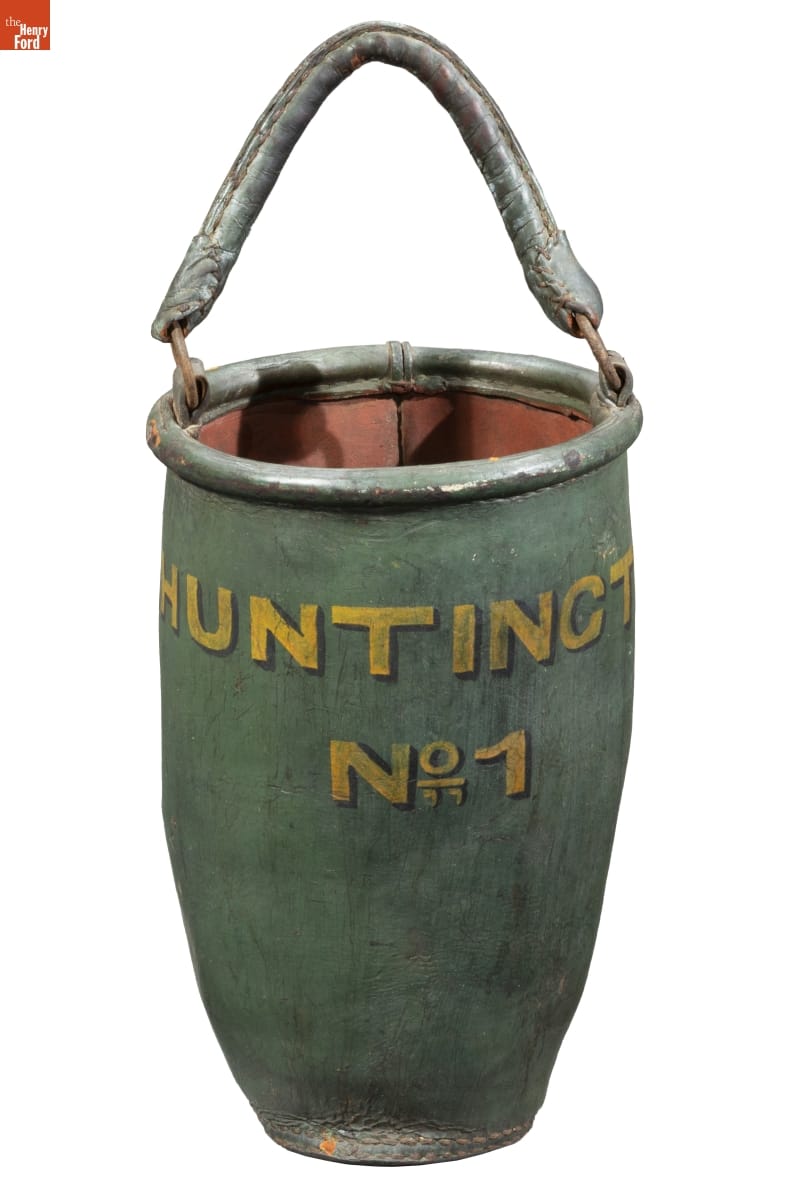
- Fire Bucket, Used by Levi Huntington, circa 1795 - Many home and business owners in colonial and early America kept leather fire buckets in case of emergency. When a fire broke out in the community, owners tossed their buckets into the street, where firefighters and local citizens used them to carry water to put out the fire. Buckets decorated with names, initials and numbers helped owners identify their buckets after the fire had been extinguished.
- circa 1795
- Collections - Artifact
Fire Bucket, Used by Levi Huntington, circa 1795
Many home and business owners in colonial and early America kept leather fire buckets in case of emergency. When a fire broke out in the community, owners tossed their buckets into the street, where firefighters and local citizens used them to carry water to put out the fire. Buckets decorated with names, initials and numbers helped owners identify their buckets after the fire had been extinguished.