
Fire Bucket, 1803
THF166604 / Fire Bucket, 1803
01
Artifact Overview
Many home and business owners in colonial and early America kept leather fire buckets in case of emergency. When a fire broke out in the community, owners tossed their buckets into the street, where firefighters and local citizens used them to carry water to put out the fire. Buckets decorated with names, initials and numbers helped owners identify their buckets after the fire had been extinguished.
Artifact Details
Artifact
Fire bucket
Subject Date
1803
Place of Creation
Location
Object ID
30.186.15
Credit
From the Collections of The Henry Ford.
Material
Leather
Metal
Paint (Coating)
Wood (Plant Material)
Color
Black (Color)
Yellow (Color)
Dimensions
Height: 13.5 in
Diameter: 8 in
Inscriptions
on side:
No. 1 / J. Whitehouse / Y.F.S. / 1803
Keywords |
|---|
02
Related Content
 Set
SetEarly Firefighting
- 32 Artifacts
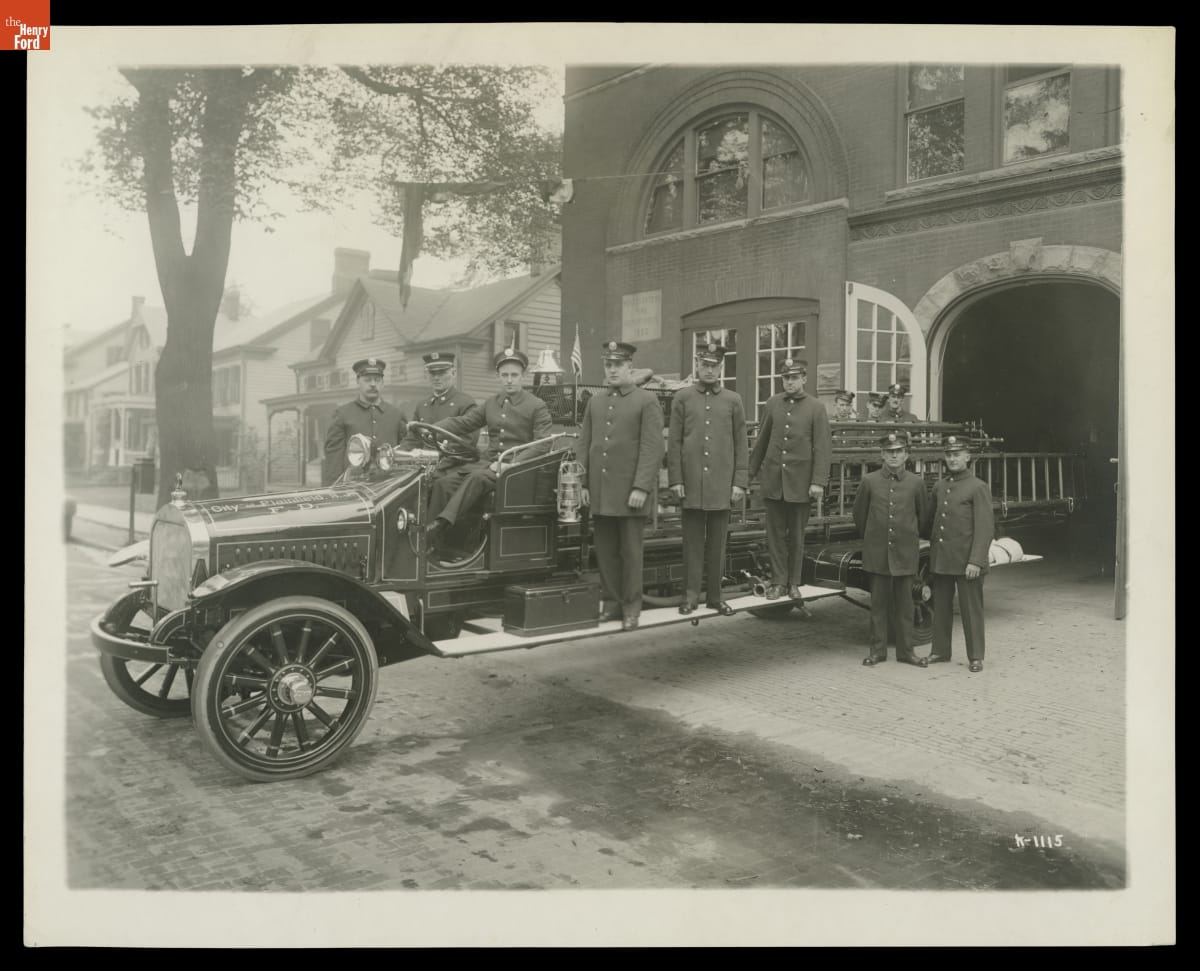
Fire was a constant menace to American cities well into the 20th century, when most buildings were made of wood and firefighting equipment was underpowered and overmatched. Firefighters risked their own lives to save those of others, to protect property, and to constrain and contain blazes before they grew into uncontrollable conflagrations. Early firefighting relied on mettle, muscle, and machinery that improved slowly but steadily over time. article
Alert Hose Company of Big Rapids, Michigan
Sometime during the late 1870s, members of the Alert Hose Company in Big Rapids, Michigan, posed for the local photographer. Find out more about the company and the men involved. article
Seagrave Fire Apparatus
Explore the history of the Seagrave fire engine in our collections — built by a company founded in Detroit in 1881 and used in Grosse Pointe Shores, Michigan, for more than four decades. article
How Do Everyday Things Reflect Community?
Five ordinary artifacts--a fire bucket, hardware display, piano, blouse, and computer--reflect larger stories of community that engage, unite, and inspire.