
Search
- Fire Hat, circa 1890 - No piece of equipment symbolizes a firefighter's dangerous work like the fire helmet. Its hard shell protects from falling debris, and its oversized brim directs water away from the neck. Early helmets were made from leather, while later versions featured metal shells. Modern helmets use lightweight composite materials, but they retain the familiar shape.
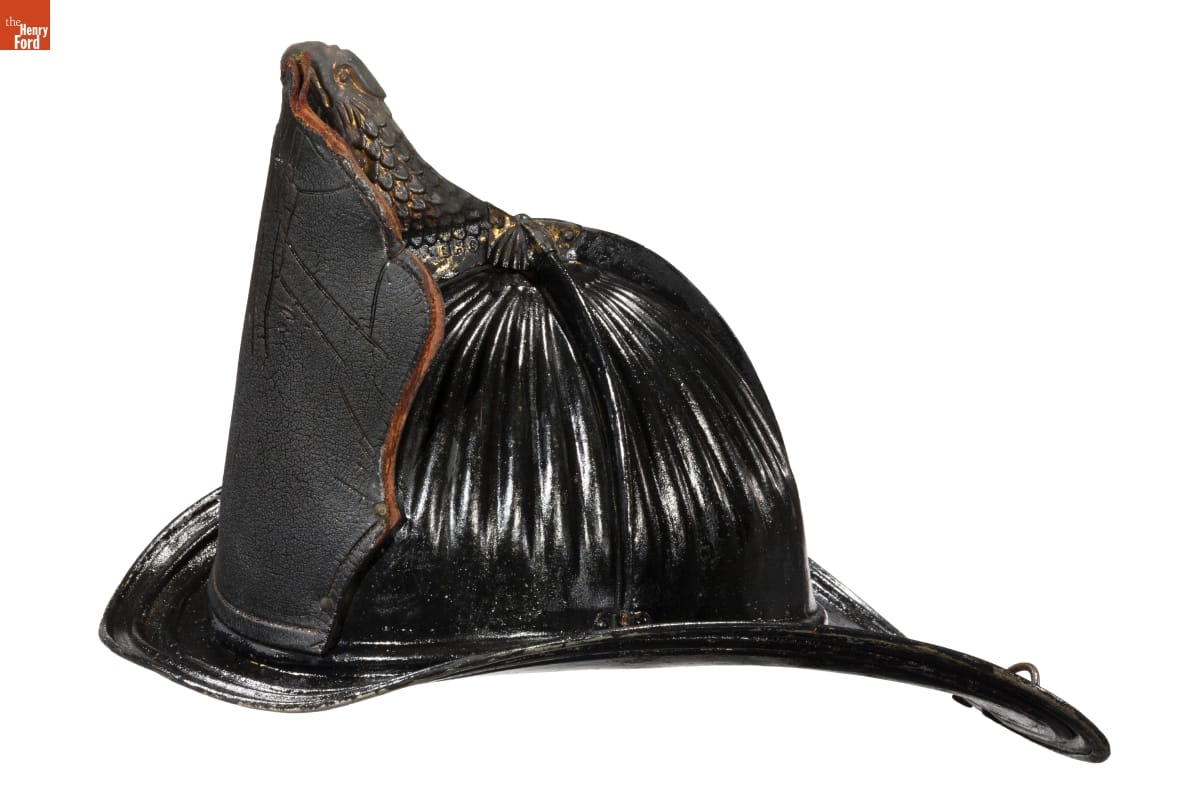
- circa 1890
- Collections - Artifact
Fire Hat, circa 1890
No piece of equipment symbolizes a firefighter's dangerous work like the fire helmet. Its hard shell protects from falling debris, and its oversized brim directs water away from the neck. Early helmets were made from leather, while later versions featured metal shells. Modern helmets use lightweight composite materials, but they retain the familiar shape.
- Firefighters at the Scene of the H.J. Heinz Chicago Branch House Fire, 1911 - This photograph shows the scene of a destructive fire at a H.J. Heinz Company branch house in Chicago, Illinois, in 1911. Fire was a constant threat to factories and industrial facilities. Firefighters focused their efforts on saving lives, controlling the fire, and preventing damage to nearby buildings.
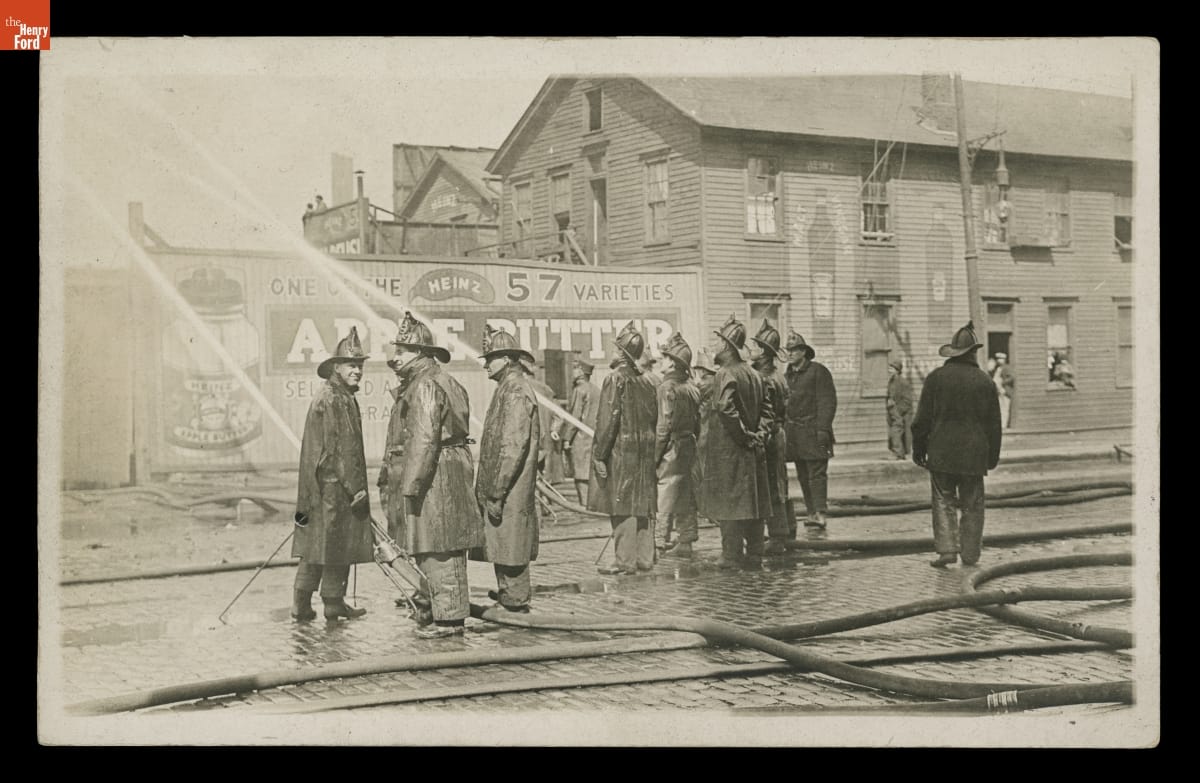
- 1911
- Collections - Artifact
Firefighters at the Scene of the H.J. Heinz Chicago Branch House Fire, 1911
This photograph shows the scene of a destructive fire at a H.J. Heinz Company branch house in Chicago, Illinois, in 1911. Fire was a constant threat to factories and industrial facilities. Firefighters focused their efforts on saving lives, controlling the fire, and preventing damage to nearby buildings.
- Fireman's Hat, 1890-1920 - No piece of equipment symbolizes a firefighter's dangerous work like the fire helmet. Its hard shell protects from falling debris, and its oversized brim directs water away from the neck. Early helmets were made from leather, while later versions featured metal shells. Modern helmets use lightweight composite materials, but they retain the familiar shape.
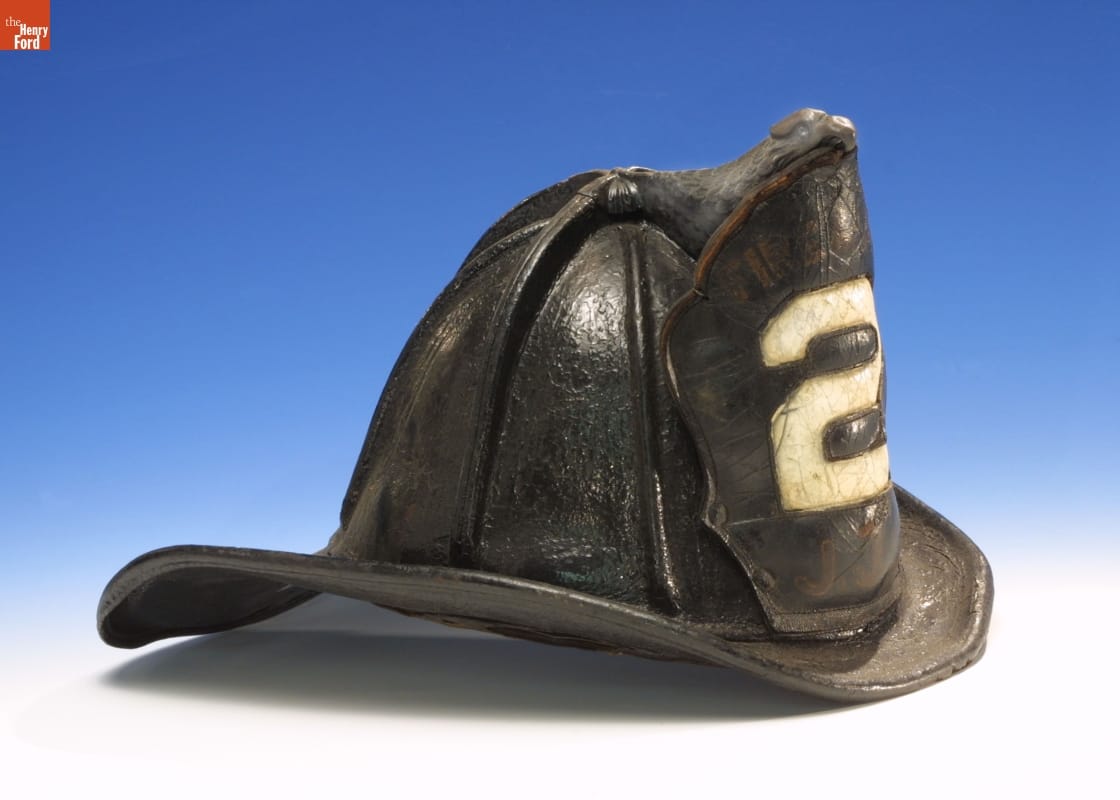
- 1890-1920
- Collections - Artifact
Fireman's Hat, 1890-1920
No piece of equipment symbolizes a firefighter's dangerous work like the fire helmet. Its hard shell protects from falling debris, and its oversized brim directs water away from the neck. Early helmets were made from leather, while later versions featured metal shells. Modern helmets use lightweight composite materials, but they retain the familiar shape.
- Fire Hat, 1945-1955 - No piece of equipment symbolizes a firefighter's dangerous work like the fire helmet. Its hard shell protects from falling debris, and its oversized brim directs water away from the neck. Early helmets were made from leather, while later versions featured metal shells. Modern helmets use lightweight composite materials, but they retain the familiar shape.
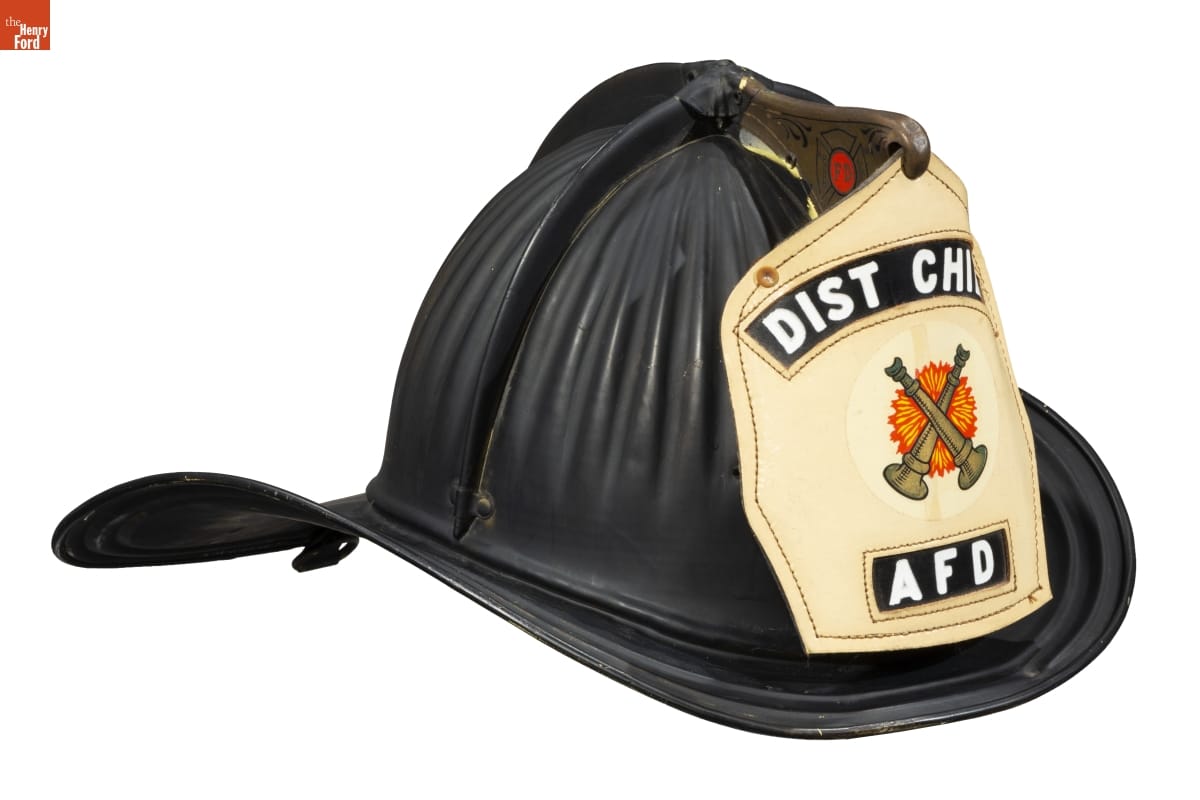
- 1945-1955
- Collections - Artifact
Fire Hat, 1945-1955
No piece of equipment symbolizes a firefighter's dangerous work like the fire helmet. Its hard shell protects from falling debris, and its oversized brim directs water away from the neck. Early helmets were made from leather, while later versions featured metal shells. Modern helmets use lightweight composite materials, but they retain the familiar shape.
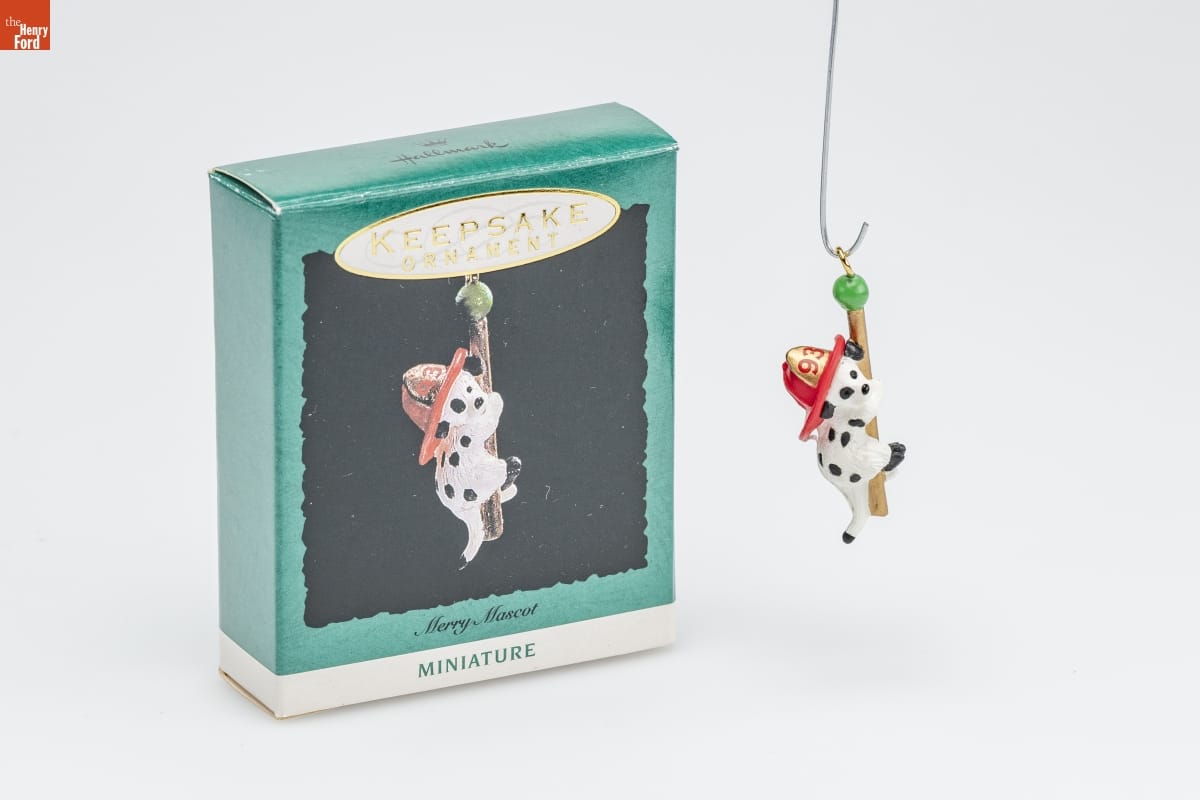
- Hallmark "Merry Mascot" Miniature Christmas Ornament, 1993 - Already known for greeting cards, Hallmark introduced a line of Christmas ornaments in 1973. The company's annual release of an increasing array of ornaments revolutionized Christmas decorating, appealing to customers' interest in marking memories and milestones as well as expressing one's personality and unique tastes.
- 1993
- Collections - Artifact
Hallmark "Merry Mascot" Miniature Christmas Ornament, 1993
Already known for greeting cards, Hallmark introduced a line of Christmas ornaments in 1973. The company's annual release of an increasing array of ornaments revolutionized Christmas decorating, appealing to customers' interest in marking memories and milestones as well as expressing one's personality and unique tastes.
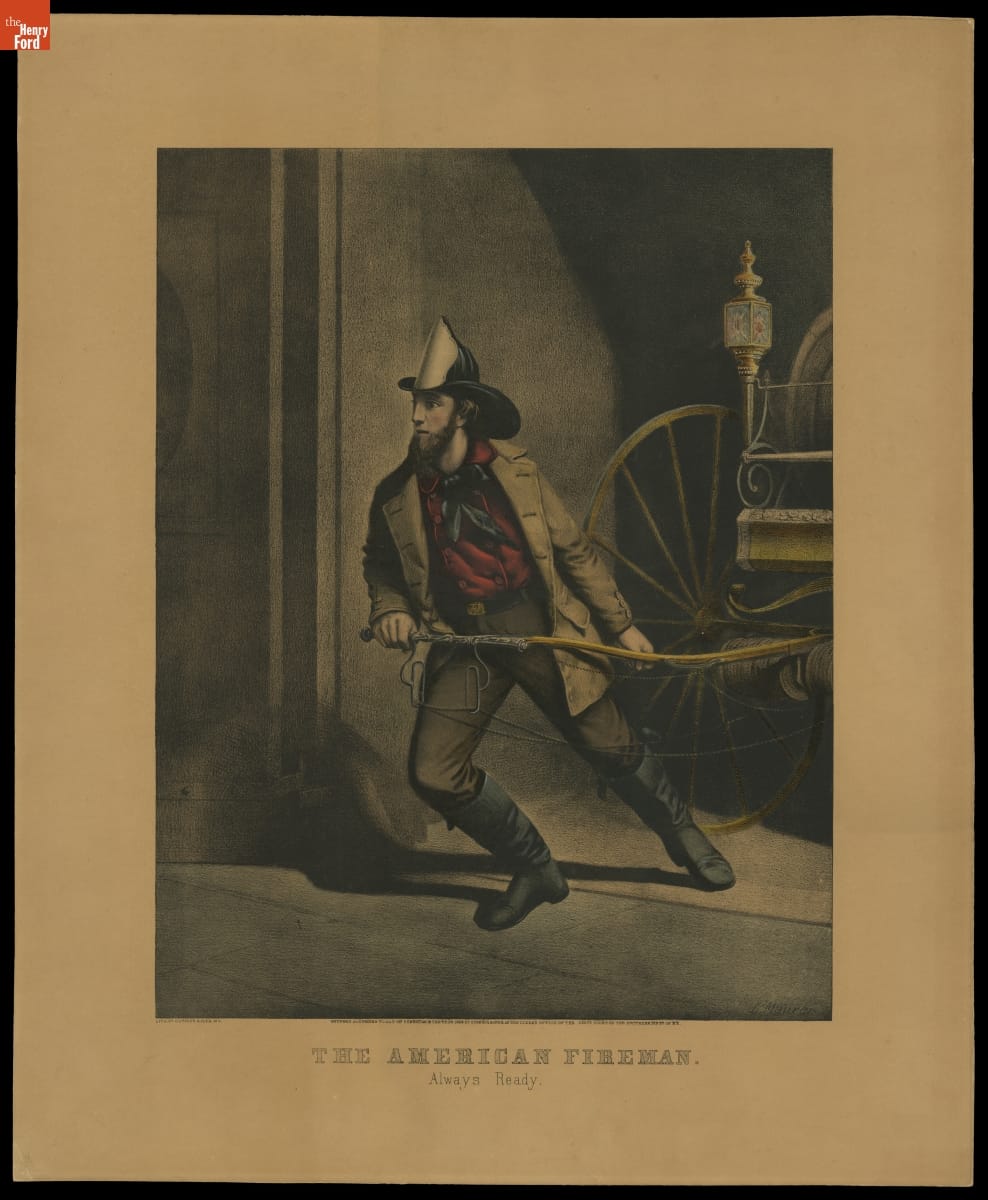
- Lithograph, "The American Fireman. Always Ready," 1858 - The firefighter became -- and remains -- a heroic symbol of bravery and devotion to duty. Artist Louis Maurer created a series of four prints that celebrated "The American Fireman" in 1858. Maurer's scenes were based on his personal observations of volunteer firefighters at work in New York City.
- 1858
- Collections - Artifact
Lithograph, "The American Fireman. Always Ready," 1858
The firefighter became -- and remains -- a heroic symbol of bravery and devotion to duty. Artist Louis Maurer created a series of four prints that celebrated "The American Fireman" in 1858. Maurer's scenes were based on his personal observations of volunteer firefighters at work in New York City.
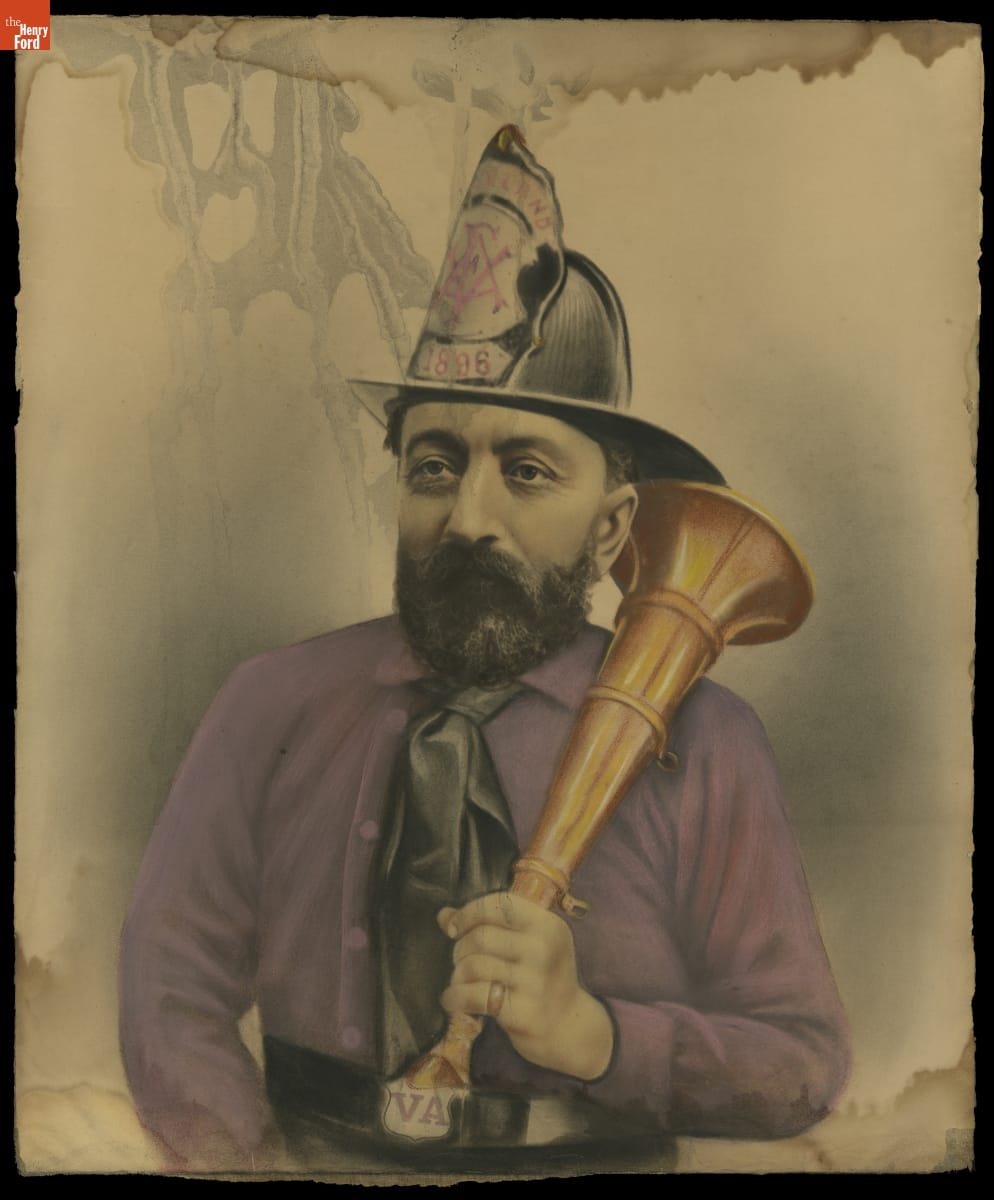
- Fireman, circa 1896 - The firefighter became -- and remains -- a heroic symbol of bravery and devotion to duty. This illustration features an American firefighter of the late 19th century. He wears his helmet to protect from debris and water, and he holds his fire trumpet to amplify his voice when shouting instructions during a blaze.
- circa 1896
- Collections - Artifact
Fireman, circa 1896
The firefighter became -- and remains -- a heroic symbol of bravery and devotion to duty. This illustration features an American firefighter of the late 19th century. He wears his helmet to protect from debris and water, and he holds his fire trumpet to amplify his voice when shouting instructions during a blaze.
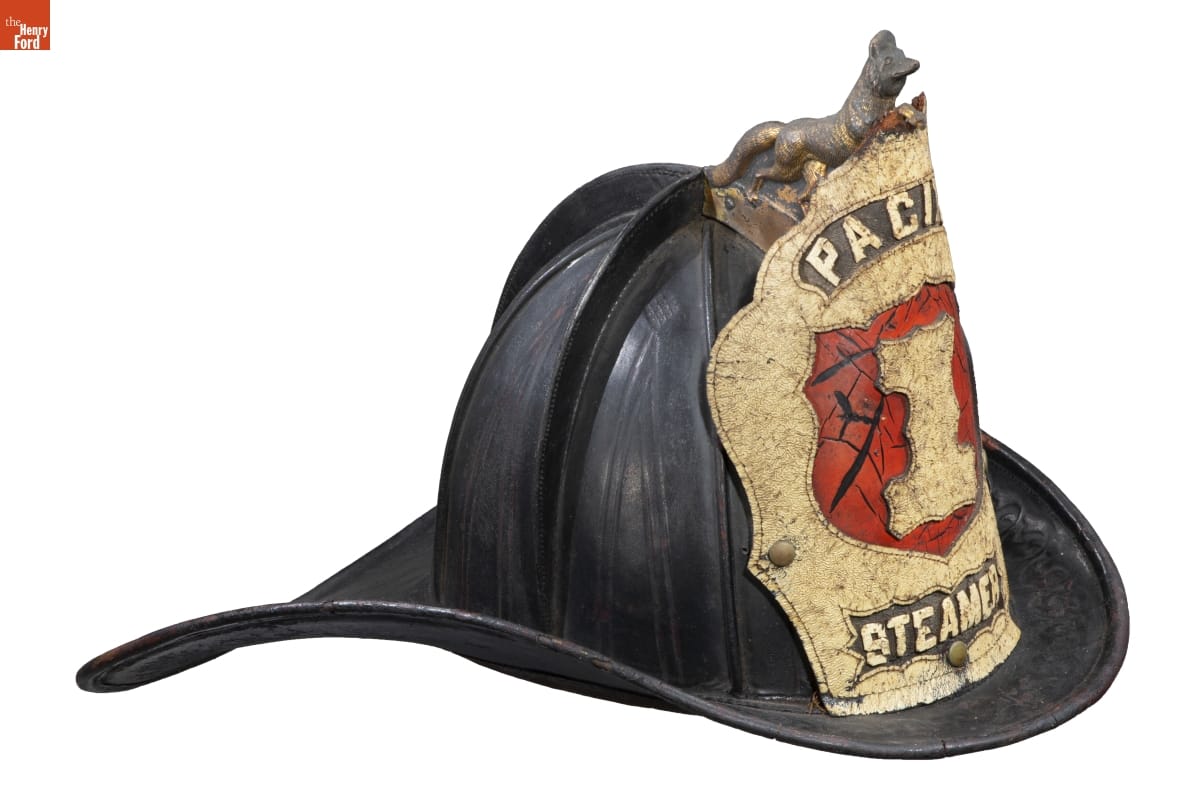
- Fire Hat, "Pacific Steamer", circa 1870 - No piece of equipment symbolizes a firefighter's dangerous work like the fire helmet. Its hard shell protects from falling debris, and its oversized brim directs water away from the neck. Early helmets were made from leather, while later versions featured metal shells. Modern helmets use lightweight composite materials, but they retain the familiar shape.
- circa 1870
- Collections - Artifact
Fire Hat, "Pacific Steamer", circa 1870
No piece of equipment symbolizes a firefighter's dangerous work like the fire helmet. Its hard shell protects from falling debris, and its oversized brim directs water away from the neck. Early helmets were made from leather, while later versions featured metal shells. Modern helmets use lightweight composite materials, but they retain the familiar shape.
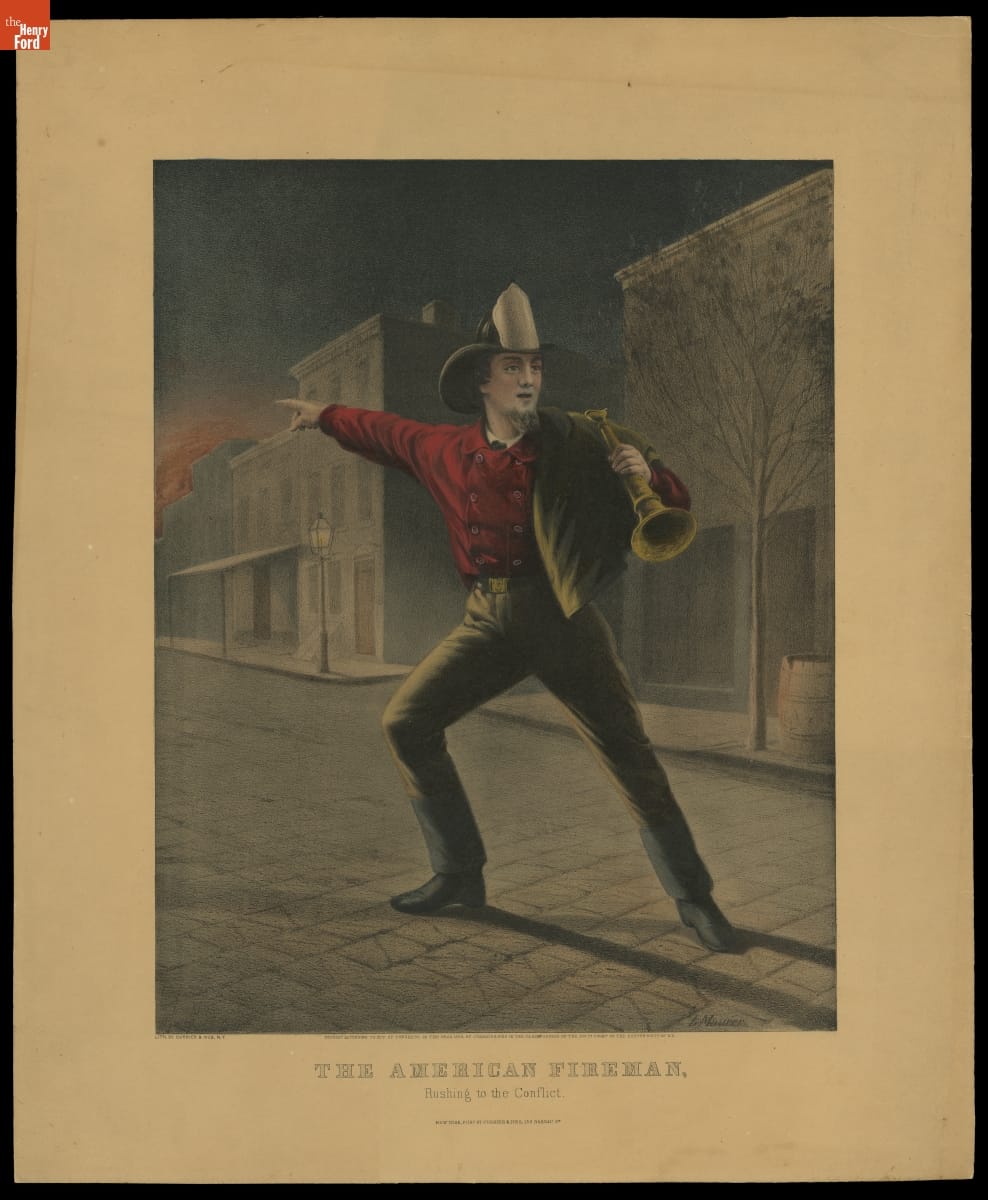
- Lithograph, "The American Fireman, Rushing to the Conflict," 1858 - The firefighter became -- and remains -- a heroic symbol of bravery and devotion to duty. Artist Louis Maurer created a series of four prints that celebrated "The American Fireman" in 1858. Maurer's scenes were based on his personal observations of volunteer firefighters at work in New York City.
- 1858
- Collections - Artifact
Lithograph, "The American Fireman, Rushing to the Conflict," 1858
The firefighter became -- and remains -- a heroic symbol of bravery and devotion to duty. Artist Louis Maurer created a series of four prints that celebrated "The American Fireman" in 1858. Maurer's scenes were based on his personal observations of volunteer firefighters at work in New York City.
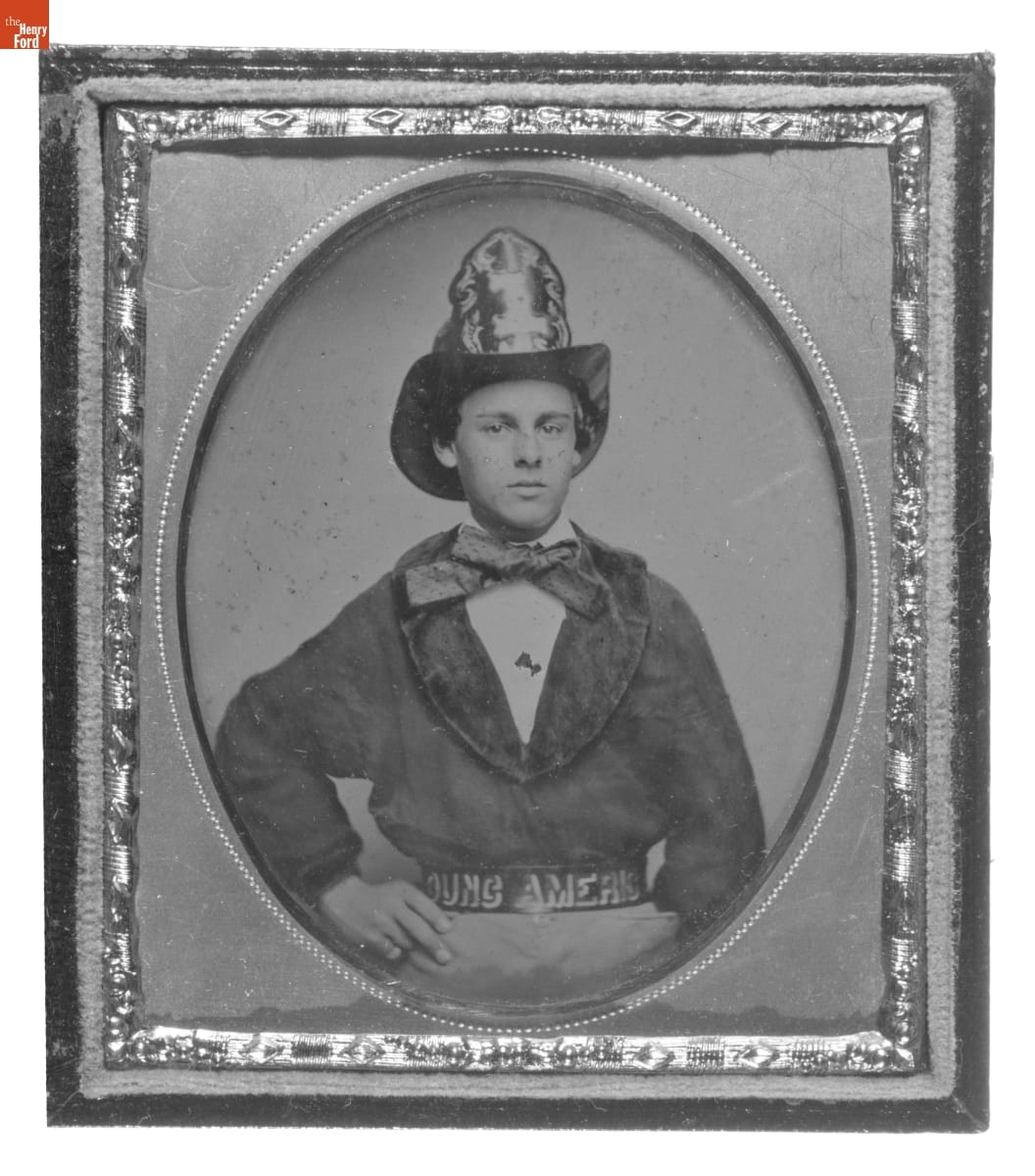
- Young America Firefighter, circa 1855 - No piece of equipment symbolized a firefighter's dangerous work like the fire helmet. Its hard shell protected from falling debris, and its oversized brim directed water away from the neck. This firefighter proudly wore his helmet for a portrait taken around 1855.
- circa 1855
- Collections - Artifact
Young America Firefighter, circa 1855
No piece of equipment symbolized a firefighter's dangerous work like the fire helmet. Its hard shell protected from falling debris, and its oversized brim directed water away from the neck. This firefighter proudly wore his helmet for a portrait taken around 1855.