
Search
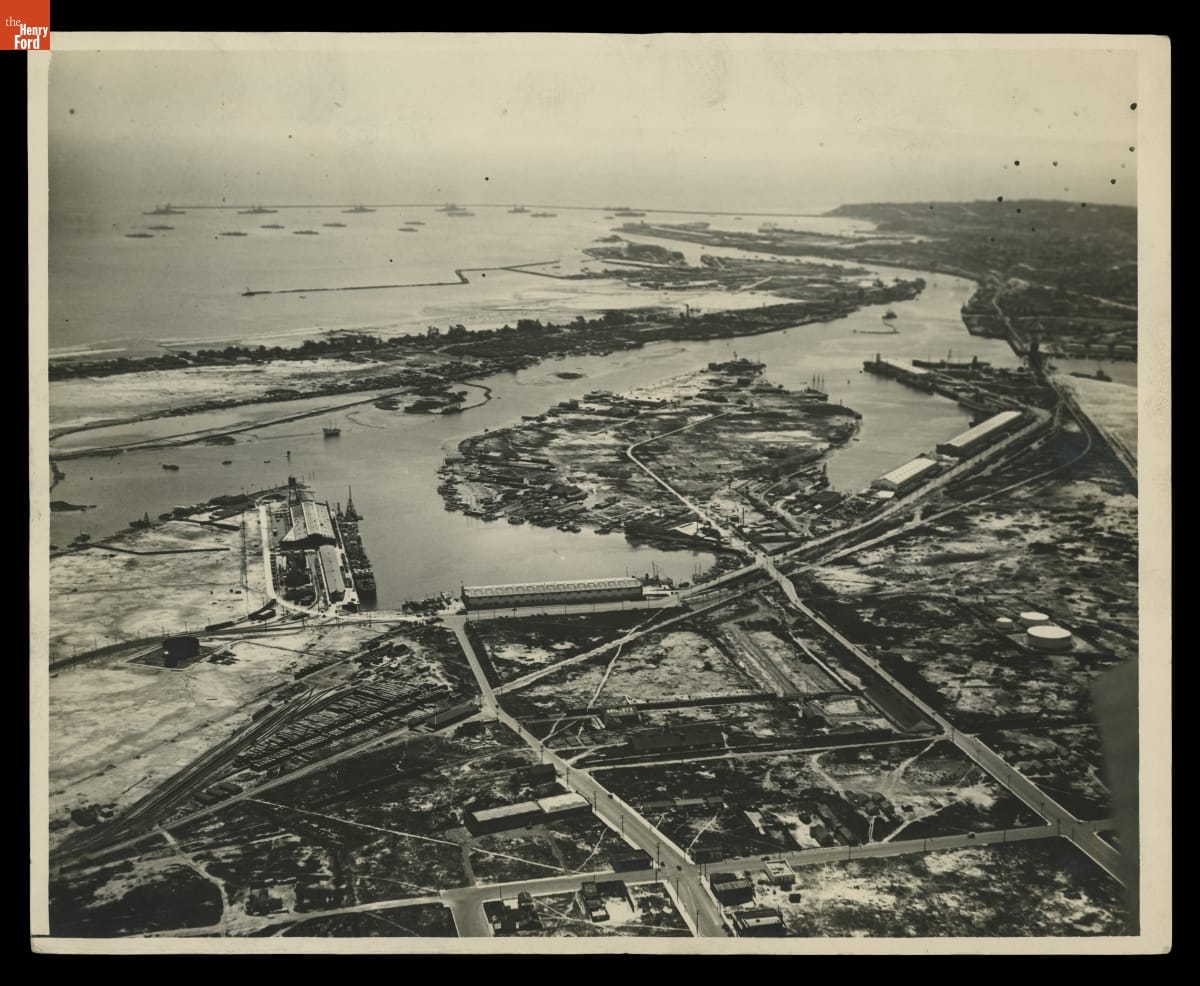
- Aerial View of Los Angeles Harbor and Part of the Pacific Fleet, circa 1922 - Military aerial reconnaissance during World War I accelerated the evolution of domestic aerial photography after the war. The sprawling city of Los Angeles became an important center for commercial aerial photography. Survey companies like Cross Aerial Photos, which captured this view, created images that remain important documents of the rapid urbanization of Southern California in the 1920s.
- circa 1922
- Collections - Artifact
Aerial View of Los Angeles Harbor and Part of the Pacific Fleet, circa 1922
Military aerial reconnaissance during World War I accelerated the evolution of domestic aerial photography after the war. The sprawling city of Los Angeles became an important center for commercial aerial photography. Survey companies like Cross Aerial Photos, which captured this view, created images that remain important documents of the rapid urbanization of Southern California in the 1920s.
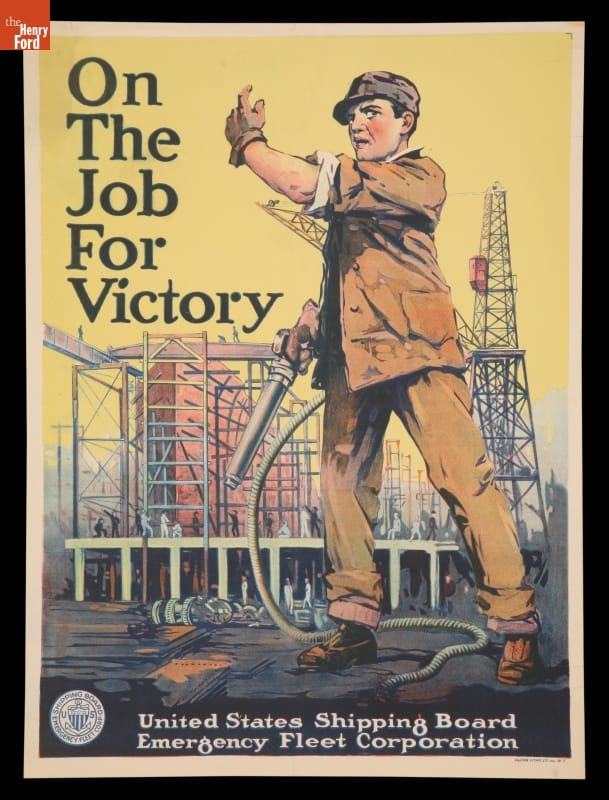
- World War I Poster, "On the Job for Victory," circa 1918 - During the First World War, governments of all the warring nations used poster campaigns to encourage civilian and military support of the war effort. Artists widely used an innovative advertising technique for these posters that moved away from a factual depiction of a product's material or event's subject to an emphasis on appealing to the viewer's emotions.
- circa 1918
- Collections - Artifact
World War I Poster, "On the Job for Victory," circa 1918
During the First World War, governments of all the warring nations used poster campaigns to encourage civilian and military support of the war effort. Artists widely used an innovative advertising technique for these posters that moved away from a factual depiction of a product's material or event's subject to an emphasis on appealing to the viewer's emotions.
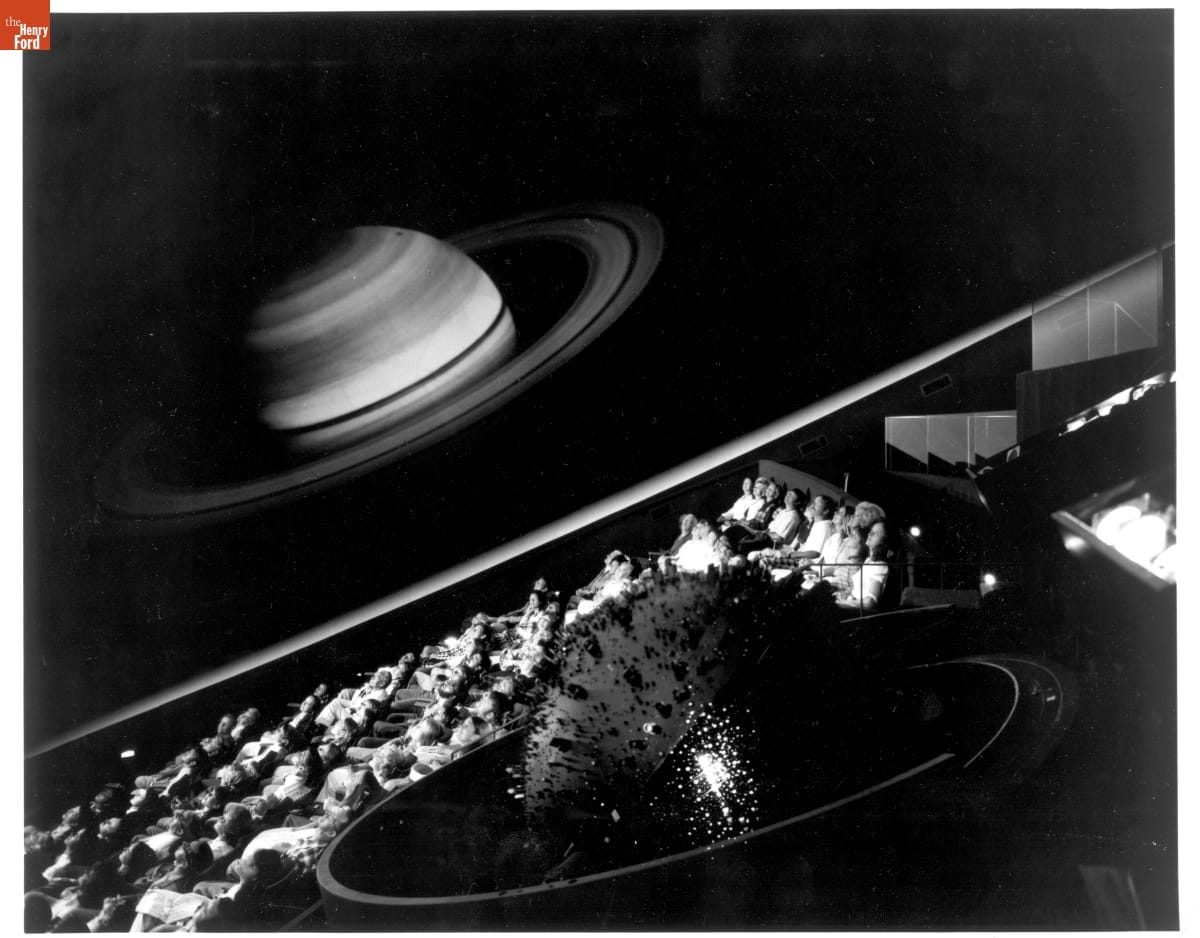
- Audience in the Fleet Science Center Theatre in San Diego during an IMAX Showing of "Voyage to the Outer Planets," circa 1973 - The Fleet Science Center museum and planetarium opened in San Diego, California, in 1973. The center's IMAX Dome theater was a signature attraction, showing educational films like <em>Voyage to the Outer Planets</em> projected through a fisheye lens onto an immersive dome screen. The impressive theater system was soon adopted by other science centers around the world.
- circa 1973
- Collections - Artifact
Audience in the Fleet Science Center Theatre in San Diego during an IMAX Showing of "Voyage to the Outer Planets," circa 1973
The Fleet Science Center museum and planetarium opened in San Diego, California, in 1973. The center's IMAX Dome theater was a signature attraction, showing educational films like Voyage to the Outer Planets projected through a fisheye lens onto an immersive dome screen. The impressive theater system was soon adopted by other science centers around the world.
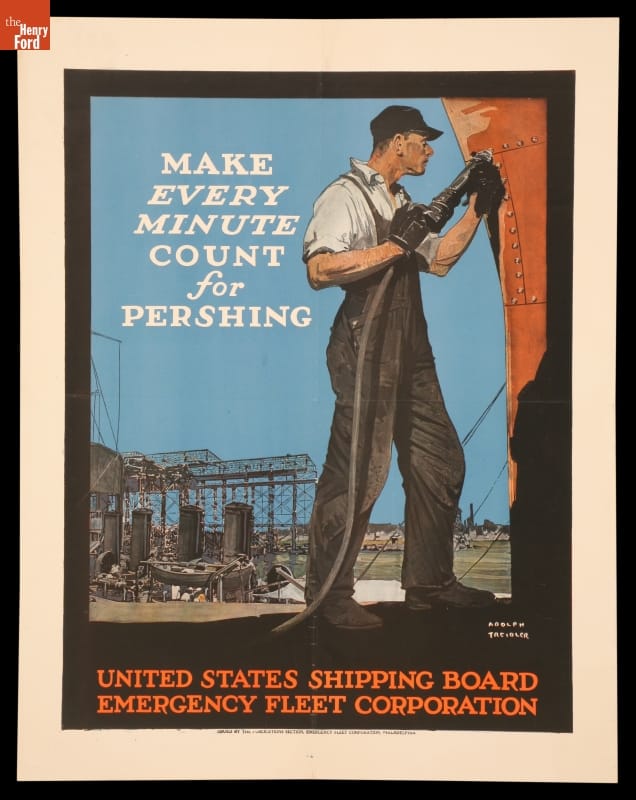
- World War I Poster, "Make Every Minute Count for Pershing," 1917 - During the First World War, governments of all the warring nations used poster campaigns to encourage civilian and military support of the war effort. Artists widely used an innovative advertising technique for these posters that moved away from a factual depiction of a product's material or event's subject to an emphasis on appealing to the viewer's emotions.
- 1917
- Collections - Artifact
World War I Poster, "Make Every Minute Count for Pershing," 1917
During the First World War, governments of all the warring nations used poster campaigns to encourage civilian and military support of the war effort. Artists widely used an innovative advertising technique for these posters that moved away from a factual depiction of a product's material or event's subject to an emphasis on appealing to the viewer's emotions.
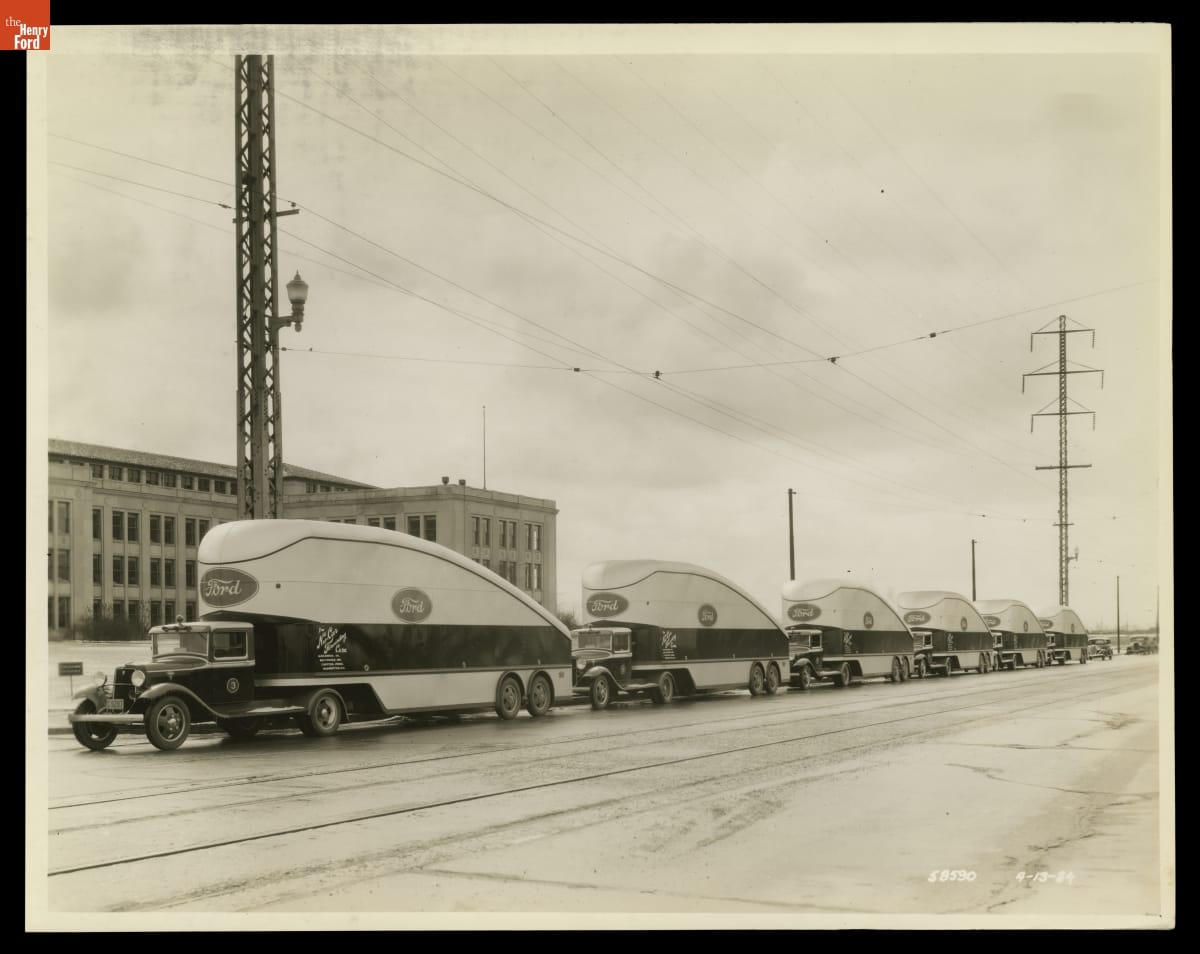
- Ford Model BB Closed Cab Tractor Truck and Haulaway Trailer Fleet, April 1934 -
- April 13, 1934
- Collections - Artifact
Ford Model BB Closed Cab Tractor Truck and Haulaway Trailer Fleet, April 1934
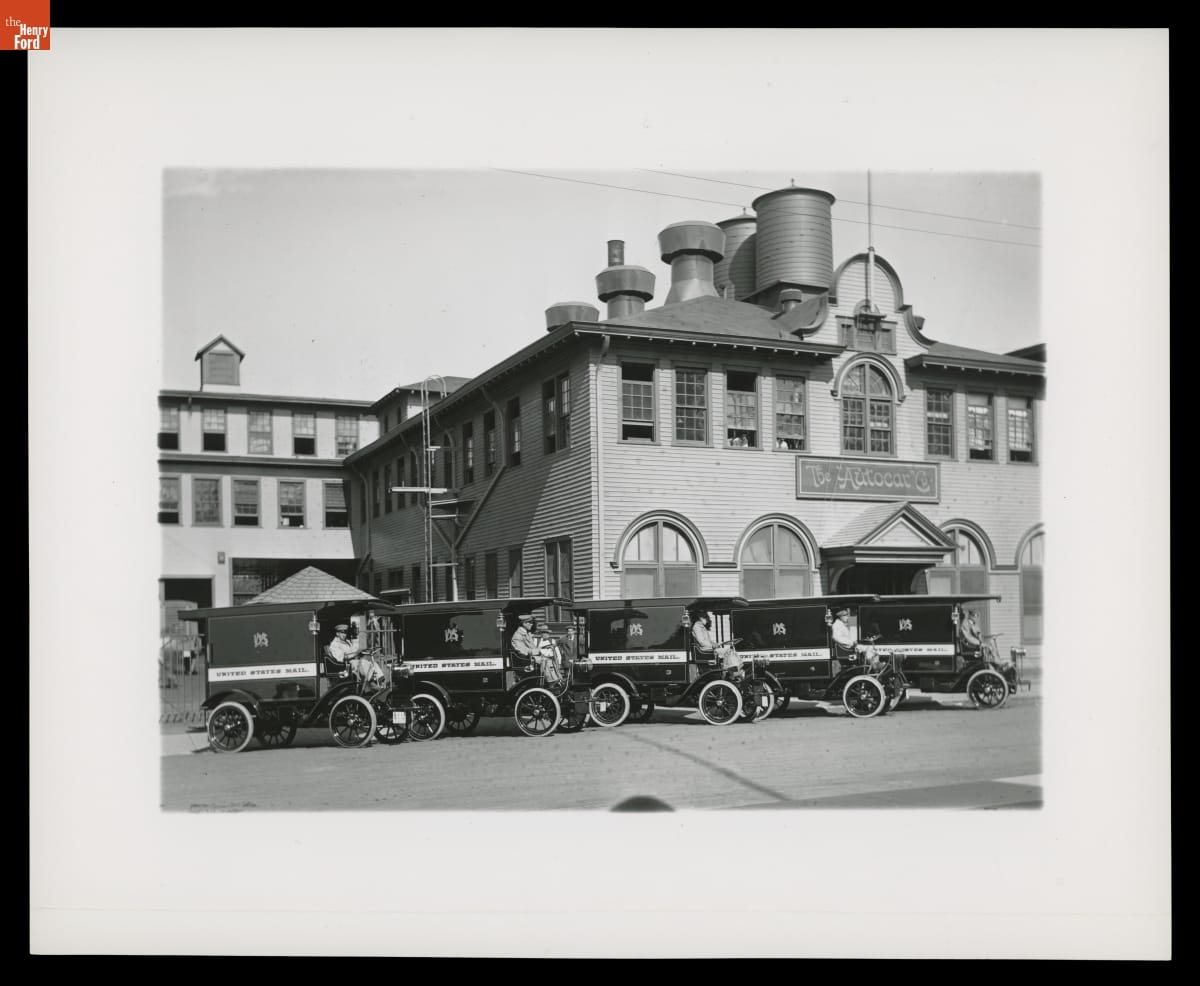
- Fleet of Autocar Type XVIII Trucks for U.S. Mail Delivery, Autocar Company Plant, Ardmore, Pennsylvania, circa 1908 - The Autocar Company was formed in Pittsburgh in 1897, but it soon moved east to Ardmore, Pennsylvania. The firm built automobiles until 1911, when it changed over to commercial trucks. Company co-founder Louis S. Clarke is credited with designing the first American spark plugs. Autocar became a part of White Motor Corporation in 1953.
- circa 1908
- Collections - Artifact
Fleet of Autocar Type XVIII Trucks for U.S. Mail Delivery, Autocar Company Plant, Ardmore, Pennsylvania, circa 1908
The Autocar Company was formed in Pittsburgh in 1897, but it soon moved east to Ardmore, Pennsylvania. The firm built automobiles until 1911, when it changed over to commercial trucks. Company co-founder Louis S. Clarke is credited with designing the first American spark plugs. Autocar became a part of White Motor Corporation in 1953.
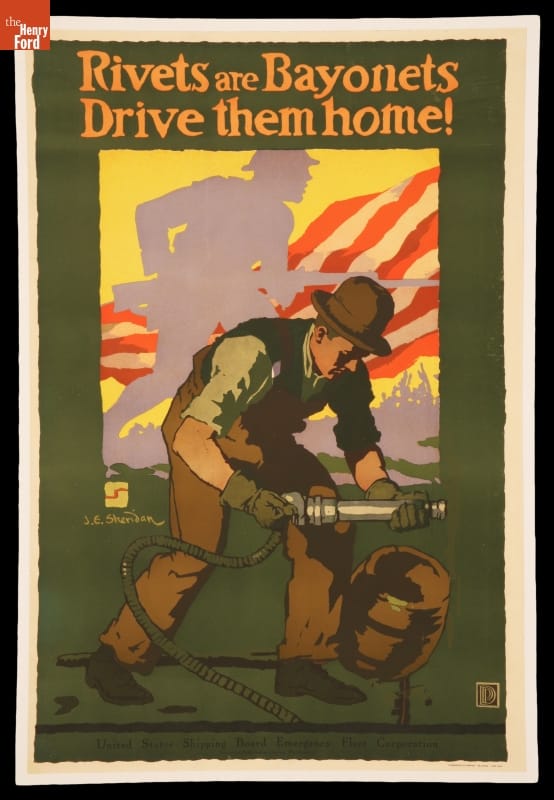
- World War I Poster, "Rivets are Bayonets. Drive them Home!" circa 1918 - During the First World War, governments of all the warring nations used poster campaigns to encourage civilian and military support of the war effort. Artists widely used an innovative advertising technique for these posters that moved away from a factual depiction of a product's material or event's subject to an emphasis on appealing to the viewer's emotions.
- circa 1918
- Collections - Artifact
World War I Poster, "Rivets are Bayonets. Drive them Home!" circa 1918
During the First World War, governments of all the warring nations used poster campaigns to encourage civilian and military support of the war effort. Artists widely used an innovative advertising technique for these posters that moved away from a factual depiction of a product's material or event's subject to an emphasis on appealing to the viewer's emotions.